

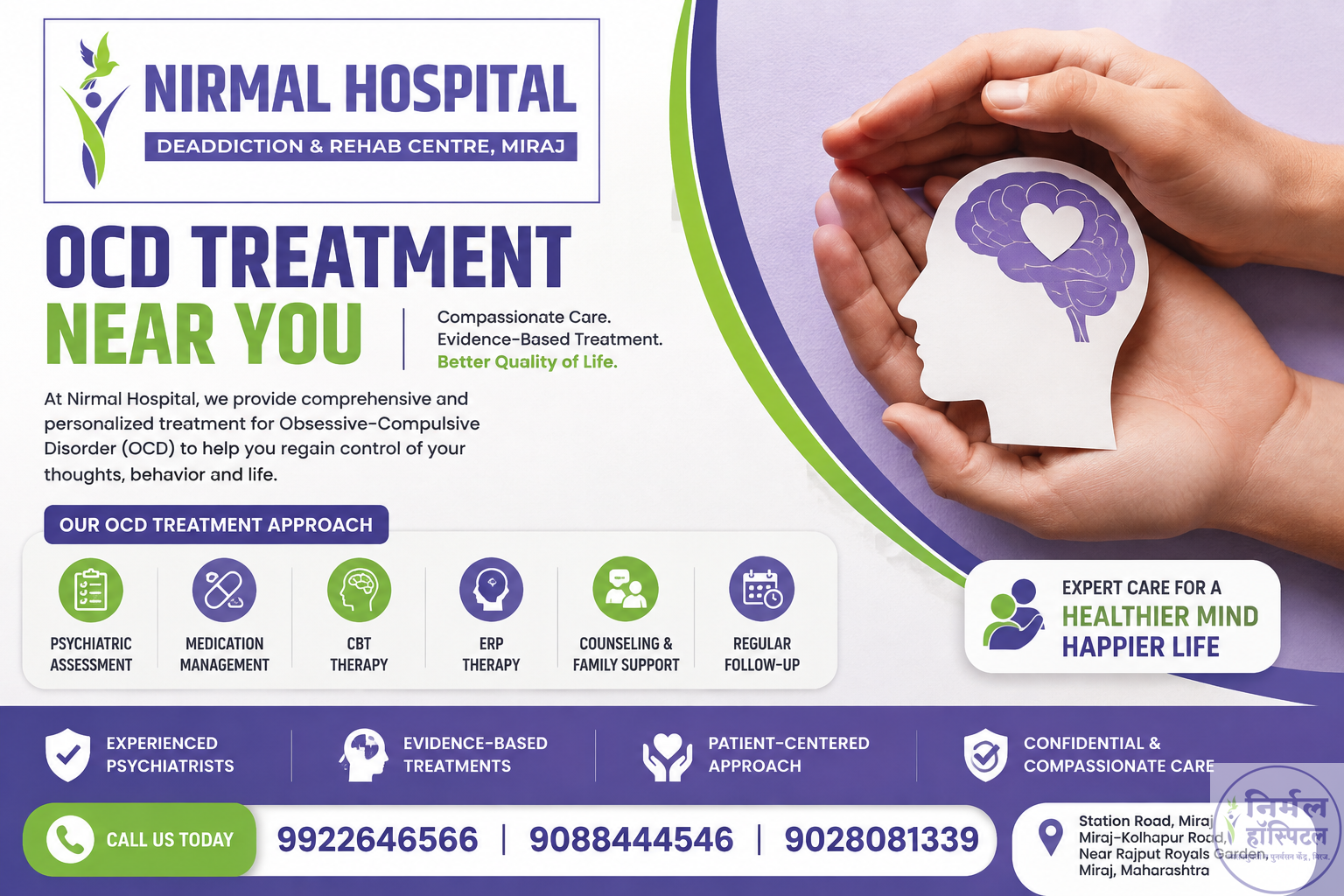
OCD Treatment Near Me
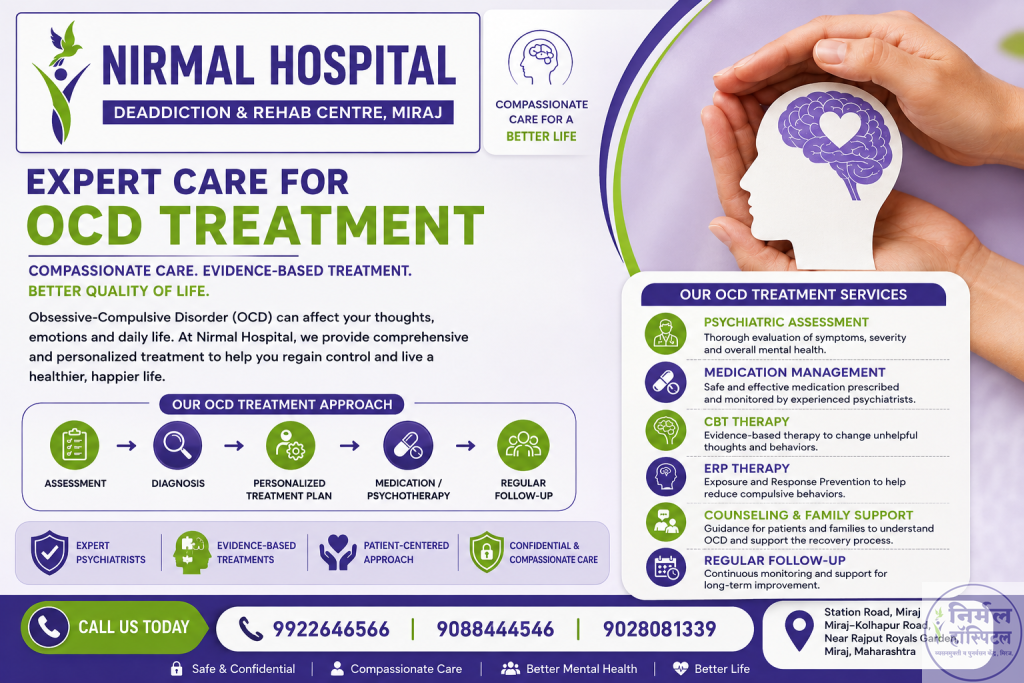
Looking for OCD treatment near me? Obsessive-Compulsive Disorder (OCD) is a treatable mental health condition that can cause persistent unwanted thoughts, excessive fears and repetitive behaviours. When OCD starts affecting daily activities, work, studies, relationships or quality of life, professional psychiatric treatment can help.
At Nirmal Hospital, OCD treatment is planned according to the patient’s symptoms, severity, treatment history, associated mental health conditions and individual needs.
Our treatment approach may include psychiatric assessment, medication management, Cognitive Behavioral Therapy (CBT), Exposure and Response Prevention (ERP), counseling, family support and regular follow-up.
Our OCD Treatment Approach
Assessment → Diagnosis → Personalized Treatment Plan → Medication / Psychotherapy → Regular Follow-up
Psychiatric Assessment for OCD
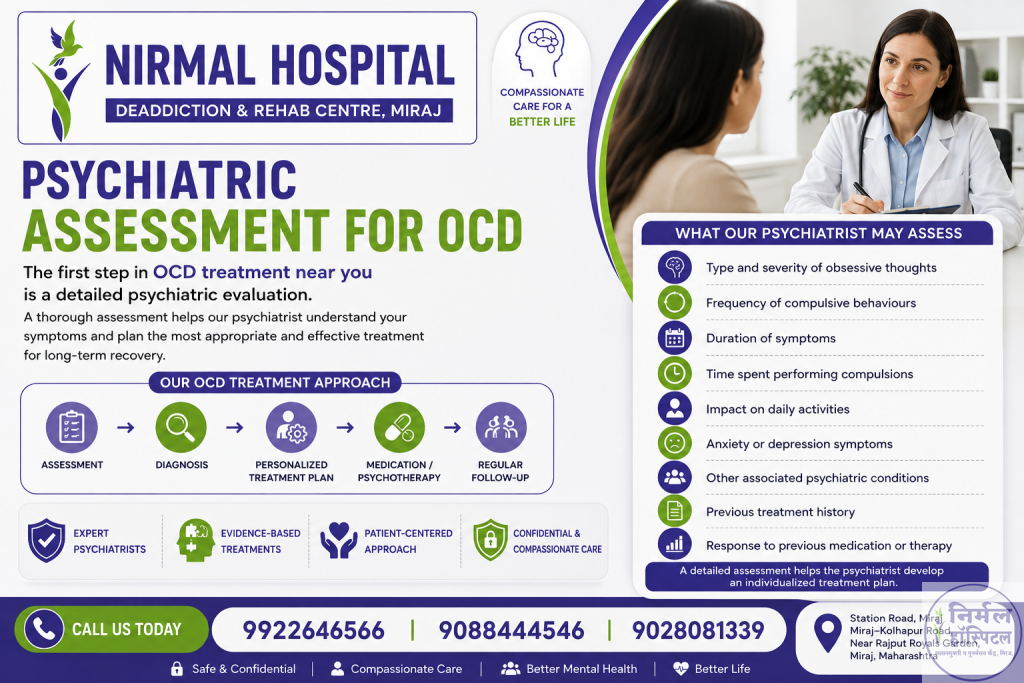
The first step in OCD treatment near you is a detailed psychiatric evaluation.
The psychiatrist may assess:
- Type and severity of obsessive thoughts
- Frequency of compulsive behaviours
- Duration of symptoms
- Time spent performing compulsions
- Impact on daily activities
- Anxiety or depression symptoms
- Other associated psychiatric conditions
- Previous treatment history
- Response to previous medication or therapy
A detailed assessment helps the psychiatrist develop an individualized treatment plan.
Medication Management for OCD
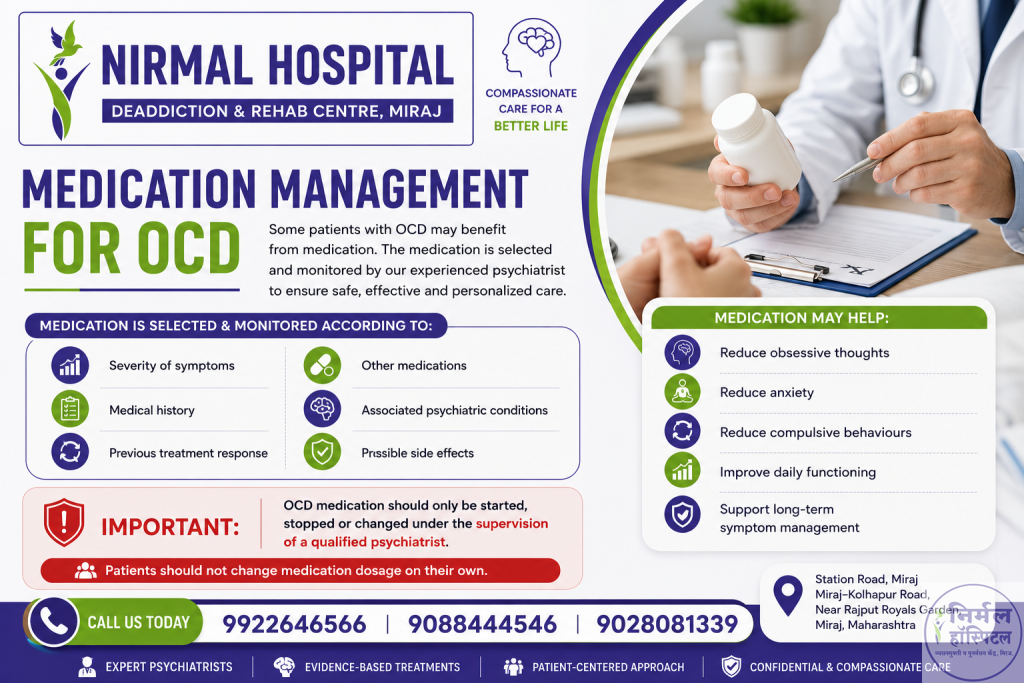
Some patients with OCD may benefit from medication.
The psychiatrist selects and monitors medication according to:
- Severity of symptoms
- Medical history
- Previous treatment response
- Other medications
- Associated psychiatric conditions
- Possible side effects
Medication may help:
- Reduce obsessive thoughts
- Reduce anxiety
- Reduce compulsive behaviours
- Improve daily functioning
- Support long-term symptom management
Important: OCD medication should only be started, stopped or changed under the supervision of a qualified psychiatrist.
Patients should not change medication dosage on their own.
CBT for OCD
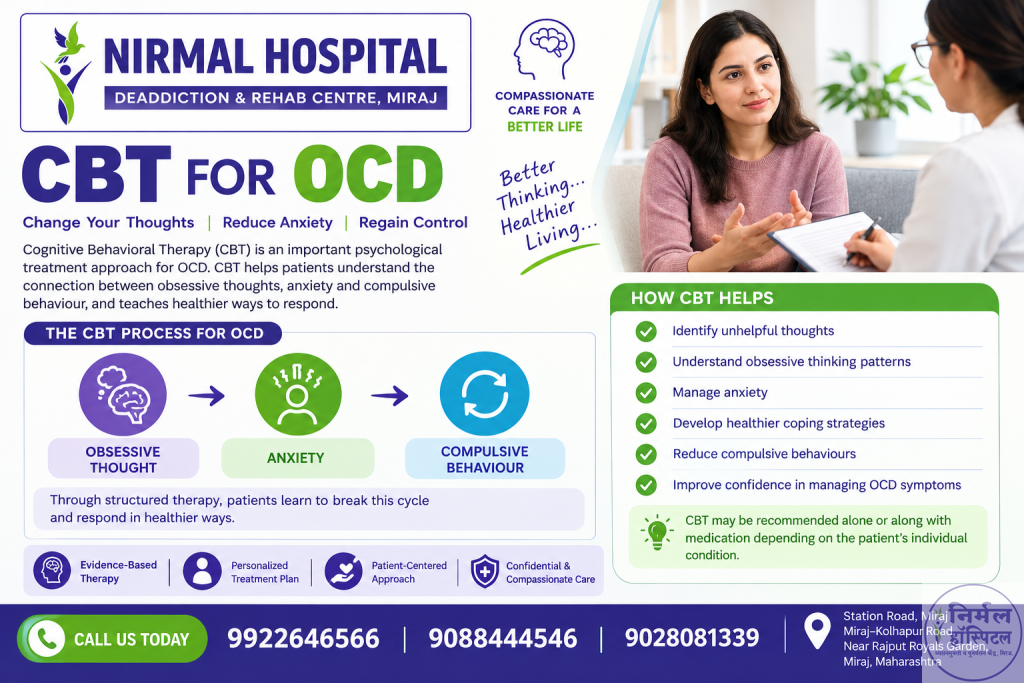
Cognitive Behavioral Therapy (CBT) is an important psychological treatment approach for OCD.
CBT helps patients understand the connection between:
Obsessive Thought → Anxiety → Compulsive Behaviour
Through structured therapy, patients can learn to:
- Identify unhelpful thoughts
- Understand obsessive thinking patterns
- Manage anxiety
- Develop healthier coping strategies
- Reduce compulsive behaviours
- Improve confidence in managing OCD symptoms
CBT may be recommended alone or along with medication depending on the patient’s individual condition.
ERP Therapy for OCD
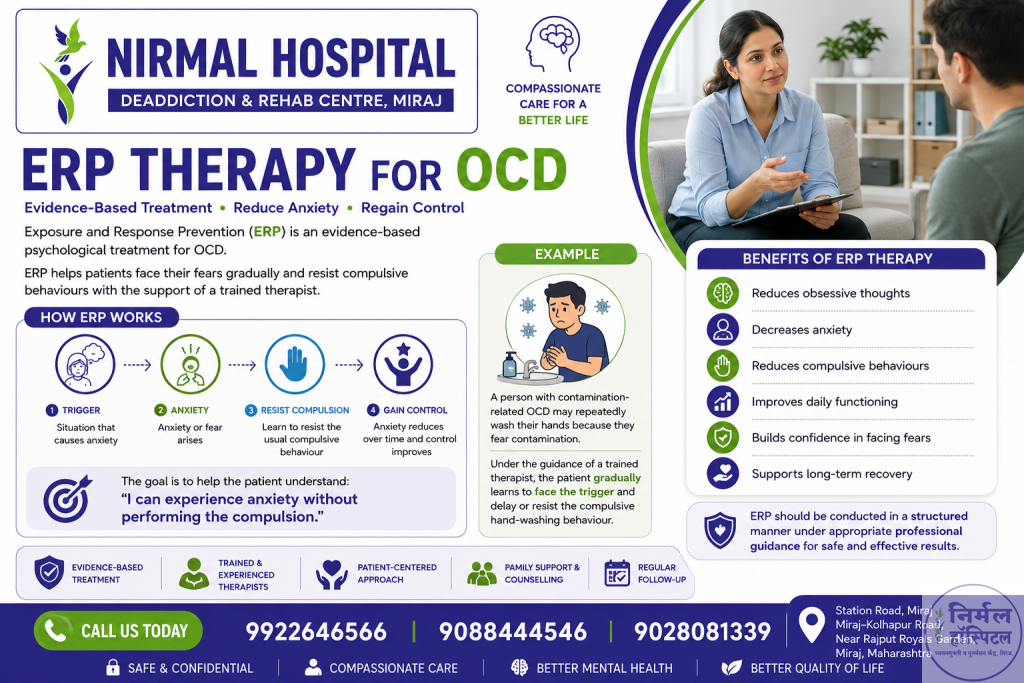
Exposure and Response Prevention (ERP) is an evidence-based psychological treatment for OCD.
During ERP, patients are gradually and safely exposed to situations that trigger anxiety while learning to resist the usual compulsive response.
Example
A person with contamination-related OCD may repeatedly wash their hands because they fear contamination.
Under the guidance of a trained therapist, the patient may gradually learn to face the trigger and delay or resist the compulsive hand-washing behaviour.
The goal is to help the patient understand:
“I can experience anxiety without performing the compulsion.”
ERP should be conducted in a structured manner under appropriate professional guidance.
CBT Techniques Used in OCD Treatment
Cognitive Behaviour Therapy (CBT) for OCD may involve a combination of different therapeutic techniques. The exact techniques used depend on the patient’s symptoms, triggers, compulsions, severity, and individual treatment goals.
1. The 4R Technique
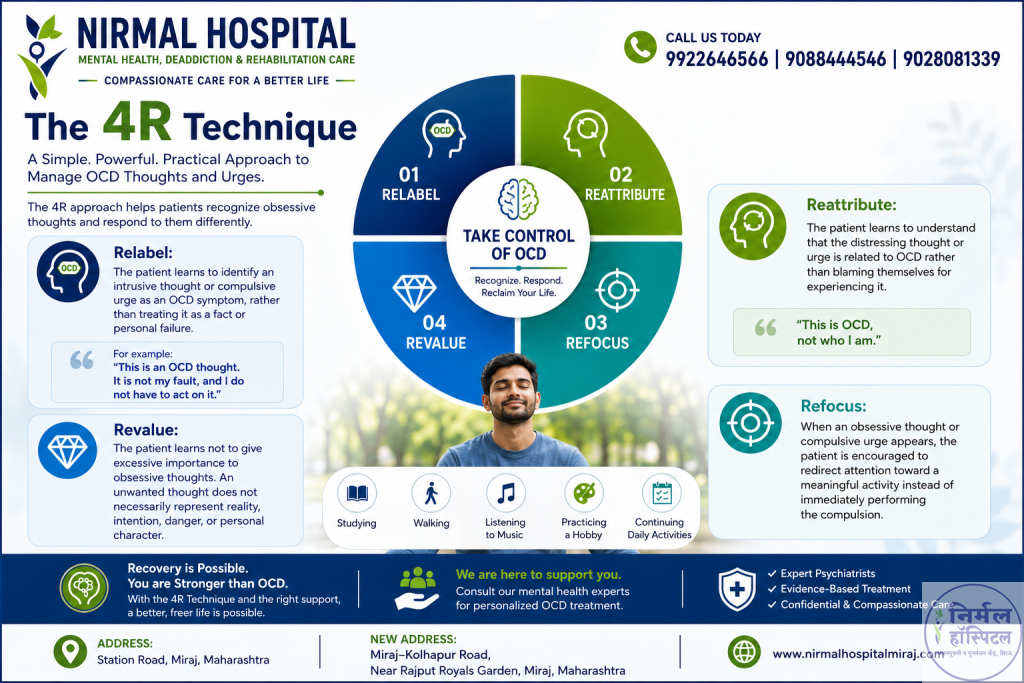
The 4R approach helps patients recognize obsessive thoughts and respond to them differently.
Relabel:
The patient learns to identify an intrusive thought or compulsive urge as an OCD symptom, rather than treating it as a fact or personal failure.
For example:
“This is an OCD thought. It is not my fault, and I do not have to act on it.”
Reattribute:
The patient learns to understand that the distressing thought or urge is related to OCD rather than blaming themselves for experiencing it.
“This is OCD, not who I am.”
Refocus:
When an obsessive thought or compulsive urge appears, the patient is encouraged to redirect attention toward a meaningful activity instead of immediately performing the compulsion.
This may include studying, walking, listening to music, practising a hobby, or continuing with a planned daily activity.
Revalue:
The patient learns not to give excessive importance to obsessive thoughts. An unwanted thought does not necessarily represent reality, intention, danger, or personal character.
2. Exposure and Response Prevention (ERP)
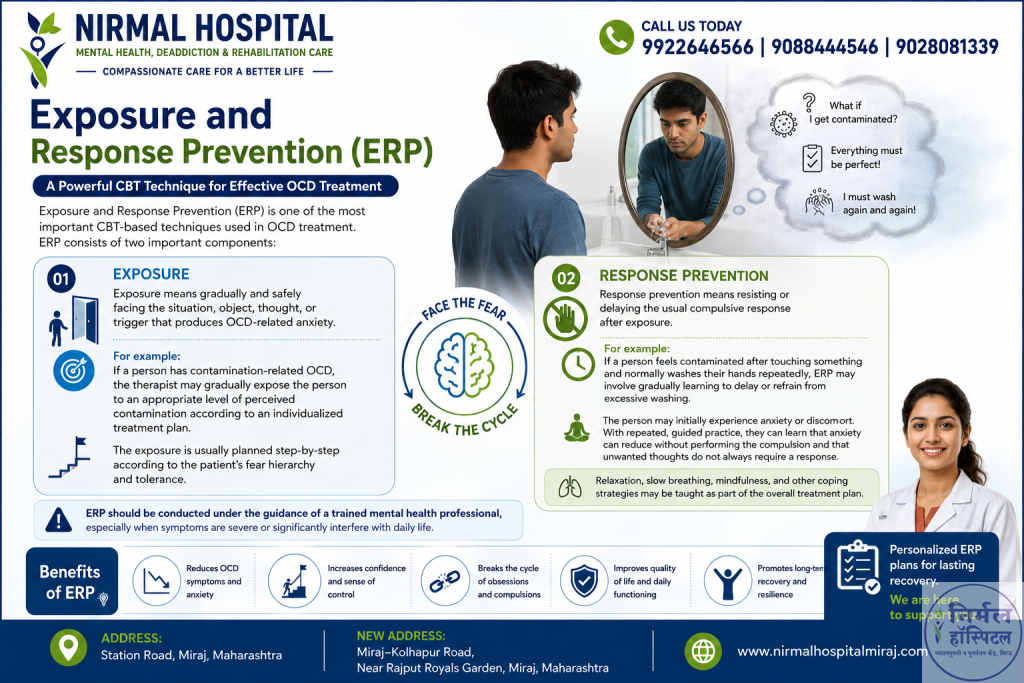
Exposure and Response Prevention (ERP) is one of the most important CBT-based techniques used in OCD treatment.
ERP consists of two important components:
Exposure
Exposure means gradually and safely facing the situation, object, thought, or trigger that produces OCD-related anxiety.
For example, if a person has contamination-related OCD, the therapist may gradually expose the person to an appropriate level of perceived contamination according to an individualized treatment plan.
The exposure is usually planned step-by-step according to the patient’s fear hierarchy and tolerance.
Response Prevention
Response prevention means resisting or delaying the usual compulsive response after exposure.
For example, if a person feels contaminated after touching something and normally washes their hands repeatedly, ERP may involve gradually learning to delay or refrain from excessive washing.
The person may initially experience anxiety or discomfort. With repeated, guided practice, they can learn that anxiety can reduce without performing the compulsion and that unwanted thoughts do not always require a response.
Relaxation, slow breathing, mindfulness, and other coping strategies may be taught as part of the overall treatment plan.
ERP should be conducted under the guidance of a trained mental health professional, especially when symptoms are severe or significantly interfere with daily life.
3. Rubber Band Technique
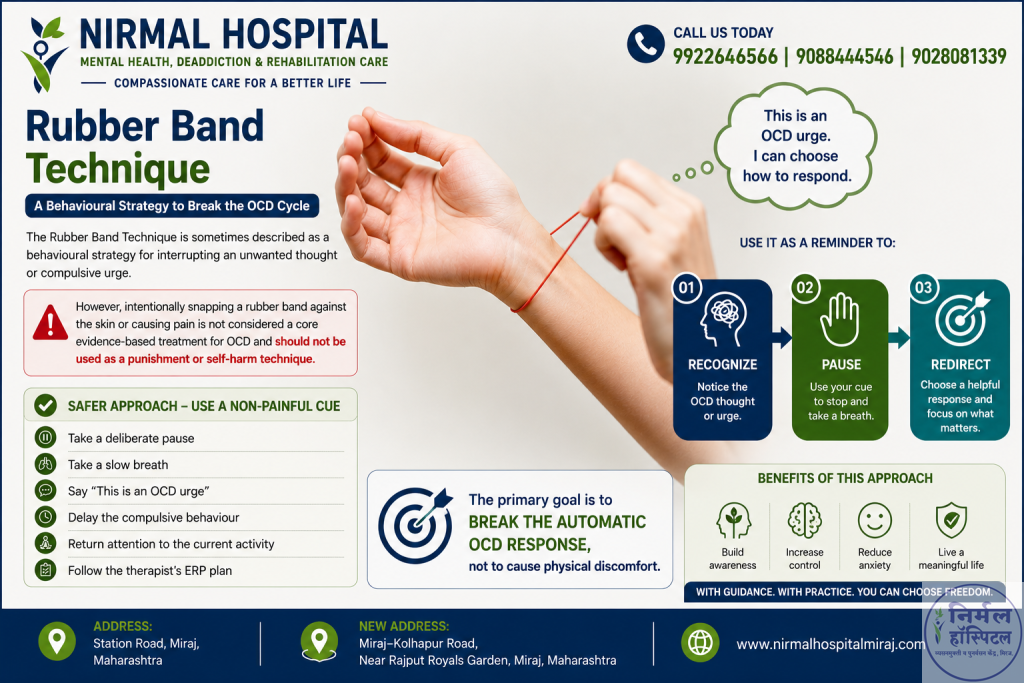
The Rubber Band Technique is sometimes described as a behavioural strategy for interrupting an unwanted thought or compulsive urge. In this approach, a person may use a rubber band around the wrist as a reminder to recognize the OCD urge and pause before responding to it.
However, intentionally snapping a rubber band against the skin or causing pain is not considered a core evidence-based treatment for OCD and should not be used as a punishment or self-harm technique.
A safer approach is to use a non-painful cue, such as:
- Taking a deliberate pause
- Taking a slow breath
- Saying “This is an OCD urge”
- Delaying the compulsive behaviour
- Returning attention to the current activity
- Following the therapist’s ERP plan
The primary goal is to break the automatic OCD response, not to cause physical discomfort.
4. Flooding
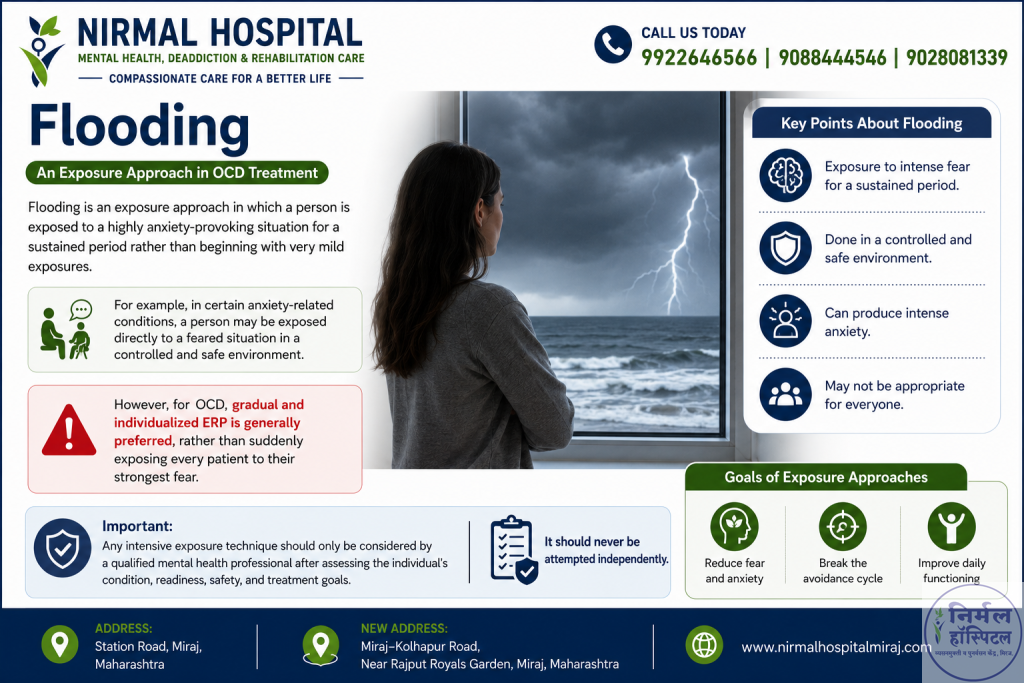
Flooding is an exposure approach in which a person is exposed to a highly anxiety-provoking situation for a sustained period rather than beginning with very mild exposures.
For example, in certain anxiety-related conditions, a person may be exposed directly to a feared situation in a controlled and safe environment.
However, for OCD, gradual and individualized ERP is generally preferred, rather than suddenly exposing every patient to their strongest fear.
Flooding can produce intense anxiety and may not be appropriate for everyone.
Important: Any intensive exposure technique should only be considered by a qualified mental health professional after assessing the individual’s condition, readiness, safety, and treatment goals. It should never be attempted independently.
5. Modelling
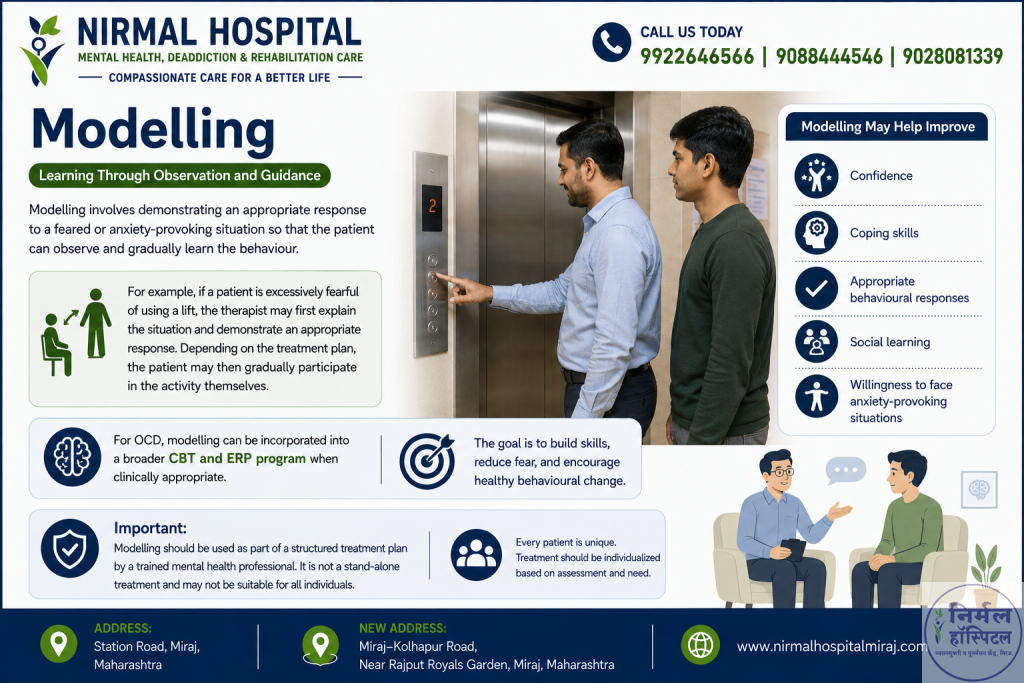
Modelling involves demonstrating an appropriate response to a feared or anxiety-provoking situation so that the patient can observe and gradually learn the behaviour.
For example, if a patient is excessively fearful of using a lift, the therapist may first explain the situation and demonstrate an appropriate response. Depending on the treatment plan, the patient may then gradually participate in the activity themselves.
Modelling may help improve:
- Confidence
- Coping skills
- Appropriate behavioural responses
- Social learning
- Willingness to face anxiety-provoking situations
For OCD, modelling can be incorporated into a broader CBT and ERP program when clinically appropriate.
Combination of CBT Techniques
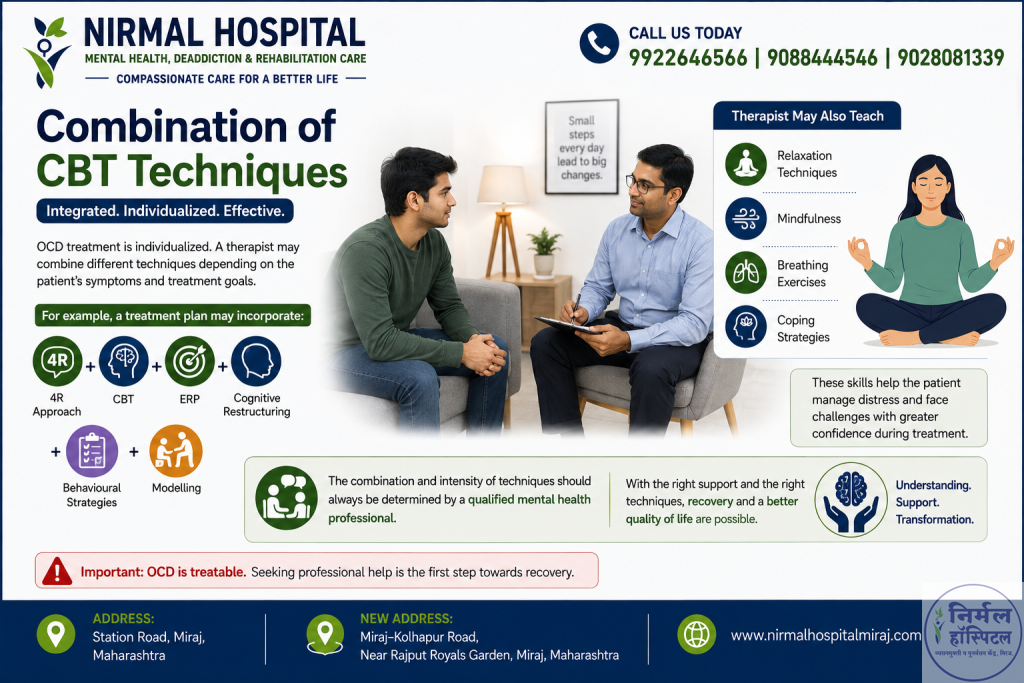
OCD treatment is individualized. A therapist may combine different techniques depending on the patient’s symptoms and treatment goals.
For example, a treatment plan may incorporate:
4R Approach + CBT + ERP + Cognitive Restructuring + Behavioural Strategies + Modelling
The therapist may also teach appropriate relaxation, mindfulness, breathing, and coping strategies to help the patient manage distress during treatment.
The combination and intensity of techniques should always be determined by a qualified mental health professional.
The Goal of CBT in OCD
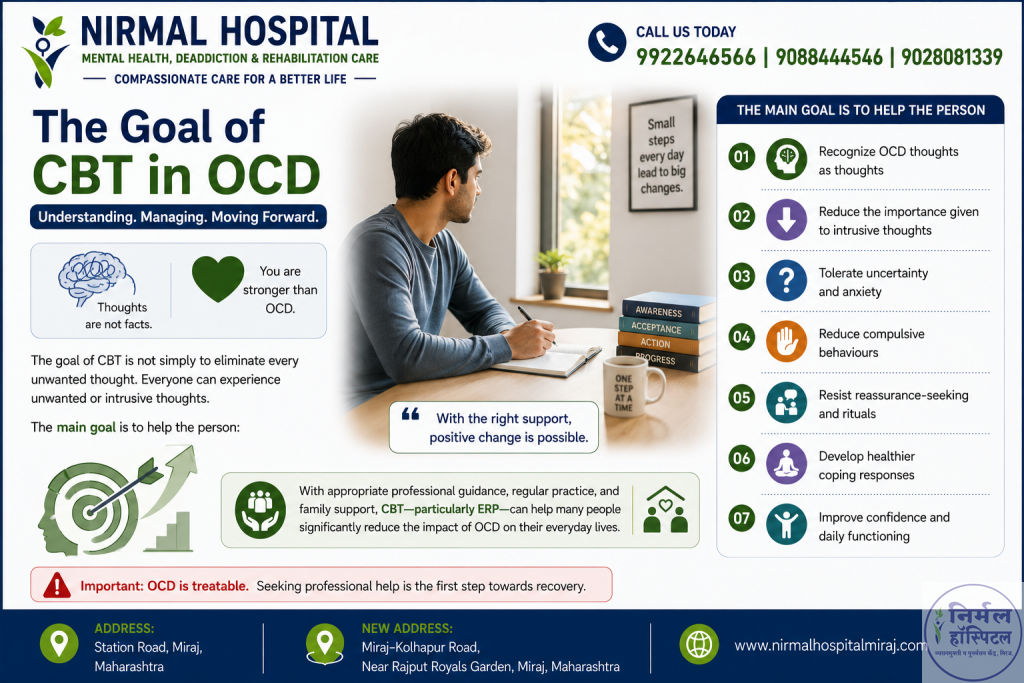
The goal of CBT is not simply to eliminate every unwanted thought. Everyone can experience unwanted or intrusive thoughts.
The main goal is to help the person:
- Recognize OCD thoughts as thoughts
- Reduce the importance given to intrusive thoughts
- Tolerate uncertainty and anxiety
- Reduce compulsive behaviours
- Resist reassurance-seeking and rituals
- Develop healthier coping responses
- Improve confidence and daily functioning
With appropriate professional guidance, regular practice, and family support, CBT—particularly ERP—can help many people significantly reduce the impact of OCD on their everyday lives.
Counseling for OCD
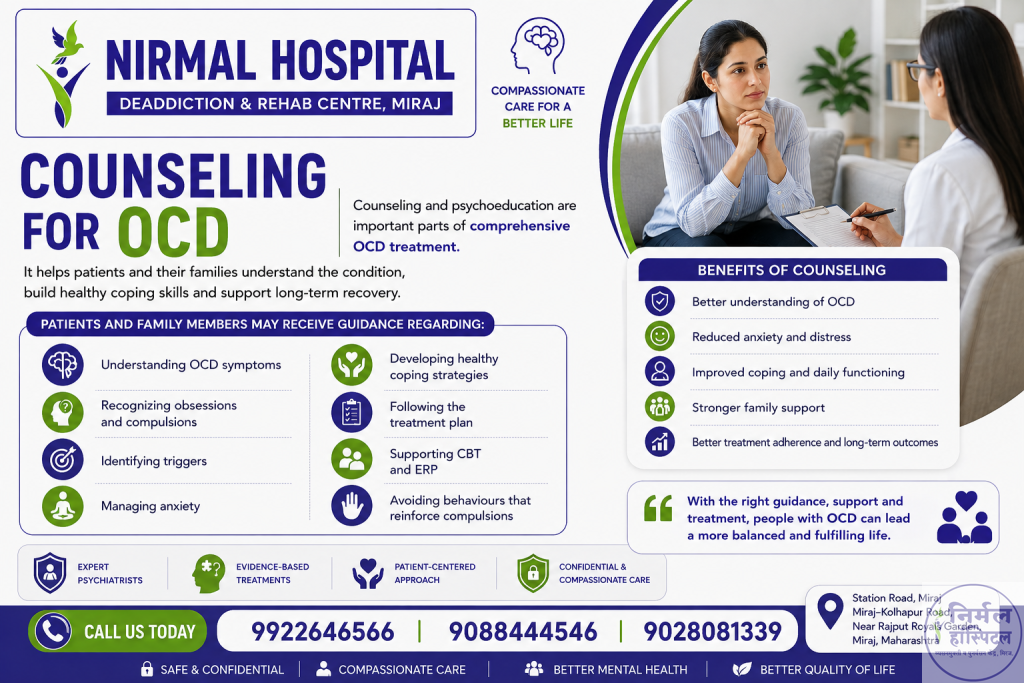
Counseling and psychoeducation are important parts of comprehensive OCD treatment.
Patients and family members may receive guidance regarding:
- Understanding OCD symptoms
- Recognizing obsessions and compulsions
- Identifying triggers
- Managing anxiety
- Developing healthy coping strategies
- Following the treatment plan
- Supporting CBT and ERP
- Avoiding behaviours that reinforce compulsions
Family Support in OCD Treatment
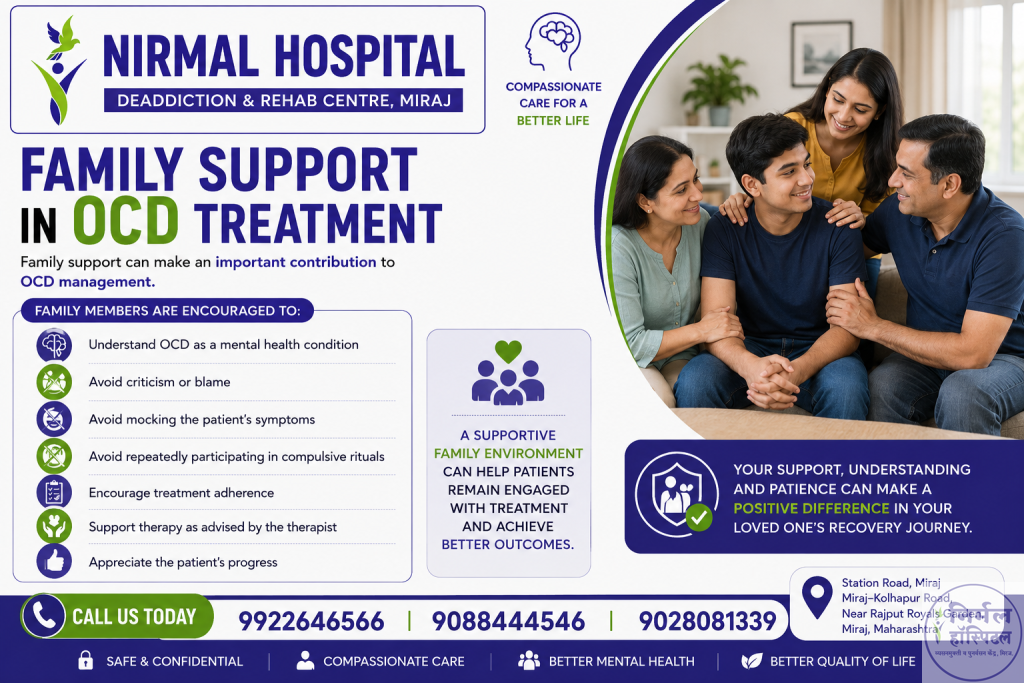
Family support can make an important contribution to OCD management.
Family members are encouraged to:
- Understand OCD as a mental health condition
- Avoid criticism or blame
- Avoid mocking the patient’s symptoms
- Avoid repeatedly participating in compulsive rituals
- Encourage treatment adherence
- Support therapy as advised by the therapist
- Appreciate the patient’s progress
A supportive family environment can help patients remain engaged with treatment.
Integrated OCD Treatment
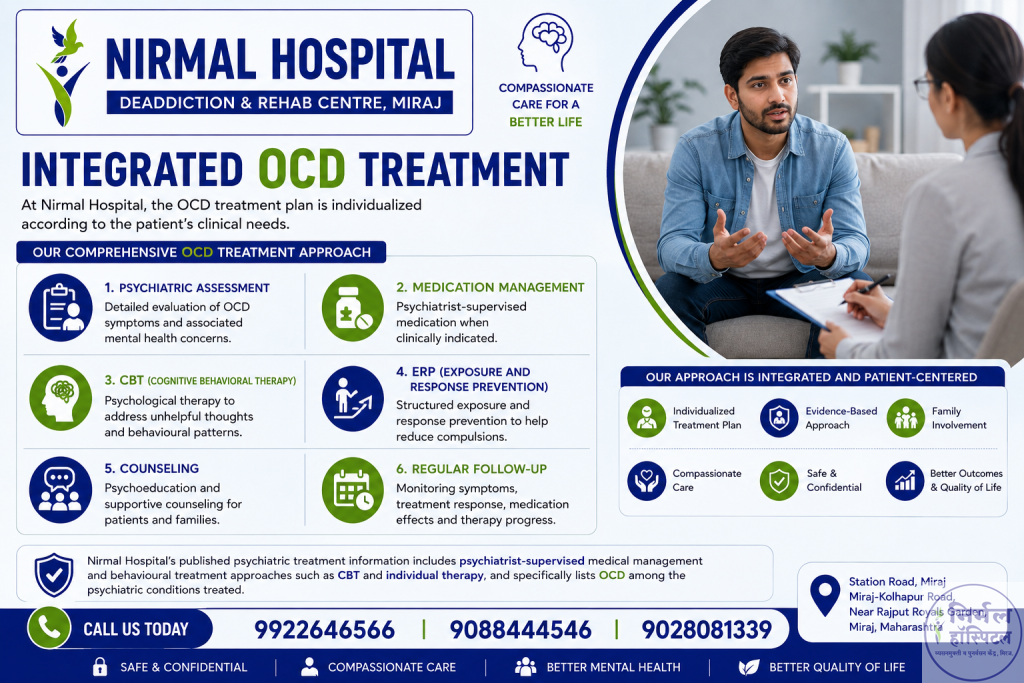
At Nirmal Hospital, the OCD treatment plan is individualized according to the patient’s clinical needs.
Treatment may include:
Psychiatric Assessment
Detailed evaluation of OCD symptoms and associated mental health concerns.
Medication Management
Psychiatrist-supervised medication when clinically indicated.
CBT
Psychological therapy to address unhelpful thoughts and behavioural patterns.
ERP
Structured exposure and response prevention to help reduce compulsions.
Counseling
Psychoeducation and supportive counseling for patients and families.
Regular Follow-up
Monitoring symptoms, treatment response, medication effects and therapy progress.
Nirmal Hospital’s published psychiatric treatment information includes psychiatrist-supervised medical management and behavioural treatment approaches such as CBT and individual therapy, and specifically lists OCD among the psychiatric conditions treated.
Does OCD Require Hospital Admission?
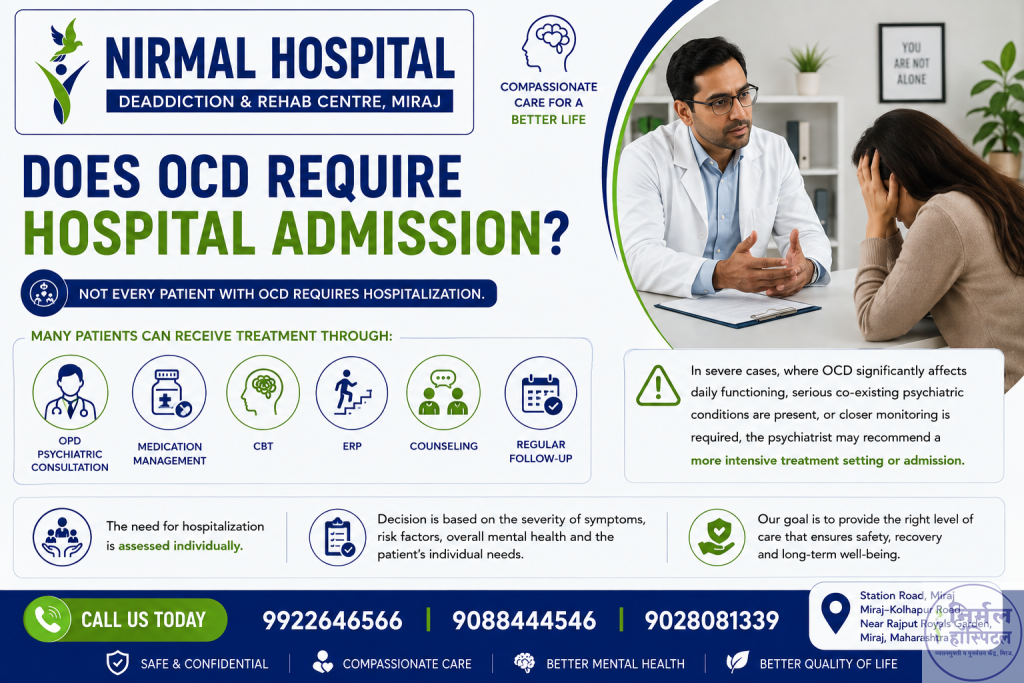
Not every patient with OCD requires hospitalization.
Many patients can receive treatment through:
- OPD psychiatric consultation
- Medication management
- CBT
- ERP
- Counseling
- Regular follow-up
In severe cases, where OCD significantly affects daily functioning, serious co-existing psychiatric conditions are present, or closer monitoring is required, the psychiatrist may recommend a more intensive treatment setting or admission.
The need for hospitalization is assessed individually.
How Long Does OCD Treatment Take?
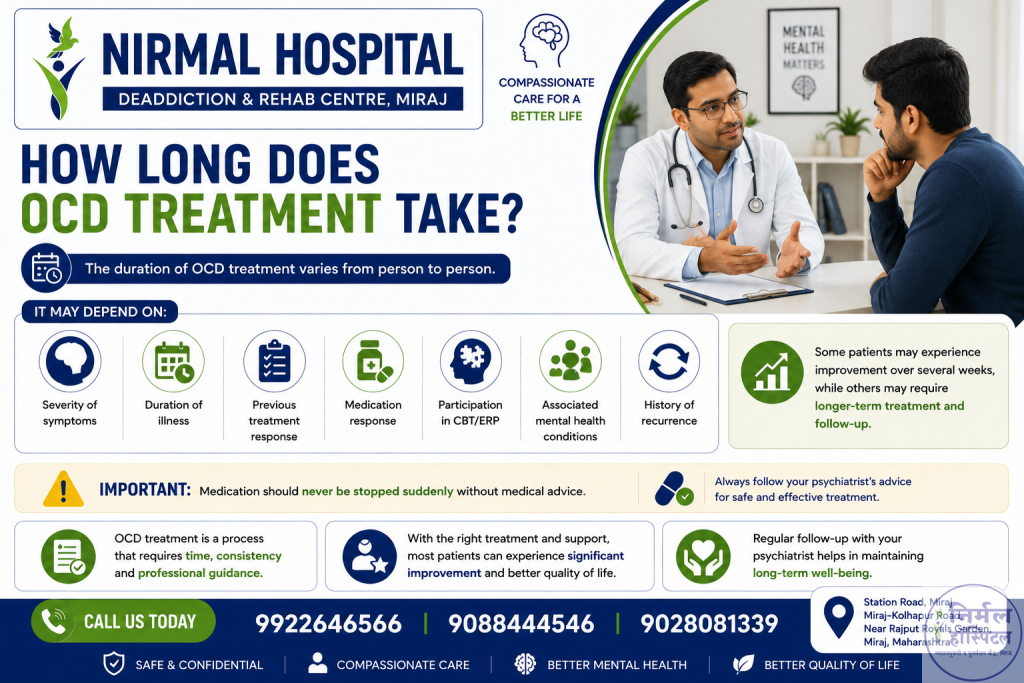
The duration of OCD treatment varies from person to person.
It may depend on:
- Severity of symptoms
- Duration of illness
- Previous treatment response
- Medication response
- Participation in CBT/ERP
- Associated mental health conditions
- History of recurrence
Some patients may experience improvement over several weeks, while others may require longer-term treatment and follow-up.
Medication should never be stopped suddenly without medical advice.
Can OCD Come Back After Treatment?
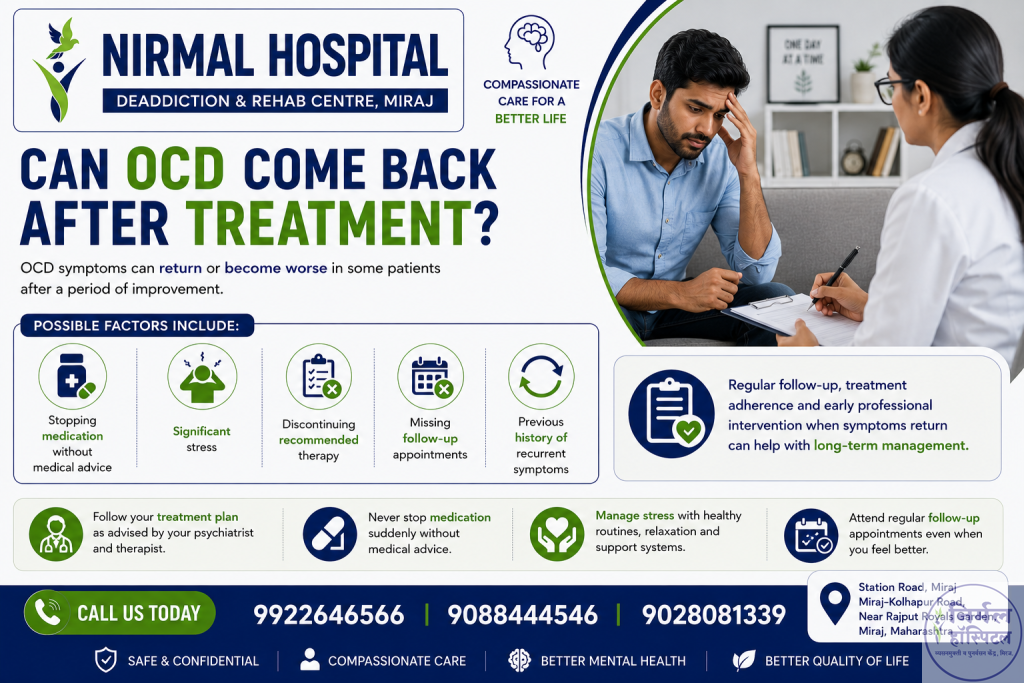
OCD symptoms can return or become worse in some patients after a period of improvement.
Possible factors include:
- Stopping medication without medical advice
- Significant stress
- Discontinuing recommended therapy
- Missing follow-up appointments
- Previous history of recurrent symptoms
Regular follow-up, treatment adherence and early professional intervention when symptoms return can help with long-term management.
When Should You Search for OCD Treatment Near Me?
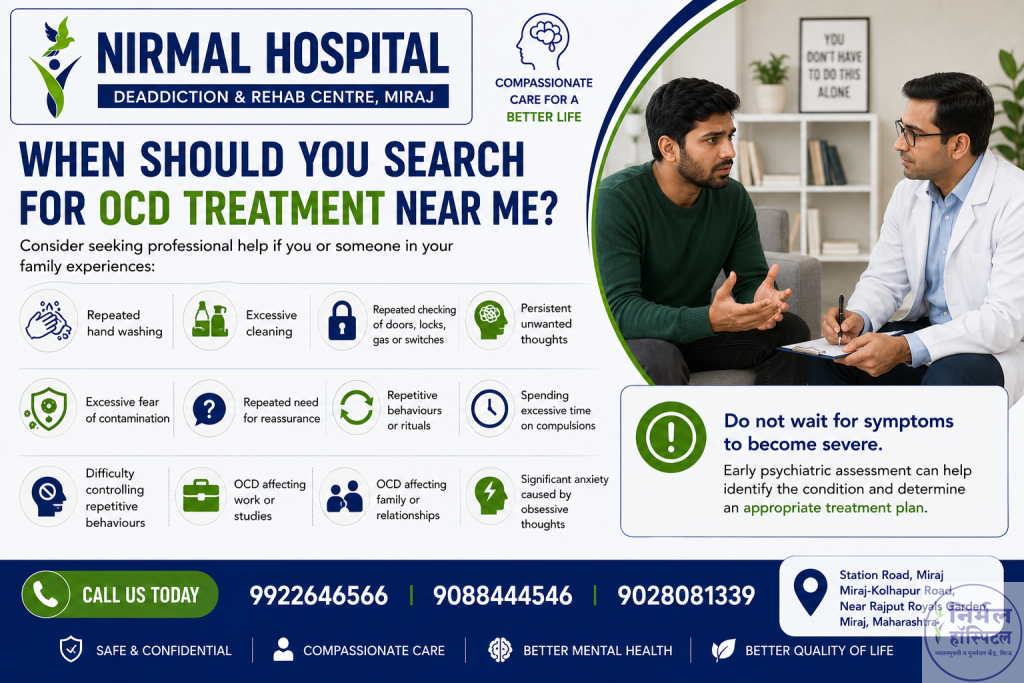
Consider seeking professional help if you or someone in your family experiences:
- Repeated hand washing
- Excessive cleaning
- Repeated checking of doors, locks, gas or switches
- Persistent unwanted thoughts
- Excessive fear of contamination
- Repeated need for reassurance
- Repetitive behaviours or rituals
- Spending excessive time on compulsions
- Difficulty controlling repetitive behaviours
- OCD affecting work or studies
- OCD affecting family or relationships
- Significant anxiety caused by obsessive thoughts
Do not wait for symptoms to become severe. Early psychiatric assessment can help identify the condition and determine an appropriate treatment plan.
Why Choose Nirmal Hospital for OCD Treatment?
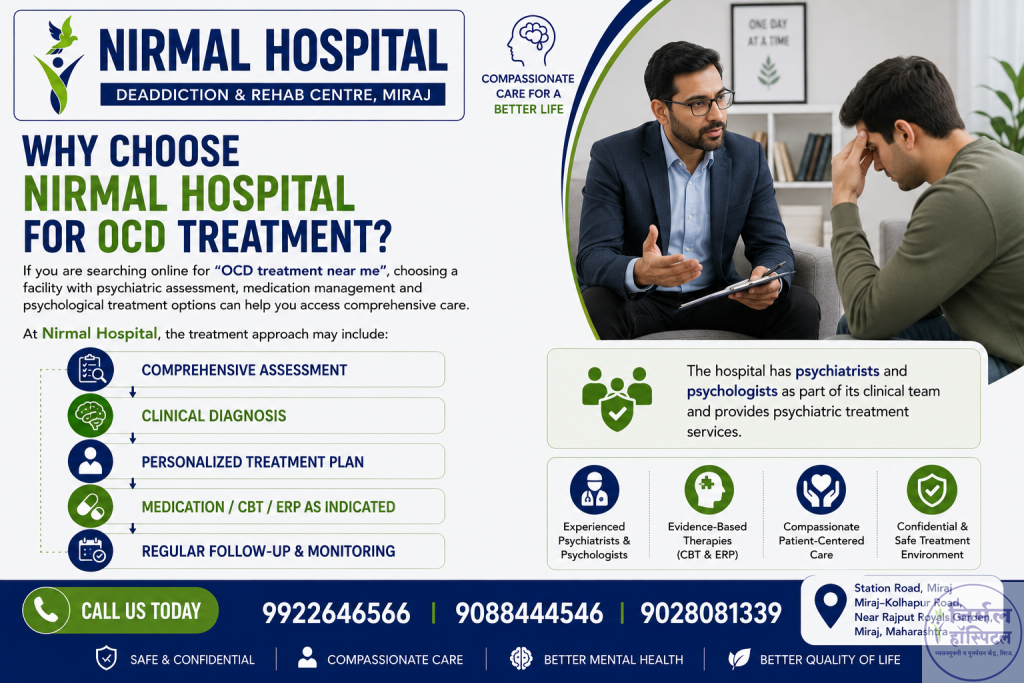
If you are searching online for “OCD treatment near me”, choosing a facility with psychiatric assessment, medication management and psychological treatment options can help you access comprehensive care.
At Nirmal Hospital, the treatment approach may include:
Comprehensive Assessment
↓
Clinical Diagnosis
↓
Personalized Treatment Plan
↓
Medication / CBT / ERP as Indicated
↓
Regular Follow-up & Monitoring
The hospital has psychiatrists and psychologists as part of its clinical team and provides psychiatric treatment services.
Frequently Asked Questions About OCD Treatment
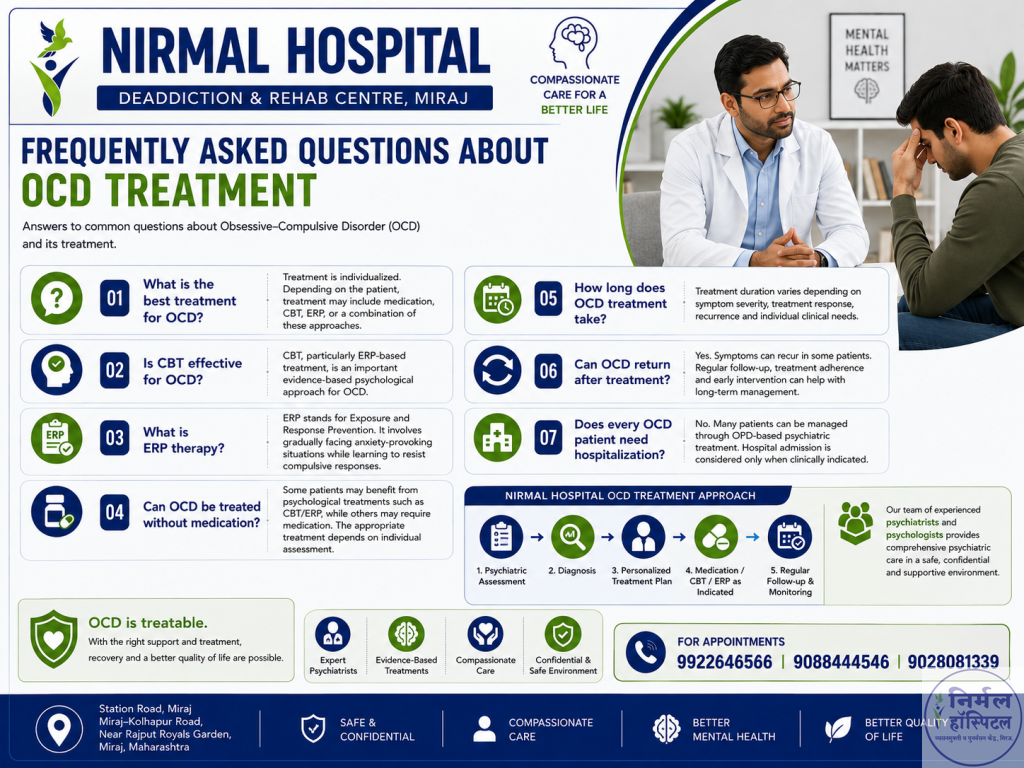
What is the best treatment for OCD?
Treatment is individualized. Depending on the patient, treatment may include medication, CBT, ERP, or a combination of these approaches.
Is CBT effective for OCD?
CBT, particularly ERP-based treatment, is an important evidence-based psychological approach for OCD.
What is ERP therapy?
ERP stands for Exposure and Response Prevention. It involves gradually facing anxiety-provoking situations while learning to resist compulsive responses.
Can OCD be treated without medication?
Some patients may benefit from psychological treatments such as CBT/ERP, while others may require medication. The appropriate treatment depends on individual assessment.
How long does OCD treatment take?
Treatment duration varies depending on symptom severity, treatment response, recurrence and individual clinical needs.
Can OCD return after treatment?
Yes. Symptoms can recur in some patients. Regular follow-up, treatment adherence and early intervention can help with long-term management.
Does every OCD patient need hospitalization?
No. Many patients can be managed through OPD-based psychiatric treatment. Hospital admission is considered only when clinically indicated.
Get OCD Treatment Near You
If obsessive thoughts, anxiety or repetitive behaviours are affecting your daily life, professional help is available.
At Nirmal Hospital, treatment focuses on:
Accurate Assessment + Personalized Treatment + Medication / CBT / ERP + Regular Follow-up
Nirmal Hospital
Address:
Station Road, Miraj, Maharashtra
New Address:
Miraj–Kolhapur Road, Near Rajput Royals Garden, Miraj, Maharashtra
Contact:
9922646566 | 9088444546 | 9028081339
OPD & Psychiatric Treatment Services Available
Nirmal Hospital – Mental Health, Deaddiction & Rehabilitation Care
OCD may occur with anxiety, depression, or other mental health conditions. Explore our Anxiety Treatment, Depression Treatment, Psychiatric Treatment, and rTMS Treatment services, or Contact Nirmal Hospital for a consultation.
You can also learn more about OCD symptoms, treatment and management through the Nirmal Hospital YouTube Channel. [Click Here to Watch Our OCD Videos]


