


Dementia Symptoms, Diagnosis and Treatment in Miraj
Changes in memory, thinking and behaviour can affect everyday life and create concern for families. Occasional forgetfulness does not always indicate dementia, but persistent or worsening difficulties deserve a medical assessment.
If you are looking for dementia treatment in Miraj, contact Nirmal Hospital to discuss memory-related concerns, assessment and suitable care options.
What Is Dementia?
Dementia describes a group of symptoms caused by diseases that affect the brain. These symptoms can interfere with memory, communication, judgement, behaviour and the ability to manage daily activities independently.
Dementia is not a normal part of ageing. Although it is more common in older adults, younger people can also develop dementia. Symptoms and their progression vary depending on the underlying condition.
Common Types of Dementia
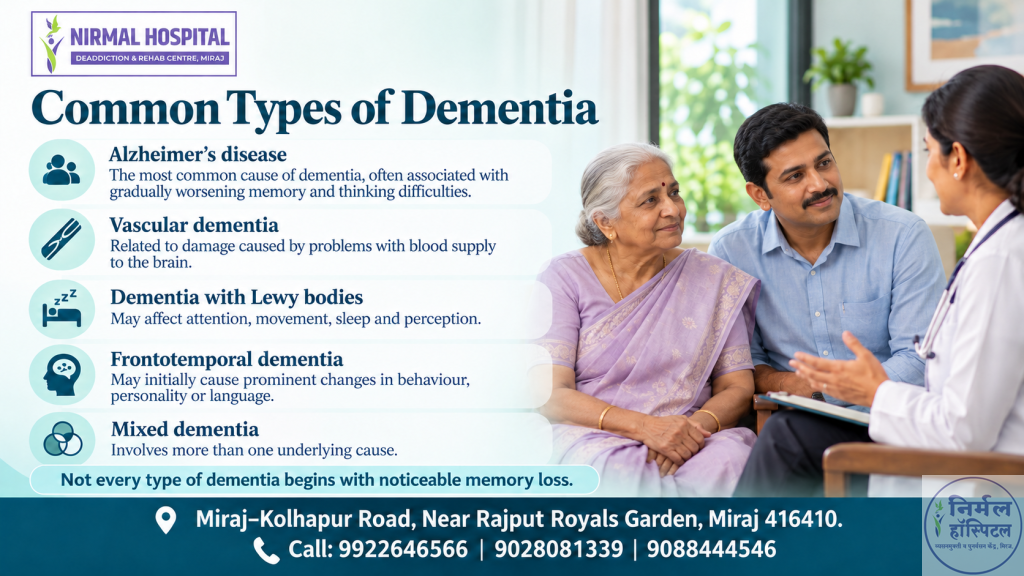
- Alzheimer’s disease: The most common cause of dementia, often associated with gradually worsening memory and thinking difficulties.
- Vascular dementia: Related to damage caused by problems with blood supply to the brain.
- Dementia with Lewy bodies: May affect attention, movement, sleep and perception.
- Frontotemporal dementia: May initially cause prominent changes in behaviour, personality or language.
- Mixed dementia: Involves more than one underlying cause.
Not every type of dementia begins with noticeable memory loss.
Early Signs and Symptoms of Dementia
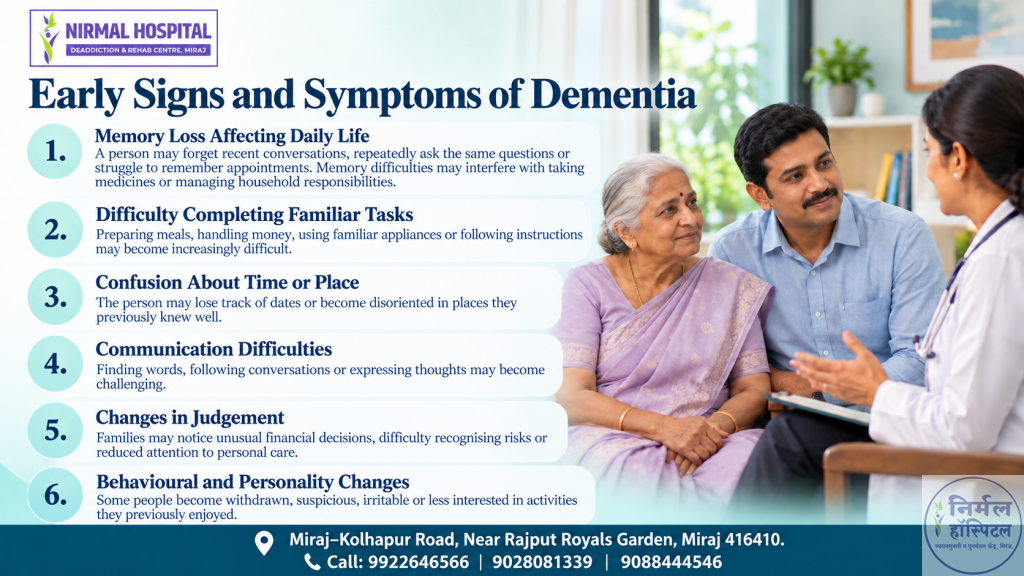
1. Memory Loss Affecting Daily Life
A person may forget recent conversations, repeatedly ask the same questions or struggle to remember appointments. Memory difficulties may interfere with taking medicines or managing household responsibilities.
2. Difficulty Completing Familiar Tasks
Preparing meals, handling money, using familiar appliances or following instructions may become increasingly difficult.
3. Confusion About Time or Place
The person may lose track of dates or become disoriented in places they previously knew well.
4. Communication Difficulties
Finding words, following conversations or expressing thoughts may become challenging.
5. Changes in Judgement
Families may notice unusual financial decisions, difficulty recognising risks or reduced attention to personal care.
6. Behavioural and Personality Changes
Some people become withdrawn, suspicious, irritable or less interested in activities they previously enjoyed.
When Should You Seek Medical Help?
Arrange an assessment when changes in memory, thinking or behaviour are persistent, worsening or affecting independence. Observations from a trusted family member can help explain how daily functioning has changed.
Sudden confusion requires urgent medical attention. Confusion developing over hours or days should not be assumed to be dementia or its usual progression. It may indicate delirium or another acute medical condition.
Dementia Diagnosis in Miraj
Assessment aims to understand the symptoms, identify possible causes and determine the support required. A diagnosis is based on several sources of information rather than a single screening score.
Medical History and Family Observations
The clinician asks about:
- When symptoms began and how they have changed.
- Their effect on daily activities and independence.
- Existing medical conditions and current medicines.
- Sleep, mood and behavioural changes.
- Relevant observations from family members or caregivers.
Memory and Thinking Assessment
Structured assessments may examine memory, attention, language and problem-solving. Results should be interpreted in the context of the person’s education, language, hearing and vision.
Physical Examination and Investigations
A physical examination and selected blood tests may help identify contributing conditions. CT or MRI scans may be recommended depending on the clinical findings.
Specialist assessment may be required to clarify the underlying cause. Not everyone needs every investigation.
Can Other Conditions Cause Memory Problems?
Yes. Depression, sleep problems, medication effects, thyroid disorders and vitamin deficiencies can cause or contribute to memory difficulties.
Some contributing causes are treatable. These conditions can also coexist with dementia, which makes a thorough assessment important.
Dementia Treatment and Management
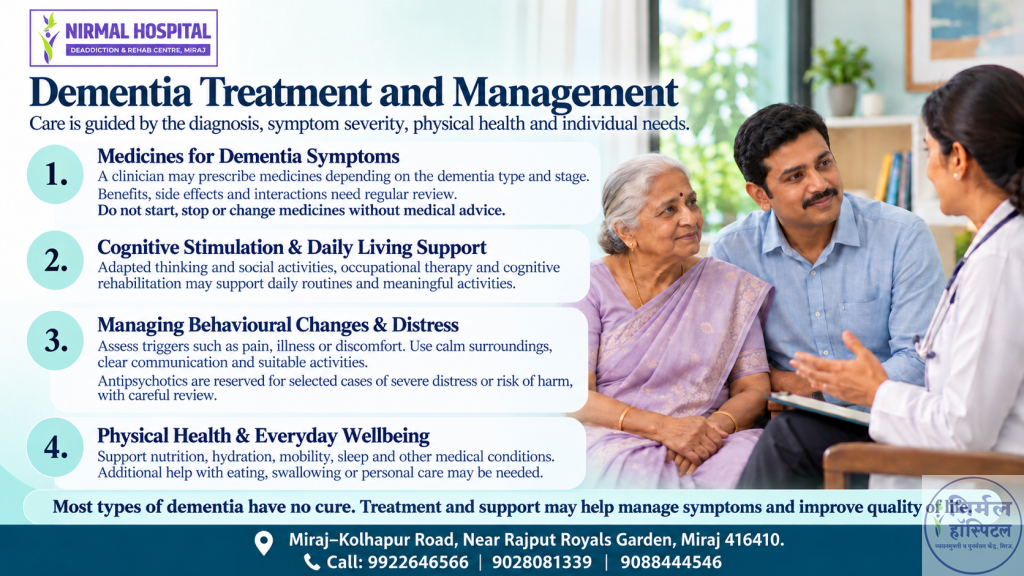
Dementia treatment in Miraj should be guided by the diagnosis, symptom severity, physical health and individual care needs.
There is currently no cure for most types of dementia. However, treatment and practical support can help manage symptoms, support daily functioning and improve quality of life.
Medicines for Dementia Symptoms
Depending on the dementia type and stage, a clinician may consider medicines such as donepezil, rivastigmine, galantamine or memantine.
These medicines may help some symptoms but do not cure dementia. They are not appropriate for every dementia subtype, and benefits, side effects and interactions require regular review.
Do not start, stop or change medicines without medical advice.
Cognitive Stimulation and Daily Living Support
Structured cognitive stimulation may be appropriate for people with mild to moderate dementia. Activities can involve conversation, thinking and social engagement adapted to the person’s abilities.
Occupational therapy or cognitive rehabilitation may support practical goals, such as maintaining familiar routines and participating in everyday tasks. These approaches do not guarantee restoration of lost memory.
Managing Behavioural Changes and Distress
Agitation, restlessness or changes in sleep should prompt assessment for possible triggers, including pain, illness, discomfort or communication difficulties.
Support may include maintaining a calm environment, using clear communication and offering suitable activities.
Antipsychotic medicines are reserved for selected situations involving severe distress or risk of harm. Their benefits and risks require careful discussion and ongoing review.
Physical Health and Everyday Wellbeing
Care should include attention to nutrition, hydration, mobility, sleep and accompanying medical conditions. Physical activity should match the person’s abilities and health.
Some people may need additional support with eating, communication, swallowing or personal care. Specialist referrals depend on individual needs.
Family Education and Caregiver Support
Dementia affects both the person and those supporting them. Families may benefit from guidance on communication, daily routines, recognising distress and planning future care.
Shared responsibilities and appropriate breaks can help caregivers manage ongoing demands. The person living with dementia should remain involved in decisions as much as possible.
Regular Follow-Up and Care Planning
Follow-up appointments help review symptoms, medicine effects, daily functioning and caregiver concerns. Care needs may change over time, requiring adjustments to treatment and support.
Planning should focus on the person’s comfort, dignity, preferences and safety.
Preparing for a Memory Assessment
Bring the following to your appointment:
- A list of current medicines and supplements.
- Previous medical reports and relevant investigations.
- Examples of changes in memory, behaviour or daily functioning.
- A trusted family member or caregiver, with the person’s agreement.
Frequently Asked Questions
Is forgetfulness always a sign of dementia?
No. Forgetfulness can have several causes. Persistent or worsening problems that affect daily life should be assessed.
Are Alzheimer’s disease and dementia the same?
Dementia describes a group of symptoms affecting thinking and daily functioning. Alzheimer’s disease is one cause of dementia.
Can dementia be cured?
Most types currently have no cure. Treatment focuses on managing symptoms, supporting independence and maintaining quality of life.
Can younger adults develop dementia?
Yes. Although dementia is more common in older adults, it can also occur in younger people.
Does sudden confusion mean dementia is getting worse?
Not necessarily. Sudden confusion may indicate an acute medical problem and requires urgent assessment.
Contact Nirmal Hospital for Dementia Care in Miraj
If you or a family member is experiencing changes in memory, thinking or behaviour, contact Nirmal Hospital, Miraj, to discuss assessment, treatment options and appropriate referrals.
Appointment Button: Book a Consultation
This content is for educational purposes and does not replace an individual medical assessment. Treatment needs and responses vary.


