

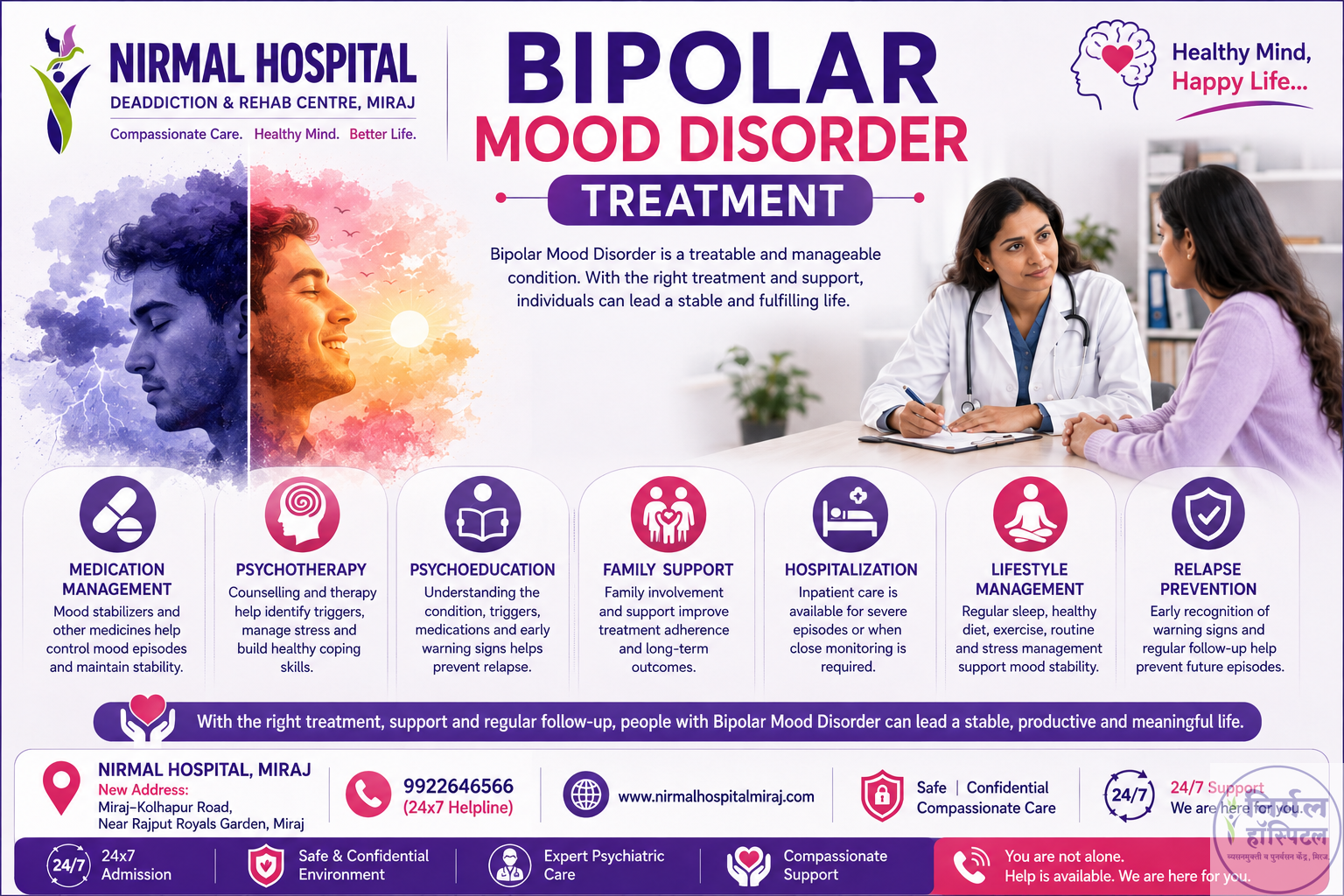
Bipolar Mood Disorder Treatment
Bipolar Mood Disorder is a treatable and manageable mental health condition. Treatment focuses on managing episodes of mania, hypomania and depression, maintaining mood stability and reducing the risk of future episodes.
The treatment plan is individualized according to the person’s symptoms, type of Bipolar Mood Disorder, severity, previous episodes, physical health, substance use and response to previous treatment.
Treatment may include medication, psychotherapy, psychoeducation, family support, lifestyle management, inpatient care when required and regular psychiatric follow-up.
Goals of Bipolar Mood Disorder Treatment
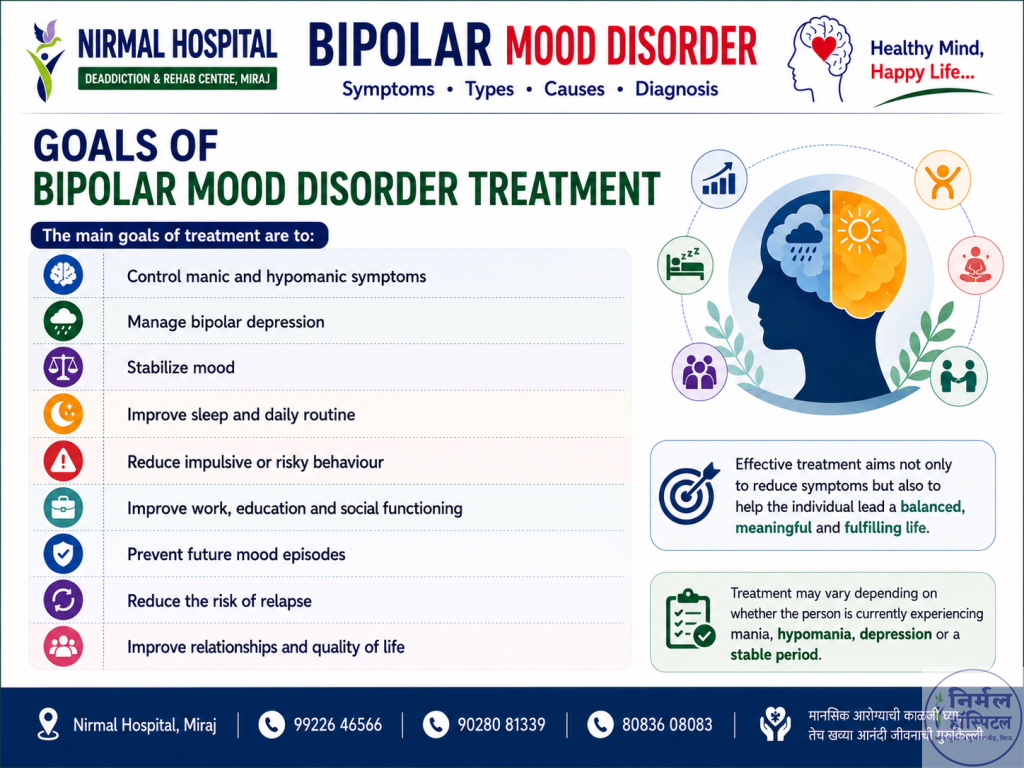
The main goals of treatment are to:
- Control manic and hypomanic symptoms
- Manage bipolar depression
- Stabilize mood
- Improve sleep and daily routine
- Reduce impulsive or risky behaviour
- Improve work, education and social functioning
- Prevent future mood episodes
- Reduce the risk of relapse
- Improve relationships and quality of life
Treatment may vary depending on whether the person is currently experiencing mania, hypomania, depression or a stable period.
Treatment of Mania
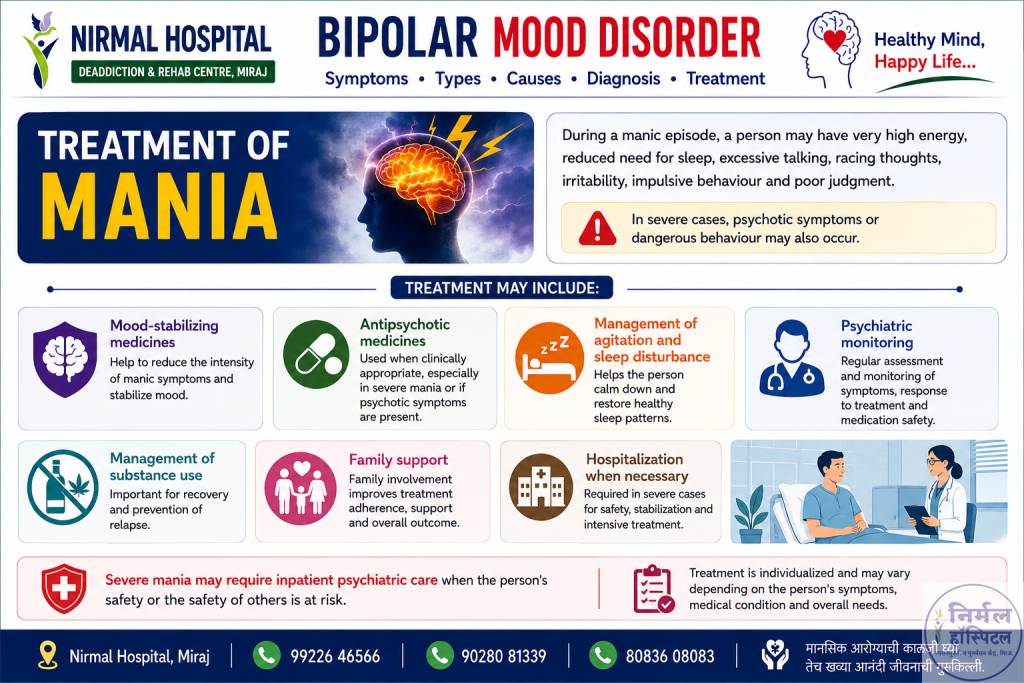
During a manic episode, a person may have very high energy, reduced need for sleep, excessive talking, racing thoughts, irritability, impulsive behaviour and poor judgment.
In severe cases, psychotic symptoms or dangerous behaviour may also occur.
Treatment may include:
- Mood-stabilizing medicines
- Antipsychotic medicines when clinically appropriate
- Management of agitation and sleep disturbance
- Psychiatric monitoring
- Management of substance use
- Family support
- Hospitalization when necessary
Severe mania may require inpatient psychiatric care when the person’s safety or the safety of others is at risk.
Treatment of Bipolar Depression
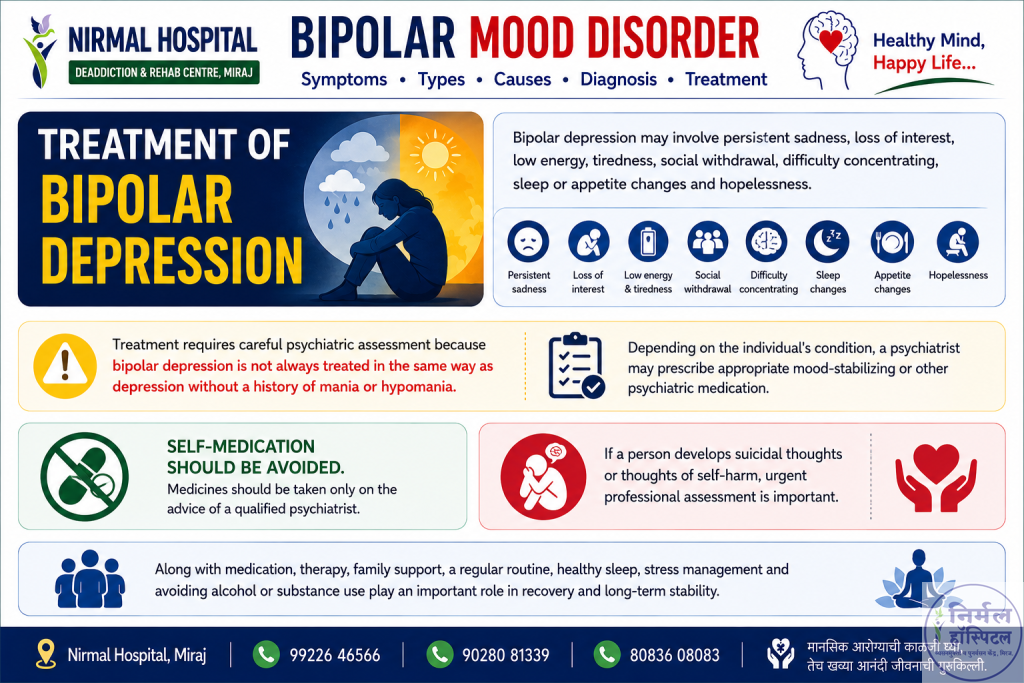
Bipolar depression may involve persistent sadness, loss of interest, low energy, tiredness, social withdrawal, difficulty concentrating, sleep or appetite changes and hopelessness.
Treatment requires careful psychiatric assessment because bipolar depression is not always treated in the same way as depression without a history of mania or hypomania.
Depending on the individual’s condition, a psychiatrist may prescribe appropriate mood-stabilizing or other psychiatric medication.
Self-medication should be avoided.
If a person develops suicidal thoughts or thoughts of self-harm, urgent professional assessment is important.
Medicines Used in Bipolar Mood Disorder
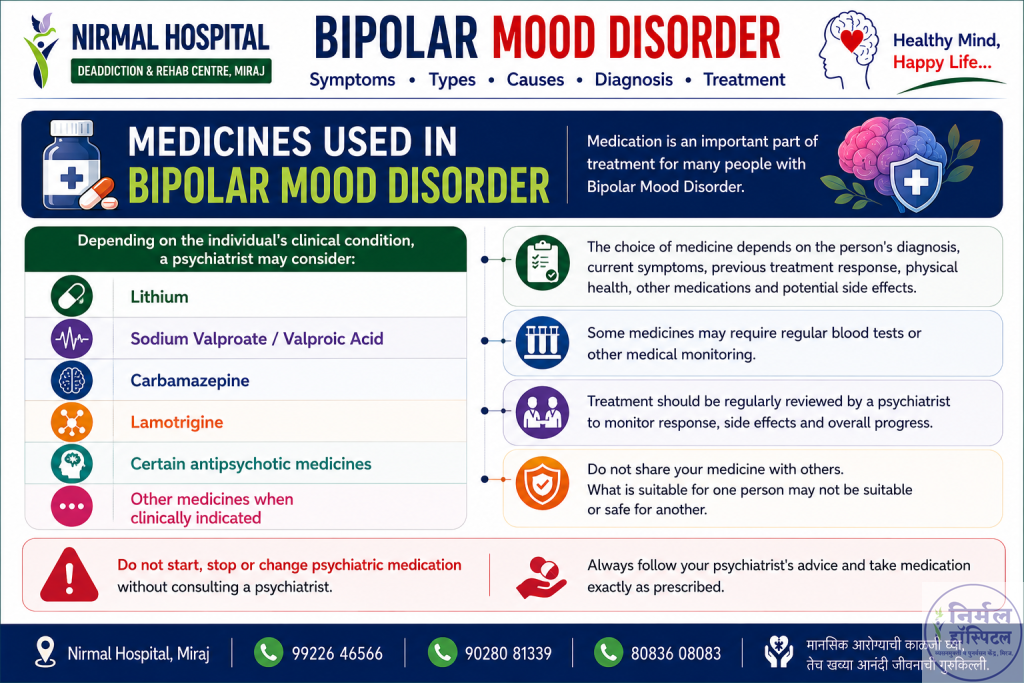
Medication is an important part of treatment for many people with Bipolar Mood Disorder.
Depending on the individual’s clinical condition, a psychiatrist may consider:
- Lithium
- Sodium Valproate / Valproic Acid
- Carbamazepine
- Lamotrigine
- Certain antipsychotic medicines
- Other medicines when clinically indicated
The choice of medicine depends on the person’s diagnosis, current symptoms, previous treatment response, physical health, other medications and potential side effects.
Some medicines may require regular blood tests or other medical monitoring.
Do not start, stop or change psychiatric medication without consulting a psychiatrist.
Psychotherapy
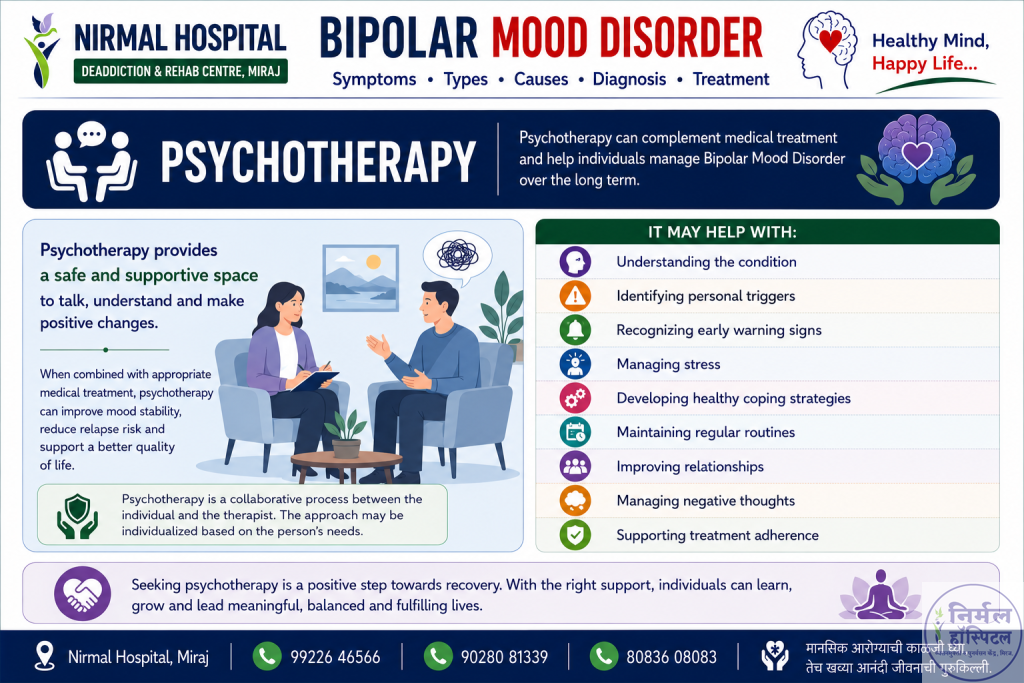
Psychotherapy can complement medical treatment and help individuals manage Bipolar Mood Disorder over the long term.
It may help with:
- Understanding the condition
- Identifying personal triggers
- Recognizing early warning signs
- Managing stress
- Developing healthy coping strategies
- Maintaining regular routines
- Improving relationships
- Managing negative thoughts
- Supporting treatment adherence
Psychoeducation
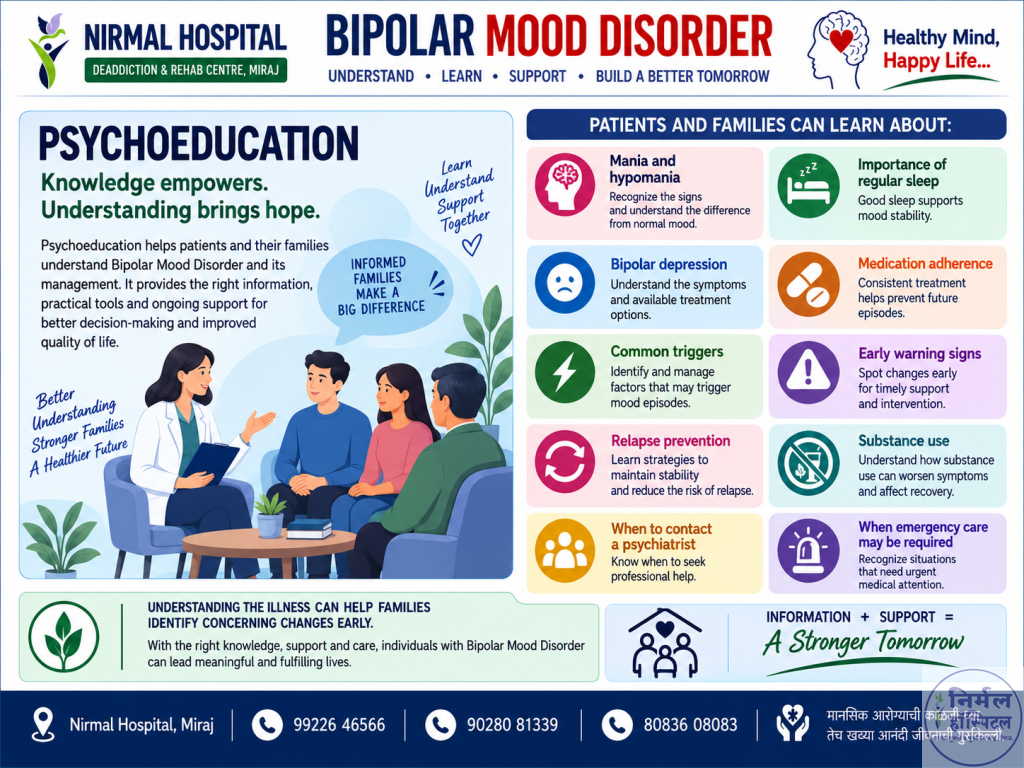
Psychoeducation helps patients and their families understand Bipolar Mood Disorder and its management.
Patients and families can learn about:
- Mania and hypomania
- Bipolar depression
- Common triggers
- Importance of regular sleep
- Medication adherence
- Early warning signs
- Relapse prevention
- Substance use
- When to contact a psychiatrist
- When emergency care may be required
Understanding the illness can help families identify concerning changes early.
Family Support
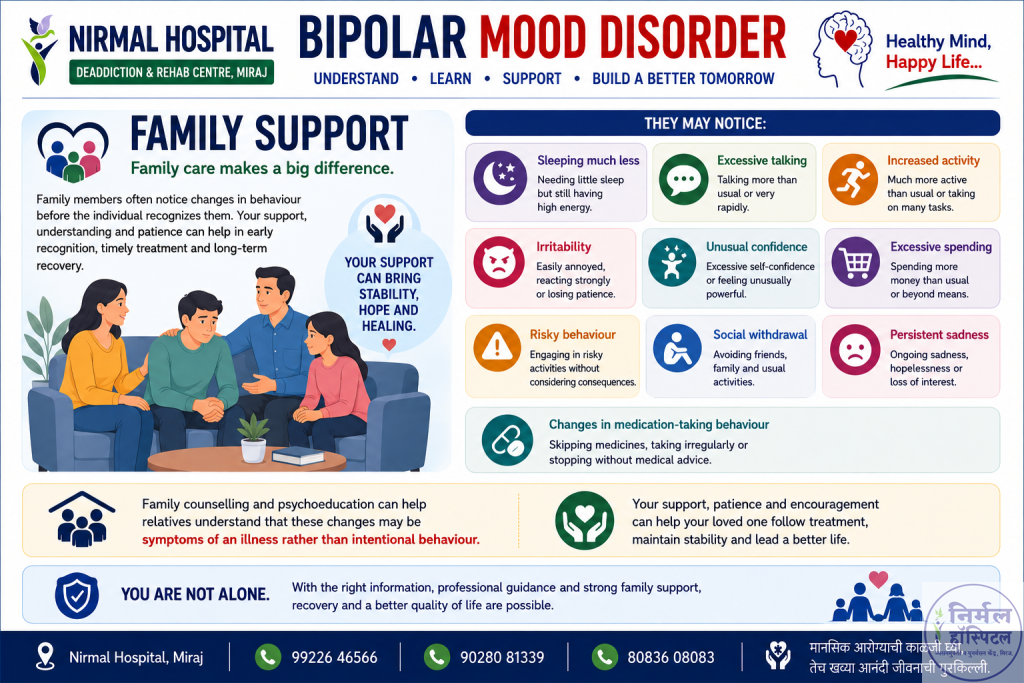
Family members often notice changes in behaviour before the individual recognizes them.
They may notice:
- Sleeping much less
- Excessive talking
- Increased activity
- Irritability
- Unusual confidence
- Excessive spending
- Risky behaviour
- Social withdrawal
- Persistent sadness
- Changes in medication-taking behaviour
Family counselling and psychoeducation can help relatives understand that these changes may be symptoms of an illness rather than intentional behaviour.
Hospitalization for Bipolar Mood Disorder
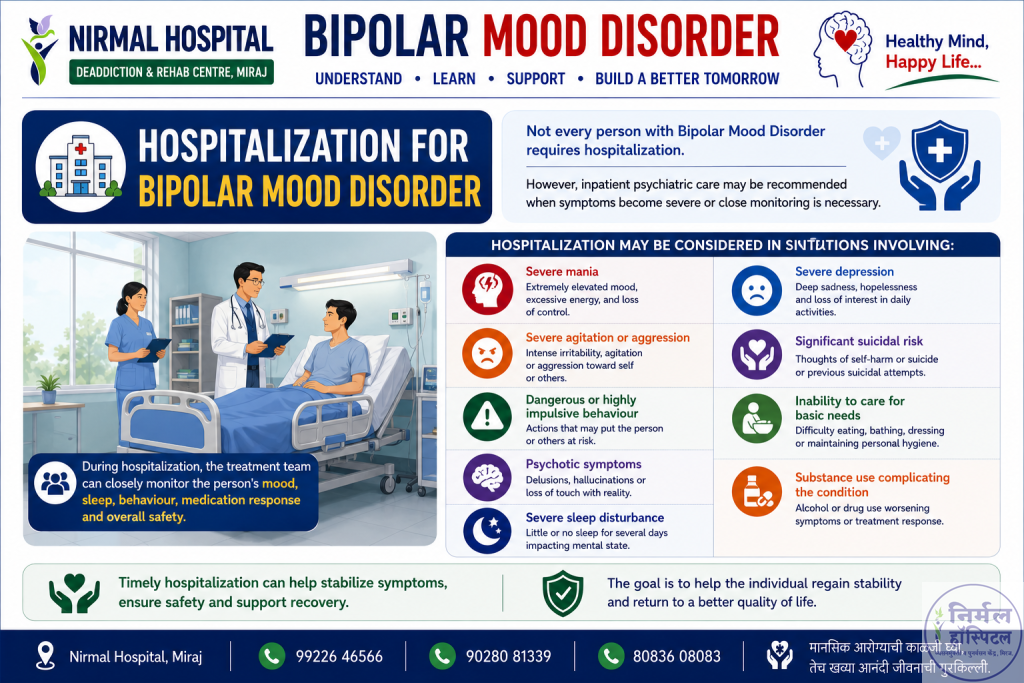
Not every person with Bipolar Mood Disorder requires hospitalization.
However, inpatient psychiatric care may be recommended when symptoms become severe or close monitoring is necessary.
Hospitalization may be considered in situations involving:
- Severe mania
- Severe agitation or aggression
- Dangerous or highly impulsive behaviour
- Psychotic symptoms
- Severe depression
- Significant suicidal risk
- Inability to care for basic needs
- Severe sleep disturbance
- Substance use complicating the condition
During hospitalization, the treatment team can closely monitor the person’s mood, sleep, behaviour, medication response and overall safety.
ECT for Severe Bipolar Mood Disorder
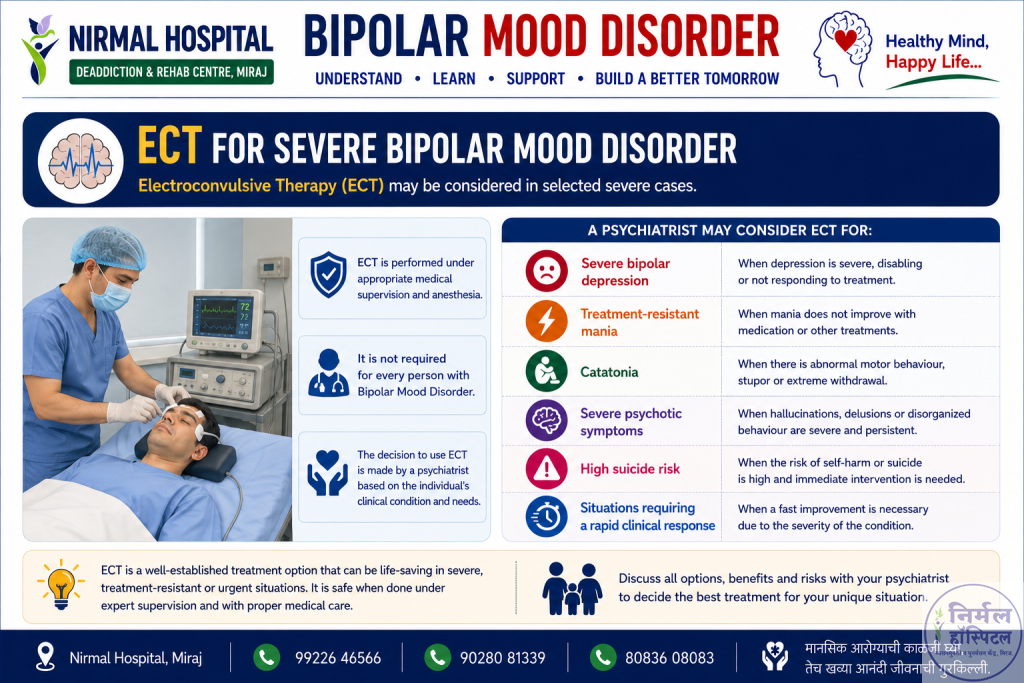
Electroconvulsive Therapy (ECT) may be considered in selected severe cases.
A psychiatrist may consider ECT for:
- Severe bipolar depression
- Treatment-resistant mania
- Catatonia
- Severe psychotic symptoms
- High suicide risk
- Situations requiring a rapid clinical response
ECT is performed under appropriate medical supervision and anesthesia.
It is not required for every person with Bipolar Mood Disorder.
Sleep Management
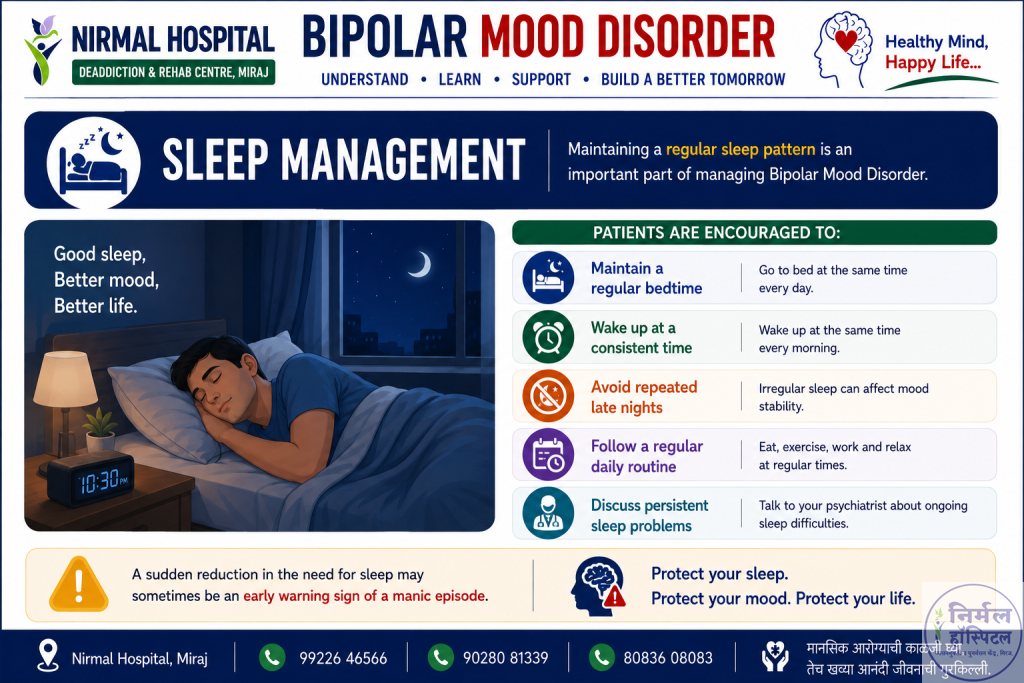
Maintaining a regular sleep pattern is an important part of managing Bipolar Mood Disorder.
Patients are encouraged to:
- Maintain a regular bedtime
- Wake up at a consistent time
- Avoid repeated late nights
- Follow a regular daily routine
- Discuss persistent sleep problems with their psychiatrist
A sudden reduction in the need for sleep may sometimes be an early warning sign of a manic episode.
Lifestyle Management
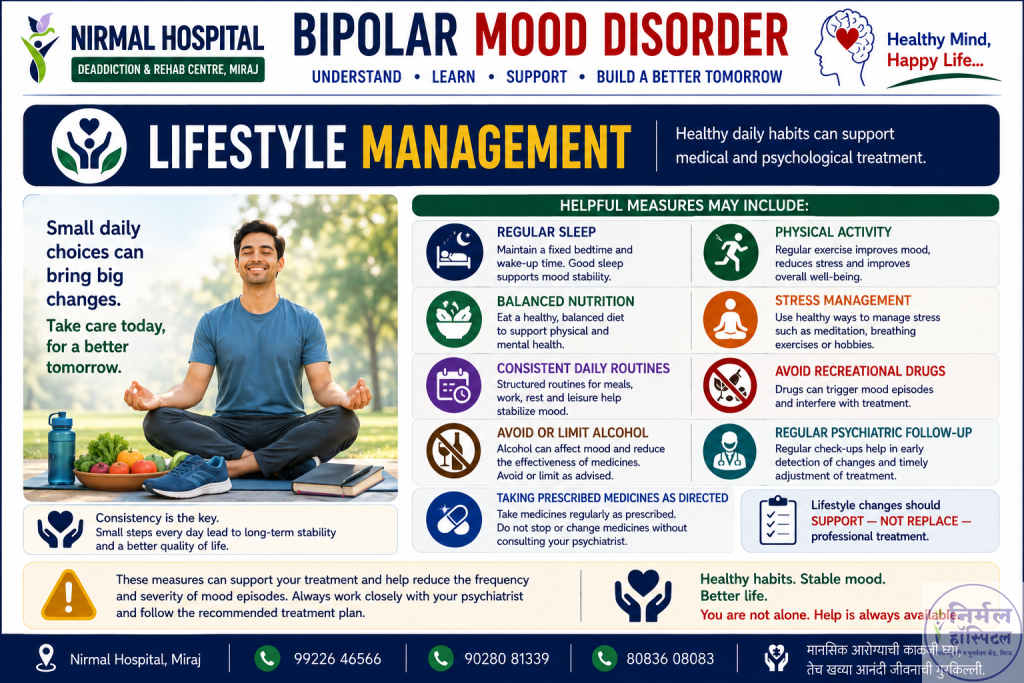
Healthy daily habits can support medical and psychological treatment.
Helpful measures may include:
- Regular sleep
- Physical activity
- Balanced nutrition
- Stress management
- Consistent daily routines
- Avoiding recreational drugs
- Avoiding or limiting alcohol as advised
- Regular psychiatric follow-up
- Taking prescribed medicines as directed
Lifestyle changes should support—not replace—professional treatment.
Bipolar Mood Disorder and Substance Use
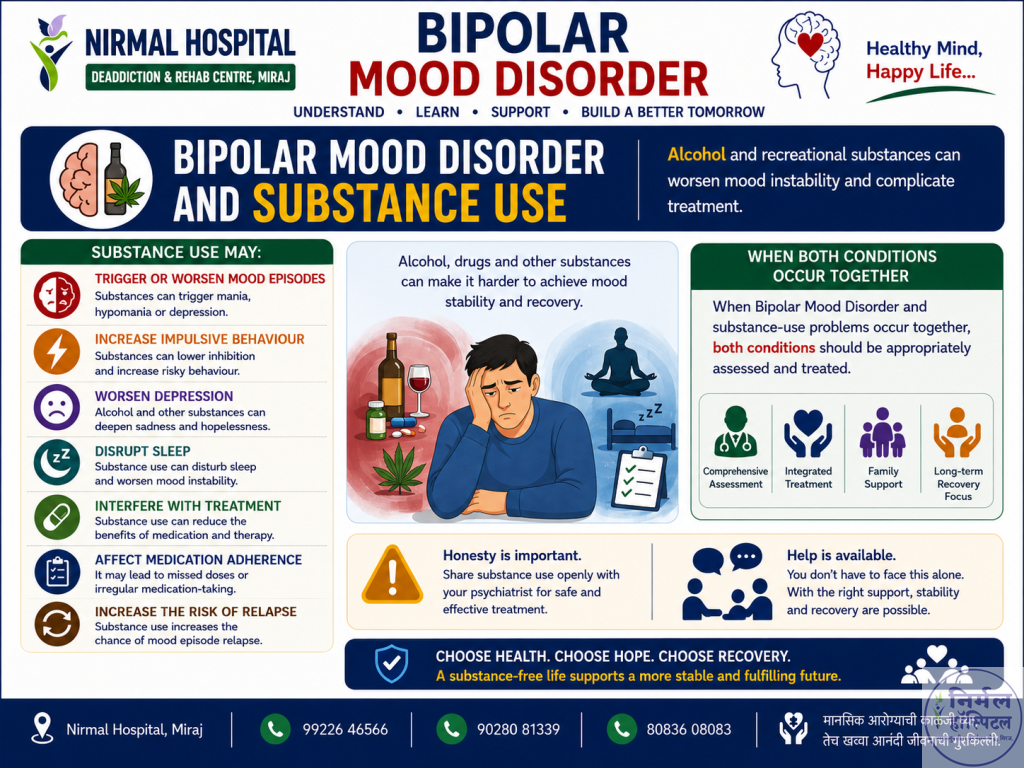
Alcohol and recreational substances can worsen mood instability and complicate treatment.
Substance use may:
- Trigger or worsen mood episodes
- Increase impulsive behaviour
- Worsen depression
- Disrupt sleep
- Interfere with treatment
- Affect medication adherence
- Increase the risk of relapse
When Bipolar Mood Disorder and substance-use problems occur together, both conditions should be appropriately assessed and treated.
Maintenance Treatment
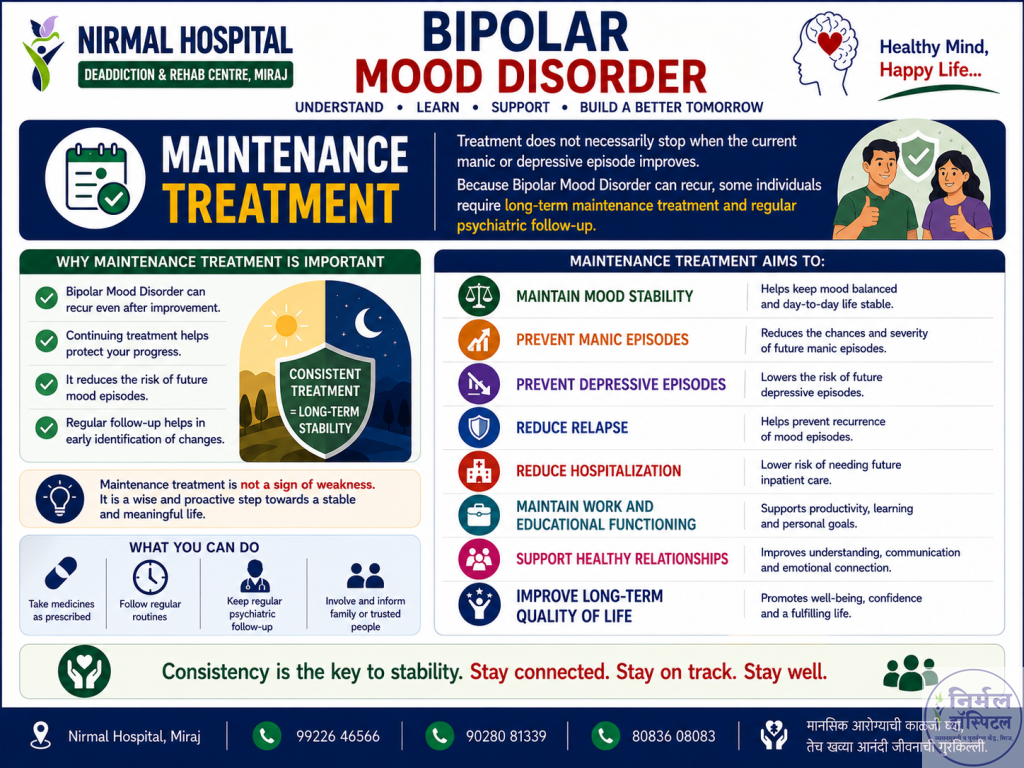
Treatment does not necessarily stop when the current manic or depressive episode improves.
Because Bipolar Mood Disorder can recur, some individuals require long-term maintenance treatment and regular psychiatric follow-up.
Maintenance treatment aims to:
- Maintain mood stability
- Prevent manic episodes
- Prevent depressive episodes
- Reduce relapse
- Reduce hospitalization
- Maintain work and educational functioning
- Support healthy relationships
- Improve long-term quality of life
Relapse Prevention
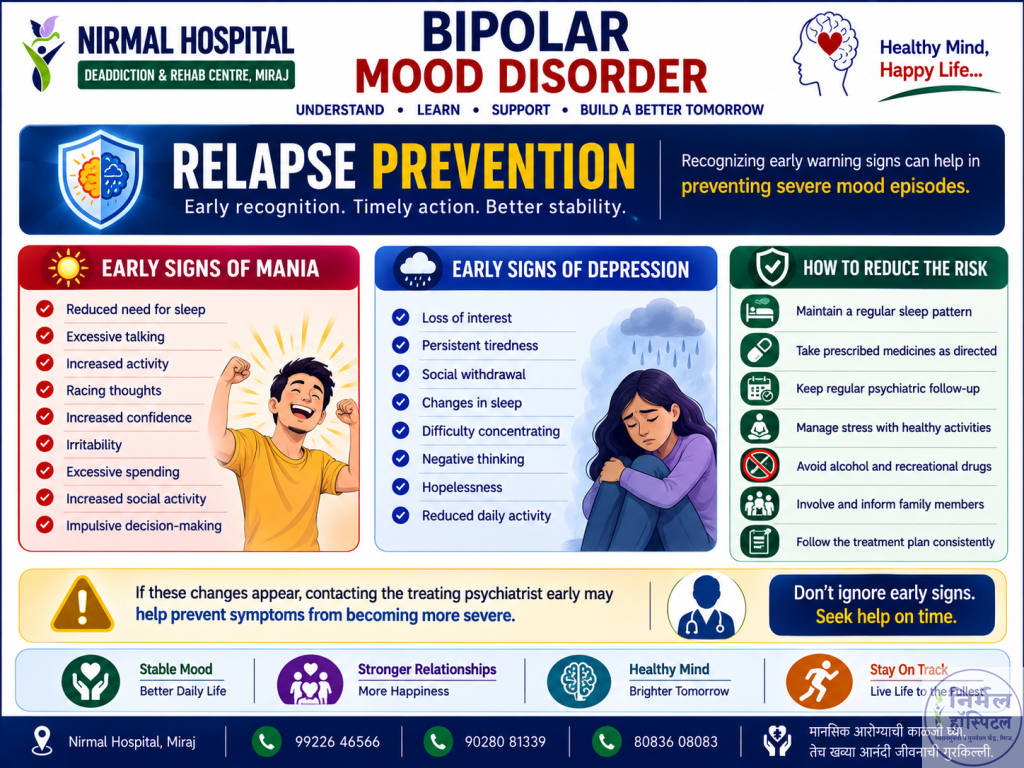
Recognizing early warning signs can help in preventing severe mood episodes.
Early Signs of Mania
- Reduced need for sleep
- Excessive talking
- Increased activity
- Racing thoughts
- Increased confidence
- Irritability
- Excessive spending
- Increased social activity
- Impulsive decision-making
Early Signs of Depression
- Loss of interest
- Persistent tiredness
- Social withdrawal
- Changes in sleep
- Difficulty concentrating
- Negative thinking
- Hopelessness
- Reduced daily activity
If these changes appear, contacting the treating psychiatrist early may help prevent symptoms from becoming more severe.
Bipolar Mood Disorder Treatment at Nirmal Hospital, Miraj
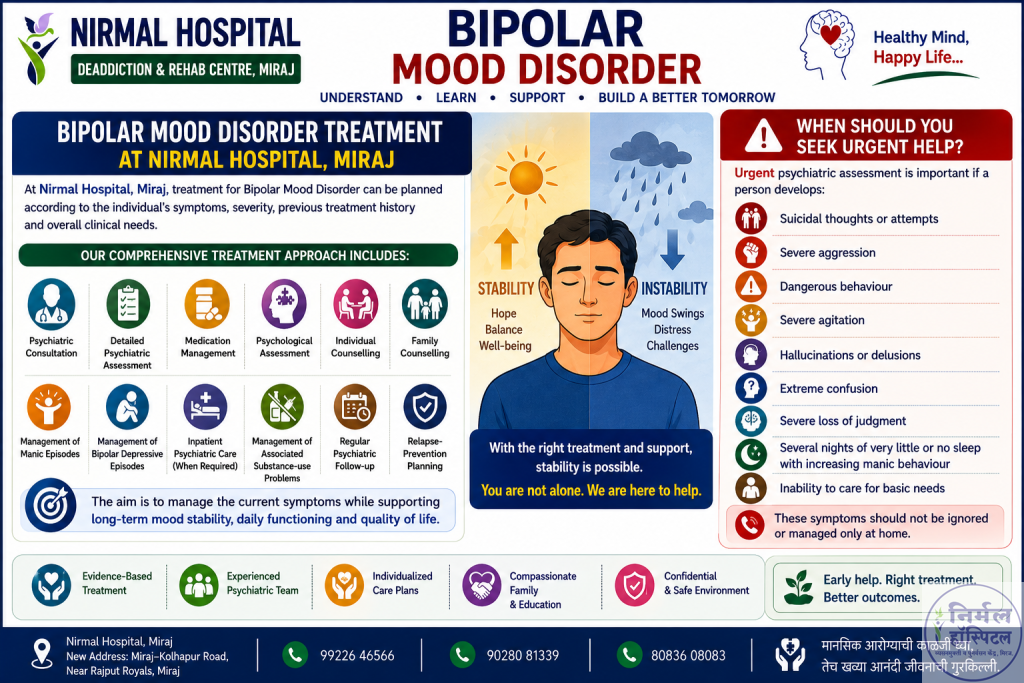
At Nirmal Hospital, Miraj, treatment for Bipolar Mood Disorder can be planned according to the individual’s symptoms, severity, previous treatment history and overall clinical needs.
Depending on the patient’s condition, care may include:
- Psychiatric consultation
- Detailed psychiatric assessment
- Medication management
- Psychological assessment
- Individual counselling
- Family counselling
- Psychoeducation
- Management of manic episodes
- Management of bipolar depressive episodes
- Inpatient psychiatric care when clinically required
- Management of associated substance-use problems
- Regular psychiatric follow-up
- Relapse-prevention planning
The aim is to manage the current symptoms while supporting long-term mood stability, daily functioning and quality of life.
When Should You Seek Urgent Help?
Urgent psychiatric assessment is important if a person develops:
- Suicidal thoughts or attempts
- Severe aggression
- Dangerous behaviour
- Severe agitation
- Hallucinations or delusions
- Extreme confusion
- Severe loss of judgment
- Several nights of very little or no sleep with increasing manic behaviour
- Inability to care for basic needs
These symptoms should not be ignored or managed only at home.
Frequently Asked Questions
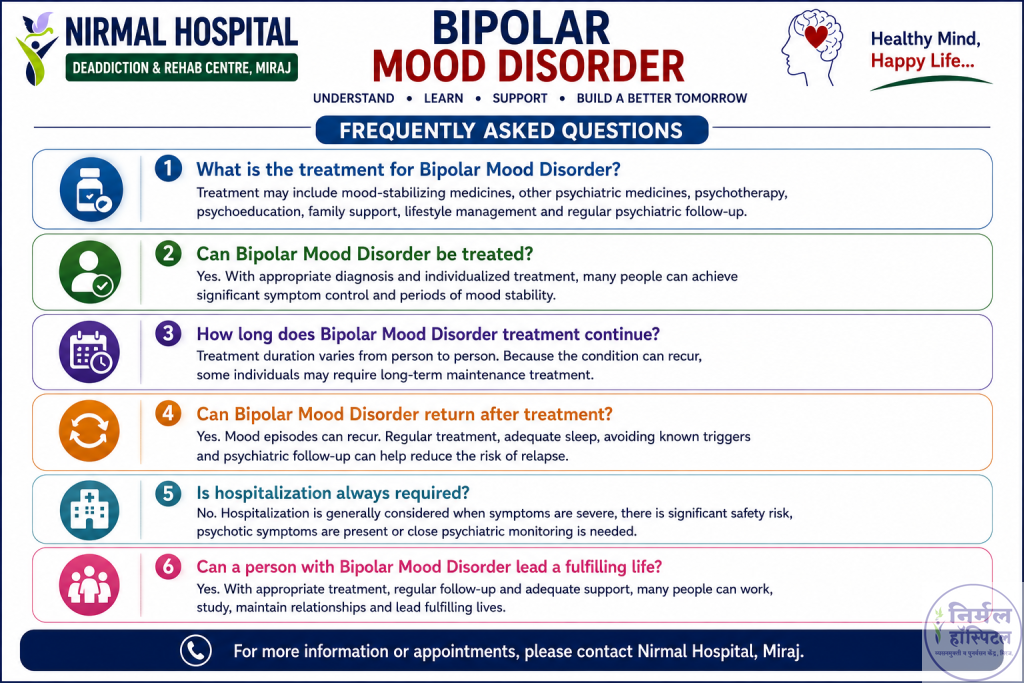
What is the treatment for Bipolar Mood Disorder?
Treatment may include mood-stabilizing medicines, other psychiatric medicines, psychotherapy, psychoeducation, family support, lifestyle management and regular psychiatric follow-up.
Can Bipolar Mood Disorder be treated?
Yes. With appropriate diagnosis and individualized treatment, many people can achieve significant symptom control and periods of mood stability.
How long does Bipolar Mood Disorder treatment continue?
Treatment duration varies from person to person. Because the condition can recur, some individuals may require long-term maintenance treatment.
Can Bipolar Mood Disorder return after treatment?
Yes. Mood episodes can recur. Regular treatment, adequate sleep, avoiding known triggers and psychiatric follow-up can help reduce the risk of relapse.
Is hospitalization always required?
No. Hospitalization is generally considered when symptoms are severe, there is significant safety risk, psychotic symptoms are present or close psychiatric monitoring is needed.
Can a person with Bipolar Mood Disorder lead a fulfilling life?
Yes. With appropriate treatment, regular follow-up and adequate support, many people can work, study, maintain relationships and lead fulfilling lives.
Important Note
Bipolar Mood Disorder requires proper psychiatric assessment and individualized treatment. Not every mood change indicates Bipolar Mood Disorder.
Do not start, stop or change psychiatric medication without medical advice. A qualified psychiatrist should determine the appropriate treatment based on the individual’s symptoms and clinical history.
Early assessment and appropriate treatment can help improve long-term mood stability and quality of life.


