


Headache
Headache is one of the most common health problems experienced by people of different age groups. A headache can range from mild discomfort to severe pain and may occur occasionally or repeatedly.
Headache may be felt in a specific area of the head or may spread across the entire head. The nature of pain can also vary from person to person. It may be dull, throbbing, pulsating, pressing, or tightness-like.
While many headaches are not related to a serious underlying condition, frequent, persistent, or unusual headaches should be medically evaluated to understand their possible cause.
What is a Headache?
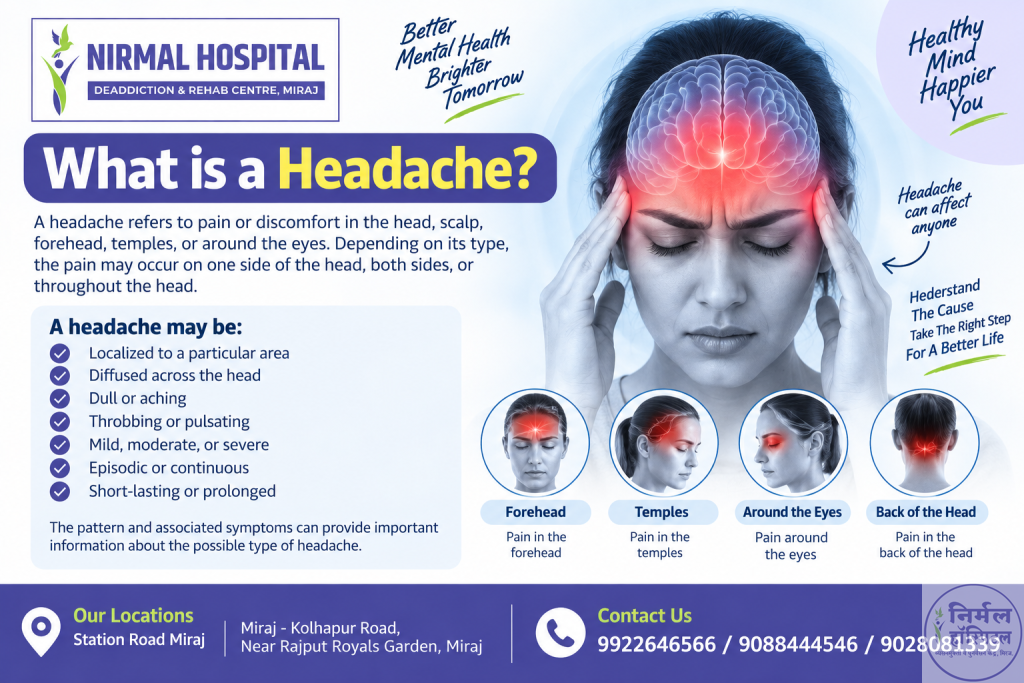
A headache refers to pain or discomfort in the head, scalp, forehead, temples, or around the eyes. Depending on its type, the pain may occur on one side of the head, both sides, or throughout the head.
A headache may be:
- Localized to a particular area
- Diffused across the head
- Dull or aching
- Throbbing or pulsating
- Mild, moderate, or severe
- Episodic or continuous
- Short-lasting or prolonged
The pattern and associated symptoms can provide important information about the possible type of headache.
Common Types of Headache
Different types of headaches can have different symptoms and triggers.
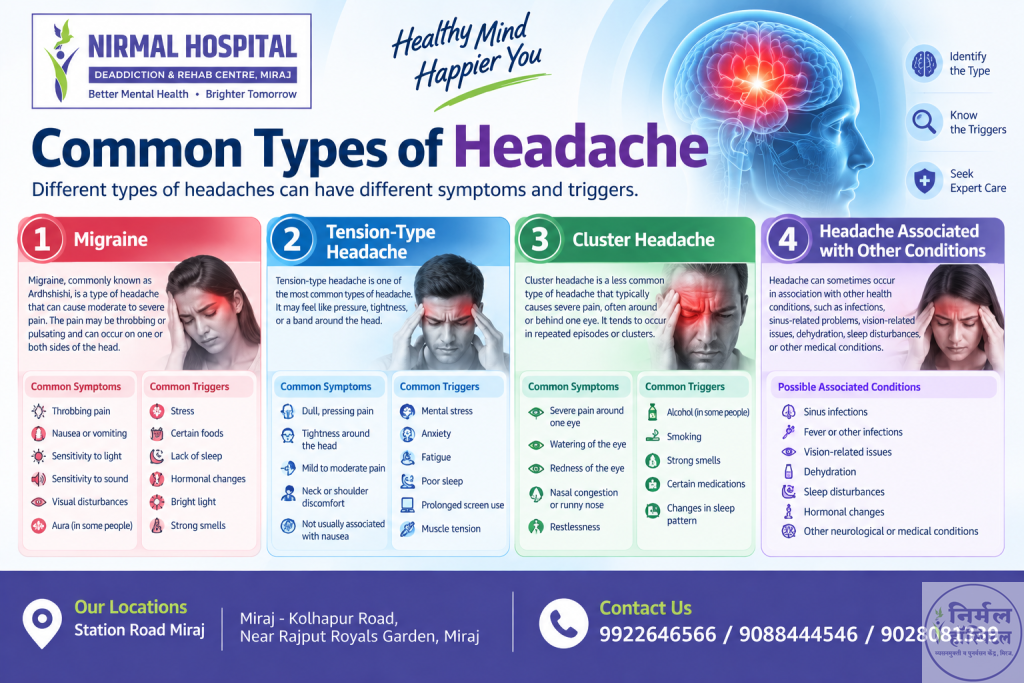
1. Migraine
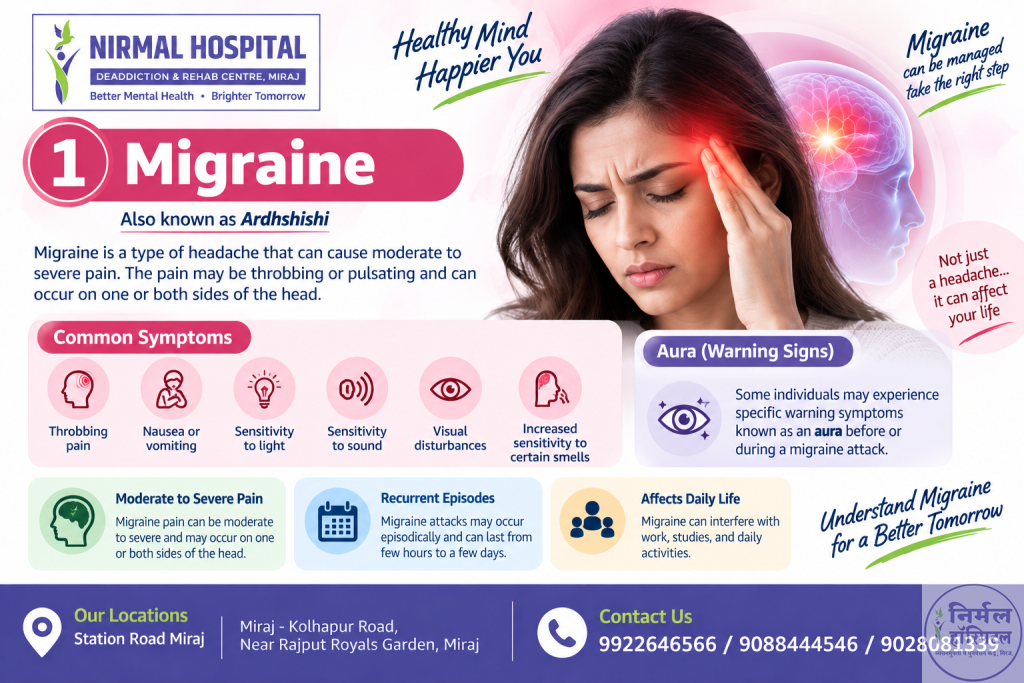
Migraine, commonly known as Ardhshishi, is a type of headache that can cause moderate to severe pain. The pain may be throbbing or pulsating and can occur on one or both sides of the head.
Migraine may also be associated with:
- Nausea or vomiting
- Sensitivity to light
- Sensitivity to sound
- Visual disturbances
- Increased sensitivity to certain smells
Some individuals may experience specific warning symptoms known as an aura before or during a migraine attack.
2. Tension-Type Headache
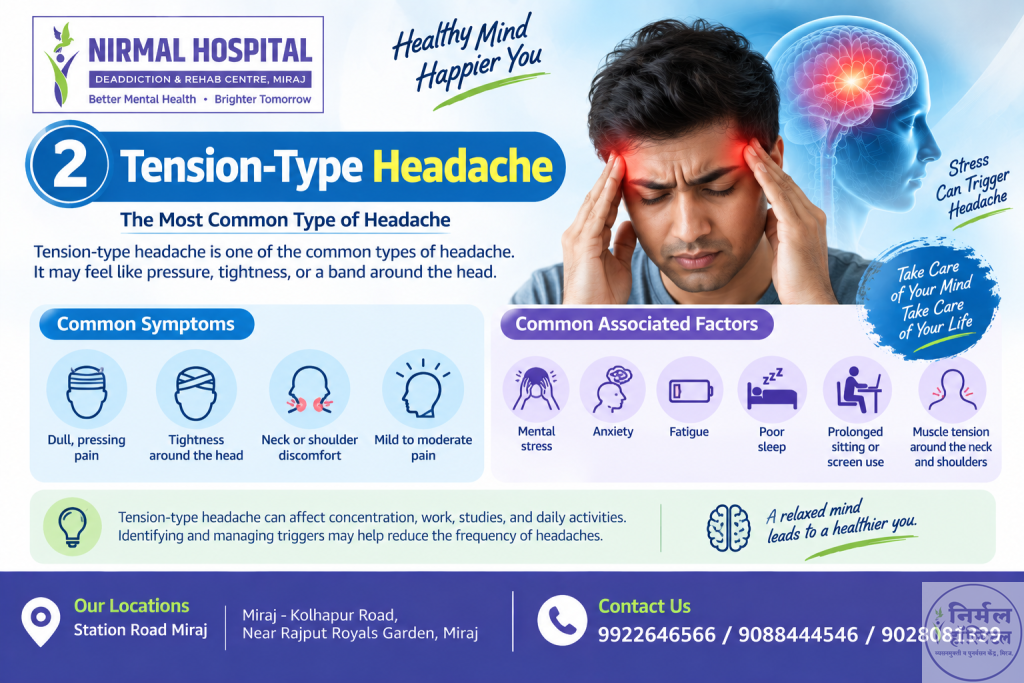
Tension-type headache is one of the common types of headache. It may feel like pressure, tightness, or a band around the head.
It may be associated with:
- Mental stress
- Anxiety
- Fatigue
- Poor sleep
- Prolonged sitting or screen use
- Muscle tension around the neck and shoulders
3. Cluster Headache
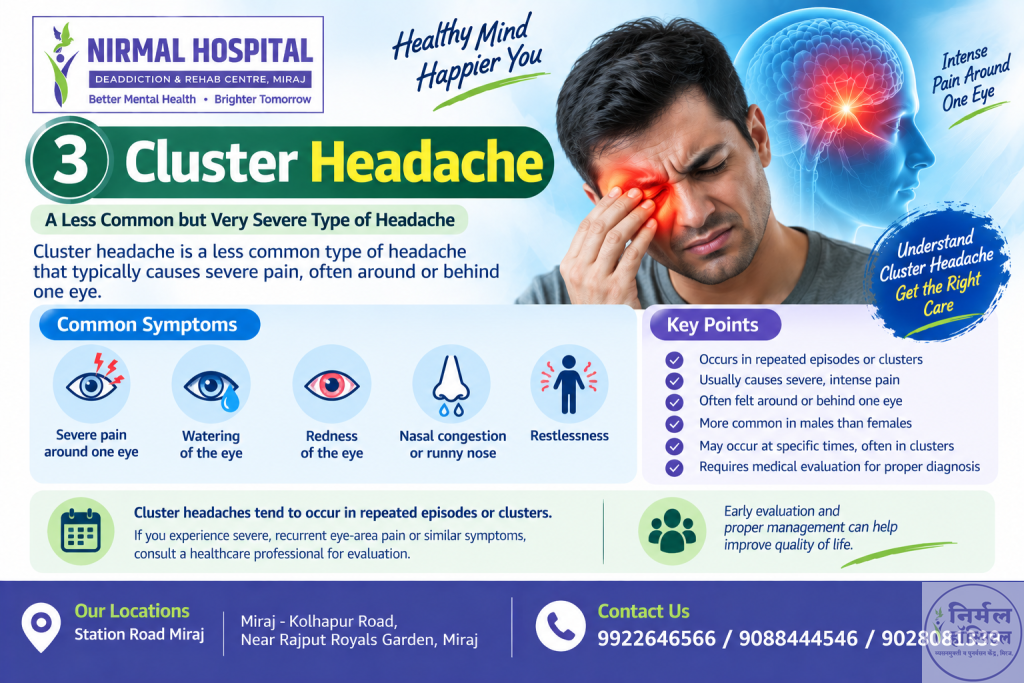
Cluster headache is a less common type of headache that typically causes severe pain, often around or behind one eye.
It may be associated with symptoms such as:
- Severe pain around one eye
- Watering of the eye
- Redness of the eye
- Nasal congestion or runny nose
- Restlessness
Cluster headaches tend to occur in repeated episodes or clusters.
4. Headache Associated with Other Conditions
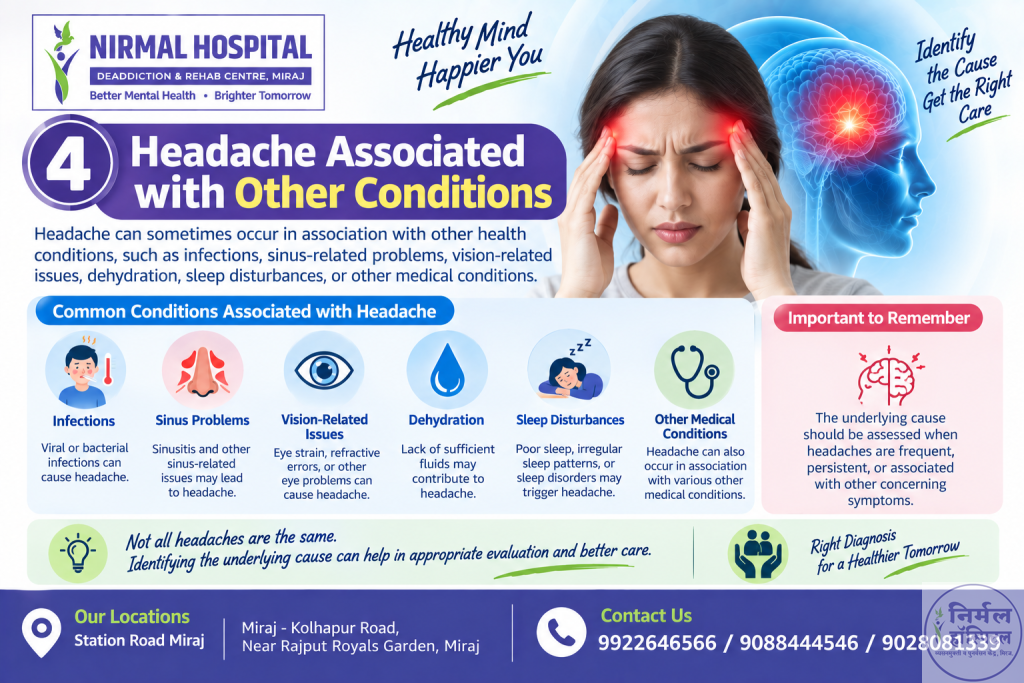
Headache can sometimes occur in association with other health conditions, such as infections, sinus-related problems, vision-related issues, dehydration, sleep disturbances, or other medical conditions.
The underlying cause should be assessed when headaches are frequent, persistent, or associated with other concerning symptoms.
Symptoms of Headache
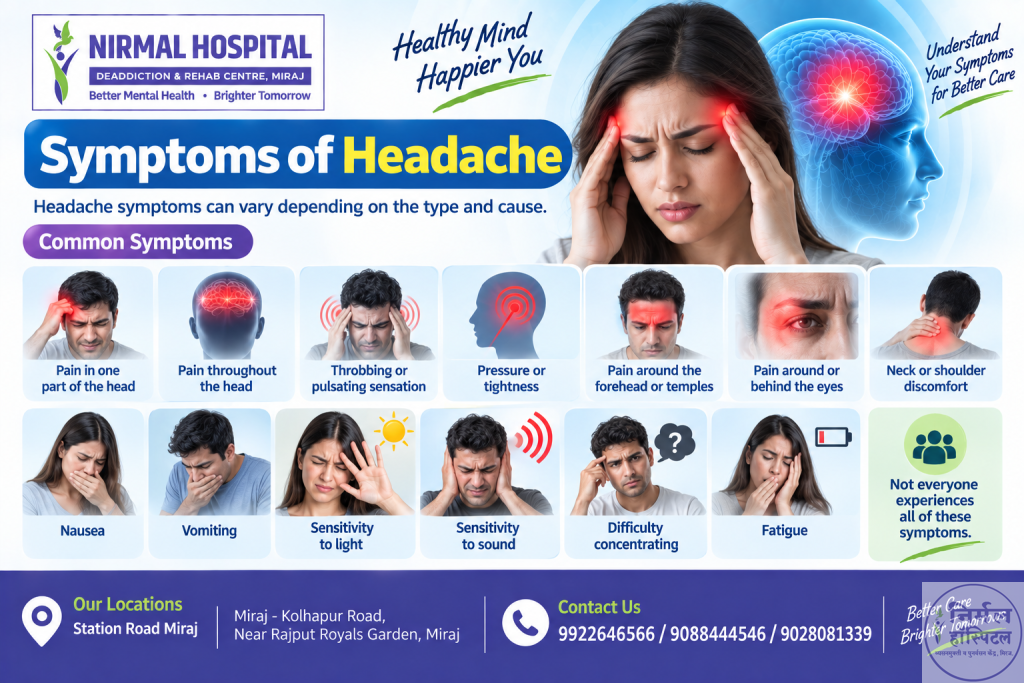
Headache symptoms can vary depending on the type and cause.
Common symptoms may include:
- Pain in one part of the head
- Pain throughout the head
- Throbbing or pulsating sensation
- Pressure or tightness
- Pain around the forehead or temples
- Pain around or behind the eyes
- Neck or shoulder discomfort
- Nausea
- Vomiting
- Sensitivity to light
- Sensitivity to sound
- Difficulty concentrating
- Fatigue
Not everyone experiences all of these symptoms.
What Can Trigger a Headache?
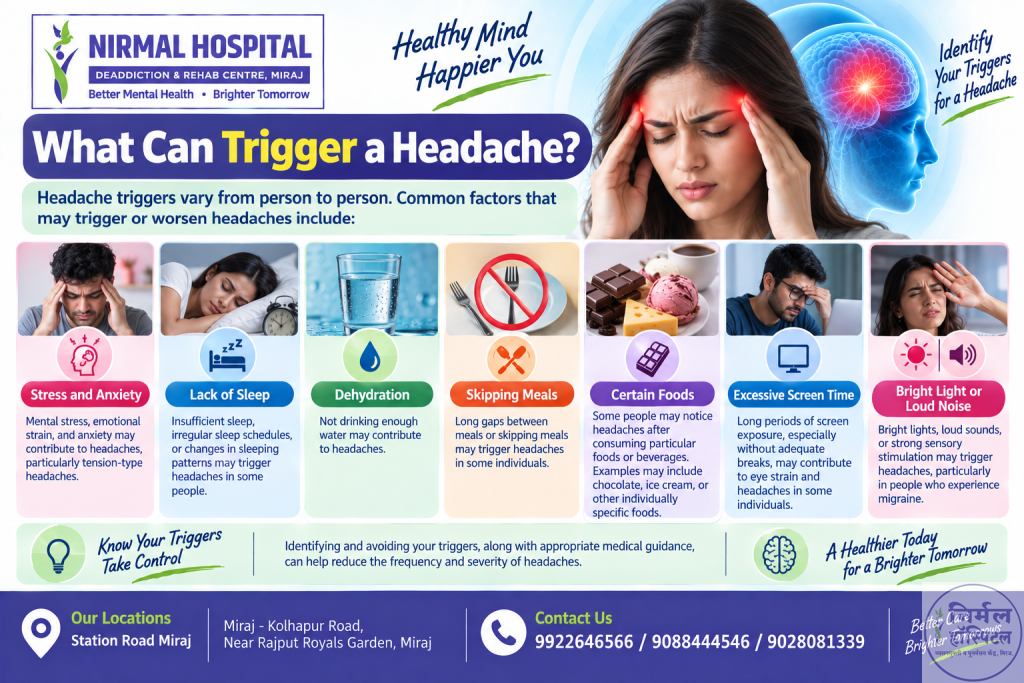
Headache triggers vary from person to person. Common factors that may trigger or worsen headaches include:
Stress and Anxiety
Mental stress, emotional strain, and anxiety may contribute to headaches, particularly tension-type headaches.
Lack of Sleep
Insufficient sleep, irregular sleep schedules, or changes in sleeping patterns may trigger headaches in some people.
Dehydration
Not drinking enough water may contribute to headaches.
Skipping Meals
Long gaps between meals or skipping meals may trigger headaches in some individuals.
Certain Foods
Some people may notice headaches after consuming particular foods or beverages. Examples may include chocolate, ice cream, or other individually specific foods.
Excessive Screen Time
Long periods of screen exposure, especially without adequate breaks, may contribute to eye strain and headaches in some individuals.
Bright Light or Loud Noise
Bright lights, loud sounds, or strong sensory stimulation may trigger headaches, particularly in people who experience migraine.
What Makes a Headache Better or Worse?
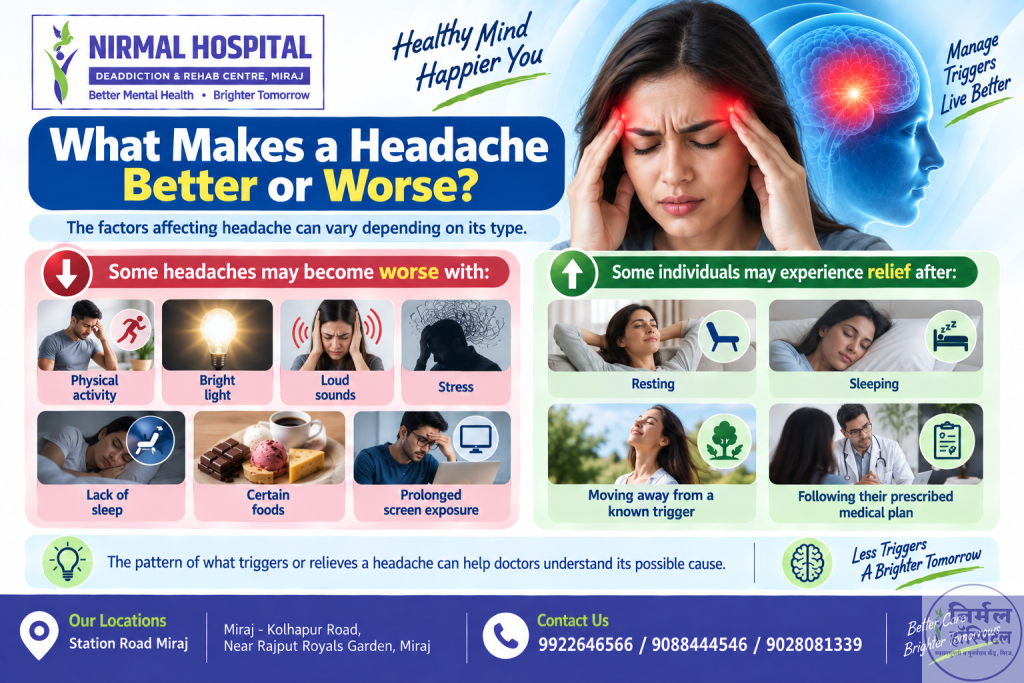
The factors affecting headache can vary depending on its type.
Some headaches may become worse with:
- Physical activity
- Bright light
- Loud sounds
- Stress
- Lack of sleep
- Certain foods
- Prolonged screen exposure
Some individuals may experience relief after:
- Resting
- Sleeping
- Moving away from a known trigger
- Following their prescribed medical plan
The pattern of what triggers or relieves a headache can help doctors understand its possible cause.
How is Headache Diagnosed?
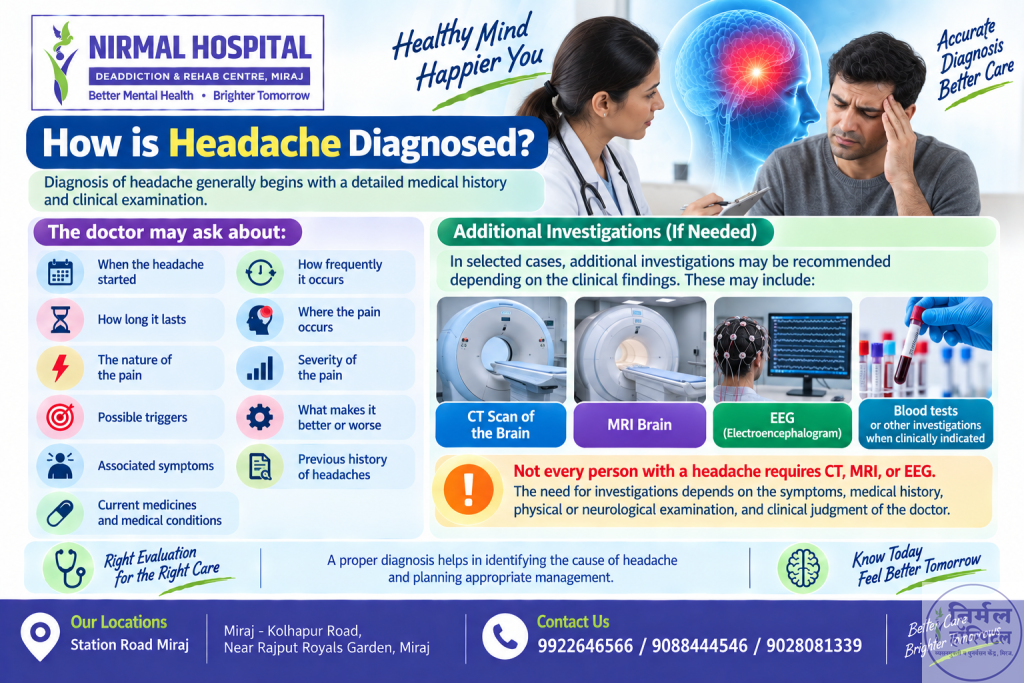
Diagnosis of headache generally begins with a detailed medical history and clinical examination.
The doctor may ask about:
- When the headache started
- How frequently it occurs
- How long it lasts
- Where the pain occurs
- The nature of the pain
- Severity of the pain
- Possible triggers
- What makes it better or worse
- Associated symptoms
- Previous history of headaches
- Current medicines and medical conditions
In selected cases, additional investigations may be recommended depending on the clinical findings.
These may include:
- CT Scan of the Brain
- MRI Brain
- EEG (Electroencephalogram)
- Blood tests or other investigations when clinically indicated
Not every person with a headache requires CT, MRI, or EEG. The need for investigations depends on the symptoms, medical history, physical or neurological examination, and clinical judgment of the doctor.
Headache and Daily Life
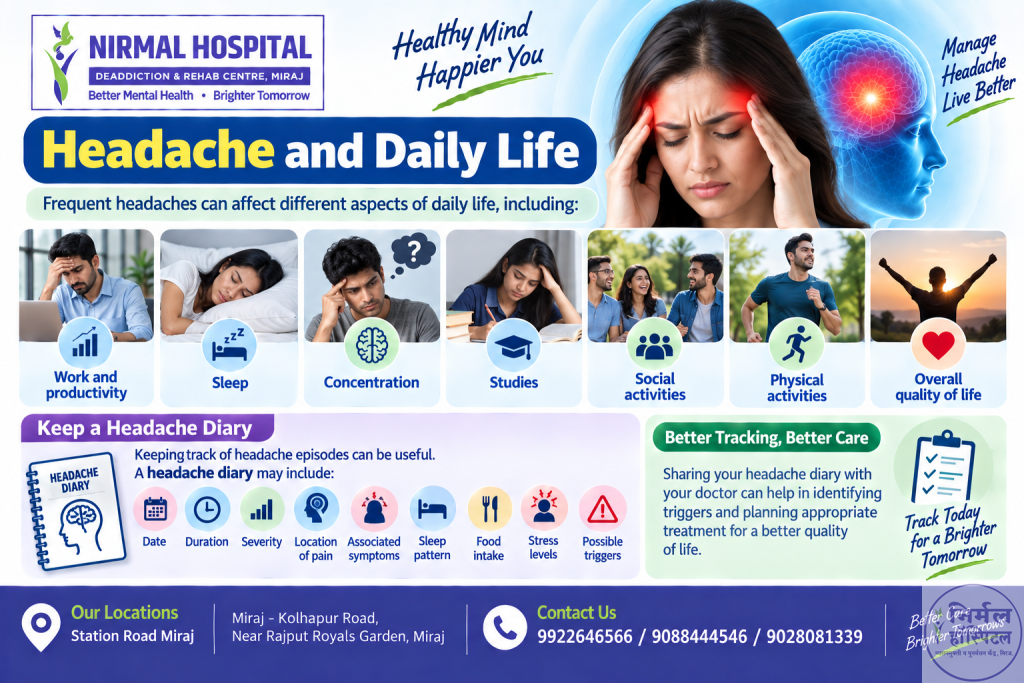
Frequent headaches can affect different aspects of daily life, including:
- Work and productivity
- Sleep
- Concentration
- Studies
- Social activities
- Physical activities
- Overall quality of life
Keeping track of headache episodes can be useful. A headache diary may include the date, duration, severity, location of pain, associated symptoms, sleep pattern, food intake, stress levels, and possible triggers.
When Should You Consult a Doctor?
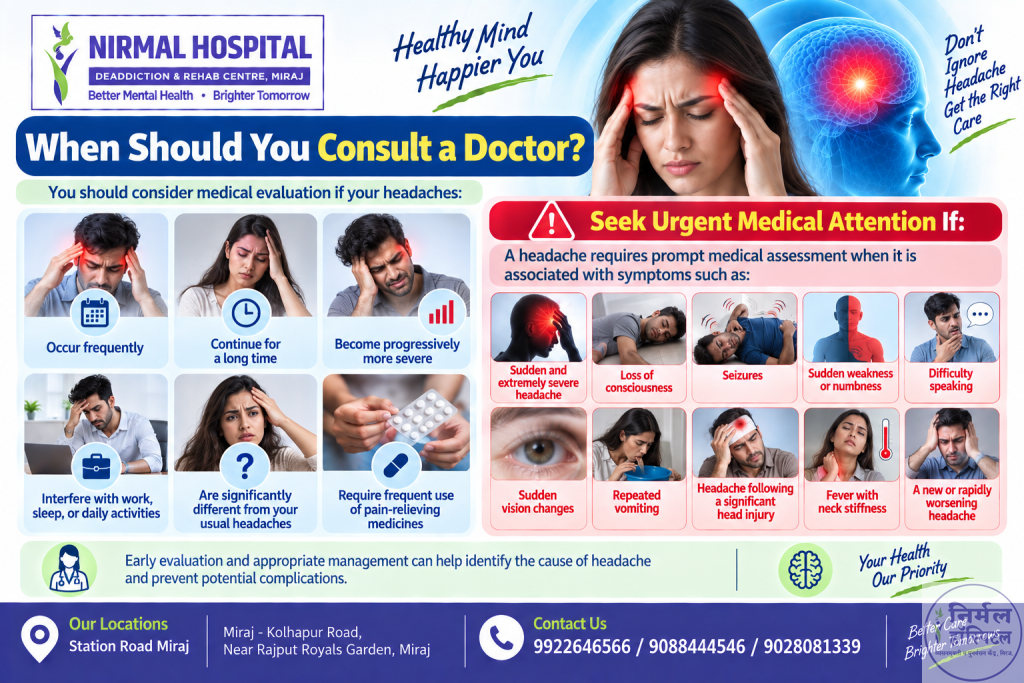
You should consider medical evaluation if your headaches:
- Occur frequently
- Continue for a long time
- Become progressively more severe
- Interfere with work, sleep, or daily activities
- Are significantly different from your usual headaches
- Require frequent use of pain-relieving medicines
Seek Urgent Medical Attention If:
A headache requires prompt medical assessment when it is associated with symptoms such as:
- Sudden and extremely severe headache
- Loss of consciousness
- Seizures
- Sudden weakness or numbness
- Difficulty speaking
- Sudden vision changes
- Repeated vomiting
- Headache following a significant head injury
- Fever with neck stiffness
- A new or rapidly worsening headache
Headache – Understanding Your Symptoms Matters
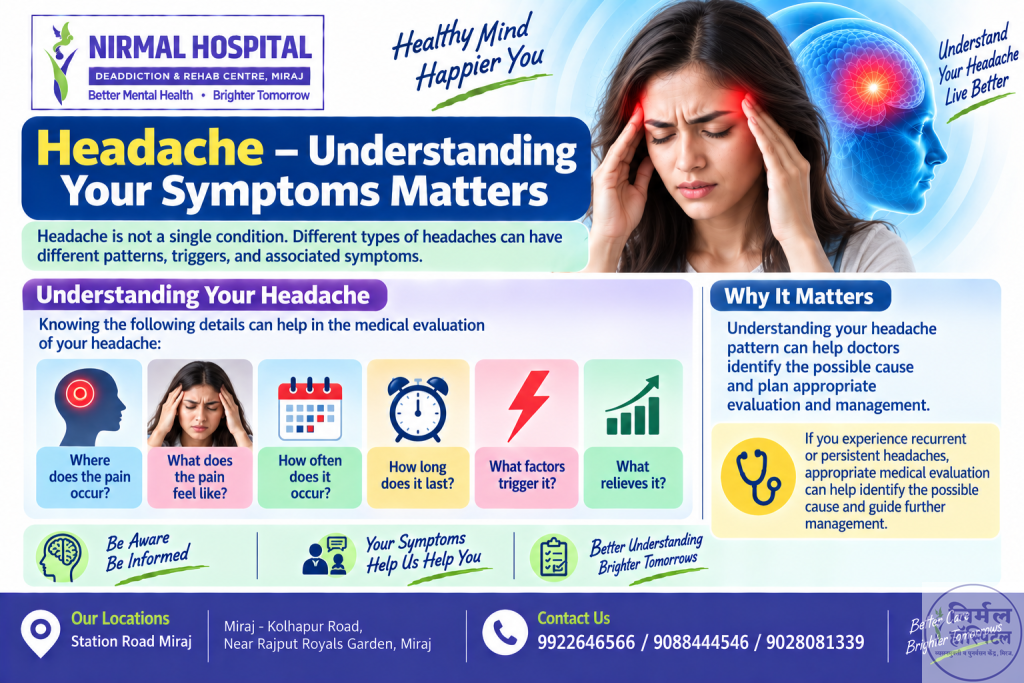
Headache is not a single condition. Different types of headaches can have different patterns, triggers, and associated symptoms.
Understanding where the pain occurs, what the pain feels like, how often it occurs, how long it lasts, and what factors trigger or relieve it can help in the medical evaluation of the condition.
If you experience recurrent or persistent headaches, appropriate medical evaluation can help identify the possible cause and guide further management.
Frequently Asked Questions About Headache
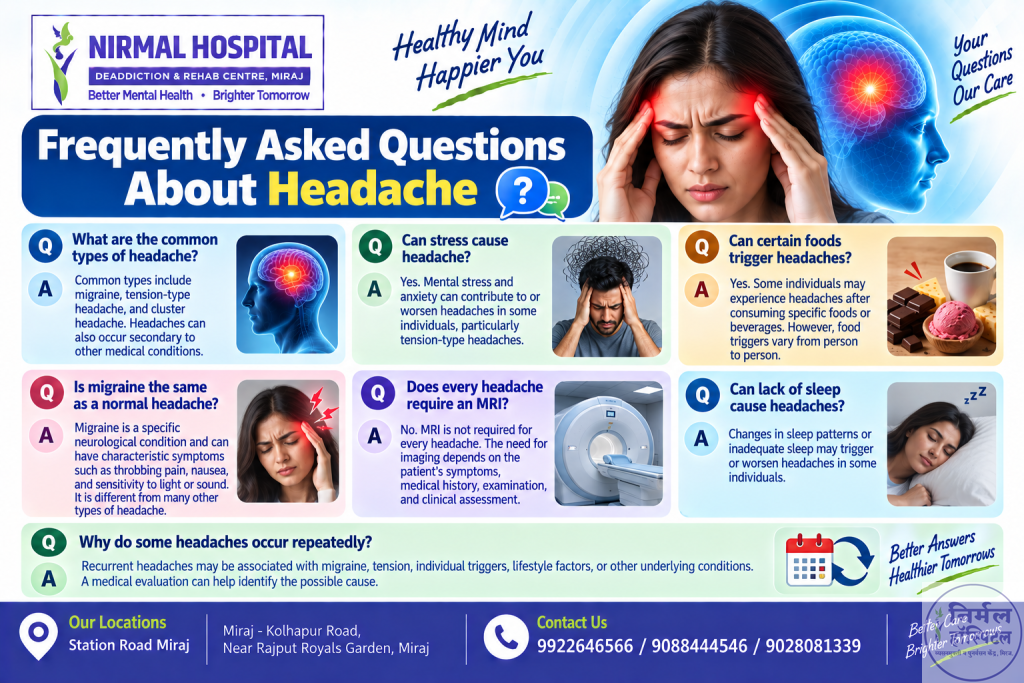
What are the common types of headache?
Common types include migraine, tension-type headache, and cluster headache. Headaches can also occur secondary to other medical conditions.
Can stress cause headache?
Yes. Mental stress and anxiety can contribute to or worsen headaches in some individuals, particularly tension-type headaches.
Can certain foods trigger headaches?
Yes. Some individuals may experience headaches after consuming specific foods or beverages. However, food triggers vary from person to person.
Is migraine the same as a normal headache?
Migraine is a specific neurological condition and can have characteristic symptoms such as throbbing pain, nausea, and sensitivity to light or sound. It is different from many other types of headache.
Does every headache require an MRI?
No. MRI is not required for every headache. The need for imaging depends on the patient’s symptoms, medical history, examination, and clinical assessment.
Can lack of sleep cause headaches?
Changes in sleep patterns or inadequate sleep may trigger or worsen headaches in some individuals.
Why do some headaches occur repeatedly?
Recurrent headaches may be associated with migraine, tension, individual triggers, lifestyle factors, or other underlying conditions. A medical evaluation can help identify the possible cause.
While many headaches are not related to a serious underlying condition, frequent, persistent, or unusual headaches should be medically evaluated to understand their possible cause. If you are experiencing recurrent headaches, learn more about headache treatment and management.
“headache treatment and management” → Headache Treatment
Learn More About Mental Health & Headache
For more informative videos about mental health, psychiatry, headache, stress, anxiety and related health topics, visit the Nirmal Hospital, Miraj YouTube Channel.
Nirmal Hospital, Miraj YouTube Channel → Nirmal Hospital, Miraj YouTube Channel


Leave a Reply