

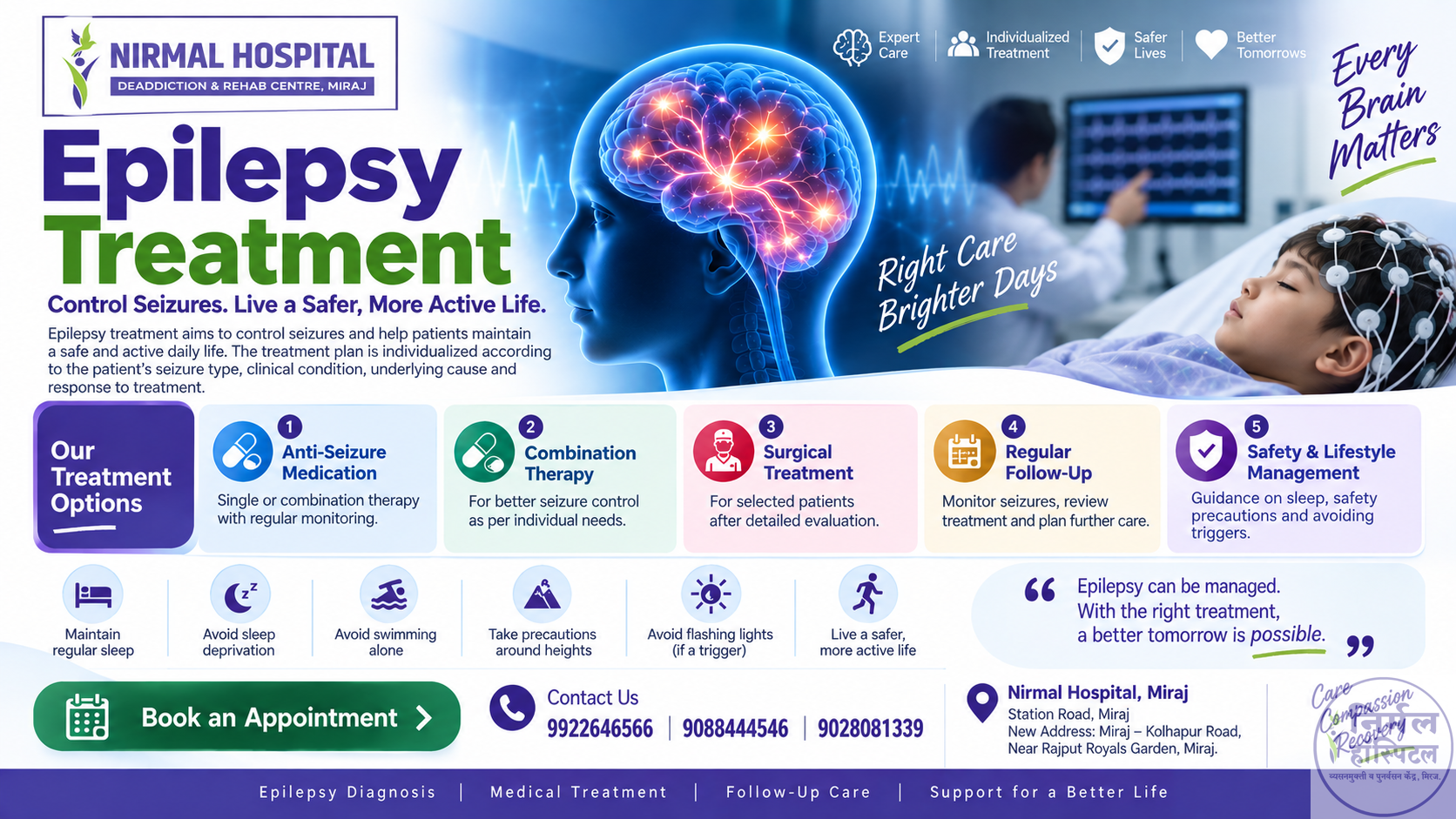
Epilepsy Treatment
Epilepsy treatment aims to control seizures and help patients maintain a safe and active daily life.
The treatment plan is individualized according to the patient’s seizure type, clinical condition, underlying cause and response to treatment.
The source material mentions medication-based treatment, combination therapy and surgery for selected patients.
Epilepsy Treatment Options
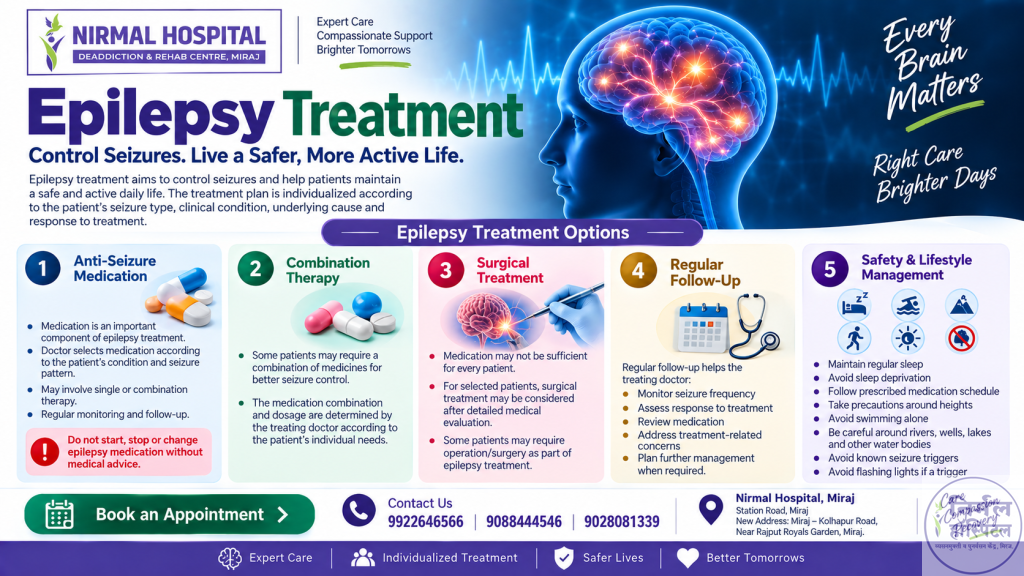
1. Anti-Seizure Medication
Medication is an important component of epilepsy treatment.
The doctor selects medication according to the patient’s condition and seizure pattern.
Treatment may involve:
- Single anti-seizure medication
- Combination medication therapy
- Regular monitoring and follow-up
The source material mentions multiple types of medicines and combination therapy.
Important
Do not start, stop or change epilepsy medication without medical advice.
2. Combination Therapy
Some patients may require a combination of medicines for better seizure control.
The medication combination and dosage are determined by the treating doctor according to the patient’s individual needs.
The source material specifically refers to combination medication therapy.
3. Surgical Treatment
Medication may not be sufficient for every patient.
For selected patients, surgical treatment may be considered after detailed medical evaluation.
The source material mentions that some patients may require operation/surgery as part of epilepsy treatment.
4. Regular Medical Follow-Up
Epilepsy management may require ongoing medical supervision.
Regular follow-up helps the treating doctor:
- Monitor seizure frequency
- Assess response to treatment
- Review medication
- Address treatment-related concerns
- Plan further management when required
5. Safety & Lifestyle Management
Treatment is supported by appropriate safety precautions.
Patients may be advised to:
- Maintain regular sleep
- Avoid sleep deprivation
- Follow the prescribed medication schedule
- Take precautions around heights
- Avoid swimming alone
- Take care around rivers, wells, lakes and other water bodies
- Avoid known seizure triggers where applicable
- Avoid flashing lights if they are a known trigger
The source material specifically recommends adequate sleep, avoiding fasting/sleep deprivation, precautions around dangerous places and water, and avoiding flashing lights where relevant.
Emergency Seizure Management
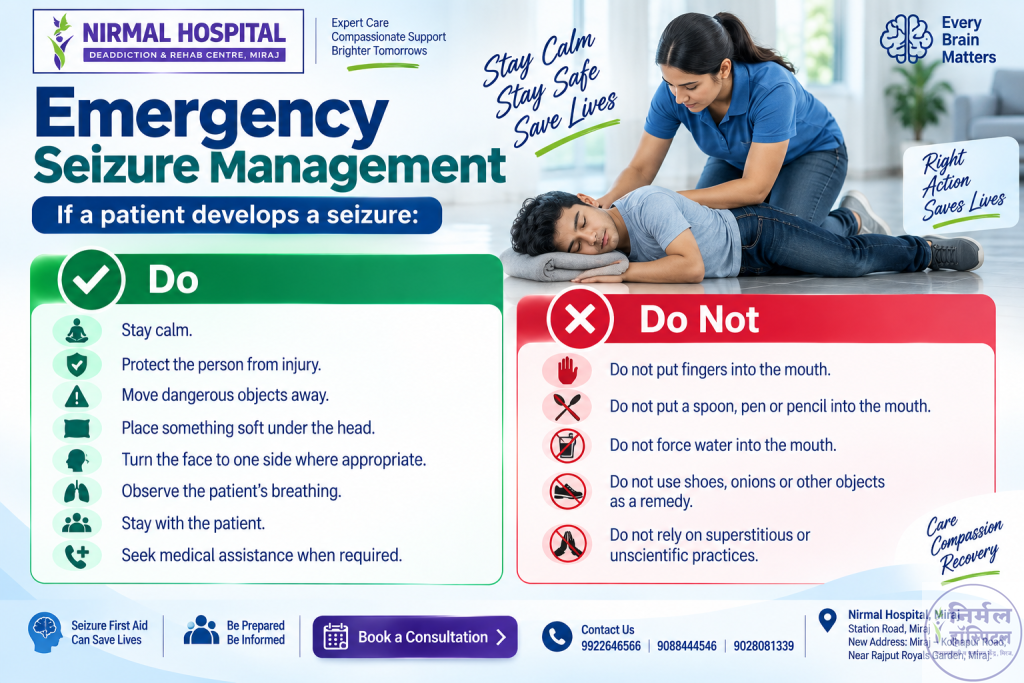
If a patient develops a seizure:
Do
- Stay calm.
- Protect the person from injury.
- Move dangerous objects away.
- Place something soft under the head.
- Turn the face to one side where appropriate.
- Observe the patient’s breathing.
- Stay with the patient.
- Seek medical assistance when required.
Do Not
- Do not put fingers into the mouth.
- Do not put a spoon, pen or pencil into the mouth.
- Do not force water into the mouth.
- Do not use shoes, onions or other objects as a remedy.
- Do not rely on superstitious or unscientific practices.
Can Epilepsy Be Treated?
Epilepsy can be managed with appropriate medical treatment. Treatment varies from patient to patient.
The source material states that treatment may include medication and, for some patients, surgery.
The treatment plan should always be determined by a qualified medical professional after appropriate evaluation.
Epilepsy Treatment at Nirmal Hospital, Miraj
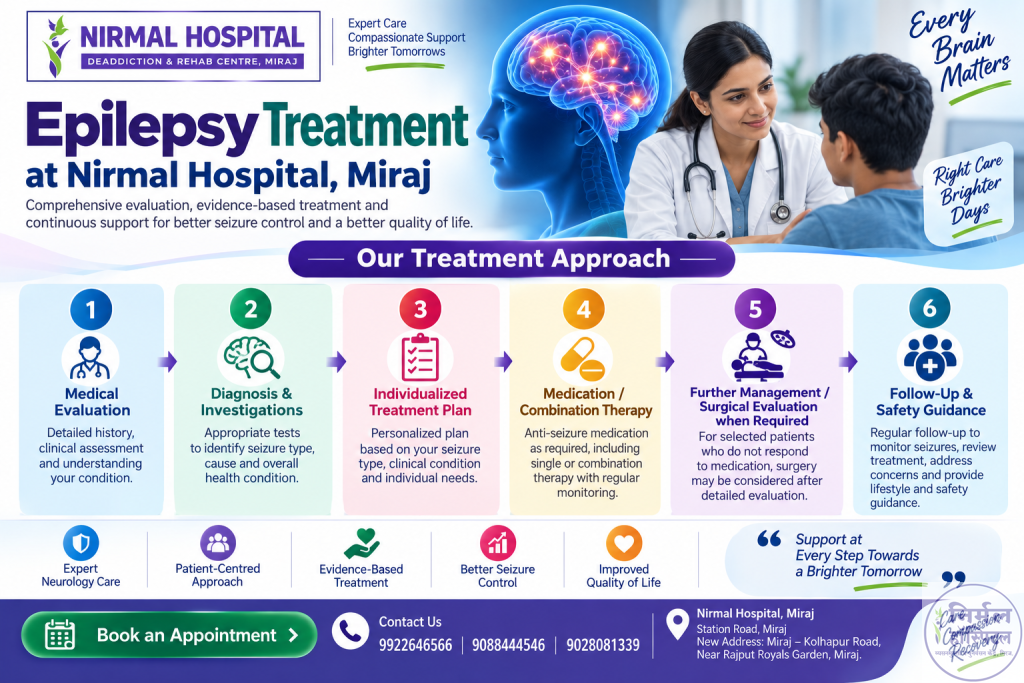
Our Treatment Approach
Medical Evaluation
↓
Diagnosis & Investigations
↓
Individualized Treatment Plan
↓
Medication / Combination Therapy
↓
Further Management / Surgical Evaluation when Required
↓
Follow-Up & Safety Guidance
Frequently Asked Questions – Epilepsy Treatment
What is the treatment for epilepsy?
Treatment may include anti-seizure medication, combination therapy and, for selected patients, surgical treatment.
Does every patient need surgery?
No. Surgery may be considered only for selected patients after appropriate medical evaluation.
Can epilepsy medication be stopped when seizures stop?
Medication should not be stopped or changed without consulting the treating doctor.
Is regular follow-up necessary?
Regular medical follow-up can help monitor seizure control and treatment response.
What should I do if a seizure occurs during treatment?
Protect the patient from injury, keep them under observation, do not put anything in their mouth, and seek medical assistance when necessary.
Book an Epilepsy Treatment Consultation
Recurrent fits or seizures should not be ignored.
Get appropriate medical evaluation, diagnosis and individualized treatment guidance.
Nirmal Hospital, Miraj
Epilepsy Diagnosis | Medical Treatment | Follow-Up Care
Book Appointment | Contact Us – 9922646566 / 9088444546 / 9028081339


