


Phobia Treatment – Effective Treatment for Phobia
Phobia treatment focuses on reducing excessive fear and anxiety, decreasing avoidance behaviour, and helping the person gradually return to normal daily activities.
Phobia is a treatable mental health condition. The treatment approach depends on the type of phobia, severity of symptoms, duration, avoidance behaviour, and the person’s overall mental health.
If you are searching for Phobia Treatment near me, professional psychiatric assessment can help identify the appropriate treatment approach for your symptoms.
Phobia Treatment at Nirmal Hospital, Miraj
At Nirmal Hospital, Miraj, treatment for phobia may include psychiatric assessment, psychotherapy, behavioural interventions, and medication when clinically appropriate.
The treatment plan is individualized according to the patient’s condition.
Our Phobia Treatment Approach
Assessment → Diagnosis → Individualized Treatment Plan → Therapy / Medication → Follow-up
1. Psychiatric Assessment for Phobia
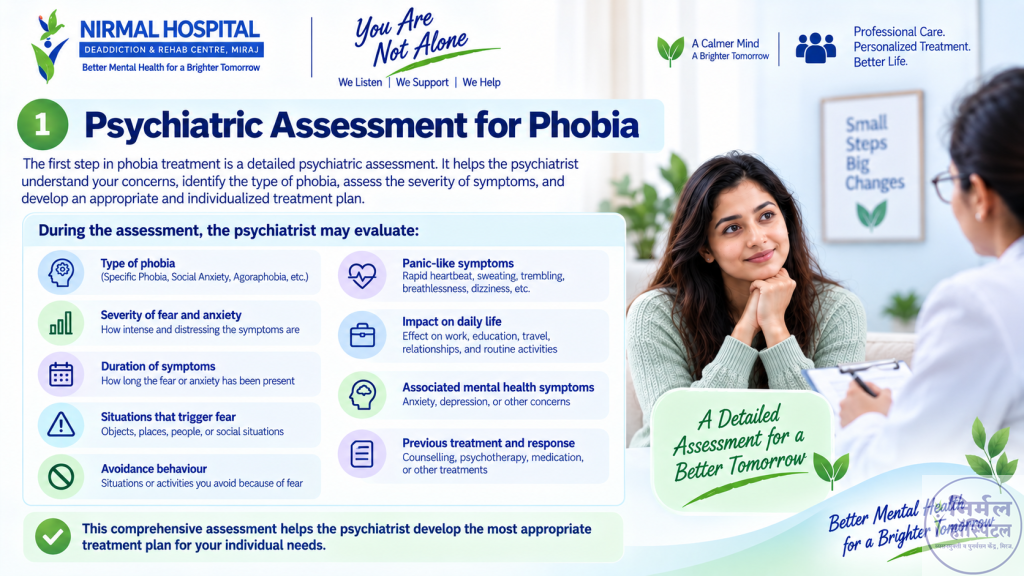
The first step in phobia treatment is a detailed psychiatric assessment.
The psychiatrist may evaluate:
- Type of phobia
- Severity of fear and anxiety
- Duration of symptoms
- Situations that trigger fear
- Avoidance behaviour
- Panic-like symptoms
- Impact on work, education, travel, and relationships
- Associated anxiety or mood symptoms
- Previous treatment and response
This assessment helps the psychiatrist develop an appropriate treatment plan.
2. Cognitive Behavioural Therapy (CBT)
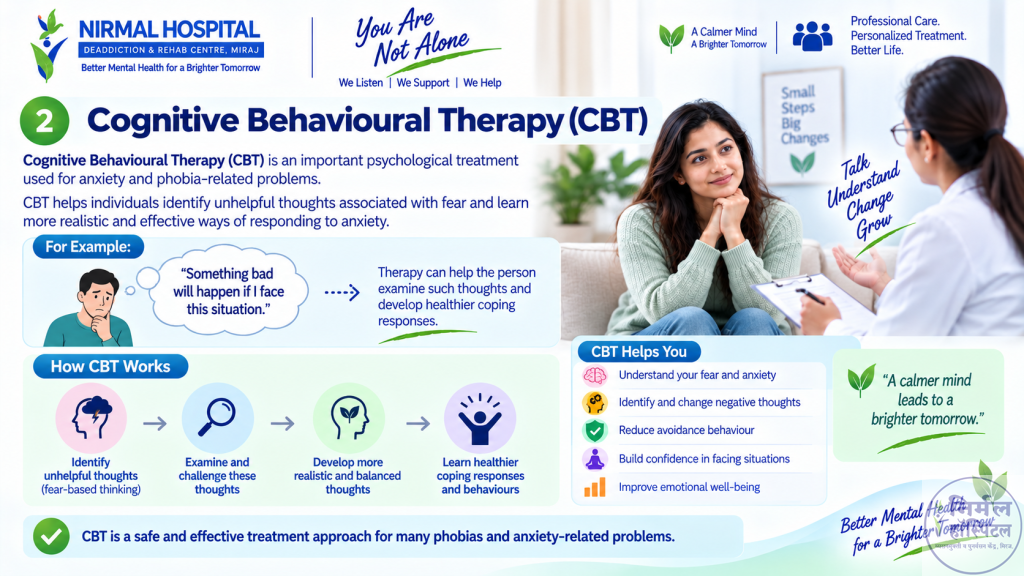
Cognitive Behavioural Therapy (CBT) is an important psychological treatment used for anxiety and phobia-related problems.
CBT helps individuals identify unhelpful thoughts associated with fear and learn more realistic and effective ways of responding to anxiety.
For example, a person may repeatedly think:
“Something bad will happen if I face this situation.”
Therapy can help the person examine such thoughts and develop healthier coping responses.
3. Exposure Therapy
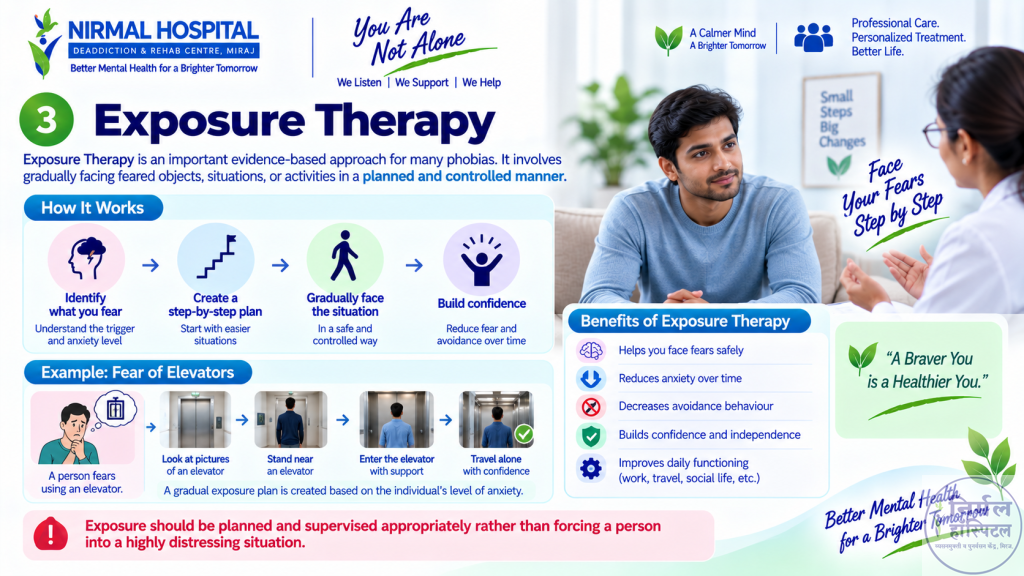
Exposure Therapy is an important evidence-based approach for many phobias.
It involves gradually facing feared objects, situations, or activities in a planned and controlled manner.
For example, if someone has a fear of elevators, therapy may involve a gradual exposure plan based on the individual’s level of anxiety.
The aim is to help the person develop confidence in managing fear and reduce avoidance behaviour.
Exposure should be planned and supervised appropriately rather than forcing a person into a highly distressing situation.
4. Systematic Desensitization
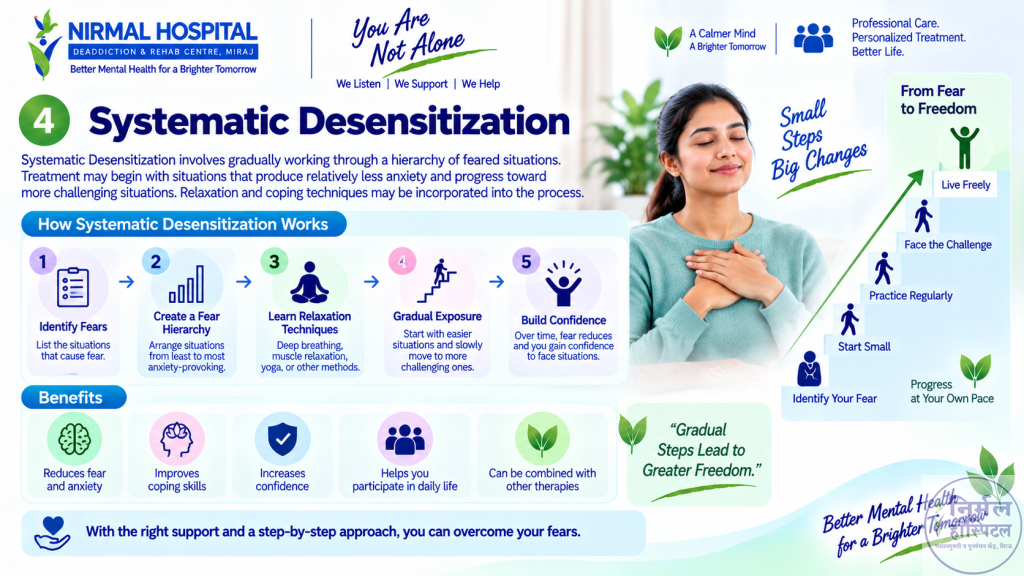
Systematic Desensitization involves gradually working through a hierarchy of feared situations.
Treatment may begin with situations that produce relatively less anxiety and progress toward more challenging situations.
Relaxation and coping techniques may be incorporated into the process.
5. Cognitive Restructuring
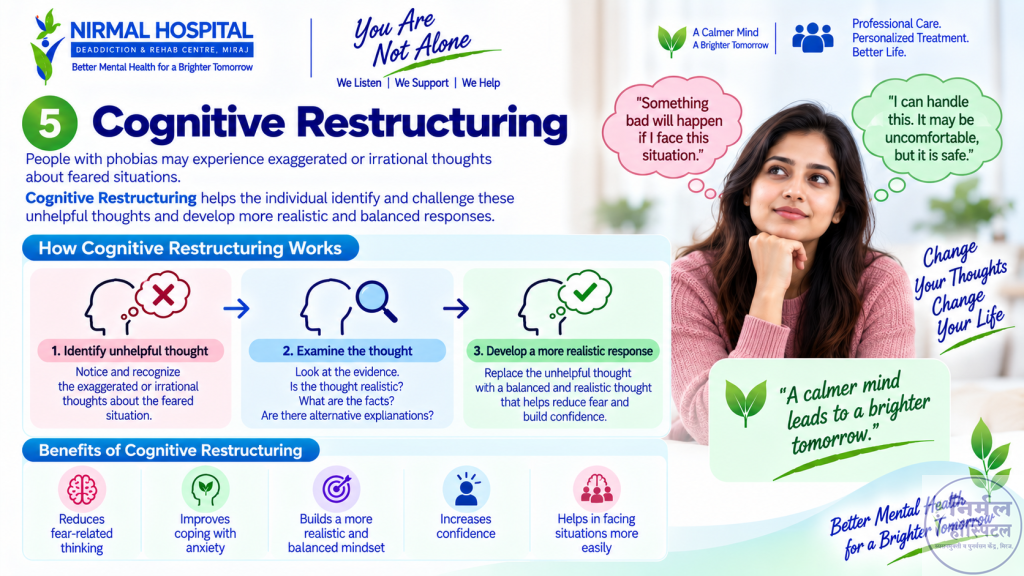
People with phobias may experience exaggerated or irrational thoughts about feared situations.
Cognitive Restructuring helps the individual:
Identify unhelpful thought → Examine the thought → Develop a more realistic response
This can help reduce fear-related thinking and improve coping with anxiety.
6. Relaxation and Coping Techniques
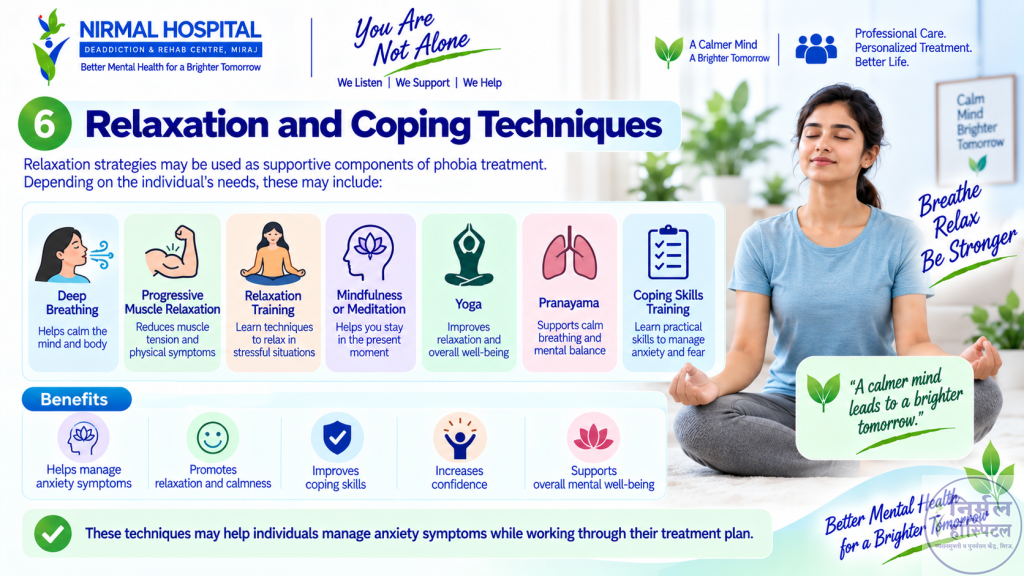
Relaxation strategies may be used as supportive components of phobia treatment.
Depending on the individual’s needs, these may include:
- Deep breathing
- Progressive muscle relaxation
- Relaxation training
- Mindfulness or meditation
- Yoga
- Pranayama
- Coping skills training
These techniques may help individuals manage anxiety symptoms while working through their treatment plan.
7. Behavioural Techniques
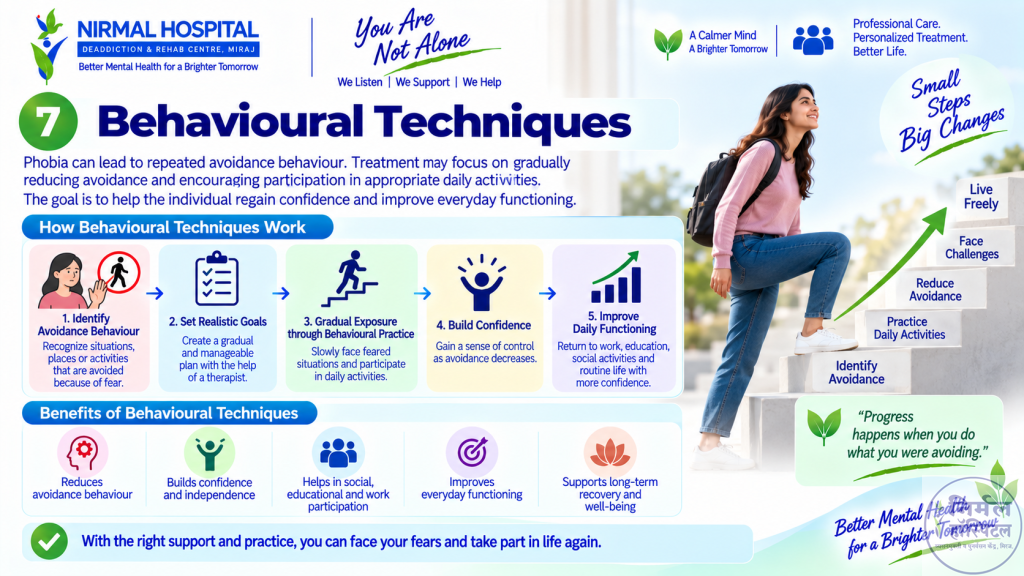
Phobia can lead to repeated avoidance behaviour.
Treatment may focus on gradually reducing avoidance and encouraging participation in appropriate daily activities.
The goal is to help the individual regain confidence and improve everyday functioning.
8. Modelling
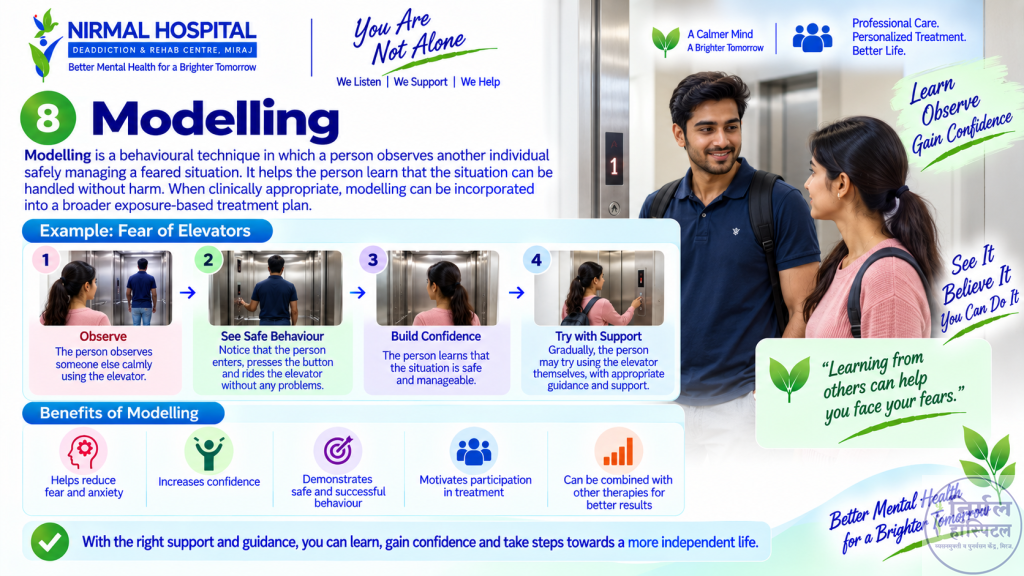
Modelling is a behavioural technique in which a person observes another individual safely managing a feared situation.
For example, someone with a fear of elevators may observe another person calmly using an elevator.
When clinically appropriate, modelling can be incorporated into a broader exposure-based treatment plan.
9. Psychological Counselling and Psychoeducation
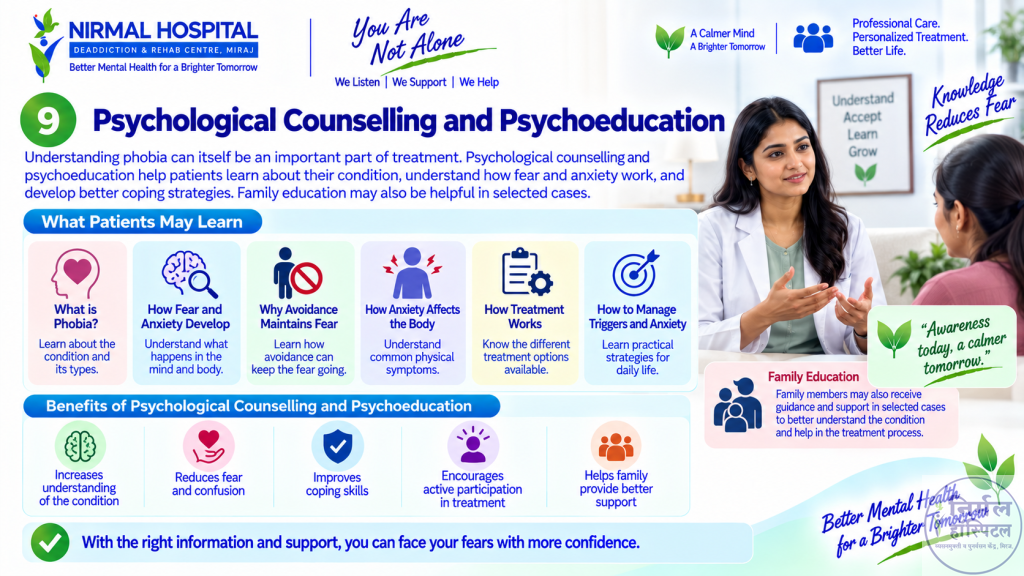
Understanding phobia can itself be an important part of treatment.
Patients may receive information about:
- What phobia is
- How fear and anxiety develop
- Why avoidance can maintain fear
- How anxiety symptoms affect the body
- How treatment works
- How to manage triggers and anxiety
Family education may also be helpful in selected cases.
10. Medication for Phobia
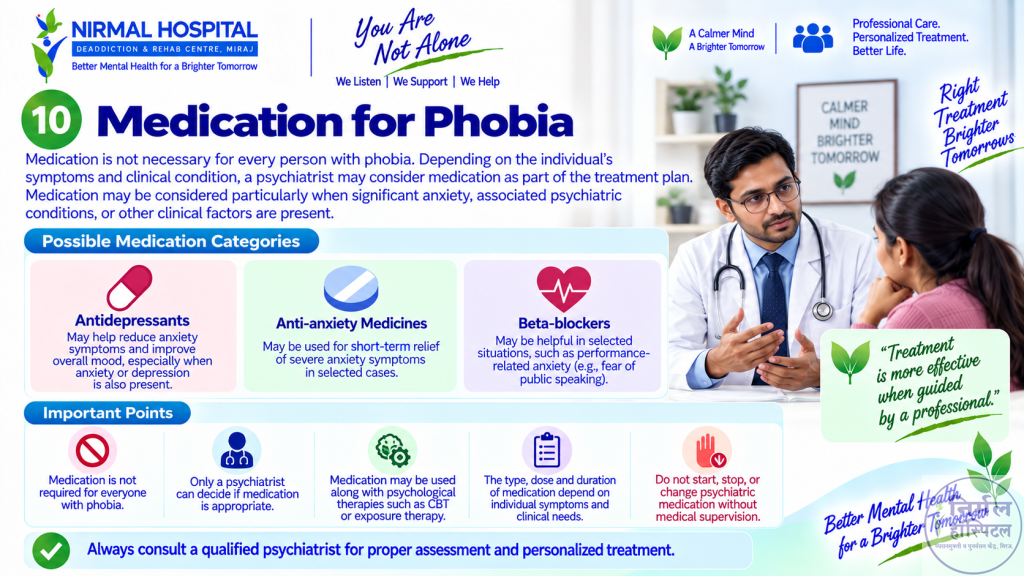
Medication is not necessary for every person with phobia.
Depending on the individual’s symptoms and clinical condition, a psychiatrist may consider medication as part of the treatment plan.
Medication may be considered particularly when significant anxiety, associated psychiatric conditions, or other clinical factors are present.
Possible medication categories may include:
- Antidepressants
- Anti-anxiety medicines
- Beta-blockers in selected situations
Do not start, stop, or change psychiatric medication without medical supervision.
11. Hypnotherapy
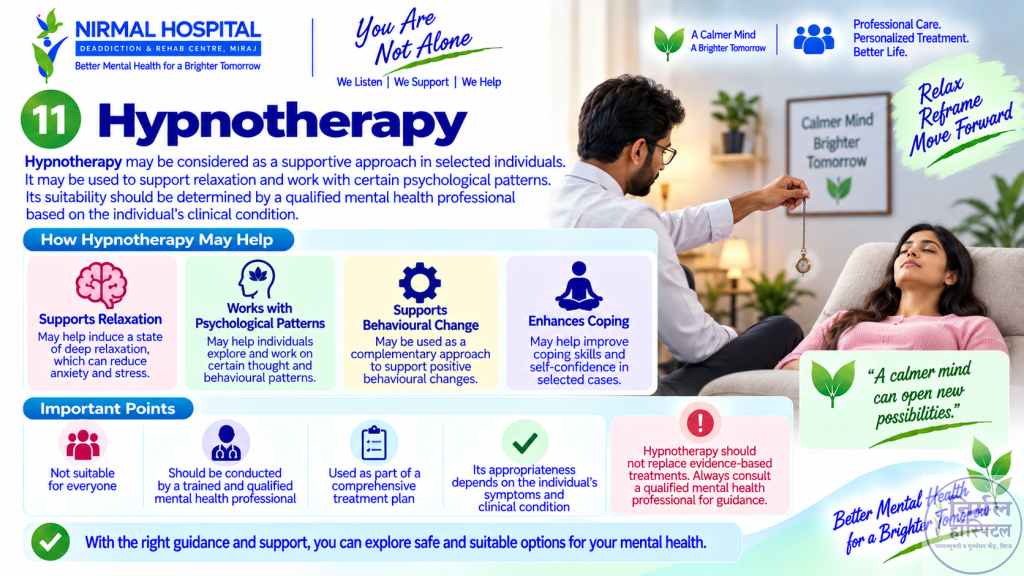
Hypnotherapy may be considered as a supportive approach in selected individuals.
It may be used to support relaxation and work with certain psychological patterns.
Its suitability should be determined by a qualified mental health professional based on the individual’s clinical condition.
12. Biofeedback
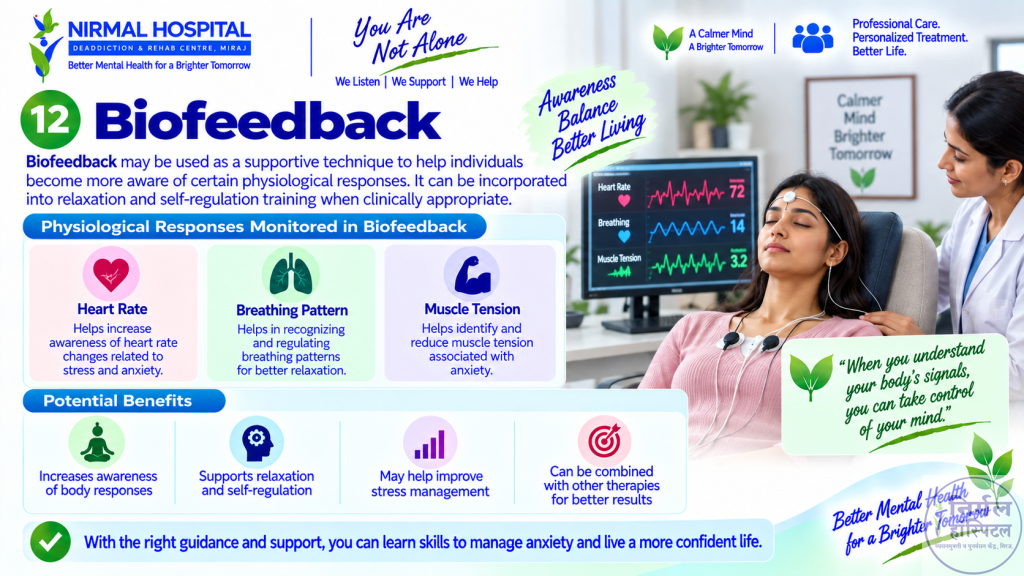
Biofeedback may be used as a supportive technique to help individuals become more aware of certain physiological responses.
These may include:
- Heart rate
- Breathing pattern
- Muscle tension
It can be incorporated into relaxation and self-regulation training when clinically appropriate.
13. Advanced Neuromodulation Therapies
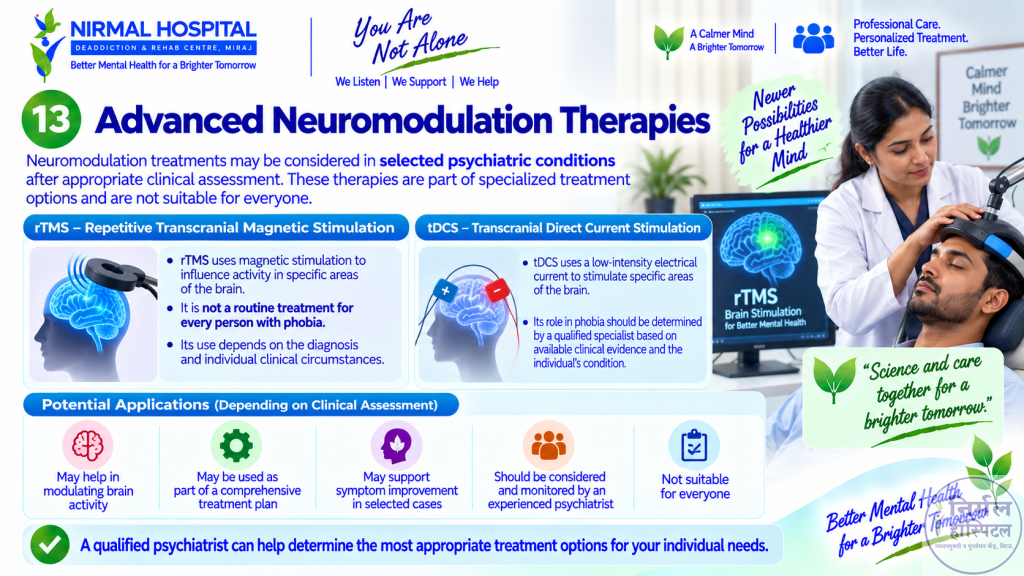
Neuromodulation treatments may be considered in selected psychiatric conditions after appropriate clinical assessment.
rTMS – Repetitive Transcranial Magnetic Stimulation
rTMS uses magnetic stimulation to influence activity in specific areas of the brain.
It is not a routine treatment for every person with phobia. Its use depends on the diagnosis and individual clinical circumstances.
tDCS – Transcranial Direct Current Stimulation
tDCS uses a low-intensity electrical current to stimulate specific areas of the brain.
Its role in phobia should be determined by a qualified specialist based on available clinical evidence and the individual’s condition.
Is Hospital Admission Required for Phobia Treatment?
Most people with phobia can be treated through outpatient (OPD) care.
Hospital-based psychiatric care may be considered when there are additional concerns such as:
- Severe psychiatric symptoms
- Significant depression
- Suicidal thoughts or safety concerns
- Other serious mental health conditions
- Severe functional impairment
- Inadequate response to outpatient treatment
The need for admission is decided by the treating psychiatrist after clinical assessment.
How Long Does Phobia Treatment Take?
The duration of treatment varies from person to person.
It may depend on:
- Type of phobia
- Severity of symptoms
- Duration of the problem
- Level of avoidance
- Response to therapy
- Presence of other mental health conditions
- Treatment adherence
Some people may improve with a structured course of psychotherapy, while others may require longer-term treatment and follow-up.
Can Phobia Be Completely Treated?
Phobia is a treatable mental health condition.
Many people can experience significant improvement with appropriate treatment. The goal of treatment is to reduce excessive fear, decrease avoidance, improve coping skills, and help the person participate more comfortably in everyday life.
Early professional help can be beneficial when phobia starts interfering with daily activities.
When Should You Seek Phobia Treatment?
Consider consulting a psychiatrist or mental health professional if:
- Fear is interfering with daily activities
- You frequently avoid certain situations
- You cannot travel because of fear
- You avoid work, college, or important responsibilities
- You experience severe anxiety or panic-like symptoms
- Your social or family life is affected
- Your fear is becoming increasingly difficult to manage
If you are looking for Phobia Treatment near me, professional assessment can help determine whether your symptoms are related to phobia or another anxiety-related condition.
Frequently Asked Questions About Phobia Treatment
What is the best treatment for phobia?
Treatment depends on the type and severity of the phobia. CBT and exposure-based therapies are commonly used approaches. Medication may be considered in selected cases.
Is CBT effective for phobia?
CBT can be an effective treatment approach for many phobias. It helps individuals understand fear-related thoughts and behaviours and develop healthier coping strategies.
What is Exposure Therapy for phobia?
Exposure Therapy involves gradually and safely facing feared situations in a structured manner. The exposure plan is tailored to the individual’s needs and should be carried out appropriately.
Can phobia be treated without medication?
Yes. Many people with phobias can benefit from psychological treatments such as CBT and exposure-based therapy without requiring medication. The appropriate treatment depends on the individual’s clinical assessment.
Is medication necessary for phobia?
Not everyone requires medication. A psychiatrist may consider medication depending on the severity of anxiety, associated conditions, and individual clinical needs.
Can phobia treatment be done on an OPD basis?
Yes. Most phobia cases can be managed through outpatient psychiatric treatment. More intensive care may be considered when clinically necessary.
How long does phobia treatment take?
There is no fixed treatment duration. It depends on the type and severity of phobia, the level of avoidance, response to therapy, and other individual factors.
Can phobia cause panic attacks?
Some people may experience panic attacks or panic-like symptoms when they encounter or anticipate a feared situation. However, panic attacks can occur in other conditions as well.
Can children receive treatment for phobia?
Yes. Children and teenagers can experience phobias. Treatment should be age-appropriate and provided after proper assessment by a qualified mental health professional.
Can phobia come back after treatment?
Symptoms may return in some individuals, particularly during periods of significant stress. Continued coping strategies, follow-up, and early intervention when symptoms return can be helpful.
Where can I get Phobia Treatment near me?
If you are located in or around Miraj, Sangli, Kolhapur, Satara, or nearby areas, you can consult a psychiatrist at Nirmal Hospital, Miraj for assessment and individualized treatment planning.
Get Professional Help for Phobia
You do not have to let fear control your daily life.
If excessive fear is causing avoidance, anxiety, panic-like symptoms, or difficulty with work, travel, education, or social activities, consider seeking professional mental health support.
Nirmal Hospital, Miraj provides psychiatric assessment and individualized treatment planning for phobia and related mental health concerns.
Phobia Treatment Near Me
Nirmal Hospital, Miraj
Address: Miraj–Kolhapur Road, Near Rajput Royals Garden, Miraj
Contact: 9922646566 | 9088444546 | 9028081339
Website: Nirmal Hospital Miraj
Important: The information on this page is for general educational purposes and does not replace an individual psychiatric consultation. Treatment should be decided by a qualified mental health professional after appropriate assessment.


