


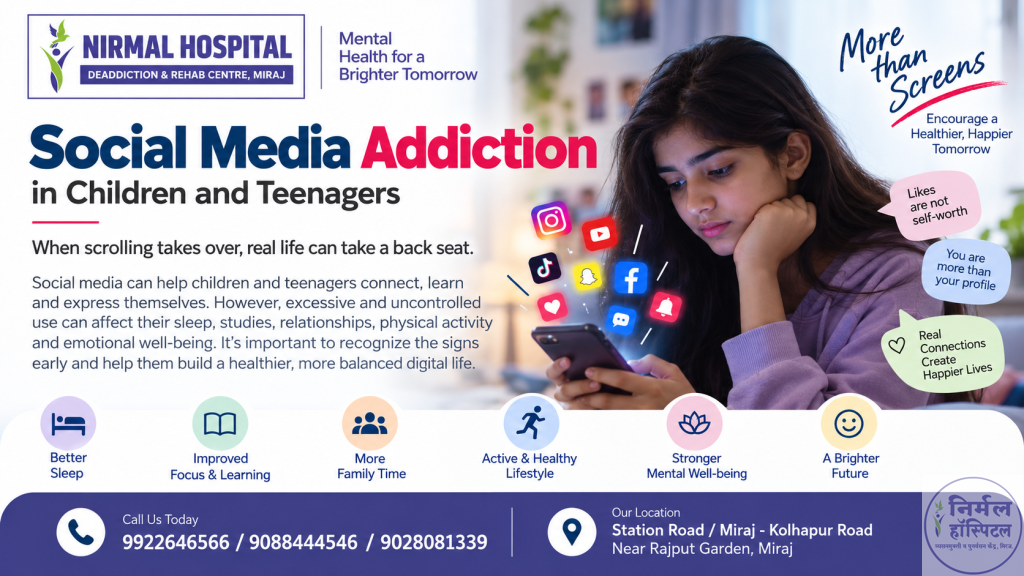
Social Media Addiction in Children and Teenagers
Social media has become an important part of everyday life for many children and teenagers. Platforms such as Instagram, Facebook, YouTube and other social networking applications allow young people to communicate, share content, watch videos and stay connected with friends.
While social media can provide opportunities for communication, education and entertainment, excessive and uncontrolled social media use can become problematic. Some children and teenagers may spend several hours scrolling through reels and short videos, checking notifications, viewing posts, chatting online or seeking likes and comments.
When social media use begins to interfere with sleep, studies, family relationships, physical activity, concentration or emotional well-being, parents should pay attention to the child’s digital habits.
Frequent social media use alone does not necessarily mean addiction. The concern becomes greater when the child has difficulty controlling social media use and continues using it despite significant negative effects on everyday life.
What Is Social Media Addiction?
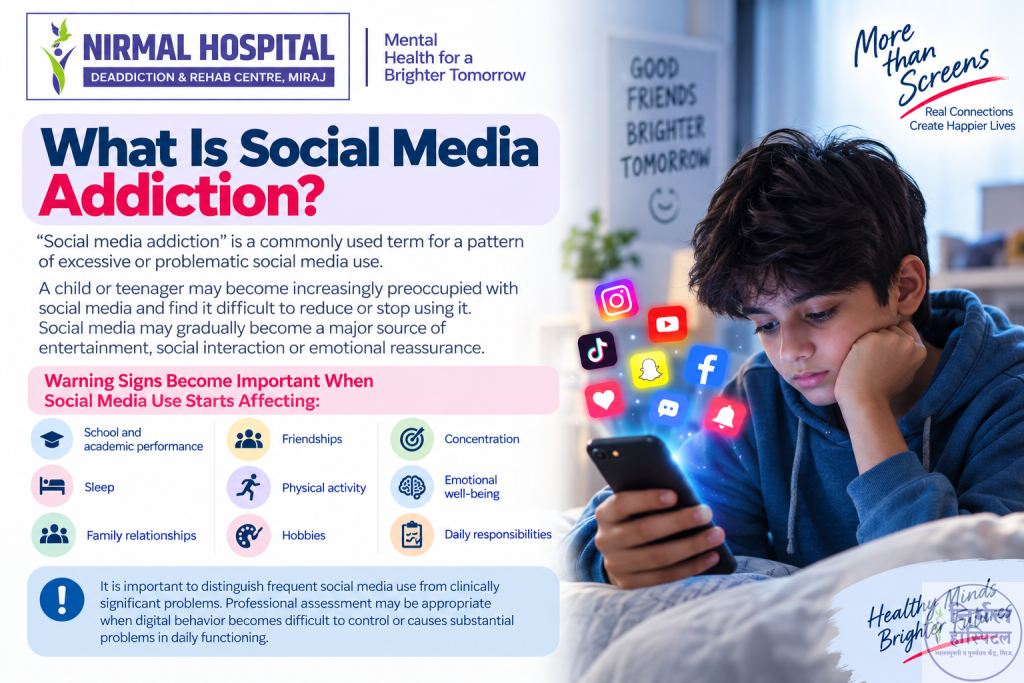
“Social media addiction” is a commonly used term for a pattern of excessive or problematic social media use.
A child or teenager may become increasingly preoccupied with social media and find it difficult to reduce or stop using it. Social media may gradually become a major source of entertainment, social interaction or emotional reassurance.
Warning signs become particularly important when social media use starts affecting:
- School and academic performance
- Sleep
- Family relationships
- Friendships
- Physical activity
- Hobbies
- Concentration
- Emotional well-being
- Daily responsibilities
It is important to distinguish frequent social media use from clinically significant problems. Professional assessment may be appropriate when digital behavior becomes difficult to control or causes substantial problems in daily functioning.
Why Does Social Media Become So Engaging?
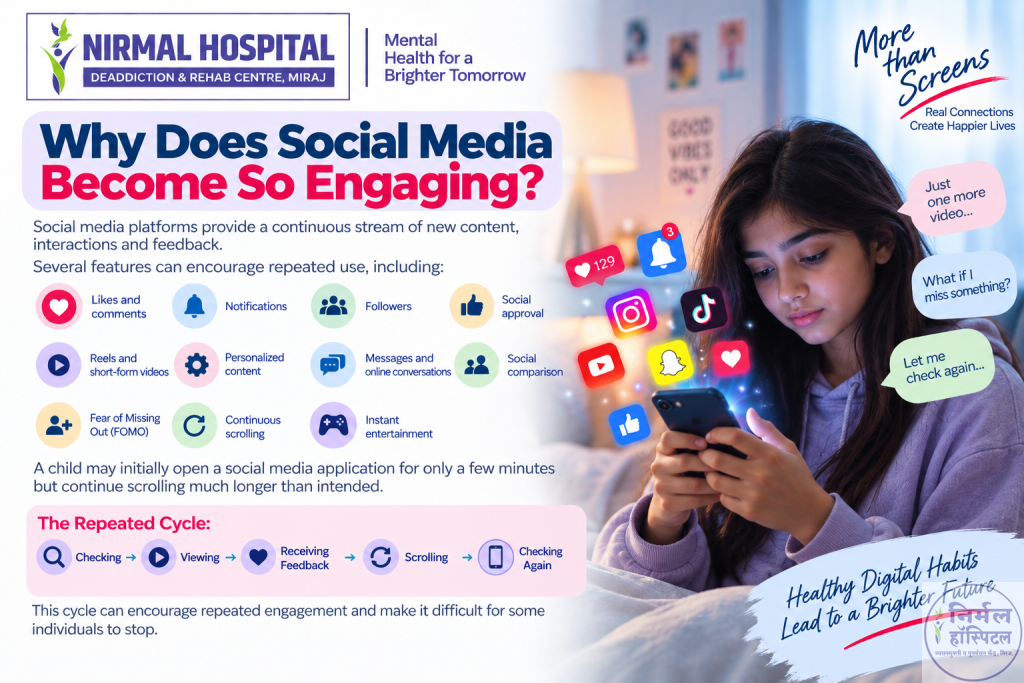
Social media platforms provide a continuous stream of new content, interactions and feedback.
Several features can encourage repeated use, including:
- Likes and comments
- Notifications
- Followers
- Social approval
- Reels and short-form videos
- Personalized content
- Messages and online conversations
- Social comparison
- Fear of Missing Out (FOMO)
- Continuous scrolling
- Instant entertainment
A child may initially open a social media application for only a few minutes but continue scrolling much longer than intended.
The repeated pattern of:
Checking → Viewing → Receiving Feedback → Scrolling → Checking Again
can encourage repeated engagement and make it difficult for some individuals to stop.
Social Media and the Brain’s Reward System
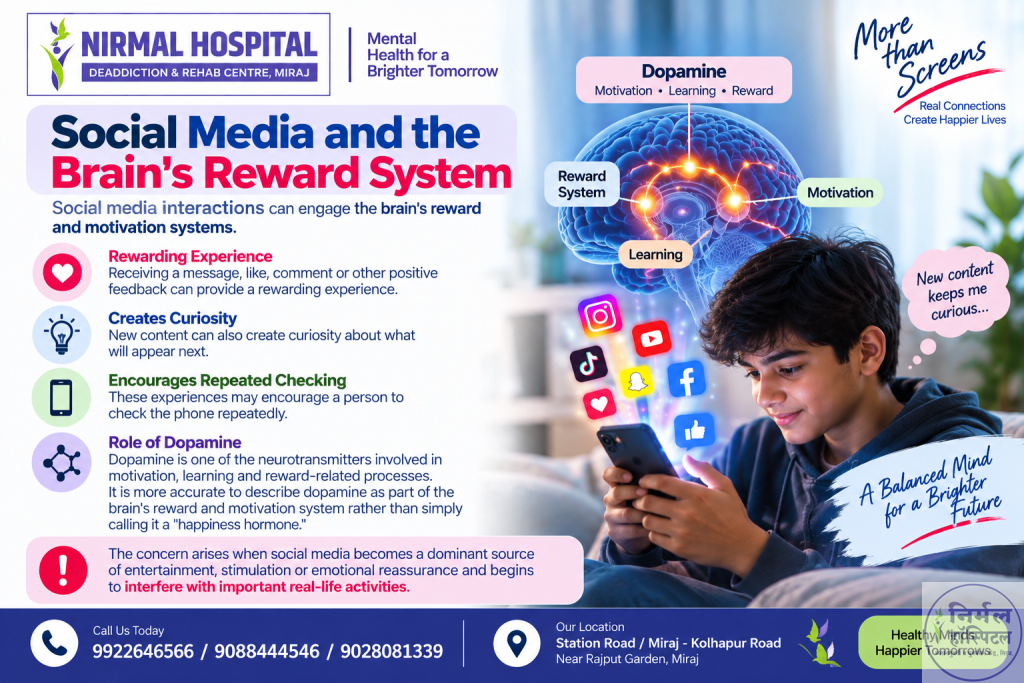
Social media interactions can engage the brain’s reward and motivation systems.
Receiving a message, like, comment or other positive feedback can provide a rewarding experience. New content can also create curiosity about what will appear next.
These experiences may encourage a person to check the phone repeatedly.
Dopamine is one of the neurotransmitters involved in motivation, learning and reward-related processes. It is more accurate to describe dopamine as part of the brain’s reward and motivation system rather than simply calling it a “happiness hormone.”
The concern arises when social media becomes a dominant source of entertainment, stimulation or emotional reassurance and begins to interfere with important real-life activities.
Causes and Risk Factors of Social Media Addiction
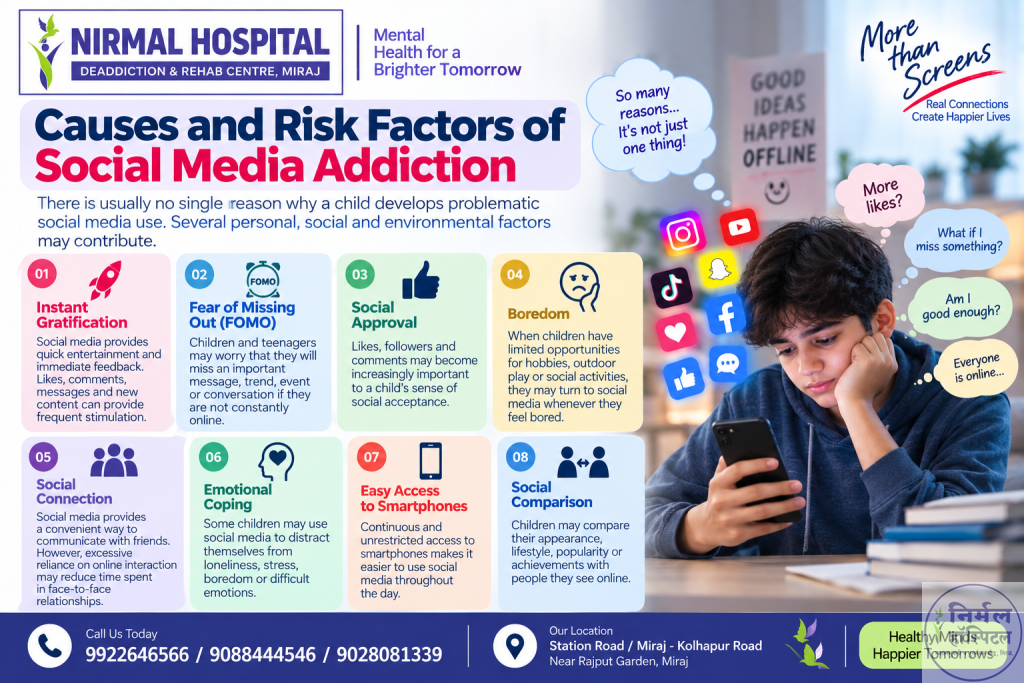
There is usually no single reason why a child develops problematic social media use. Several personal, social and environmental factors may contribute.
1. Instant Gratification
Social media provides quick entertainment and immediate feedback. Likes, comments, messages and new content can provide frequent stimulation.
2. Fear of Missing Out (FOMO)
Children and teenagers may worry that they will miss an important message, trend, event or conversation if they are not constantly online.
3. Social Approval
Likes, followers and comments may become increasingly important to a child’s sense of social acceptance.
4. Boredom
When children have limited opportunities for hobbies, outdoor play or social activities, they may turn to social media whenever they feel bored.
5. Social Connection
Social media provides a convenient way to communicate with friends. However, excessive reliance on online interaction may reduce time spent in face-to-face relationships.
6. Emotional Coping
Some children may use social media to distract themselves from loneliness, stress, boredom or difficult emotions.
7. Easy Access to Smartphones
Continuous and unrestricted access to smartphones makes it easier to use social media throughout the day.
8. Social Comparison
Children may compare their appearance, lifestyle, popularity or achievements with people they see online.
Symptoms of Social Media Addiction in Children and Teenagers
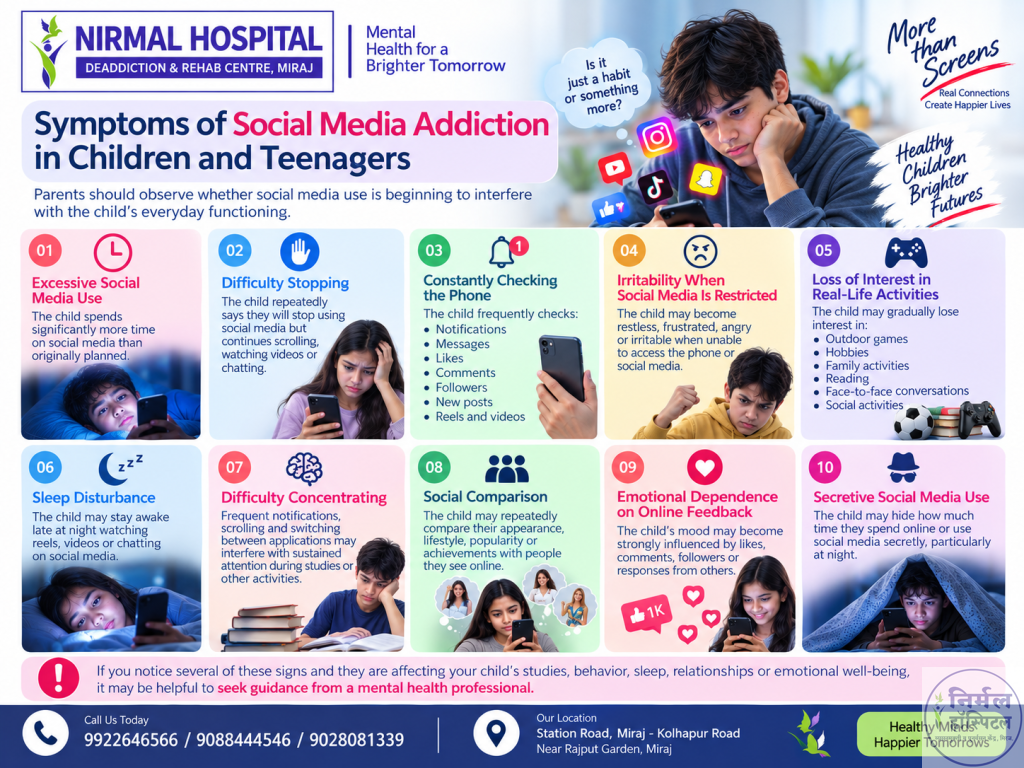
Parents should observe whether social media use is beginning to interfere with the child’s everyday functioning.
1. Excessive Social Media Use
The child spends significantly more time on social media than originally planned.
2. Difficulty Stopping
The child repeatedly says they will stop using social media but continues scrolling, watching videos or chatting.
3. Constantly Checking the Phone
The child frequently checks:
- Notifications
- Messages
- Likes
- Comments
- Followers
- New posts
- Reels and videos
4. Irritability When Social Media Is Restricted
The child may become restless, frustrated, angry or irritable when unable to access the phone or social media.
5. Loss of Interest in Real-Life Activities
The child may gradually lose interest in:
- Outdoor games
- Hobbies
- Family activities
- Reading
- Face-to-face conversations
- Social activities
6. Sleep Disturbance
The child may stay awake late at night watching reels, videos or chatting on social media.
7. Difficulty Concentrating
Frequent notifications, scrolling and switching between applications may interfere with sustained attention during studies or other activities.
8. Social Comparison
The child may repeatedly compare their appearance, lifestyle, popularity or achievements with people they see online.
9. Emotional Dependence on Online Feedback
The child’s mood may become strongly influenced by likes, comments, followers or responses from others.
10. Secretive Social Media Use
The child may hide how much time they spend online or use social media secretly, particularly at night.
Effects of Excessive Social Media Use on Children
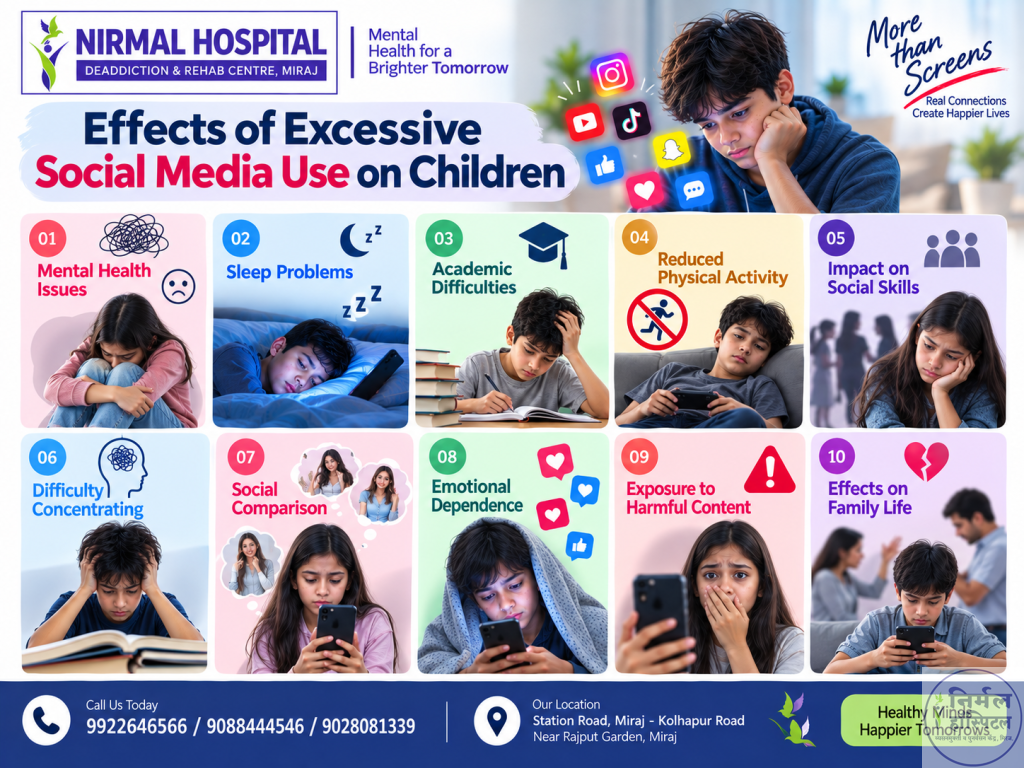
Excessive social media use can affect different aspects of a child’s life. The impact can vary between individuals depending on their age, circumstances, type of online activity and overall digital habits.
1. Mental and Emotional Effects
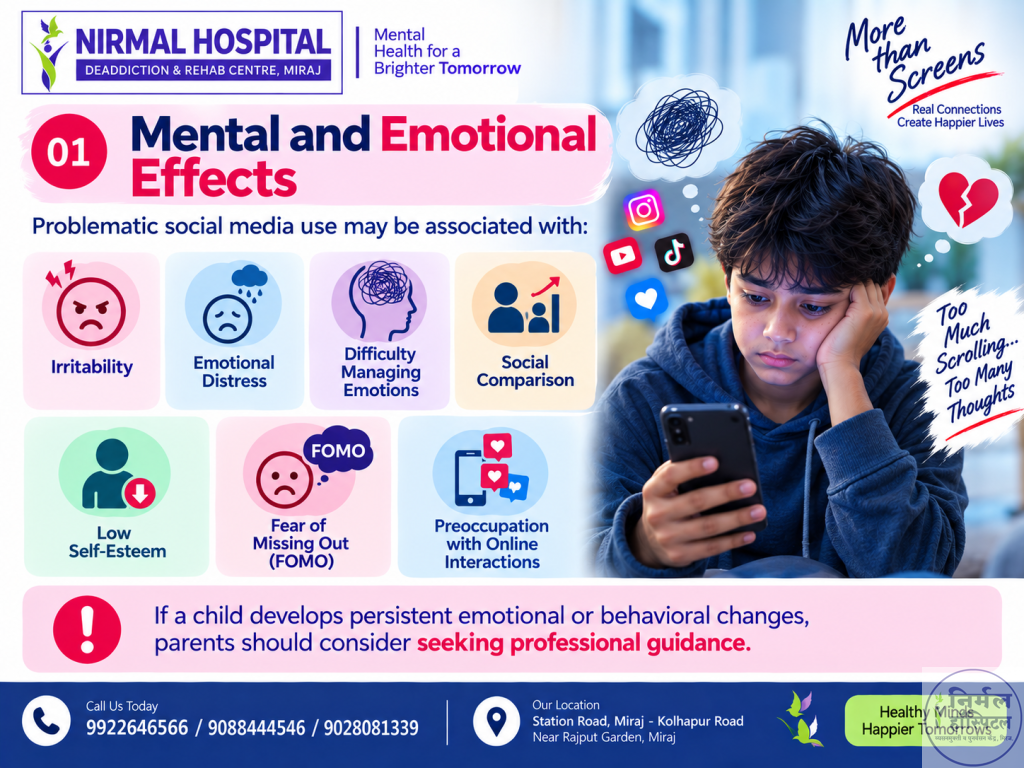
Problematic social media use may be associated with:
- Irritability
- Emotional distress
- Difficulty managing emotions
- Social comparison
- Low self-esteem
- Fear of Missing Out (FOMO)
- Preoccupation with online interactions
If a child develops persistent emotional or behavioral changes, parents should consider seeking professional guidance.
2. Sleep Problems
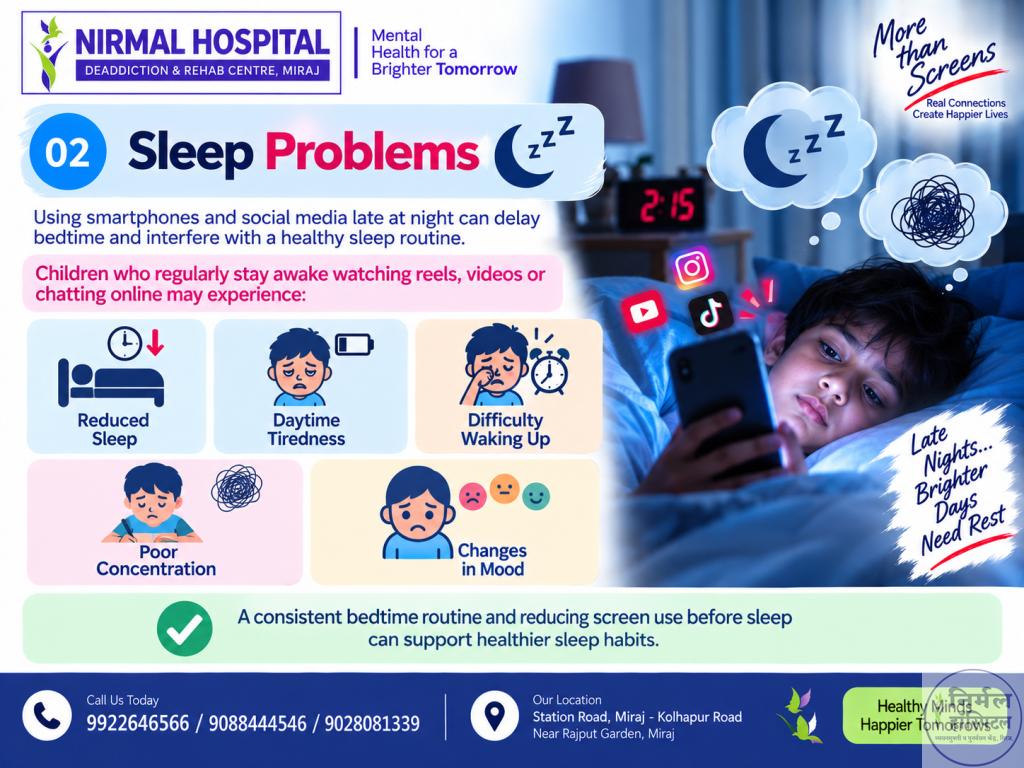
Using smartphones and social media late at night can delay bedtime and interfere with a healthy sleep routine.
Children who regularly stay awake watching reels, videos or chatting online may experience:
- Reduced sleep
- Daytime tiredness
- Difficulty waking up
- Poor concentration
- Changes in mood
A consistent bedtime routine and reducing screen use before sleep can support healthier sleep habits.
3. Academic Problems
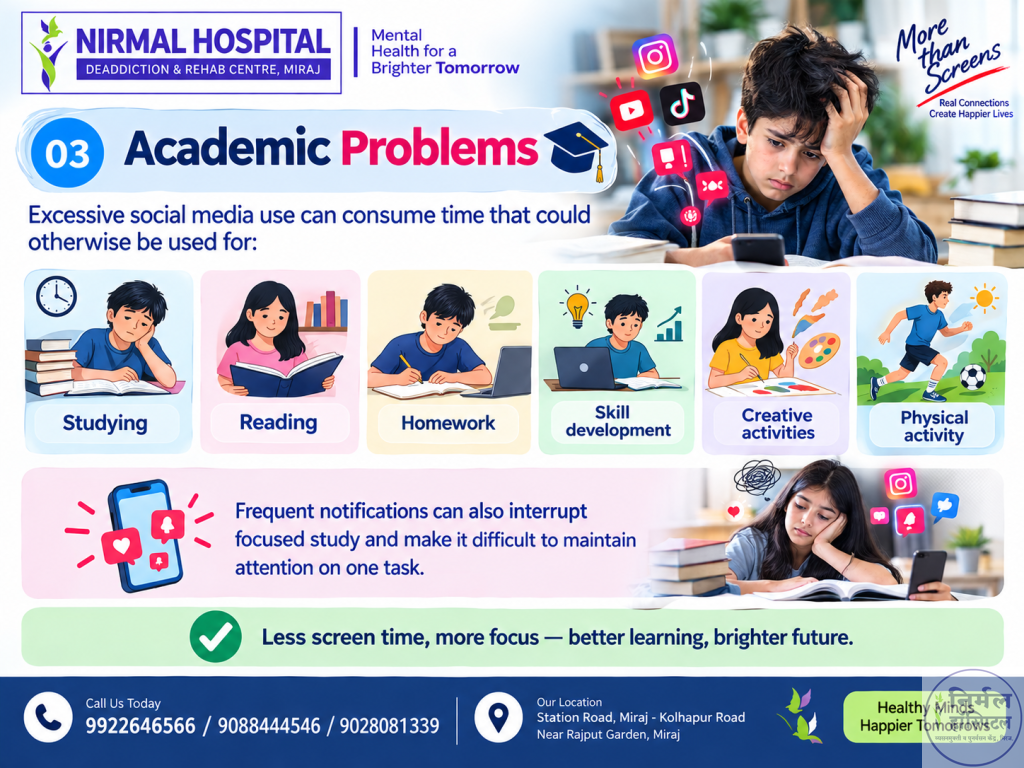
Excessive social media use can consume time that could otherwise be used for:
- Studying
- Reading
- Homework
- Skill development
- Creative activities
- Physical activity
Frequent notifications can also interrupt focused study and make it difficult to maintain attention on one task.
4. Reduced Physical Activity
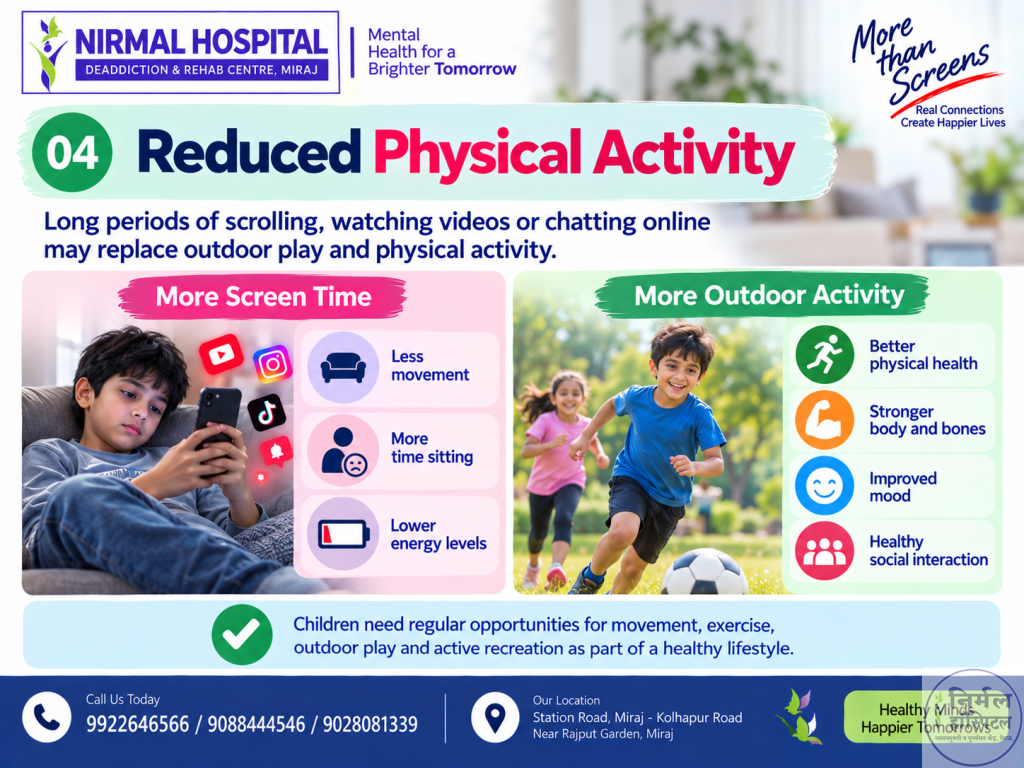
Long periods of scrolling, watching videos or chatting online may replace outdoor play and physical activity.
Children need regular opportunities for movement, exercise, outdoor play and active recreation as part of a healthy lifestyle.
5. Social and Family Problems
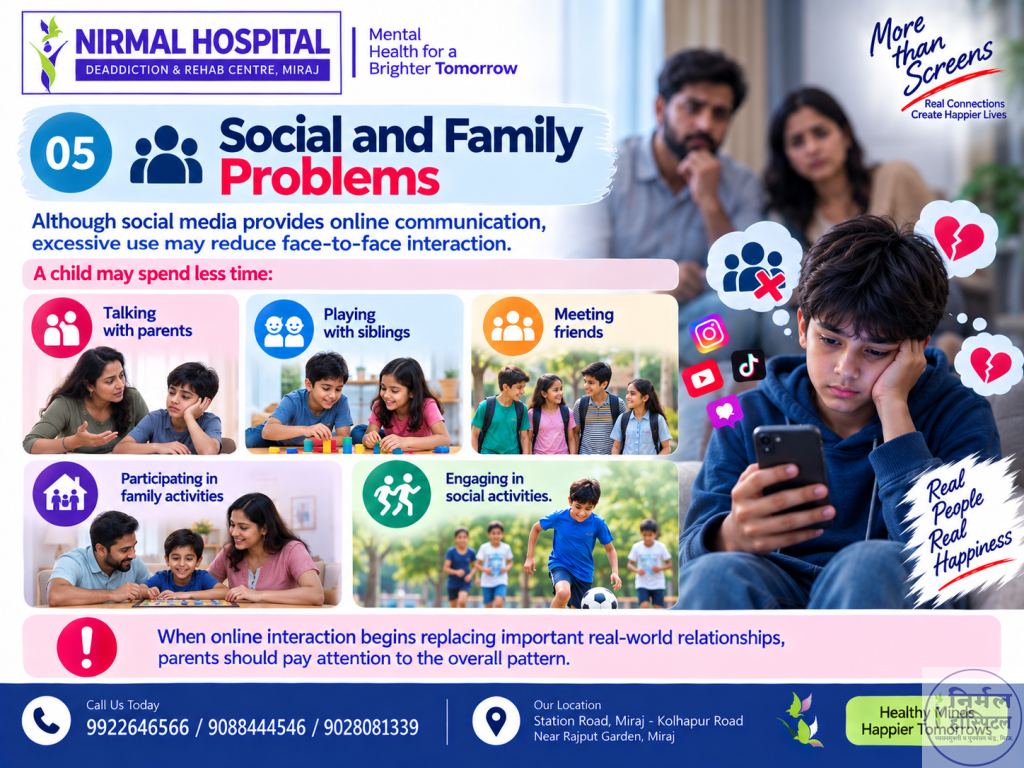
Although social media provides online communication, excessive use may reduce face-to-face interaction.
A child may spend less time:
- Talking with parents
- Playing with siblings
- Meeting friends
- Participating in family activities
- Engaging in social activities
When online interaction begins replacing important real-world relationships, parents should pay attention to the overall pattern.
6. Cyberbullying and Online Safety Risks
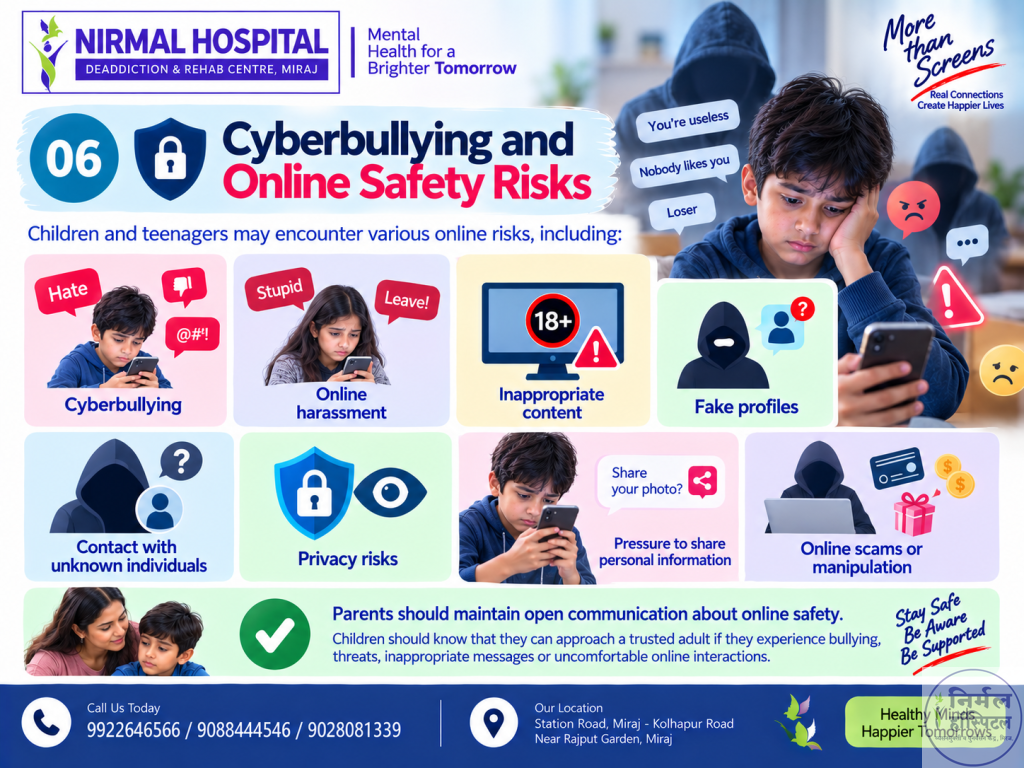
Children and teenagers may encounter various online risks, including:
- Cyberbullying
- Online harassment
- Inappropriate content
- Fake profiles
- Contact with unknown individuals
- Privacy risks
- Pressure to share personal information
- Online scams or manipulation
Parents should maintain open communication about online safety.
Children should know that they can approach a trusted adult if they experience bullying, threats, inappropriate messages or uncomfortable online interactions.
Social Media, Self-Esteem and Body Image
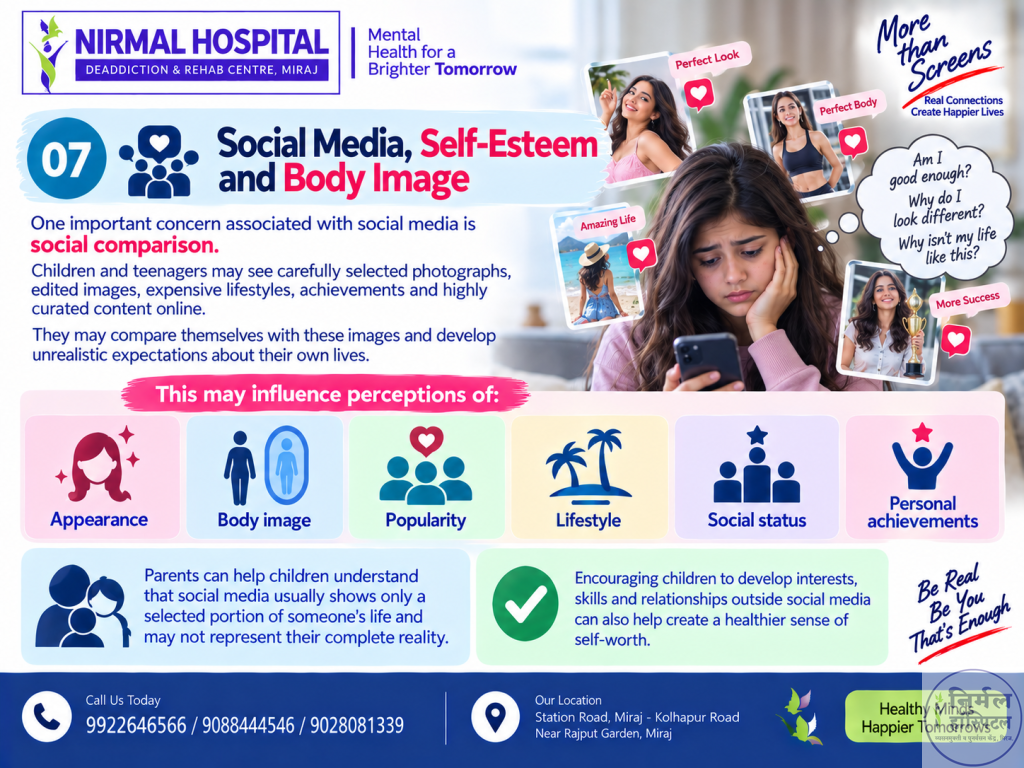
One important concern associated with social media is social comparison.
Children and teenagers may see carefully selected photographs, edited images, expensive lifestyles, achievements and highly curated content online.
They may compare themselves with these images and develop unrealistic expectations about their own lives.
This may influence perceptions of:
- Appearance
- Body image
- Popularity
- Lifestyle
- Social status
- Personal achievements
Parents can help children understand that social media usually shows only a selected portion of someone’s life and may not represent their complete reality.
Encouraging children to develop interests, skills and relationships outside social media can also help create a healthier sense of self-worth.
Social Media and Fear of Missing Out (FOMO)
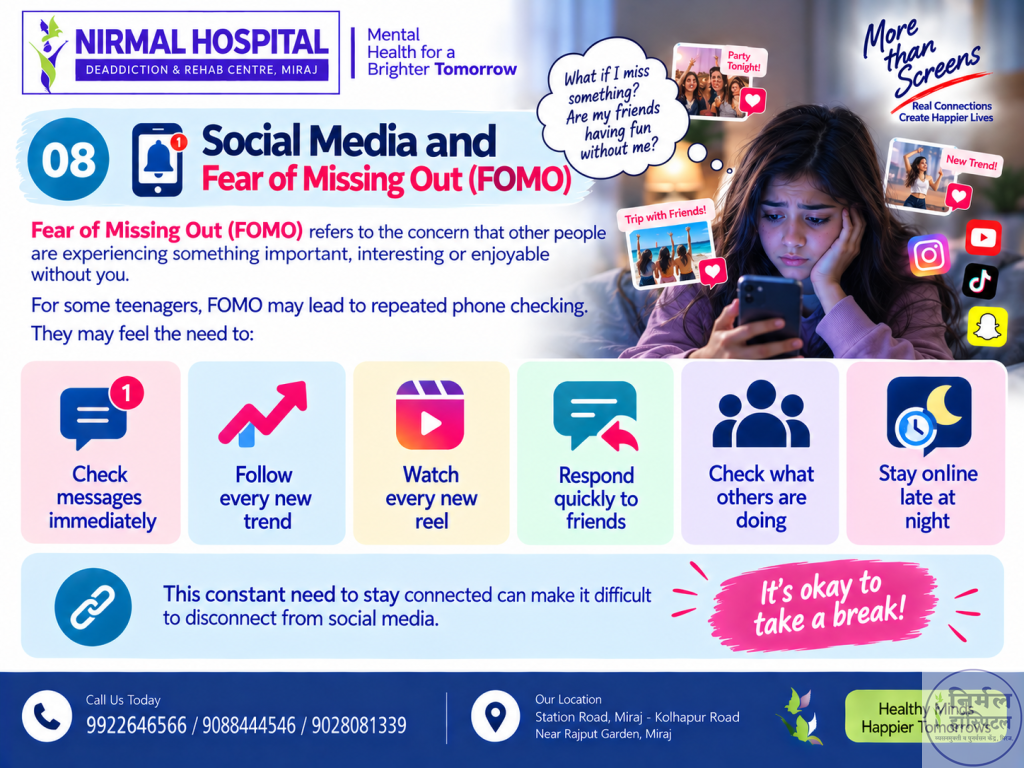
Fear of Missing Out (FOMO) refers to the concern that other people are experiencing something important, interesting or enjoyable without you.
For some teenagers, FOMO may lead to repeated phone checking.
They may feel the need to:
- Check messages immediately
- Follow every new trend
- Watch every new reel
- Respond quickly to friends
- Check what others are doing
- Stay online late at night
This constant need to stay connected can make it difficult to disconnect from social media.
Mobile Gaming and Social Media Addiction Can Coexist
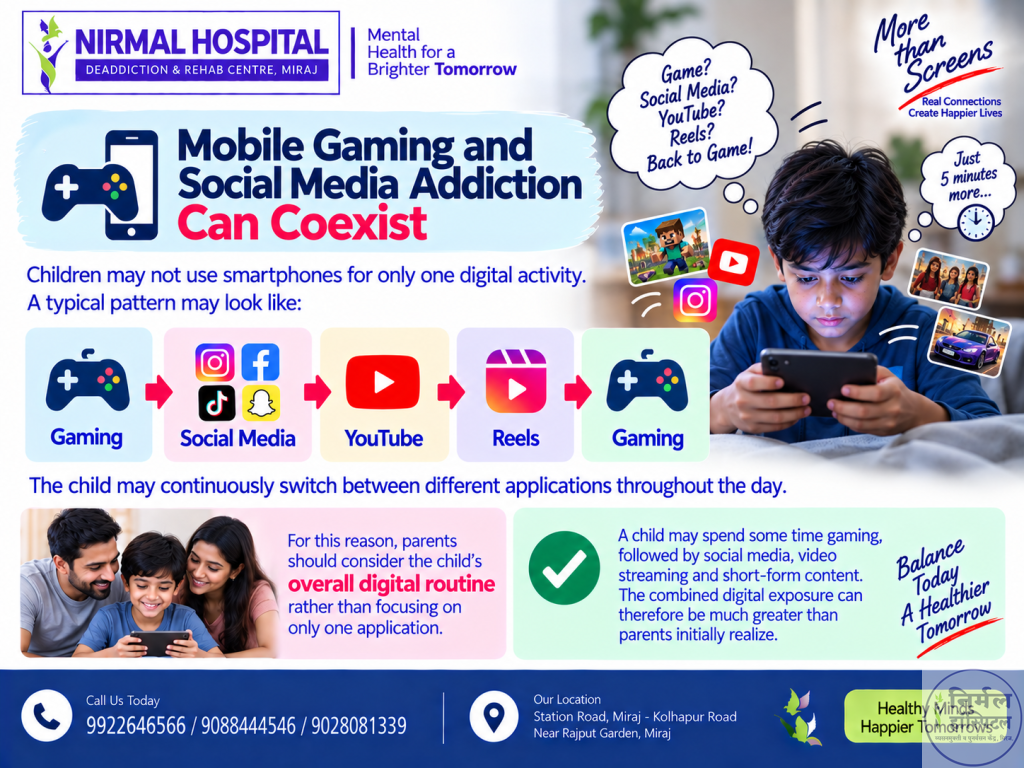
Children may not use smartphones for only one digital activity.
A typical pattern may look like:
Gaming → Social Media → YouTube → Reels → Gaming
The child may continuously switch between different applications throughout the day.
For this reason, parents should consider the child’s overall digital routine rather than focusing on only one application.
A child may spend some time gaming, followed by social media, video streaming and short-form content. The combined digital exposure can therefore be much greater than parents initially realize.
How Can Parents Identify Problematic Social Media Use?
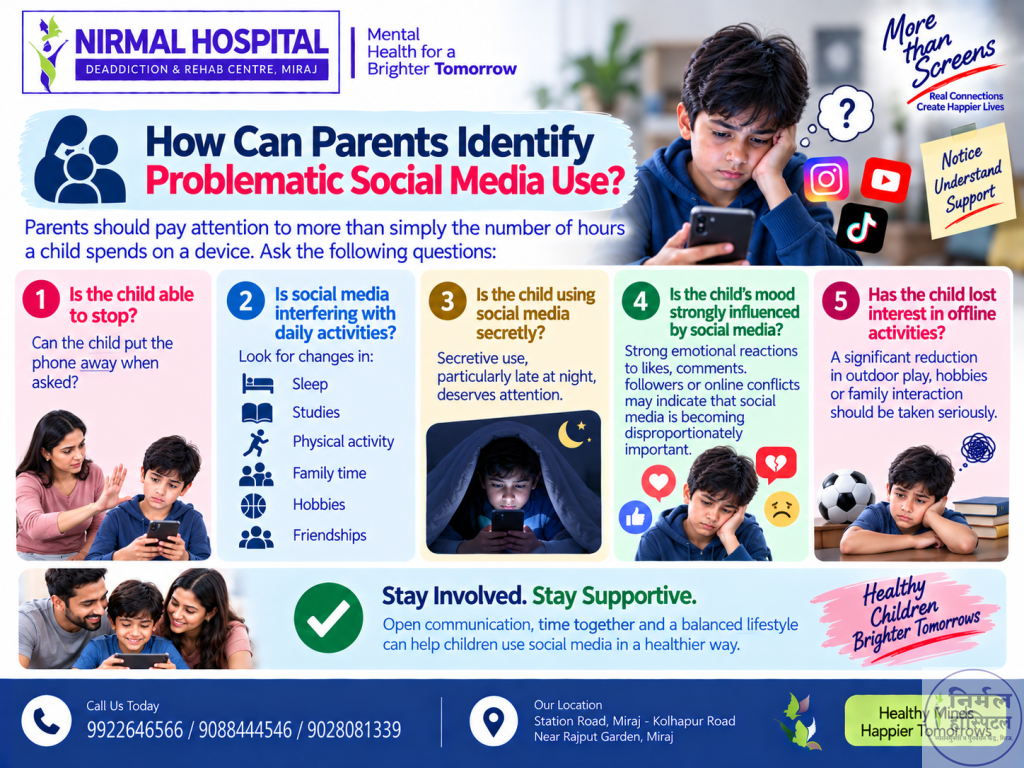
Parents should pay attention to more than simply the number of hours a child spends on a device.
Ask the following questions:
Is the child able to stop?
Can the child put the phone away when asked?
Is social media interfering with daily activities?
Look for changes in:
- Sleep
- Studies
- Physical activity
- Family time
- Hobbies
- Friendships
Is the child using social media secretly?
Secretive use, particularly late at night, deserves attention.
Is the child’s mood strongly influenced by social media?
Strong emotional reactions to likes, comments, followers or online conflicts may indicate that social media is becoming disproportionately important.
Has the child lost interest in offline activities?
A significant reduction in outdoor play, hobbies or family interaction should be taken seriously.
Healthy Social Media Habits for Children and Teenagers
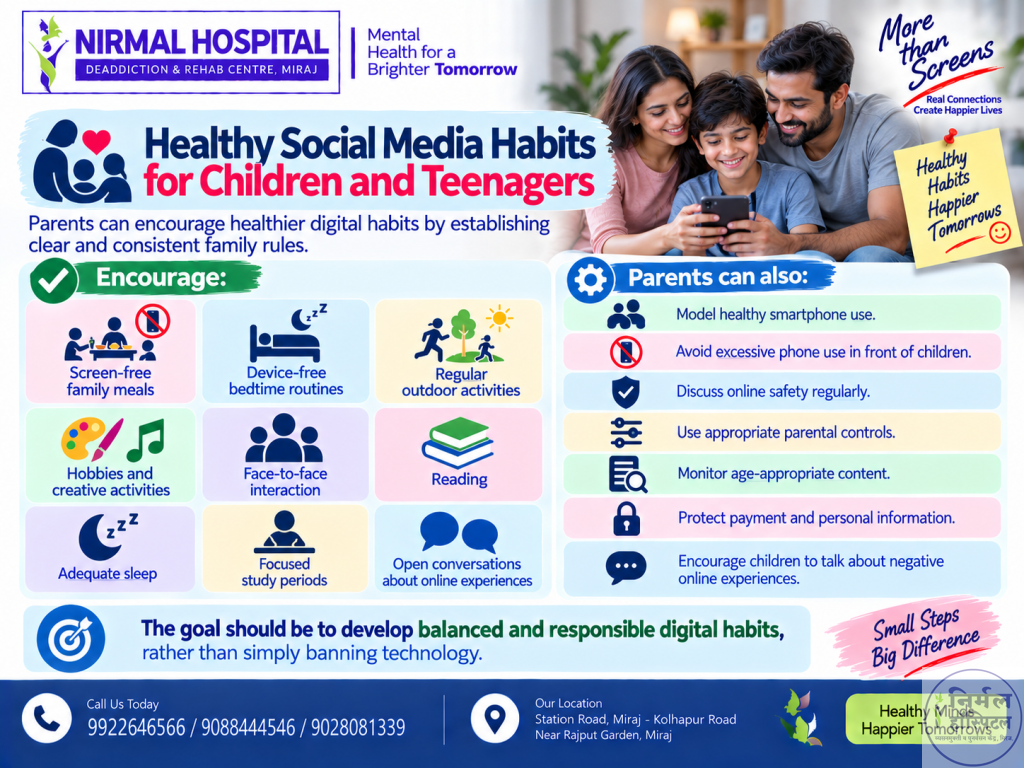
Parents can encourage healthier digital habits by establishing clear and consistent family rules.
Encourage:
- Screen-free family meals
- Device-free bedtime routines
- Regular outdoor activities
- Hobbies and creative activities
- Face-to-face interaction
- Reading
- Adequate sleep
- Focused study periods
- Open conversations about online experiences
Parents can also:
- Model healthy smartphone use.
- Avoid excessive phone use in front of children.
- Discuss online safety regularly.
- Use appropriate parental controls.
- Monitor age-appropriate content.
- Protect payment and personal information.
- Encourage children to talk about negative online experiences.
The goal should be to develop balanced and responsible digital habits, rather than simply banning technology.
When Should Parents Seek Professional Help?
Parents should consider consulting a mental-health professional if social media or smartphone use is causing significant difficulties such as:
- Persistent inability to control social media use
- Major disruption to studies
- Repeated sleep problems
- Severe family conflicts
- Loss of interest in normal activities
- Significant changes in mood or behavior
- Social withdrawal
- Excessive preoccupation with online interactions
- Cyberbullying or serious online distress
- Continued problematic use despite negative consequences
Early recognition can help families address problematic digital behavior before it significantly affects the child’s everyday life.
For information about professional assessment and treatment options, visit our dedicated:
[Treatment for Mobile, Gaming & Social Media Addiction]
Frequently Asked Questions About Social Media Addiction
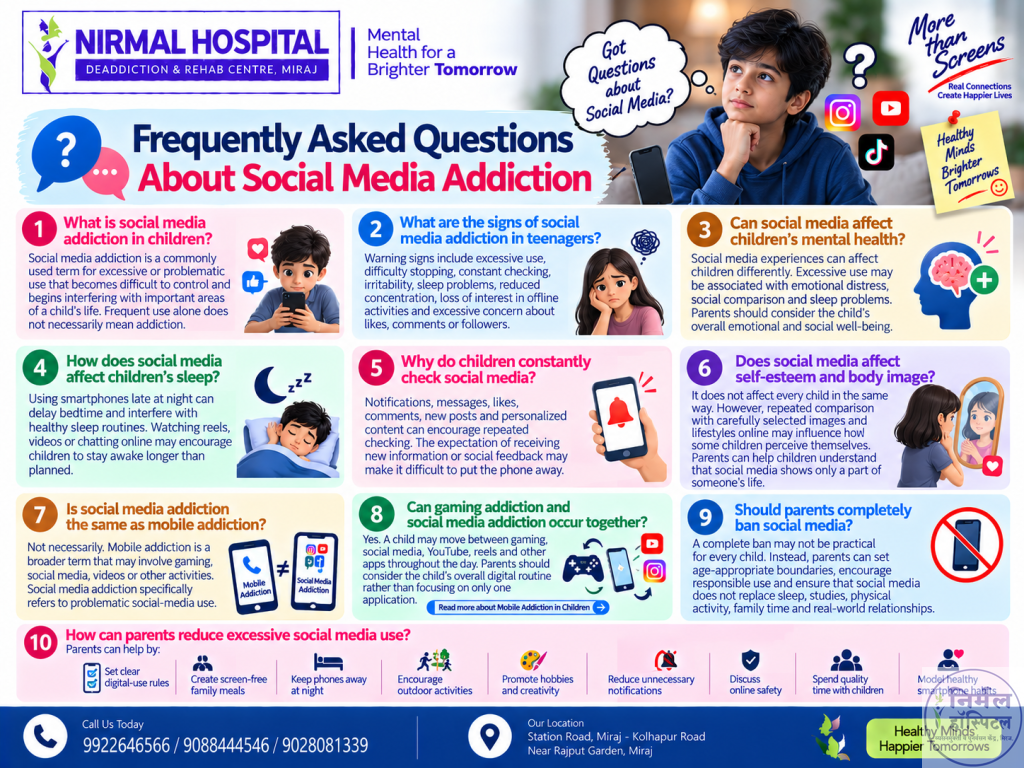
What is social media addiction in children?
Social media addiction is a commonly used term for excessive or problematic social media use that becomes difficult to control and begins interfering with important areas of a child’s life, such as studies, sleep, relationships, physical activity or emotional well-being.
Frequent social media use alone does not necessarily mean addiction.
What are the signs of social media addiction in teenagers?
Common warning signs include excessive social media use, difficulty stopping, constantly checking notifications, irritability when access is restricted, sleep problems, reduced concentration, loss of interest in offline activities and excessive concern about likes, comments or followers.
Can social media affect children’s mental health?
Social media experiences can affect children differently. Excessive or problematic use may be associated with emotional distress, social comparison, sleep problems and other difficulties.
Parents should consider the child’s overall emotional and social well-being.
How does social media affect children’s sleep?
Using smartphones late at night can delay bedtime and interfere with healthy sleep routines.
Watching reels, videos or chatting online may encourage children to stay awake longer than planned.
Why do children constantly check social media?
Notifications, messages, likes, comments, new posts, reels and personalized content can encourage repeated checking.
The expectation of receiving new information or social feedback may make it difficult for some children to put the phone away.
Does social media affect self-esteem and body image?
Social media does not affect every child in the same way. However, repeated comparison with carefully selected photographs, lifestyles and achievements online may influence how some children perceive themselves.
Parents can help children understand that social media usually represents only a selected part of someone’s life.
Is social media addiction the same as mobile addiction?
Not necessarily.
Mobile addiction is a broader term that may involve excessive smartphone use for gaming, social media, videos, browsing or other activities.
Social media addiction specifically refers to problematic patterns of social networking and social-media use.
A child may experience problematic use involving one or several digital activities.
Can gaming addiction and social media addiction occur together?
Yes. A child may move between gaming, social media, YouTube, reels and other applications throughout the day.
For this reason, parents should consider the child’s overall digital routine rather than looking at only one application.
Read more about [Mobile Addiction in Children].
Should parents completely ban social media?
A complete ban may not be practical or necessary for every child.
Parents can instead establish age-appropriate boundaries, encourage responsible use, discuss online safety and ensure that social media does not replace sleep, studies, physical activity, family time and real-world relationships.
How can parents reduce excessive social media use?
Parents can help by:
- Setting clear and consistent digital-use rules
- Creating screen-free family meals
- Keeping smartphones away from bedrooms at night
- Encouraging outdoor activities
- Promoting hobbies and creative activities
- Reducing unnecessary notifications
- Discussing online safety
- Spending quality time with children
- Modelling healthy smartphone habits themselves
When should parents consult a mental-health professional?
Professional guidance may be appropriate when social media use becomes difficult to control or significantly affects the child’s:
- Studies
- Sleep
- Family relationships
- Friendships
- Physical activity
- Emotional well-being
- Daily responsibilities
For detailed information about professional treatment, visit [Treatment for Mobile, Gaming & Social Media Addiction].
Watch Our Mobile Addiction Awareness Video
Want to learn more about mobile addiction and excessive smartphone use in children and teenagers?
Watch the Nirmal Hospital Mobile Addiction Awareness Video on our YouTube channel for additional educational information and practical guidance.
[Watch Mobile Addiction Video on Nirmal Hospital YouTube Channel]
This video is provided as an additional educational resource. For individual concerns, consult a qualified healthcare professional.
Related Information
Explore our related resources:
Mobile Addiction in Children
Learn about the causes, symptoms, effects and warning signs associated with excessive smartphone and digital-media use.
[Read More: Mobile Addiction in Children]
Treatment for Mobile, Gaming & Social Media Addiction
Learn about professional assessment and the different psychological, behavioral and family-based approaches that may be considered according to individual needs.
[Read More: Treatment for Mobile, Gaming & Social Media Addiction]
Child and Adolescent Mental Health
Learn more about emotional, behavioral and psychological concerns affecting children and teenagers.
[Read More: Child & Adolescent Mental Health]
A Healthy Digital Life for Children
Technology is an important part of modern life. Smartphones and social media can provide communication, information, education and entertainment.
However, children also need sufficient sleep, physical activity, family interaction, friendships, hobbies and real-world experiences.
A healthy digital lifestyle can be represented as:
Education + Sleep + Physical Activity + Family Time + Social Interaction + Hobbies + Responsible Technology Use
The objective is not necessarily to eliminate technology, but to help children develop a healthy and balanced relationship with the digital world.
Final Message for Parents
Social media can be a useful tool for communication, learning and entertainment. However, excessive and uncontrolled use can become a concern when it begins to interfere with a child’s everyday life.
Parents should focus on the child’s overall behavior and functioning, rather than judging the problem only by the number of hours spent online.
Open communication, healthy boundaries, positive activities, good sleep habits and responsible parental role modelling can help children develop healthier digital habits.
If your child is struggling to control social media or smartphone use and it is affecting studies, sleep, relationships or emotional well-being, consider consulting a qualified mental-health professional for appropriate assessment and guidance.
Disclaimer: This content is intended for general educational purposes only and does not replace professional medical or psychological evaluation. Individual concerns should be discussed with a qualified healthcare professional.


Leave a Reply