


Panic Disorder: Causes, Symptoms and Recovery
When we talk about mental health, we often think only of sadness or depression. However, mental health problems are not limited to feeling sad or experiencing depression. Disorders characterized by intense fear and anxiety are also increasing rapidly.
One such condition that can suddenly overwhelm and completely shake a person is Panic Disorder.
In simple terms, a person with panic disorder may suddenly experience overwhelming fear without any obvious external reason. This sudden episode of intense fear is called a Panic Attack.
Imagine that you are sitting peacefully and, within seconds, your heart suddenly starts beating rapidly, you begin sweating heavily, and you struggle to breathe. There may be no apparent reason for it, yet it happens suddenly.
Normally, when we face a dangerous situation—for example, if a tiger or another serious threat suddenly appears—the brain activates the body’s “fight-or-flight” response, preparing us either to confront the danger or escape from it.
But during a panic attack, this emergency response is suddenly activated even when there is no actual danger. The heart may race so intensely and breathing may become so difficult that the person may feel as though they are having a heart attack or are about to die.
Although panic disorder is becoming increasingly recognized today, it is not a new condition. It has existed throughout human history. The most reassuring fact is that with appropriate treatment, panic disorder can be effectively managed.
A Brief History of Panic Disorder
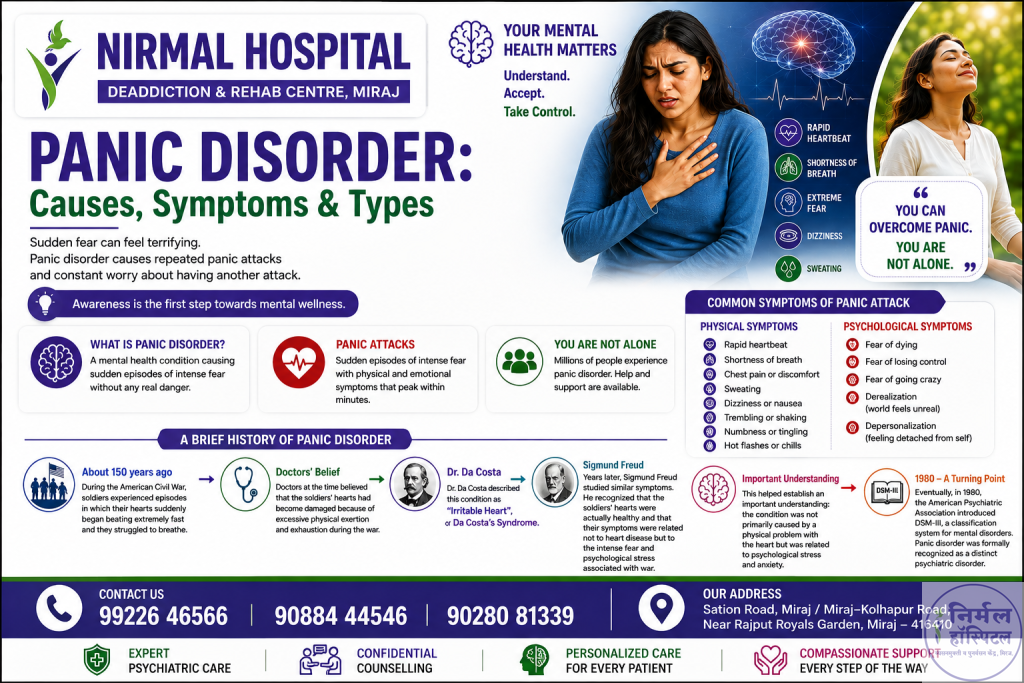
About 150 years ago, during the American Civil War, soldiers experienced episodes in which their hearts suddenly began beating extremely fast and they struggled to breathe.
Doctors at the time believed that the soldiers’ hearts had become damaged because of excessive physical exertion and exhaustion during the war.
Dr. Da Costa described this condition as “Irritable Heart”, or Da Costa’s Syndrome.
Years later, Sigmund Freud studied similar symptoms. He recognized that the soldiers’ hearts were actually healthy and that their symptoms were related not to heart disease but to the intense fear and psychological stress associated with war.
This helped establish an important understanding: the condition was not primarily caused by a physical problem with the heart but was related to psychological stress and anxiety.
Eventually, in 1980, the American Psychiatric Association introduced DSM-III, a classification system for mental disorders. Panic disorder was formally recognized as a distinct psychiatric disorder.
Panic Disorder: Global Reality and Statistics
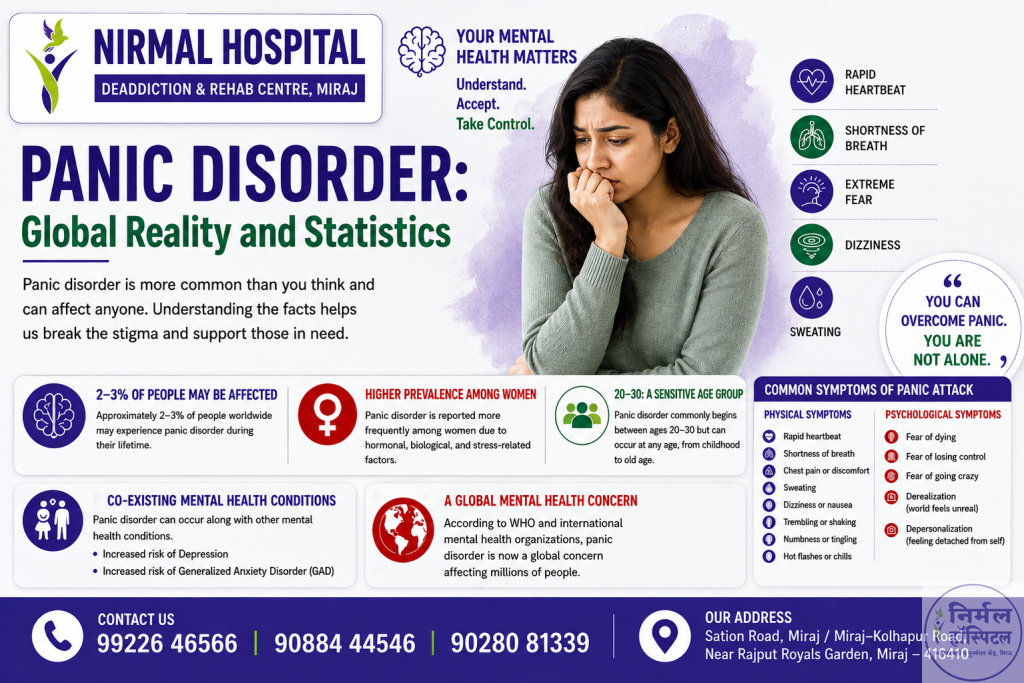
To understand how common panic disorder is and what its characteristics are, it is important to look at global statistics.
According to reports from the World Health Organization (WHO) and various international mental health organizations, panic disorder is now a global mental health concern.
2–3% of People May Be Affected
Approximately 2–3% of people worldwide may experience panic disorder during their lifetime.
Although this percentage may appear small, when considered in relation to the global population, it represents millions of people.
Higher Prevalence Among Women
One important characteristic of this condition is that panic disorder is reported more frequently among women than men.
According to medical research, hormonal changes, biological factors, and the way women experience and manage social and family-related stress may contribute to this increased risk.
20–30: A Sensitive Age Group
Panic disorder commonly begins between the ages of 20 and 30, during early adulthood.
This is a period when people may face major decisions involving career, marriage, relationships, and responsibilities, which can contribute to increased psychological stress.
However, although this age group may be particularly vulnerable, panic disorder can occur at any age, from childhood to old age.
Co-existing Mental Health Conditions
Panic disorder does not always occur alone. It may occur along with other mental health conditions.
People who experience recurrent panic attacks may also have an increased risk of depression and Generalized Anxiety Disorder (GAD).
Repeated unexpected attacks can leave a person emotionally exhausted and may contribute to depression.
Types of Panic Attacks
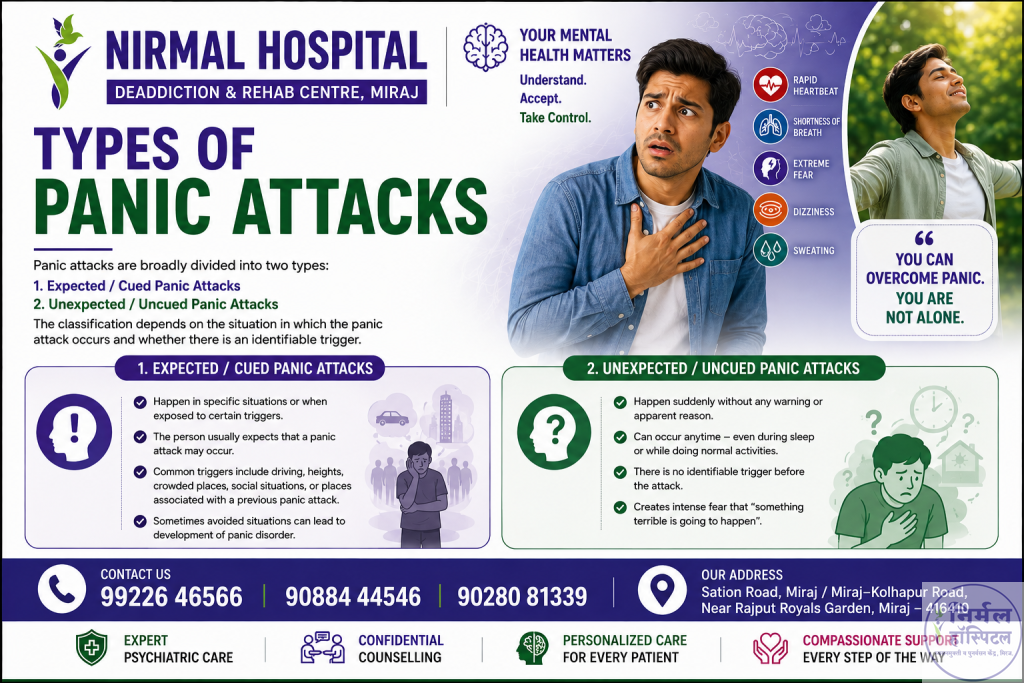
Panic attacks are broadly divided into two types:
- Expected / Cued Panic Attacks
- Unexpected / Uncued Panic Attacks
The classification depends on the situation in which the panic attack occurs and whether there is an identifiable trigger.
1. Expected / Cued Panic Attacks
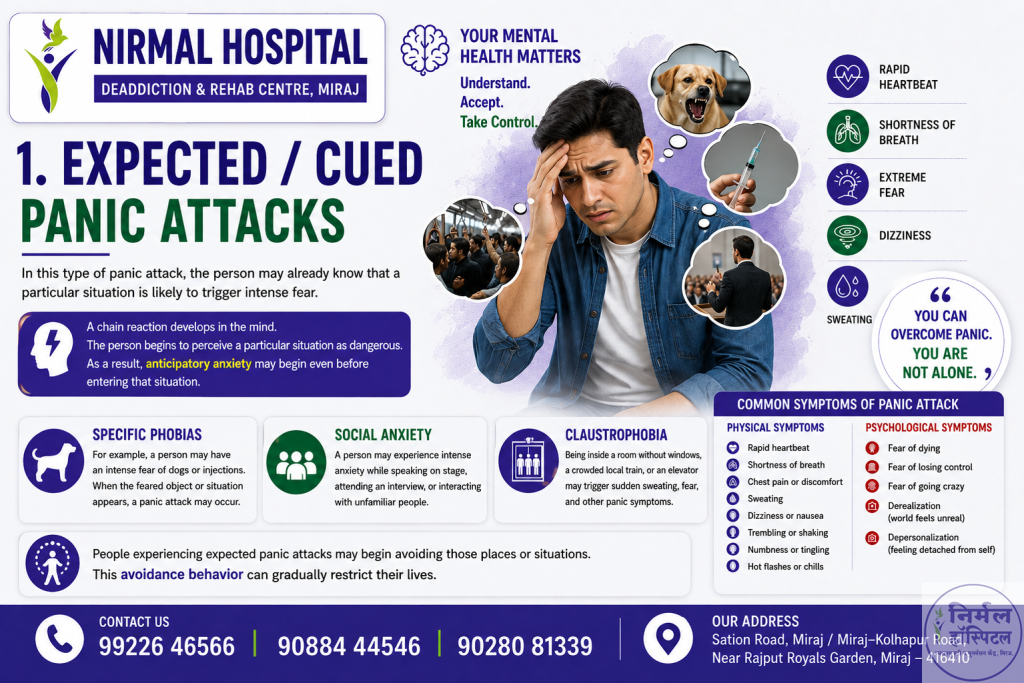
In this type of panic attack, the person may already know that a particular situation is likely to trigger intense fear.
A chain reaction develops in the mind. The person begins to perceive a particular situation as dangerous. As a result, anticipatory anxiety may begin even before entering that situation.
Specific Phobias
For example, a person may have an intense fear of dogs or injections. When the feared object or situation appears, a panic attack may occur.
Social Anxiety
A person may experience intense anxiety while speaking on stage, attending an interview, or interacting with unfamiliar people.
Claustrophobia
Being inside a room without windows, a crowded local train, or an elevator may trigger sudden sweating, fear, and other panic symptoms.
People experiencing expected panic attacks may begin avoiding those places or situations. This avoidance behavior can gradually restrict their lives.
2. Unexpected / Uncued Panic Attacks
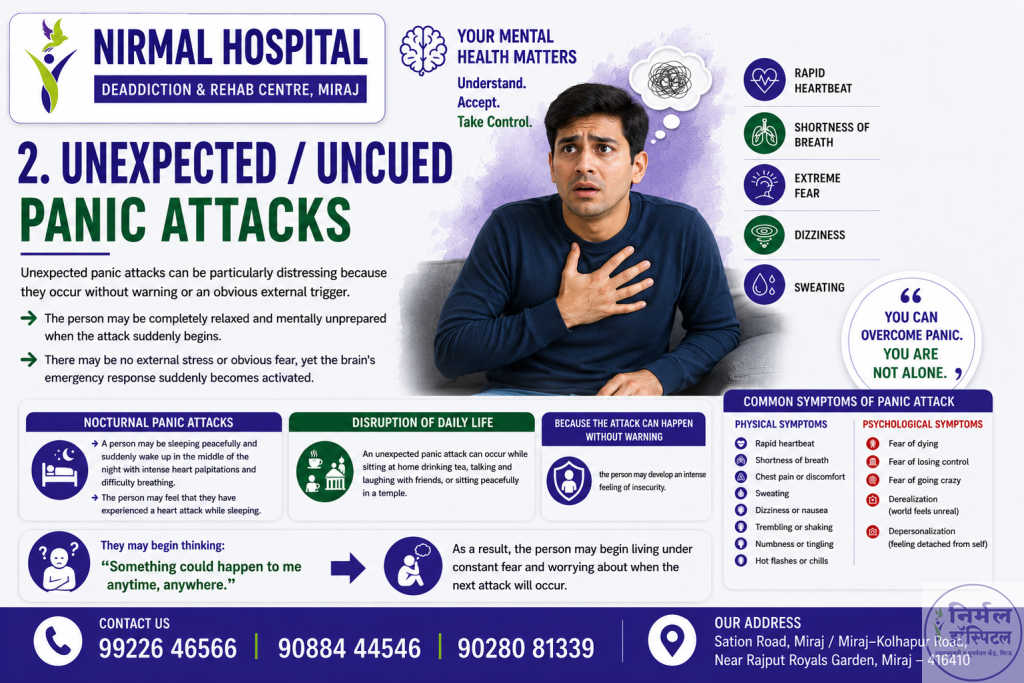
Unexpected panic attacks can be particularly distressing because they occur without warning or an obvious external trigger.
The person may be completely relaxed and mentally unprepared when the attack suddenly begins.
There may be no external stress or obvious fear, yet the brain’s emergency response suddenly becomes activated.
Nocturnal Panic Attacks
A person may be sleeping peacefully and suddenly wake up in the middle of the night with intense heart palpitations and difficulty breathing.
The person may feel that they have experienced a heart attack while sleeping.
Disruption of Daily Life
An unexpected panic attack can occur while sitting at home drinking tea, talking and laughing with friends, or sitting peacefully in a temple.
Because the attack can happen without warning, the person may develop an intense feeling of insecurity.
They may begin thinking:
“Something could happen to me anytime, anywhere.”
As a result, the person may begin living under constant fear and worrying about when the next attack will occur.
A Doctor’s Diary: Sayali’s Successful Battle with Panic Disorder at Nirmal Hospital
An Experience from the OPD
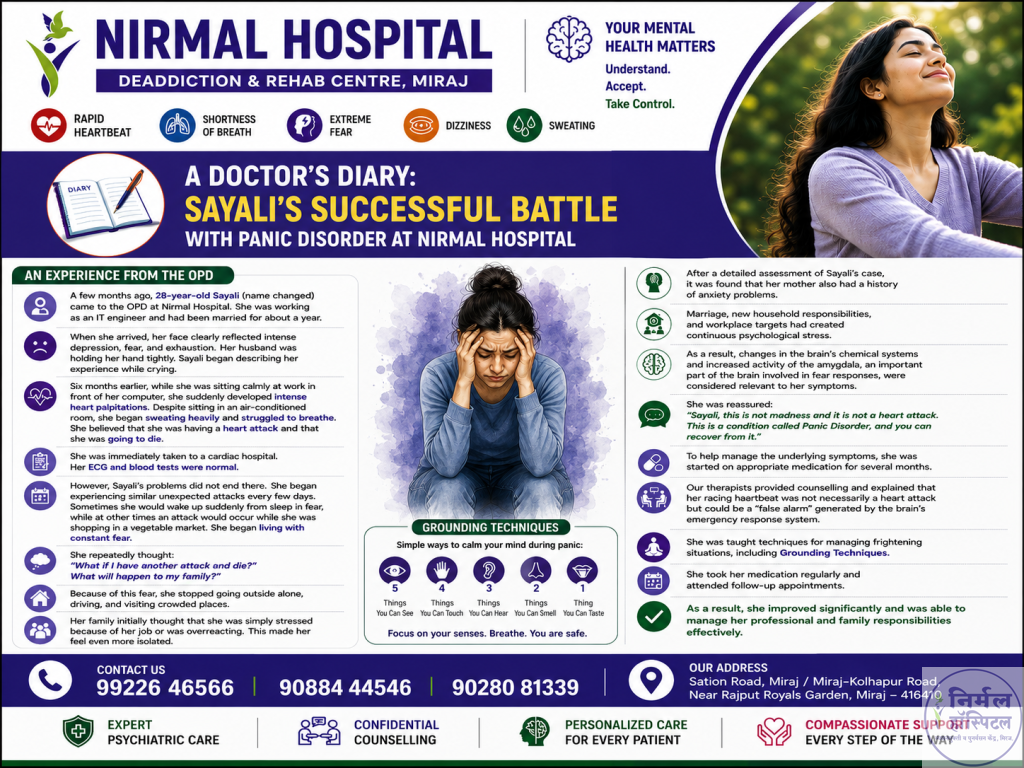
A few months ago, 28-year-old Sayali (name changed) came to the OPD at Nirmal Hospital.
She was working as an IT engineer and had been married for about a year.
When she arrived, her face clearly reflected intense depression, fear, and exhaustion. Her husband was holding her hand tightly.
Sayali began describing her experience while crying.
Six months earlier, while she was sitting calmly at work in front of her computer, she suddenly developed intense heart palpitations.
Despite sitting in an air-conditioned room, she began sweating heavily and struggled to breathe.
She believed that she was having a heart attack and that she was going to die.
She was immediately taken to a cardiac hospital. Her ECG and blood tests were normal.
However, Sayali’s problems did not end there.
She began experiencing similar unexpected attacks every few days. Sometimes she would wake up suddenly from sleep in fear, while at other times an attack would occur while she was shopping in a vegetable market.
She began living with constant fear.
She repeatedly thought:
“What if I have another attack and die? What will happen to my family?”
Because of this fear, she stopped going outside alone, driving, and visiting crowded places.
Her family initially thought that she was simply stressed because of her job or was overreacting. This made her feel even more isolated.
After a detailed assessment of Sayali’s case, it was found that her mother also had a history of anxiety problems.
Marriage, new household responsibilities, and workplace targets had created continuous psychological stress.
As a result, changes in the brain’s chemical systems and increased activity of the amygdala, an important part of the brain involved in fear responses, were considered relevant to her symptoms.
She was reassured:
“Sayali, this is not madness and it is not a heart attack. This is a condition called Panic Disorder, and you can recover from it.”
To help manage the underlying symptoms, she was started on appropriate medication for several months.
Our therapists provided counselling and explained that her racing heartbeat was not necessarily a heart attack but could be a “false alarm” generated by the brain’s emergency response system.
She was taught techniques for managing frightening situations, including Grounding Techniques.
She took her medication regularly and attended follow-up appointments.
As a result, she improved significantly and was able to manage her professional and family responsibilities effectively.
Main Causes of Panic Disorder
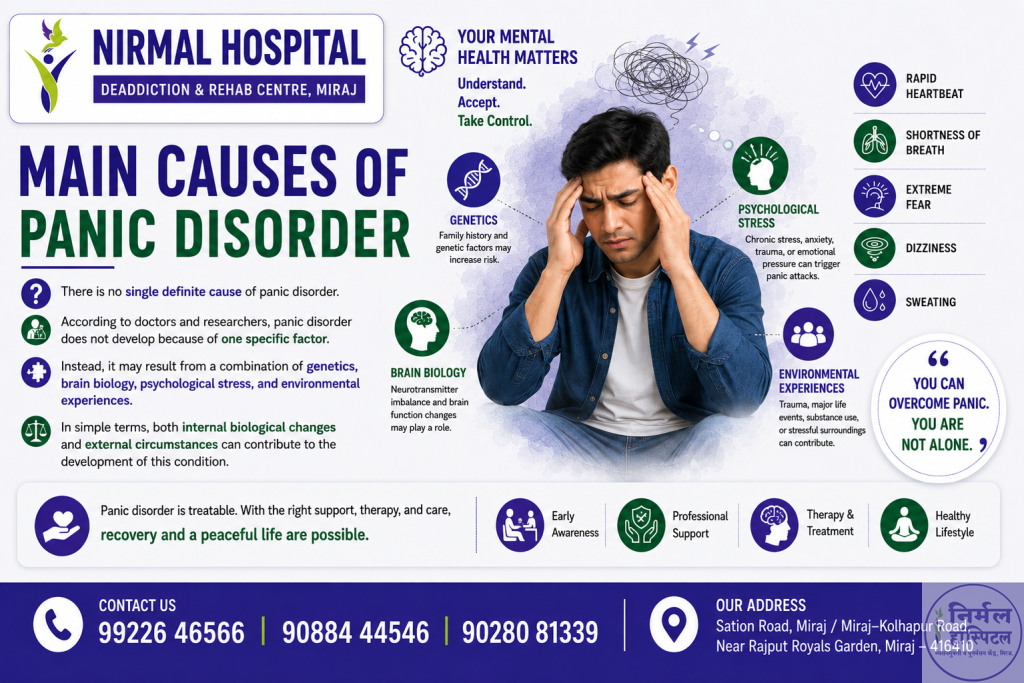
There is no single definite cause of panic disorder.
According to doctors and researchers, panic disorder does not develop because of one specific factor.
Instead, it may result from a combination of genetics, brain biology, psychological stress, and environmental experiences.
In simple terms, both internal biological changes and external circumstances can contribute to the development of this condition.
1. Genetics / Heredity
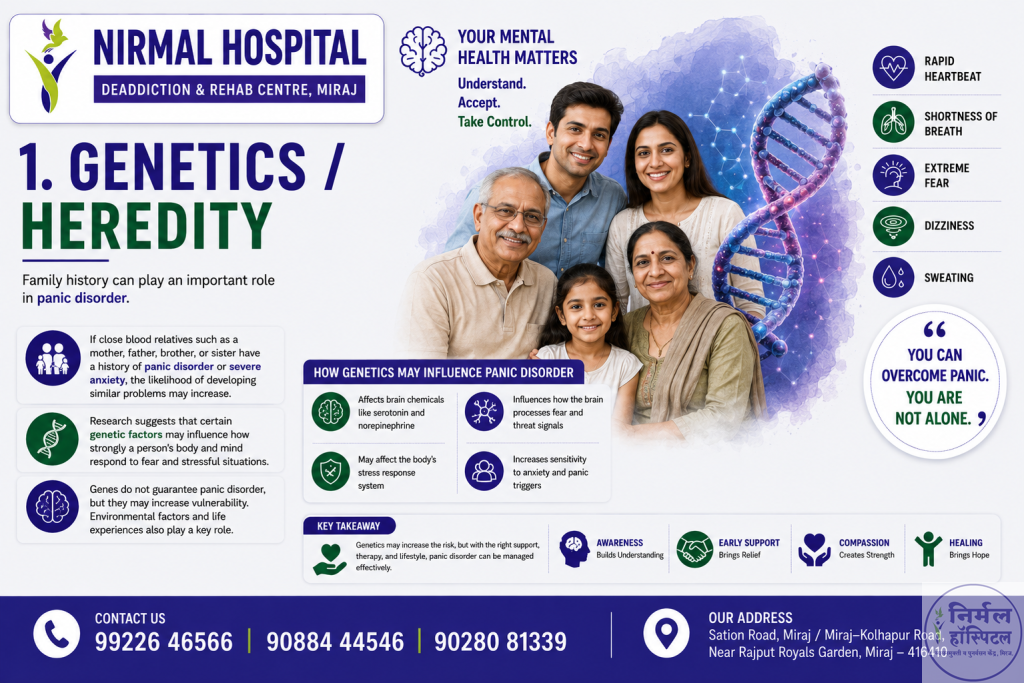
Family history can play an important role in panic disorder.
If close blood relatives such as a mother, father, brother, or sister have a history of panic disorder or severe anxiety, the likelihood of developing similar problems may increase.
Research suggests that certain genetic factors may influence how strongly a person’s body and mind respond to fear and stressful situations.
2. Brain Chemistry and Biology
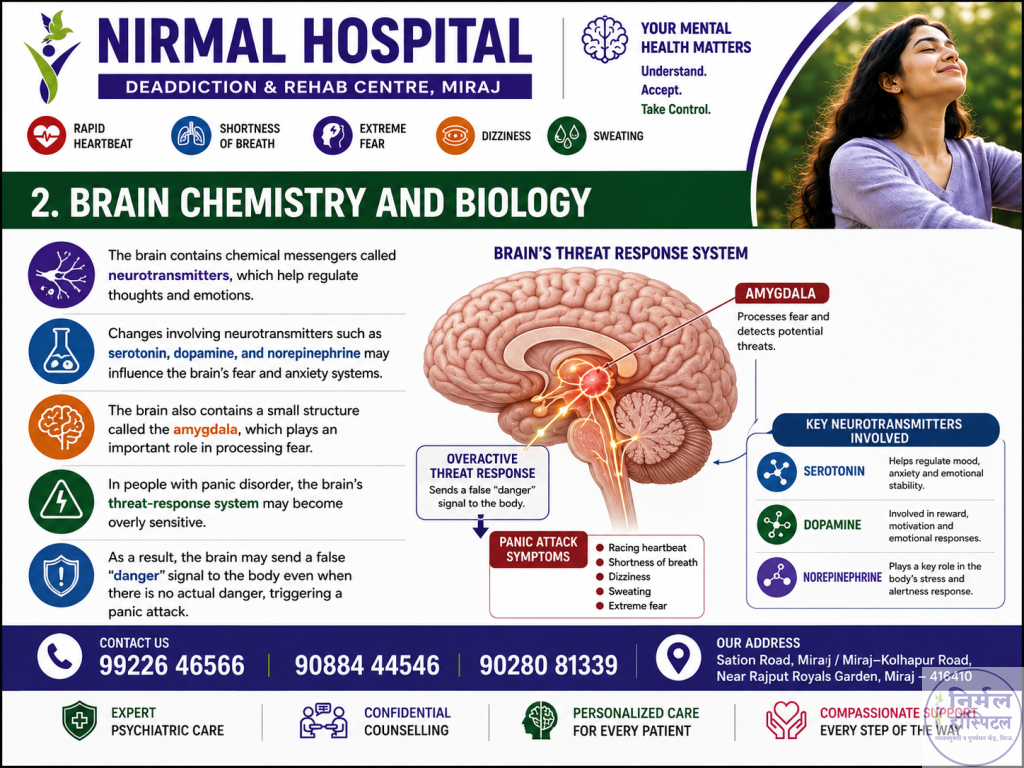
The brain contains chemical messengers called neurotransmitters, which help regulate thoughts and emotions.
Changes involving neurotransmitters such as serotonin, dopamine, and norepinephrine may influence the brain’s fear and anxiety systems.
The brain also contains a small structure called the amygdala, which plays an important role in processing fear.
In people with panic disorder, the brain’s threat-response system may become overly sensitive.
As a result, the brain may send a false “danger” signal to the body even when there is no actual danger, triggering a panic attack.
3. Chronic Stress and Anxiety
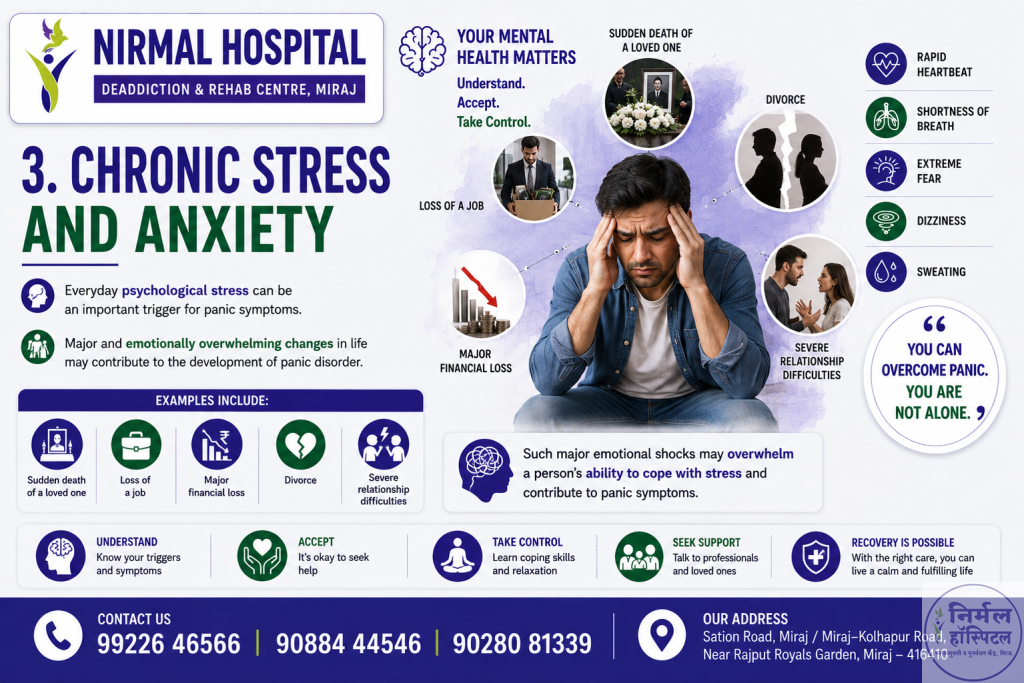
Everyday psychological stress can be an important trigger for panic symptoms.
Major and emotionally overwhelming changes in life may contribute to the development of panic disorder.
Examples include:
- Sudden death of a loved one
- Loss of a job
- Major financial loss
- Divorce
- Severe relationship difficulties
Such major emotional shocks may overwhelm a person’s ability to cope with stress and contribute to panic symptoms.
4. Environmental Factors and Trauma
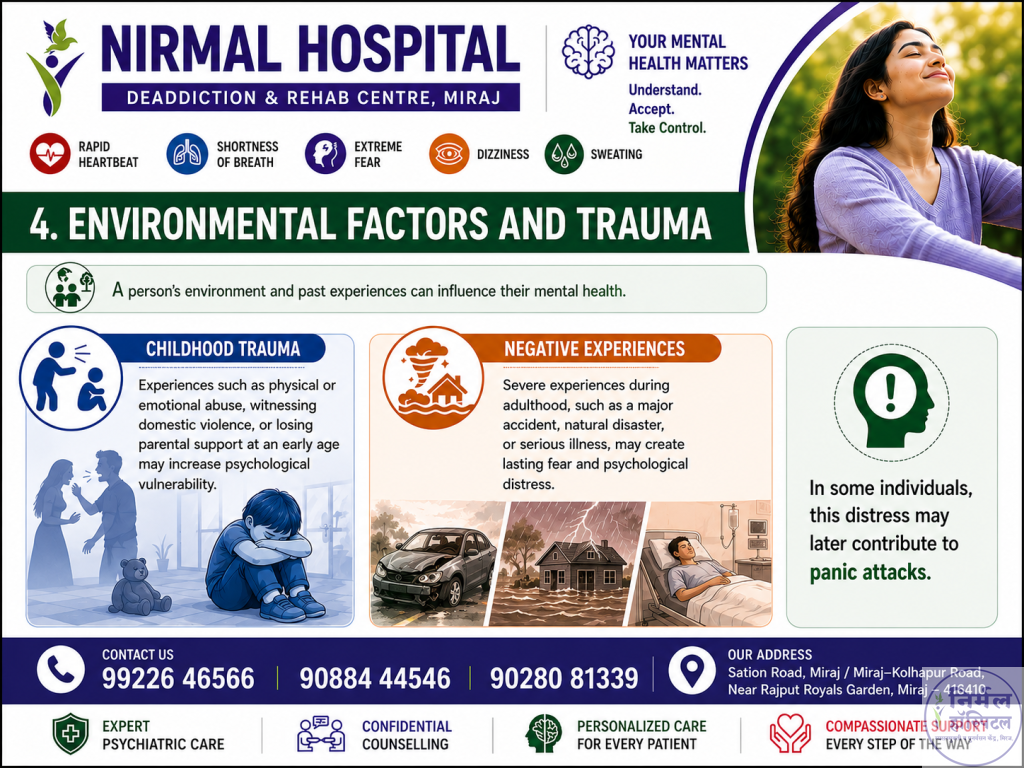
A person’s environment and past experiences can influence their mental health.
Childhood Trauma
Experiences such as physical or emotional abuse, witnessing domestic violence, or losing parental support at an early age may increase psychological vulnerability.
Negative Experiences
Severe experiences during adulthood, such as a major accident, natural disaster, or serious illness, may create lasting fear and psychological distress.
In some individuals, this distress may later contribute to panic attacks.
5. Lifestyle and Substance Use
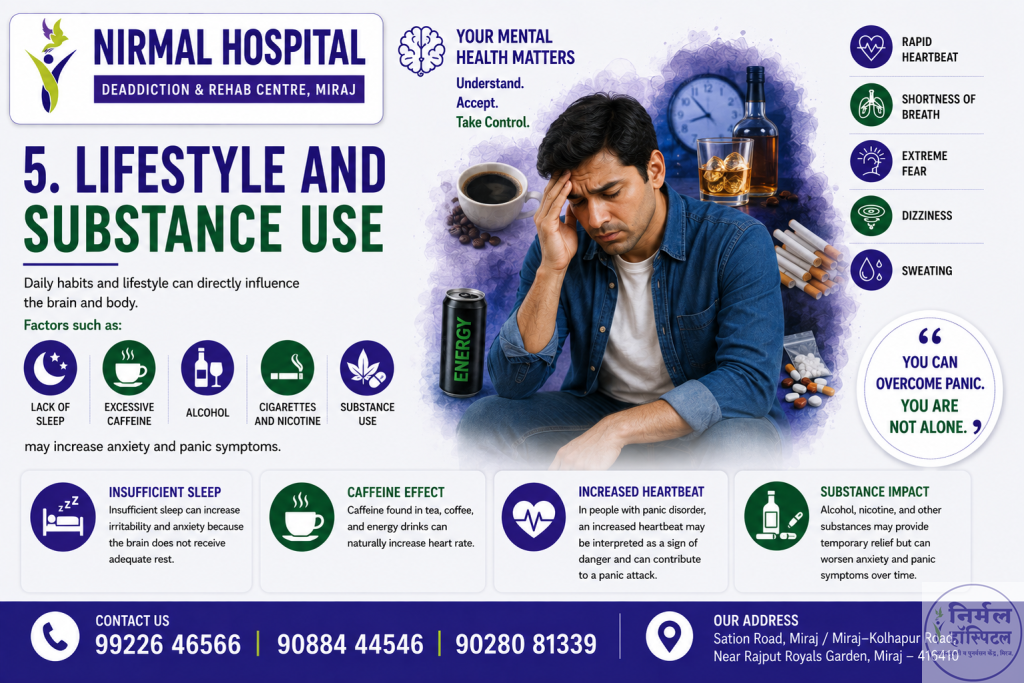
Daily habits and lifestyle can directly influence the brain and body.
Factors such as:
- Lack of sleep
- Excessive caffeine consumption
- Alcohol
- Cigarettes and nicotine
- Substance use
may increase anxiety and panic symptoms.
Insufficient sleep can increase irritability and anxiety because the brain does not receive adequate rest.
Caffeine found in tea, coffee, and energy drinks can naturally increase heart rate.
In people with panic disorder, an increased heartbeat may be interpreted as a sign of danger and can contribute to a panic attack.
Alcohol, nicotine, and other substances may provide temporary relief but can worsen anxiety and panic symptoms over time.
Major Symptoms of a Panic Attack
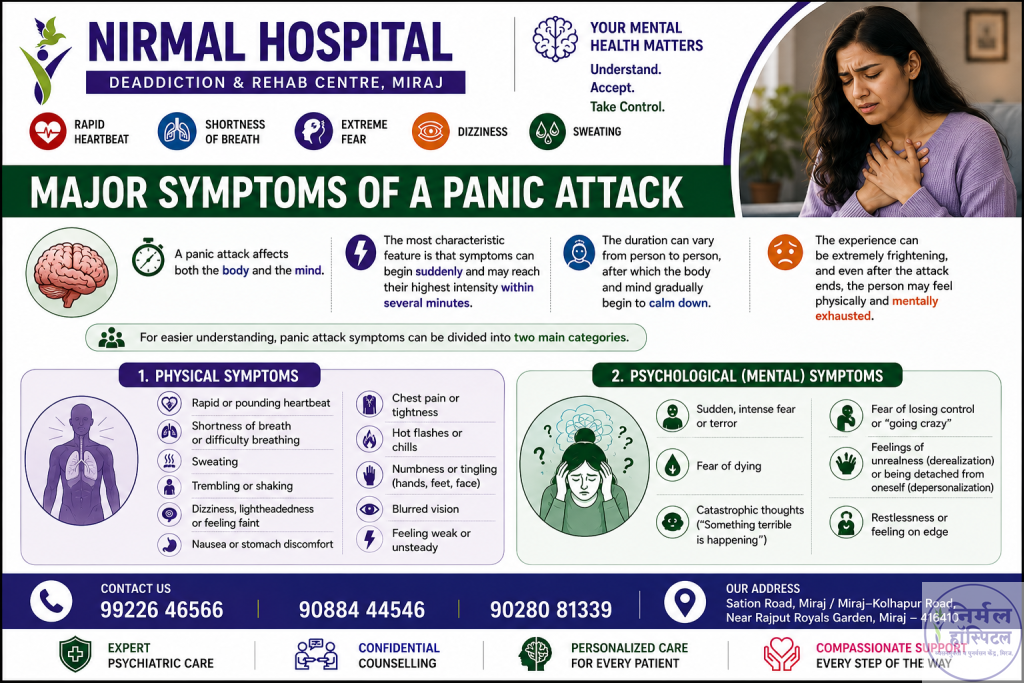
A panic attack affects both the body and the mind.
The most characteristic feature is that symptoms can begin suddenly and may reach their highest intensity within several minutes.
The duration can vary from person to person, after which the body and mind gradually begin to calm down.
The experience can be extremely frightening, and even after the attack ends, the person may feel physically and mentally exhausted.
For easier understanding, panic attack symptoms can be divided into two main categories.
A) Physical Symptoms of Panic Attack
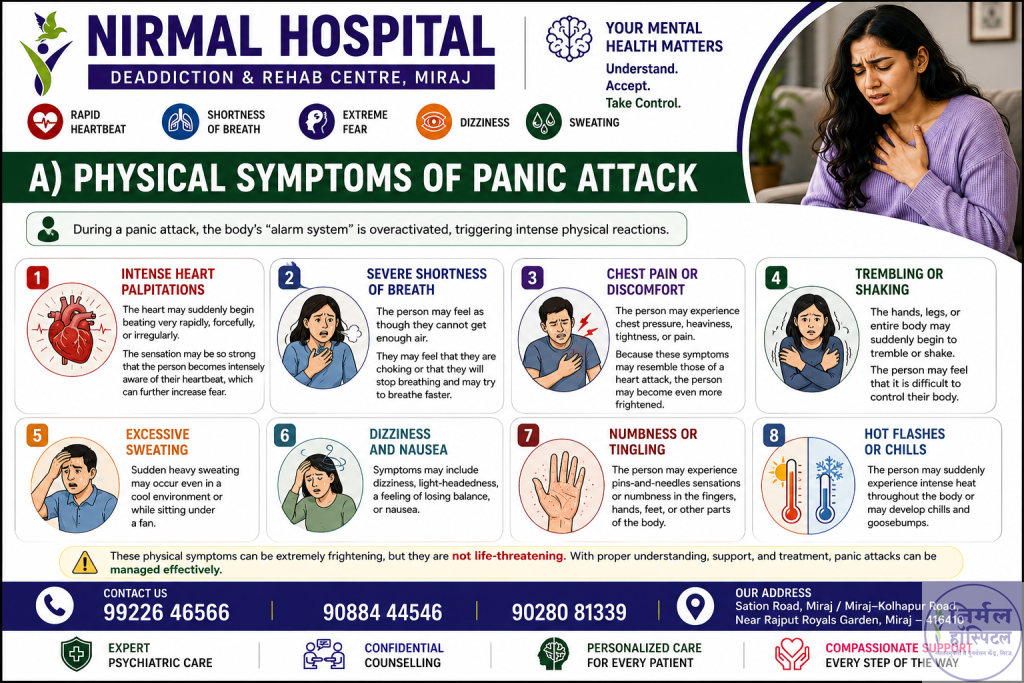
1. Intense Heart Palpitations
The heart may suddenly begin beating very rapidly, forcefully, or irregularly.
The sensation may be so strong that the person becomes intensely aware of their heartbeat, which can further increase fear.
2. Severe Shortness of Breath
The person may feel as though they cannot get enough air.
They may feel that they are choking or that they will stop breathing and may try to breathe faster.
3. Chest Pain or Discomfort
The person may experience chest pressure, heaviness, tightness, or pain.
Because these symptoms may resemble those of a heart attack, the person may become even more frightened.
4. Trembling or Shaking
The hands, legs, or entire body may suddenly begin to tremble or shake.
The person may feel that it is difficult to control their body.
5. Excessive Sweating
Sudden heavy sweating may occur even in a cool environment or while sitting under a fan.
6. Dizziness and Nausea
Symptoms may include dizziness, light-headedness, a feeling of losing balance, or nausea.
7. Numbness or Tingling
The person may experience pins-and-needles sensations or numbness in the fingers, hands, feet, or other parts of the body.
8. Hot Flashes or Chills
The person may suddenly experience intense heat throughout the body or may develop chills and goosebumps.
B) Psychological and Emotional Symptoms
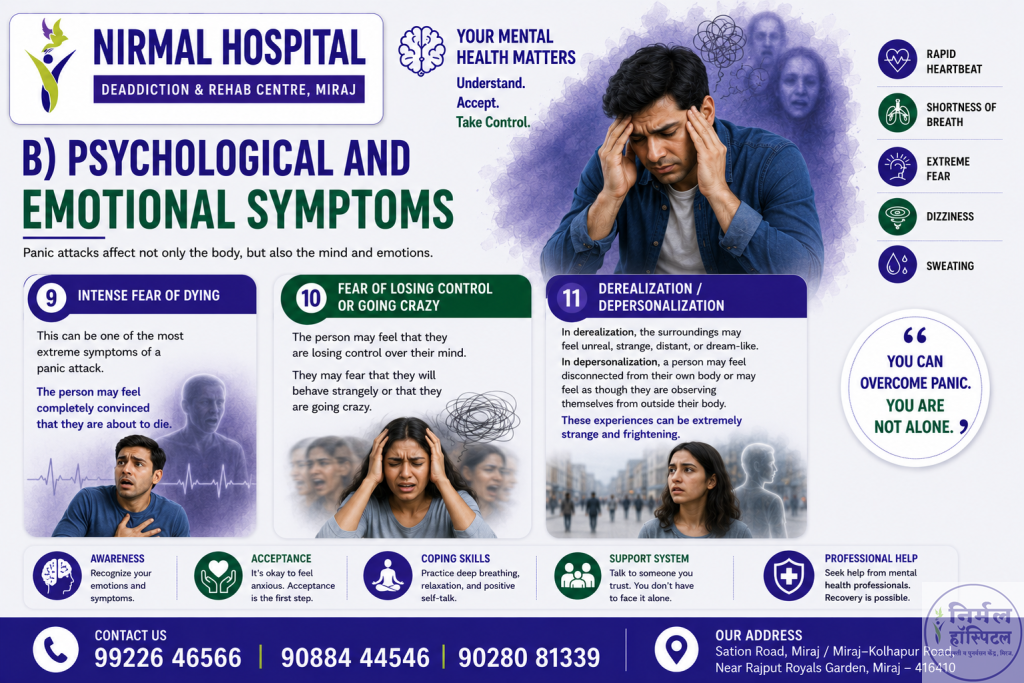
9. Intense Fear of Dying
This can be one of the most extreme symptoms of a panic attack.
The person may feel completely convinced that they are about to die.
10. Fear of Losing Control or Going Crazy
The person may feel that they are losing control over their mind.
They may fear that they will behave strangely or that they are going crazy.
11. Derealization / Depersonalization
In derealization, the surroundings may feel unreal, strange, distant, or dream-like.
In depersonalization, a person may feel disconnected from their own body or may feel as though they are observing themselves from outside their body.
These experiences can be extremely strange and frightening.
An Important Message About Panic Attacks
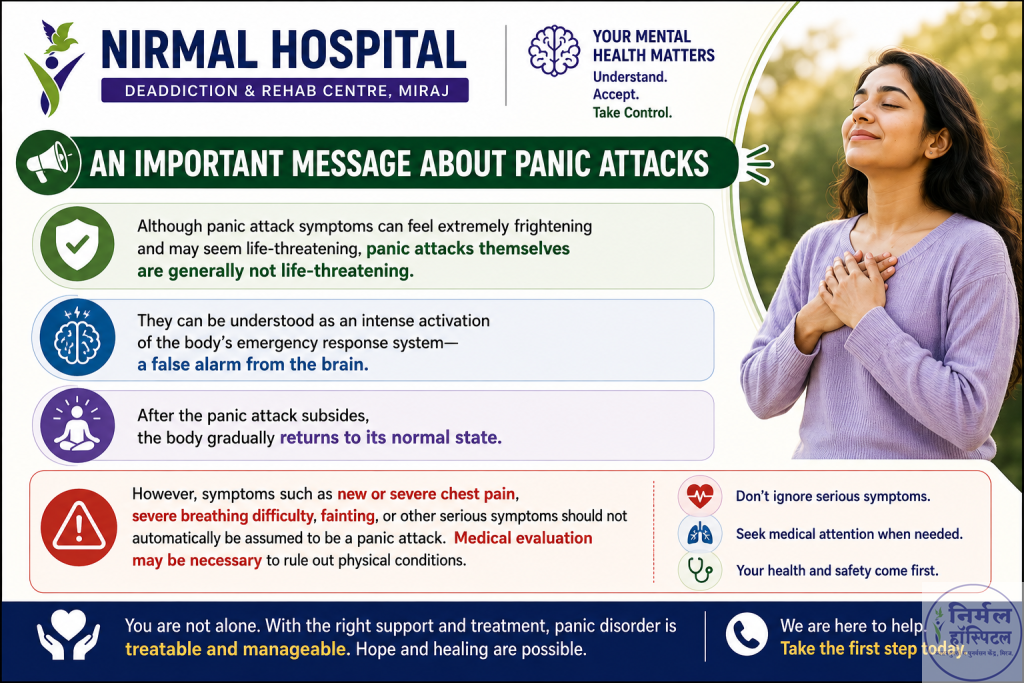
Although panic attack symptoms can feel extremely frightening and may seem life-threatening, panic attacks themselves are generally not life-threatening.
They can be understood as an intense activation of the body’s emergency response system—a false alarm from the brain.
After the panic attack subsides, the body gradually returns to its normal state.
However, symptoms such as new or severe chest pain, severe breathing difficulty, fainting, or other serious symptoms should not automatically be assumed to be a panic attack. Medical evaluation may be necessary to rule out physical conditions.
When to Seek Professional Help
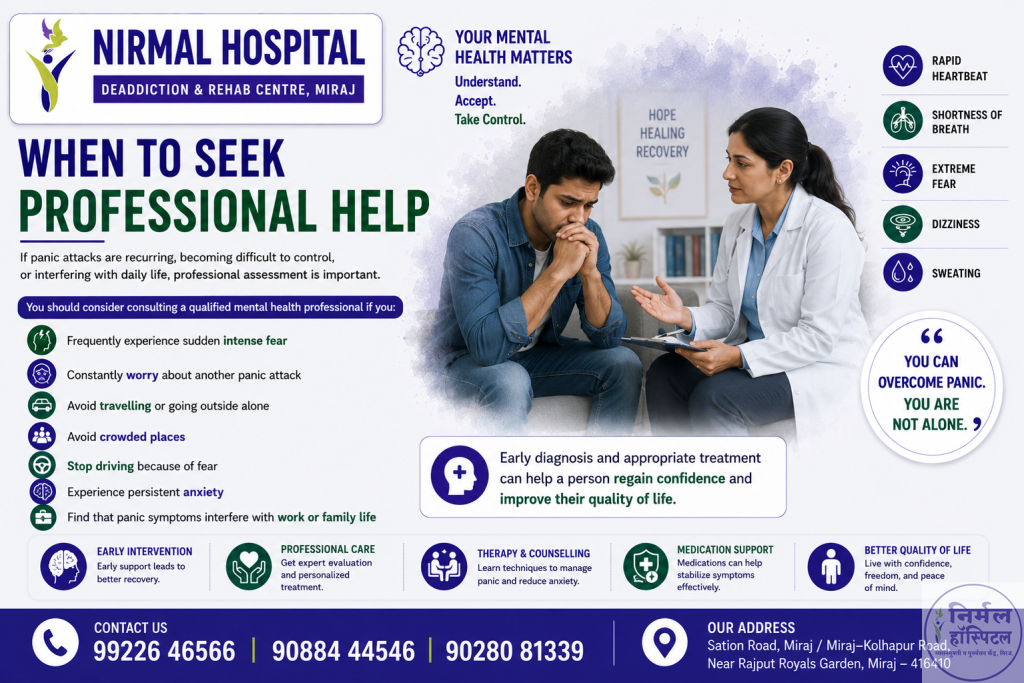
If panic attacks are recurring, becoming difficult to control, or interfering with daily life, professional assessment is important.
You should consider consulting a qualified mental health professional if you:
- Frequently experience sudden intense fear
- Constantly worry about another panic attack
- Avoid travelling or going outside alone
- Avoid crowded places
- Stop driving because of fear
- Experience persistent anxiety
- Find that panic symptoms interfere with work or family life
Early diagnosis and appropriate treatment can help a person regain confidence and improve their quality of life.
Frequently Asked Questions About Panic Disorder
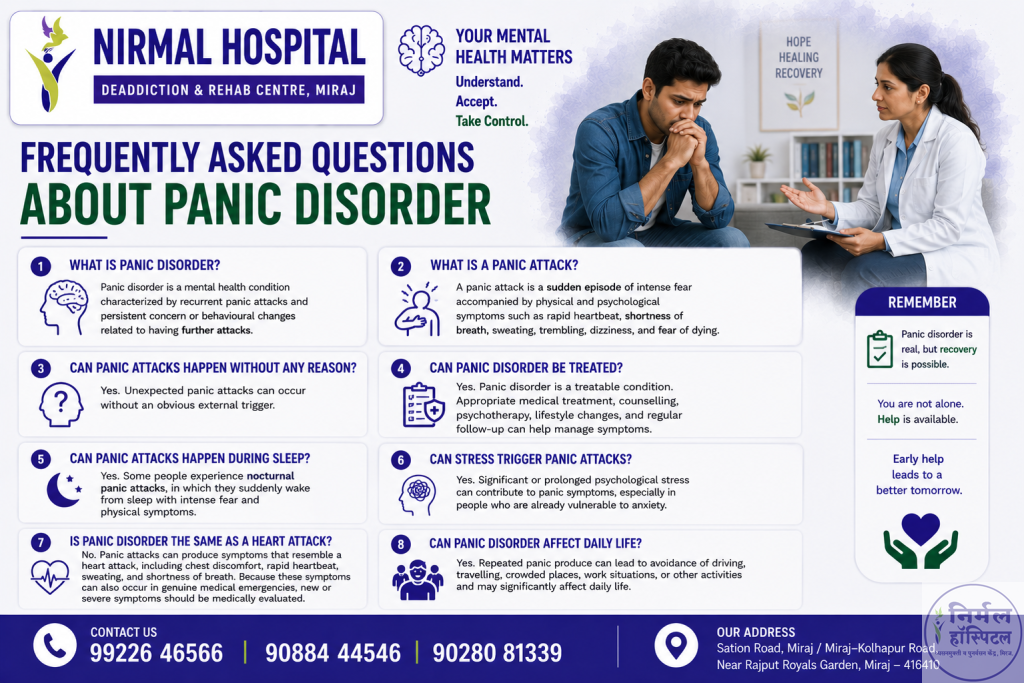
What is panic disorder?
Panic disorder is a mental health condition characterized by recurrent panic attacks and persistent concern or behavioural changes related to having further attacks.
What is a panic attack?
A panic attack is a sudden episode of intense fear accompanied by physical and psychological symptoms such as rapid heartbeat, shortness of breath, sweating, trembling, dizziness, and fear of dying.
Can panic attacks happen without any reason?
Yes. Unexpected panic attacks can occur without an obvious external trigger.
Can panic disorder be treated?
Yes. Panic disorder is a treatable condition. Appropriate medical treatment, counselling, psychotherapy, lifestyle changes, and regular follow-up can help manage symptoms.
Can panic attacks happen during sleep?
Yes. Some people experience nocturnal panic attacks, in which they suddenly wake from sleep with intense fear and physical symptoms.
Can stress trigger panic attacks?
Yes. Significant or prolonged psychological stress can contribute to panic symptoms, especially in people who are already vulnerable to anxiety.
Is panic disorder the same as a heart attack?
No. Panic attacks can produce symptoms that resemble a heart attack, including chest discomfort, rapid heartbeat, sweating, and shortness of breath. Because these symptoms can also occur in genuine medical emergencies, new or severe symptoms should be medically evaluated.
Can panic disorder affect daily life?
Yes. Repeated panic attacks can lead to avoidance of driving, travelling, crowded places, work situations, or other activities and may significantly affect daily life.
From Fear to Calm: Take the Right Step
Panic attacks can be frightening, but you do not have to face them alone.
With appropriate diagnosis, treatment, counselling, and regular follow-up, panic disorder can be effectively managed.
If you or someone you know is experiencing recurrent panic attacks, intense fear, or anxiety that is affecting daily life, professional mental health support can help.
Nirmal Hospital, Miraj
Take the first step toward understanding your symptoms and regaining control of your life.
Book an Appointment | Contact Us | Talk to a Psychiatrist – 9922646566 / 9088444546 / 9028081339


