

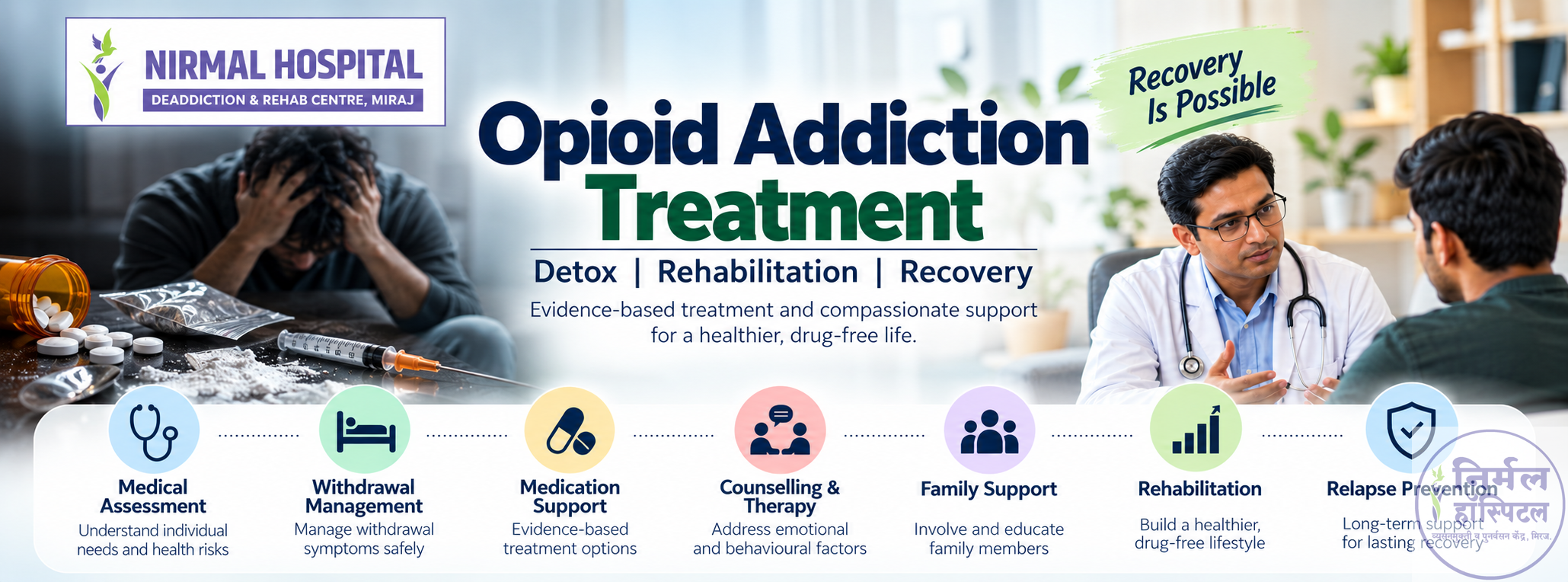
Opioid Addiction Treatment: Medications, Withdrawal Management & Recovery
Opioid addiction, clinically known as Opioid Use Disorder (OUD), is a treatable medical condition. Treatment should be individualized according to the type of opioid being used, severity of dependence, withdrawal symptoms, overdose history, physical and mental health, other substance use and previous treatment attempts.
Effective opioid addiction treatment may involve medications for Opioid Use Disorder, withdrawal management, psychological therapies, counselling, family support, rehabilitation and ongoing relapse-prevention care.
A professional medical assessment can help determine the most appropriate treatment plan.
1. Medical and Psychiatric Assessment
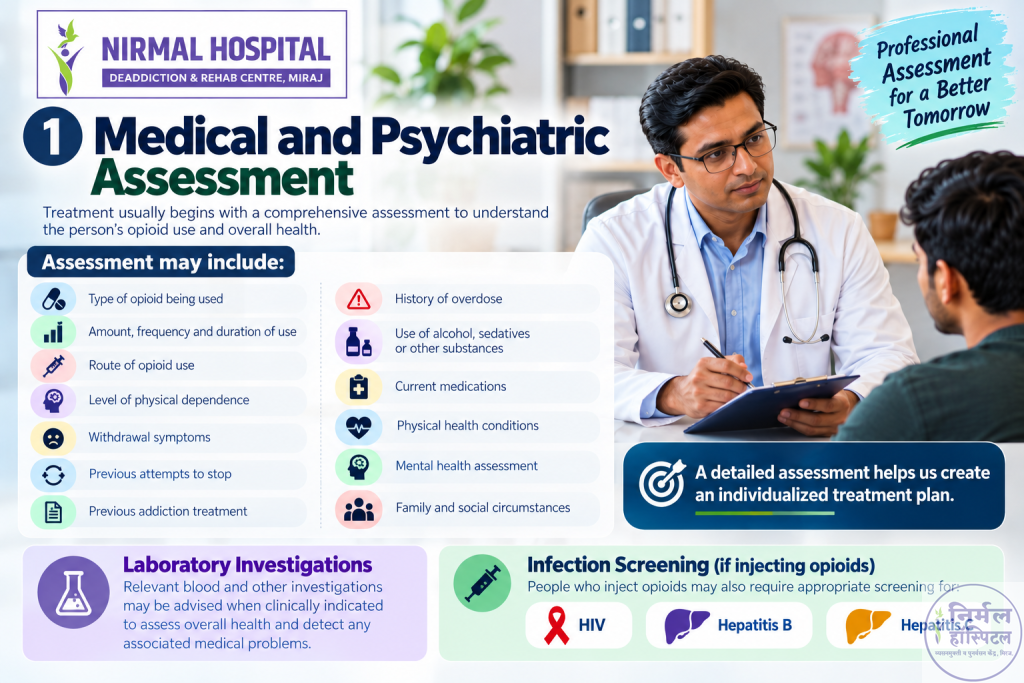
Treatment usually begins with a comprehensive assessment to understand the person’s opioid use and overall health.
Assessment may include:
- Type of opioid being used
- Amount, frequency and duration of use
- Route of opioid use
- Level of physical dependence
- Withdrawal symptoms
- Previous attempts to stop
- Previous addiction treatment
- History of overdose
- Use of alcohol, sedatives or other substances
- Current medications
- Physical health conditions
- Mental health assessment
- Family and social circumstances
Relevant laboratory investigations and additional medical evaluation may be advised when clinically indicated.
People who inject opioids may also require appropriate screening for infections such as HIV, hepatitis B and hepatitis C.
2. Opioid Withdrawal Management
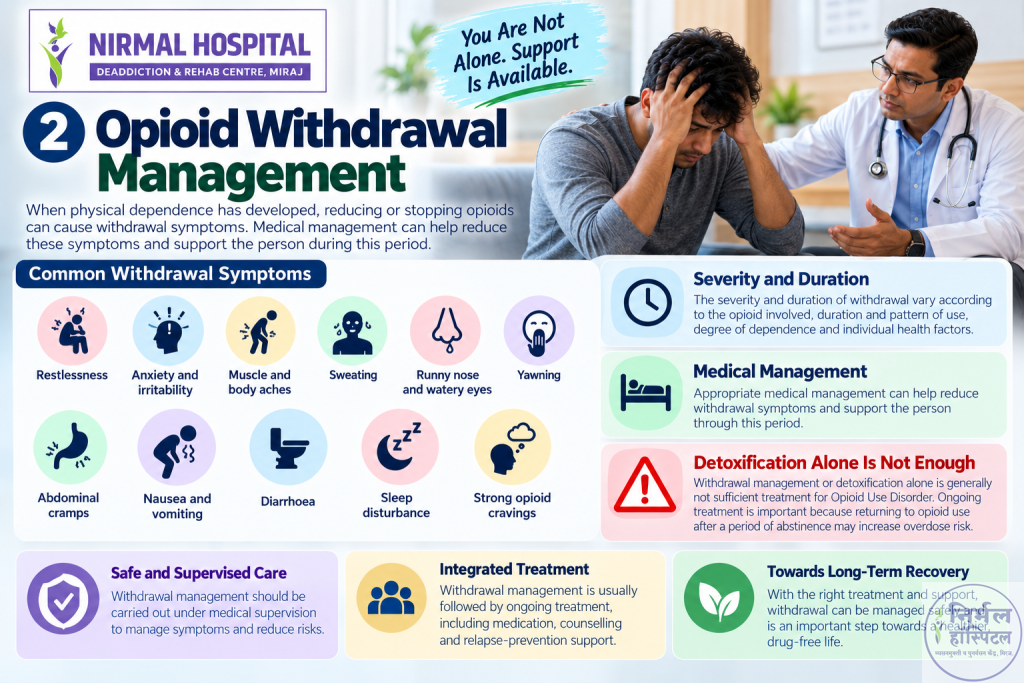
When physical dependence has developed, reducing or stopping opioids can cause withdrawal symptoms.
These may include:
- Restlessness
- Anxiety and irritability
- Muscle and body aches
- Sweating
- Runny nose and watery eyes
- Yawning
- Abdominal cramps
- Nausea and vomiting
- Diarrhoea
- Sleep disturbance
- Strong opioid cravings
The severity and duration of withdrawal vary according to the opioid involved, duration and pattern of use, degree of dependence and individual health factors.
Medical management can help reduce withdrawal symptoms and support the person during this period.
Withdrawal management or detoxification alone is generally not sufficient treatment for Opioid Use Disorder. Ongoing treatment is important because returning to opioid use after a period of abstinence may increase overdose risk.
3. Medications for Opioid Use Disorder
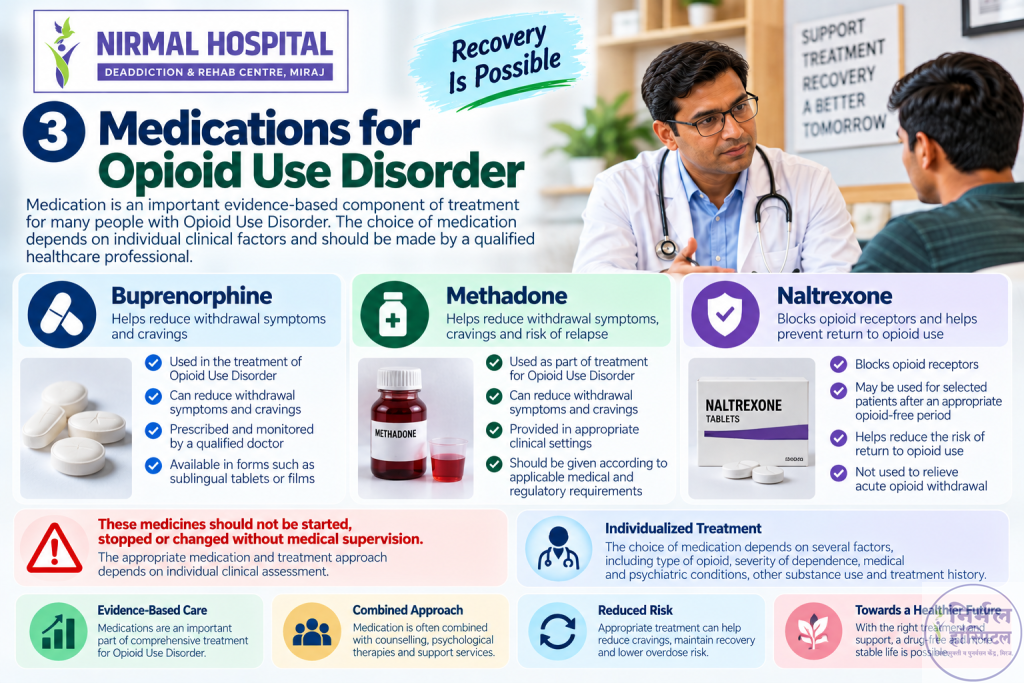
Medication is an important evidence-based component of treatment for many people with Opioid Use Disorder.
Depending on individual clinical assessment, medications may include:
Buprenorphine
Buprenorphine is used in the treatment of Opioid Use Disorder. It can help reduce opioid withdrawal symptoms and cravings when prescribed and monitored appropriately.
Methadone
Methadone can be used as part of treatment for Opioid Use Disorder in appropriate clinical settings. It can reduce withdrawal symptoms and cravings and should be provided according to applicable medical and regulatory requirements.
Naltrexone
Naltrexone blocks opioid receptors and may be used for selected patients after an appropriate opioid-free period. It is not used to relieve acute opioid withdrawal.
The choice of medication depends on several clinical factors and should be made by an appropriately qualified healthcare professional.
These medicines should not be started, stopped or changed without medical supervision.
4. Craving Management
Opioid cravings may continue even after the initial withdrawal symptoms have improved.
Craving management may involve:
- Appropriate medication when prescribed
- Identifying personal triggers
- Avoiding high-risk situations
- Developing healthier coping strategies
- Managing stress
- Improving sleep and daily routine
- Psychological counselling
- Regular follow-up
- Family and social support
Managing cravings is an important part of reducing the risk of returning to opioid use.
5. Psychological Treatment and Counselling
Medication and medical care may be combined with appropriate psychological and behavioural support.
Depending on individual needs, treatment may include:
- Cognitive Behavioural Therapy (CBT)
- Motivational Enhancement Therapy (MET)
- Individual counselling
- Behavioural interventions
- Psychoeducation
- Relapse-prevention counselling
- Family counselling
Psychological treatment may help individuals identify triggers, develop coping strategies, improve motivation for recovery and address behavioural or emotional difficulties associated with opioid use.
6. Treatment of Co-existing Mental Health Conditions
Some people with Opioid Use Disorder may also experience mental health conditions or other substance-use problems.
These may include:
- Depression
- Anxiety disorders
- Sleep problems
- Other substance-use disorders
- Other psychiatric conditions
A comprehensive treatment plan should consider both opioid-related problems and co-existing mental health conditions.
7. Family Counselling and Support
Family involvement can be valuable during opioid addiction treatment.
Family counselling and psychoeducation may help relatives:
- Understand Opioid Use Disorder
- Recognize triggers and warning signs
- Improve communication
- Support treatment adherence
- Avoid unintentionally enabling substance use
- Encourage regular follow-up
- Respond appropriately if relapse occurs
Family participation should be planned according to the person’s individual circumstances and consent.
8. Inpatient Deaddiction and Rehabilitation
Some people may benefit from a structured inpatient deaddiction and rehabilitation programme, particularly when there is:
- Severe opioid dependence
- Repeated relapse
- Difficulty controlling opioid use
- Previous unsuccessful treatment attempts
- Use of multiple substances
- Significant medical complications
- Co-existing psychiatric conditions
- Limited family or social support
- A need for a structured treatment environment
Rehabilitation may focus on establishing a healthier daily routine, psychological recovery, coping skills, family relationships, social functioning and relapse prevention.
Not everyone with Opioid Use Disorder requires inpatient treatment. The appropriate level of care should be determined through professional assessment.
9. Relapse Prevention and Long-Term Recovery
Recovery from opioid addiction often requires continued care beyond the initial withdrawal period.
A relapse-prevention plan may include:
- Regular medical follow-up
- Medication adherence when prescribed
- Psychological counselling
- Identifying triggers
- Craving-management strategies
- Family support
- Peer or recovery support where appropriate
- Healthy routines and coping skills
- Planning for high-risk situations
A return to opioid use does not mean treatment cannot continue. The treatment plan may need to be reassessed and modified according to the person’s current needs.
Overdose Prevention During Opioid Addiction Treatment
Overdose prevention is an important part of opioid addiction care.
After reducing or stopping opioid use, opioid tolerance may decrease. Returning to an amount previously used can therefore increase the risk of severe or potentially fatal overdose.
Overdose-prevention planning may include:
- Education about overdose warning signs
- Avoiding combinations of opioids with alcohol or other sedating substances
- Continued treatment for Opioid Use Disorder
- Naloxone access and education where appropriate
- Family education
- Emergency planning
If a person is unresponsive, cannot be awakened or has very slow or absent breathing, seek emergency medical assistance immediately. Naloxone can temporarily reverse an opioid overdose when administered appropriately, but emergency medical evaluation is still necessary.
Opioid Addiction Treatment at Nirmal Hospital, Miraj
At Nirmal Hospital, Miraj, people experiencing opioid dependence or Opioid Use Disorder can undergo professional assessment to determine an appropriate treatment plan.
Depending on individual clinical needs, opioid addiction treatment may include:
- Psychiatric and medical assessment
- Opioid withdrawal management
- Medication management when clinically appropriate
- Craving management
- Individual counselling
- Psychological therapies
- Family counselling
- Management of co-existing psychiatric conditions
- Inpatient deaddiction and rehabilitation when indicated
- Relapse-prevention planning
- Follow-up care
Treatment is individualized according to the person’s clinical condition, pattern of opioid use and treatment requirements.
If opioid use has become difficult to control, withdrawal symptoms occur when stopping, previous attempts to quit have been unsuccessful or an overdose has occurred, professional assessment should be considered.
Frequently Asked Questions About Opioid Addiction Treatment
How is opioid addiction treated?
Opioid addiction treatment may include medications for Opioid Use Disorder, withdrawal management, counselling, psychological therapies, family support, rehabilitation and relapse-prevention care. Treatment should be individualized according to clinical needs.
Which medications are used for Opioid Use Disorder?
Depending on clinical assessment, medications such as buprenorphine, methadone and naltrexone may be used for Opioid Use Disorder. The appropriate medication and treatment approach should be determined by a qualified healthcare professional.
Is detoxification enough to treat opioid addiction?
Generally, no. Withdrawal management can help a person through the acute withdrawal period, but detoxification alone does not address the longer-term risks associated with Opioid Use Disorder. Continued treatment and relapse-prevention care are important.
Can opioid withdrawal be treated at home?
Withdrawal severity and individual medical risks vary. People with significant opioid dependence, use of multiple substances, serious medical or psychiatric conditions, previous complications or a high risk of relapse should seek professional assessment before attempting withdrawal without medical supervision.
How long does opioid withdrawal last?
The duration of opioid withdrawal varies depending on the specific opioid, duration and frequency of use, degree of physical dependence and individual health factors. Some symptoms may improve within several days, while cravings, sleep disturbance or mood-related symptoms may persist longer.
Does everyone with opioid addiction need inpatient treatment?
No. Some individuals can receive appropriate outpatient treatment, while others may benefit from inpatient deaddiction and rehabilitation. Severity of dependence, relapse history, medical and psychiatric conditions, other substance use, safety and available support should be considered.
Can counselling help with opioid addiction?
Yes. Counselling and psychological therapies can help people identify triggers, improve motivation, develop coping strategies, manage cravings and support relapse prevention.
Why is overdose risk important after stopping opioids?
Opioid tolerance may decrease during abstinence. If a person later returns to an amount similar to what they previously used, overdose risk may be higher.


