


Ketamine Addiction: Symptoms, Effects, Risks & Withdrawal
Ketamine is a dissociative anaesthetic with legitimate medical uses, particularly in anaesthesia. However, repeated or non-medical use of ketamine can lead to misuse, tolerance, dependence and serious physical and psychological health problems.
People who misuse ketamine may experience dissociation, changes in perception, poor coordination, confusion and memory problems. With frequent or prolonged use, the risks can extend to the brain, mental health, urinary system, liver and overall daily functioning.
Understanding the symptoms and risks of ketamine addiction can help individuals and families recognize a developing problem and seek professional assessment at an appropriate time.
What Is Ketamine?
Ketamine is a dissociative anaesthetic medicine. One of its important actions in the brain involves blocking NMDA (N-methyl-D-aspartate) receptors, which are part of the glutamate neurotransmitter system.
This action contributes to ketamine’s anaesthetic, pain-relieving and dissociative effects.
During dissociation, a person may feel disconnected from their body, thoughts, surroundings or sense of reality.
Ketamine has legitimate medical uses when administered in an appropriate clinical setting. Medical use under professional supervision is different from taking ketamine recreationally or using it repeatedly without medical guidance.
What Is Ketamine Addiction?
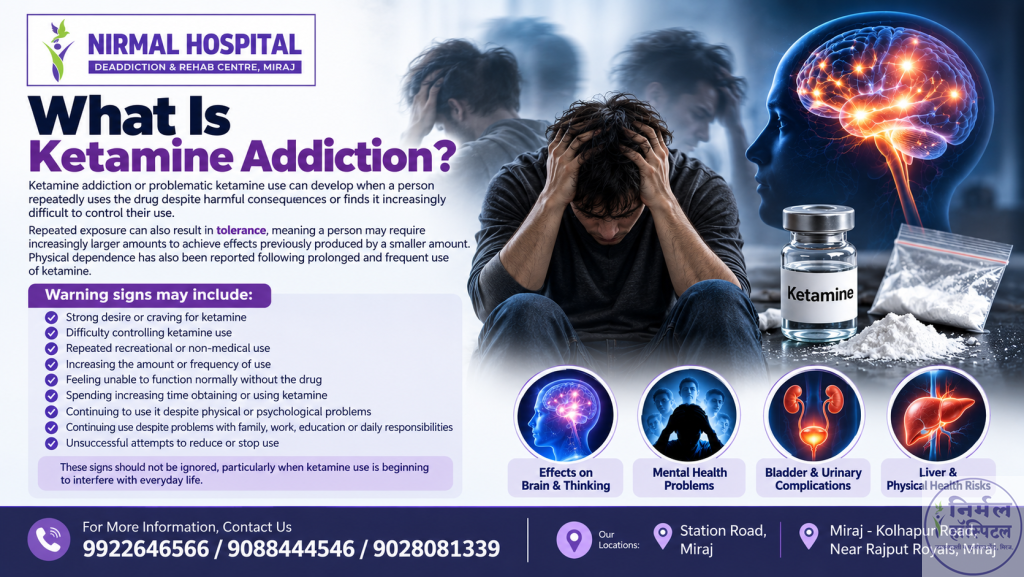
Ketamine addiction or problematic ketamine use can develop when a person repeatedly uses the drug despite harmful consequences or finds it increasingly difficult to control their use.
Repeated exposure can also result in tolerance, meaning a person may require increasingly larger amounts to achieve effects previously produced by a smaller amount.
Physical dependence has also been reported following prolonged and frequent use of ketamine.
Warning signs may include:
- Strong desire or craving for ketamine
- Difficulty controlling ketamine use
- Repeated recreational or non-medical use
- Increasing the amount or frequency of use
- Feeling unable to function normally without the drug
- Spending increasing time obtaining or using ketamine
- Continuing to use it despite physical or psychological problems
- Continuing use despite problems with family, work, education or daily responsibilities
- Unsuccessful attempts to reduce or stop use
These signs should not be ignored, particularly when ketamine use is beginning to interfere with everyday life.
How Does Ketamine Affect the Brain?
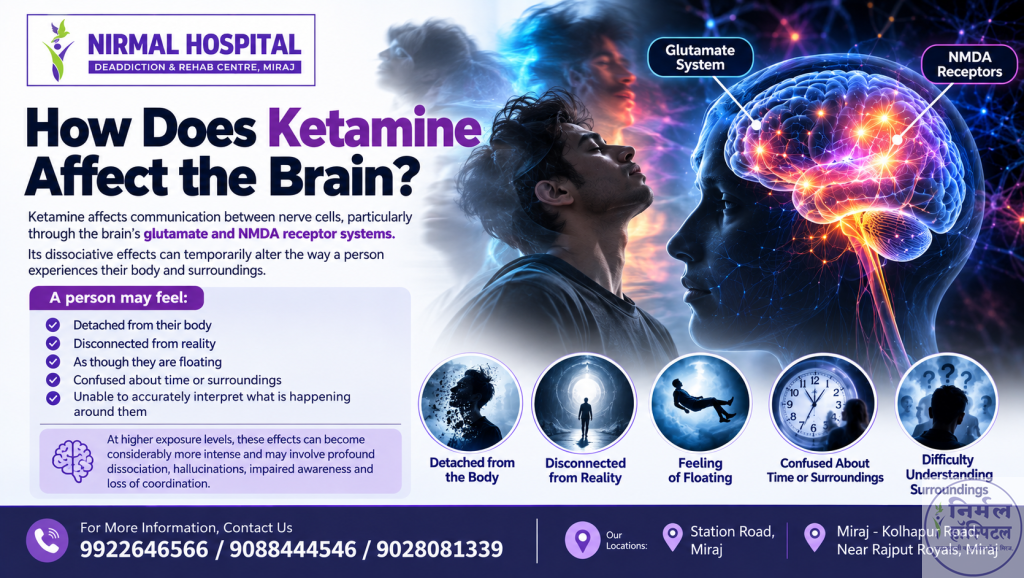
Ketamine affects communication between nerve cells, particularly through the brain’s glutamate and NMDA receptor systems.
Its dissociative effects can temporarily alter the way a person experiences their body and surroundings.
A person may feel:
- Detached from their body
- Disconnected from reality
- As though they are floating
- Confused about time or surroundings
- Unable to accurately interpret what is happening around them
At higher exposure levels, these effects can become considerably more intense and may involve profound dissociation, hallucinations, impaired awareness and loss of coordination.
Common Short-Term Effects of Ketamine
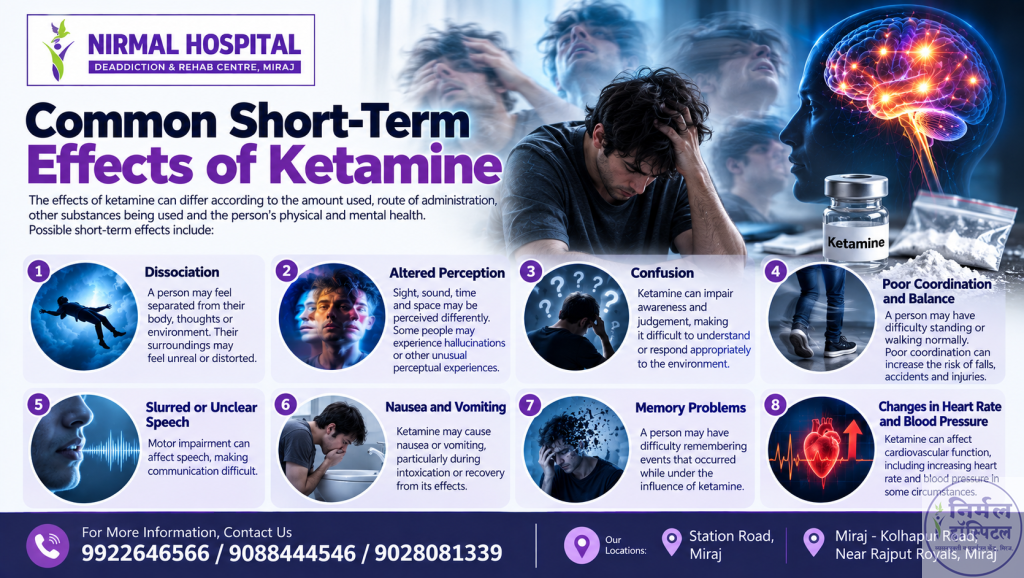
The effects of ketamine can differ according to the amount used, route of administration, other substances being used and the person’s physical and mental health.
Possible short-term effects include:
Dissociation
A person may feel separated from their body, thoughts or environment. Their surroundings may feel unreal or distorted.
Altered Perception
Sight, sound, time and space may be perceived differently. Some people may experience hallucinations or other unusual perceptual experiences.
Confusion
Ketamine can impair awareness and judgement, making it difficult to understand or respond appropriately to the environment.
Poor Coordination and Balance
A person may have difficulty standing or walking normally. Poor coordination can increase the risk of falls, accidents and injuries.
Slurred or Unclear Speech
Motor impairment can affect speech, making communication difficult.
Nausea and Vomiting
Ketamine may cause nausea or vomiting, particularly during intoxication or recovery from its effects.
Memory Problems
A person may have difficulty remembering events that occurred while under the influence of ketamine.
Changes in Heart Rate and Blood Pressure
Ketamine can affect cardiovascular function, including increasing heart rate and blood pressure in some circumstances.
What Is a K-Hole?
The term “K-hole” is commonly used to describe an intense state of ketamine-induced dissociation.
During this state, a person may experience profound detachment from their body and surroundings, altered awareness, difficulty moving or communicating and intense perceptual changes.
Some people describe sensations of floating, being outside their body or losing their normal sense of time and space.
A K-hole should not be viewed as a harmless recreational experience. Severe intoxication can impair awareness and movement and increase the risk of falls, injuries, unconsciousness and other medical complications.
Long-Term Effects of Ketamine Misuse
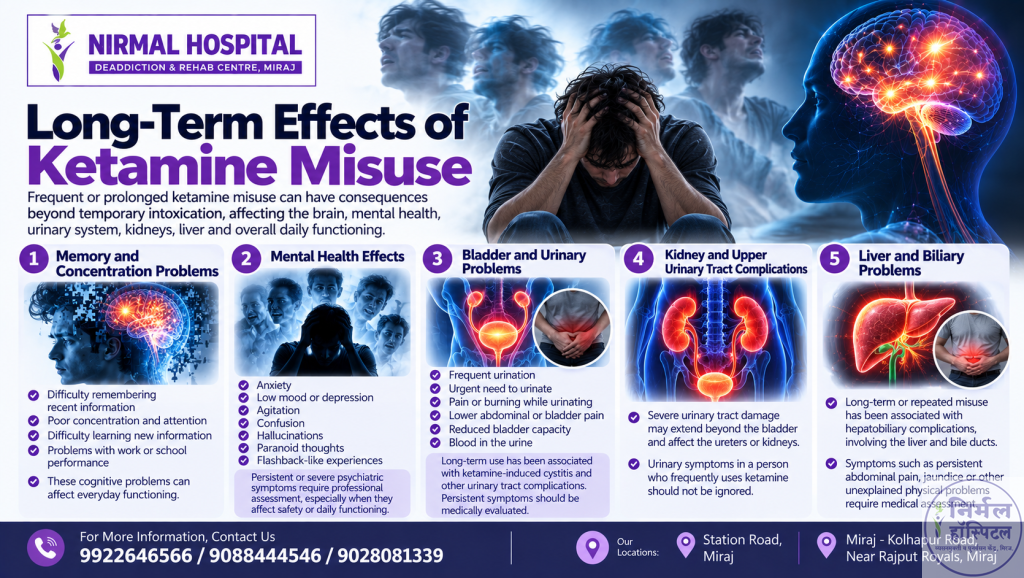
Frequent or prolonged ketamine misuse can have consequences beyond temporary intoxication.
1. Memory and Concentration Problems
Repeated high-dose ketamine misuse has been associated with impairment in memory and attention.
A person may notice difficulty:
- Remembering recent information
- Concentrating on tasks
- Learning new information
- Maintaining attention
- Performing effectively at work or school
These cognitive problems may significantly affect everyday functioning.
2. Mental Health Effects
Ketamine misuse may be associated with psychological symptoms such as:
- Anxiety
- Low mood or depressive symptoms
- Agitation
- Confusion
- Hallucinations
- Paranoid thoughts
- Flashback-like experiences
Persistent or severe psychiatric symptoms require professional assessment, particularly when they affect safety or the person’s ability to function.
3. Bladder and Urinary Problems
One of the important risks associated with chronic ketamine misuse is damage to the urinary system.
Long-term use has been associated with ketamine-induced cystitis and other urinary tract complications.
Warning symptoms can include:
- Frequent urination
- Urgent need to urinate
- Pain or burning while urinating
- Lower abdominal or bladder pain
- Reduced bladder capacity
- Blood in the urine
Severe or persistent urinary symptoms should be medically evaluated.
4. Kidney and Upper Urinary Tract Complications
Severe urinary tract damage may extend beyond the bladder and affect the ureters or kidneys.
This is one reason urinary symptoms in a person who frequently uses ketamine should not be ignored.
5. Liver and Biliary Problems
Long-term or repeated ketamine misuse has also been associated with hepatobiliary complications, involving the liver and bile ducts.
Symptoms such as persistent abdominal pain, jaundice or other unexplained physical problems require medical assessment.
Can Ketamine Cause Dependence?
Yes. Ketamine has the potential for misuse and dependence.
With prolonged use, some people develop tolerance, meaning they require a larger amount of ketamine to produce an effect similar to what they previously experienced with a smaller amount.
Dependence may become apparent when the person feels compelled to continue using ketamine or experiences craving or other symptoms when use is reduced or stopped.
Ketamine Withdrawal Symptoms
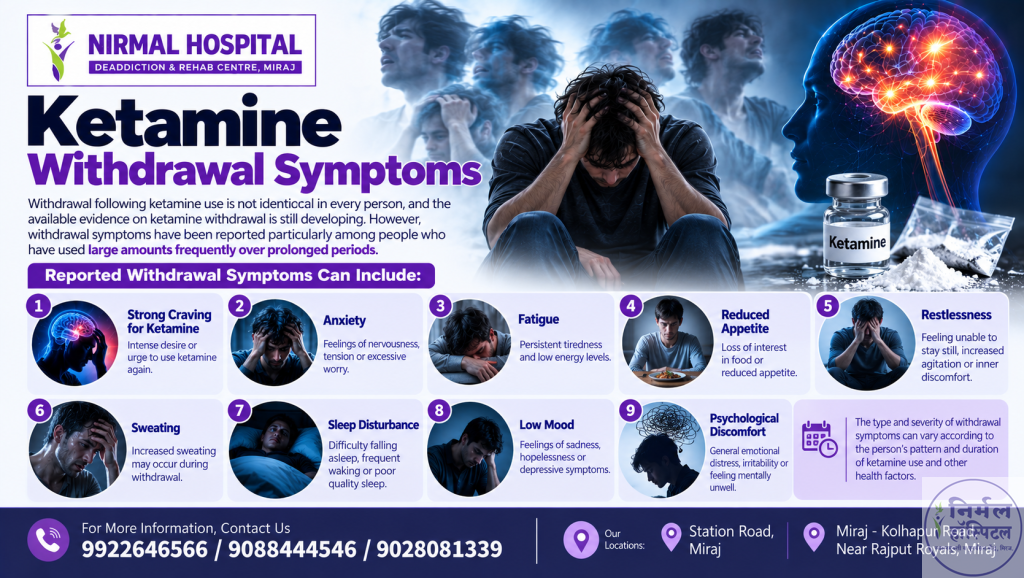
Withdrawal following ketamine use is not identical in every person, and the available evidence on ketamine withdrawal is still developing.
However, withdrawal symptoms have been reported particularly among people who have used large amounts frequently over prolonged periods.
Reported symptoms can include:
- Strong craving for ketamine
- Anxiety
- Fatigue
- Reduced appetite
- Restlessness
- Sweating
- Sleep disturbance
- Low mood
- Psychological discomfort
The type and severity of withdrawal symptoms can vary according to the person’s pattern and duration of ketamine use and other health factors.
Why Can Stopping Ketamine Feel Difficult?
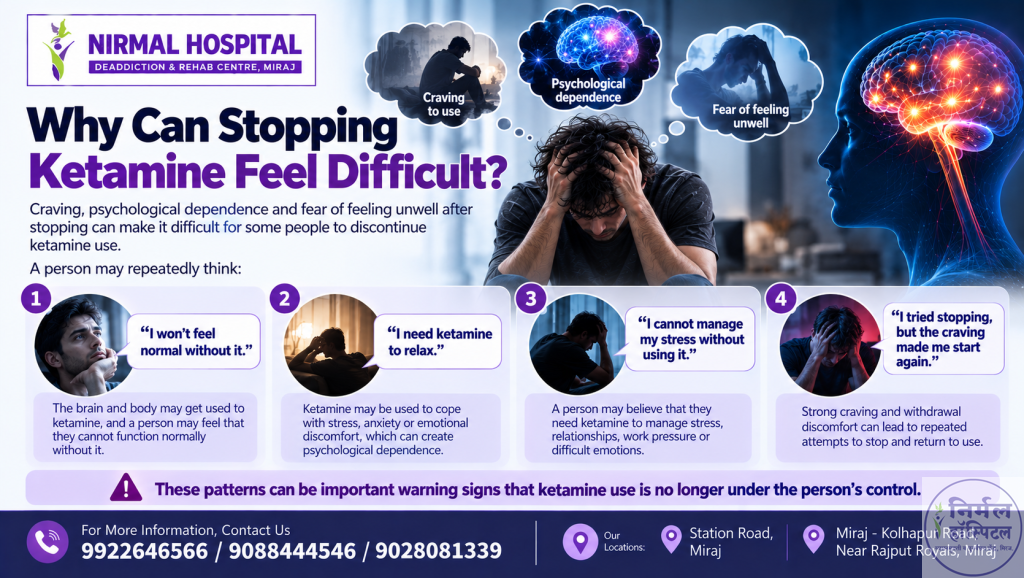
Craving, psychological dependence and fear of feeling unwell after stopping can make it difficult for some people to discontinue ketamine use.
A person may repeatedly think:
- “I won’t feel normal without it.”
- “I need ketamine to relax.”
- “I cannot manage my stress without using it.”
- “I tried stopping, but the craving made me start again.”
These patterns can be important warning signs that ketamine use is no longer under the person’s control.
Ketamine Misuse vs Medical Ketamine Use
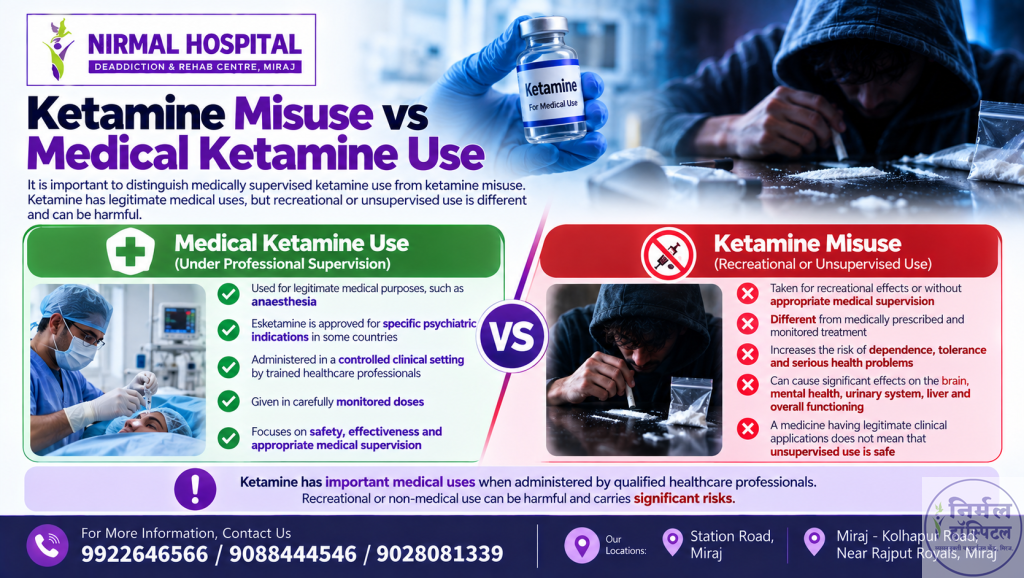
It is important to distinguish medically supervised ketamine use from ketamine misuse.
Ketamine has legitimate anaesthetic uses. Esketamine, which is related to ketamine, also has specific approved psychiatric indications in some countries and is administered under controlled medical supervision.
Recreational ketamine use or taking ketamine without appropriate medical supervision is different from medically prescribed and monitored treatment.
A medicine having legitimate clinical applications does not mean that unsupervised use is safe.
Ketamine Overdose: When Is It an Emergency?
Large amounts of ketamine can cause serious toxicity. Overdose or severe intoxication may involve:
- Severe confusion
- Marked agitation
- Loss of consciousness
- Very poor coordination
- Seizures
- Abnormal heart rate or blood pressure
- Breathing difficulties or dangerously slowed breathing
- Coma
Loss of consciousness, seizures, severe breathing difficulty or inability to respond normally requires immediate emergency medical attention.
When Should You Seek Professional Help?
Consider seeking professional assessment if ketamine use is:
- Becoming frequent or difficult to control
- Increasing in quantity
- Producing strong cravings
- Affecting memory or concentration
- Causing anxiety, depression, paranoia or hallucinations
- Causing urinary or bladder problems
- Affecting work or education
- Creating financial difficulties
- Damaging family or social relationships
- Continuing despite known health problems
- Returning repeatedly after attempts to stop
Recognizing these signs early can help identify the severity of the problem and any associated physical or mental-health complications.
Frequently Asked Questions About Ketamine Addiction
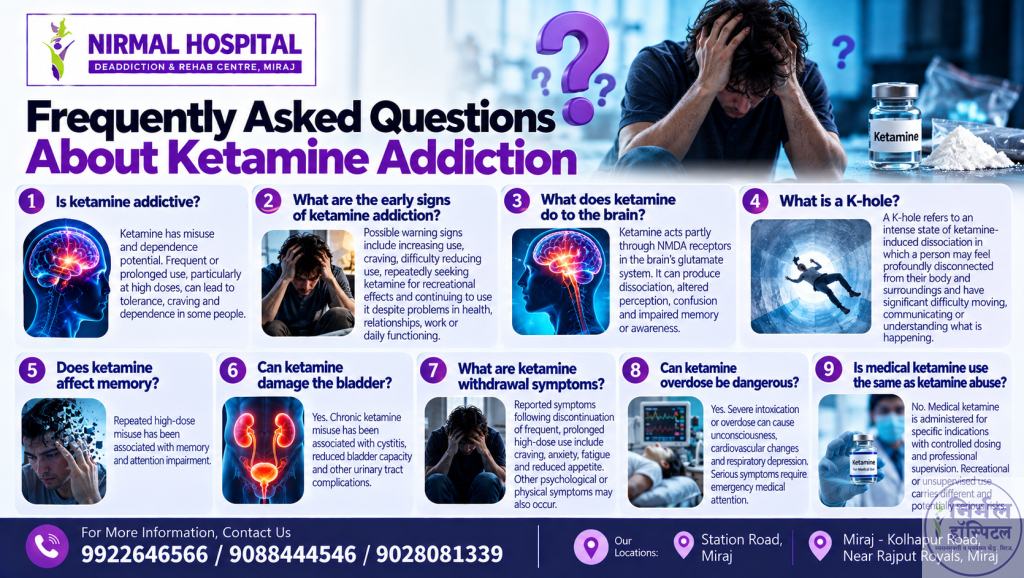
Is ketamine addictive?
Ketamine has misuse and dependence potential. Frequent or prolonged use, particularly at high doses, can lead to tolerance, craving and dependence in some people.
What are the early signs of ketamine addiction?
Possible warning signs include increasing use, craving, difficulty reducing use, repeatedly seeking ketamine for recreational effects and continuing to use it despite problems in health, relationships, work or daily functioning.
What does ketamine do to the brain?
Ketamine acts partly through NMDA receptors in the brain’s glutamate system. It can produce dissociation, altered perception, confusion and impaired memory or awareness.
What is a K-hole?
A K-hole refers to an intense state of ketamine-induced dissociation in which a person may feel profoundly disconnected from their body and surroundings and have significant difficulty moving, communicating or understanding what is happening.
Does ketamine affect memory?
Repeated high-dose misuse has been associated with memory and attention impairment.
Can ketamine damage the bladder?
Yes. Chronic ketamine misuse has been associated with cystitis, reduced bladder capacity and other urinary tract complications.
What are ketamine withdrawal symptoms?
Reported symptoms following discontinuation of frequent, prolonged high-dose use include craving, anxiety, fatigue and reduced appetite. Other psychological or physical symptoms may also occur.
Can ketamine overdose be dangerous?
Yes. Severe intoxication or overdose can cause unconsciousness, cardiovascular changes and respiratory depression. Serious symptoms require emergency medical attention.
Is medical ketamine use the same as ketamine abuse?
No. Medical ketamine is administered for specific indications with controlled dosing and professional supervision. Recreational or unsupervised use carries different and potentially serious risks.
Learn More About Ketamine Addiction Treatment
If ketamine use has become difficult to control or is affecting physical health, mental health or daily functioning, professional assessment can help determine the severity of the problem.
For information about assessment, de-addiction care, counselling, rehabilitation and relapse prevention, visit our Ketamine Addiction Treatment in Miraj page.
Watch our expert awareness video on Ketamine Addiction to understand how ketamine affects the brain, the warning signs of misuse, dependence, health risks and why timely professional assessment is important.
▶ Watch: Ketamine Addiction – Symptoms, Effects & Risks | Nirmal Hospital, Miraj
Nirmal Hospital – Psychiatric, De-addiction & Rehabilitation Centre, Miraj
📍 Miraj–Kolhapur Road, Near Rajput Royals Garden, Miraj
📞 9922646566 | 9088444546 | 9028081339
This page is intended for health education and awareness. It should not replace individual medical assessment, diagnosis or emergency care.


