

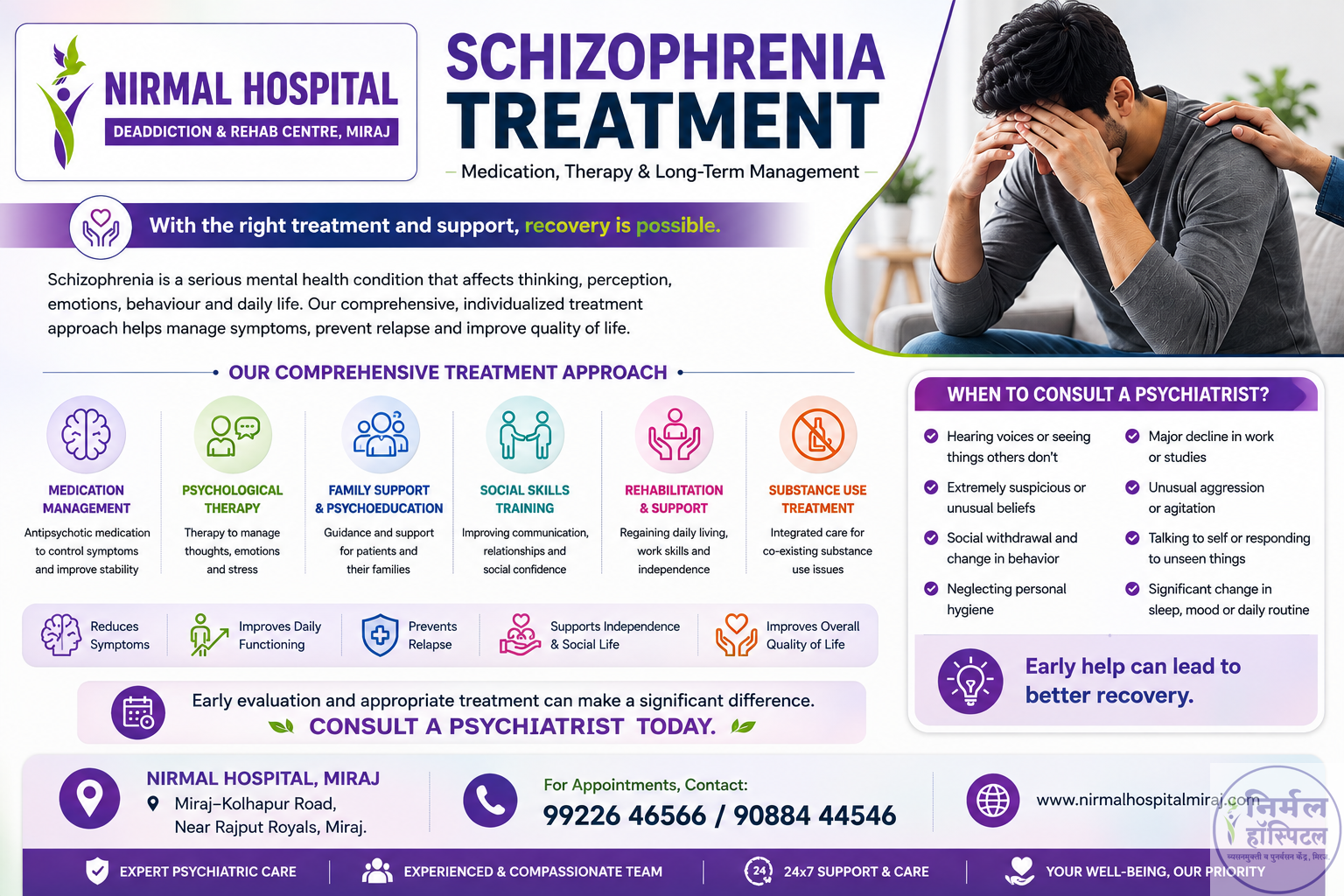
Schizophrenia Treatment – Medication, Therapy & Long-Term Management
Understanding Treatment, Medication, Therapy & Long-Term Management
Schizophrenia is a serious mental health condition that can affect a person’s thinking, perception, emotions, behaviour, relationships, and daily functioning. Although schizophrenia can be a long-term condition, appropriate treatment can help control symptoms, improve functioning, reduce the risk of relapse, and support a better quality of life.
Treatment for schizophrenia is individualized and depends on the person’s symptoms, severity, medical history, treatment response, and overall needs.
What Is the Treatment for Schizophrenia?
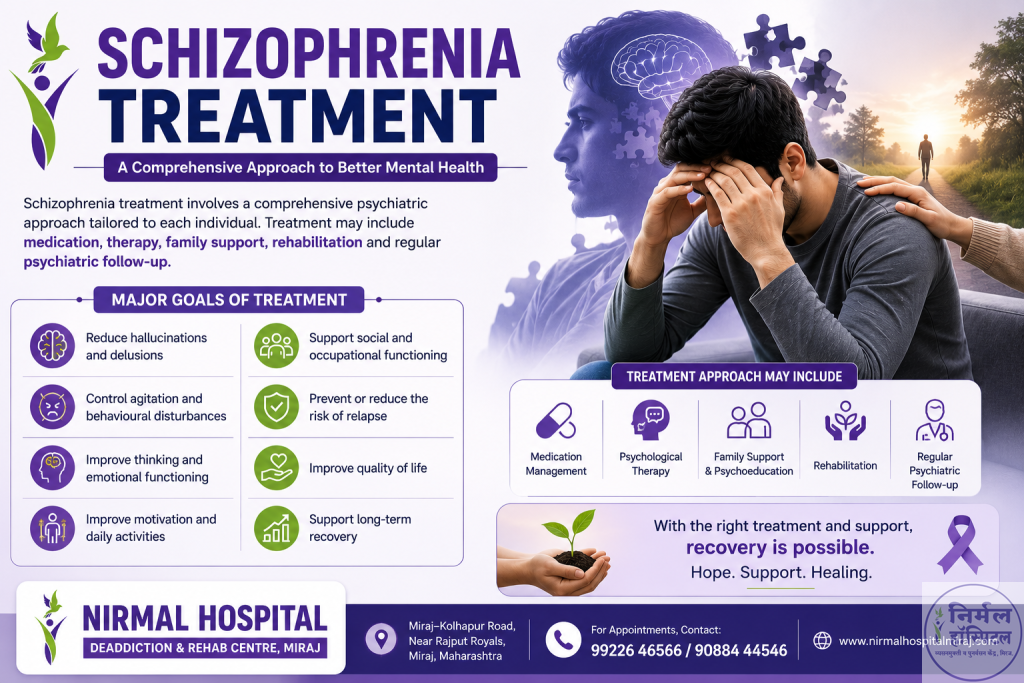
Schizophrenia treatment generally involves a comprehensive psychiatric approach. Depending on the individual’s condition, treatment may include medication, psychological interventions, family support, rehabilitation, and regular psychiatric follow-up.
The major goals of treatment are to:
- Reduce hallucinations and delusions
- Control agitation and behavioural disturbances
- Improve thinking and emotional functioning
- Improve motivation and daily activities
- Support social and occupational functioning
- Prevent or reduce the risk of relapse
- Improve quality of life
- Support long-term recovery
Schizophrenia Treatment Options
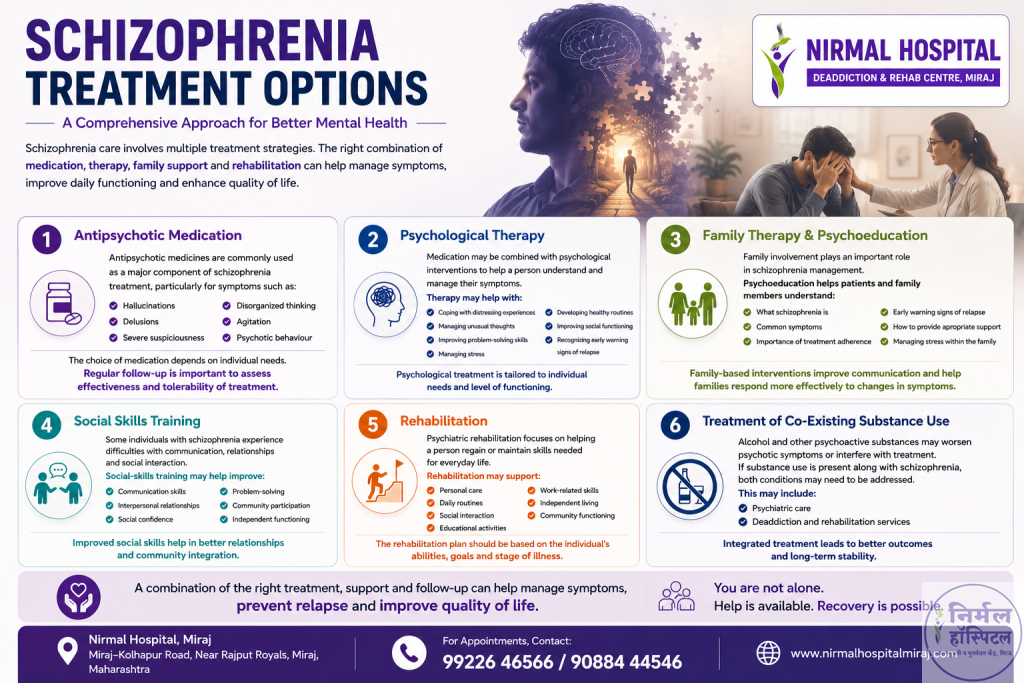
- Antipsychotic Medication
Antipsychotic medicines are commonly used as a major component of schizophrenia treatment, particularly for symptoms such as:
- Hallucinations
- Delusions
- Severe suspiciousness
- Disorganized thinking
- Agitation
- Psychotic behaviour
The choice of medication depends on the individual’s symptoms, previous treatment response, medical history, and possible side effects.
Regular psychiatric follow-up is important to assess the effectiveness and tolerability of treatment.
- Psychological Therapy
Medication may be combined with psychological interventions to help a person understand and manage their symptoms.
Therapeutic approaches may help with:
- Coping with distressing experiences
- Managing unusual thoughts
- Improving problem-solving skills
- Managing stress
- Developing healthy routines
- Improving social functioning
- Recognizing early warning signs of relapse
Psychological treatment is generally tailored to the individual’s needs and level of functioning.
- Family Therapy and Psychoeducation
Family involvement can play an important role in schizophrenia management.
Psychoeducation helps patients and family members understand:
- What schizophrenia is
- Common symptoms
- Importance of treatment adherence
- Early warning signs of relapse
- How to provide appropriate support
- How to manage stress within the family
Family-based interventions can also improve communication and help families respond more effectively to changes in symptoms.
- Social Skills Training
Some individuals with schizophrenia experience difficulties with communication, relationships, and social interaction.
Social-skills training may help improve:
- Communication skills
- Interpersonal relationships
- Social confidence
- Problem-solving
- Community participation
- Independent functioning
- Rehabilitation
Psychiatric rehabilitation focuses on helping a person regain or maintain skills needed for everyday life.
Rehabilitation may support:
- Personal care
- Daily routines
- Social interaction
- Educational activities
- Work-related skills
- Independent living
- Community functioning
The rehabilitation plan should be based on the individual’s abilities, goals, and stage of illness.
- Treatment of Co-Existing Substance Use
Alcohol and other psychoactive substances may worsen psychotic symptoms or interfere with treatment.
If substance use is present along with schizophrenia, both conditions may need to be addressed as part of a comprehensive treatment plan.
This may include psychiatric care along with appropriate deaddiction and rehabilitation services.
Want to learn more about schizophrenia treatment? Watch our informative videos on YouTube →
Treatment According to the Phase of Schizophrenia
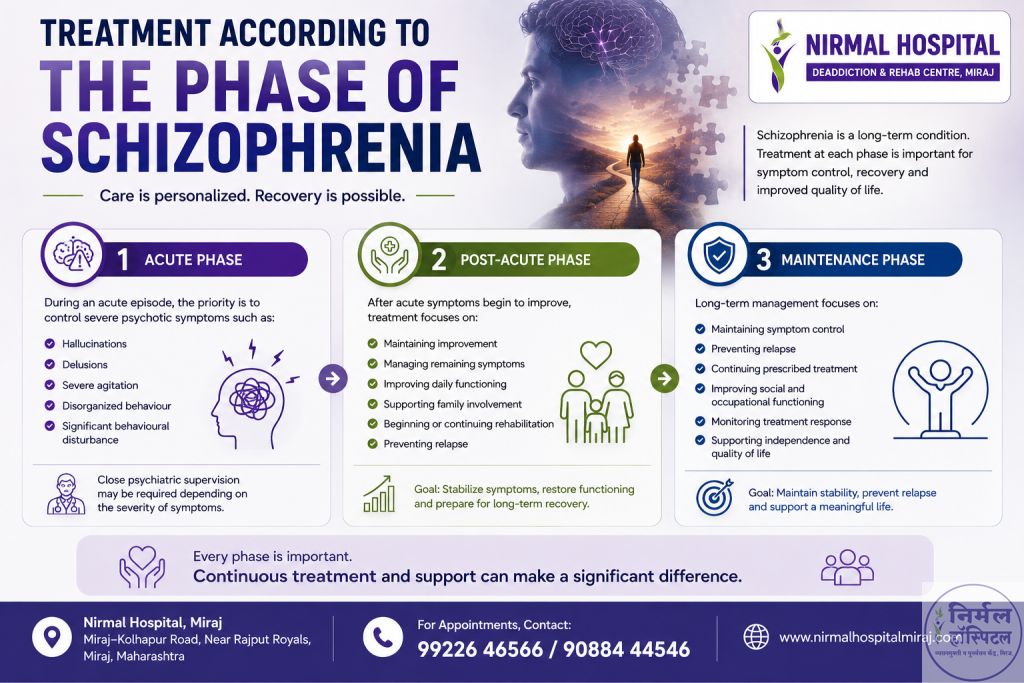
Acute Phase
During an acute episode, the priority is to control severe psychotic symptoms such as:
- Hallucinations
- Delusions
- Severe agitation
- Disorganized behaviour
- Significant behavioural disturbance
Close psychiatric supervision may be required depending on the severity of symptoms.
Post-Acute Phase
After acute symptoms begin to improve, treatment focuses on:
- Maintaining improvement
- Managing remaining symptoms
- Improving daily functioning
- Supporting family involvement
- Beginning or continuing rehabilitation
- Preventing relapse
Maintenance Phase
Long-term management focuses on:
- Maintaining symptom control
- Preventing relapse
- Continuing prescribed treatment
- Improving social and occupational functioning
- Monitoring treatment response
- Supporting independence and quality of life
Importance of Regular Psychiatric Follow-Up
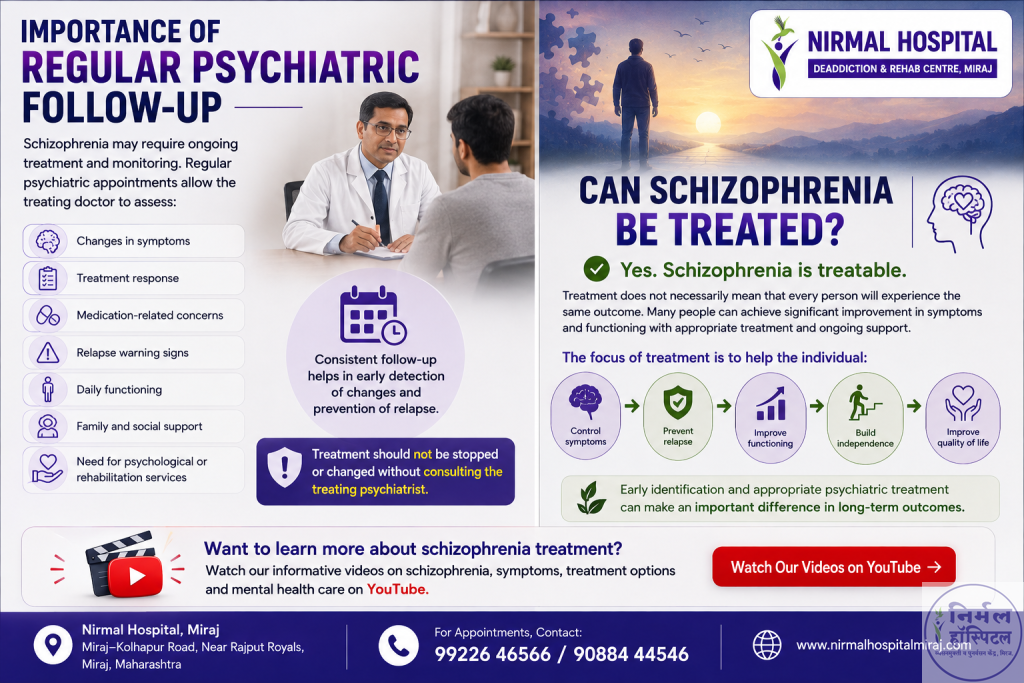
Schizophrenia may require ongoing treatment and monitoring. Regular psychiatric appointments allow the treating doctor to assess:
- Changes in symptoms
- Treatment response
- Medication-related concerns
- Relapse warning signs
- Daily functioning
- Family and social support
- Need for psychological or rehabilitation services
Treatment should not be stopped or changed without consulting the treating psychiatrist.
Can Schizophrenia Be Treated?
Yes. Schizophrenia is treatable.
Treatment does not necessarily mean that every person will experience the same outcome. Many people can achieve significant improvement in symptoms and functioning with appropriate treatment and ongoing support.
The focus of treatment is to help the individual:
Control symptoms → Prevent relapse → Improve functioning → Build independence → Improve quality of life
Early identification and appropriate psychiatric treatment can make an important difference in long-term outcomes.
When Is Hospital Treatment Needed?
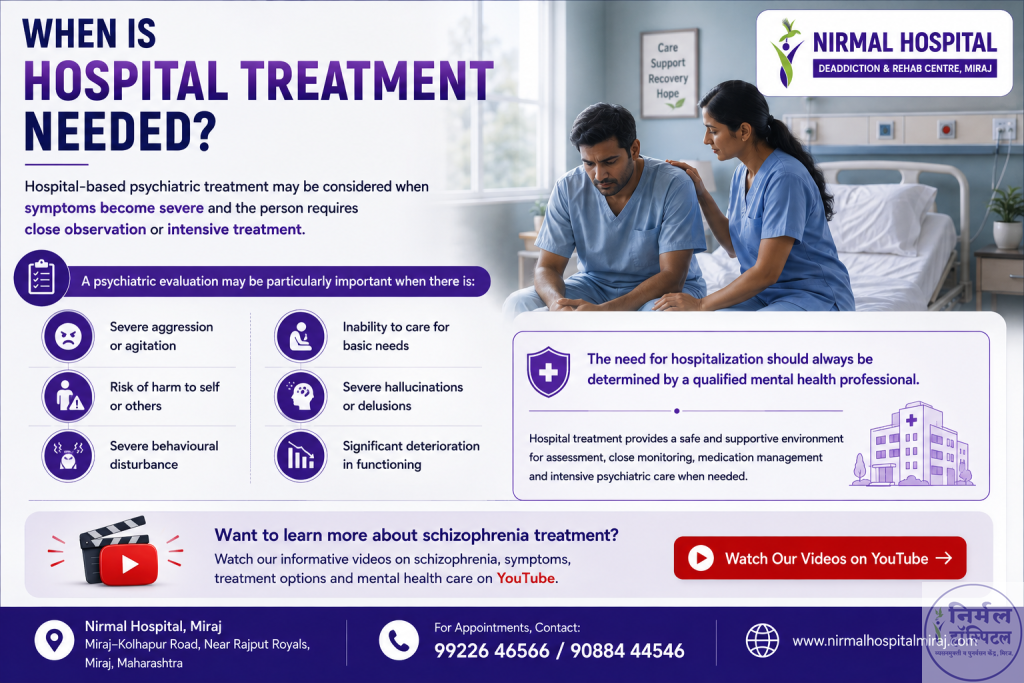
Hospital-based psychiatric treatment may be considered when symptoms become severe and the person requires close observation or intensive treatment.
A psychiatric evaluation may be particularly important when there is:
- Severe aggression or agitation
- Risk of harm to self or others
- Severe behavioural disturbance
- Inability to care for basic needs
- Severe hallucinations or delusions
- Significant deterioration in functioning
The need for hospitalization should always be determined by a qualified mental health professional.
When Should You Consult a Psychiatrist?
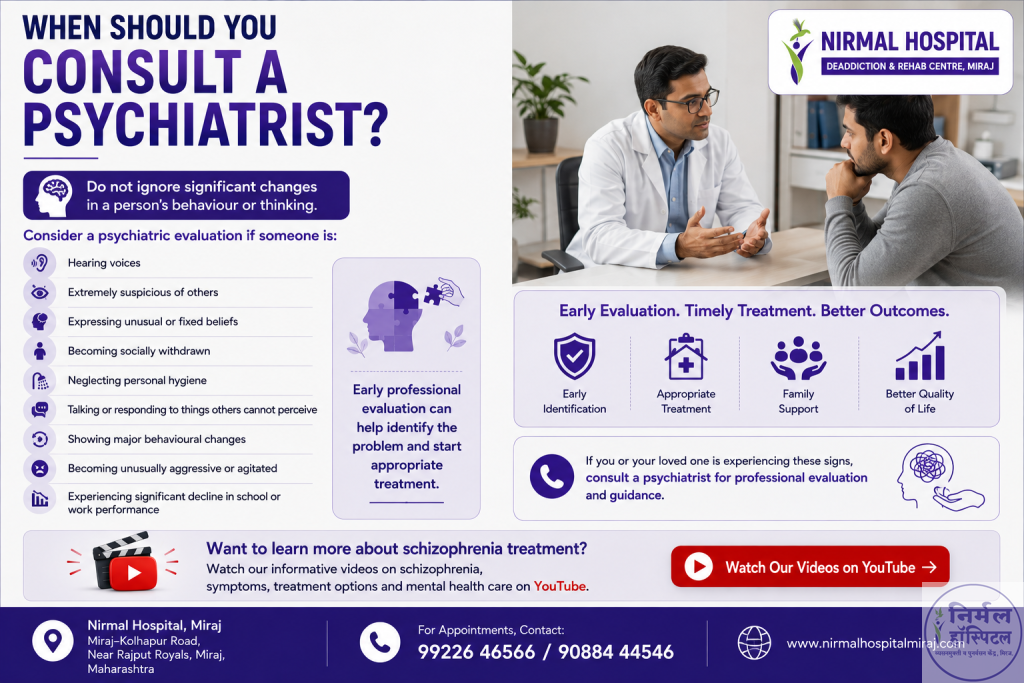
Do not ignore significant changes in a person’s behaviour or thinking.
Consider a psychiatric evaluation if someone is:
- Hearing voices
- Extremely suspicious of others
- Expressing unusual or fixed beliefs
- Becoming socially withdrawn
- Neglecting personal hygiene
- Talking or responding to things others cannot perceive
- Showing major behavioural changes
- Becoming unusually aggressive or agitated
- Experiencing significant decline in school or work performance
Early professional evaluation can help identify the problem and start appropriate treatment.
Frequently Asked Questions About Schizophrenia Treatment
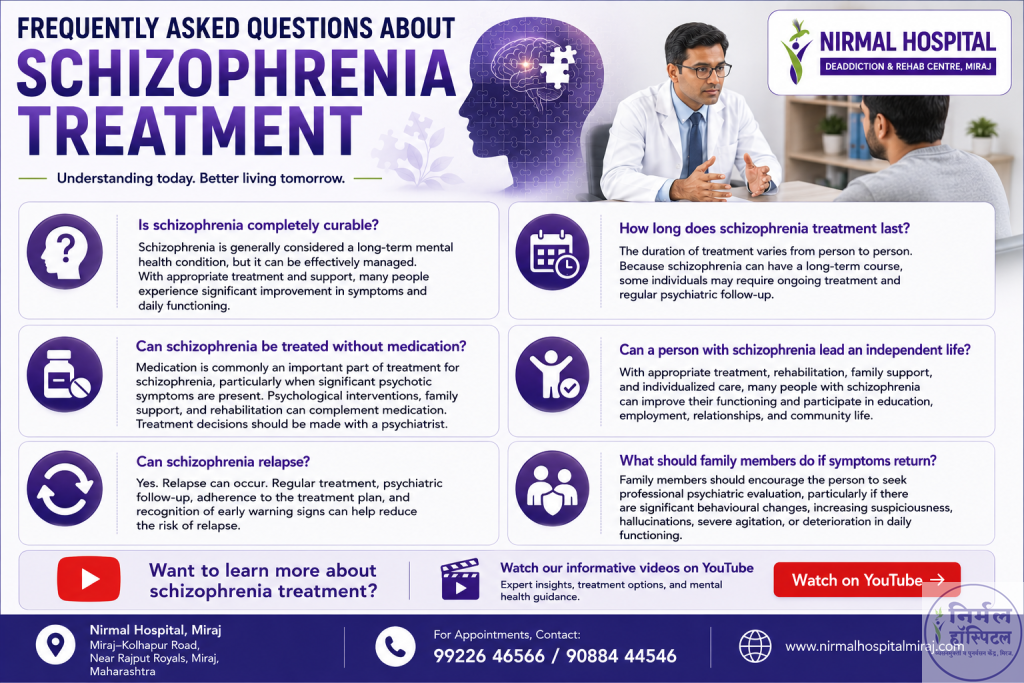
Is schizophrenia completely curable?
Schizophrenia is generally considered a long-term mental health condition, but it can be effectively managed. With appropriate treatment and support, many people experience significant improvement in symptoms and daily functioning.
How long does schizophrenia treatment last?
The duration of treatment varies from person to person. Because schizophrenia can have a long-term course, some individuals may require ongoing treatment and regular psychiatric follow-up.
Can schizophrenia be treated without medication?
Medication is commonly an important part of treatment for schizophrenia, particularly when significant psychotic symptoms are present. Psychological interventions, family support, and rehabilitation can complement medication. Treatment decisions should be made with a psychiatrist.
Can a person with schizophrenia lead an independent life?
With appropriate treatment, rehabilitation, family support, and individualized care, many people with schizophrenia can improve their functioning and participate in education, employment, relationships, and community life.
Can schizophrenia relapse?
Yes. Relapse can occur. Regular treatment, psychiatric follow-up, adherence to the treatment plan, and recognition of early warning signs can help reduce the risk of relapse.
What should family members do if symptoms return?
Family members should encourage the person to seek professional psychiatric evaluation, particularly if there are significant behavioural changes, increasing suspiciousness, hallucinations, severe agitation, or deterioration in daily functioning.
Schizophrenia Treatment at Nirmal Hospital
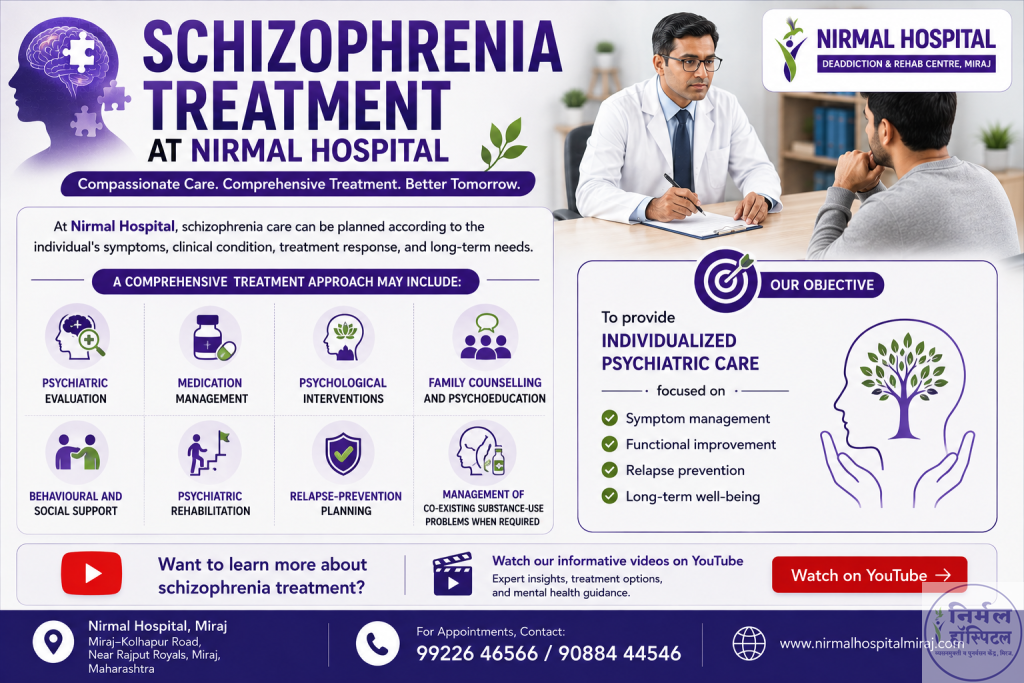
At Nirmal Hospital, schizophrenia care can be planned according to the individual’s symptoms, clinical condition, treatment response, and long-term needs.
A comprehensive treatment approach may include:
- Psychiatric evaluation
- Medication management
- Psychological interventions
- Family counselling and psychoeducation
- Behavioural and social support
- Psychiatric rehabilitation
- Relapse-prevention planning
- Management of co-existing substance-use problems when required
The objective is to provide individualized psychiatric care focused on symptom management, functional improvement, relapse prevention, and long-term well-being.
Learn more about Schizophrenia Symptoms, Psychiatric Treatment, Mental Health Treatment, and other related psychiatric services at Nirmal Hospital.
Watch Our Schizophrenia Treatment Videos
Learn more about schizophrenia, treatment options, recovery, and mental health through our informative YouTube videos.


