


Causes of Cocaine Addiction
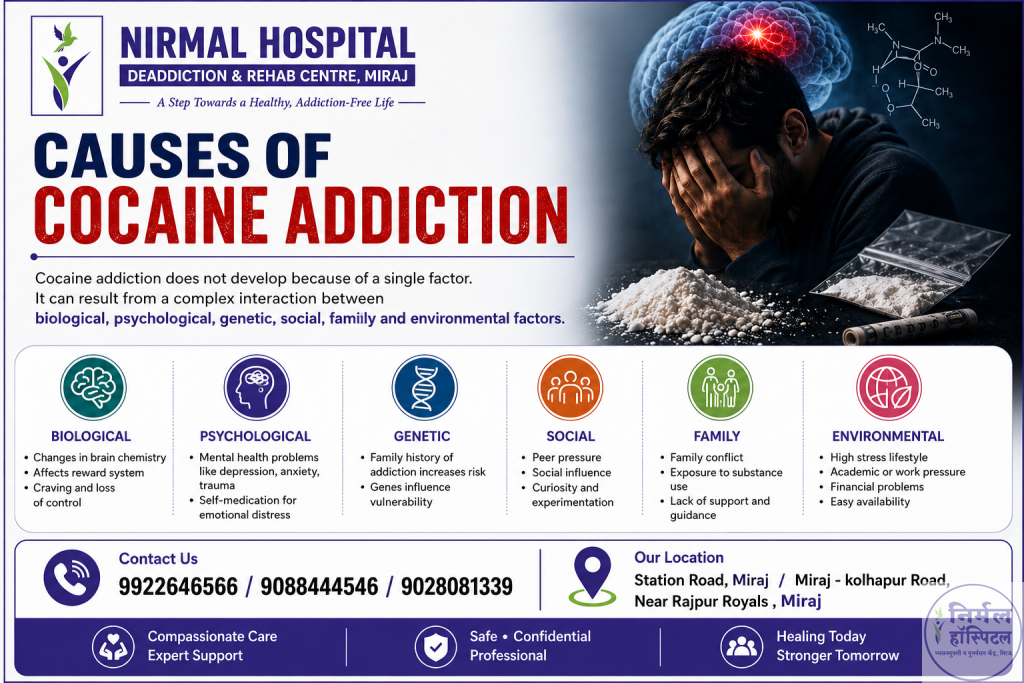
Cocaine addiction does not develop because of a single factor. It can result from a complex interaction between biological, psychological, genetic, social, family and environmental factors.
1. Brain Chemistry and the Reward System
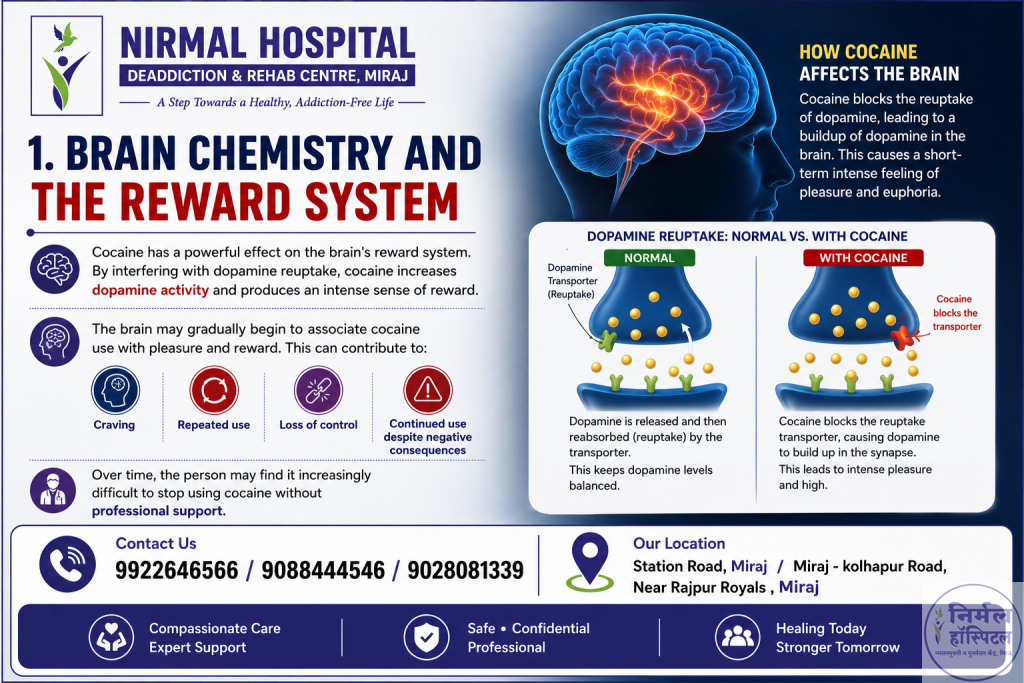
Cocaine has a powerful effect on the brain’s reward system.
By interfering with dopamine reuptake, cocaine increases dopamine activity and produces an intense sense of reward.
The brain may gradually begin to associate cocaine use with pleasure and reward. This can contribute to:
- Craving
- Repeated use
- Loss of control
- Continued use despite negative consequences
Over time, the person may find it increasingly difficult to stop using cocaine without professional support.
2. Mental Health Problems and Self-Medication
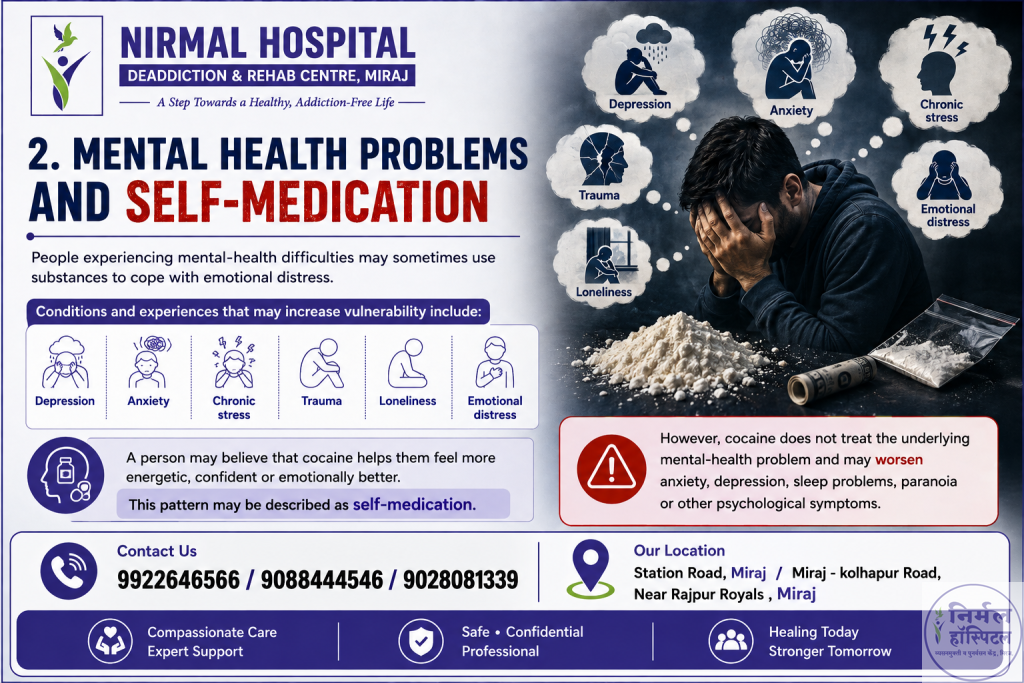
People experiencing mental-health difficulties may sometimes use substances to cope with emotional distress.
Conditions and experiences that may increase vulnerability include:
- Depression
- Anxiety
- Chronic stress
- Trauma
- Loneliness
- Emotional distress
A person may believe that cocaine helps them feel more energetic, confident or emotionally better.
This pattern may be described as self-medication.
However, cocaine does not treat the underlying mental-health problem and may worsen anxiety, depression, sleep problems, paranoia or other psychological symptoms.
3. Peer Pressure and Social Influence
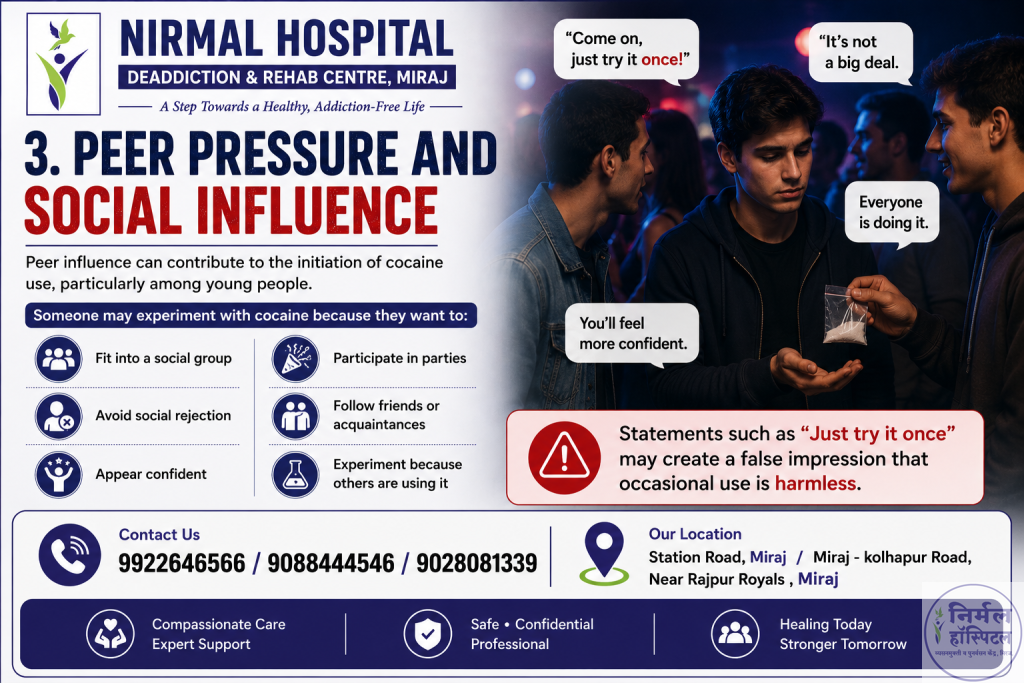
Peer influence can contribute to the initiation of cocaine use, particularly among young people.
Someone may experiment with cocaine because they want to:
- Fit into a social group
- Avoid social rejection
- Appear confident
- Participate in parties
- Follow friends or acquaintances
- Experiment because others are using it
Statements such as “Just try it once” may create a false impression that occasional use is harmless.
4. Curiosity and Experimentation
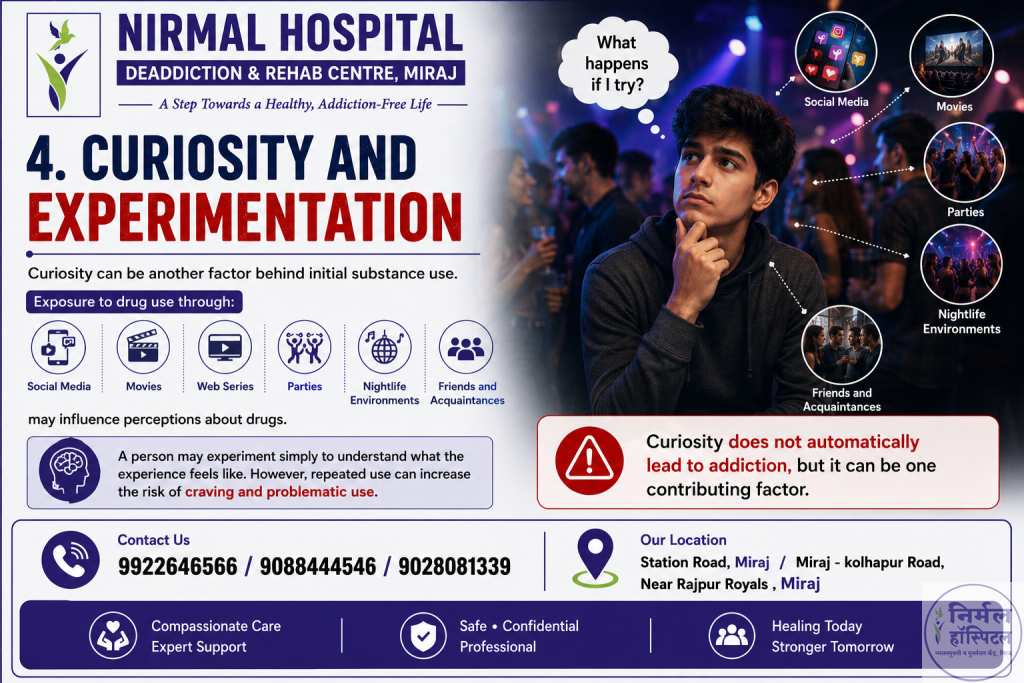
Curiosity can be another factor behind initial substance use.
Exposure to drug use through:
- Social media
- Movies
- Web series
- Parties
- Nightlife environments
- Friends and acquaintances
may influence perceptions about drugs.
A person may experiment simply to understand what the experience feels like. However, repeated use can increase the risk of craving and problematic use.
Curiosity does not automatically lead to addiction, but it can be one contributing factor.
5. Lifestyle and High-Stress Environments
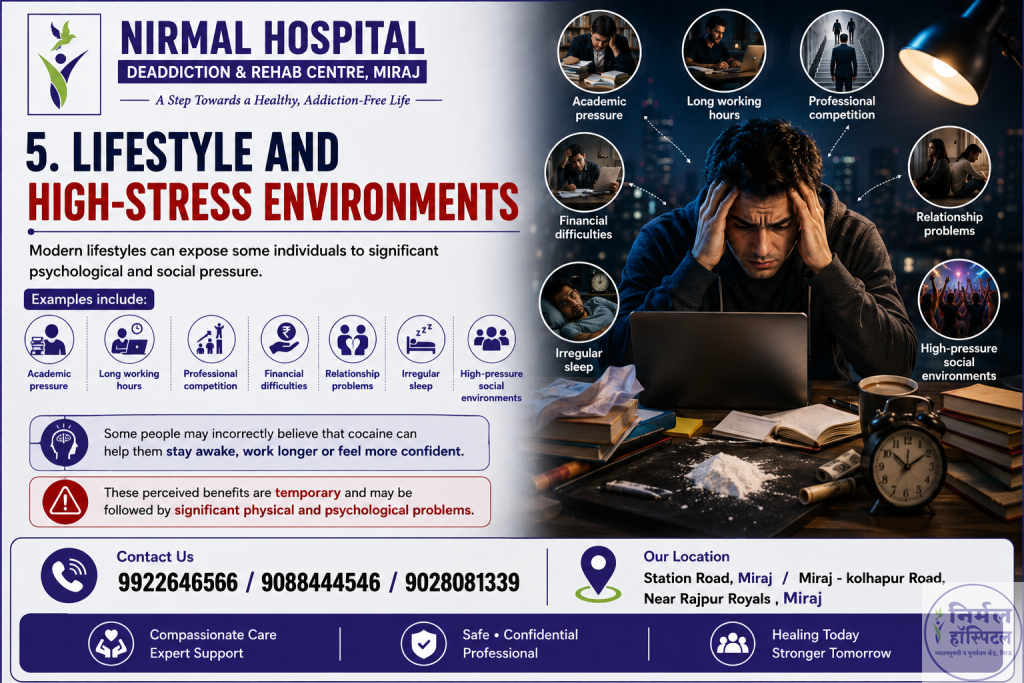
Modern lifestyles can expose some individuals to significant psychological and social pressure.
Examples include:
- Academic pressure
- Long working hours
- Professional competition
- Financial difficulties
- Relationship problems
- Irregular sleep
- High-pressure social environments
Some people may incorrectly believe that cocaine can help them stay awake, work longer or feel more confident.
These perceived benefits are temporary and may be followed by significant physical and psychological problems.
6. Family and Environmental Factors
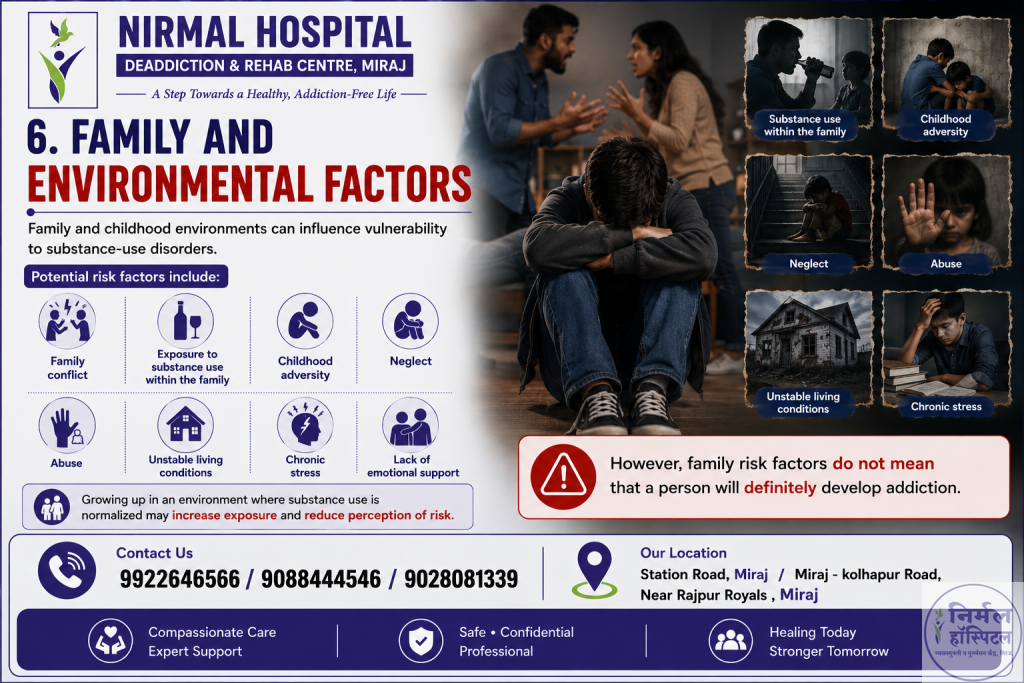
Family and childhood environments can influence vulnerability to substance-use disorders.
Potential risk factors include:
- Family conflict
- Exposure to substance use within the family
- Childhood adversity
- Neglect
- Abuse
- Unstable living conditions
- Chronic stress
- Lack of emotional support
Growing up in an environment where substance use is normalized may increase exposure and reduce perception of risk.
However, family risk factors do not mean that a person will definitely develop addiction.
7. Imitation and Family Influence
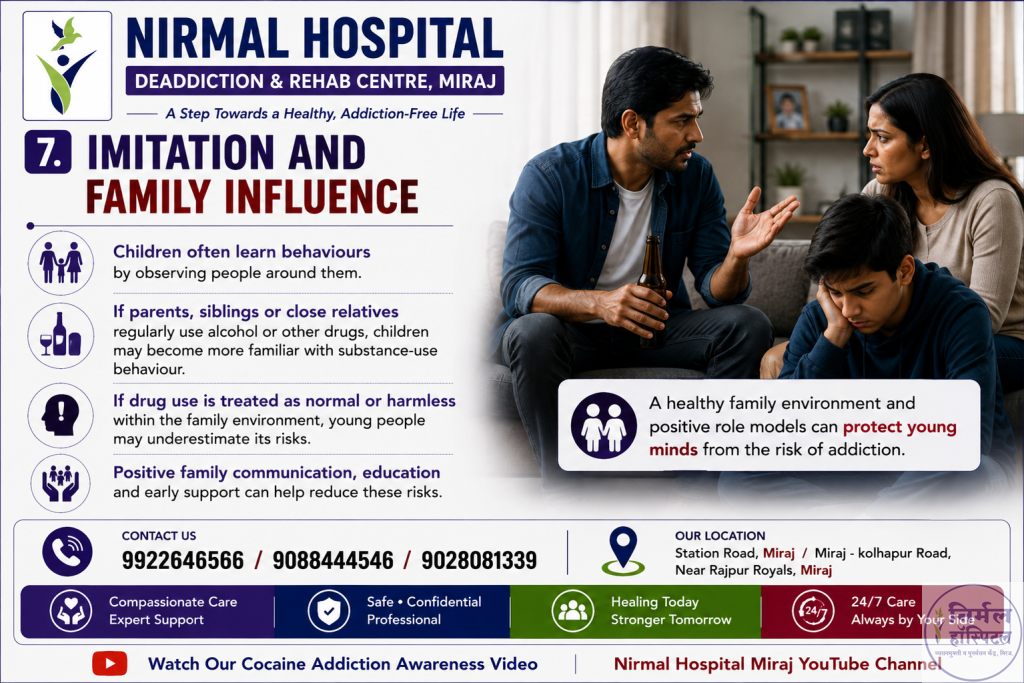
Children often learn behaviours by observing people around them.
If parents, siblings or close relatives regularly use alcohol or other drugs, children may become more familiar with substance-use behaviour.
If drug use is treated as normal or harmless within the family environment, young people may underestimate its risks.
Positive family communication, education and early support can help reduce these risks.
8. Stress, Anxiety and Depression
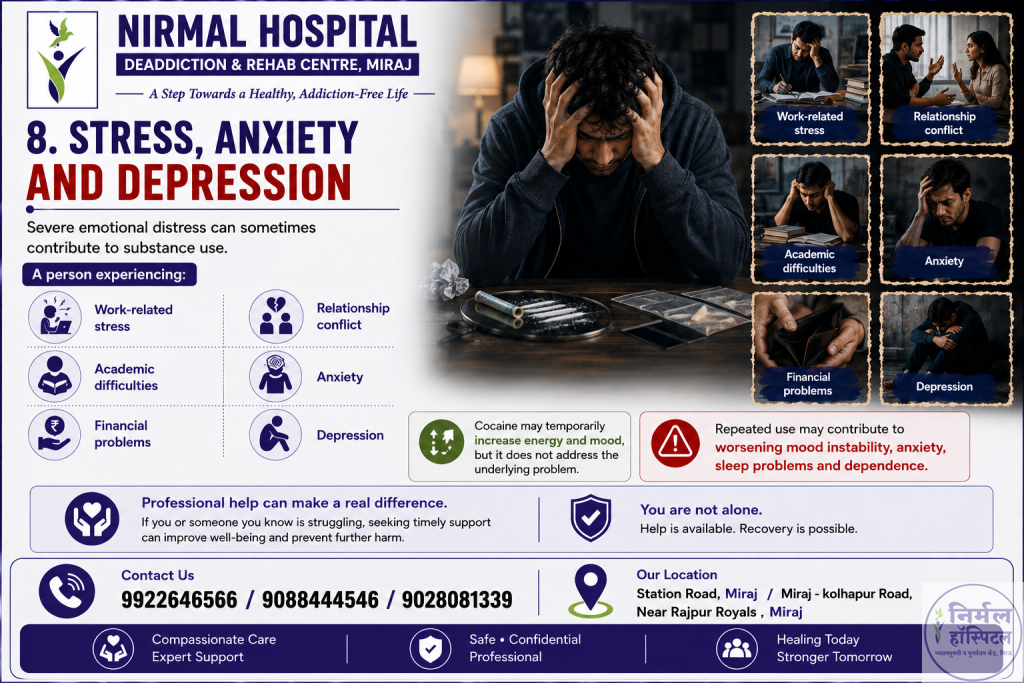
Severe emotional distress can sometimes contribute to substance use.
A person experiencing:
- Work-related stress
- Academic difficulties
- Financial problems
- Relationship conflict
- Anxiety
- Depression
may look for a quick way to change their emotional state.
Cocaine may temporarily increase energy and mood, but it does not address the underlying problem.
Repeated use may contribute to worsening mood instability, anxiety, sleep problems and dependence.
9. Personality and Risk-Taking Behaviour
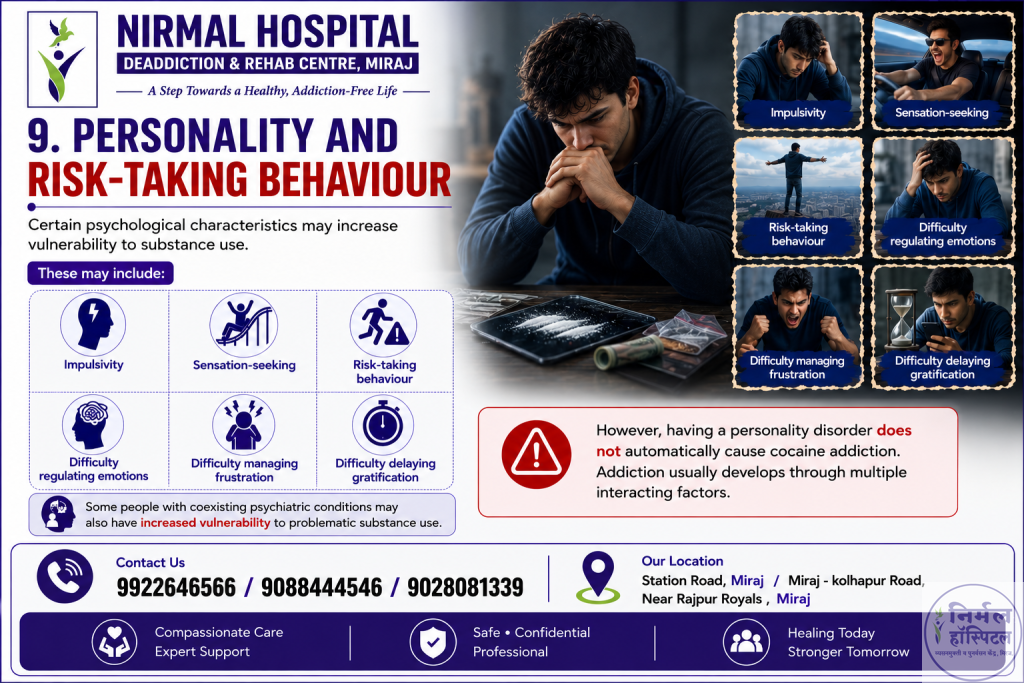
Certain psychological characteristics may increase vulnerability to substance use.
These may include:
- Impulsivity
- Sensation-seeking
- Risk-taking behaviour
- Difficulty regulating emotions
- Difficulty managing frustration
- Difficulty delaying gratification
Some people with coexisting psychiatric conditions may also have increased vulnerability to problematic substance use.
However, having a personality disorder does not automatically cause cocaine addiction. Addiction usually develops through multiple interacting factors.
10. Genetics and Hereditary Factors

Genetics can influence a person’s vulnerability to substance-use disorders.
People with a family history of alcohol or drug dependence may have an increased risk.
However, genetics are only one part of the picture.
Other factors include:
- Family environment
- Childhood experiences
- Mental health
- Peer influence
- Stress
- Social circumstances
- Individual behaviour
Therefore, having a family history of addiction does not mean that someone is destined to develop cocaine addiction.
Case History – An Illustrative Example
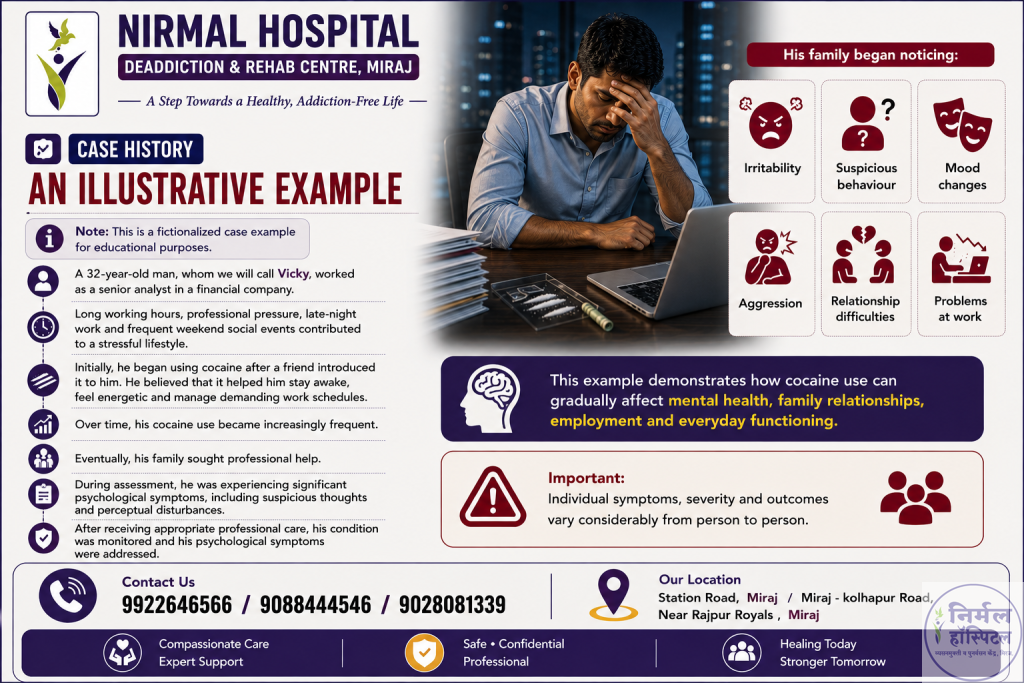
Note: This is a fictionalized case example for educational purposes.
A 32-year-old man, whom we will call Vicky, worked as a senior analyst in a financial company.
Long working hours, professional pressure, late-night work and frequent weekend social events contributed to a stressful lifestyle.
Initially, he began using cocaine after a friend introduced it to him. He believed that it helped him stay awake, feel energetic and manage demanding work schedules.
Over time, his cocaine use became increasingly frequent.
His family began noticing:
- Irritability
- Suspicious behaviour
- Mood changes
- Aggression
- Relationship difficulties
- Problems at work
Eventually, his family sought professional help.
During assessment, he was experiencing significant psychological symptoms, including suspicious thoughts and perceptual disturbances.
After receiving appropriate professional care, his condition was monitored and his psychological symptoms were addressed.
This example demonstrates how cocaine use can gradually affect mental health, family relationships, employment and everyday functioning.
Important: Individual symptoms, severity and outcomes vary considerably from person to person.
Symptoms of Cocaine Intoxication
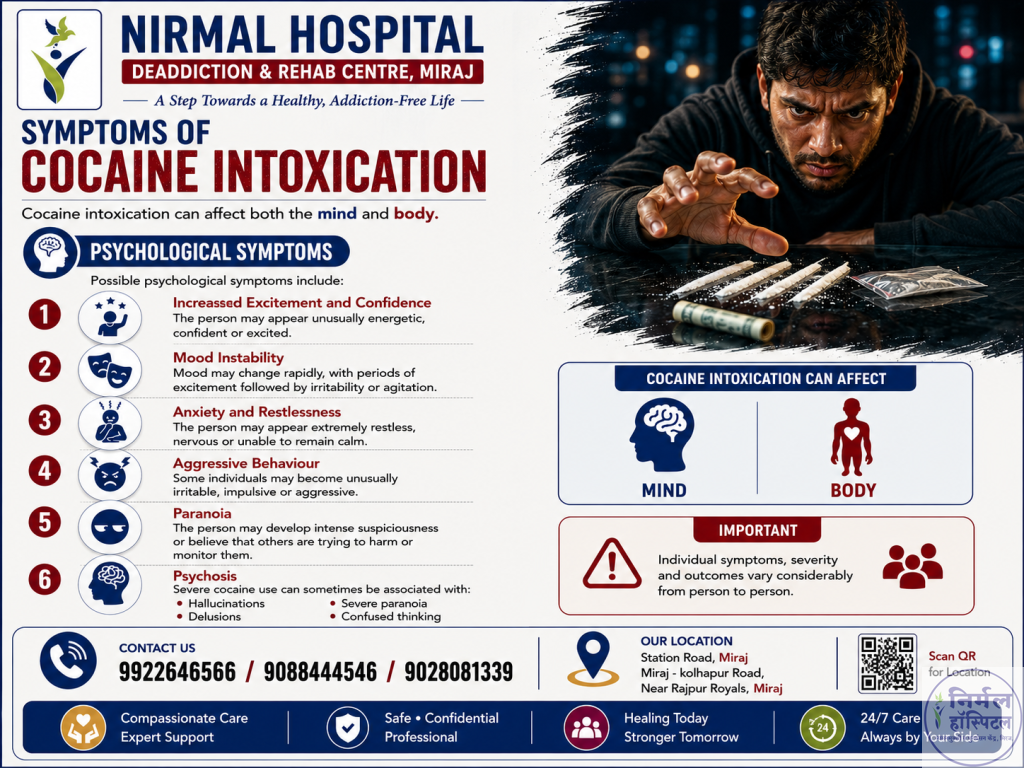
Cocaine intoxication can affect both the mind and body.
Psychological Symptoms
Possible psychological symptoms include:
Increased Excitement and Confidence
The person may appear unusually energetic, confident or excited.
Mood Instability
Mood may change rapidly, with periods of excitement followed by irritability or agitation.
Anxiety and Restlessness
The person may appear extremely restless, nervous or unable to remain calm.
Aggressive Behaviour
Some individuals may become unusually irritable, impulsive or aggressive.
Paranoia
The person may develop intense suspiciousness or believe that others are trying to harm or monitor them.
Psychosis
Severe cocaine use can sometimes be associated with:
- Hallucinations
- Delusions
- Severe paranoia
- Confused thinking
Physical Symptoms of Cocaine Intoxication
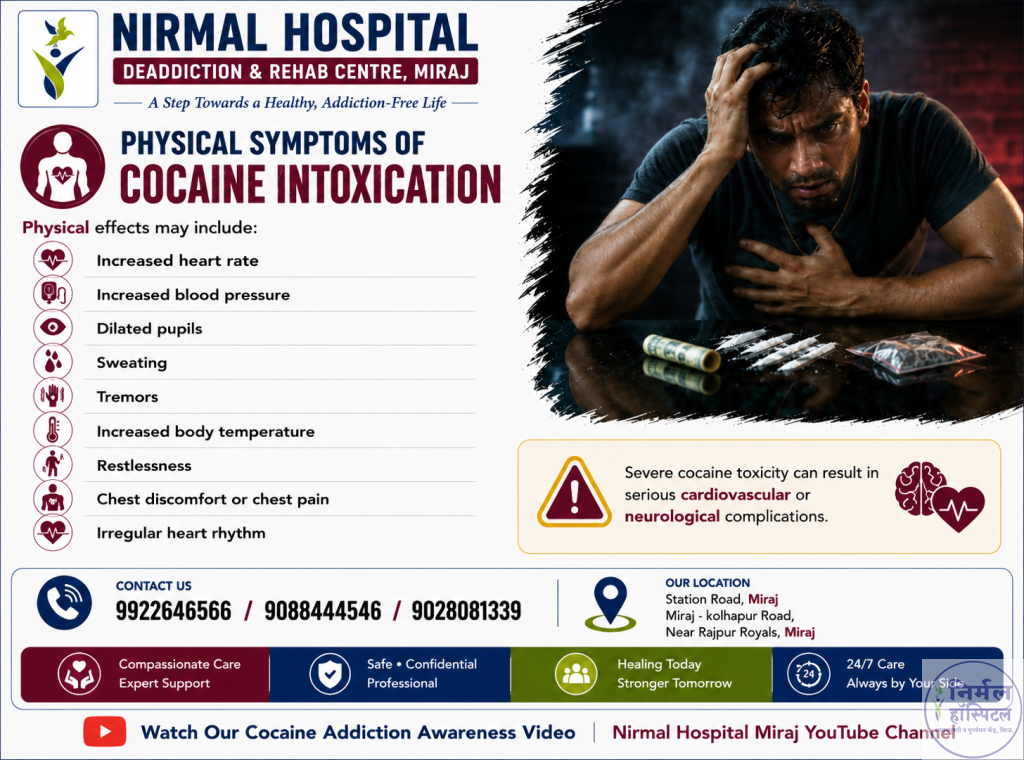
Physical effects may include:
- Increased heart rate
- Increased blood pressure
- Dilated pupils
- Sweating
- Tremors
- Increased body temperature
- Restlessness
- Chest discomfort or chest pain
- Irregular heart rhythm
Severe cocaine toxicity can result in serious cardiovascular or neurological complications.
Cocaine Withdrawal Symptoms
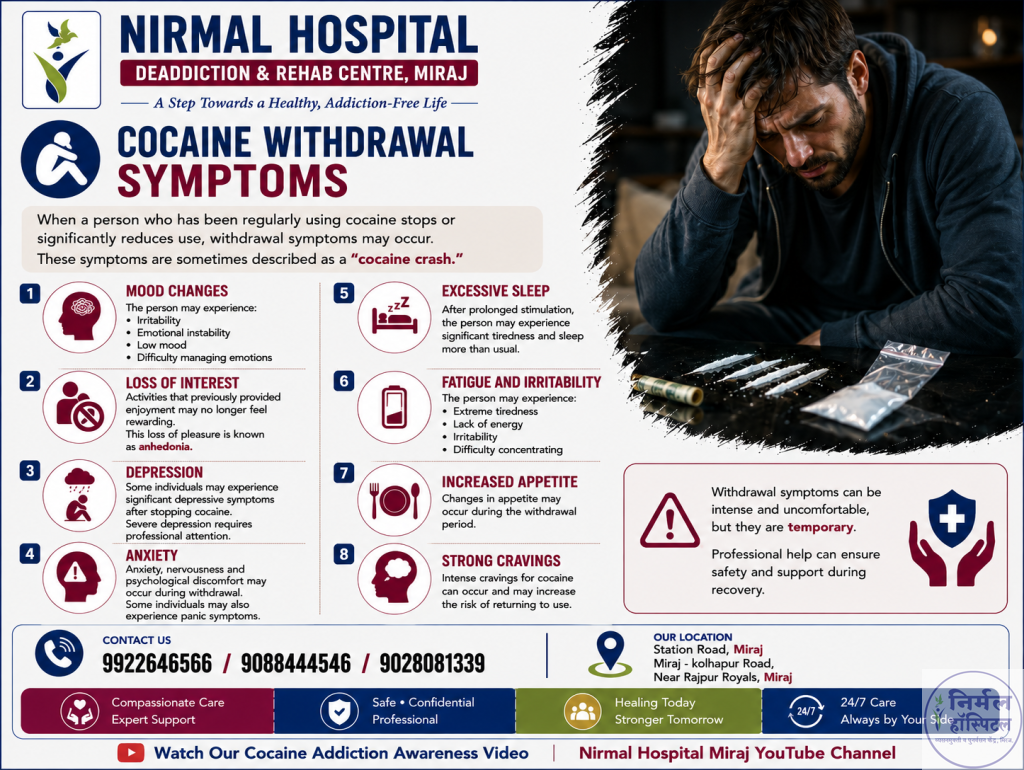
When a person who has been regularly using cocaine stops or significantly reduces use, withdrawal symptoms may occur.
These symptoms are sometimes described as a “cocaine crash.”
1. Mood Changes
The person may experience:
- Irritability
- Emotional instability
- Low mood
- Difficulty managing emotions
2. Loss of Interest
Activities that previously provided enjoyment may no longer feel rewarding.
This loss of pleasure is known as anhedonia.
3. Depression
Some individuals may experience significant depressive symptoms after stopping cocaine.
Severe depression requires professional attention.
4. Anxiety
Anxiety, nervousness and psychological discomfort may occur during withdrawal.
Some individuals may also experience panic symptoms.
5. Excessive Sleep
After prolonged stimulation, the person may experience significant tiredness and sleep more than usual.
6. Fatigue and Irritability
The person may experience:
- Extreme tiredness
- Lack of energy
- Irritability
- Difficulty concentrating
7. Increased Appetite
Changes in appetite may occur during the withdrawal period.
8. Strong Cravings
Intense cravings for cocaine can occur and may increase the risk of returning to use.
Mental Health Warning During Cocaine Withdrawal
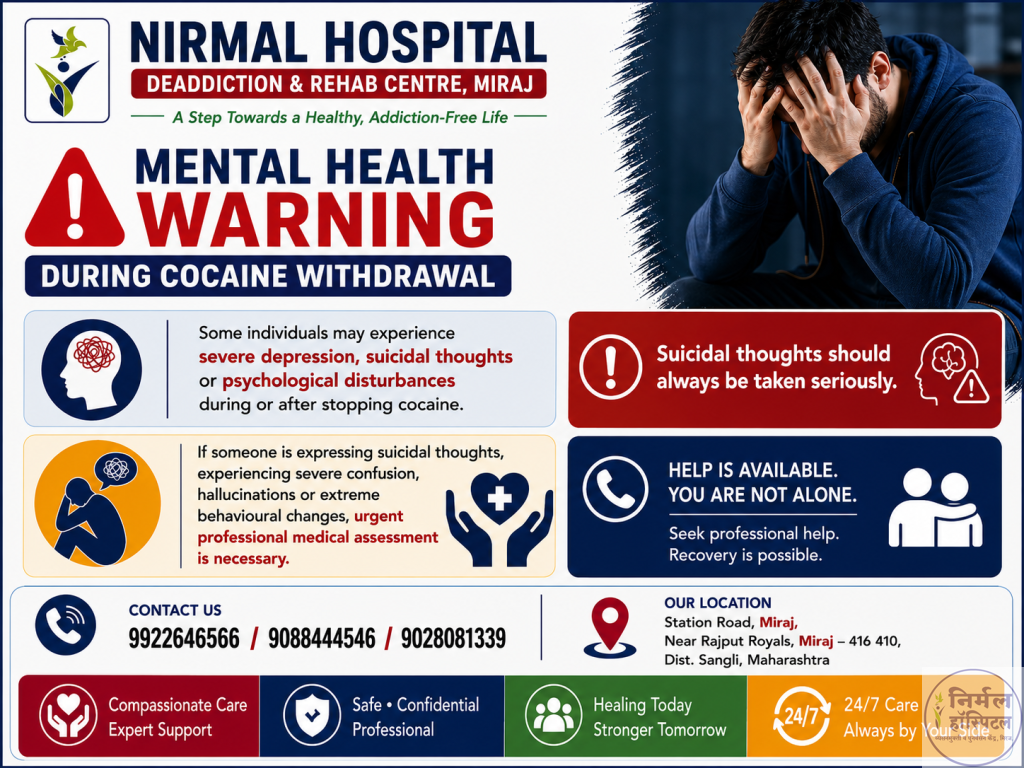
Some individuals may experience severe depression, suicidal thoughts or psychological disturbances during or after stopping cocaine.
Suicidal thoughts should always be taken seriously.
If someone is expressing suicidal thoughts, experiencing severe confusion, hallucinations or extreme behavioural changes, urgent professional medical assessment is necessary.
Effects of Cocaine Addiction
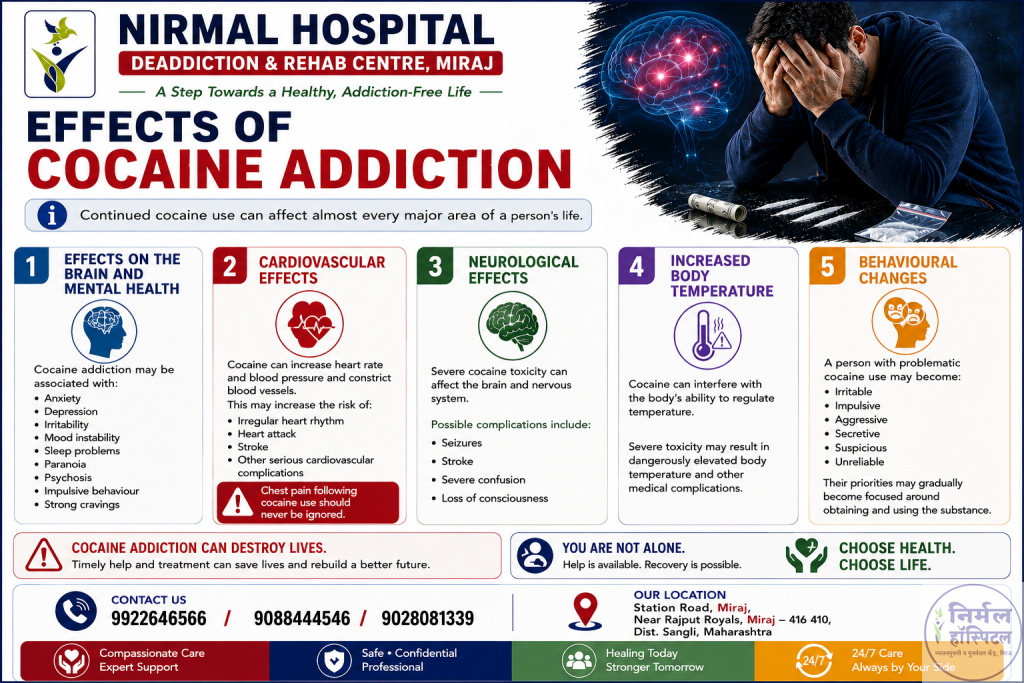
Continued cocaine use can affect almost every major area of a person’s life.
1. Effects on the Brain and Mental Health
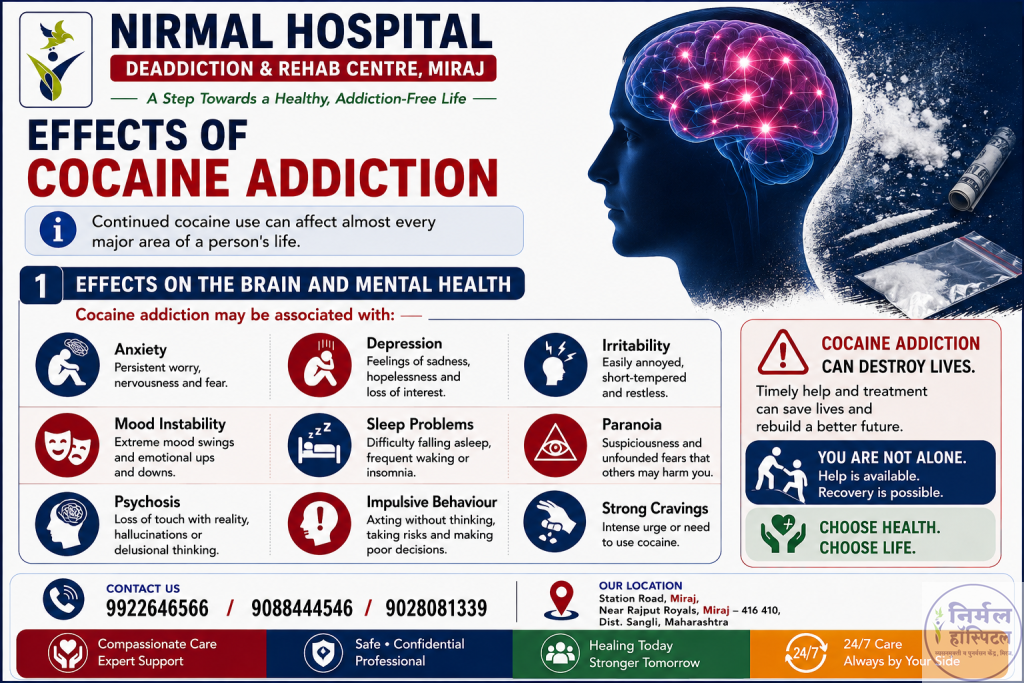
Cocaine addiction may be associated with:
- Anxiety
- Depression
- Irritability
- Mood instability
- Sleep problems
- Paranoia
- Psychosis
- Impulsive behaviour
- Strong cravings
2. Cardiovascular Effects
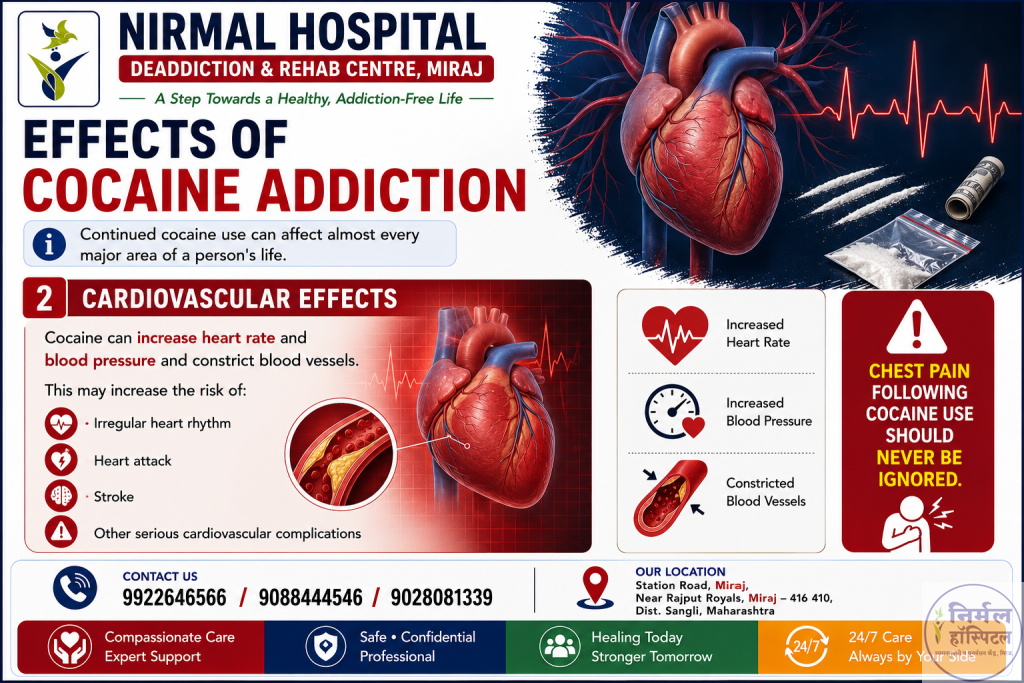
Cocaine can increase heart rate and blood pressure and constrict blood vessels.
This may increase the risk of:
- Irregular heart rhythm
- Heart attack
- Stroke
- Other serious cardiovascular complications
Chest pain following cocaine use should never be ignored.
3. Neurological Effects
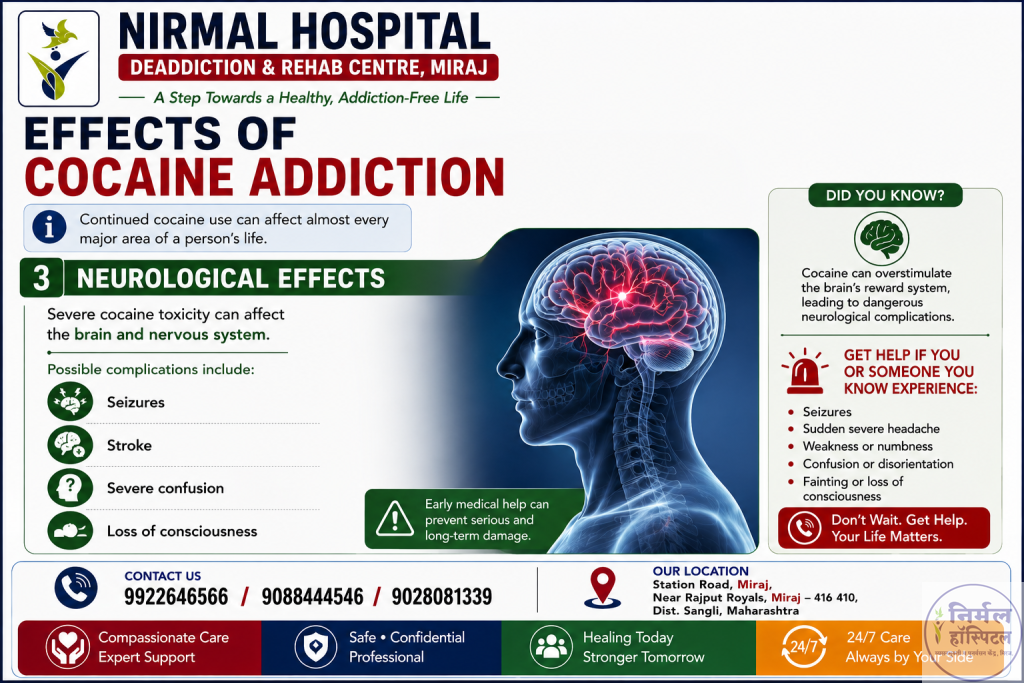
Severe cocaine toxicity can affect the brain and nervous system.
Possible complications include:
- Seizures
- Stroke
- Severe confusion
- Loss of consciousness
4. Increased Body Temperature
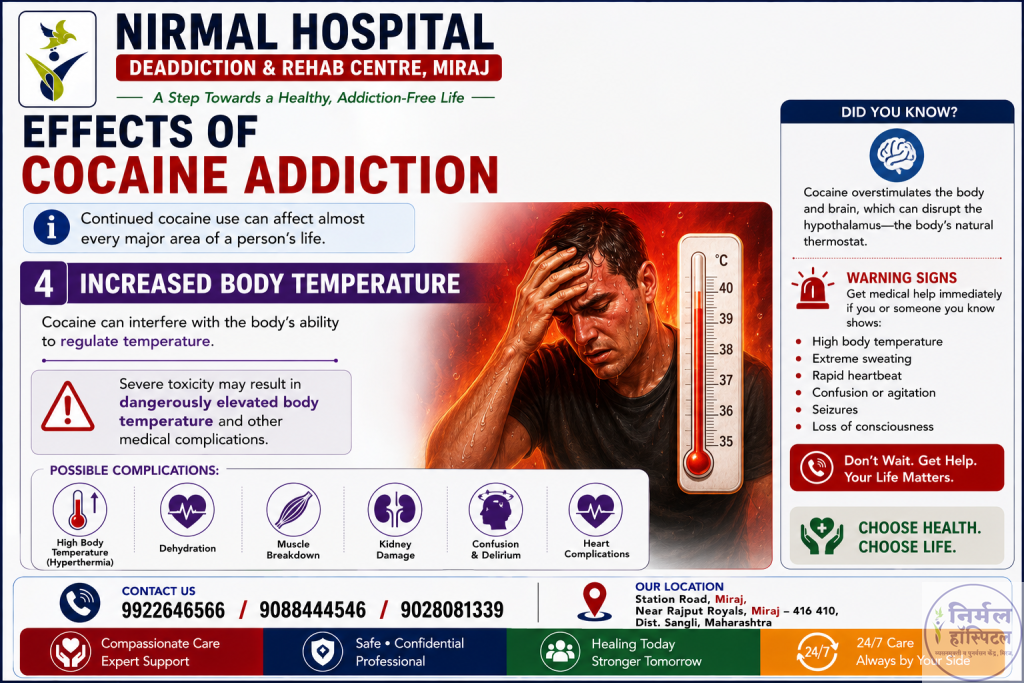
Cocaine can interfere with the body’s ability to regulate temperature.
Severe toxicity may result in dangerously elevated body temperature and other medical complications.
5. Behavioural Changes
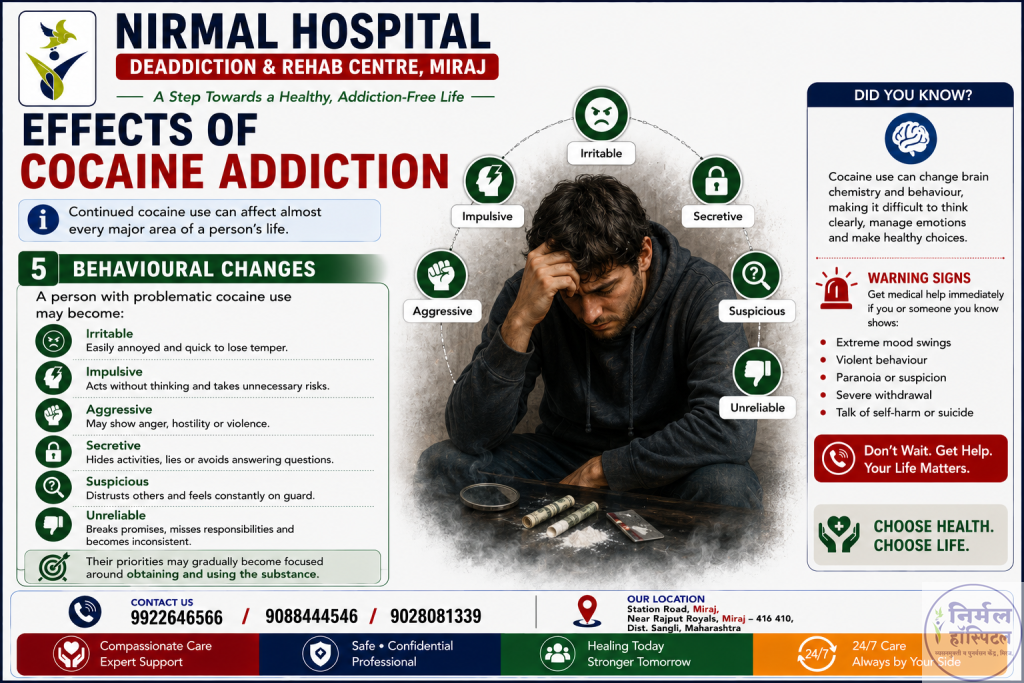
A person with problematic cocaine use may become:
- Irritable
- Impulsive
- Aggressive
- Secretive
- Suspicious
- Unreliable
Their priorities may gradually become focused around obtaining and using the substance.
Social and Occupational Effects
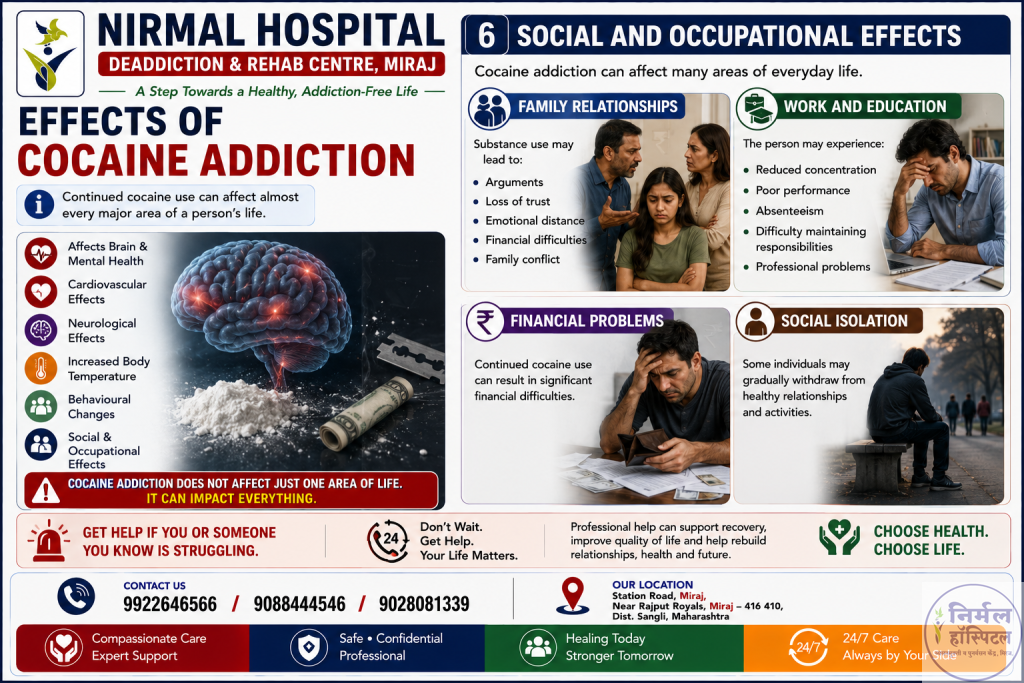
Cocaine addiction can affect many areas of everyday life.
Family Relationships
Substance use may lead to:
- Arguments
- Loss of trust
- Emotional distance
- Financial difficulties
- Family conflict
Work and Education
The person may experience:
- Reduced concentration
- Poor performance
- Absenteeism
- Difficulty maintaining responsibilities
- Professional problems
Financial Problems
Continued cocaine use can result in significant financial difficulties.
Social Isolation
Some individuals may gradually withdraw from healthy relationships and activities.
Cocaine Overdose: Warning Signs
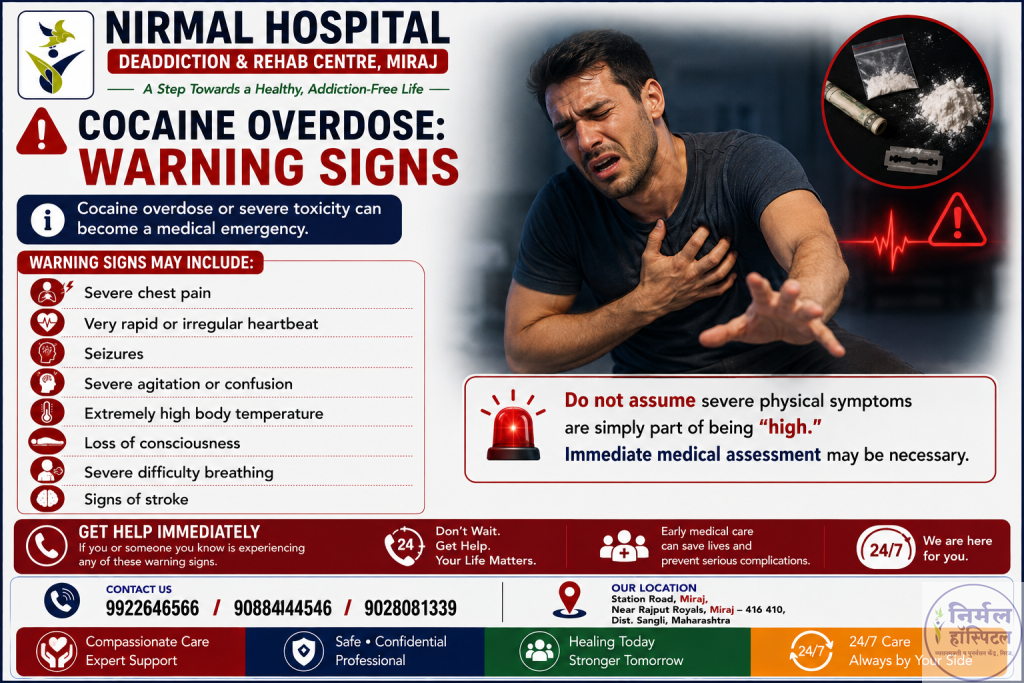
Cocaine overdose or severe toxicity can become a medical emergency.
Warning signs may include:
- Severe chest pain
- Very rapid or irregular heartbeat
- Seizures
- Severe agitation or confusion
- Extremely high body temperature
- Loss of consciousness
- Severe difficulty breathing
- Signs of stroke
Do not assume severe physical symptoms are simply part of being “high.” Immediate medical assessment may be necessary.
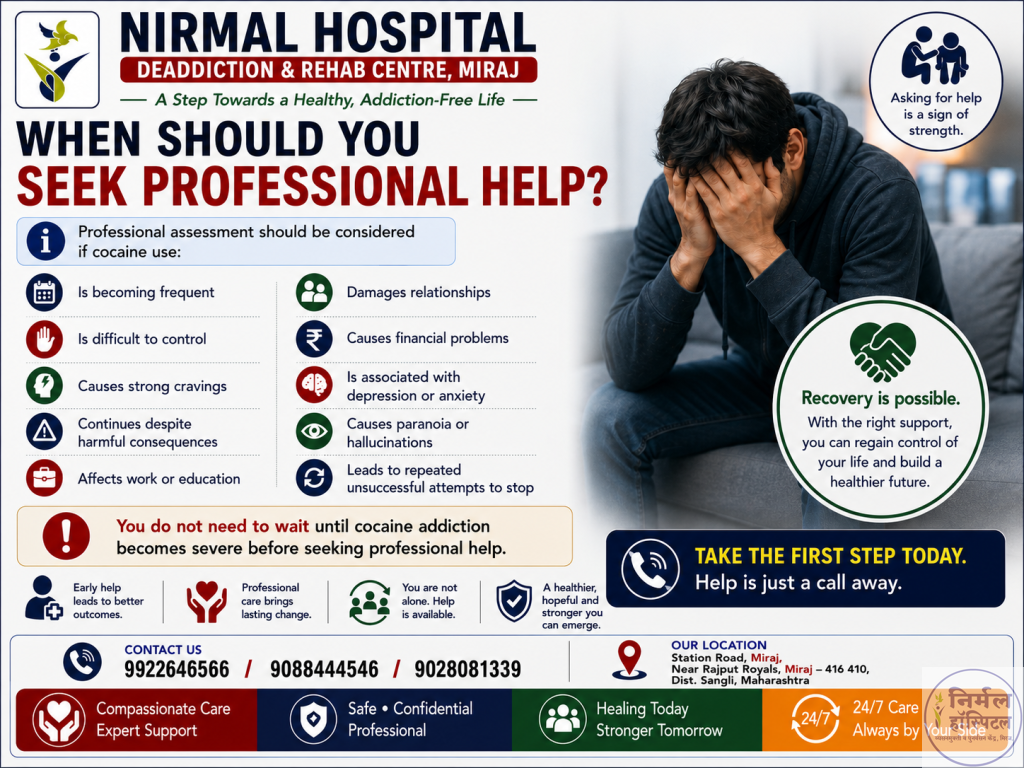
When Should You Seek Professional Help?
Professional assessment should be considered if cocaine use:
- Is becoming frequent
- Is difficult to control
- Causes strong cravings
- Continues despite harmful consequences
- Affects work or education
- Damages relationships
- Causes financial problems
- Is associated with depression or anxiety
- Causes paranoia or hallucinations
- Leads to repeated unsuccessful attempts to stop
You do not need to wait until cocaine addiction becomes severe before seeking professional help.
Important Message for Families
Cocaine addiction should not be viewed simply as a character flaw or lack of willpower.
It is a complex health condition involving biological, psychological and social factors.
Family members can help by:
- Avoiding judgment
- Listening calmly
- Encouraging professional assessment
- Supporting healthy routines
- Taking warning signs seriously
- Encouraging continued professional follow-up
Avoid statements such as:
“Just stop using it.”
“You have no self-control.”
“You can quit whenever you want.”
Instead, supportive communication can encourage the person to seek appropriate professional help.
Frequently Asked Questions (FAQ) – Cocaine Addiction
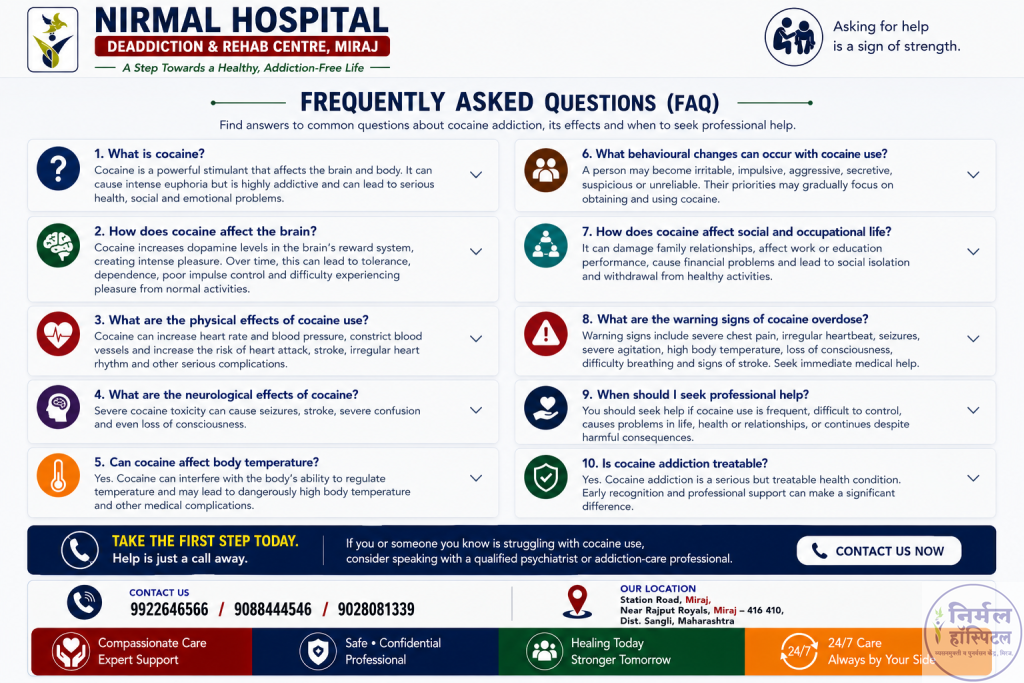
1. What is cocaine?
Cocaine is a powerful stimulant that affects the brain and central nervous system. It can produce temporary feelings of euphoria, increased energy and alertness, but repeated use can lead to craving, loss of control and addiction.
2. How does cocaine affect the brain?
Cocaine interferes with dopamine reuptake in the brain’s reward system. This increases dopamine activity and can produce intense pleasure. Repeated use may strengthen cravings and make it difficult to stop using cocaine.
3. What are the common symptoms of cocaine intoxication?
Symptoms may include increased excitement, excessive confidence, restlessness, anxiety, irritability, aggression, paranoia, rapid heartbeat, increased blood pressure, sweating, tremors and dilated pupils.
4. Can cocaine cause mental health problems?
Yes. Cocaine use may be associated with anxiety, depression, mood instability, sleep problems, paranoia and psychosis. Existing mental-health difficulties may also become worse with continued cocaine use.
5. What are the physical effects of cocaine?
Cocaine can increase heart rate and blood pressure and constrict blood vessels. It may increase the risk of irregular heart rhythm, heart attack, stroke, seizures and other serious medical complications.
6. What are cocaine withdrawal symptoms?
After stopping or significantly reducing regular cocaine use, a person may experience a “cocaine crash.” Symptoms can include low mood, irritability, fatigue, excessive sleep, increased appetite, anxiety, loss of interest and strong cravings.
7. Can cocaine withdrawal cause depression?
Yes. Some people may experience significant depressive symptoms after stopping cocaine. Severe depression or suicidal thoughts require prompt professional assessment.
8. What is cocaine psychosis?
Cocaine-related psychosis can involve severe paranoia, hallucinations, delusions or confused thinking. These symptoms require professional medical evaluation, particularly when they are severe or persistent.
9. What are the warning signs of cocaine overdose?
Warning signs can include severe chest pain, very rapid or irregular heartbeat, seizures, severe agitation or confusion, extremely high body temperature, difficulty breathing, loss of consciousness or signs of stroke. These symptoms can represent a medical emergency.
10. How does cocaine addiction affect family life?
Cocaine addiction can contribute to arguments, loss of trust, emotional distance, financial difficulties and ongoing family conflict. It may also affect the person’s ability to maintain healthy relationships.
11. Can cocaine addiction affect work or education?
Yes. Continued cocaine use may affect concentration, attendance, decision-making and performance. It can lead to difficulty maintaining professional or educational responsibilities.
12. When should someone seek professional help for cocaine use?
Professional help should be considered when cocaine use becomes frequent or difficult to control, when strong cravings occur, or when use begins affecting health, relationships, finances, work or education.
13. Does having a family history of addiction increase the risk?
A family history of substance-use disorders may increase vulnerability, but it does not mean that a person will definitely develop cocaine addiction. Genetics interact with psychological, social, family and environmental factors.
14. Can cocaine addiction be treated?
Yes. Cocaine addiction is a serious but treatable health condition. A qualified psychiatrist or addiction-care professional can assess the person’s individual situation and recommend an appropriate care plan.
15. Is professional help necessary if someone believes they can quit on their own?
Professional assessment can still be valuable, particularly when cocaine use has been frequent, difficult to control or associated with psychological or physical symptoms. Early support may help identify risks and appropriate next steps.
16. What should family members do if someone is struggling with cocaine use?
Family members can provide non-judgmental support, encourage professional assessment and take serious psychological or physical warning signs seriously. Avoiding blame and maintaining supportive communication can make it easier for the person to seek help.
17. Can cocaine use affect the heart?
Yes. Cocaine can increase heart rate and blood pressure and constrict blood vessels. Chest pain, severe palpitations or other serious symptoms after cocaine use should not be ignored.
18. Can cocaine use cause seizures or stroke?
Severe cocaine toxicity can affect the brain and nervous system and may result in seizures or stroke. Sudden neurological symptoms require immediate medical assessment.
19. Can cocaine addiction affect everyday life?
Yes. Cocaine addiction can affect mental health, physical health, family relationships, work, education, finances and social functioning.
20. Where can I seek professional help for cocaine addiction?
If you or someone you know is struggling with cocaine use, consider speaking with a qualified psychiatrist or addiction-care professional for an appropriate assessment and guidance.
Conclusion
Cocaine addiction is a serious but treatable health condition.
Understanding the causes, symptoms and effects of cocaine use can help individuals and families recognize problems earlier and seek appropriate professional support.
Cocaine can affect the brain, heart, nervous system, mental health, relationships, work and overall quality of life.
Early recognition of problematic use and professional assessment can help reduce the risk of serious complications and support healthier long-term functioning.
If you or someone you know is struggling with cocaine use, consider speaking with a qualified psychiatrist or addiction-care professional.
Note: Treatment, detoxification, medication, CBT, rehabilitation and relapse-prevention strategies have intentionally not been included in this article. Those topics can be developed separately as your dedicated “Cocaine Addiction Treatment & Rehabilitation” page.
If you or someone you know is struggling with cocaine use, consider speaking with a qualified psychiatrist or addiction-care professional. Learn more about Cocaine Addiction Treatment & Rehabilitation and available professional support.
Learn More About Cocaine Addiction
For additional information about cocaine addiction, withdrawal symptoms and its effects, watch our Cocaine Addiction Awareness Video by Nirmal Hospital, Miraj.


