


MDMA Addiction: Causes, Symptoms and Side Effects
In today’s fast-paced and stressful lifestyle, substance abuse has become a serious social and health concern. The use of psychoactive substances is particularly concerning among young people. One such substance is MDMA (3,4-Methylenedioxymethamphetamine), commonly known as Ecstasy, Molly, E, X, or “Love Drug.”
MDMA is a synthetic psychoactive substance that affects the brain and central nervous system. It may initially produce feelings of happiness, excitement, increased energy, confidence, empathy and emotional closeness.
Because of these effects, some people may use MDMA in recreational settings such as parties, nightclubs and music festivals. However, its pleasurable effects are temporary, and repeated or problematic use can have significant effects on physical health, mental health, relationships, work and family life.
This article explains what MDMA is, its causes, symptoms, side effects, withdrawal symptoms and health risks in simple language to promote awareness and encourage timely professional help.
What Is MDMA?
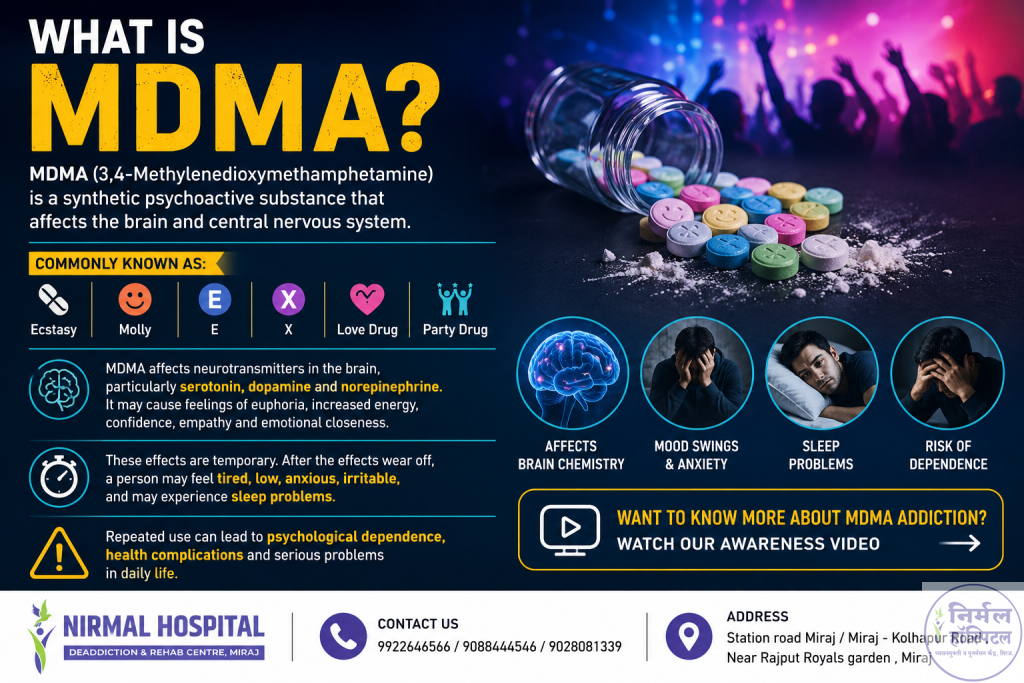
MDMA (3,4-Methylenedioxymethamphetamine) is a synthetic psychoactive substance that primarily affects the brain and central nervous system.
It is commonly known by several names, including:
- Ecstasy
- Molly
- E
- X
- Love Drug
- Party Drug
MDMA may be found in tablets, capsules, powders or crystals. The contents of illicit products can vary, and substances sold as MDMA may contain other drugs. This makes their effects difficult to predict.
MDMA affects neurotransmitters in the brain, particularly serotonin, dopamine and norepinephrine. Changes in these chemical messenger systems can temporarily produce feelings of euphoria, increased energy, confidence, empathy and emotional closeness.
Because some people experience increased emotional connection and empathy, MDMA is sometimes called a “Love Drug.”
However, these effects are temporary. After the effects wear off, a person may experience fatigue, low mood, anxiety, irritability, sleep problems and emotional instability.
Repeated use can contribute to problematic substance use and psychological dependence and may increase the risk of physical and mental health complications.
How Does MDMA Affect the Brain and Body?
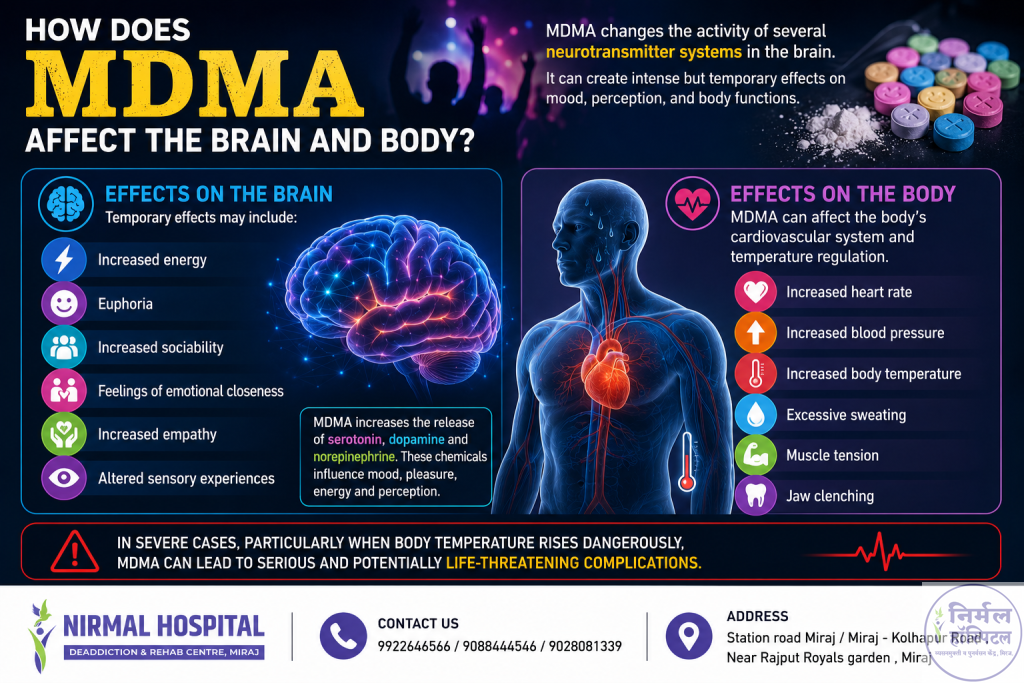
MDMA changes the activity of several neurotransmitter systems in the brain.
The temporary effects may include:
- Increased energy
- Euphoria
- Increased sociability
- Feelings of emotional closeness
- Increased empathy
- Altered sensory experiences
At the same time, MDMA can affect the body’s cardiovascular system and temperature regulation.
It may cause:
- Increased heart rate
- Increased blood pressure
- Increased body temperature
- Excessive sweating
- Muscle tension
- Jaw clenching
In severe cases, particularly when body temperature rises dangerously, MDMA can lead to serious and potentially life-threatening complications.
Causes and Risk Factors of MDMA Addiction
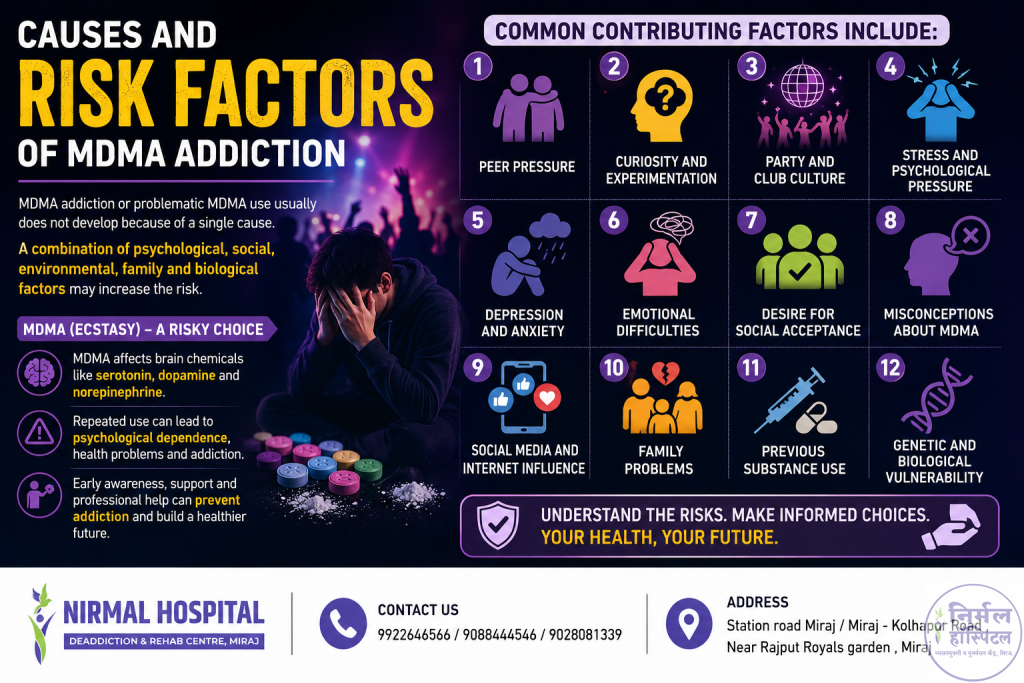
MDMA addiction or problematic MDMA use usually does not develop because of a single cause.
A combination of psychological, social, environmental, family and biological factors may increase the risk.
Common contributing factors include:
- Peer pressure
- Curiosity and experimentation
- Party and club culture
- Stress and psychological pressure
- Depression and anxiety
- Emotional difficulties
- Desire for social acceptance
- Misconceptions about MDMA
- Social media and internet influence
- Family problems
- Previous substance use
- Genetic and biological vulnerability
1. Peer Pressure
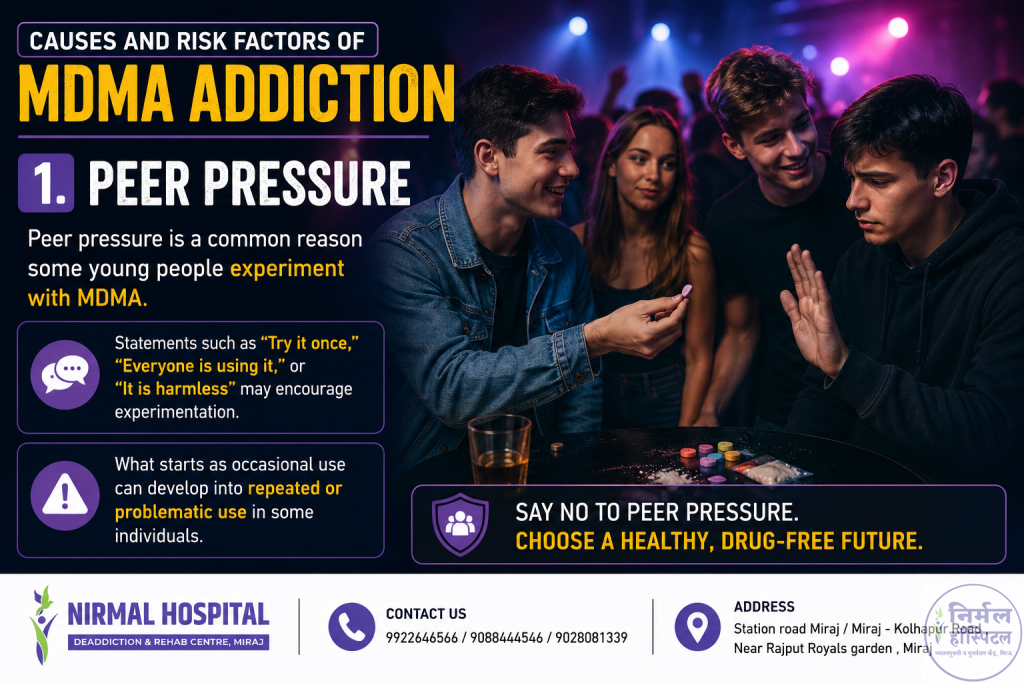
Peer pressure is a common reason some young people experiment with MDMA.
Statements such as “Try it once,” “Everyone is using it,” or “It is harmless” may encourage experimentation.
What starts as occasional use can develop into repeated or problematic use in some individuals.
2. Curiosity and Experimentation
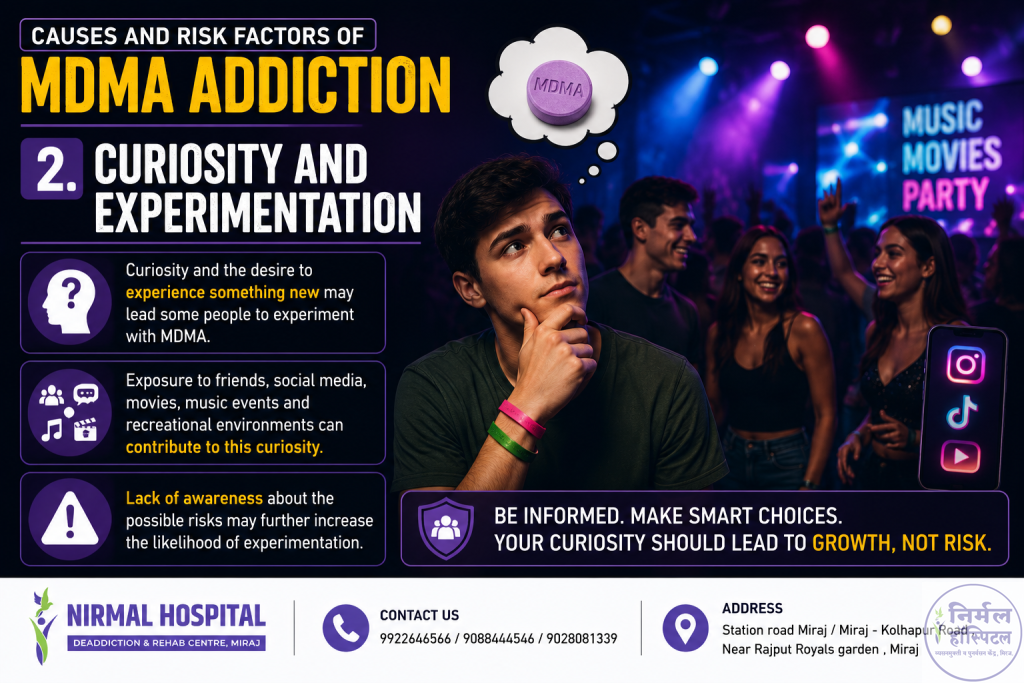
Curiosity and the desire to experience something new may lead some people to experiment with MDMA.
Exposure to friends, social media, movies, music events and recreational environments can contribute to this curiosity.
Lack of awareness about the possible risks may further increase the likelihood of experimentation.
3. Party and Club Culture
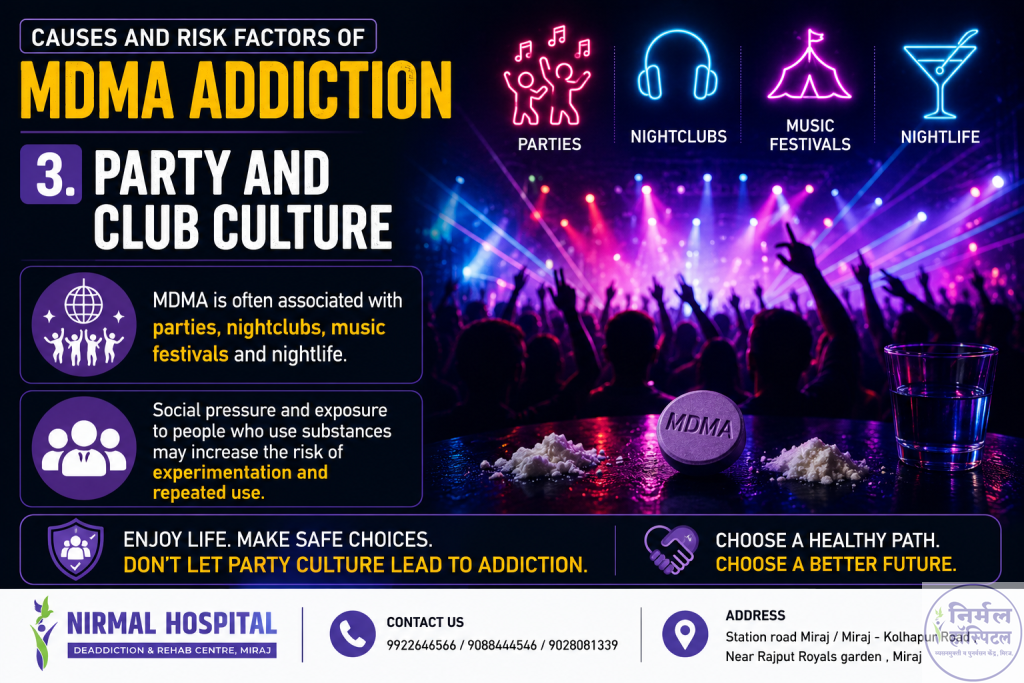
MDMA is often associated with parties, nightclubs, music festivals and nightlife.
Social pressure and exposure to people who use substances may increase the risk of experimentation and repeated use.
4. Stress and Psychological Pressure
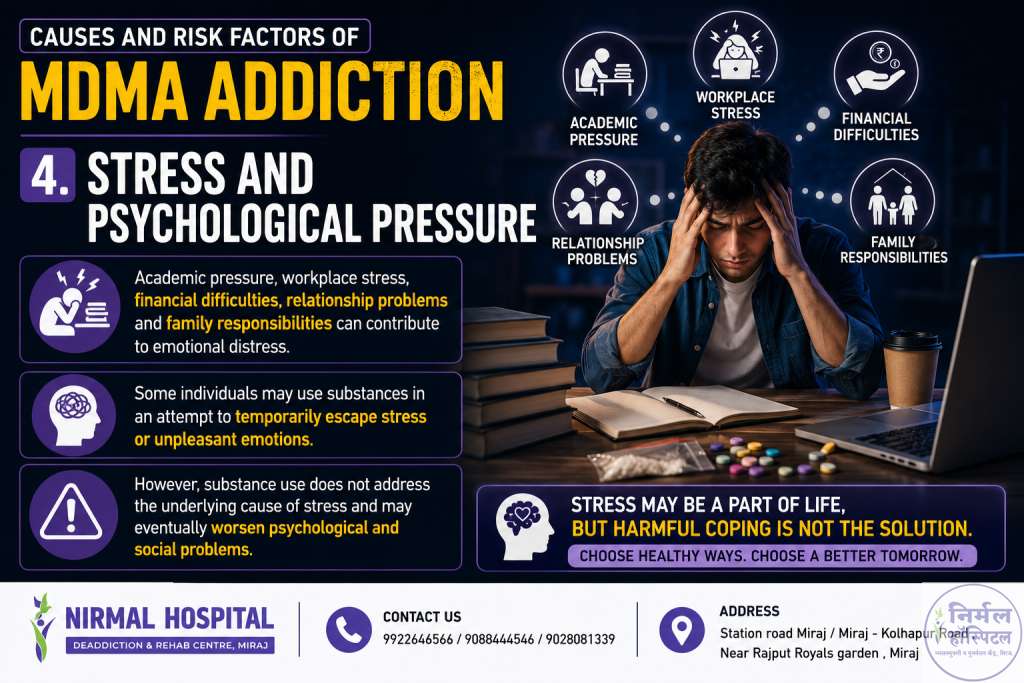
Academic pressure, workplace stress, financial difficulties, relationship problems and family responsibilities can contribute to emotional distress.
Some individuals may use substances in an attempt to temporarily escape stress or unpleasant emotions.
However, substance use does not address the underlying cause of stress and may eventually worsen psychological and social problems.
5. Depression, Anxiety and Emotional Difficulties
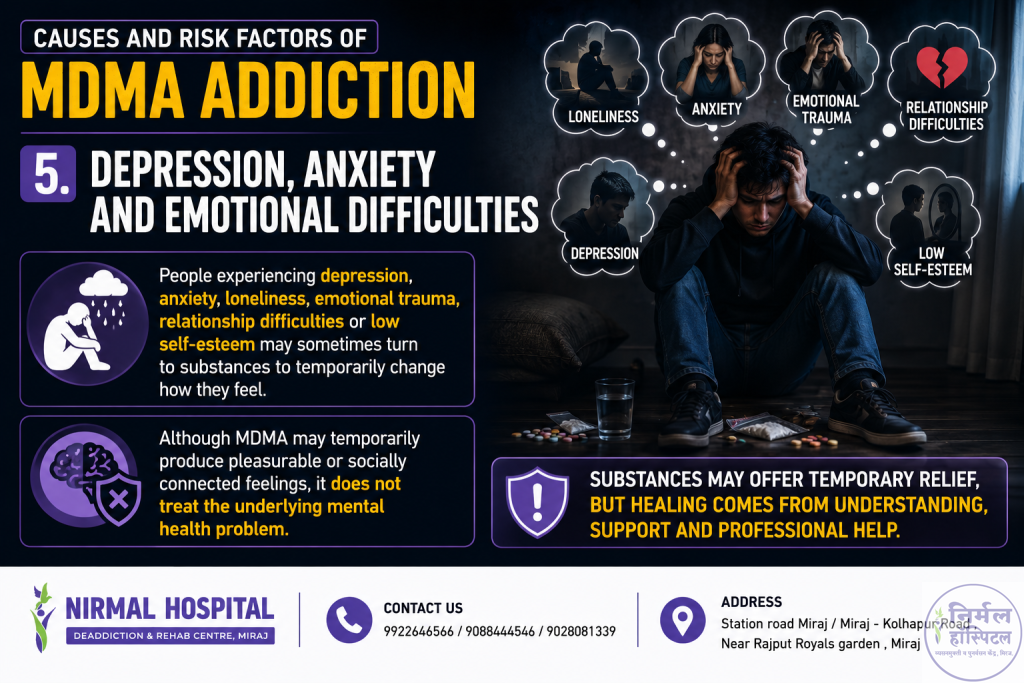
People experiencing depression, anxiety, loneliness, emotional trauma, relationship difficulties or low self-esteem may sometimes turn to substances to temporarily change how they feel.
Although MDMA may temporarily produce pleasurable or socially connected feelings, it does not treat the underlying mental health problem.
6. Desire for Social Acceptance
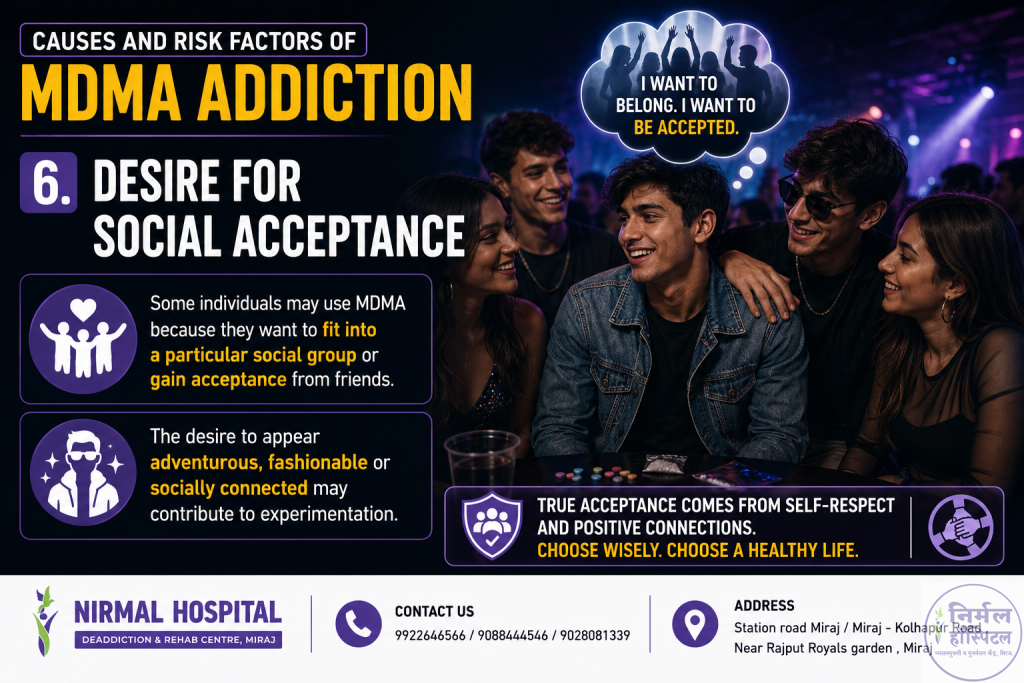
Some individuals may use MDMA because they want to fit into a particular social group or gain acceptance from friends.
The desire to appear adventurous, fashionable or socially connected may contribute to experimentation.
7. Misconceptions About MDMA
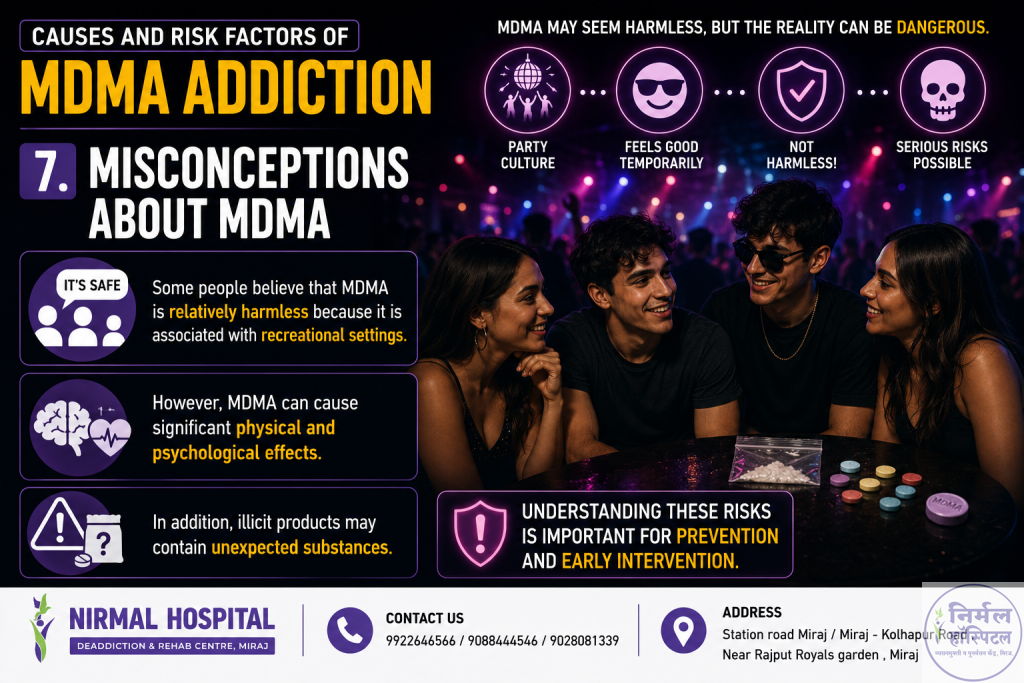
Some people believe that MDMA is relatively harmless because it is associated with recreational settings.
However, MDMA can cause significant physical and psychological effects. In addition, illicit products may contain unexpected substances.
Understanding these risks is important for prevention and early intervention.
8. Social Media and Internet Influence
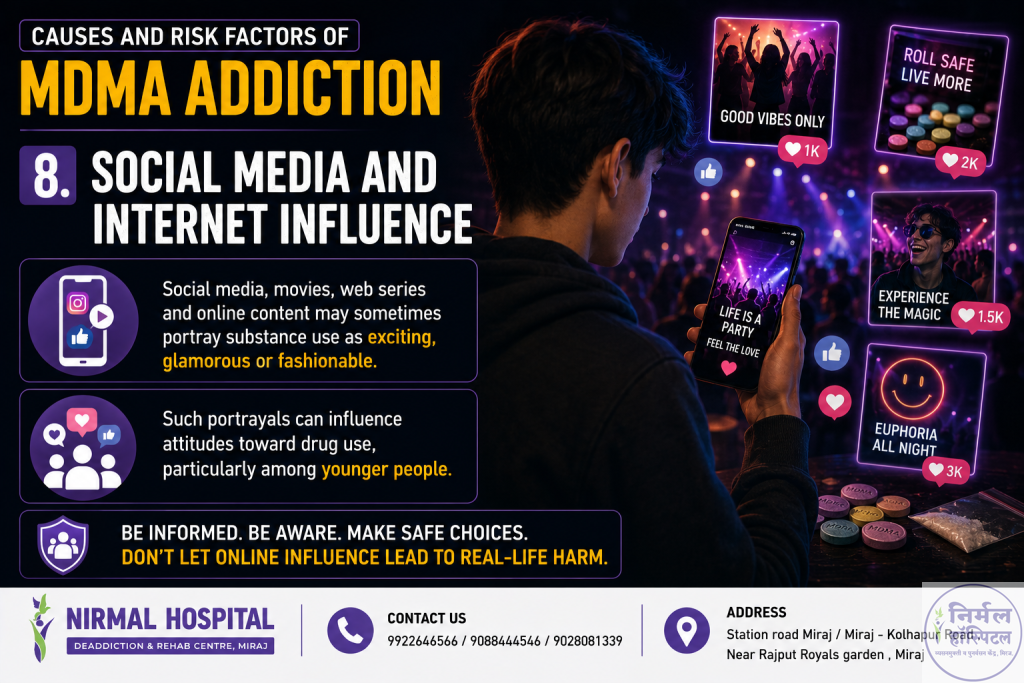
Social media, movies, web series and online content may sometimes portray substance use as exciting, glamorous or fashionable.
Such portrayals can influence attitudes toward drug use, particularly among younger people.
9. Family Problems
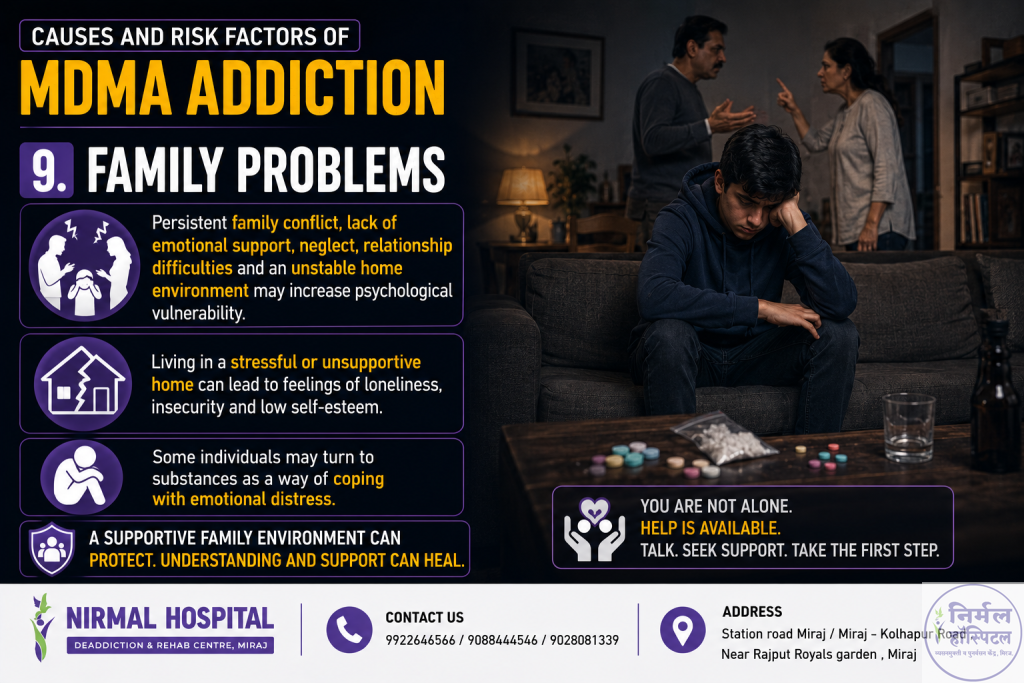
Persistent family conflict, lack of emotional support, neglect, relationship difficulties and an unstable home environment may increase psychological vulnerability.
Some individuals may turn to substances as a way of coping with emotional distress.
10. Genetic and Biological Factors
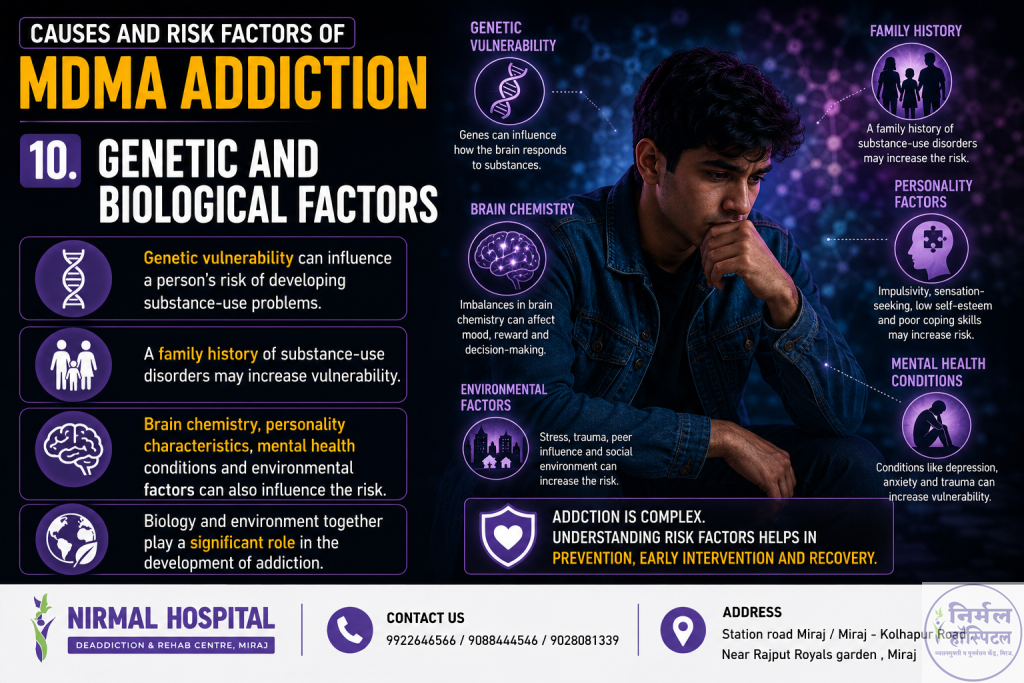
Genetic vulnerability can influence a person’s risk of developing substance-use problems.
A family history of substance-use disorders may increase vulnerability. Brain chemistry, personality characteristics, mental health conditions and environmental factors can also influence the risk.
Symptoms of MDMA Addiction
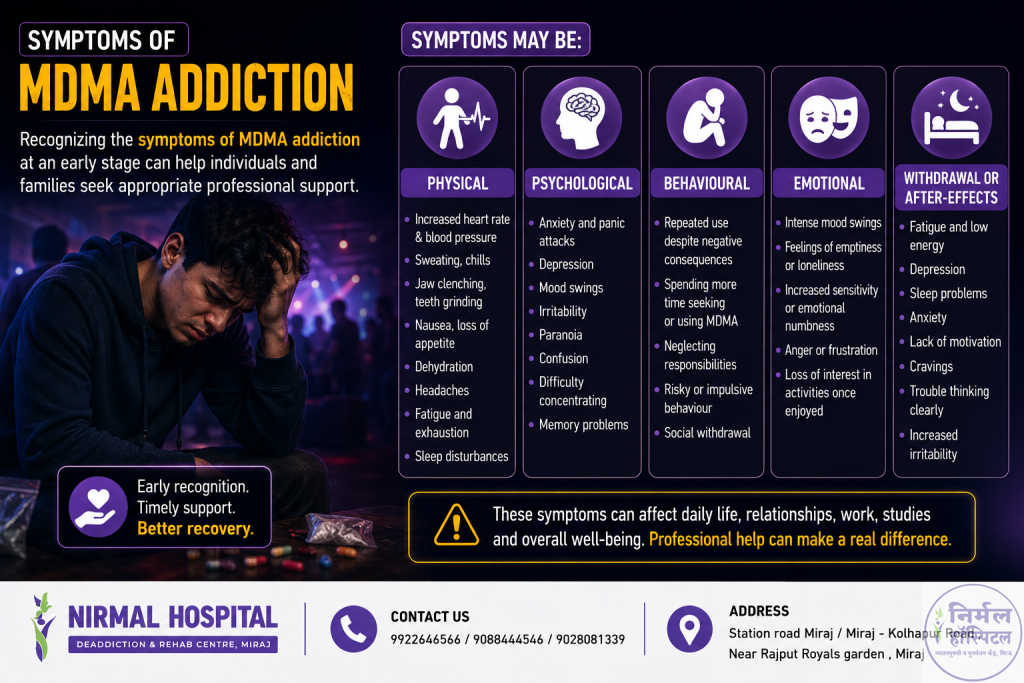
Recognizing the symptoms of MDMA addiction at an early stage can help individuals and families seek appropriate professional support.
Symptoms may be:
- Physical
- Psychological
- Behavioural
- Emotional
- Related to withdrawal or after-effects
Physical Symptoms of MDMA Use
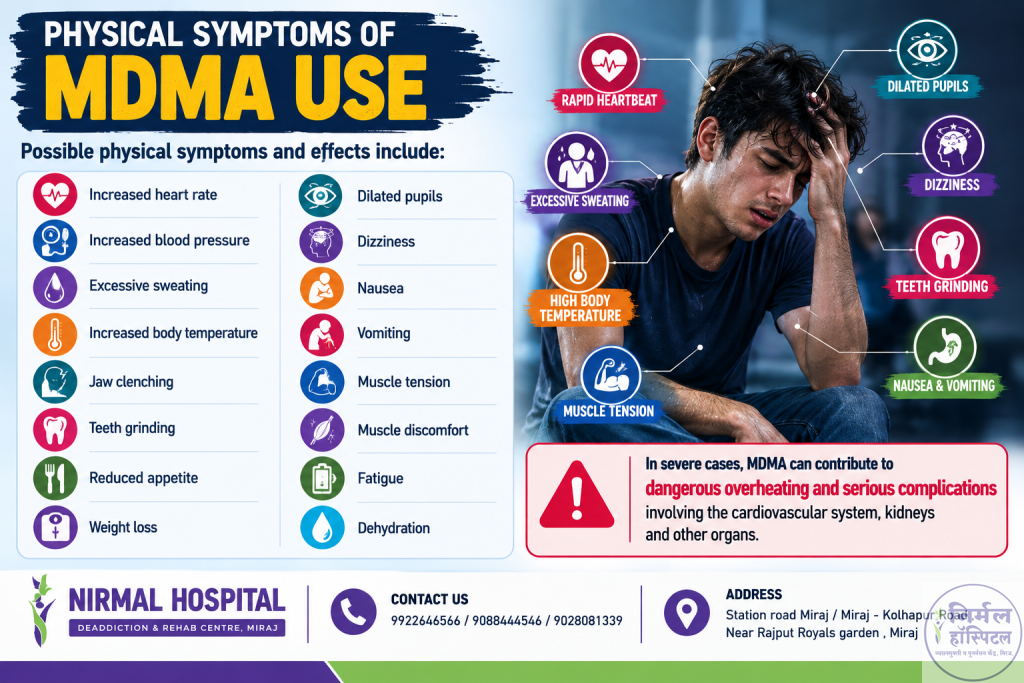
Possible physical symptoms and effects include:
- Increased heart rate
- Increased blood pressure
- Excessive sweating
- Increased body temperature
- Jaw clenching
- Teeth grinding
- Reduced appetite
- Weight loss
- Dilated pupils
- Dizziness
- Nausea
- Vomiting
- Muscle tension
- Muscle discomfort
- Fatigue
- Dehydration
In severe cases, MDMA can contribute to dangerous overheating and serious complications involving the cardiovascular system, kidneys and other organs.
Psychological Symptoms of MDMA Use
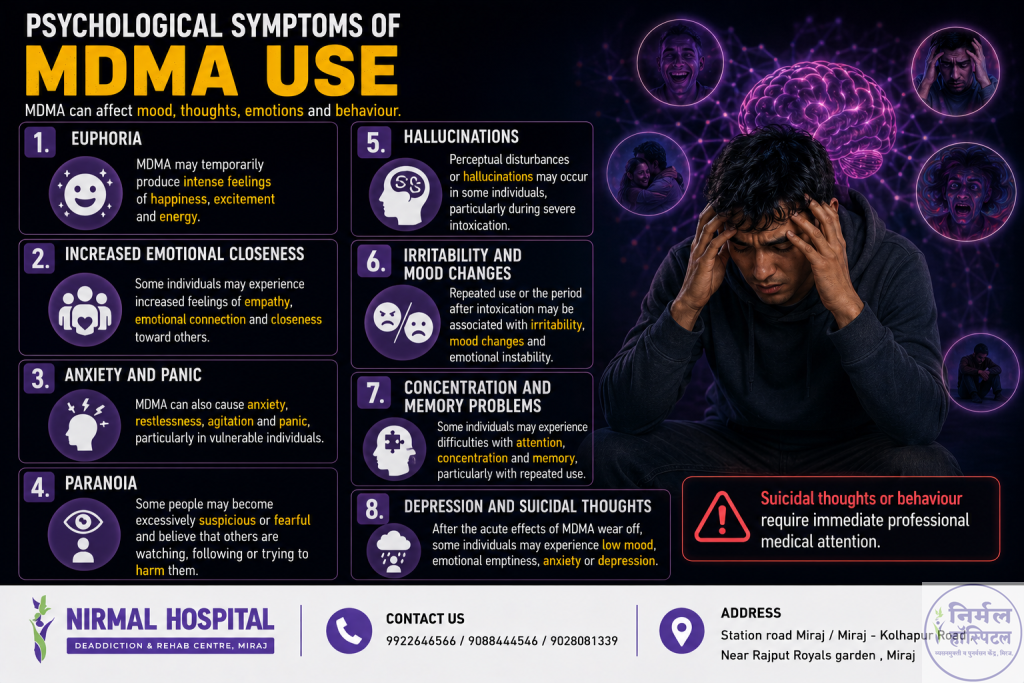
1. Euphoria
MDMA may temporarily produce intense feelings of happiness, excitement and energy.
2. Increased Emotional Closeness
Some individuals may experience increased feelings of empathy, emotional connection and closeness toward others.
3. Anxiety and Panic
MDMA can also cause anxiety, restlessness, agitation and panic, particularly in vulnerable individuals.
4. Paranoia
Some people may become excessively suspicious or fearful and believe that others are watching, following or trying to harm them.
5. Hallucinations
Perceptual disturbances or hallucinations may occur in some individuals, particularly during severe intoxication.
6. Irritability and Mood Changes
Repeated use or the period after intoxication may be associated with irritability, mood changes and emotional instability.
7. Concentration and Memory Problems
Some individuals may experience difficulties with attention, concentration and memory, particularly with repeated use.
8. Depression and Suicidal Thoughts
After the acute effects of MDMA wear off, some individuals may experience low mood, emotional emptiness, anxiety or depression.
Suicidal thoughts or behaviour require immediate professional medical attention.
Behavioural Signs of MDMA Addiction
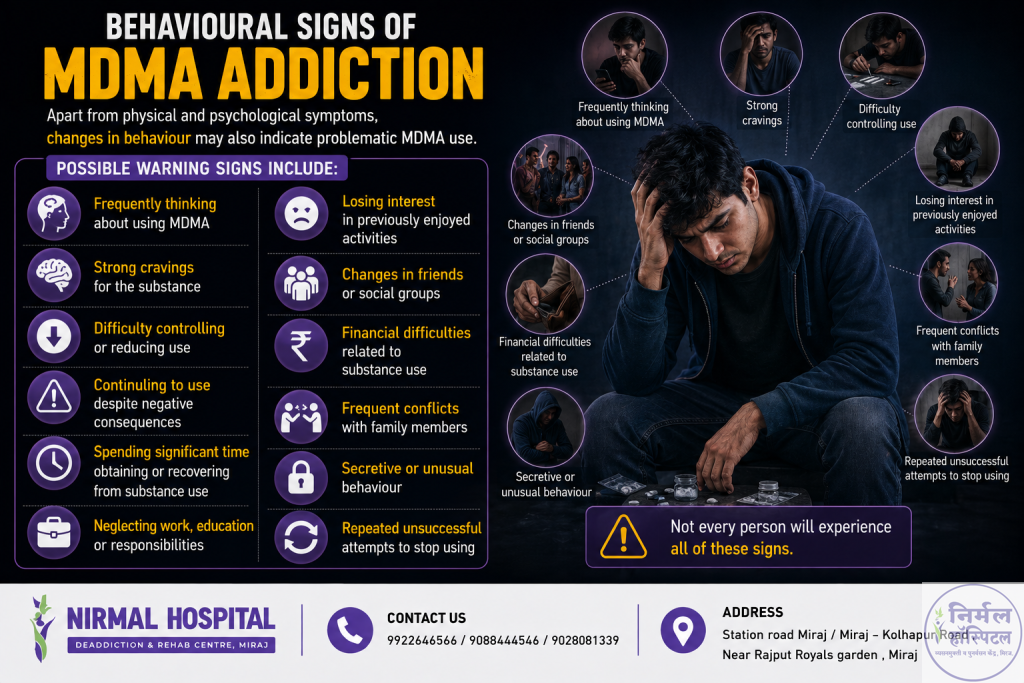
Apart from physical and psychological symptoms, changes in behaviour may also indicate problematic MDMA use.
Possible warning signs include:
- Frequently thinking about using MDMA
- Strong cravings for the substance
- Difficulty controlling or reducing use
- Continuing to use despite negative consequences
- Spending significant time obtaining or recovering from substance use
- Neglecting work, education or responsibilities
- Losing interest in previously enjoyed activities
- Changes in friends or social groups
- Financial difficulties related to substance use
- Frequent conflicts with family members
- Secretive or unusual behaviour
- Repeated unsuccessful attempts to stop using
Not every person will experience all of these signs.
MDMA Withdrawal Symptoms
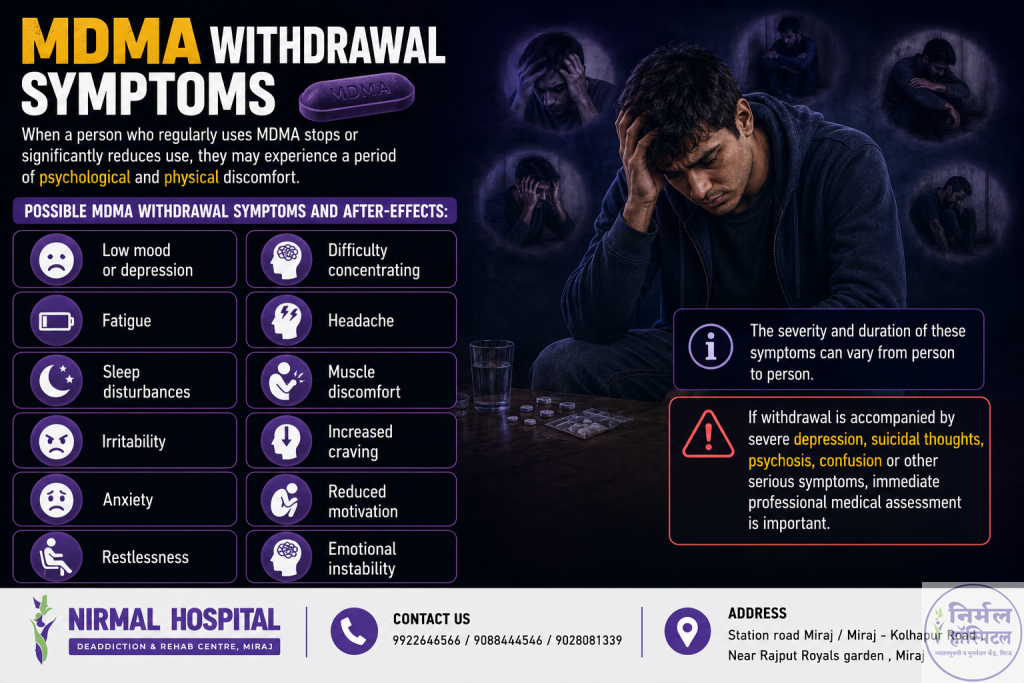
When a person who regularly uses MDMA stops or significantly reduces use, they may experience a period of psychological and physical discomfort.
Possible MDMA withdrawal symptoms and after-effects include:
- Low mood or depression
- Fatigue
- Sleep disturbances
- Irritability
- Anxiety
- Restlessness
- Difficulty concentrating
- Headache
- Muscle discomfort
- Increased craving
- Reduced motivation
- Emotional instability
The severity and duration of these symptoms can vary from person to person.
If withdrawal is accompanied by severe depression, suicidal thoughts, psychosis, confusion or other serious symptoms, immediate professional medical assessment is important.
Side Effects of MDMA
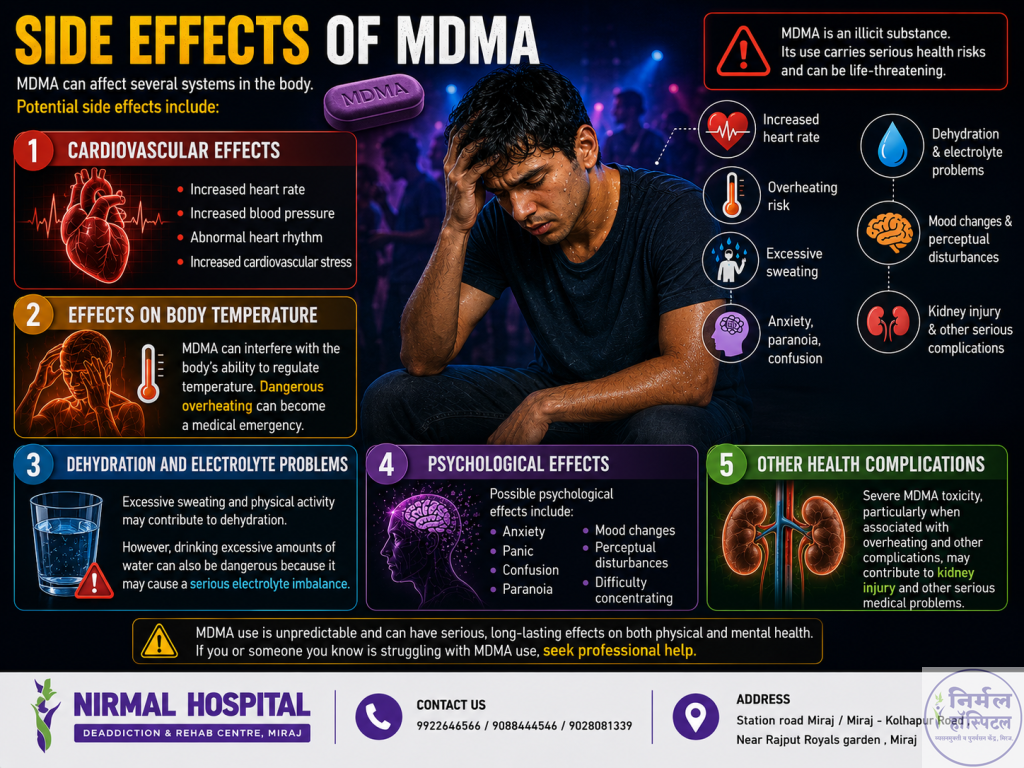
MDMA can affect several systems in the body.
Potential side effects include:
Cardiovascular Effects
- Increased heart rate
- Increased blood pressure
- Abnormal heart rhythm
- Increased cardiovascular stress
Effects on Body Temperature
MDMA can interfere with the body’s ability to regulate temperature. Dangerous overheating can become a medical emergency.
Dehydration and Electrolyte Problems
Excessive sweating and physical activity may contribute to dehydration.
However, drinking excessive amounts of water can also be dangerous because it may cause a serious electrolyte imbalance.
Psychological Effects
Possible psychological effects include:
- Anxiety
- Panic
- Confusion
- Paranoia
- Mood changes
- Perceptual disturbances
- Difficulty concentrating
Other Health Complications
Severe MDMA toxicity, particularly when associated with overheating and other complications, may contribute to kidney injury and other serious medical problems.
Long-Term Effects of MDMA Use
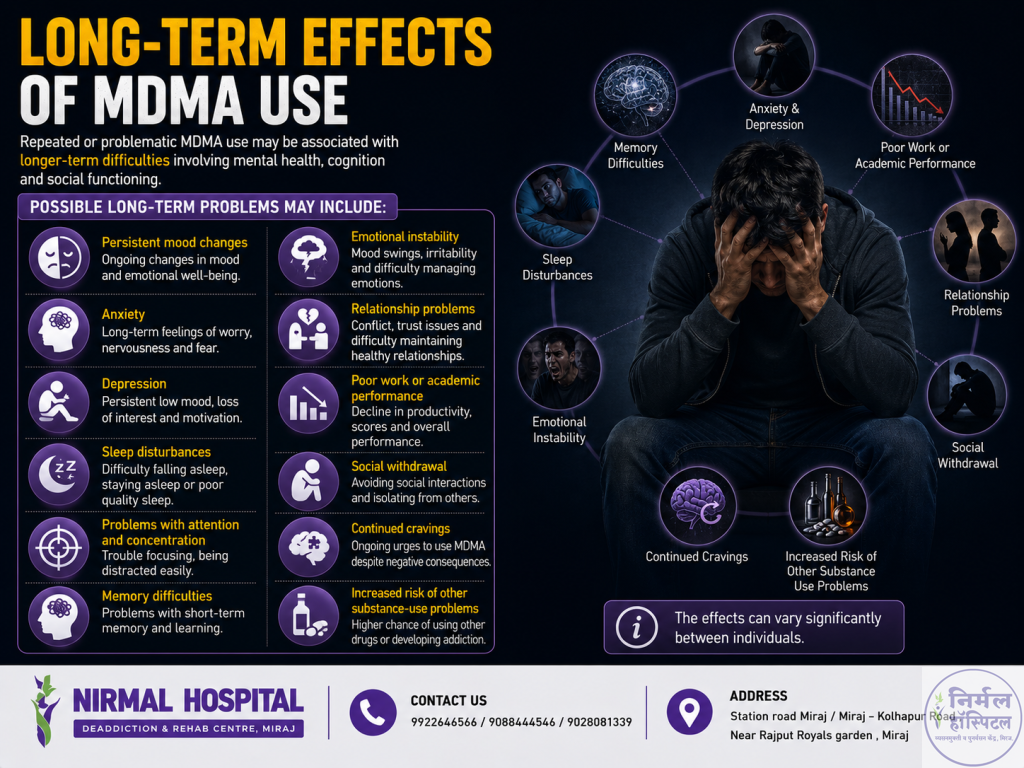
Repeated or problematic MDMA use may be associated with longer-term difficulties involving mental health, cognition and social functioning.
Possible problems may include:
- Persistent mood changes
- Anxiety
- Depression
- Sleep disturbances
- Problems with attention and concentration
- Memory difficulties
- Emotional instability
- Relationship problems
- Poor work or academic performance
- Social withdrawal
- Continued cravings
- Increased risk of other substance-use problems
The effects can vary significantly between individuals.
When Is MDMA Use a Medical Emergency?
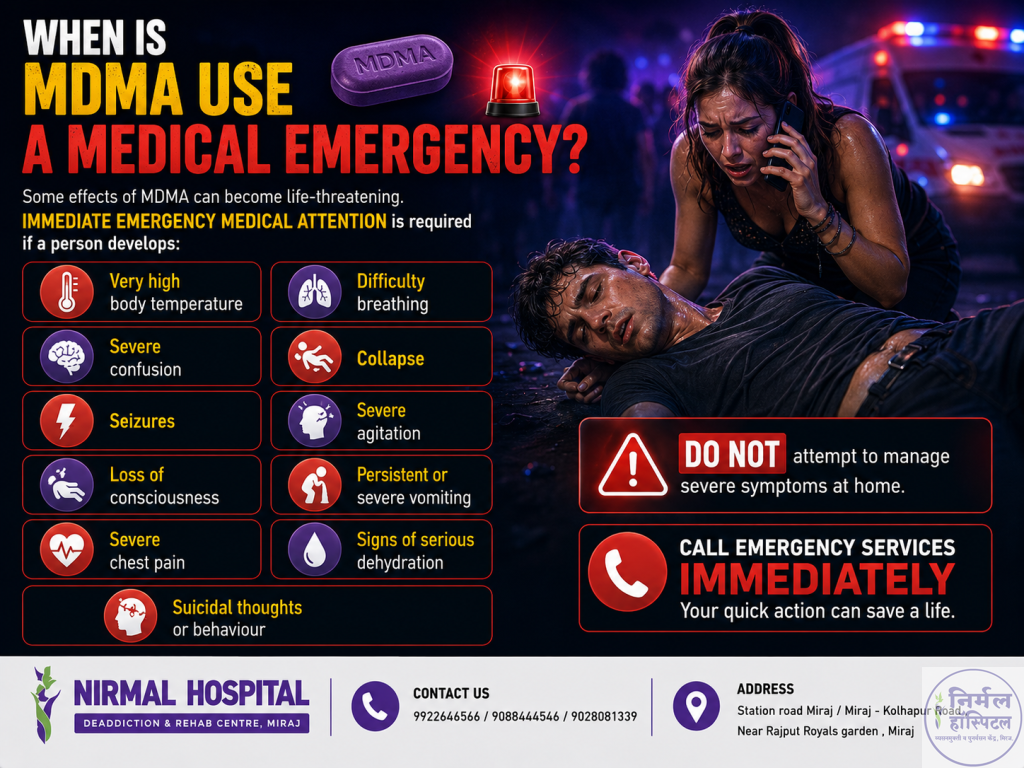
Some effects of MDMA can become life-threatening.
Immediate emergency medical attention is required if a person develops:
- Very high body temperature
- Severe confusion
- Seizures
- Loss of consciousness
- Severe chest pain
- Difficulty breathing
- Collapse
- Severe agitation
- Persistent or severe vomiting
- Signs of serious dehydration
- Suicidal thoughts or behaviour
Do not attempt to manage severe symptoms at home.
Case History: A Representative Example
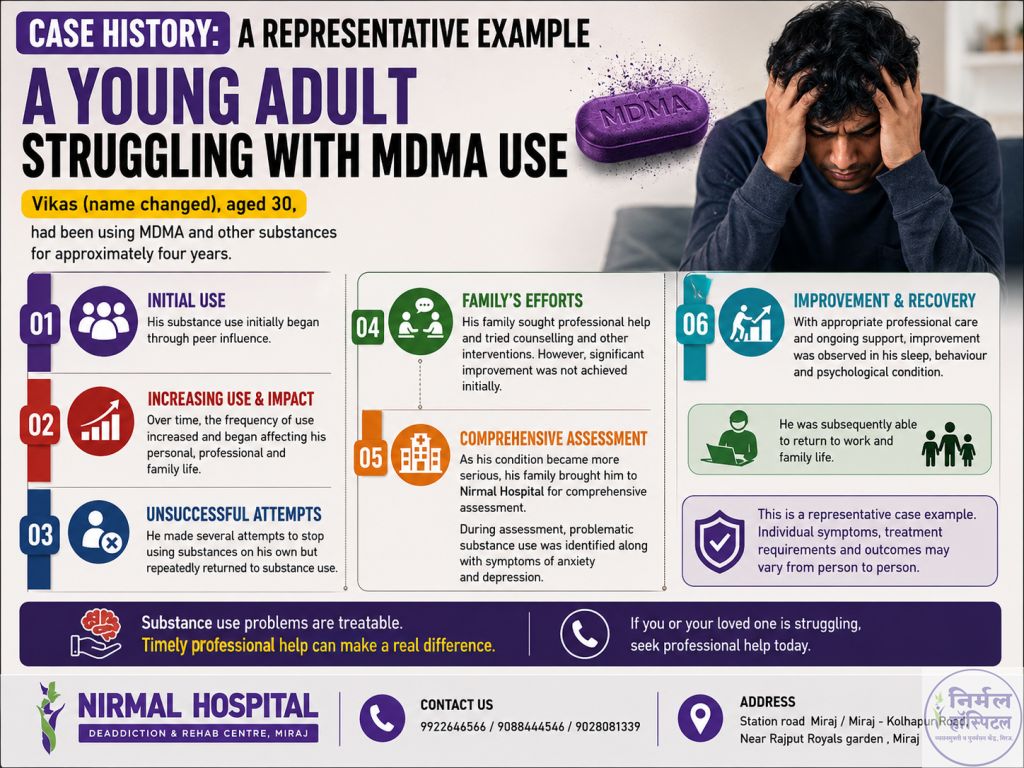
A Young Adult Struggling With MDMA Use
Vikas (name changed), aged 30, had been using MDMA and other substances for approximately four years.
His substance use initially began through peer influence. Over time, the frequency of use increased and began affecting his personal, professional and family life.
He made several attempts to stop using substances on his own but repeatedly returned to substance use.
His family sought professional help and tried counselling and other interventions. However, significant improvement was not achieved initially.
As his condition became more serious, his family brought him to Nirmal Hospital for comprehensive assessment.
During assessment, problematic substance use was identified along with symptoms of anxiety and depression.
With appropriate professional care and ongoing support, improvement was observed in his sleep, behaviour and psychological condition. He was subsequently able to return to work and family life.
This is a representative case example. Individual symptoms, treatment requirements and outcomes may vary from person to person.
Can MDMA Addiction Affect Family and Social Life?
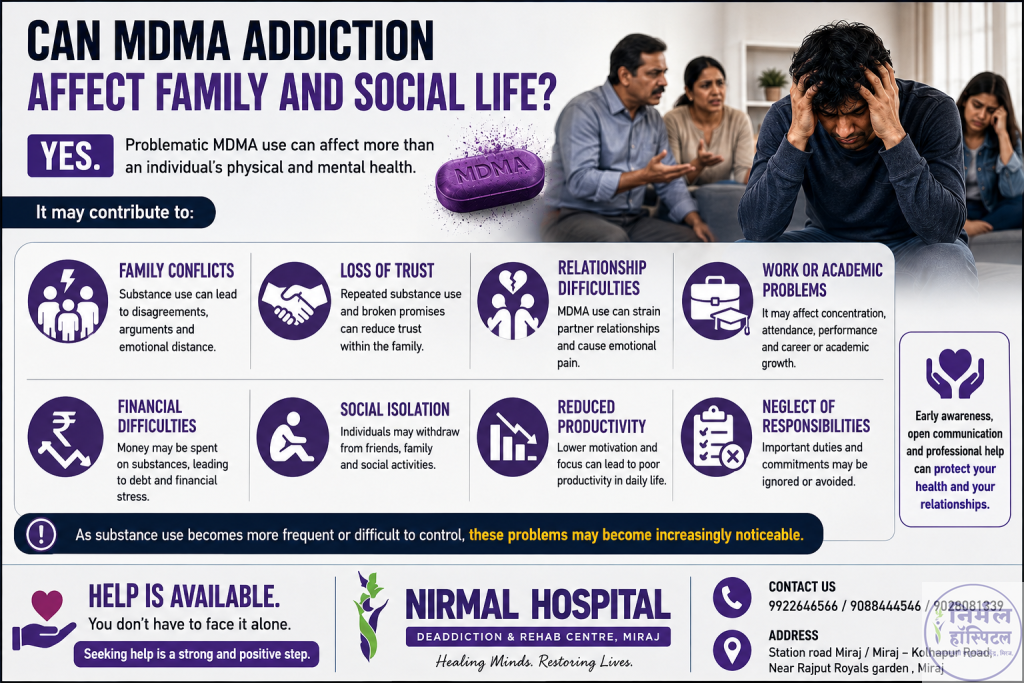
Yes. Problematic MDMA use can affect more than an individual’s physical and mental health.
It may contribute to:
- Family conflicts
- Loss of trust
- Relationship difficulties
- Work or academic problems
- Financial difficulties
- Social isolation
- Reduced productivity
- Neglect of responsibilities
As substance use becomes more frequent or difficult to control, these problems may become increasingly noticeable.
Why Early Recognition Is Important
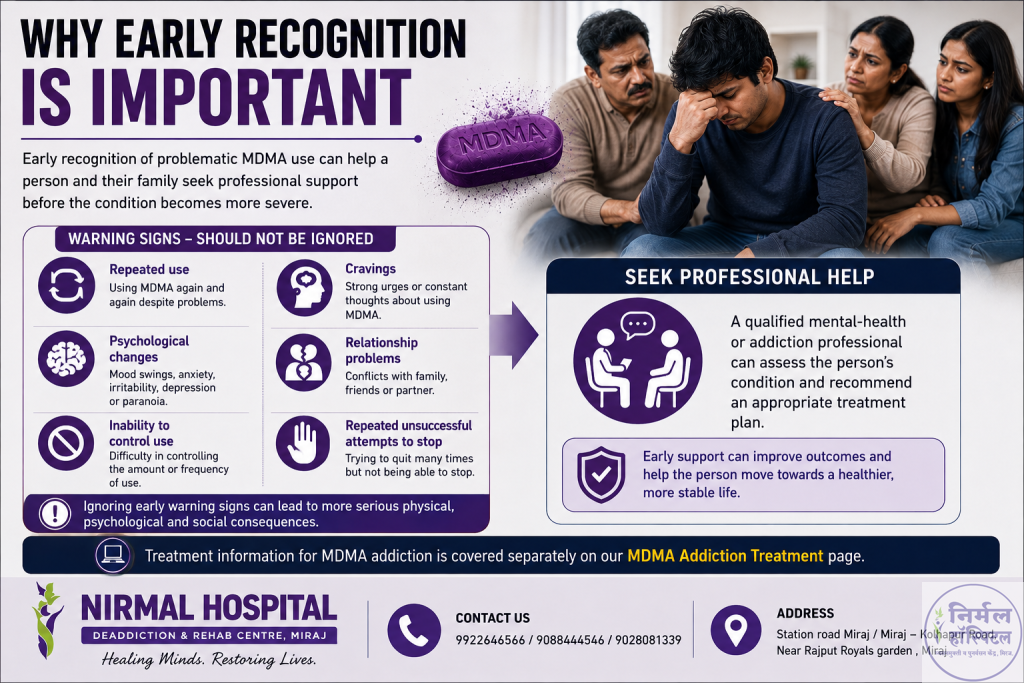
Early recognition of problematic MDMA use can help a person and their family seek professional support before the condition becomes more severe.
Warning signs such as repeated use, cravings, inability to control use, psychological changes, relationship problems or repeated unsuccessful attempts to stop should not be ignored.
A qualified mental-health or addiction professional can assess the person’s condition and recommend an appropriate treatment plan.
Treatment information for MDMA addiction is covered separately on our MDMA Addiction Treatment page.
Frequently Asked Questions About MDMA Addiction
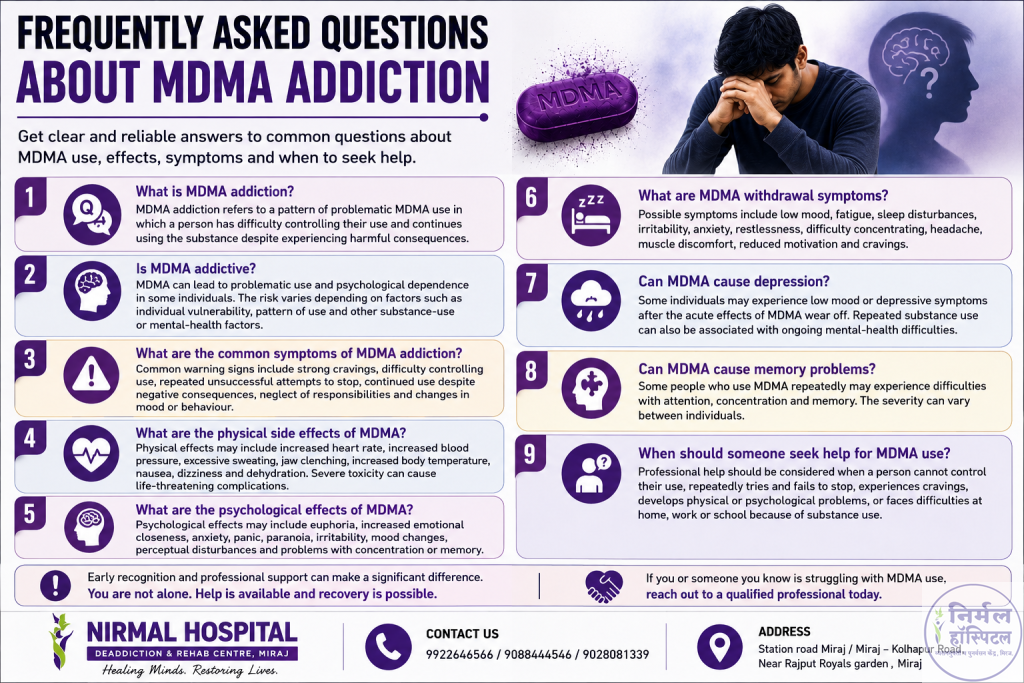
What is MDMA addiction?
MDMA addiction refers to a pattern of problematic MDMA use in which a person has difficulty controlling their use and continues using the substance despite experiencing harmful consequences.
Is MDMA addictive?
MDMA can lead to problematic use and psychological dependence in some individuals. The risk varies depending on factors such as individual vulnerability, pattern of use and other substance-use or mental-health factors.
What are the common symptoms of MDMA addiction?
Common warning signs include strong cravings, difficulty controlling use, repeated unsuccessful attempts to stop, continued use despite negative consequences, neglect of responsibilities and changes in mood or behaviour.
What are the physical side effects of MDMA?
Physical effects may include increased heart rate, increased blood pressure, excessive sweating, jaw clenching, increased body temperature, nausea, dizziness and dehydration. Severe toxicity can cause life-threatening complications.
What are the psychological effects of MDMA?
Psychological effects may include euphoria, increased emotional closeness, anxiety, panic, paranoia, irritability, mood changes, perceptual disturbances and problems with concentration or memory.
What are MDMA withdrawal symptoms?
Possible symptoms include low mood, fatigue, sleep disturbances, irritability, anxiety, restlessness, difficulty concentrating, headache, muscle discomfort, reduced motivation and cravings.
Can MDMA cause depression?
Some individuals may experience low mood or depressive symptoms after the acute effects of MDMA wear off. Repeated substance use can also be associated with ongoing mental-health difficulties.
Can MDMA cause memory problems?
Some people who use MDMA repeatedly may experience difficulties with attention, concentration and memory. The severity can vary between individuals.
When should someone seek help for MDMA use?
Professional help should be considered when a person cannot control their use, repeatedly tries and fails to stop, experiences cravings, develops physical or psychological problems, or faces difficulties at home, work or school because of substance use.
Take the First Step Toward Help
MDMA use can have significant effects on physical health, mental health, relationships, work and family life.
Understanding the causes, symptoms, side effects and warning signs of MDMA addiction is an important step toward early recognition and professional support.
If you or someone you know is struggling with MDMA or another substance, consult a qualified psychiatrist or addiction-treatment professional for an appropriate assessment.
Early help can make an important difference.
Looking for MDMA Addiction Treatment?
Learn more about our comprehensive approach to MDMA Addiction Treatment, including medical assessment, psychological care, counselling and rehabilitation.
Want to understand more about MDMA addiction, its symptoms, effects and health risks? Watch our MDMA Addiction Awareness Video to learn more about the dangers of MDMA use and the importance of seeking professional help.


