


Phobia: Symptoms, Causes, Types, Diagnosis
Phobia is a mental health condition characterized by an intense, excessive, or irrational fear of a particular object, animal, situation, place, or social situation.
Fear is a normal human emotion. However, in phobia, the fear may be much stronger than the actual level of danger and can lead a person to repeatedly avoid the feared situation. When this happens, phobia can interfere with everyday life, work, education, travel, social relationships, and personal activities.
Phobia is a treatable mental health condition. Proper assessment by a mental health professional can help identify the type and severity of the phobia and determine an appropriate management plan.
What Does Phobia Feel Like?
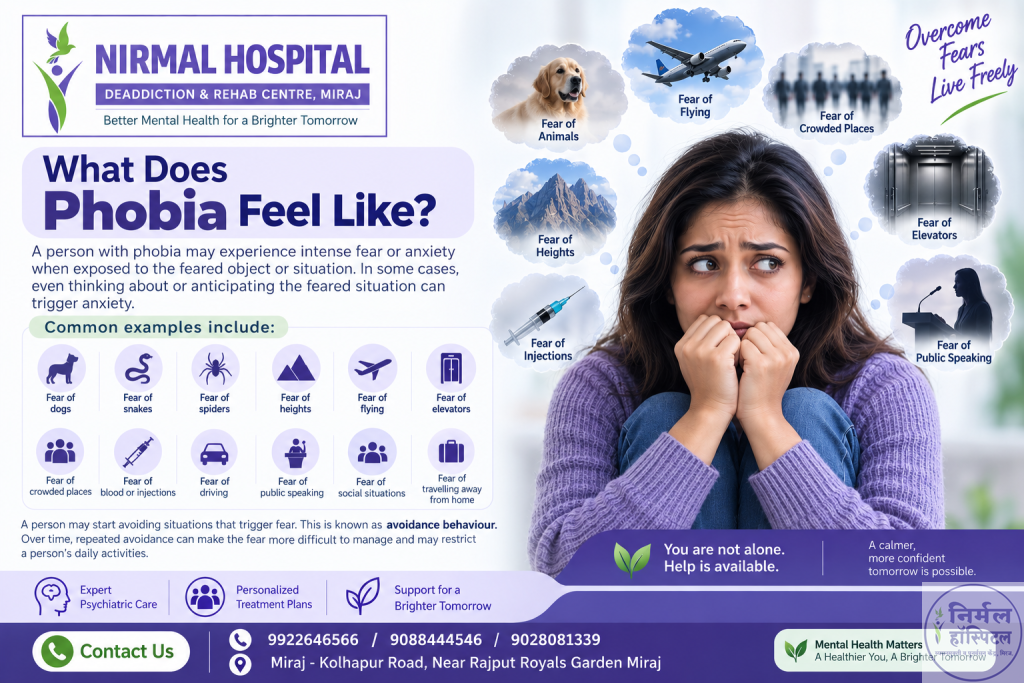
A person with phobia may experience intense fear or anxiety when exposed to the feared object or situation. In some cases, even thinking about or anticipating the feared situation can trigger anxiety.
Common examples include:
- Intense fear of dogs
- Fear of snakes or spiders
- Fear of heights
- Fear of flying
- Fear of elevators
- Fear of enclosed or crowded spaces
- Fear of blood or injections
- Fear of driving
- Fear of public speaking
- Fear of social situations
- Fear of travelling away from home
A person may start avoiding situations that trigger fear. This is known as avoidance behaviour.
Over time, repeated avoidance can make the fear more difficult to manage and may restrict a person’s daily activities.
Types of Phobia
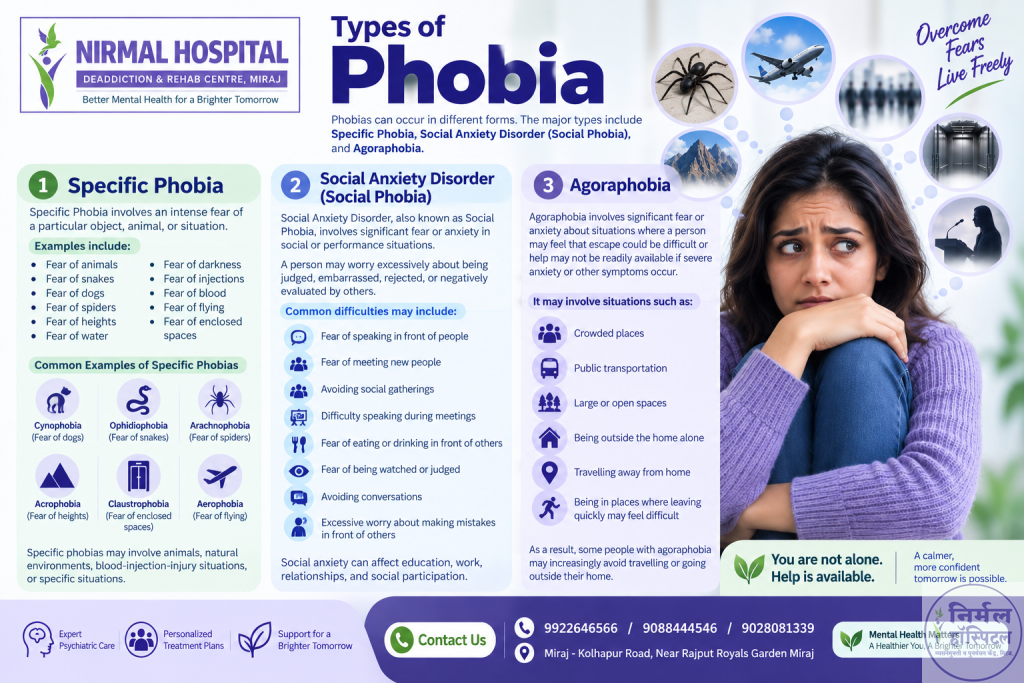
Phobias can occur in different forms. The major types include Specific Phobia, Social Anxiety Disorder (Social Phobia), and Agoraphobia.
1. Specific Phobia
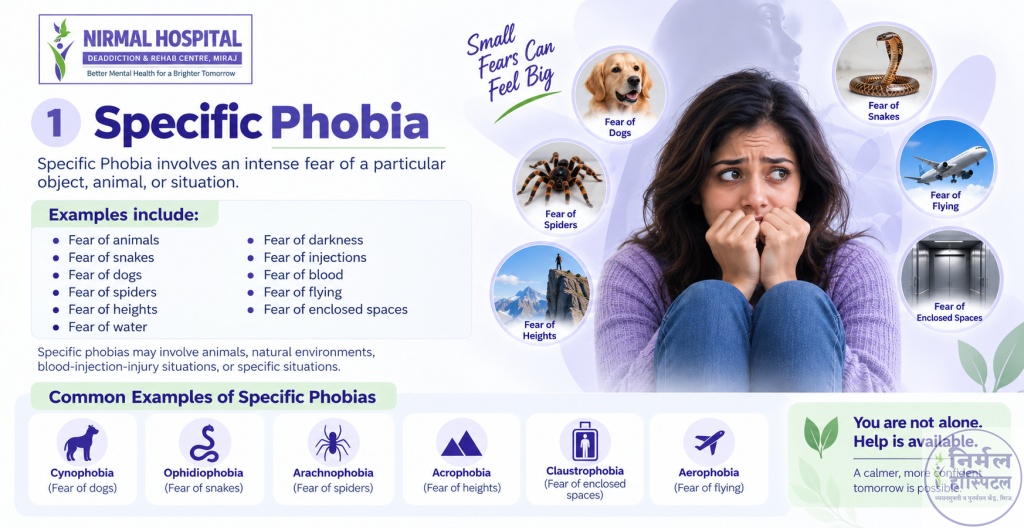
Specific Phobia involves an intense fear of a particular object, animal, or situation.
Examples include:
- Fear of animals
- Fear of snakes
- Fear of dogs
- Fear of spiders
- Fear of heights
- Fear of water
- Fear of darkness
- Fear of injections
- Fear of blood
- Fear of flying
- Fear of enclosed spaces
Common Examples of Specific Phobias
Cynophobia – Fear of dogs
Ophidiophobia – Fear of snakes
Arachnophobia – Fear of spiders
Acrophobia – Fear of heights
Claustrophobia – Fear of enclosed or confined spaces
Aerophobia – Fear of flying
Specific phobias may involve animals, natural environments, blood-injection-injury situations, or specific situations.
2. Social Anxiety Disorder / Social Phobia
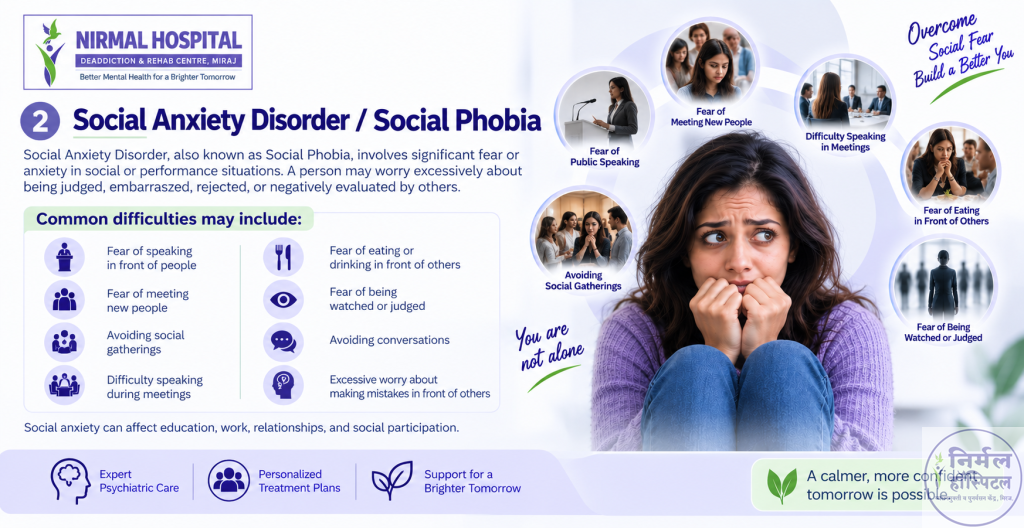
Social Anxiety Disorder, also known as Social Phobia, involves significant fear or anxiety in social or performance situations.
A person may worry excessively about being judged, embarrassed, rejected, or negatively evaluated by others.
Common difficulties may include:
- Fear of speaking in front of people
- Fear of meeting new people
- Avoiding social gatherings
- Difficulty speaking during meetings
- Fear of eating or drinking in front of others
- Fear of being watched or judged
- Avoiding conversations
- Excessive worry about making mistakes in front of others
Social anxiety can affect education, work, relationships, and social participation.
3. Agoraphobia
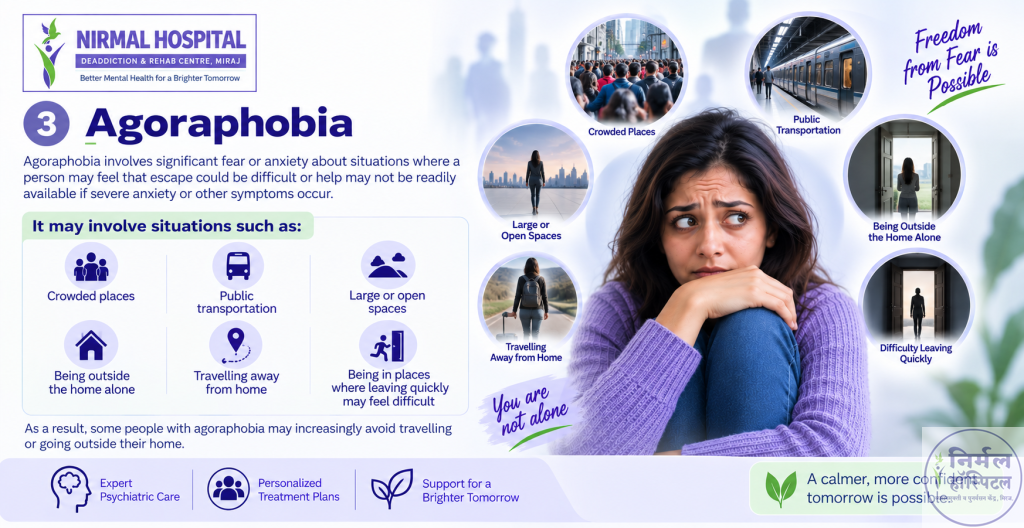
Agoraphobia involves significant fear or anxiety about situations where a person may feel that escape could be difficult or help may not be readily available if severe anxiety or other symptoms occur.
It may involve situations such as:
- Crowded places
- Public transportation
- Large or open spaces
- Being outside the home alone
- Travelling away from home
- Being in places where leaving quickly may feel difficult
As a result, some people with agoraphobia may increasingly avoid travelling or going outside their home.
What Causes Phobia?
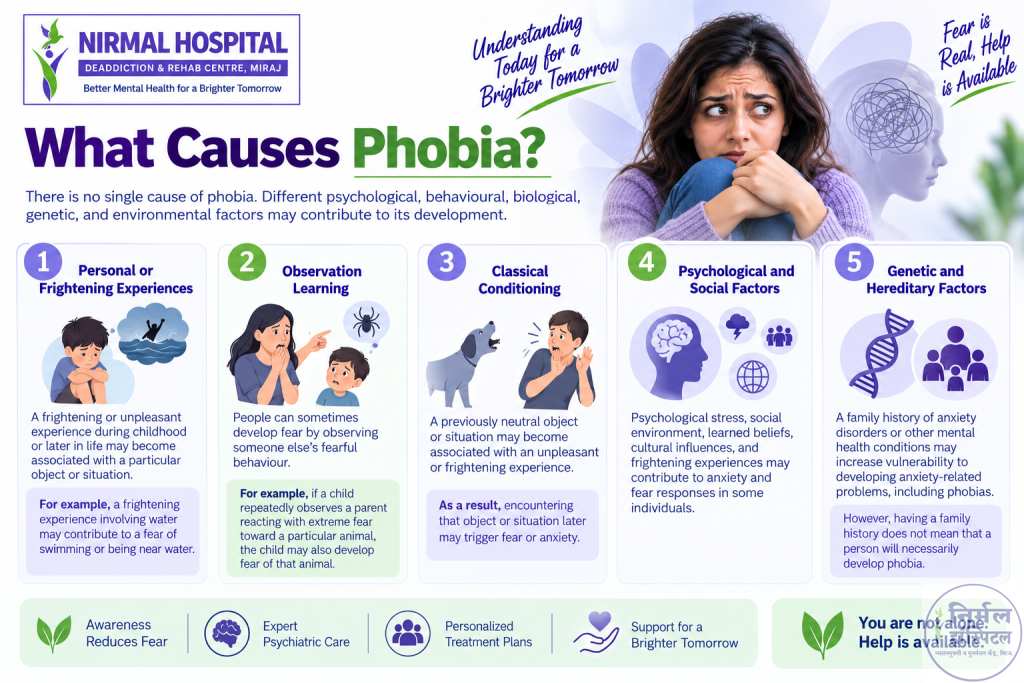
There is no single cause of phobia. Different psychological, behavioural, biological, genetic, and environmental factors may contribute to its development.
1. Personal or Frightening Experiences
A frightening or unpleasant experience during childhood or later in life may become associated with a particular object or situation.
For example, a frightening experience involving water may contribute to a fear of swimming or being near water.
2. Observation Learning
People can sometimes develop fear by observing someone else’s fearful behaviour.
For example, if a child repeatedly observes a parent reacting with extreme fear toward a particular animal, the child may also develop fear of that animal.
3. Classical Conditioning
A previously neutral object or situation may become associated with an unpleasant or frightening experience.
As a result, encountering that object or situation later may trigger fear or anxiety.
4. Psychological and Social Factors
Psychological stress, social environment, learned beliefs, cultural influences, and frightening experiences may contribute to anxiety and fear responses in some individuals.
5. Genetic and Hereditary Factors
A family history of anxiety disorders or other mental health conditions may increase vulnerability to developing anxiety-related problems, including phobias.
However, having a family history does not mean that a person will necessarily develop phobia.
Symptoms of Phobia
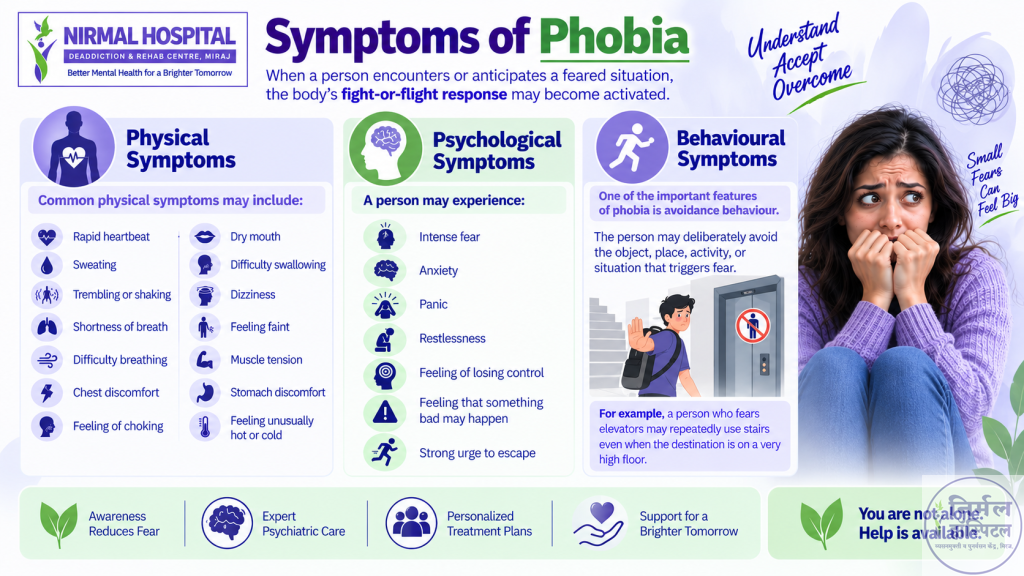
When a person encounters or anticipates a feared situation, the body’s fight-or-flight response may become activated.
Physical Symptoms
Common physical symptoms may include:
- Rapid heartbeat
- Sweating
- Trembling or shaking
- Shortness of breath
- Difficulty breathing
- Chest discomfort
- Feeling of choking
- Dry mouth
- Difficulty swallowing
- Dizziness
- Feeling faint
- Muscle tension
- Stomach discomfort
- Feeling unusually hot or cold
Psychological Symptoms
A person may experience:
- Intense fear
- Anxiety
- Panic
- Restlessness
- Feeling of losing control
- Feeling that something bad may happen
- Strong urge to escape
Behavioural Symptoms
One of the important features of phobia is avoidance behaviour.
The person may deliberately avoid the object, place, activity, or situation that triggers fear.
For example, a person who fears elevators may repeatedly use stairs even when the destination is on a very high floor.
How Can Phobia Affect Daily Life?
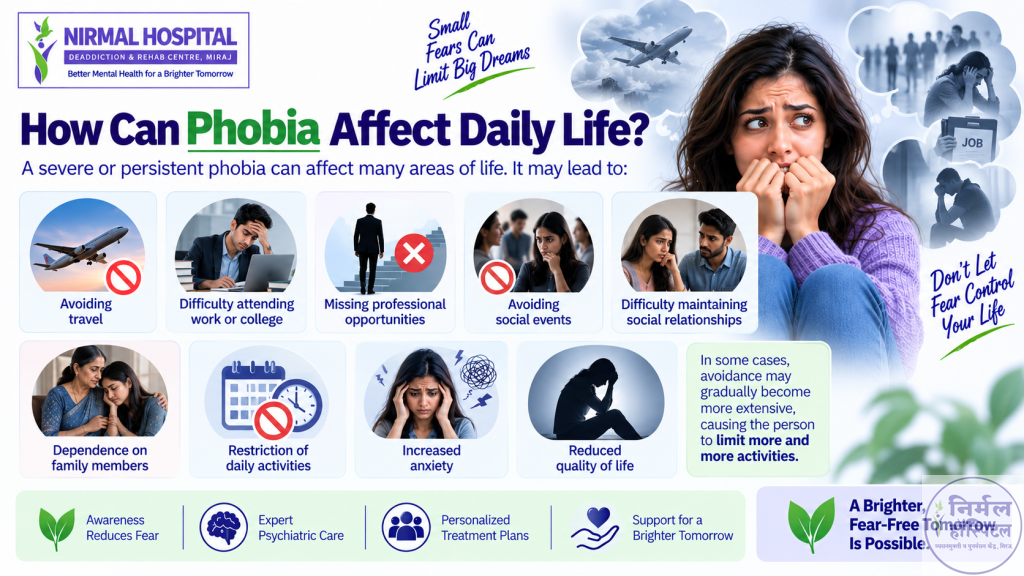
A severe or persistent phobia can affect many areas of life.
It may lead to:
- Avoiding travel
- Difficulty attending work or college
- Missing professional opportunities
- Avoiding social events
- Difficulty maintaining social relationships
- Dependence on family members
- Restriction of daily activities
- Increased anxiety
- Reduced quality of life
In some cases, avoidance may gradually become more extensive, causing the person to limit more and more activities.
Phobia and Panic Attacks
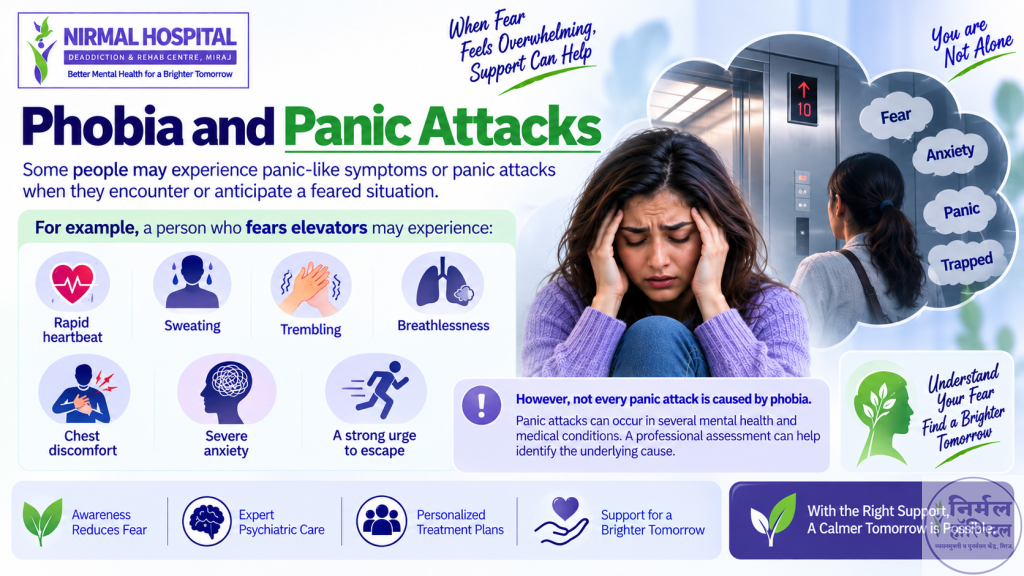
Some people may experience panic-like symptoms or panic attacks when they encounter or anticipate a feared situation.
For example, a person who fears elevators may experience:
- Rapid heartbeat
- Sweating
- Trembling
- Breathlessness
- Chest discomfort
- Severe anxiety
- A strong urge to escape
However, not every panic attack is caused by phobia. Panic attacks can occur in several mental health and medical conditions. A professional assessment can help identify the underlying cause.
How Is Phobia Diagnosed?
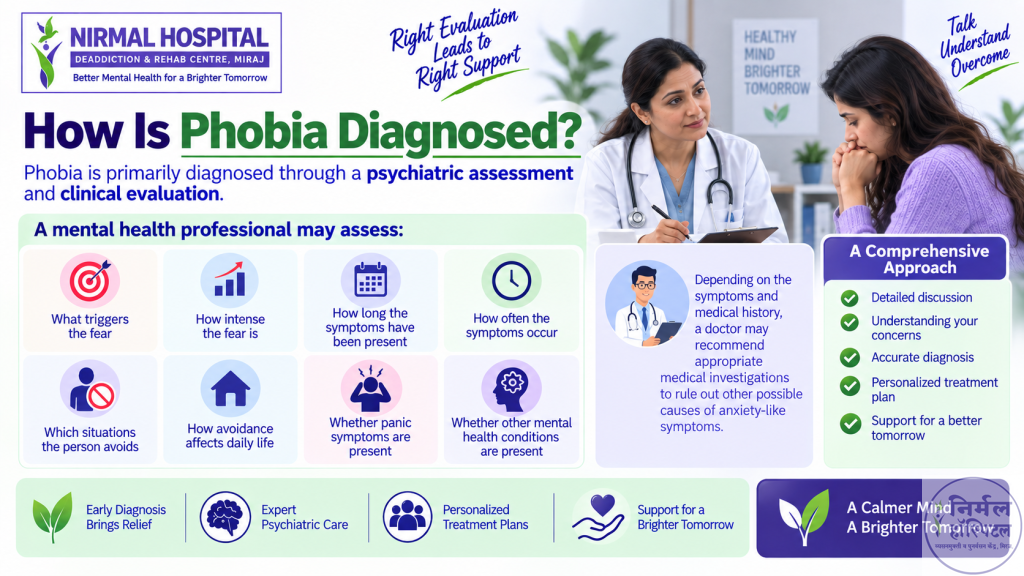
Phobia is primarily diagnosed through a psychiatric assessment and clinical evaluation.
A mental health professional may assess:
- What triggers the fear
- How intense the fear is
- How long the symptoms have been present
- How often the symptoms occur
- Which situations the person avoids
- How avoidance affects daily life
- Whether panic symptoms are present
- Whether other mental health conditions are present
Depending on the symptoms and medical history, a doctor may recommend appropriate medical investigations to rule out other possible causes of anxiety-like symptoms.
Is Phobia a Mental Illness?
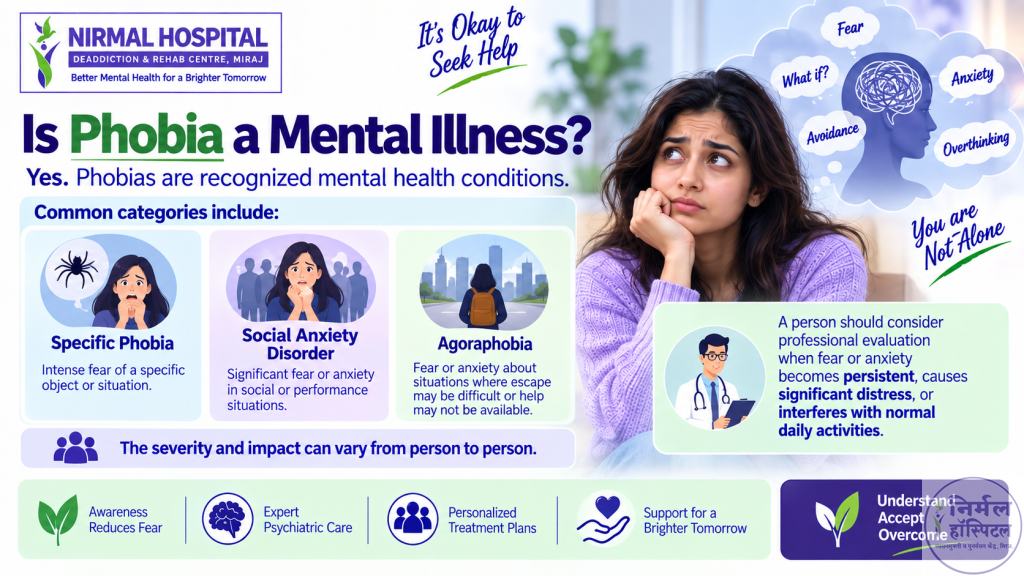
Yes. Phobias are recognized mental health conditions.
Common categories include:
- Specific Phobia
- Social Anxiety Disorder
- Agoraphobia
The severity and impact can vary from person to person.
A person should consider professional evaluation when fear or anxiety becomes persistent, causes significant distress, or interferes with normal daily activities.
Can Phobia Be Treated?
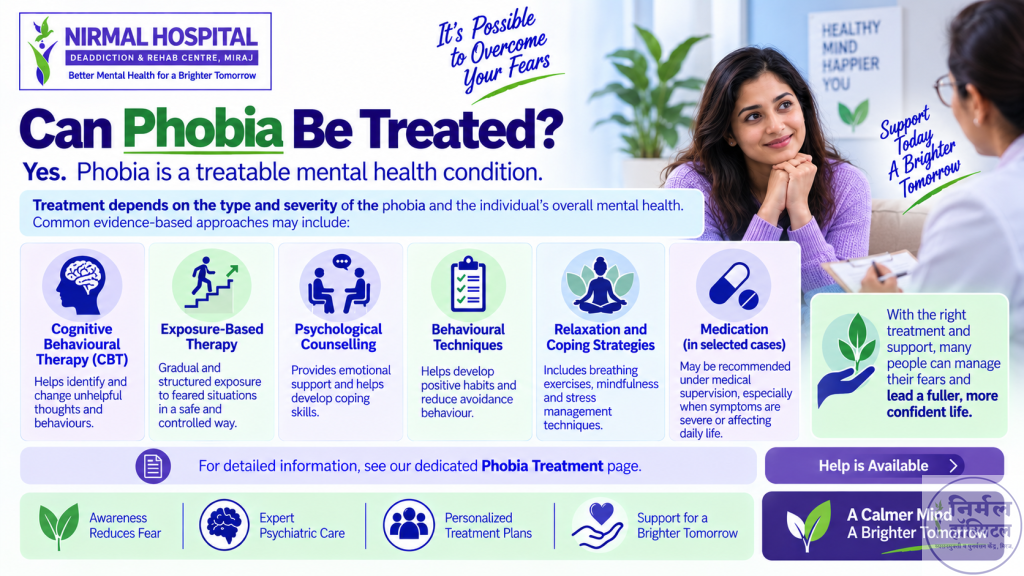
Yes. Phobia is a treatable mental health condition.
Treatment depends on the type and severity of the phobia and the individual’s overall mental health.
Common evidence-based approaches may include:
- Cognitive Behavioural Therapy (CBT)
- Exposure-based therapy
- Psychological counselling
- Behavioural techniques
- Relaxation and coping strategies
- Medication in selected cases under medical supervision
For detailed information, see our dedicated Phobia Treatment page.
Frequently Asked Questions About Phobia
What is Phobia?
Phobia is an intense or excessive fear of a particular object, animal, situation, place, or social situation. The fear may lead to significant anxiety and avoidance behaviour.
Is Phobia a mental health condition?
Yes. Phobias are recognized mental health conditions. Specific Phobia, Social Anxiety Disorder, and Agoraphobia are common categories.
What are the common symptoms of Phobia?
Symptoms may include intense fear, anxiety, sweating, trembling, rapid heartbeat, breathlessness, dizziness, chest discomfort, panic-like symptoms, and avoidance of the feared situation.
What causes Phobia?
Phobia can develop due to several factors, including frightening experiences, observation learning, classical conditioning, psychological and social factors, and genetic vulnerability.
What are the main types of Phobia?
The major types include Specific Phobia, Social Anxiety Disorder (Social Phobia), and Agoraphobia.
What is Specific Phobia?
Specific Phobia is an intense fear of a particular object or situation, such as dogs, snakes, spiders, heights, flying, injections, blood, or enclosed spaces.
What is Social Phobia?
Social Phobia, also called Social Anxiety Disorder, is characterized by significant fear or anxiety in social or performance situations, often because of concerns about embarrassment, judgment, or negative evaluation.
What is Agoraphobia?
Agoraphobia involves significant fear or anxiety about situations where escape may feel difficult or help may not be readily available. It may involve public transportation, crowded places, open spaces, travelling away from home, or being outside alone.
Can Phobia cause panic attacks?
A person with phobia may experience panic-like symptoms or a panic attack when exposed to or anticipating the feared situation. However, panic attacks can have other causes as well.
How is Phobia diagnosed?
Phobia is diagnosed mainly through psychiatric assessment and clinical evaluation. The doctor considers the person’s symptoms, triggers, avoidance behaviour, duration, severity, and impact on daily life.
Can Phobia be treated?
Yes. Phobia can be effectively managed with appropriate professional care. CBT and exposure-based approaches are commonly used, while medication may be considered in selected cases.
What is CBT for Phobia?
Cognitive Behavioural Therapy (CBT) helps a person identify and challenge unhelpful thoughts related to fear and develop healthier coping strategies. It can also help reduce avoidance behaviour.
What is Exposure Therapy for Phobia?
Exposure Therapy involves gradually and safely facing feared objects or situations in a controlled therapeutic setting. The exposure plan is tailored to the individual’s needs and clinical condition.
Is medication necessary for Phobia?
Not everyone with phobia requires medication. A psychiatrist may recommend medication depending on the type and severity of symptoms and the individual’s overall clinical condition.
Medication should only be taken under the supervision of a qualified medical professional.
Can Phobia affect daily life?
Yes. Severe phobia can affect work, education, travel, relationships, social activities, and everyday responsibilities.
Can children develop Phobia?
Yes. Children and teenagers can also experience phobias and anxiety disorders. Persistent fears that interfere with school, family life, social activities, or normal development should be professionally evaluated.
When should I consult a psychiatrist for Phobia?
Consider consulting a mental health professional if:
- Fear is interfering with daily activities
- You regularly avoid certain situations
- You cannot travel because of fear
- You experience severe anxiety or panic-like symptoms
- Your work or education is affected
- Your social or family life is affected
- Your fear is becoming increasingly difficult to control
Is Phobia the same as normal fear?
No. Fear is a normal emotional response to perceived danger. Phobia involves excessive or disproportionate fear that can cause significant distress, avoidance, or interference with daily life.
Can Phobia go away without treatment?
Some fears may reduce over time, but persistent or severe phobias may continue and can lead to increasing avoidance. If the fear is affecting your life, professional assessment can help determine whether treatment is appropriate.
A Message from the Doctor
Fear is a normal human emotion. However, when fear begins to interfere with your daily life, work, education, travel, relationships, or social activities, it should not simply be dismissed as a personality trait or weakness.
Phobia is a treatable mental health condition. Early professional assessment can help identify the problem and guide appropriate care.
If you or someone you know is experiencing persistent or severe fear, consider seeking guidance from a qualified mental health professional.
For more information about mental health services, visit Nirmal Hospital, Miraj – 9922646566 / 9088444546 / 9028081339
Website: www.nirmalhospitalmiraj.com


Leave a Reply