

Nicotine Addiction Treatment: Effective Treatment for Tobacco Dependence
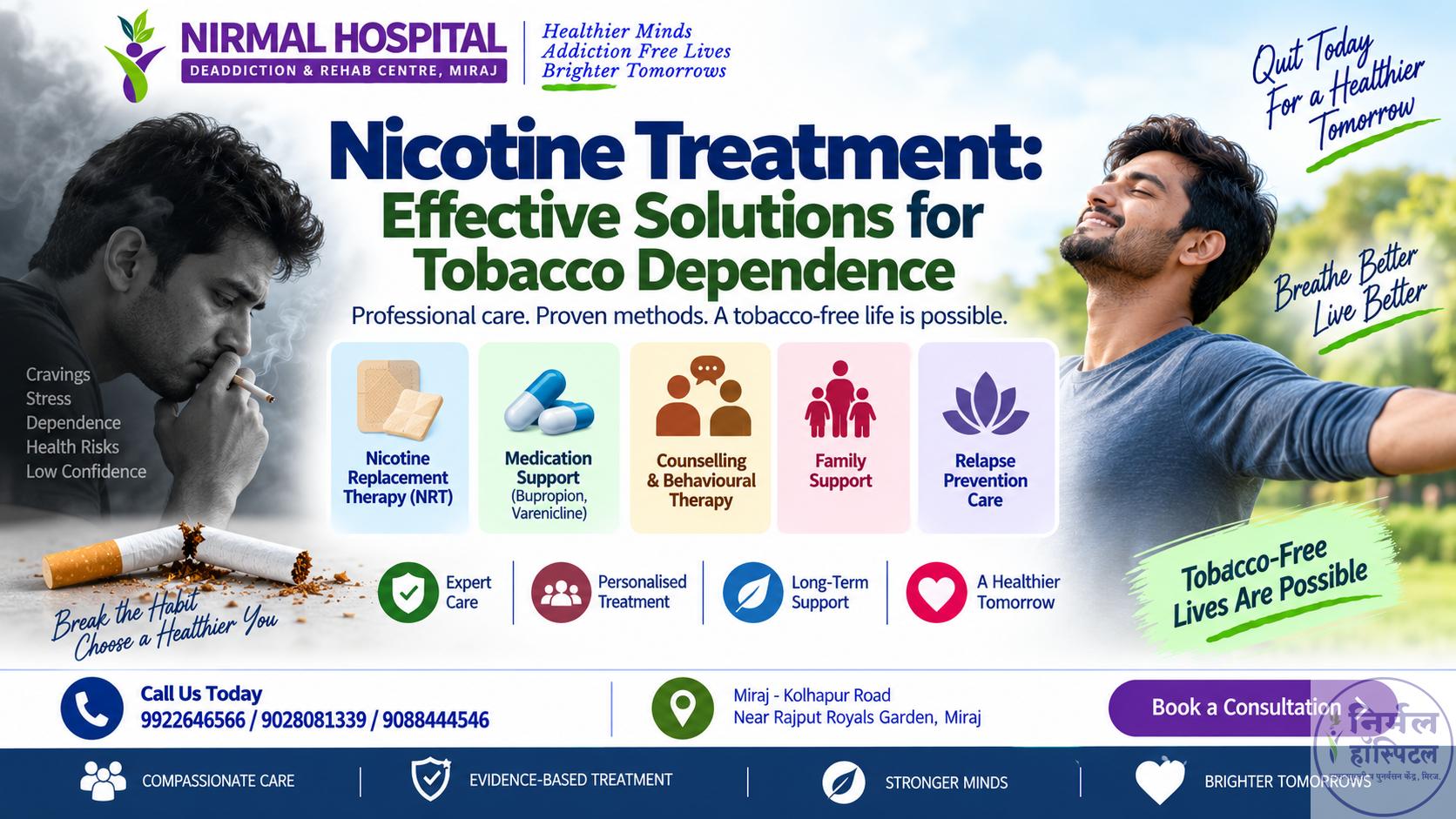
Nicotine addiction treatment helps people overcome dependence on cigarettes, bidis, gutkha, khaini, chewing tobacco and other tobacco products. Quitting tobacco can be difficult because nicotine causes physical dependence, cravings and withdrawal symptoms.
At Nirmal Hospital, Miraj, tobacco dependence can be assessed and managed through a personalised treatment approach that may include medication, Nicotine Replacement Therapy (NRT), counselling, behavioural interventions and relapse-prevention support.
Evidence-based tobacco cessation guidelines recommend combining behavioural support with appropriate medication because this can improve the chances of successfully quitting.
Who May Need Nicotine Addiction Treatment?
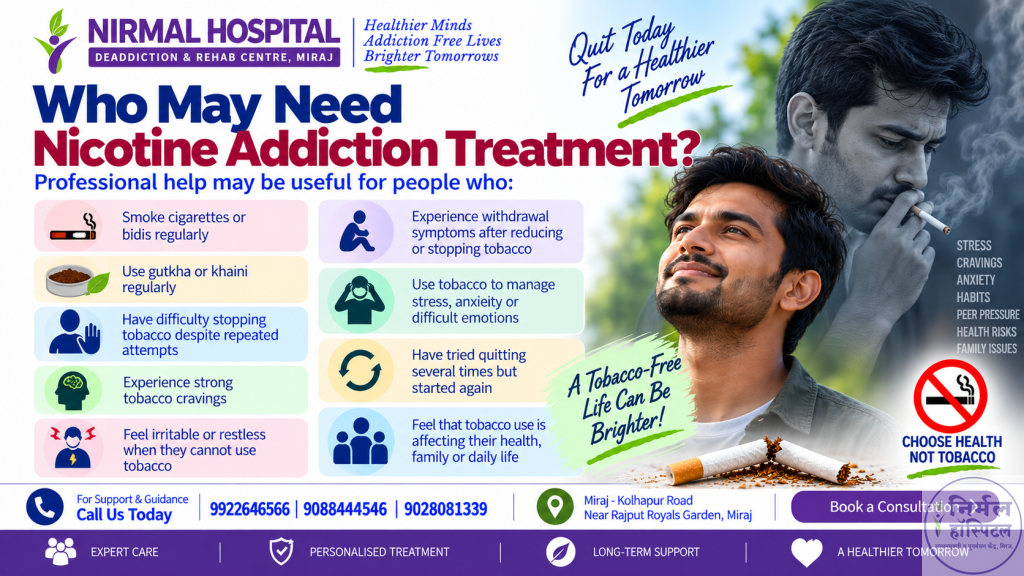
Professional help may be useful for people who:
- Smoke cigarettes or bidis regularly
- Use gutkha or khaini regularly
- Have difficulty stopping tobacco despite repeated attempts
- Experience strong tobacco cravings
- Feel irritable or restless when they cannot use tobacco
- Experience withdrawal symptoms after reducing or stopping tobacco
- Use tobacco to manage stress, anxiety or difficult emotions
- Have tried quitting several times but started again
- Feel that tobacco use is affecting their health, family or daily life
The 8D Approach to Tobacco Cessation
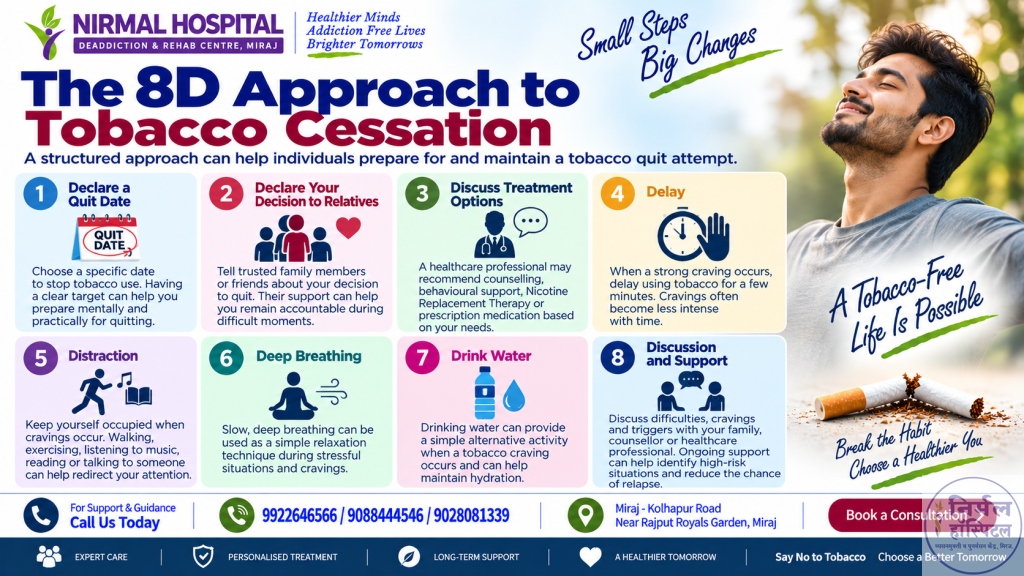
A structured approach can help individuals prepare for and maintain a tobacco quit attempt.
1. Declare a Quit Date
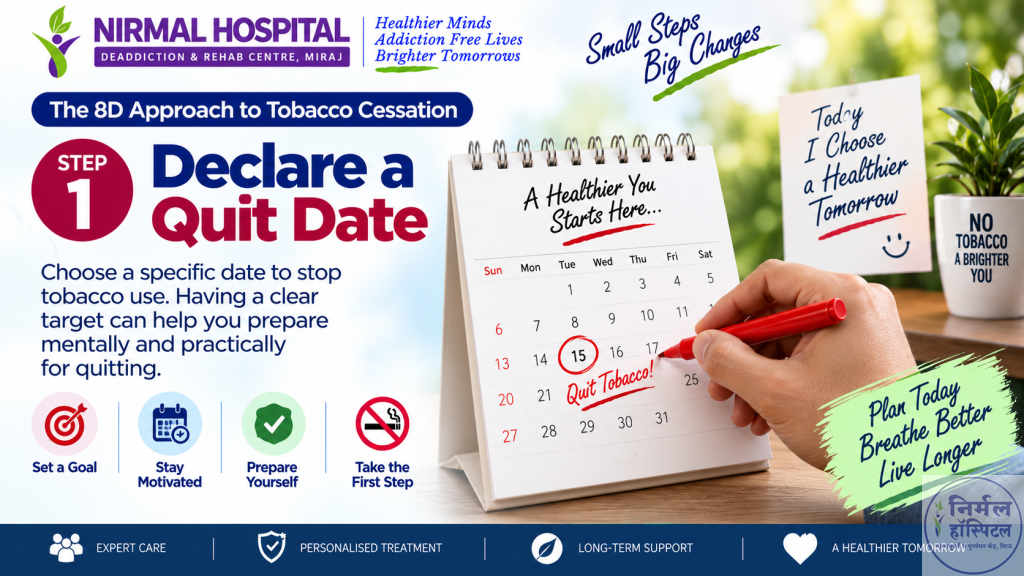
Choose a specific date to stop tobacco use. Having a clear target can help you prepare mentally and practically for quitting.
2. Declare Your Decision to Relatives
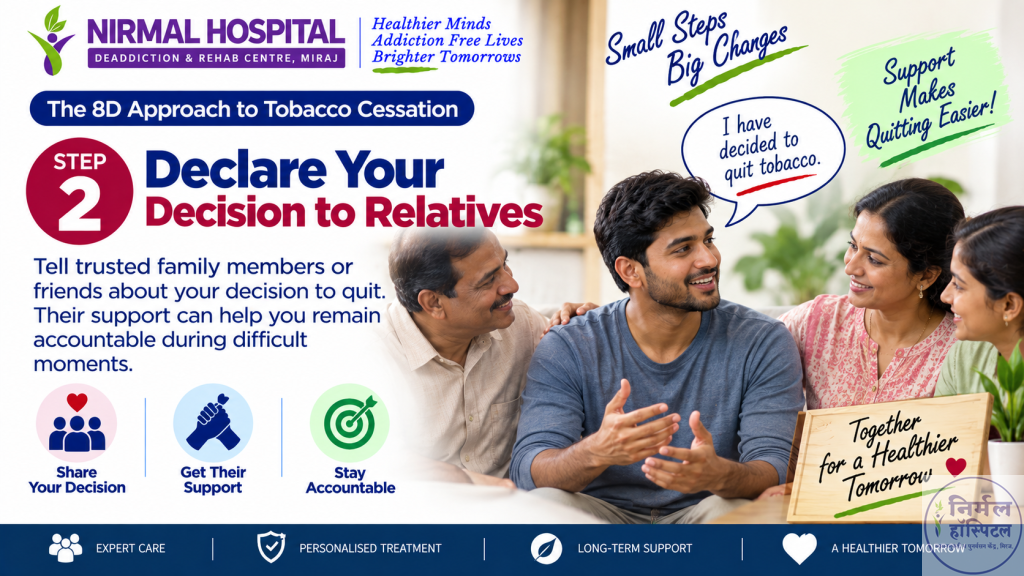
Tell trusted family members or friends about your decision to quit. Their support can help you remain accountable during difficult moments.
3. Discuss Treatment Options
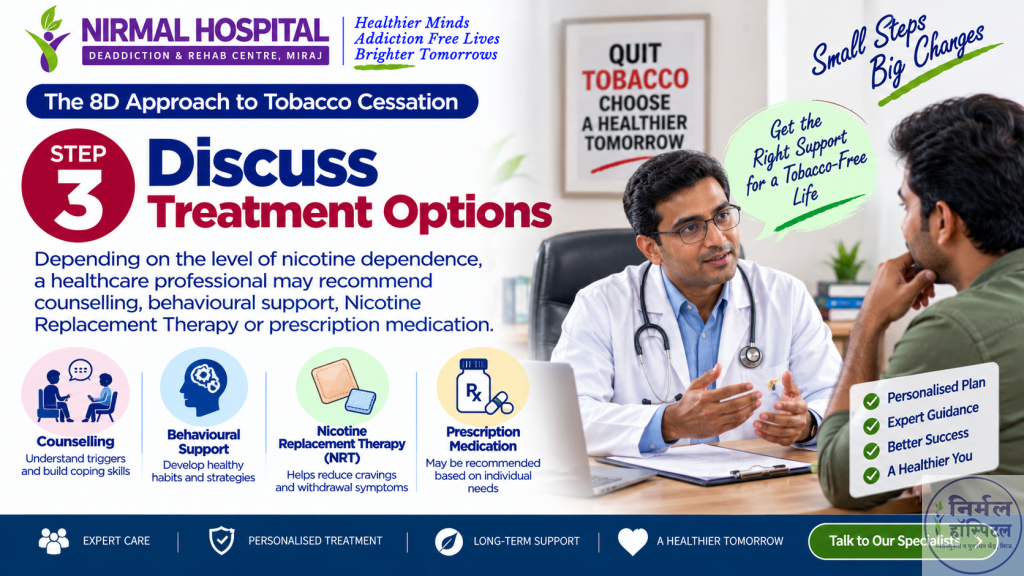
Depending on the level of nicotine dependence, a healthcare professional may recommend counselling, behavioural support, Nicotine Replacement Therapy or prescription medication.
4. Delay
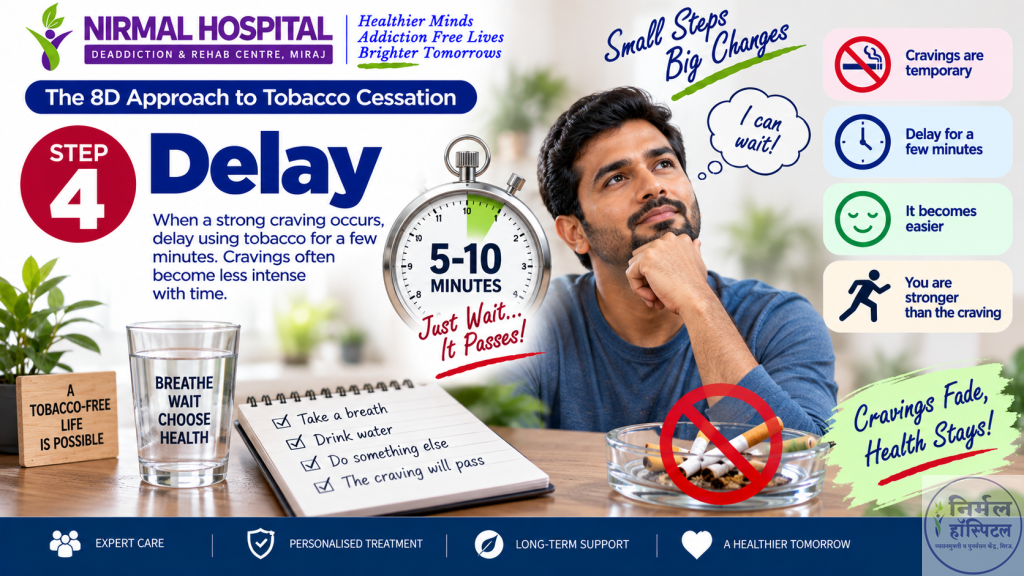
When a strong craving occurs, delay using tobacco for a few minutes. Cravings often become less intense with time.
5. Distraction
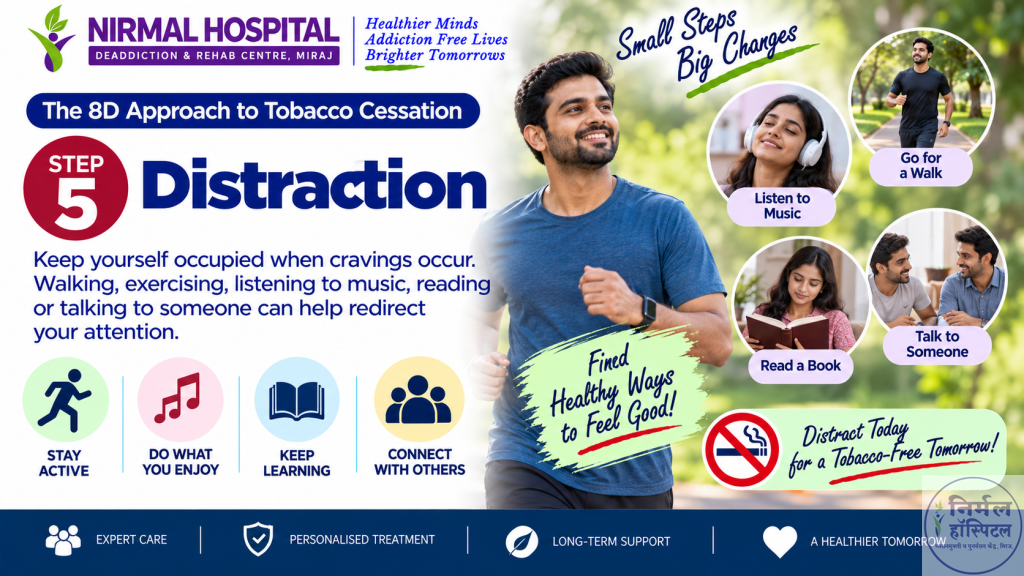
Keep yourself occupied when cravings occur. Walking, exercising, listening to music, reading or talking to someone can help redirect your attention.
6. Deep Breathing
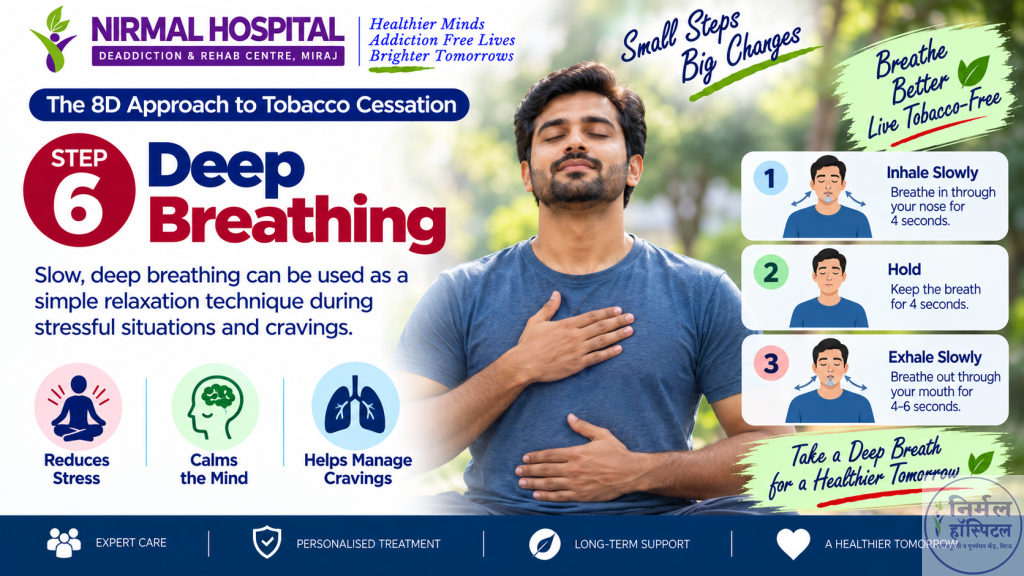
Slow, deep breathing can be used as a simple relaxation technique during stressful situations and cravings.
7. Drink Water
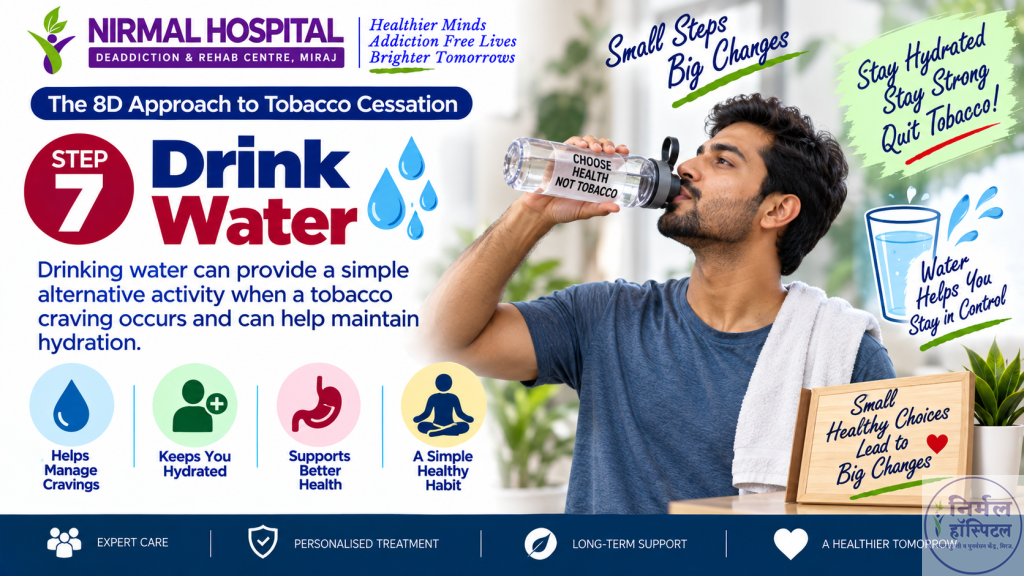
Drinking water can provide a simple alternative activity when a tobacco craving occurs and can help maintain hydration.
8. Discussion and Support
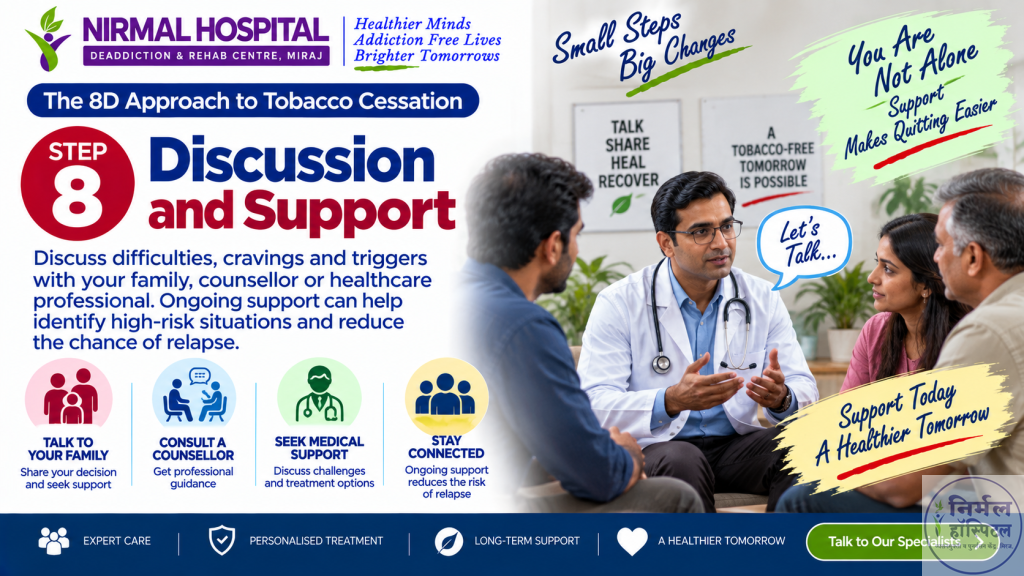
Discuss difficulties, cravings and triggers with your family, counsellor or healthcare professional. Ongoing support can help identify high-risk situations and reduce the chance of relapse.
Nicotine Addiction Treatment Options
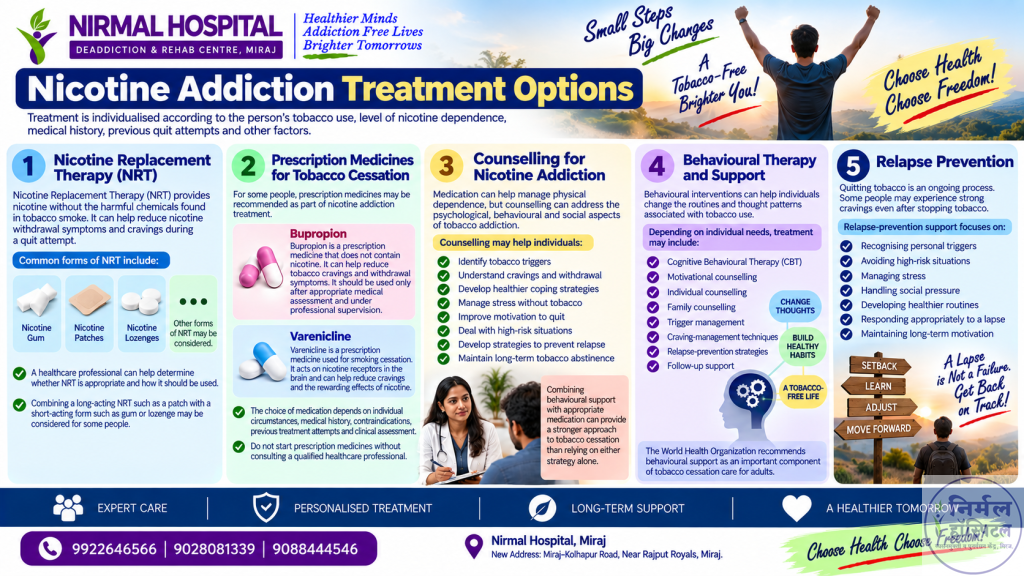
Treatment is individualised according to the person’s tobacco use, level of nicotine dependence, medical history, previous quit attempts and other factors.
1. Nicotine Replacement Therapy (NRT)
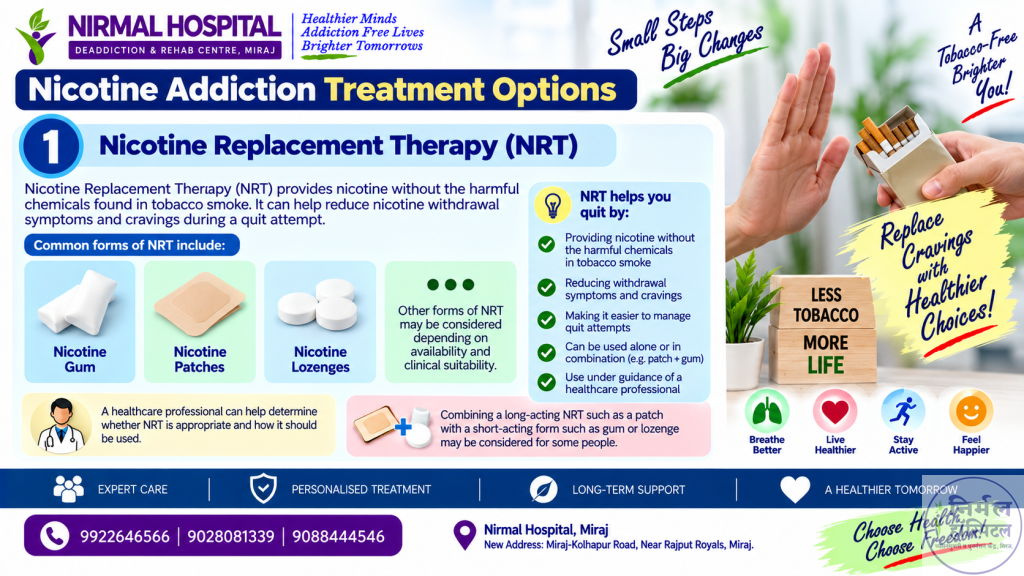
Nicotine Replacement Therapy (NRT) provides nicotine without the harmful chemicals found in tobacco smoke. It can help reduce nicotine withdrawal symptoms and cravings during a quit attempt.
Common forms of NRT include:
- Nicotine Gum
- Nicotine Patches
- Nicotine Lozenges
- Other forms of NRT may be considered depending on availability and clinical suitability.
A healthcare professional can help determine whether NRT is appropriate and how it should be used.
Combining a long-acting NRT such as a patch with a short-acting form such as gum or lozenge may be considered for some people.
2. Prescription Medicines for Tobacco Cessation
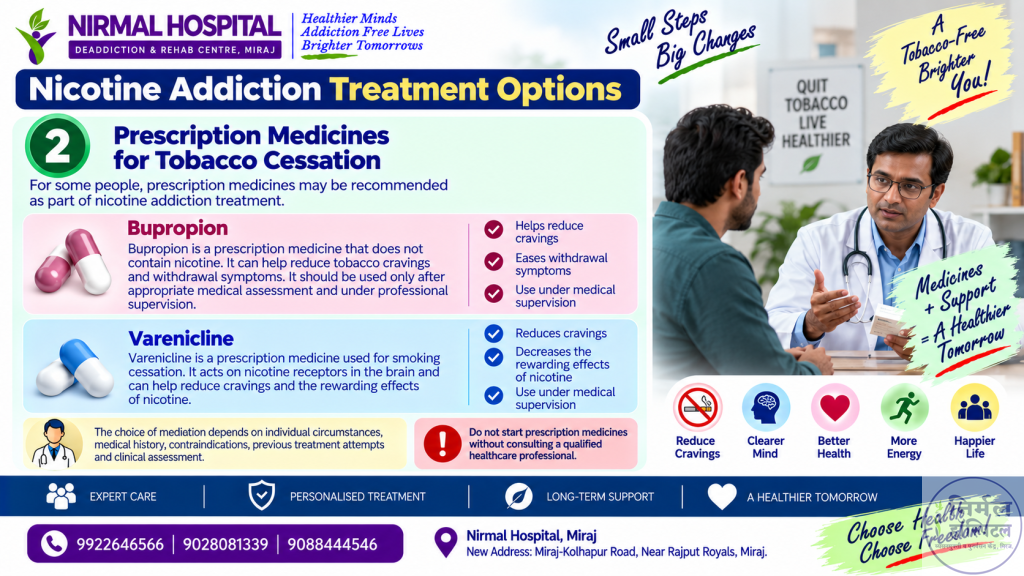
For some people, prescription medicines may be recommended as part of nicotine addiction treatment.
Bupropion
Bupropion is a prescription medicine that does not contain nicotine. It can help reduce tobacco cravings and withdrawal symptoms. It should be used only after appropriate medical assessment and under professional supervision.
Varenicline
Varenicline is a prescription medicine used for smoking cessation. It acts on nicotine receptors in the brain and can help reduce cravings and the rewarding effects of nicotine.
The choice of medication depends on individual circumstances, medical history, contraindications, previous treatment attempts and clinical assessment.
Do not start prescription medicines without consulting a qualified healthcare professional.
3. Counselling for Nicotine Addiction
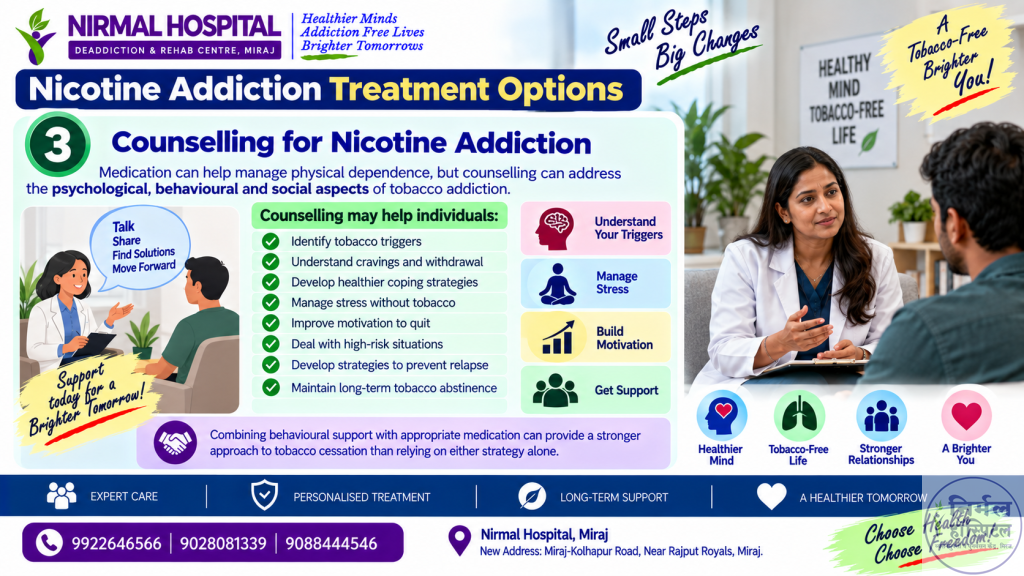
Medication can help manage physical dependence, but counselling can address the psychological, behavioural and social aspects of tobacco addiction.
Counselling may help individuals:
- Identify tobacco triggers
- Understand cravings and withdrawal
- Develop healthier coping strategies
- Manage stress without tobacco
- Improve motivation to quit
- Deal with high-risk situations
- Develop strategies to prevent relapse
- Maintain long-term tobacco abstinence
Combining behavioural support with appropriate medication can provide a stronger approach to tobacco cessation than relying on either strategy alone.
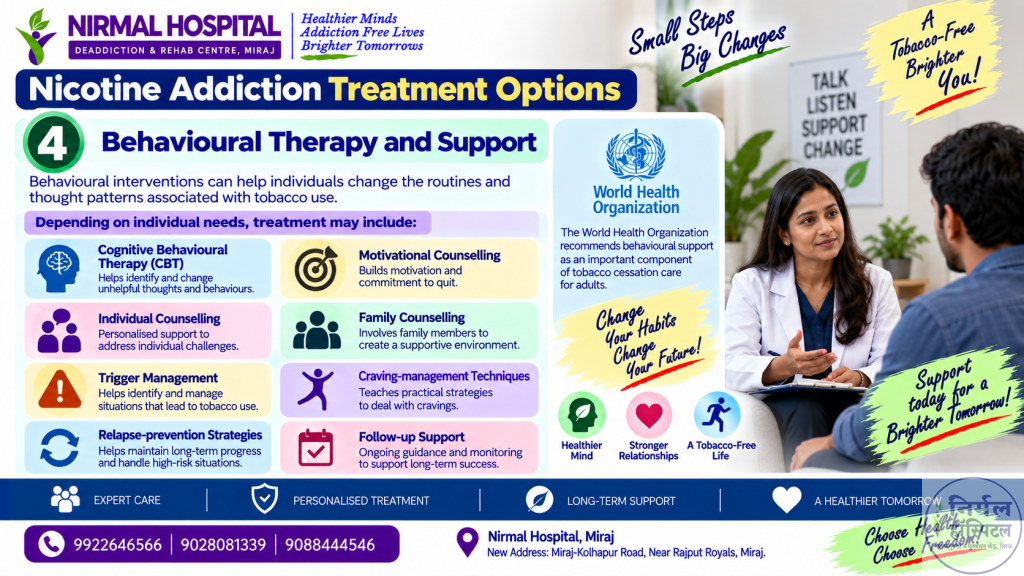
4. Behavioural Therapy and Support
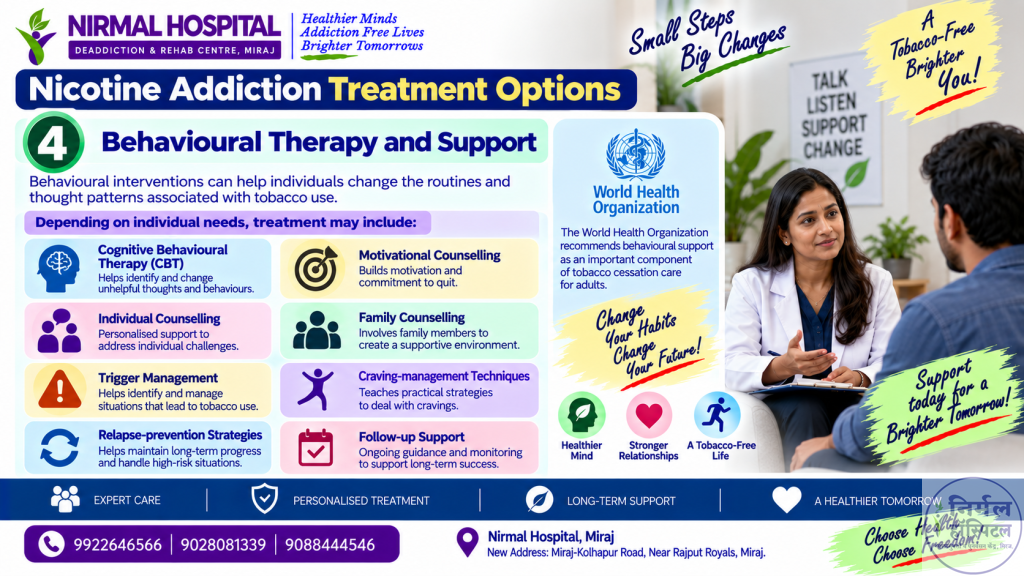
Behavioural interventions can help individuals change the routines and thought patterns associated with tobacco use.
Depending on individual needs, treatment may include:
- Cognitive Behavioural Therapy (CBT)
- Motivational counselling
- Individual counselling
- Family counselling
- Trigger management
- Craving-management techniques
- Relapse-prevention strategies
- Follow-up support
The World Health Organization recommends behavioural support as an important component of tobacco cessation care for adults.
5. Relapse Prevention
Quitting tobacco is an ongoing process. Some people may experience strong cravings even after stopping tobacco.
Relapse-prevention support focuses on:
- Recognising personal triggers
- Avoiding high-risk situations
- Managing stress
- Handling social pressure
- Developing healthier routines
- Responding appropriately to a lapse
- Maintaining long-term motivation
A temporary lapse does not mean that quitting has failed. Professional support can help individuals understand what triggered the lapse and return to their quit plan.
Hypnotherapy for Nicotine Addiction
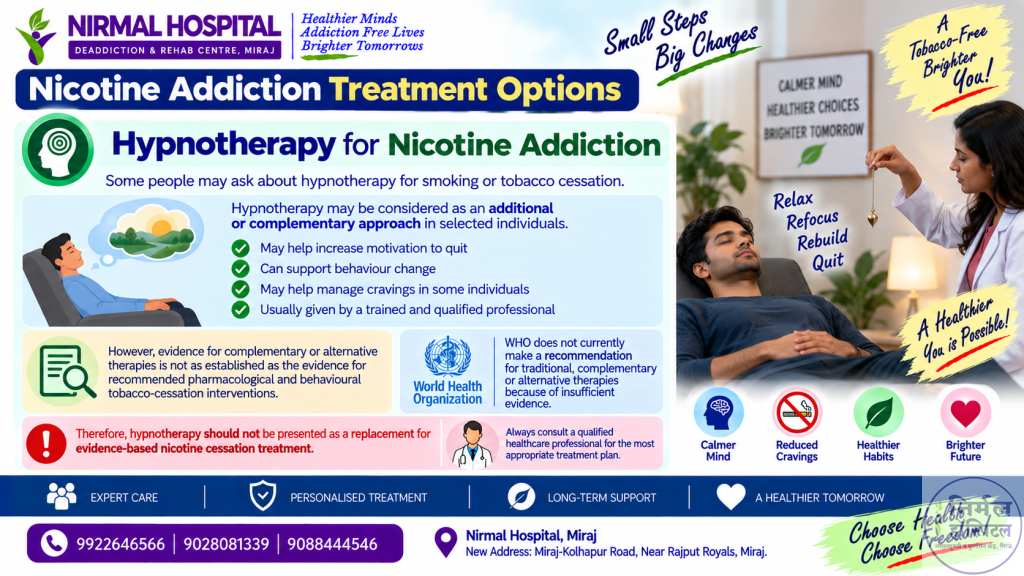
Some people may ask about hypnotherapy for smoking or tobacco cessation.
Hypnotherapy may be considered as an additional or complementary approach in selected individuals. However, evidence for complementary or alternative therapies is not as established as the evidence for recommended pharmacological and behavioural tobacco-cessation interventions. WHO does not currently make a recommendation for traditional, complementary or alternative therapies because of insufficient evidence.
Therefore, hypnotherapy should not be presented as a replacement for evidence-based nicotine cessation treatment.
Why Choose Nirmal Hospital, Miraj for Nicotine Addiction Treatment?
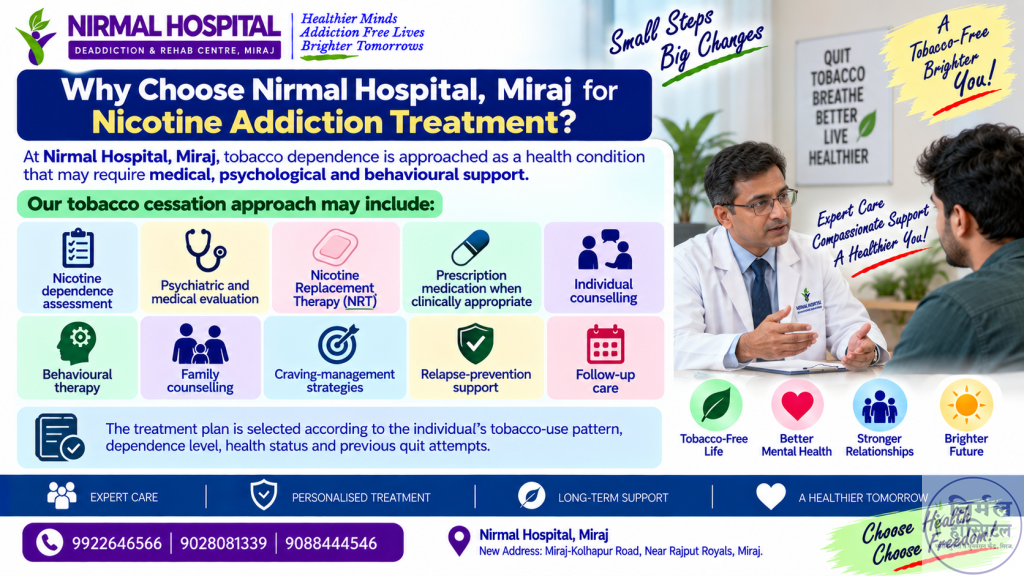
At Nirmal Hospital, Miraj, tobacco dependence is approached as a health condition that may require medical, psychological and behavioural support.
Our tobacco cessation approach may include:
- Nicotine dependence assessment
- Psychiatric and medical evaluation
- Nicotine Replacement Therapy
- Prescription medication when clinically appropriate
- Individual counselling
- Behavioural therapy
- Family counselling
- Craving-management strategies
- Relapse-prevention support
- Follow-up care
The treatment plan is selected according to the individual’s tobacco-use pattern, dependence level, health status and previous quit attempts.
Frequently Asked Questions About Nicotine Addiction Treatment
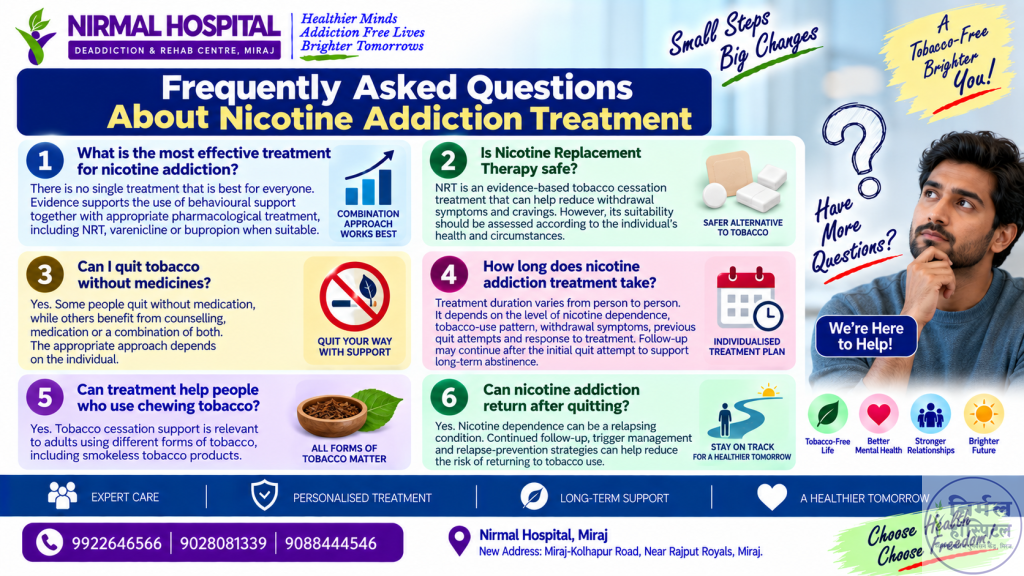
What is the most effective treatment for nicotine addiction?
There is no single treatment that is best for everyone. Evidence supports the use of behavioural support together with appropriate pharmacological treatment, including NRT, varenicline or bupropion when suitable.
Is Nicotine Replacement Therapy safe?
NRT is an evidence-based tobacco cessation treatment that can help reduce withdrawal symptoms and cravings. However, its suitability should be assessed according to the individual’s health and circumstances.
Can I quit tobacco without medicines?
Yes. Some people quit without medication, while others benefit from counselling, medication or a combination of both. The appropriate approach depends on the individual.
How long does nicotine addiction treatment take?
Treatment duration varies from person to person. It depends on the level of nicotine dependence, tobacco-use pattern, withdrawal symptoms, previous quit attempts and response to treatment. Follow-up may continue after the initial quit attempt to support long-term abstinence.
Can treatment help people who use chewing tobacco?
Yes. Tobacco cessation support is relevant to adults using different forms of tobacco, including smokeless tobacco products.
Can nicotine addiction return after quitting?
Yes. Nicotine dependence can be a relapsing condition. Continued follow-up, trigger management and relapse-prevention strategies can help reduce the risk of returning to tobacco use.
Start Your Tobacco-Free Journey
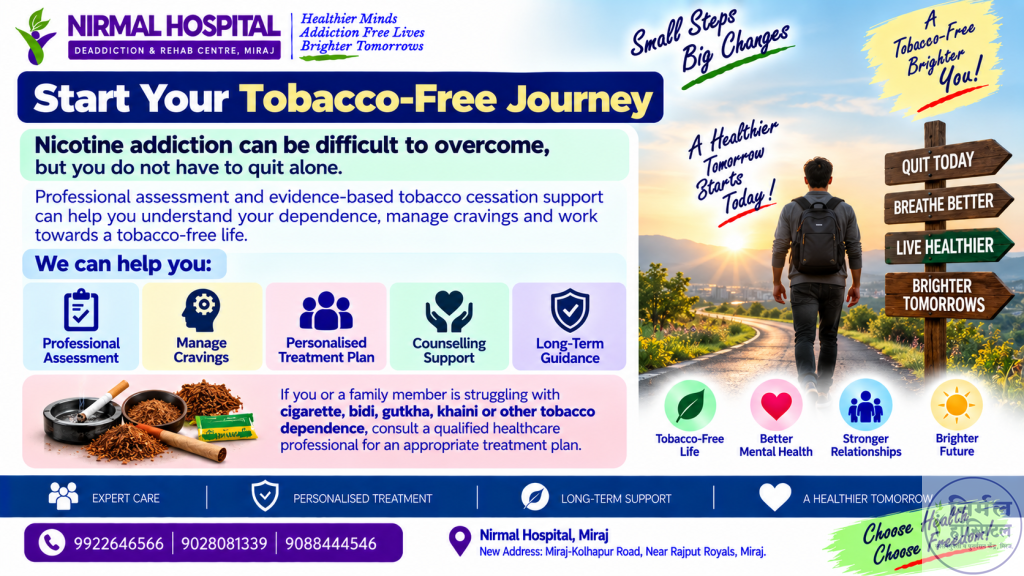
Nicotine addiction can be difficult to overcome, but you do not have to quit alone. Professional assessment and evidence-based tobacco cessation support can help you understand your dependence, manage cravings and work towards a tobacco-free life.
If you or a family member is struggling with cigarette, bidi, gutkha, khaini or other tobacco dependence, consult a qualified healthcare professional for an appropriate treatment plan.
Learn More About Addiction and Its Effects
“Watch Our Nicotine Addiction & Health Awareness Videos on YouTube”


