

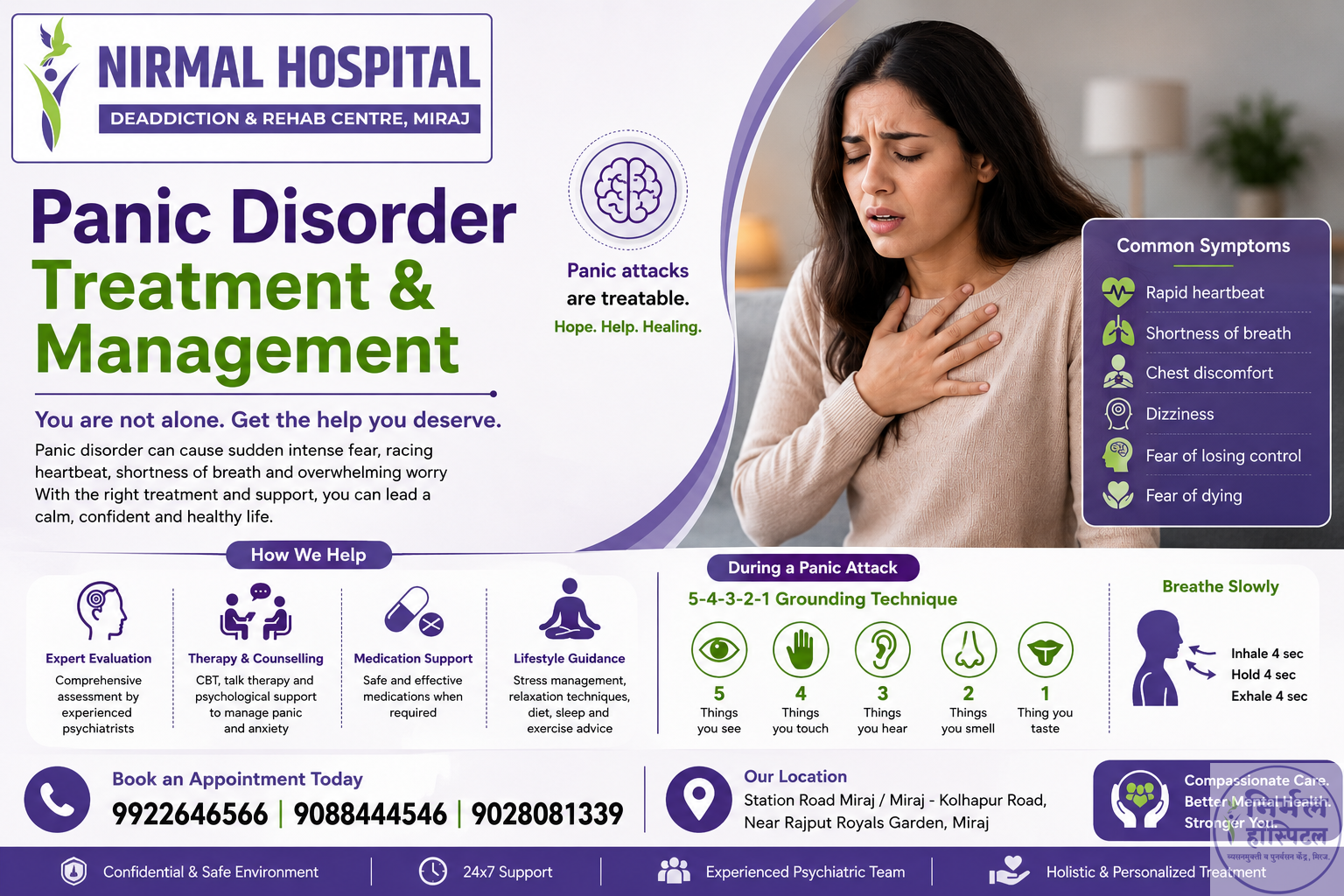
Panic Disorder Treatment & Management
Panic disorder can be a highly distressing condition, but it is highly treatable. With appropriate psychiatric care, psychotherapy, medication when required, and healthy lifestyle changes, many people can significantly reduce panic attacks, manage anxiety, and regain confidence in their daily lives.
If you are searching for “panic disorder treatment near me”, consulting a qualified psychiatrist or mental health professional is an important first step. A professional evaluation can help understand your symptoms, assess their severity, identify any associated conditions, and develop an individualized treatment plan.
At Nirmal Hospital, Miraj, individuals experiencing recurrent panic attacks, excessive anxiety, fear, or related mental health concerns can seek professional psychiatric evaluation and treatment.
What Is the Treatment for Panic Disorder?
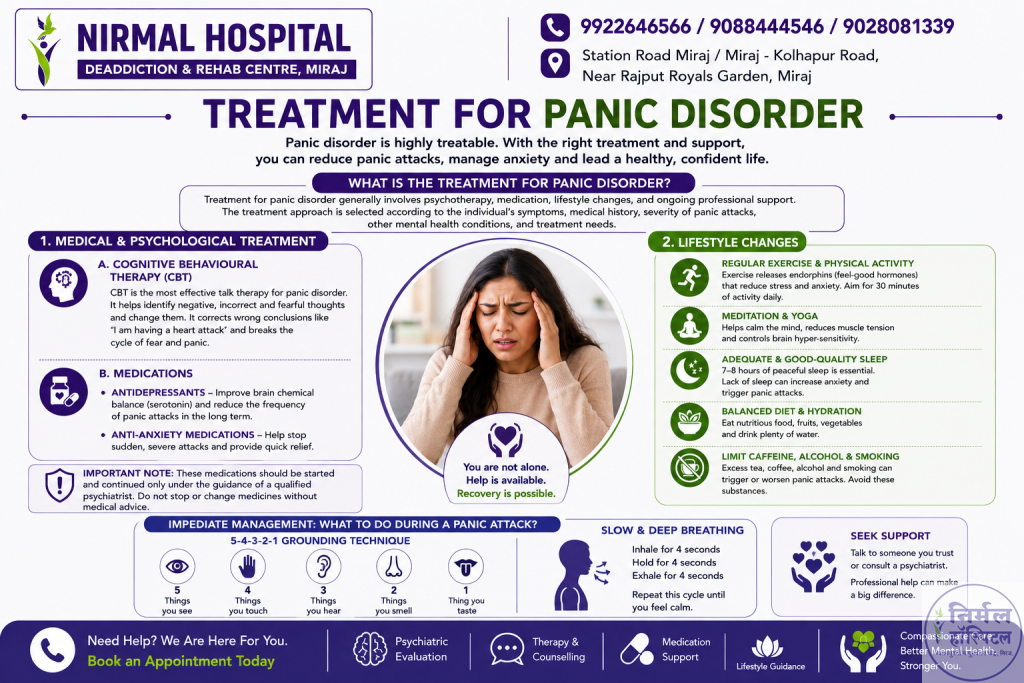
Treatment for panic disorder generally involves psychotherapy, medication, lifestyle changes, and ongoing professional support. The treatment approach is selected according to the individual’s symptoms, medical history, severity of panic attacks, other mental health conditions, and treatment needs.
The main approaches include:
- Cognitive Behavioural Therapy (CBT)
- Medication when clinically appropriate
- Relaxation and coping strategies
- Regular physical activity
- Healthy sleep habits
- Reducing caffeine and other substances that may worsen symptoms
- Ongoing psychiatric follow-up and support
1. Cognitive Behavioural Therapy (CBT)
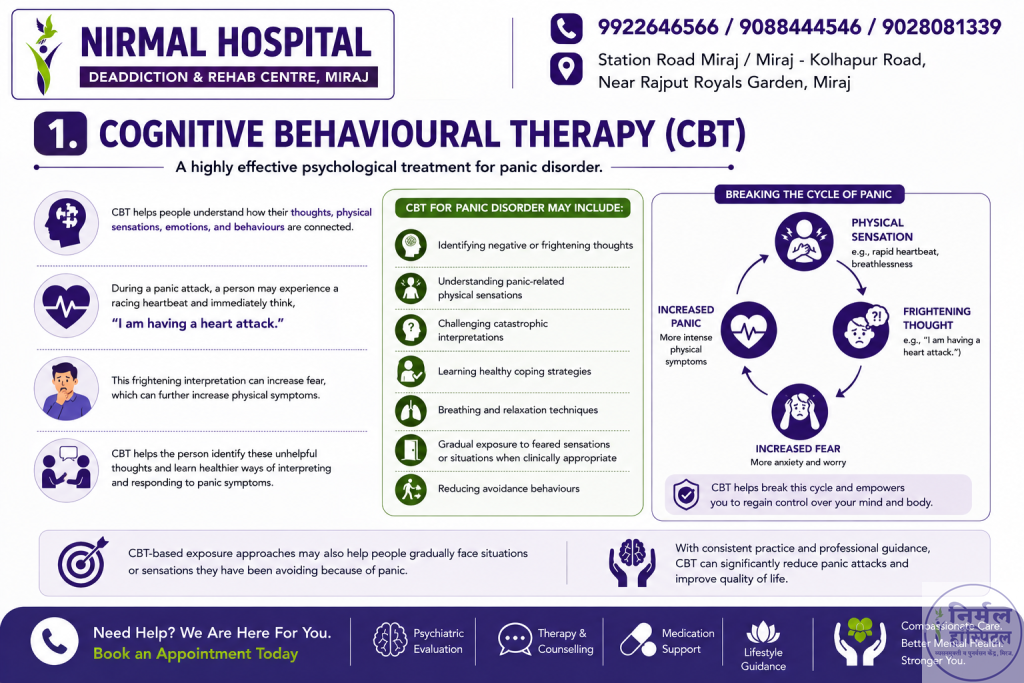
Cognitive Behavioural Therapy (CBT) is one of the most established psychological treatments for panic disorder. It helps people understand how their thoughts, physical sensations, emotions, and behaviours are connected.
During a panic attack, a person may experience a racing heartbeat and immediately think:
“I am having a heart attack.”
This frightening interpretation can increase fear, which can further increase physical symptoms.
CBT helps the person identify these unhelpful thoughts and learn healthier ways of interpreting and responding to panic symptoms.
CBT for Panic Disorder May Include:
- Identifying negative or frightening thoughts
- Understanding panic-related physical sensations
- Challenging catastrophic interpretations
- Learning healthy coping strategies
- Breathing and relaxation techniques
- Gradual exposure to feared sensations or situations when clinically appropriate
- Reducing avoidance behaviours
CBT can help break the cycle of physical sensation → frightening thought → increased fear → increased panic. CBT-based exposure approaches may also help people gradually face situations or sensations they have been avoiding because of panic.
2. Medication for Panic Disorder
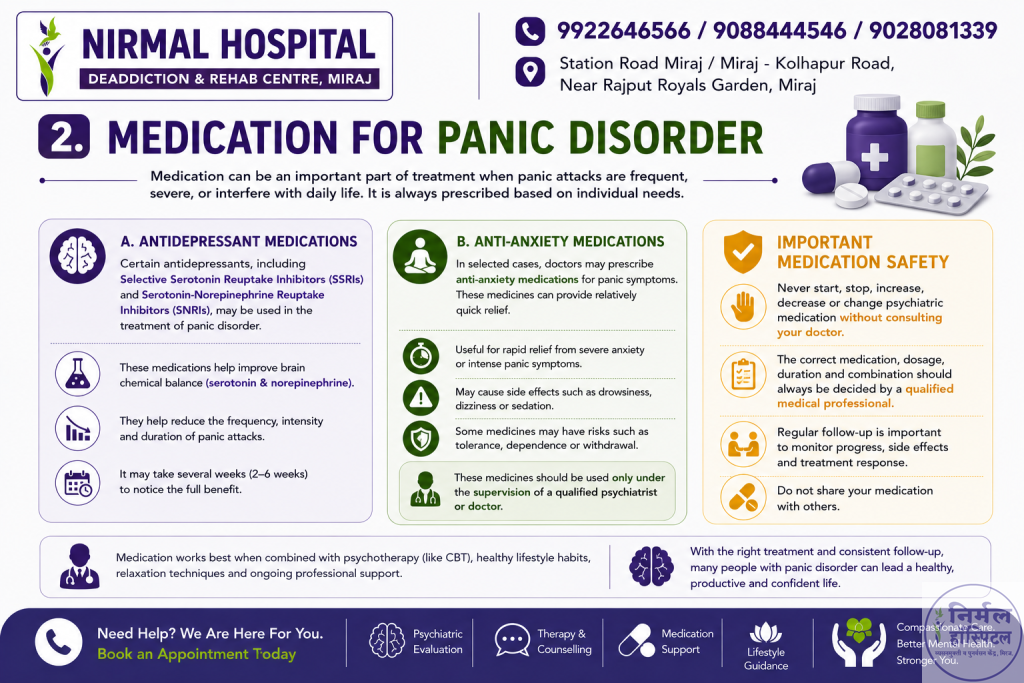
For some individuals, particularly when panic attacks are frequent, severe, or significantly interfere with daily life, a psychiatrist may recommend medication. The choice of medication depends on the person’s individual medical and psychiatric needs.
Antidepressant Medications
Certain antidepressants, including Selective Serotonin Reuptake Inhibitors (SSRIs) and Serotonin-Norepinephrine Reuptake Inhibitors (SNRIs), may be used in the treatment of panic disorder.
These medications can help reduce panic symptoms and anxiety over time. They may take several weeks to begin showing their full effect.
Anti-Anxiety Medications
In selected cases, doctors may prescribe anti-anxiety medications for panic symptoms. Some medications can provide relatively rapid relief but may have risks such as sedation, tolerance, or dependence.
For this reason, these medicines should be used only under the supervision of a qualified psychiatrist or doctor.
Important Medication Safety
Never start, stop, increase, decrease, or change psychiatric medication without consulting your doctor.
The correct medication, dosage, duration, and combination should always be determined by a qualified medical professional.
3. Lifestyle Changes for Panic Disorder
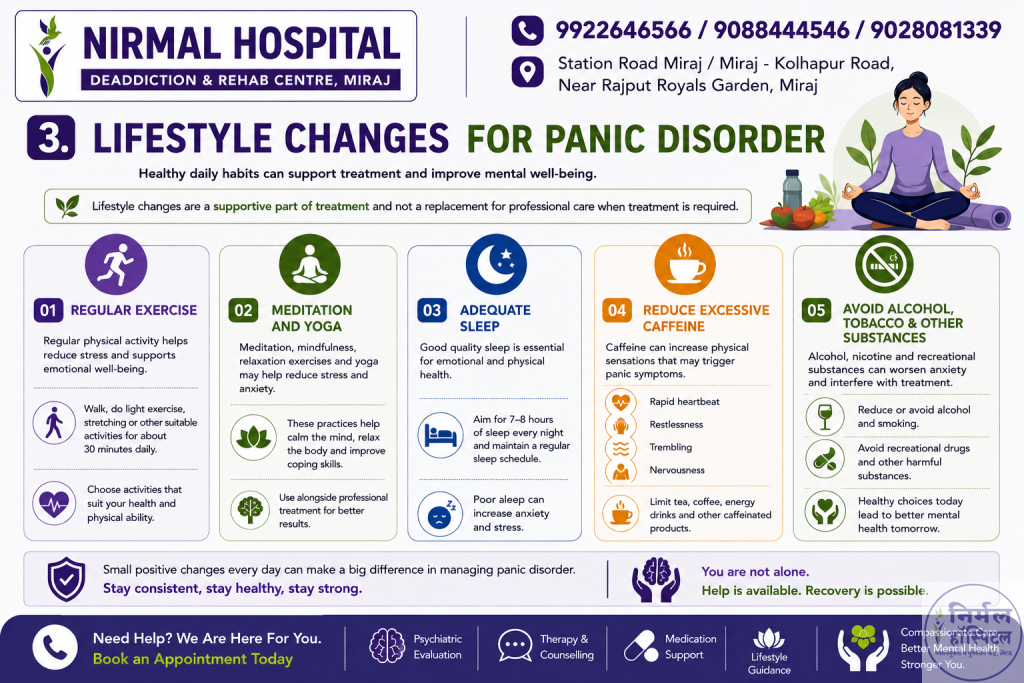
Lifestyle changes can support professional treatment and help improve overall mental well-being. However, healthy habits should be considered a supportive part of treatment and not a replacement for professional care when treatment is required.
Regular Exercise
Regular physical activity can help reduce stress and support emotional well-being.
Walking, light exercise, stretching, or other suitable physical activities can be included in the daily routine according to an individual’s physical health.
Meditation and Yoga
Meditation, mindfulness, relaxation exercises, and yoga may help some people manage stress and anxiety.
These practices can be used alongside professional treatment to promote relaxation and improve coping skills.
Adequate Sleep
Maintaining a regular sleep schedule and getting sufficient sleep can support emotional health.
Poor sleep may make anxiety and stress more difficult to manage, so maintaining healthy sleep habits is an important part of overall mental wellness.
Reduce Excessive Caffeine
Coffee, tea, energy drinks, and other caffeinated products can increase physical sensations such as:
- Rapid heartbeat
- Restlessness
- Trembling
- Nervousness
If caffeine appears to trigger or worsen panic symptoms, reducing caffeine intake may be helpful.
Avoid Alcohol, Tobacco and Other Substances
Alcohol, nicotine, and recreational substances may worsen anxiety symptoms or interfere with treatment in some individuals.
Reducing or avoiding substances that worsen symptoms can support better treatment outcomes.
4. Immediate Management During a Panic Attack
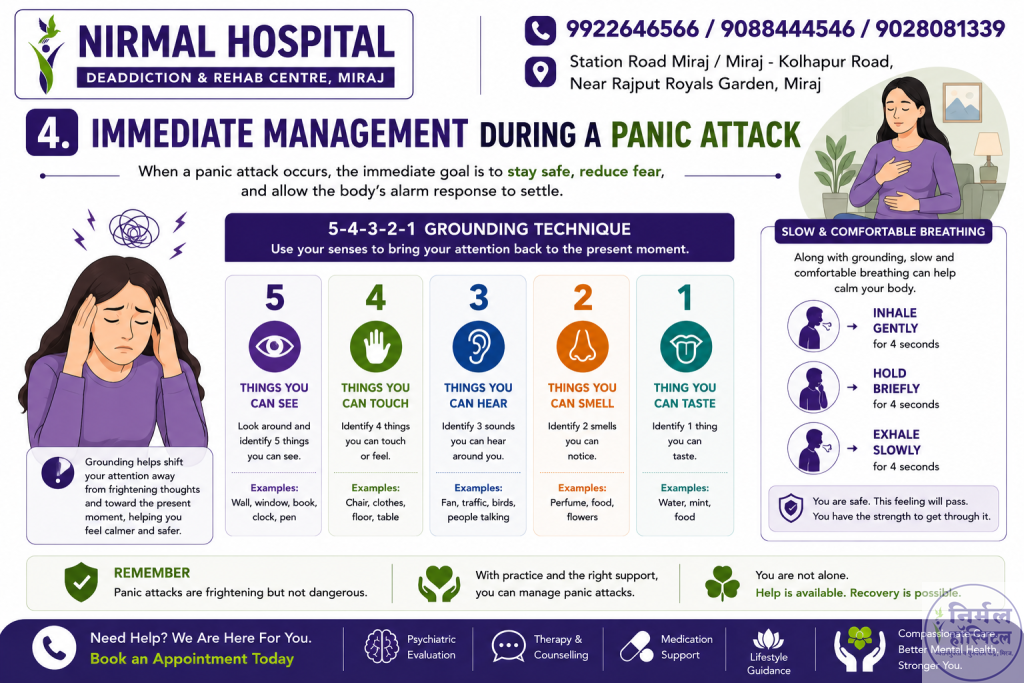
When a panic attack occurs, the immediate goal is to stay safe, reduce fear, and allow the body’s alarm response to settle.
5-4-3-2-1 Grounding Technique
The 5-4-3-2-1 grounding technique can help bring your attention back to the present moment.
5 – Things You Can See
Look around and identify 5 things you can see.
4 – Things You Can Touch
Identify 4 things you can touch or feel, such as your chair, clothing, floor, or table.
3 – Things You Can Hear
Identify 3 sounds you can hear around you.
2 – Things You Can Smell
Identify 2 smells that you can notice.
1 – Thing You Can Taste
Identify 1 thing you can taste.
Grounding can help shift attention away from frightening thoughts and toward the immediate surroundings.
5. Slow and Comfortable Breathing
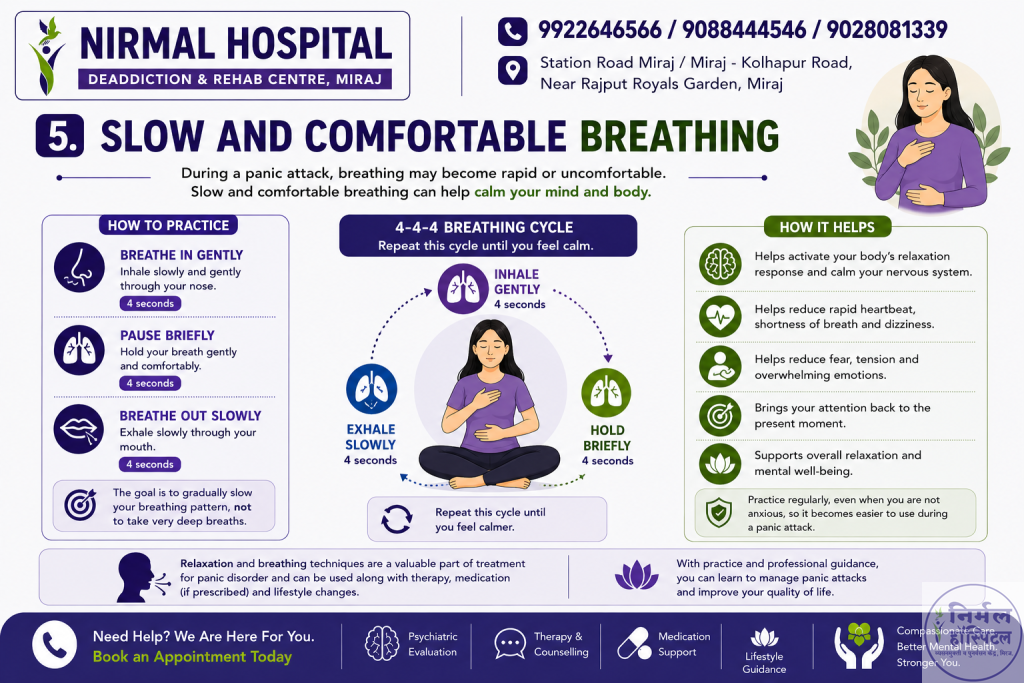
During a panic attack, breathing may become rapid or uncomfortable. Slow and comfortable breathing may help a person manage distress.
Try to:
Breathe in gently → pause briefly → breathe out slowly.
The goal is to gradually slow the breathing pattern rather than forcing very deep breaths.
Relaxation and breathing techniques may be incorporated into psychological treatment for panic disorder.
6. Professional Psychiatric Evaluation
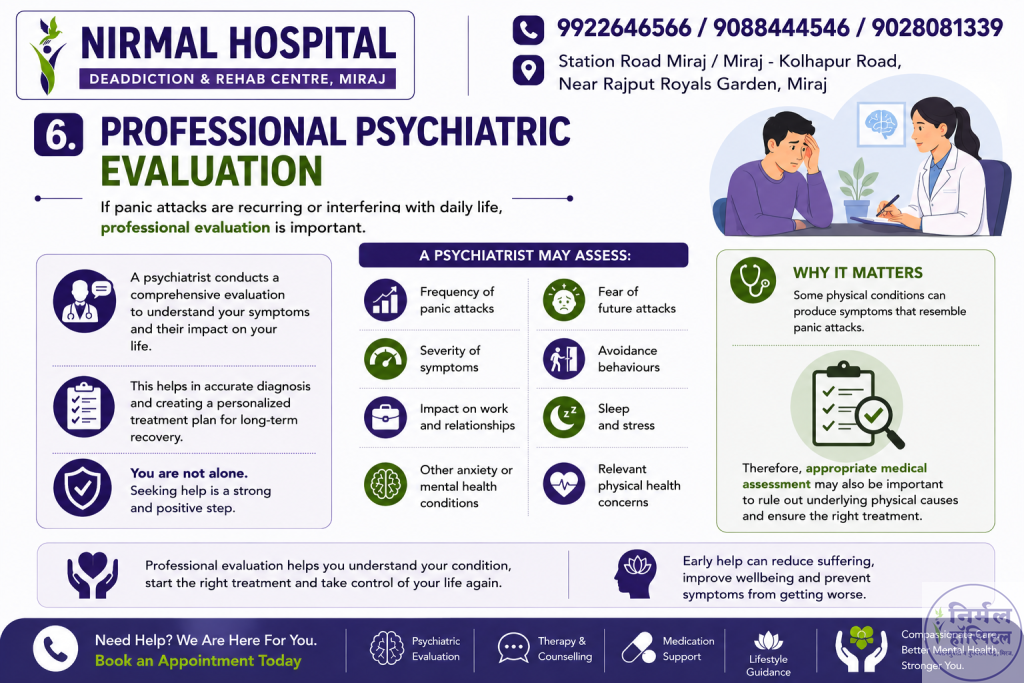
If panic attacks are recurring or interfering with daily life, professional evaluation is important.
A psychiatrist may assess:
- Frequency of panic attacks
- Severity of symptoms
- Fear of future attacks
- Avoidance behaviours
- Impact on work and relationships
- Sleep and stress
- Other anxiety or mental health conditions
- Relevant physical health concerns
Some physical conditions can produce symptoms that resemble panic attacks, so appropriate medical assessment may also be important.
Panic Disorder Treatment Near Me
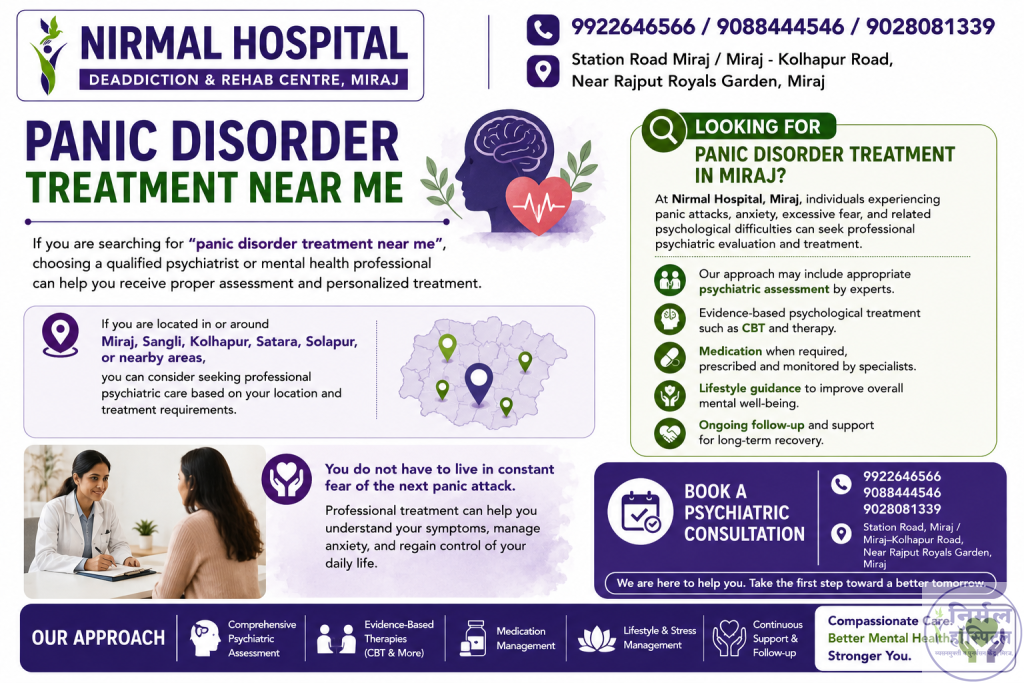
If you are searching for “panic disorder treatment near me”, choosing a qualified psychiatrist or mental health professional can help you receive proper assessment and personalized treatment.
If you are located in or around Miraj, Sangli, Kolhapur, Satara, Solapur, or nearby areas, you can consider seeking professional psychiatric care based on your location and treatment requirements.
Looking for Panic Disorder Treatment in Miraj?
At Nirmal Hospital, Miraj, individuals experiencing panic attacks, anxiety, excessive fear, and related psychological difficulties can seek professional psychiatric evaluation and treatment.
Our approach may include appropriate psychiatric assessment, psychological treatment, medication when required, lifestyle guidance, and ongoing support.
You do not have to live in constant fear of the next panic attack. Professional treatment can help you understand your symptoms, manage anxiety, and regain control of your daily life.
Book a Psychiatric Consultation
Nirmal Hospital, Miraj
Psychiatric & Mental Health Services
Contact:
9922646566 / 9088444546 / 9028081339
Address:
Station Road, Miraj / Miraj–Kolhapur Road, Near Rajput Royals Garden, Miraj
Frequently Asked Questions About Panic Disorder Treatment
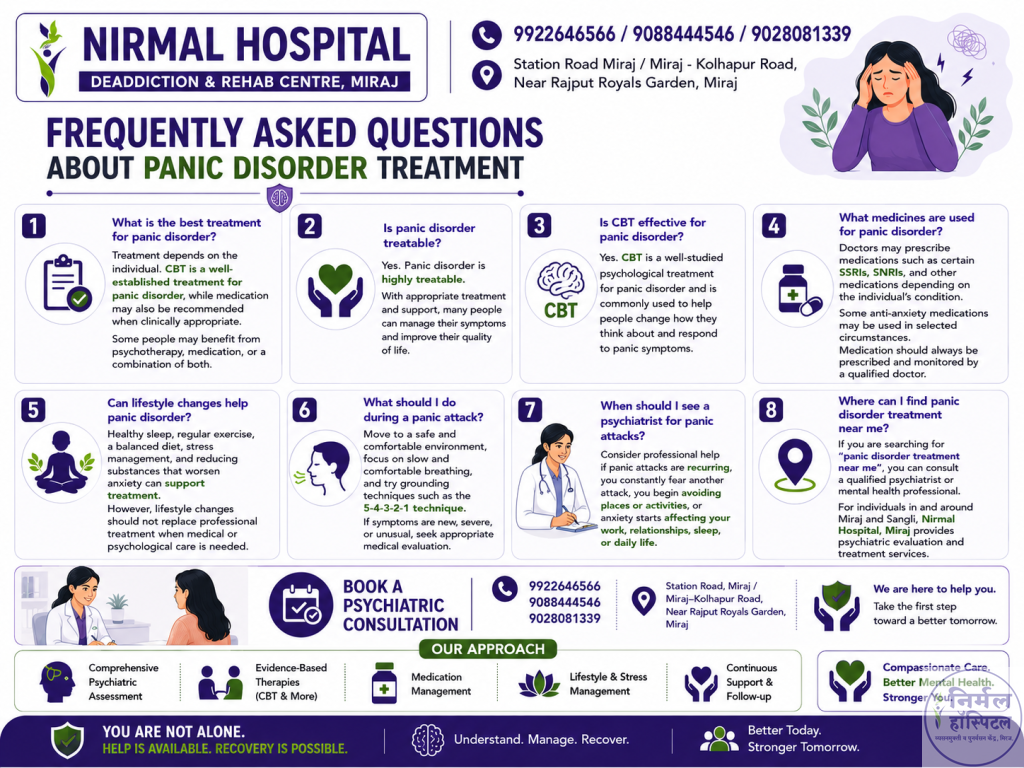
What is the best treatment for panic disorder?
Treatment depends on the individual. CBT is a well-established treatment for panic disorder, while medication may also be recommended when clinically appropriate. Some people may benefit from psychotherapy, medication, or a combination of both.
Is panic disorder treatable?
Yes. Panic disorder is highly treatable. With appropriate treatment and support, many people can manage their symptoms and improve their quality of life.
Is CBT effective for panic disorder?
Yes. CBT is a well-studied psychological treatment for panic disorder and is commonly used to help people change how they think about and respond to panic symptoms.
What medicines are used for panic disorder?
Doctors may prescribe medications such as certain SSRIs, SNRIs, and other medications depending on the individual’s condition. Some anti-anxiety medications may be used in selected circumstances. Medication should always be prescribed and monitored by a qualified doctor.
Can lifestyle changes help panic disorder?
Healthy sleep, regular exercise, a balanced diet, stress management, and reducing substances that worsen anxiety can support treatment. However, lifestyle changes should not replace professional treatment when medical or psychological care is needed.
What should I do during a panic attack?
Move to a safe and comfortable environment, focus on slow and comfortable breathing, and try grounding techniques such as the 5-4-3-2-1 technique. If symptoms are new, severe, or unusual, seek appropriate medical evaluation.
When should I see a psychiatrist for panic attacks?
Consider professional help if panic attacks are recurring, you constantly fear another attack, you begin avoiding places or activities, or anxiety starts affecting your work, relationships, sleep, or daily life.
Where can I find panic disorder treatment near me?
If you are searching for “panic disorder treatment near me”, you can consult a qualified psychiatrist or mental health professional. For individuals in and around Miraj and Sangli, Nirmal Hospital, Miraj provides psychiatric evaluation and treatment services.
Key Takeaway
Panic disorder is treatable, and professional help can make a significant difference.
A combination of CBT, appropriate medication when required, healthy lifestyle habits, coping strategies, and regular professional follow-up can help many people manage panic disorder and improve their quality of life.
If you are experiencing recurrent panic attacks or severe anxiety, do not try to manage the condition alone. Consult a qualified psychiatrist for proper evaluation and treatment.
👉 Learn More About Panic Disorder
Watch Our YouTube Video: Panic Disorder Treatment & Management


