

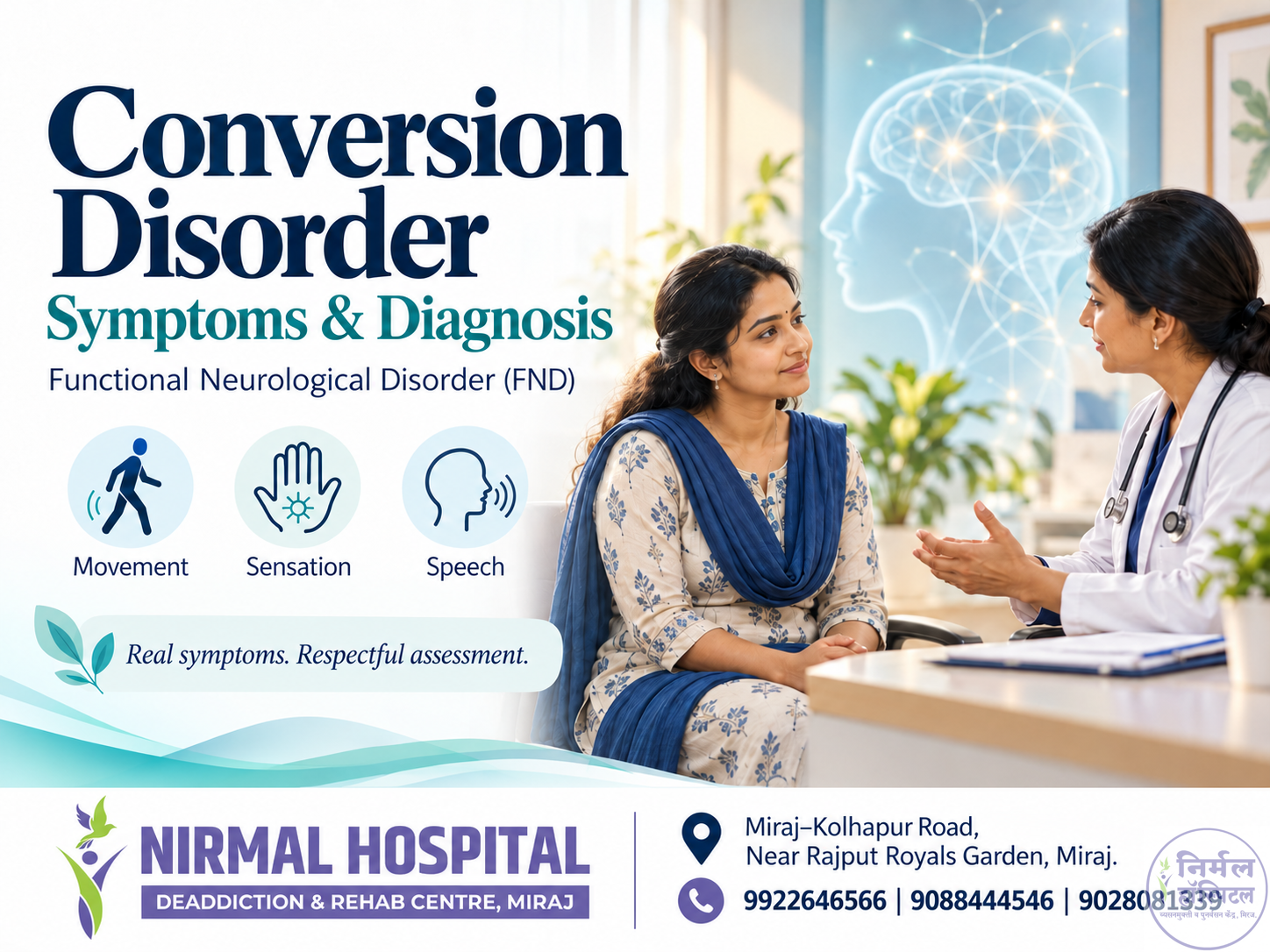
Conversion Disorder: Symptoms and Diagnosis in Miraj
Changes in movement, sensation or speech can be frightening, particularly when the reason is unclear. These symptoms deserve a thorough medical assessment and a respectful approach.
Functional neurological disorder (FND), also called conversion disorder, involves problems with how the nervous system functions. The symptoms are real, involuntary and can significantly affect daily life.
If you are seeking conversion disorder diagnosis in Miraj, contact Nirmal Hospital for guidance on assessment and appropriate specialist referral.
What Is Hysterical Conversion Reaction?
“Hysterical conversion reaction” is an outdated term historically used for symptoms now assessed within the framework of conversion disorder or functional neurological disorder.
Modern terminology avoids describing people as “hysterical.” It recognises that symptoms require clinical evaluation and are not deliberately produced.
Common Symptoms of Conversion Disorder
Symptoms vary between individuals and may include:
- Weakness or difficulty moving an arm or leg.
- Tremors, unusual movements or difficulty walking.
- Problems with balance.
- Numbness or altered sensation.
- Speech or voice changes.
- Episodes of shaking or reduced responsiveness, called functional seizures.
- Visual disturbances or swallowing difficulties.
These symptoms can also occur in other medical conditions. Their presence alone does not confirm FND.
Is Conversion Disorder Always Caused by Stress?
No. Stress, physical illness or trauma may contribute in some people, but there may be no identifiable trigger. A history of emotional trauma is not required for diagnosis.
The condition should not be dismissed as “just stress” or a lack of willpower.
How Is Conversion Disorder Diagnosed?
Medical History and Neurological Examination
Assessment explores when symptoms started, how they vary and how they affect daily activities. A clinician examines movement, sensation and other relevant neurological functions.
Positive Clinical Signs
Diagnosis relies on recognised examination findings or symptom patterns that support FND. Normal scans or blood tests alone do not establish the diagnosis.
Investigations When Needed
Tests are selected according to symptoms and possible alternative explanations. A neurologist usually plays an important role in diagnosis.
Assessment of Seizure-Like Episodes
For suspected functional seizures, clinicians review the person’s account and witness descriptions. Video-EEG monitoring may help clarify the diagnosis when appropriate. A person can have both functional seizures and epilepsy, so careful assessment matters.
When Should You Seek Urgent Medical Attention?
Sudden facial drooping, new one-sided weakness, sudden speech difficulty or a first seizure requires urgent medical assessment. Do not assume that new symptoms are due to conversion disorder, even if FND has previously been diagnosed.
Frequently Asked Questions
Are functional symptoms deliberately produced?
No. FND symptoms are involuntary. People experiencing them deserve understanding and appropriate medical care.
Does a normal MRI confirm conversion disorder?
No. Diagnosis requires clinical findings that support FND, together with assessment for other conditions.
Is a neurological assessment important?
Yes. Neurological assessment helps identify the symptom pattern and determine whether investigations or other specialist input are needed.
Seek Guidance at Nirmal Hospital, Miraj
If changes in movement, sensation or episodes of reduced responsiveness are affecting everyday life, seek medical evaluation.
Contact Nirmal Hospital, Miraj, to discuss your concerns and the appropriate assessment pathway.


