
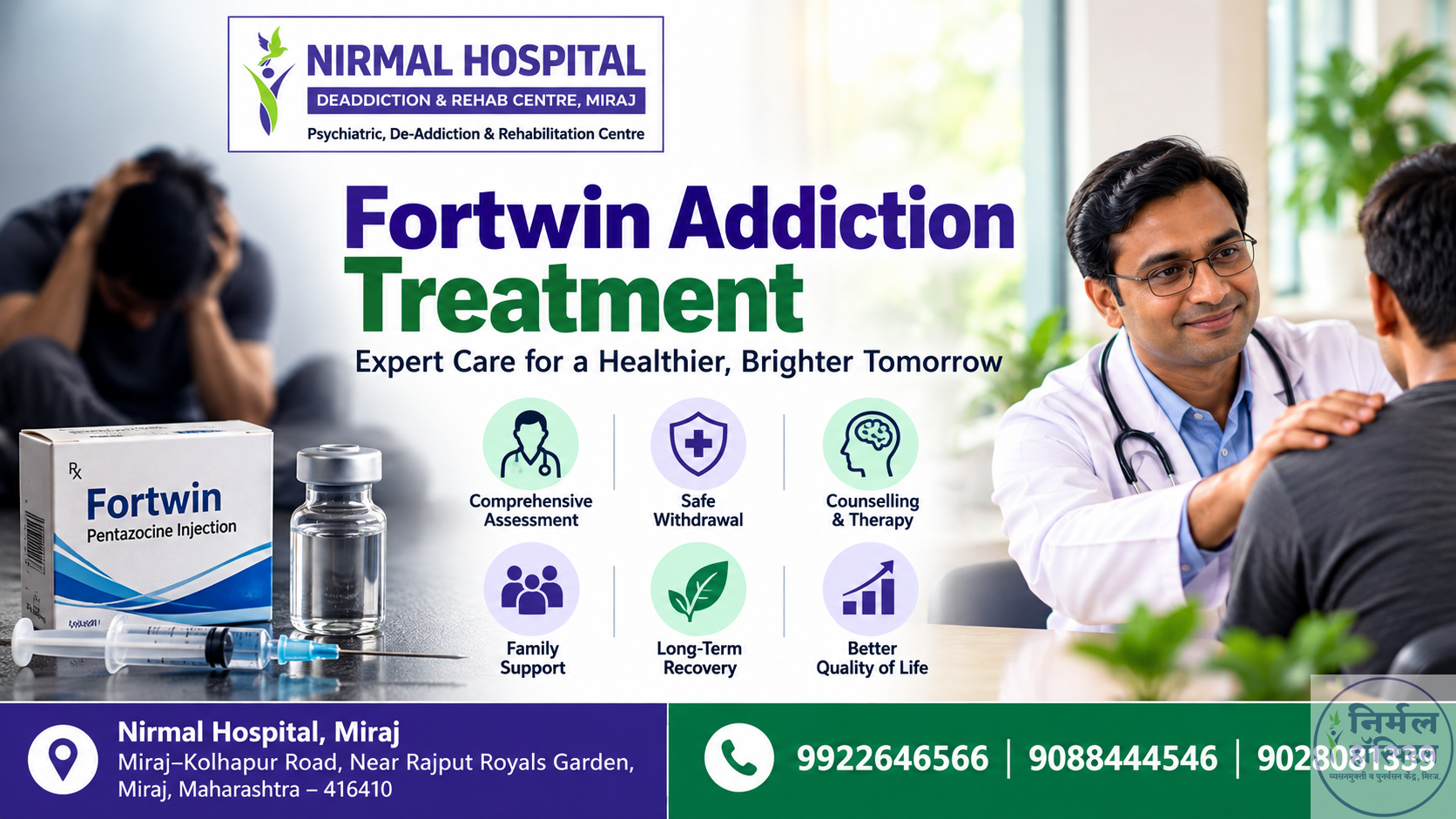
Fortwin Addiction Treatment in Miraj: Medical Care, Withdrawal Management & Rehabilitation
Fortwin Addiction Treatment involves a comprehensive medical approach to managing Pentazocine dependence, addressing withdrawal symptoms, reducing the risk of relapse and supporting long-term recovery.
Fortwin is a brand associated with Pentazocine, an opioid pain-relieving medicine. Although Pentazocine has legitimate medical uses, repeated misuse or use without appropriate medical supervision may lead to physical dependence or opioid use disorder.
At Nirmal Hospital, Miraj, individuals experiencing Fortwin dependence can receive professional assessment, medically supervised withdrawal management, psychological counselling and rehabilitation support based on their clinical needs.
Treatment planning considers the patient’s history of Pentazocine use, physical health, mental health, possible injection-related complications and previous attempts to stop using the substance.
1. Comprehensive Medical Assessment for Fortwin Dependence
The first step in Fortwin addiction treatment is a detailed clinical evaluation.
A healthcare professional may assess:
-
Duration and frequency of Fortwin use
-
Prescribed dosage and actual pattern of use
-
Oral or injectable use of Pentazocine
-
Signs of physical dependence or opioid use disorder
-
Previous withdrawal symptoms
-
History of unsuccessful attempts to stop
-
Use of alcohol, sedatives or other opioids
-
Physical and mental health conditions
-
Previous treatment and relapse history
-
Family and social support
Medical Investigations
Depending on the patient’s medical history, symptoms and clinical findings, investigations may include:
-
Complete Blood Count (CBC)
-
Liver Function Tests (LFT)
-
Renal Function Tests (RFT)
-
Blood sugar testing
-
HIV screening
-
Hepatitis B and Hepatitis C screening
-
ECG, when clinically indicated
-
Additional investigations for suspected injection-related complications
These assessments help clinicians identify medical risks and determine whether outpatient care or inpatient treatment is more appropriate.
2. Medically Supervised Fortwin Withdrawal Management
When a person has developed physical dependence on Pentazocine, reducing or stopping its use may produce opioid withdrawal symptoms.
Possible symptoms include:
-
Restlessness and anxiety
-
Excessive sweating
-
Muscle and body aches
-
Nausea and vomiting
-
Abdominal cramps
-
Diarrhoea
-
Irritability
-
Sleep disturbances
-
Strong cravings
Withdrawal severity can vary depending on the duration of use, dosage, individual health status and other substances being used.
Why Is Medical Supervision Important?
Medical supervision allows healthcare professionals to assess withdrawal symptoms, monitor physical health and provide appropriate supportive care.
Depending on clinical requirements, withdrawal management may involve:
-
Monitoring vital signs and withdrawal severity
-
Managing dehydration and gastrointestinal symptoms
-
Providing appropriate medications for symptom relief
-
Assessing sleep disturbances and anxiety
-
Monitoring coexisting medical conditions
-
Evaluating the need for inpatient observation
-
Planning ongoing treatment for opioid use disorder
Patients should not abruptly discontinue regularly used Pentazocine without medical advice, particularly when significant dependence or other medical complications are present.
Important: Detoxification alone does not constitute complete addiction treatment. Continuing care is often necessary to address cravings, behavioural patterns and relapse risks.
3. Medication-Assisted Treatment for Pentazocine Dependence
Some patients with Fortwin-related opioid use disorder may benefit from evidence-based medications as part of a comprehensive treatment plan.
Depending on the clinical assessment, treatment options may include:
-
Buprenorphine-based treatment
-
Methadone treatment through appropriately authorised services
-
Naltrexone after appropriate opioid withdrawal and assessment
-
Other medications for specific withdrawal symptoms
The choice of medication depends on the patient’s clinical condition, opioid exposure, withdrawal status, treatment history and applicable prescribing regulations.
Special Considerations for Pentazocine
Pentazocine has mixed opioid receptor activity, which can complicate treatment transitions.
Introducing certain opioid medications at an inappropriate time may precipitate withdrawal. Therefore, any transition to opioid use disorder medication requires careful assessment and supervision by a qualified clinician.
Medication-assisted treatment is not automatically necessary or suitable for every patient.
4. Treatment of Fortwin Injection-Related Complications
Patients who misuse injectable Fortwin may require additional medical assessment and treatment.
Repeated or unsafe injections can cause damage to the skin, veins and surrounding tissues.
Injection-Related Conditions Requiring Evaluation
-
Injection-site infections
-
Abscess formation
-
Cellulitis
-
Vein damage and thrombophlebitis
-
Skin ulcers and tissue injury
-
Blood-borne infections
-
Suspected infective endocarditis
Medical Management
Depending on the findings, treatment may involve:
-
Examination of injection sites
-
Wound assessment and care
-
Antibiotic treatment when clinically indicated
-
Drainage of abscesses when required
-
Screening for HIV and viral hepatitis
-
Evaluation for systemic infections
-
Referral for specialist medical or surgical care
Patients experiencing fever, rapidly spreading redness, severe swelling, chest pain or breathing difficulties require urgent medical evaluation.
5. Psychological Counselling and Behavioural Therapy
Psychological treatment is an important component of comprehensive Fortwin addiction care.
Counselling helps patients understand the factors contributing to substance use and develop strategies to maintain recovery.
Cognitive Behavioural Therapy (CBT)
CBT may help individuals:
-
Identify triggers associated with Fortwin use
-
Recognise unhelpful thoughts and behaviours
-
Develop healthier coping strategies
-
Manage stress and cravings
-
Improve decision-making
-
Build relapse-prevention skills
Motivational Enhancement Therapy (MET)
Motivational approaches support patients in exploring their reasons for change, addressing ambivalence and strengthening engagement with treatment.
Individual Counselling
Individual sessions may address:
-
Emotional distress
-
Relationship difficulties
-
Stress-related substance use
-
Treatment motivation
-
Personal recovery goals
-
Behavioural changes
The counselling approach is selected according to the patient’s needs and clinical assessment.
6. Management of Coexisting Mental Health Conditions
Some individuals experiencing Fortwin dependence may also have mental health conditions that require assessment and treatment.
These may include:
-
Depression
-
Anxiety disorders
-
Sleep disturbances
-
Trauma-related symptoms
-
Other substance use disorders
A comprehensive psychiatric assessment helps determine whether symptoms are related to substance use, withdrawal or an independent mental health condition.
At Nirmal Hospital, Miraj, psychiatric care can be integrated with addiction treatment when clinically indicated.
Managing coexisting conditions may improve treatment engagement and support recovery.
7. Family Counselling and Recovery Support
Fortwin dependence can affect relationships, communication, employment and family responsibilities.
Family involvement, with the patient’s consent, may support the recovery process.
Family counselling may focus on:
-
Understanding opioid dependence
-
Recognising relapse warning signs
-
Improving communication
-
Developing realistic expectations
-
Encouraging treatment adherence
-
Establishing healthy boundaries
-
Supporting follow-up care
Families can play a valuable role in recovery without taking responsibility for controlling every aspect of the patient’s behaviour.
8. Relapse Prevention and Long-Term Rehabilitation
Recovery from Fortwin addiction often requires ongoing support beyond the initial withdrawal phase.
A personalised relapse-prevention plan may include:
-
Identifying high-risk situations
-
Recognising early warning signs
-
Developing craving-management strategies
-
Maintaining psychiatric and medical follow-up
-
Continuing prescribed medications when indicated
-
Participating in counselling sessions
-
Strengthening family and social support
-
Establishing healthy daily routines
-
Addressing chronic pain through appropriate medical care
Rehabilitation Support
Depending on the patient’s clinical needs, rehabilitation may include structured activities, psychological support, lifestyle guidance and recovery-focused routines.
Regular follow-up allows the treatment team to review progress and modify the treatment plan when necessary.
For patients at risk of opioid overdose, education about overdose recognition and access to naloxone, where available, should be considered as part of the safety plan.
9. Inpatient and Outpatient Fortwin Addiction Treatment
The appropriate treatment setting depends on the severity of dependence, withdrawal symptoms, physical health and psychosocial circumstances.
| Inpatient Treatment | Outpatient Treatment |
|---|---|
| May be appropriate for complicated withdrawal or significant medical risks | May be appropriate for medically stable patients |
| Provides structured observation and clinical support | Allows scheduled consultations and follow-up |
| May help when multiple substances are involved | May suit patients with reliable support at home |
| Supports coordinated management of complex conditions | Supports continuing medication and counselling |
Not every person with Fortwin dependence requires hospital admission.
The decision is made after clinical evaluation, taking into account patient safety and treatment needs.
10. Fortwin Addiction Treatment at Nirmal Hospital, Miraj
Nirmal Hospital, Miraj, provides psychiatric, de-addiction and rehabilitation services for individuals experiencing substance use disorders.
Patients seeking treatment for Fortwin or Pentazocine dependence may receive:
-
Comprehensive medical and psychiatric assessment
-
Medically supervised withdrawal care
-
Evaluation of injection-related health complications
-
Individualised treatment planning
-
Psychological counselling and behavioural therapy
-
Family counselling and education
-
Inpatient care when clinically indicated
-
Rehabilitation and relapse-prevention support
-
Follow-up consultations
Treatment is tailored to the patient’s medical condition, substance use history and recovery needs.
Early professional assessment can help identify complications, establish an appropriate treatment plan and support safer recovery.
Frequently Asked Questions About Fortwin Addiction Treatment
1. Can Fortwin addiction be treated?
Yes. Fortwin-related opioid use disorder is treatable. Depending on individual needs, treatment may involve medical assessment, withdrawal management, medications, psychological counselling and continuing recovery support.
2. How is Fortwin withdrawal treated?
Fortwin withdrawal is managed according to symptom severity, medical history and the patient’s overall condition. Clinicians may recommend supportive medications, monitoring and treatment for opioid use disorder when appropriate.
3. How long does Fortwin addiction treatment take?
Treatment duration varies. Acute withdrawal management may take several days or longer, while counselling, medication treatment and relapse-prevention support may continue for months or longer depending on individual needs.
4. Is hospital admission necessary for Fortwin addiction?
Not always. Some patients can receive outpatient treatment, while others may require inpatient care because of significant withdrawal symptoms, medical complications, coexisting substance use or inadequate support at home.
5. Can Fortwin injection-related complications be treated?
Many injection-related complications can be treated when identified appropriately. Infections, abscesses, vein injuries and other complications may require medications, procedures or specialist care.
6. Can Fortwin addiction return after treatment?
Relapse can occur with opioid use disorder, but continuing treatment, appropriate medication, counselling, family support and regular follow-up can help reduce the risk.
7. Is counselling alone enough for Fortwin addiction?
Counselling is valuable, but it may not be sufficient for every patient. People with moderate or severe opioid use disorder should be assessed for evidence-based medication treatment alongside psychosocial care.
8. Where can I get Fortwin addiction treatment in Miraj?
Patients can consult Nirmal Hospital, Miraj, for medical assessment and an individualised treatment plan for Fortwin or Pentazocine dependence.
Get Professional Help for Fortwin Addiction
If you or a family member is struggling with Fortwin or Pentazocine dependence, professional medical assessment can help determine the safest and most appropriate next steps.
Nirmal Hospital – Psychiatric, De-Addiction & Rehabilitation Centre
Miraj–Kolhapur Road, Near Rajput Royals Garden, Miraj, Maharashtra – 416410
9922646566 | 9088444546 | 9028081339


