


Headache Treatment
Headache treatment depends on the type, cause, severity, frequency, duration, and associated symptoms of the headache. Occasional headaches may improve with rest, hydration, and appropriate medication, while recurrent or chronic headaches may require a detailed medical evaluation and a personalized treatment plan.
At Nirmal Hospital Miraj, headache and migraine management focuses on identifying possible triggers and underlying causes and providing treatment according to the individual patient’s condition.
How is Headache Treated?
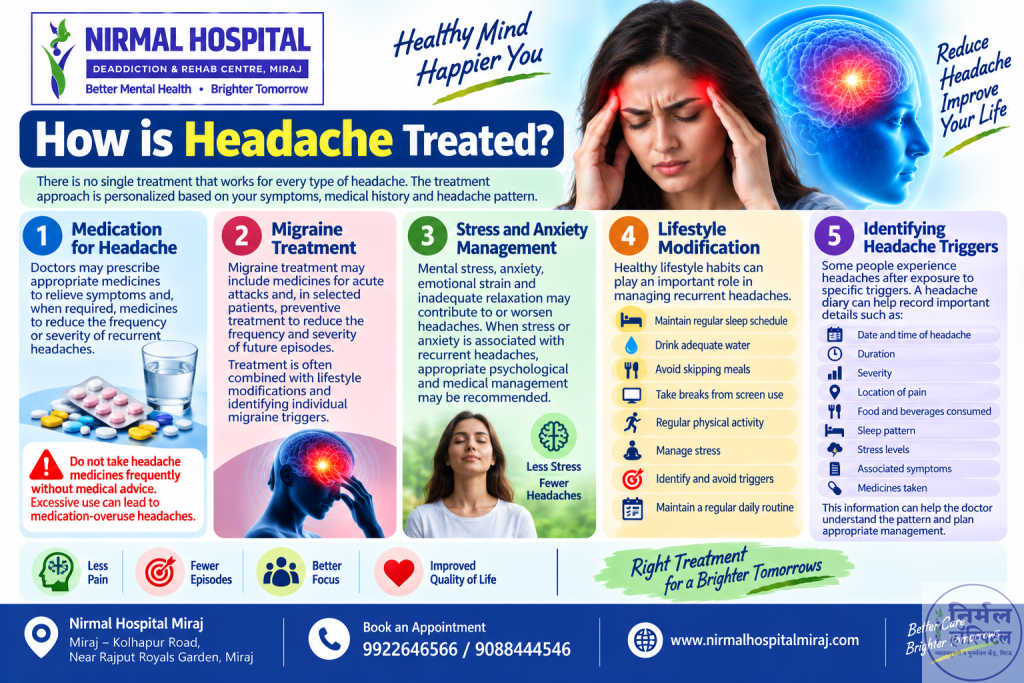
There is no single treatment that works for every type of headache. The treatment approach is selected after understanding the patient’s symptoms, medical history, headache pattern, and clinical findings.
Depending on the diagnosis, treatment may include:
1. Medication for Headache
Doctors may prescribe appropriate medicines to relieve headache symptoms and, when required, medicines to reduce the frequency or severity of recurrent headaches.
The choice of medication depends on the type of headache and the patient’s individual health condition.
Do not take headache medicines frequently without medical advice, as excessive use of some pain-relieving medicines can itself contribute to medication-overuse headaches.
2. Migraine Treatment
Migraine treatment may include medicines for acute migraine attacks and, in selected patients, preventive treatment to reduce the frequency and severity of future episodes.
Treatment may be combined with lifestyle modifications and identification of individual migraine triggers.
3. Stress and Anxiety Management
Mental stress, anxiety, emotional strain, and inadequate relaxation may contribute to or worsen headaches in some individuals.
When stress or anxiety is associated with recurrent headaches, appropriate psychological and medical management may be recommended as part of the overall treatment plan.
4. Lifestyle Modification
Healthy lifestyle habits can play an important role in managing recurrent headaches.
Depending on the patient’s condition, doctors may recommend:
- Maintaining a regular sleep schedule
- Drinking adequate water
- Avoiding prolonged fasting or skipping meals
- Taking appropriate breaks from prolonged screen use
- Regular physical activity, when suitable
- Managing stress
- Identifying and avoiding personal headache triggers
- Maintaining a regular daily routine
5. Identifying Headache Triggers
Some people experience headaches after exposure to specific triggers. These may include certain foods, changes in sleep, stress, dehydration, bright lights, or other individual factors.
A headache diary can help record:
- Date and time of headache
- Duration
- Severity
- Location of pain
- Food and beverages consumed
- Sleep pattern
- Stress levels
- Associated symptoms
- Medicines taken
This information can help the doctor understand the headache pattern and plan appropriate management.
Treatment for Chronic Headache
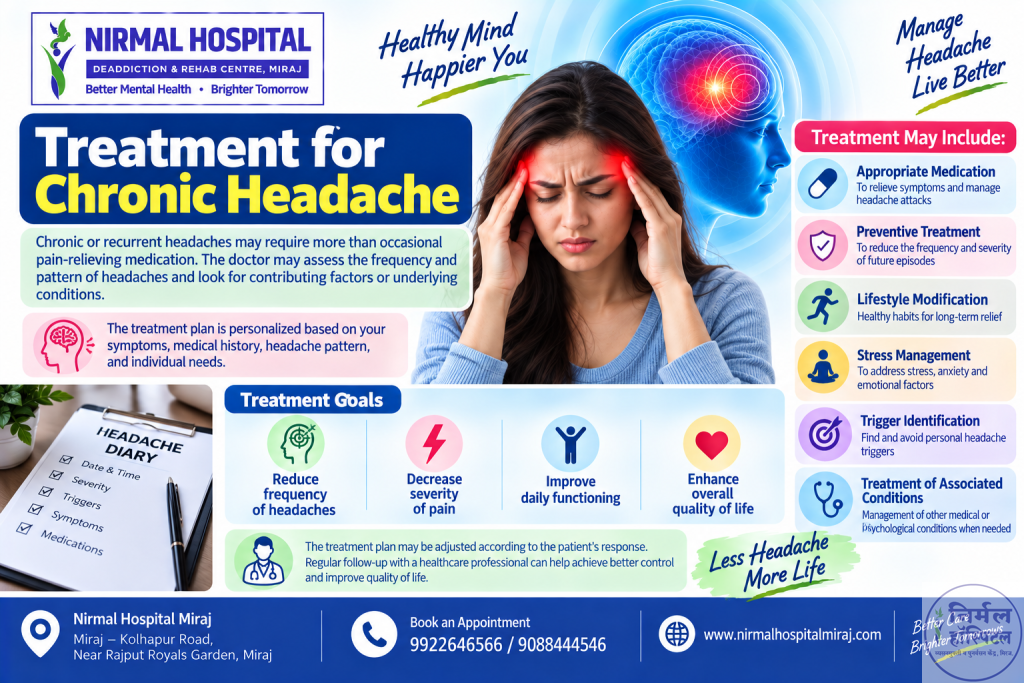
Chronic or recurrent headaches may require more than occasional pain-relieving medication. The doctor may assess the frequency and pattern of headaches and look for contributing factors or underlying conditions.
Treatment may involve a combination of:
- Appropriate medication
- Preventive treatment when indicated
- Lifestyle modification
- Stress management
- Trigger identification
- Treatment of associated medical or psychological conditions
The treatment plan may be adjusted according to the patient’s response.
When Are Further Investigations Required?
Most headaches can be assessed through medical history and clinical examination. However, when the symptoms or examination findings indicate a need for further evaluation, the doctor may recommend investigations such as:
- CT Scan of the Brain
- MRI Brain
- EEG
- Blood tests or other relevant investigations
The choice of investigation depends on the patient’s symptoms and clinical assessment. CT, MRI, or EEG is not routinely required for every headache.
Importance of Individualized Headache Treatment
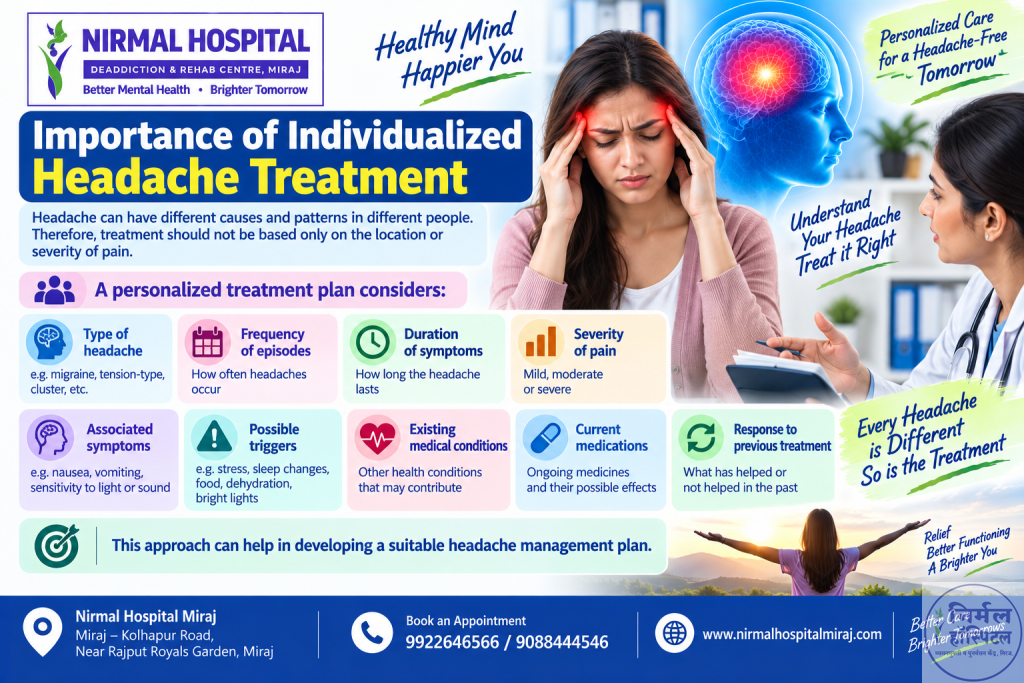
Headache can have different causes and patterns in different people. Therefore, treatment should not be based only on the location or severity of pain.
A personalized treatment plan considers:
- Type of headache
- Frequency of episodes
- Duration of symptoms
- Severity of pain
- Associated symptoms
- Possible triggers
- Existing medical conditions
- Current medications
- Response to previous treatment
This approach can help in developing a suitable headache management plan.
Avoid Self-Medication
Taking painkillers repeatedly without identifying the cause of recurrent headaches may not be the right approach. Frequent use of some headache medicines can lead to medication-overuse headache.
If you need headache medication frequently or headaches continue despite treatment, consult a qualified healthcare professional for evaluation.
When to Seek Urgent Medical Attention
Seek prompt medical attention if a headache is:
- Sudden and extremely severe
- New and significantly different from previous headaches
- Progressively worsening
- Associated with loss of consciousness or seizures
- Associated with sudden weakness or numbness
- Associated with difficulty speaking
- Associated with sudden vision changes
- Occurring after a significant head injury
- Associated with repeated vomiting
- Associated with fever and neck stiffness
These symptoms may require urgent medical evaluation.
Headache Treatment at Nirmal Hospital Miraj
At Nirmal Hospital Miraj, patients with recurrent headaches and migraine can receive medical evaluation to understand the possible cause and appropriate treatment options.
The treatment approach is based on the patient’s symptoms, clinical assessment, headache pattern, and individual requirements.
If you are experiencing frequent headaches, migraine attacks, persistent head pain, or headaches affecting your daily activities, professional medical evaluation can help determine the appropriate course of treatment.
Do not ignore persistent or recurrent headaches. Consult a qualified healthcare professional for proper diagnosis and treatment.
Frequently Asked Questions About Headache Treatment
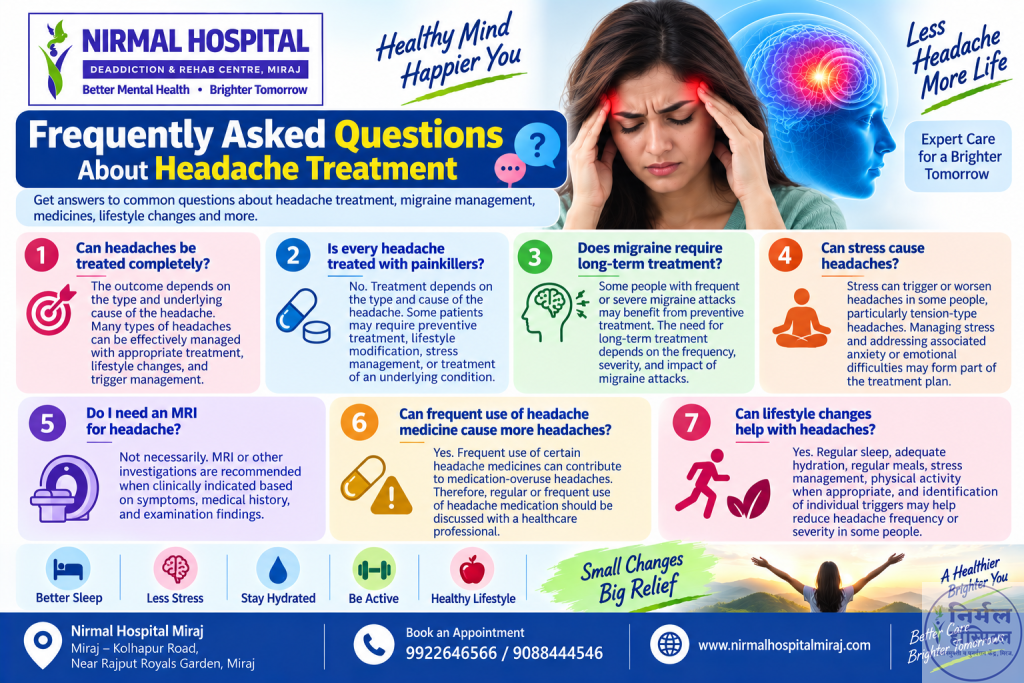
Can headaches be treated completely?
The outcome depends on the type and underlying cause of the headache. Many types of headaches can be effectively managed with appropriate treatment, lifestyle changes, and trigger management.
Is every headache treated with painkillers?
No. Treatment depends on the type and cause of the headache. Some patients may require preventive treatment, lifestyle modification, stress management, or treatment of an underlying condition.
Does migraine require long-term treatment?
Some people with frequent or severe migraine attacks may benefit from preventive treatment. The need for long-term treatment depends on the frequency, severity, and impact of migraine attacks.
Can stress cause headaches?
Stress can trigger or worsen headaches in some people, particularly tension-type headaches. Managing stress and addressing associated anxiety or emotional difficulties may form part of the treatment plan.
Do I need an MRI for headache?
Not necessarily. MRI or other investigations are recommended when clinically indicated based on symptoms, medical history, and examination findings.
Can frequent use of headache medicine cause more headaches?
Yes. Frequent use of certain headache medicines can contribute to medication-overuse headaches. Therefore, regular or frequent use of headache medication should be discussed with a healthcare professional.
Can lifestyle changes help with headaches?
Yes. Regular sleep, adequate hydration, regular meals, stress management, physical activity when appropriate, and identification of individual triggers may help reduce headache frequency or severity in some people.
Learn More About Mental Health & Headache
For more informative videos about mental health, psychiatry, headache, stress, anxiety and related health topics, visit the Nirmal Hospital, Miraj YouTube Channel.
Nirmal Hospital, Miraj YouTube Channel → Nirmal Hospital, Miraj YouTube Channel


