

Anxiety Treatment Near Me
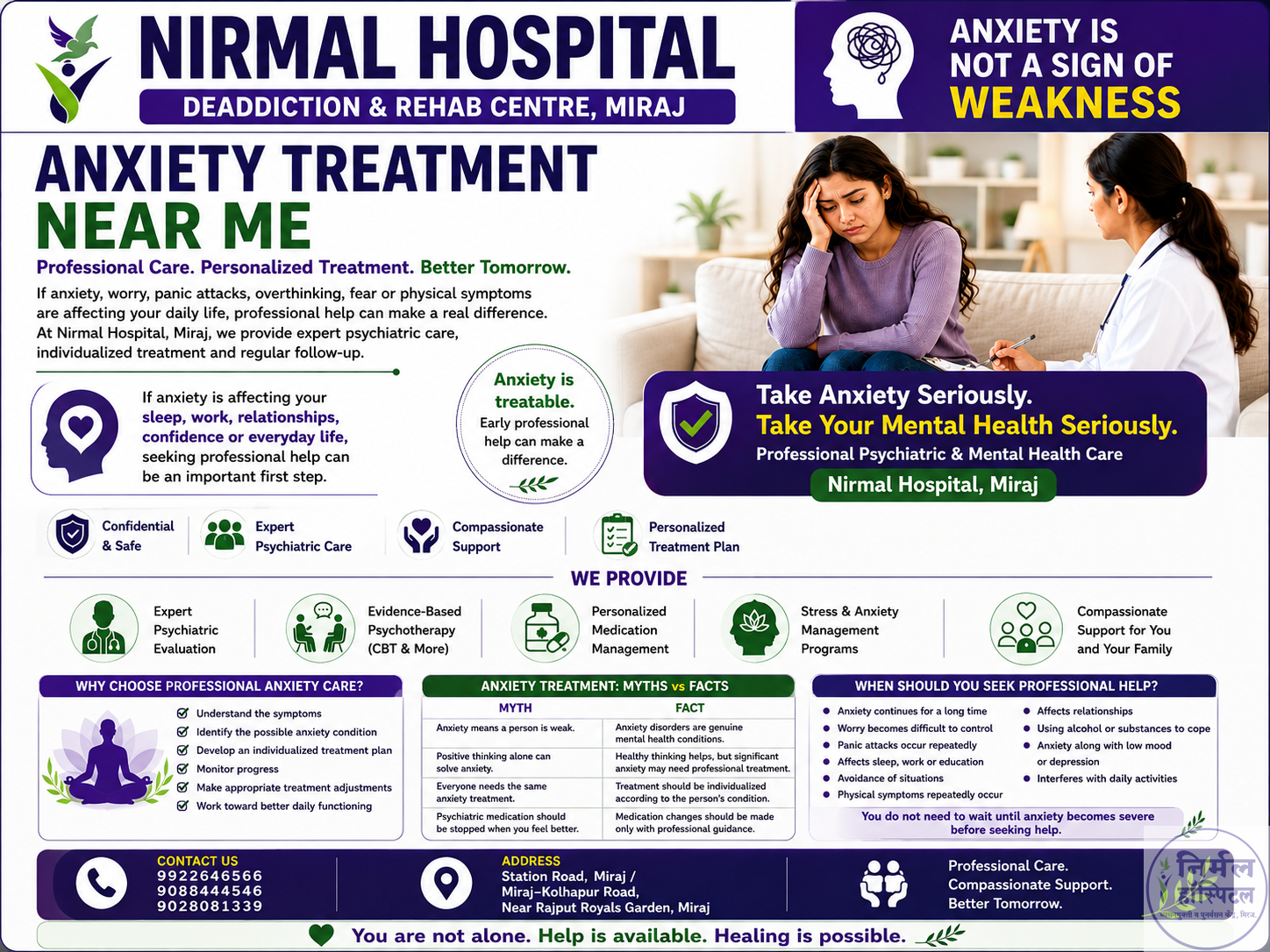
Are you searching for “anxiety treatment near me” because persistent worry, fear, panic attacks, overthinking or physical symptoms are affecting your daily life?
Anxiety is a common human emotion, but when it becomes excessive, persistent or difficult to control, it may be associated with an anxiety disorder. When anxiety starts affecting your sleep, work, education, relationships, confidence or everyday activities, professional evaluation can be an important first step.
At Nirmal Hospital, Miraj, anxiety-related concerns are approached with professional psychiatric assessment, individualized care and regular follow-up.
What Is Anxiety Disorder?
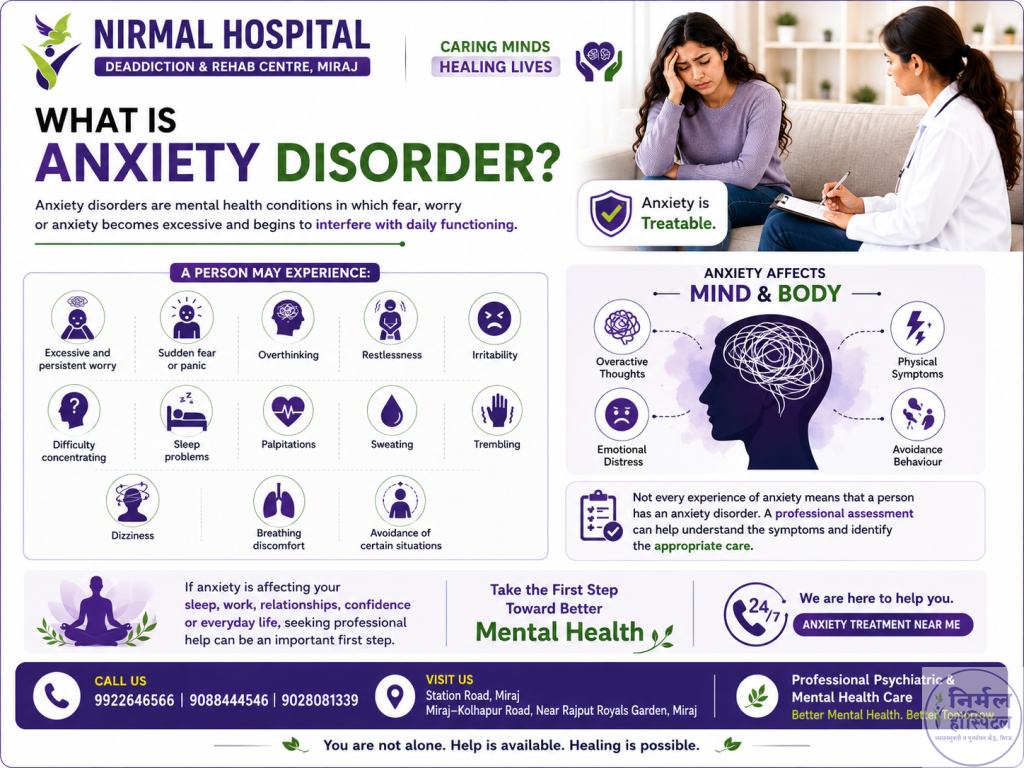
Anxiety disorders are mental health conditions in which fear, worry or anxiety becomes excessive and begins to interfere with daily functioning.
A person may experience:
- Excessive and persistent worry
- Sudden fear or panic
- Overthinking
- Restlessness
- Irritability
- Difficulty concentrating
- Sleep problems
- Palpitations
- Sweating
- Trembling
- Dizziness
- Breathing discomfort
- Avoidance of certain situations
Not every experience of anxiety means that a person has an anxiety disorder. A professional assessment can help understand the symptoms and identify the appropriate care.
When Should You Consider Anxiety Treatment?
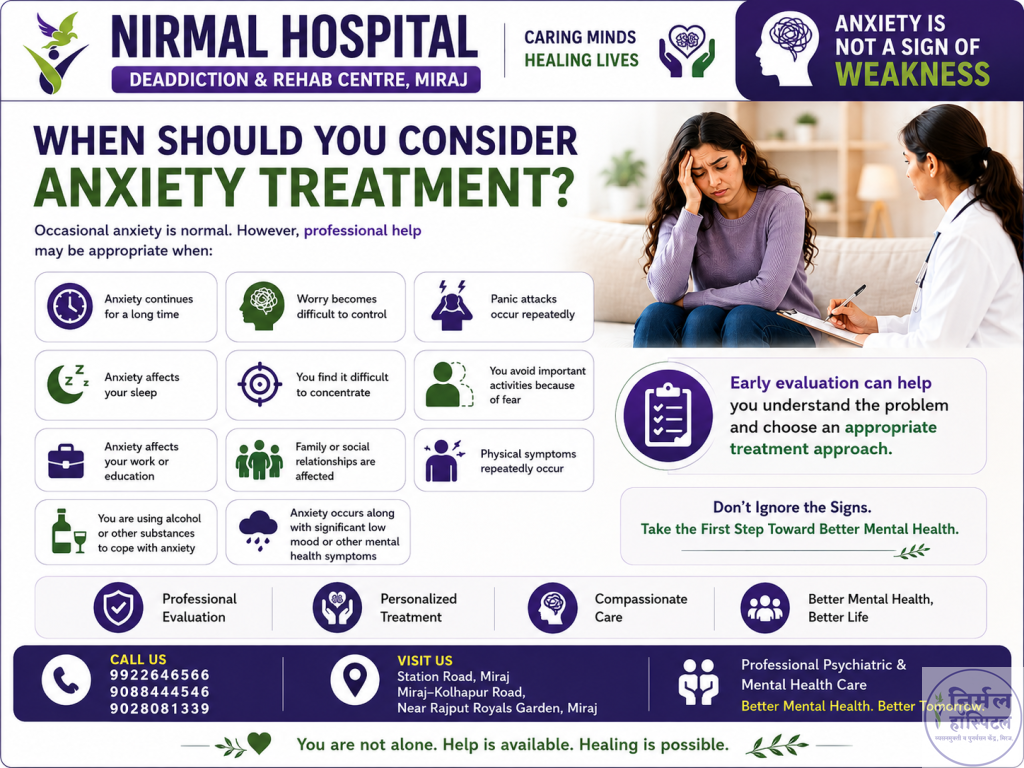
Occasional anxiety is normal. However, professional help may be appropriate when:
- Anxiety continues for a long time
- Worry becomes difficult to control
- Panic attacks occur repeatedly
- Anxiety affects your sleep
- You find it difficult to concentrate
- You avoid important activities because of fear
- Anxiety affects your work or education
- Family or social relationships are affected
- Physical symptoms repeatedly occur
- You are using alcohol or other substances to cope with anxiety
- Anxiety occurs along with significant low mood or other mental health symptoms
Early evaluation can help you understand the problem and choose an appropriate treatment approach.
Anxiety Treatment at Nirmal Hospital, Miraj
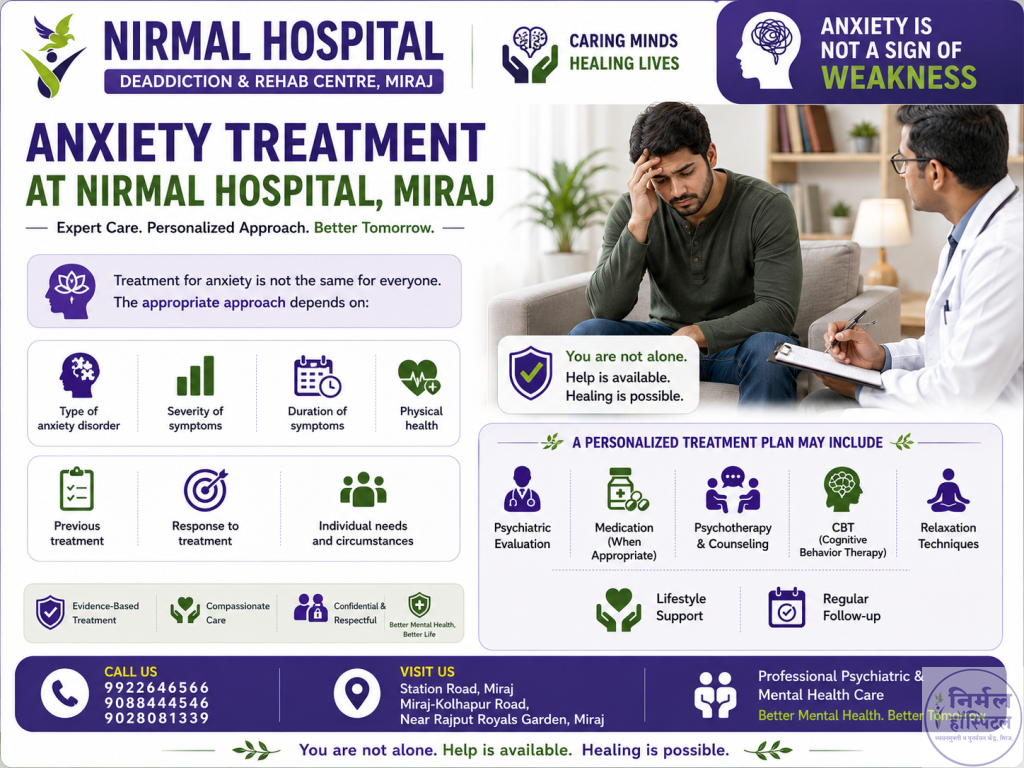
Treatment for anxiety is not the same for everyone.
The appropriate approach depends on:
- Type of anxiety disorder
- Severity of symptoms
- Duration of symptoms
- Physical health
- Previous treatment
- Response to treatment
- Individual needs and circumstances
A personalized treatment plan may include psychiatric evaluation, medication when appropriate, psychotherapy, CBT, relaxation techniques, lifestyle support and regular follow-up.
1. Psychiatric Evaluation
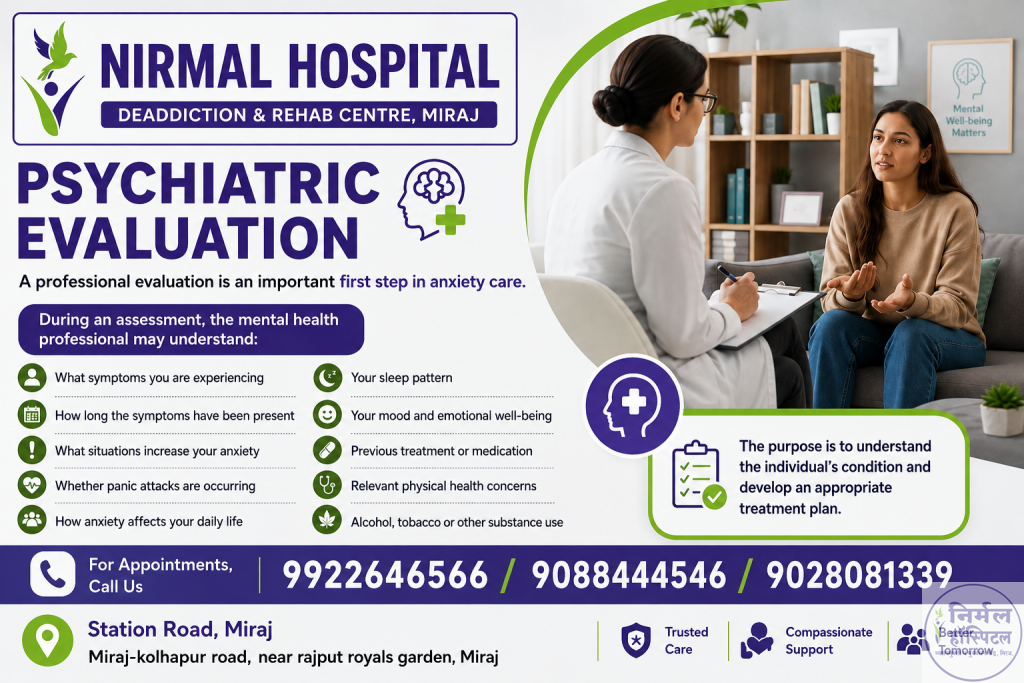
A professional evaluation is an important first step in anxiety care.
During an assessment, the mental health professional may understand:
- What symptoms you are experiencing
- How long the symptoms have been present
- What situations increase your anxiety
- Whether panic attacks are occurring
- How anxiety affects your daily life
- Your sleep pattern
- Your mood and emotional well-being
- Previous treatment or medication
- Relevant physical health concerns
- Alcohol, tobacco or other substance use
The purpose is to understand the individual’s condition and develop an appropriate treatment plan.
2. Medication for Anxiety
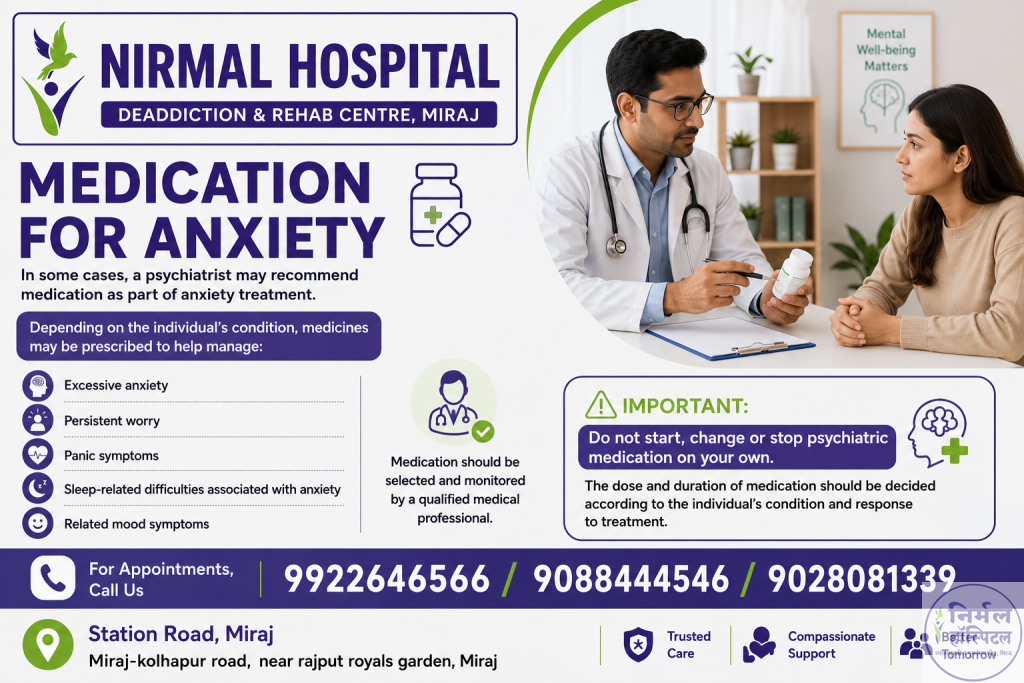
In some cases, a psychiatrist may recommend medication as part of anxiety treatment.
Depending on the individual’s condition, medicines may be prescribed to help manage:
- Excessive anxiety
- Persistent worry
- Panic symptoms
- Sleep-related difficulties associated with anxiety
- Related mood symptoms
Medication should be selected and monitored by a qualified medical professional.
Important:
Do not start, change or stop psychiatric medication on your own.
The dose and duration of medication should be decided according to the individual’s condition and response to treatment.
3. Cognitive Behavioral Therapy (CBT)
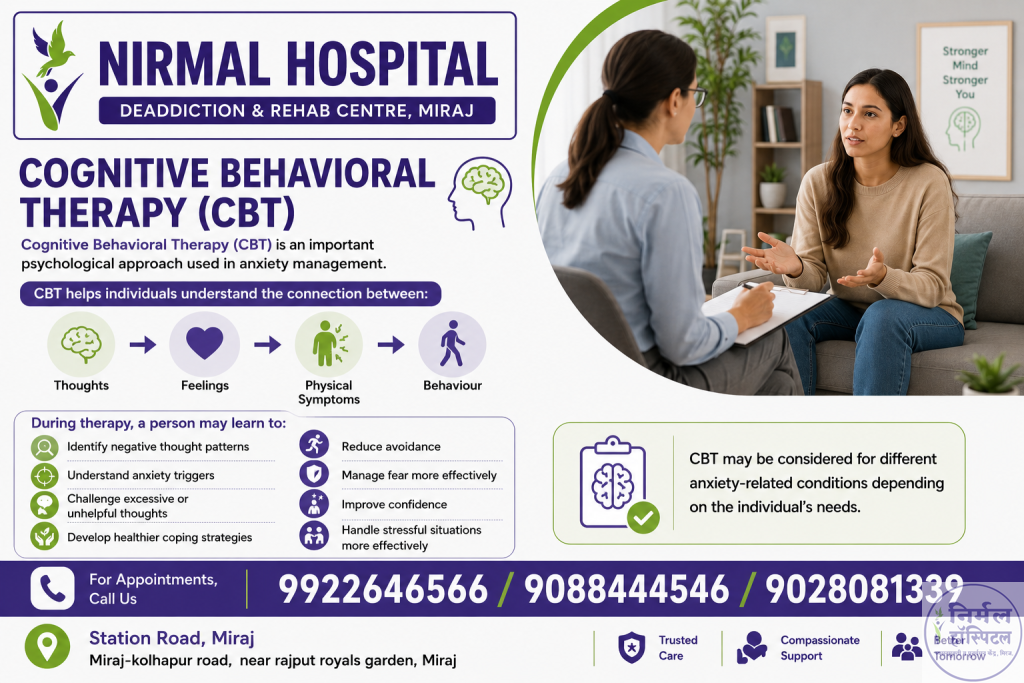
Cognitive Behavioral Therapy (CBT) is an important psychological approach used in anxiety management.
CBT helps individuals understand the connection between:
Thoughts → Feelings → Physical Symptoms → Behaviour
During therapy, a person may learn to:
- Identify negative thought patterns
- Understand anxiety triggers
- Challenge excessive or unhelpful thoughts
- Develop healthier coping strategies
- Reduce avoidance
- Manage fear more effectively
- Improve confidence
- Handle stressful situations more effectively
CBT may be considered for different anxiety-related conditions depending on the individual’s needs.
4. Relaxation & Stress-Management Techniques
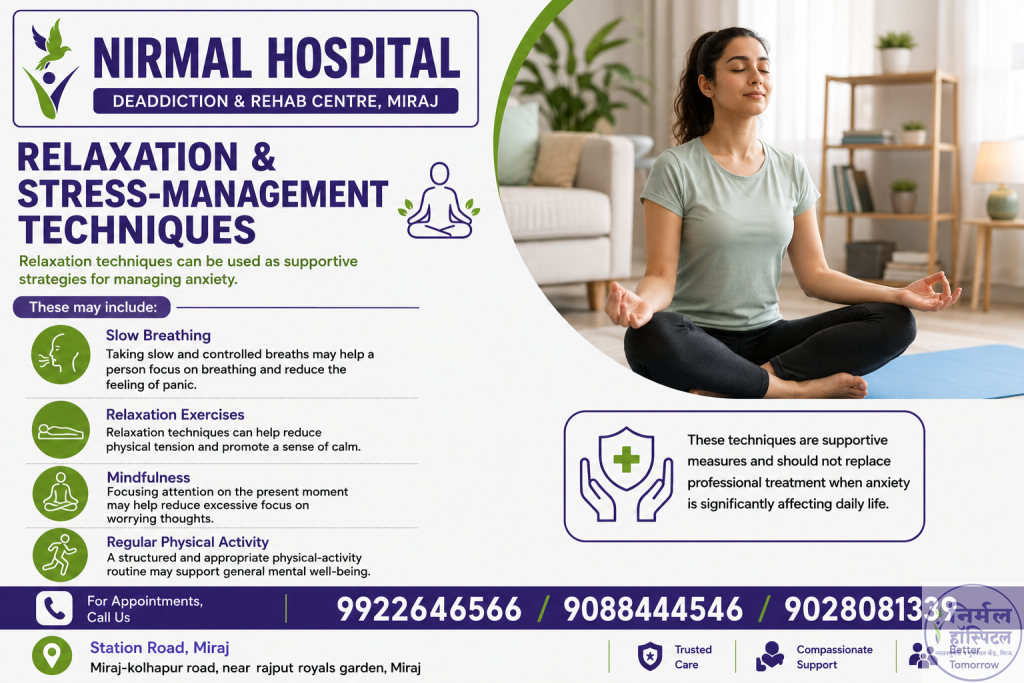
Relaxation techniques can be used as supportive strategies for managing anxiety.
These may include:
Slow Breathing
Taking slow and controlled breaths may help a person focus on breathing and reduce the feeling of panic.
Relaxation Exercises
Relaxation techniques can help reduce physical tension and promote a sense of calm.
Mindfulness
Focusing attention on the present moment may help reduce excessive focus on worrying thoughts.
Regular Physical Activity
A structured and appropriate physical-activity routine may support general mental well-being.
These techniques are supportive measures and should not replace professional treatment when anxiety is significantly affecting daily life.
5. Treatment for Different Anxiety Conditions
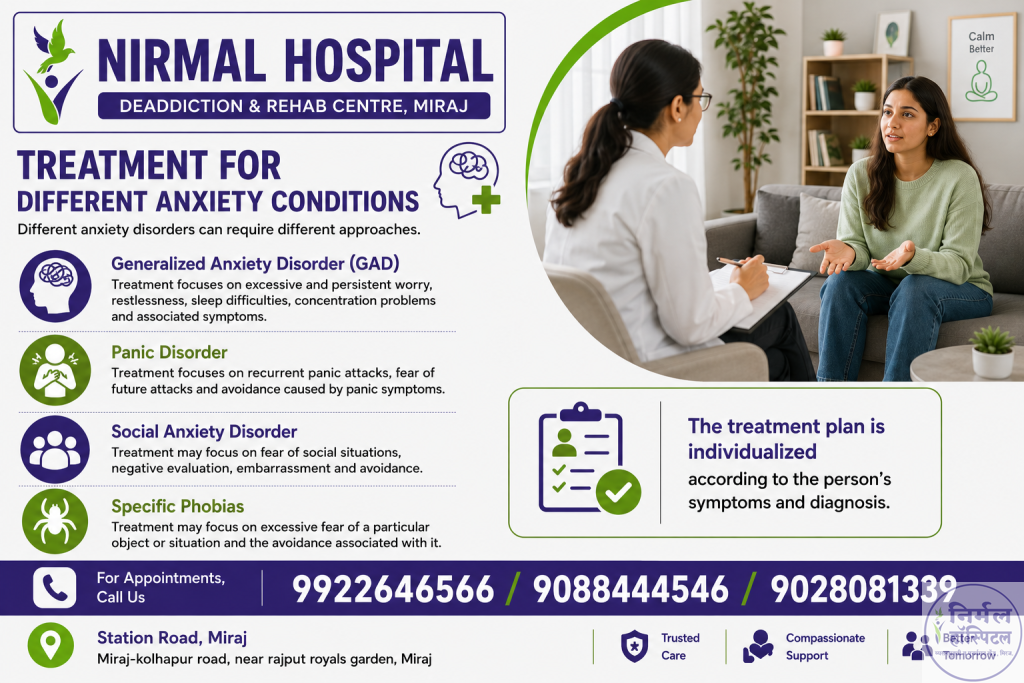
Different anxiety disorders can require different approaches.
Generalized Anxiety Disorder (GAD)
Treatment focuses on excessive and persistent worry, restlessness, sleep difficulties, concentration problems and associated symptoms.
Panic Disorder
Treatment focuses on recurrent panic attacks, fear of future attacks and avoidance caused by panic symptoms.
Social Anxiety Disorder
Treatment may focus on fear of social situations, negative evaluation, embarrassment and avoidance.
Specific Phobias
Treatment may focus on excessive fear of a particular object or situation and the avoidance associated with it.
The treatment plan is individualized according to the person’s symptoms and diagnosis.
6. Lifestyle Support During Anxiety Treatment
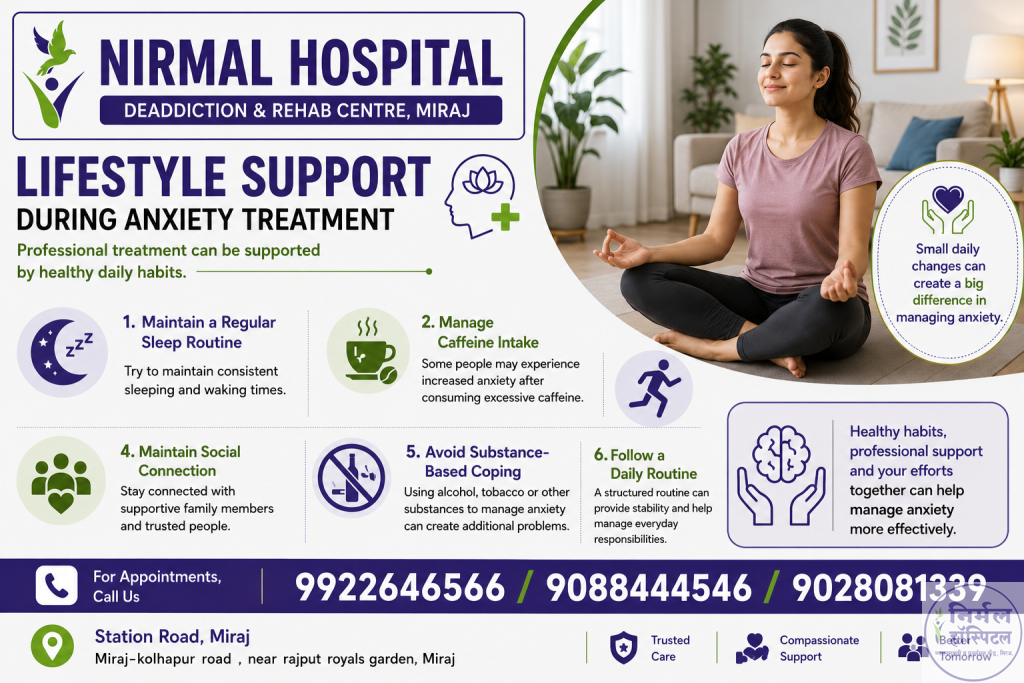
Professional treatment can be supported by healthy daily habits.
Maintain a Regular Sleep Routine
Try to maintain consistent sleeping and waking times.
Manage Caffeine Intake
Some people may experience increased anxiety after consuming excessive caffeine.
Stay Physically Active
Regular physical activity can support general physical and emotional well-being.
Maintain Social Connection
Stay connected with supportive family members and trusted people.
Avoid Substance-Based Coping
Using alcohol, tobacco or other substances to manage anxiety can create additional problems.
Follow a Daily Routine
A structured routine can provide stability and help manage everyday responsibilities.
How Long Does Anxiety Treatment Take?
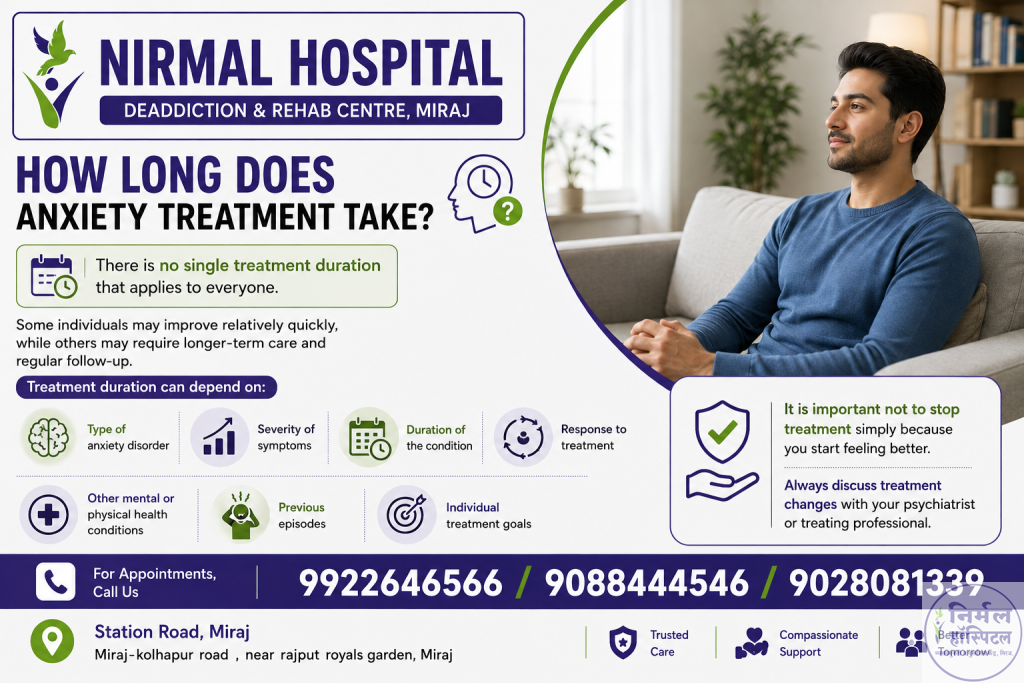
There is no single treatment duration that applies to everyone.
Some individuals may improve relatively quickly, while others may require longer-term care and regular follow-up.
Treatment duration can depend on:
- Type of anxiety disorder
- Severity of symptoms
- Duration of the condition
- Response to treatment
- Other mental or physical health conditions
- Previous episodes
- Individual treatment goals
It is important not to stop treatment simply because you start feeling better.
Always discuss treatment changes with your psychiatrist or treating professional.
Why Should You Not Stop Medication Suddenly?
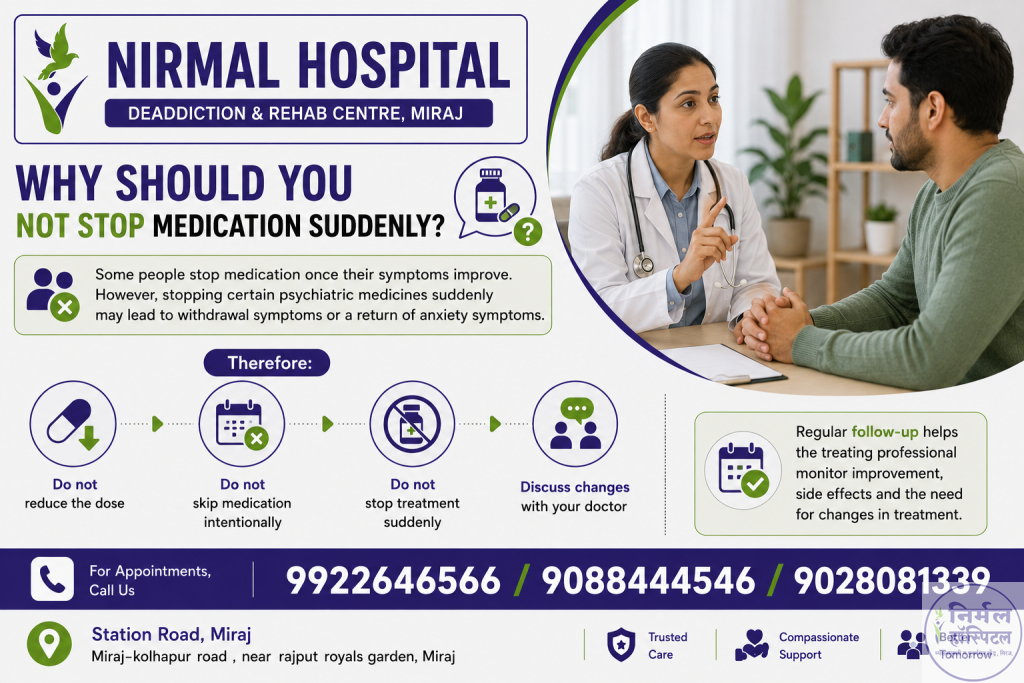
Some people stop medication once their symptoms improve.
However, stopping certain psychiatric medicines suddenly may lead to withdrawal symptoms or a return of anxiety symptoms.
Therefore:
Do not reduce the dose → Do not skip medication intentionally → Do not stop treatment suddenly → Discuss changes with your doctor
Regular follow-up helps the treating professional monitor improvement, side effects and the need for changes in treatment.
What Can Family Members Do?
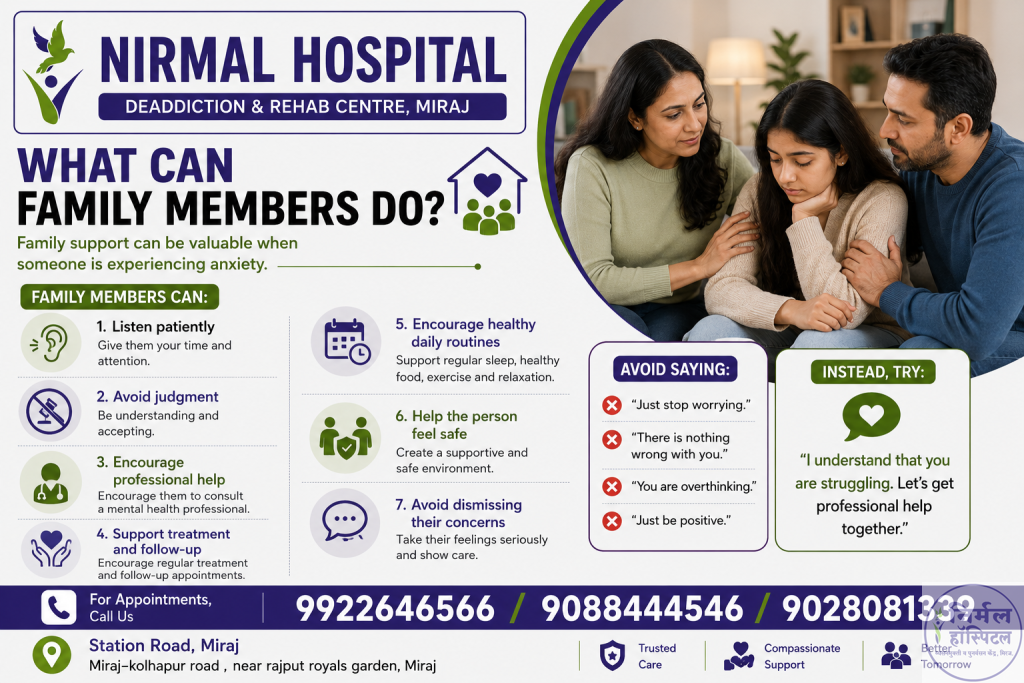
Family support can be valuable when someone is experiencing anxiety.
Family members can:
- Listen patiently
- Avoid judgment
- Encourage professional help
- Support treatment and follow-up
- Encourage healthy daily routines
- Help the person feel safe
- Avoid dismissing their concerns
Avoid saying:
“Just stop worrying.”
“There is nothing wrong with you.”
“You are overthinking.”
“Just be positive.”
Instead, try:
“I understand that you are struggling. Let’s get professional help together.”
What to Do During a Panic Attack?
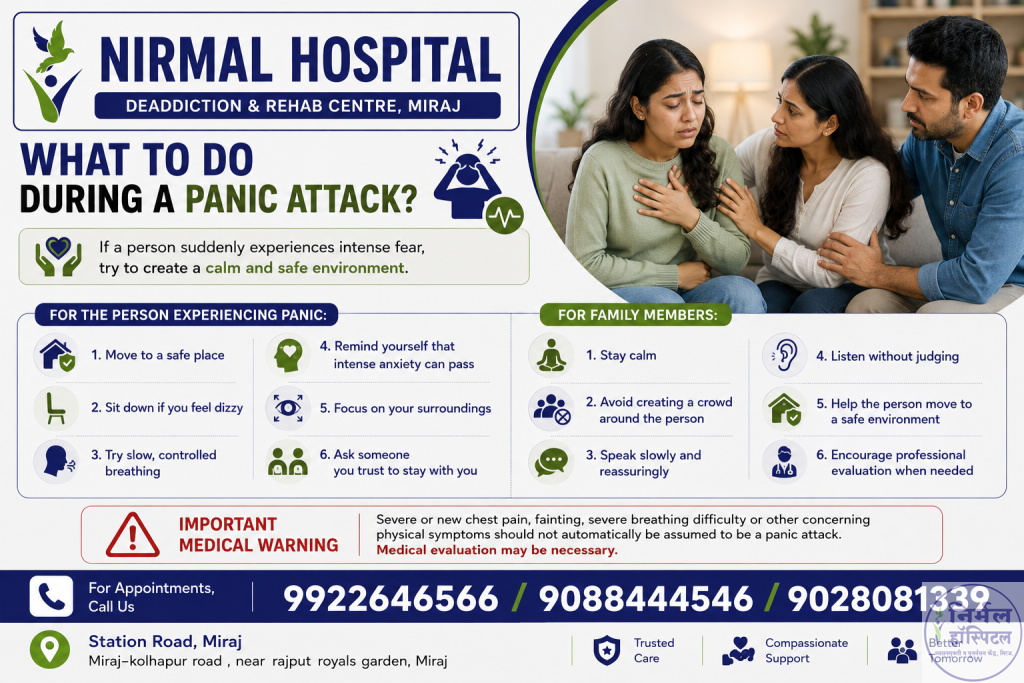
If a person suddenly experiences intense fear, try to create a calm and safe environment.
For the person experiencing panic:
- Move to a safe place
- Sit down if you feel dizzy
- Try slow, controlled breathing
- Remind yourself that intense anxiety can pass
- Focus on your surroundings
- Ask someone you trust to stay with you
For family members:
- Stay calm
- Avoid creating a crowd around the person
- Speak slowly and reassuringly
- Listen without judging
- Help the person move to a safe environment
- Encourage professional evaluation when needed
Important Medical Warning
Severe or new chest pain, fainting, severe breathing difficulty or other concerning physical symptoms should not automatically be assumed to be a panic attack. Medical evaluation may be necessary.
Anxiety Treatment: Myths vs Facts
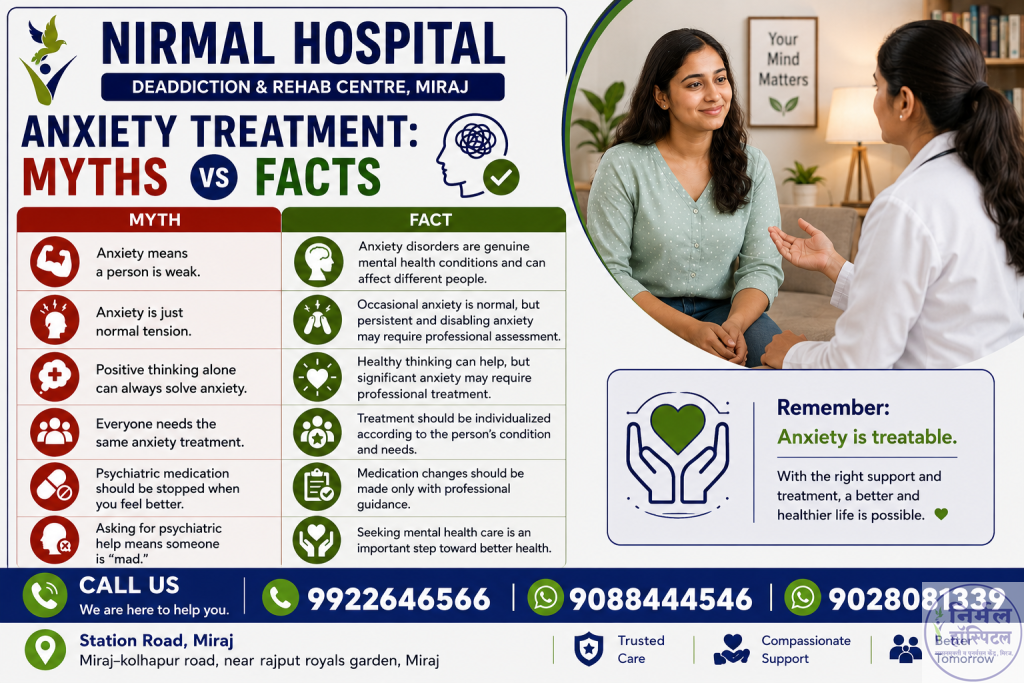
| Myth | Fact |
|---|---|
| Anxiety means a person is weak. | Anxiety disorders are genuine mental health conditions and can affect different people. |
| Anxiety is just normal tension. | Occasional anxiety is normal, but persistent and disabling anxiety may require professional assessment. |
| Positive thinking alone can always solve anxiety. | Healthy thinking can help, but significant anxiety may require professional treatment. |
| Everyone needs the same anxiety treatment. | Treatment should be individualized according to the person’s condition and needs. |
| Psychiatric medication should be stopped when you feel better. | Medication changes should be made only with professional guidance. |
| Asking for psychiatric help means someone is “mad.” | Seeking mental health care is an important step toward better health. |
When Should You Seek Professional Help?
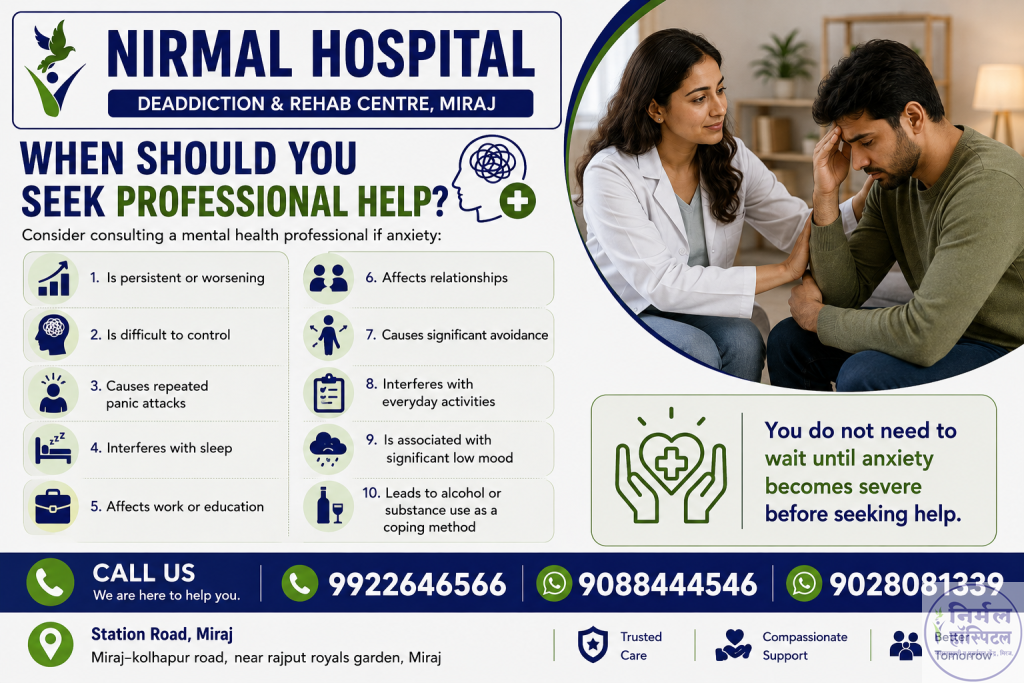
Consider consulting a mental health professional if anxiety:
- Is persistent or worsening
- Is difficult to control
- Causes repeated panic attacks
- Interferes with sleep
- Affects work or education
- Affects relationships
- Causes significant avoidance
- Interferes with everyday activities
- Is associated with significant low mood
- Leads to alcohol or substance use as a coping method
You do not need to wait until anxiety becomes severe before seeking help.
Why Choose Professional Anxiety Care?
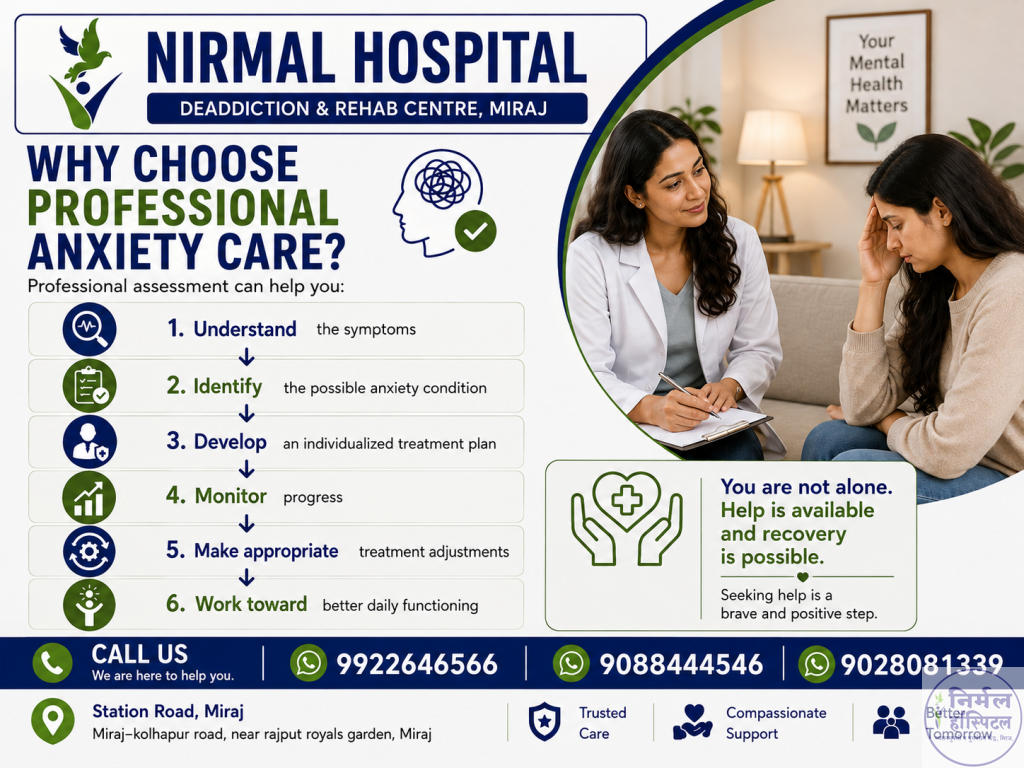
Professional assessment can help you:
Understand the symptoms
↓
Identify the possible anxiety condition
↓
Develop an individualized treatment plan
↓
Monitor progress
↓
Make appropriate treatment adjustments
↓
Work toward better daily functioning
Anxiety Treatment Near Me – Nirmal Hospital, Miraj
If you are searching online for “anxiety treatment near me”, “anxiety treatment in Miraj” or “anxiety psychiatrist near me”, Nirmal Hospital, Miraj provides professional psychiatric and mental health care for anxiety-related concerns.
If anxiety is affecting your sleep, work, relationships, confidence or everyday life, taking the first step toward professional evaluation can make a difference.
Take Your Mental Health Seriously
Anxiety is not a sign of weakness.
Anxiety is treatable.
Professional help is available.
Nirmal Hospital, Miraj
Professional Psychiatric & Mental Health Care
📞 9922646566 | 9088444546 | 9028081339
📍 Station Road, Miraj
Miraj–Kolhapur Road, Near Rajput Royals Garden, Miraj
Take the First Step Toward Better Mental Health.
Watch mental health and anxiety awareness videos on the Nirmal Hospital, Miraj YouTube Channel.
Anxiety can sometimes occur along with depression, panic symptoms, stress or other mental health concerns. If these symptoms are affecting daily life, professional psychiatric treatment can help with proper assessment and individualized care.
Link:
- depression → Depression Treatment page
- panic symptoms → Panic Disorder Treatment page
- stress → Stress Management page
- psychiatric treatment → Psychiatric Treatment page


