

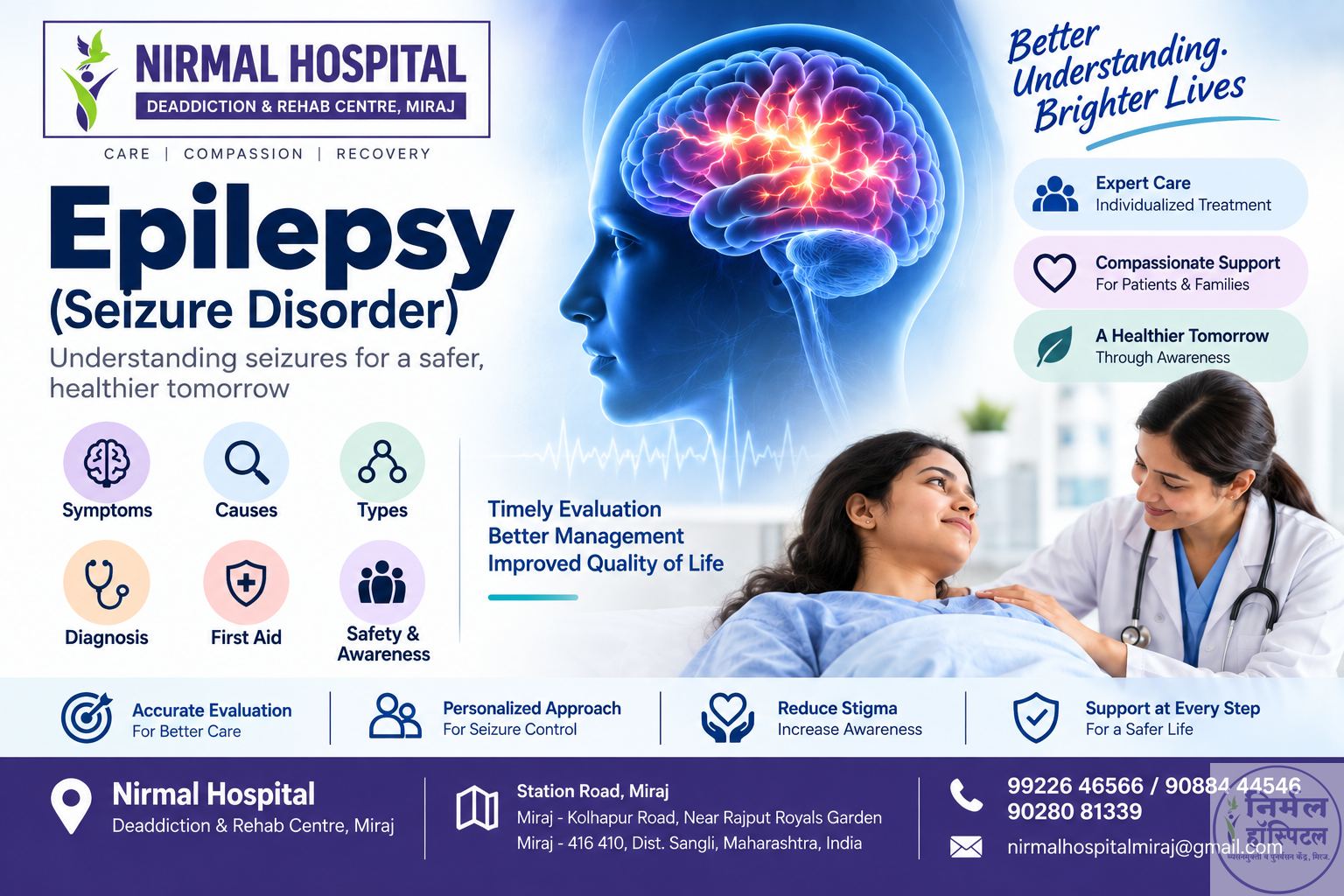
Epilepsy (Seizure Disorder) – Symptoms, Causes, Diagnosis
Epilepsy, commonly referred to as fits, seizures, seizure disorder, or convulsions, is a neurological condition associated with abnormal electrical activity in the brain.
Epilepsy is not a contagious disease and can affect people of different ages, including both males and females.
What Is Epilepsy?
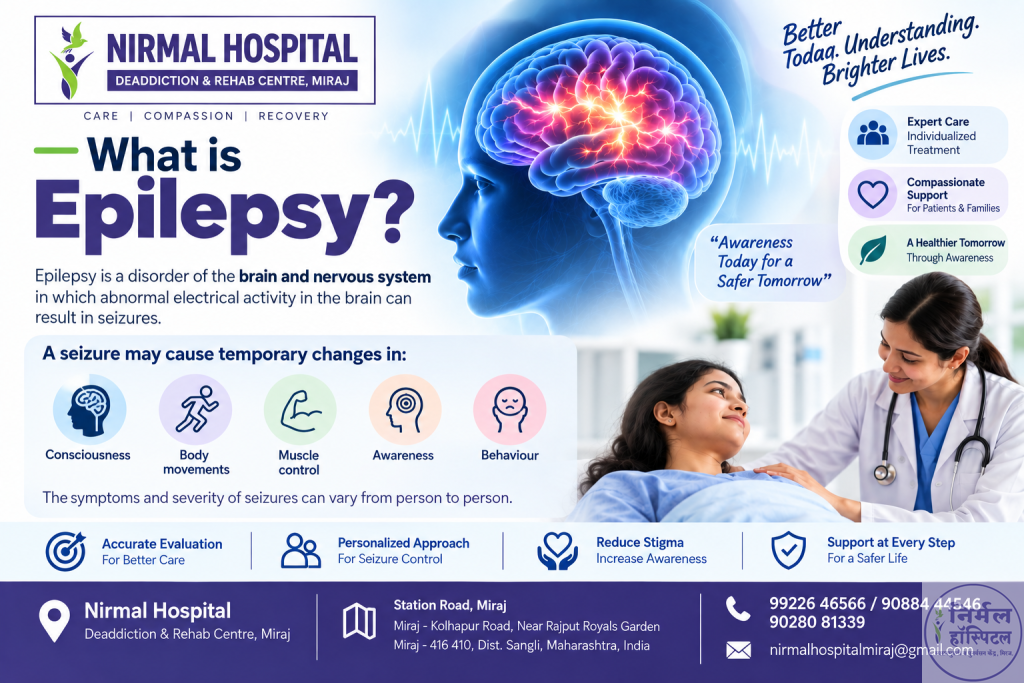
Epilepsy is a disorder of the brain and nervous system in which abnormal electrical activity in the brain can result in seizures.
A seizure may cause temporary changes in:
- Consciousness
- Body movements
- Muscle control
- Awareness
- Behaviour
The symptoms and severity of seizures can vary from person to person.
Types of Epilepsy
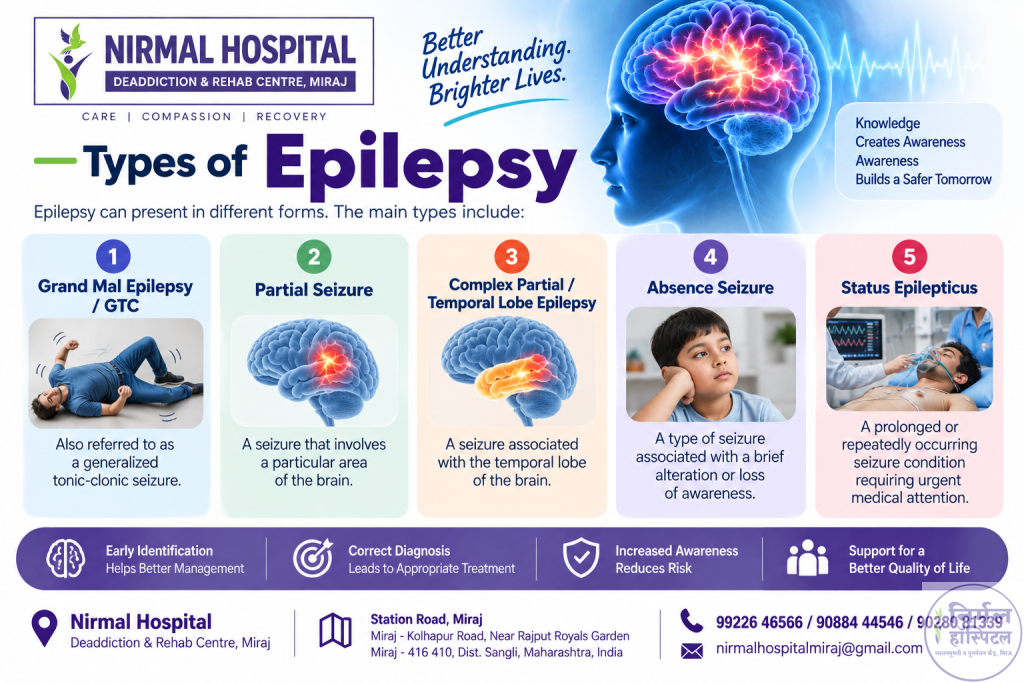
The source material describes the following types:
1. Grand Mal Epilepsy / GTC
Also referred to as a generalized tonic-clonic seizure.
2. Partial Seizure
A seizure that involves a particular area of the brain.
3. Complex Partial / Temporal Lobe Epilepsy
A seizure associated with the temporal lobe of the brain.
4. Absence Seizure
A type of seizure associated with a brief alteration or loss of awareness.
5. Status Epilepticus
A prolonged or repeatedly occurring seizure condition requiring urgent medical attention.
Symptoms of Epilepsy
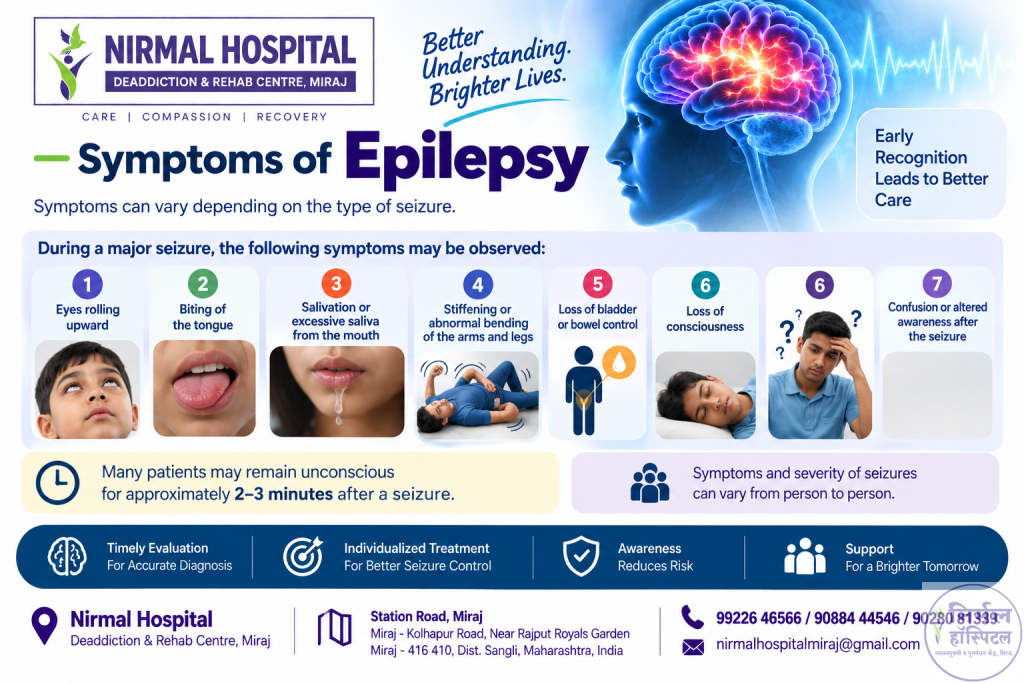
Symptoms can vary depending on the type of seizure.
During a major seizure, the following symptoms may be observed:
- Eyes rolling upward
- Biting of the tongue
- Salivation or excessive saliva from the mouth
- Stiffening or abnormal bending of the arms and legs
- Loss of bladder or bowel control
- Loss of consciousness
- Confusion or altered awareness after the seizure
The source material notes that many patients may remain unconscious for approximately 2–3 minutes after a seizure.
Causes of Epilepsy
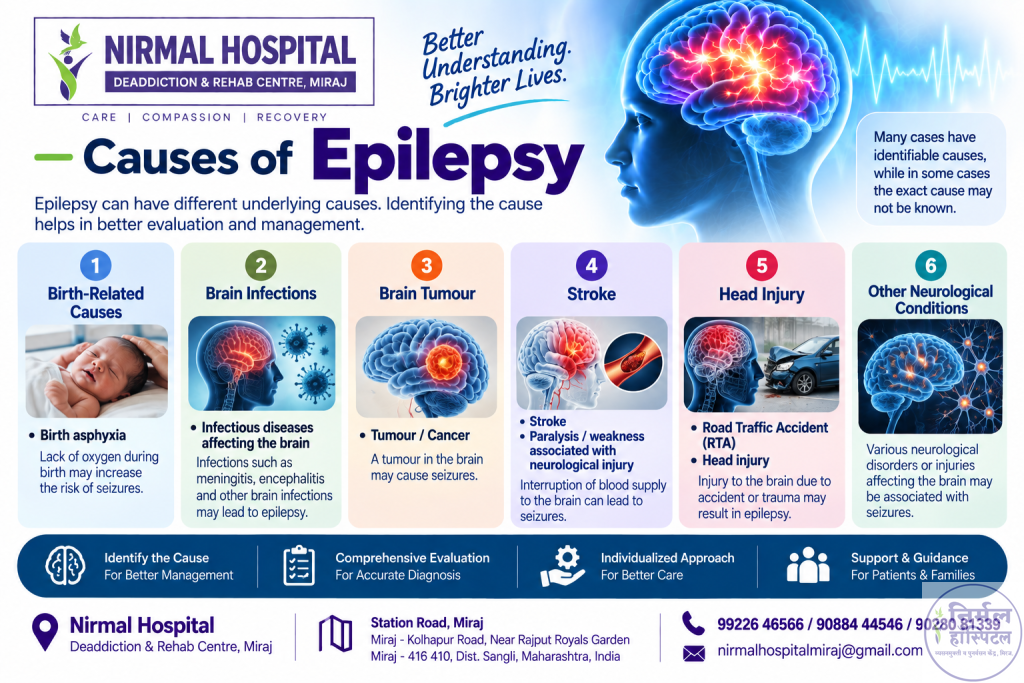
Epilepsy can have different underlying causes. The source material mentions:
Birth-Related Causes
- Birth asphyxia
Brain Infections
- Infectious diseases affecting the brain
Brain Tumour
- Tumour / Cancer
Stroke
- Stroke
- Paralysis / weakness associated with neurological injury
Head Injury
- Road Traffic Accident (RTA)
- Head injury
Other Neurological Conditions
Various disorders or injuries affecting the brain may be associated with seizures.
Diagnosis of Epilepsy
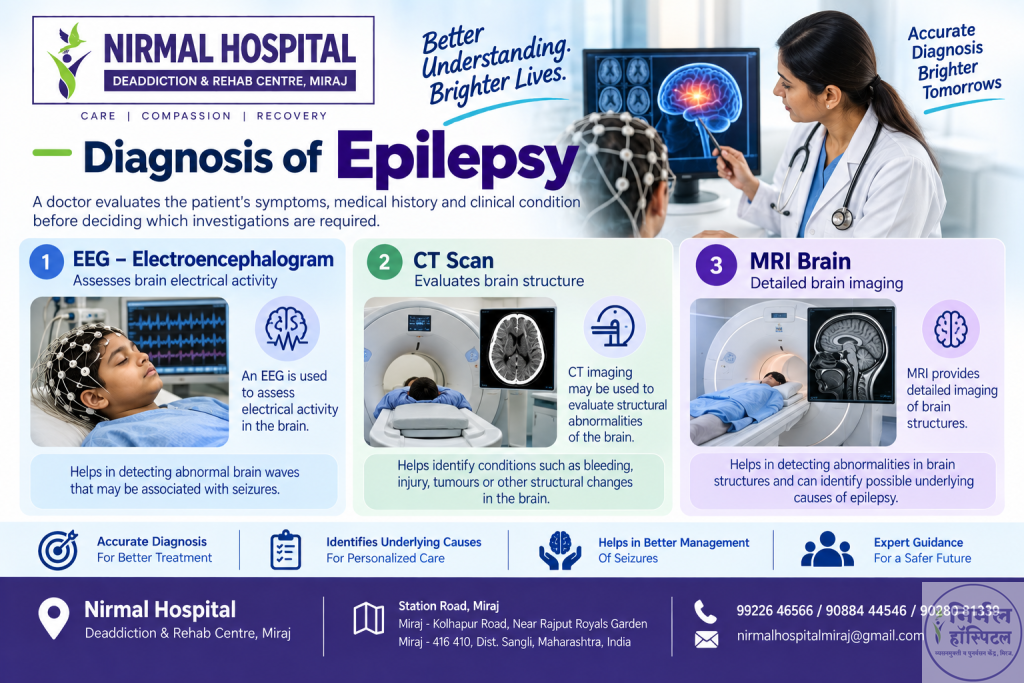
A doctor evaluates the patient’s symptoms, medical history and clinical condition before deciding which investigations are required.
The source material mentions the following investigations:
EEG – Electroencephalogram
An EEG is used to assess electrical activity in the brain.
CT Scan
CT imaging may be used to evaluate structural abnormalities of the brain.
MRI Brain
MRI provides detailed imaging of brain structures.
These investigations may help doctors evaluate the condition and identify possible underlying causes.
Treatment of Epilepsy
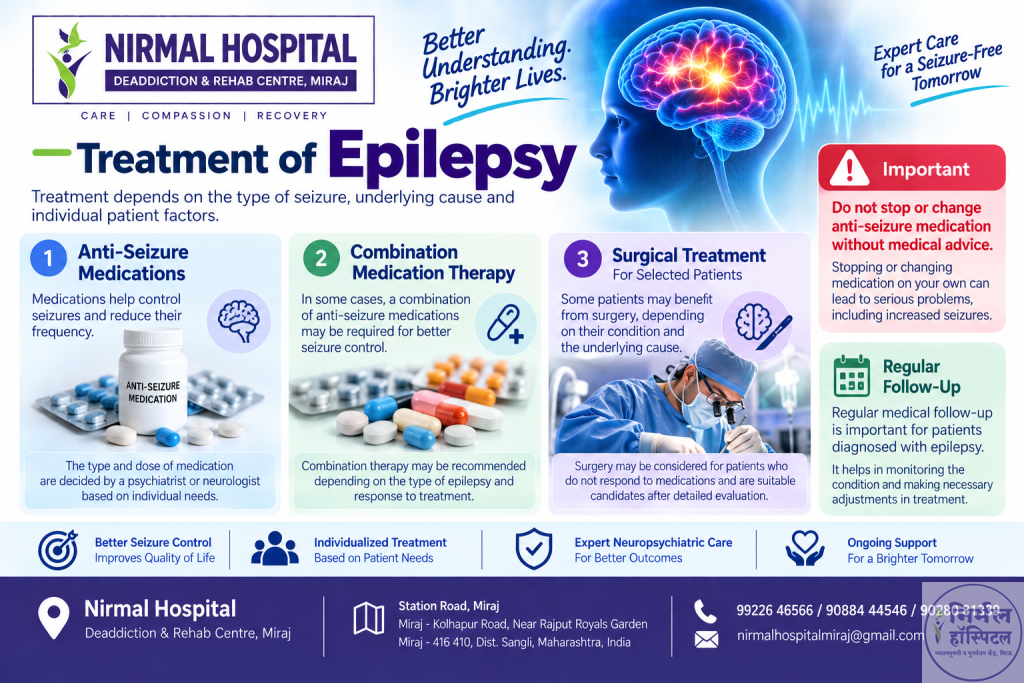
Treatment depends on the type of seizure, underlying cause and individual patient factors.
The source material mentions:
- Anti-seizure medications
- Combination medication therapy
- Surgical treatment for selected patients
Some patients may require surgery depending on their condition.
Important
Do not stop or change anti-seizure medication without medical advice.
Regular medical follow-up is important for patients diagnosed with epilepsy.
What Should You Do If Someone Has a Seizure?
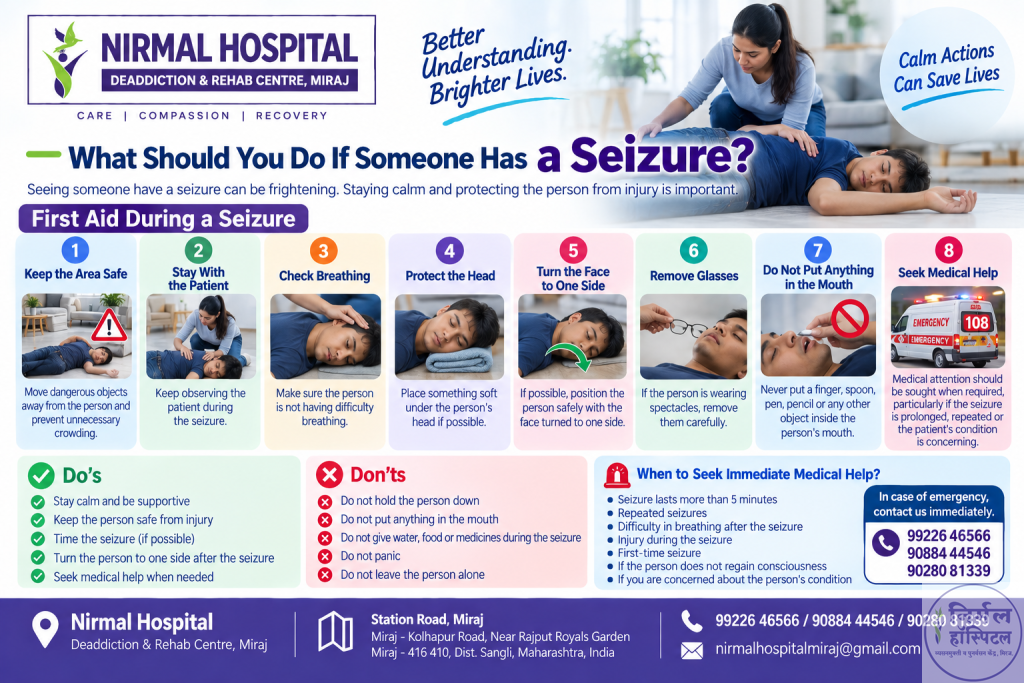
Seeing someone have a seizure can be frightening. Staying calm and protecting the person from injury is important.
First Aid During a Seizure
1. Keep the Area Safe
Move dangerous objects away from the person and prevent unnecessary crowding.
2. Stay With the Patient
Keep observing the patient during the seizure.
3. Check Breathing
Make sure the person is not having difficulty breathing.
4. Protect the Head
Place something soft under the person’s head if possible.
5. Turn the Face to One Side
If possible, position the person safely with the face turned to one side.
6. Remove Glasses
If the person is wearing spectacles, remove them carefully.
7. Do Not Put Anything in the Mouth
Never put a finger, spoon, pen, pencil or any other object inside the person’s mouth.
8. Seek Medical Help
Medical attention should be sought when required, particularly if the seizure is prolonged, repeated or the patient’s condition is concerning.
What Should You NOT Do During a Seizure?
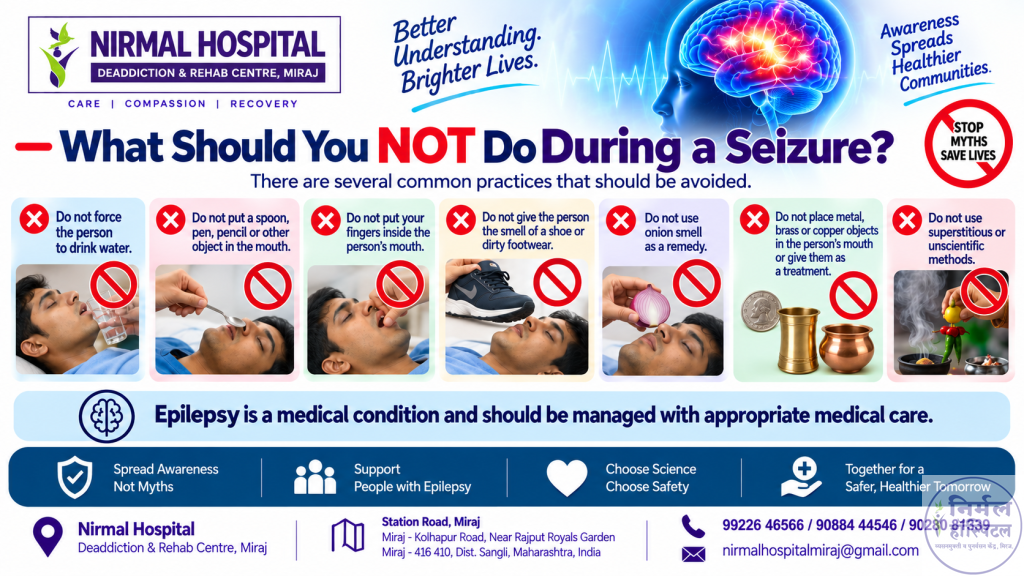
There are several common practices that should be avoided.
❌ Do not force the person to drink water.
❌ Do not put a spoon, pen, pencil or other object in the mouth.
❌ Do not put your fingers inside the person’s mouth.
❌ Do not give the person the smell of a shoe or dirty footwear.
❌ Do not use onion smell as a remedy.
❌ Do not place metal, brass or copper objects in the person’s mouth or give them as a treatment.
❌ Do not use superstitious or unscientific methods.
Epilepsy is a medical condition and should be managed with appropriate medical care.
Common Myths About Epilepsy
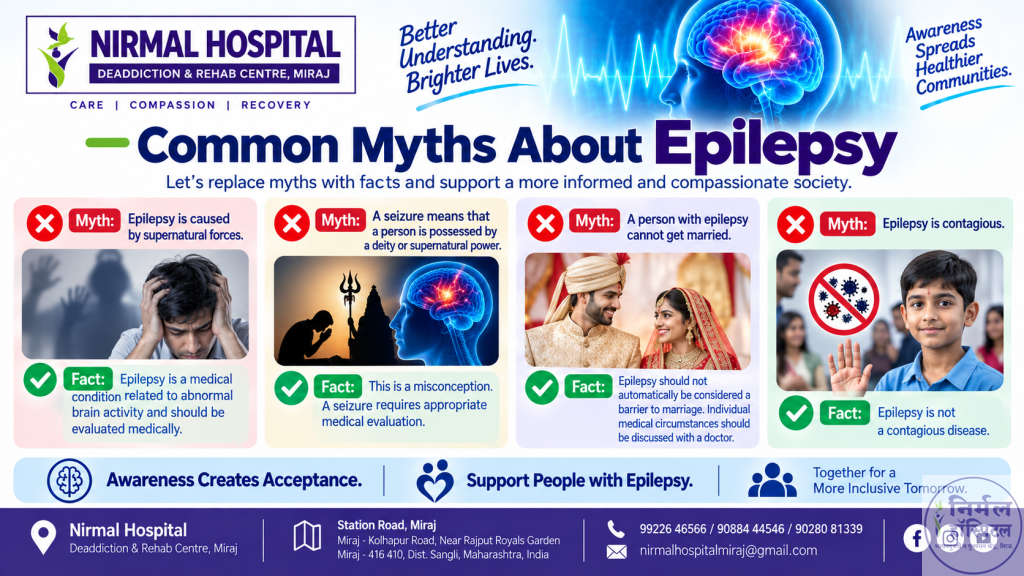
Myth: Epilepsy is caused by supernatural forces
Fact: Epilepsy is a medical condition related to abnormal brain activity and should be evaluated medically.
Myth: A seizure means that a person is possessed by a deity or supernatural power
Fact: This is a misconception. A seizure requires appropriate medical evaluation.
Myth: A person with epilepsy cannot get married
Fact: Epilepsy should not automatically be considered a barrier to marriage. Individual medical circumstances should be discussed with a doctor.
Myth: Epilepsy is contagious
Fact: Epilepsy is not a contagious disease.
Precautions for People With Epilepsy
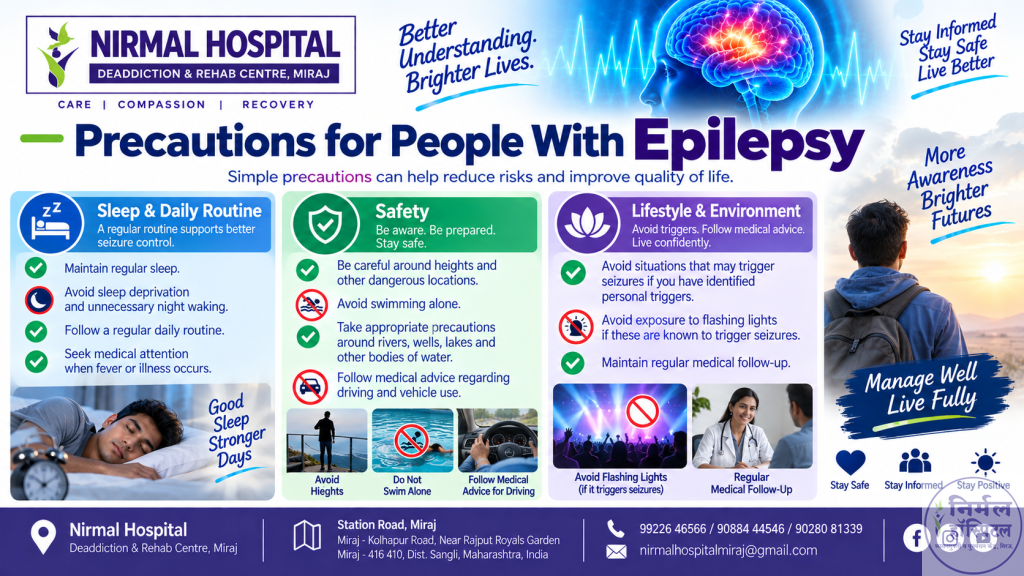
People with epilepsy may benefit from following appropriate safety precautions.
Sleep & Daily Routine
- Maintain regular sleep.
- Avoid sleep deprivation and unnecessary night waking.
- Follow a regular daily routine.
- Seek medical attention when fever or illness occurs.
Safety
- Be careful around heights and other dangerous locations.
- Avoid swimming alone.
- Take appropriate precautions around rivers, wells, lakes and other bodies of water.
- Follow medical advice regarding driving and vehicle use.
Lifestyle & Environment
- Avoid situations that may trigger seizures if you have identified personal triggers.
- Avoid exposure to flashing lights if these are known to trigger seizures.
- Maintain regular medical follow-up.
The source material specifically recommends avoiding sleep deprivation, taking precautions around dangerous places and water, and avoiding flashing lights where relevant.
Epilepsy and Social Stigma
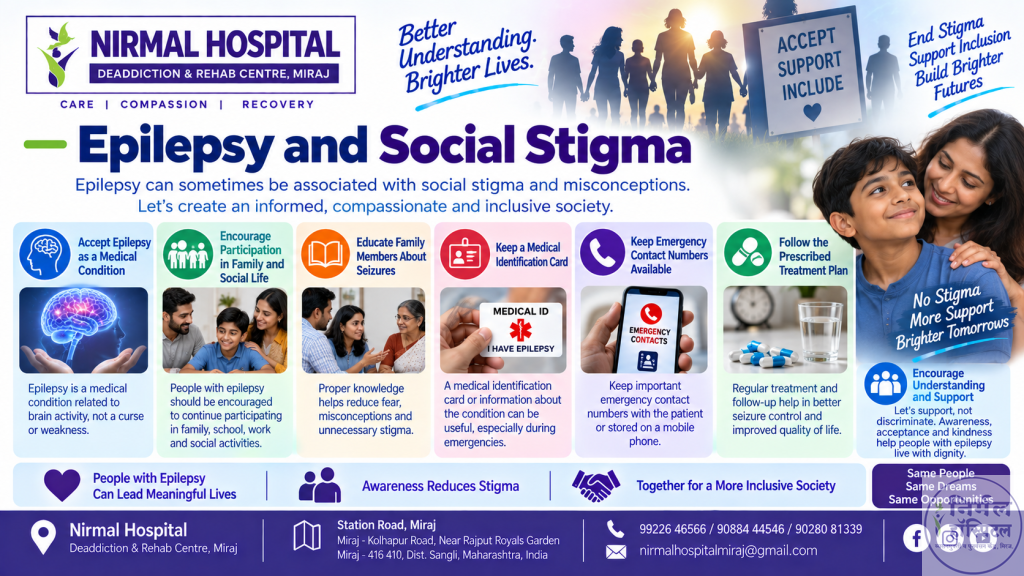
Epilepsy can sometimes be associated with social stigma and misconceptions.
It is important to:
- Accept epilepsy as a medical condition.
- Encourage patients to continue participating in family and social life.
- Educate family members about seizures.
- Keep a medical identification card or information about the condition when appropriate.
- Keep important emergency contact numbers available.
- Follow the prescribed treatment plan.
- Encourage understanding and support rather than discrimination.
When Should You Consult a Doctor?
You should seek medical evaluation if:
- A person experiences a seizure for the first time.
- Seizures occur repeatedly.
- There is unexplained loss of consciousness.
- There are repeated episodes of abnormal movements or awareness.
- A seizure lasts unusually long.
- Multiple seizures occur without adequate recovery.
- The person is injured during a seizure.
- There are concerns about the effectiveness or side effects of treatment.
Frequently Asked Questions – Epilepsy
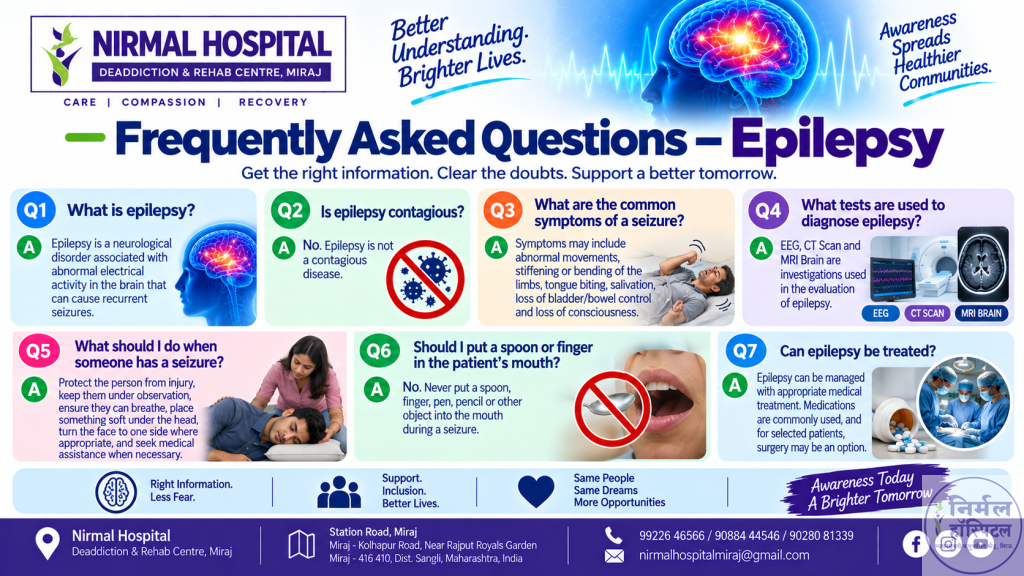
What is epilepsy?
Epilepsy is a neurological disorder associated with abnormal electrical activity in the brain that can cause recurrent seizures.
Is epilepsy contagious?
No. Epilepsy is not a contagious disease.
What are the common symptoms of a seizure?
Symptoms may include abnormal movements, stiffening or bending of the limbs, tongue biting, salivation, loss of bladder/bowel control and loss of consciousness.
What tests are used to diagnose epilepsy?
The source material mentions EEG, CT Scan and MRI Brain as investigations used in the evaluation of epilepsy.
What should I do when someone has a seizure?
Protect the person from injury, keep them under observation, ensure they can breathe, place something soft under the head, turn the face to one side where appropriate, and seek medical assistance when necessary.
Should I put a spoon or finger in the patient’s mouth?
No. Never put a spoon, finger, pen, pencil or other object into the mouth during a seizure.
Can epilepsy be treated?
Epilepsy can be managed with appropriate medical treatment. The source material mentions medications and, for selected patients, surgery.
Epilepsy Treatment & Consultation
If you or a family member is experiencing seizures, fits, loss of consciousness or other symptoms suggestive of epilepsy, professional medical evaluation is important.
At Nirmal Hospital, Miraj, patients can seek appropriate consultation and evaluation for neurological and psychiatric concerns.
Get Professional Medical Guidance
Don’t ignore repeated seizures.
Don’t rely on myths or unscientific remedies.
Seek appropriate medical evaluation and treatment.
Book an Appointment / Contact Us – 9922646566 / 9088444546 / 9028081339


Leave a Reply