

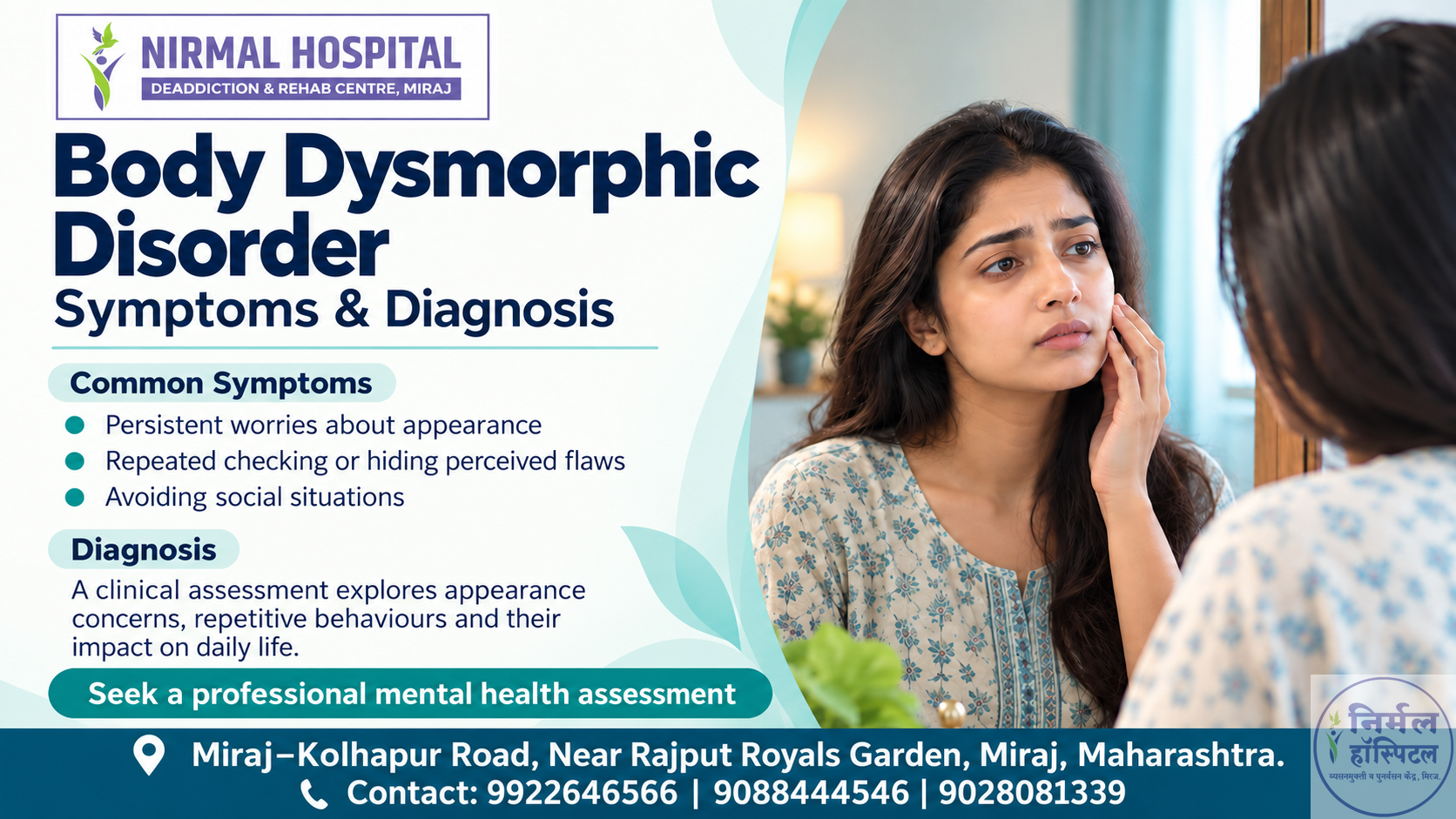
Body Dysmorphic Disorder: Symptoms and Diagnosis in Miraj
Concerns about appearance are common. However, when these worries become persistent, distressing and difficult to control, they may indicate body dysmorphic disorder (BDD).
BDD is a mental health condition in which a person becomes intensely preoccupied with perceived flaws in their appearance that other people may barely notice or cannot see. These concerns can interfere with relationships, education, work and everyday activities.
If you are seeking body dysmorphic disorder diagnosis in Miraj, a mental health assessment can help clarify your symptoms and guide appropriate care.
What Is Body Dysmorphic Disorder?
Body dysmorphic disorder involves more than occasionally feeling unhappy with your appearance. A person may spend considerable time thinking about a particular feature, checking it, trying to hide it or comparing it with other people’s features.
Concerns may involve the skin, hair, nose, facial features or other body areas. Some people worry that their body is too small or insufficiently muscular.
The distress is real, even when the perceived flaw is slight or unnoticeable to others. BDD should be approached with understanding rather than dismissed as vanity.
Common Symptoms of Body Dysmorphic Disorder
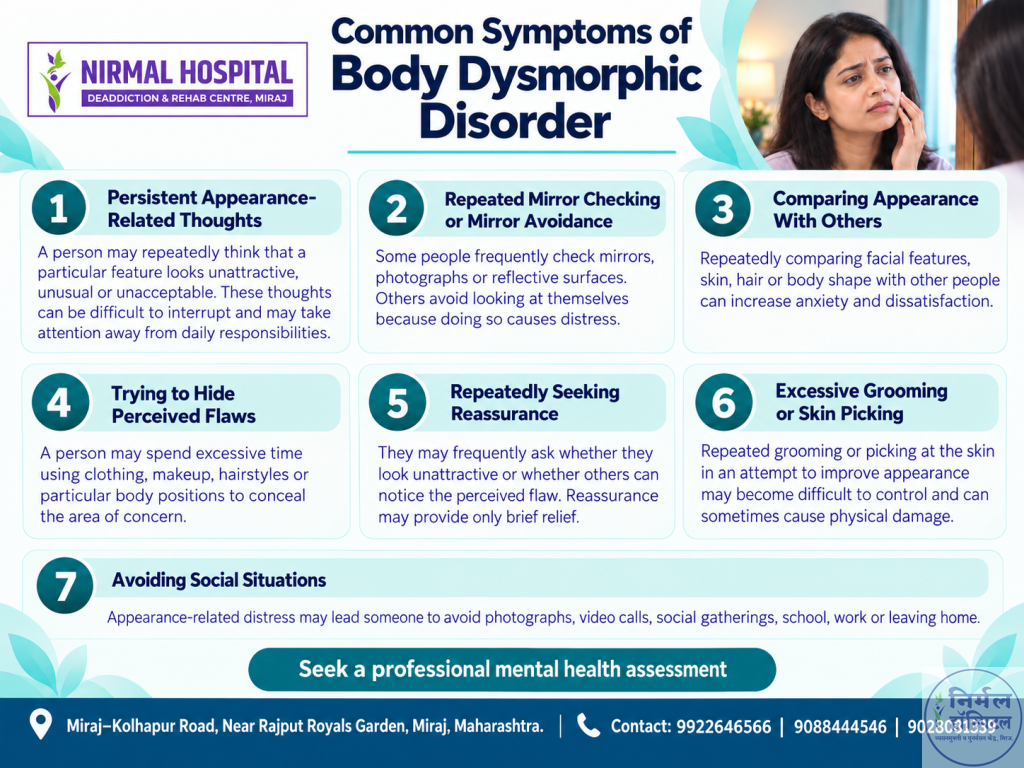
Persistent Appearance-Related Thoughts
A person may repeatedly think that a particular feature looks unattractive, unusual or unacceptable. These thoughts can be difficult to interrupt and may take attention away from daily responsibilities.
Repeated Mirror Checking or Mirror Avoidance
Some people frequently check mirrors, photographs or reflective surfaces. Others avoid looking at themselves because doing so causes distress.
Comparing Appearance With Others
Repeatedly comparing facial features, skin, hair or body shape with other people can increase anxiety and dissatisfaction.
Trying to Hide Perceived Flaws
A person may spend excessive time using clothing, makeup, hairstyles or particular body positions to conceal the area of concern.
Repeatedly Seeking Reassurance
They may frequently ask whether they look unattractive or whether others can notice the perceived flaw. Reassurance may provide only brief relief.
Excessive Grooming or Skin Picking
Repeated grooming or picking at the skin in an attempt to improve appearance may become difficult to control and can sometimes cause physical damage.
Avoiding Social Situations
Appearance-related distress may lead someone to avoid photographs, video calls, social gatherings, school, work or leaving home.
How Can BDD Affect Everyday Life?
BDD can make routine activities feel overwhelming. A person may arrive late because of prolonged grooming, struggle to concentrate or withdraw from relationships because they fear being judged.
Persistent distress can also occur alongside depression, social anxiety or obsessive-compulsive symptoms. The impact on daily life is an important reason to seek professional assessment.
Diagnosis of Body Dysmorphic Disorder
A psychiatrist or another appropriately qualified mental health professional diagnoses BDD through a clinical assessment.
Understanding Appearance Concerns
The professional asks which features cause concern, how often these thoughts occur and how difficult they are to manage.
Assessing Repetitive Behaviours
Assessment explores behaviours such as checking mirrors, comparing appearance, seeking reassurance, excessive grooming and hiding perceived flaws.
Reviewing Distress and Daily Functioning
The professional considers whether these concerns cause significant distress or interfere with relationships, education, employment or daily routines.
Considering Other Conditions
The assessment also considers conditions that may overlap with, or better explain, the symptoms, including eating disorders, OCD, depression and social anxiety.
Assessing Emotional Wellbeing and Safety
The professional may ask about hopelessness, self-harm thoughts and available support to understand whether urgent care is needed.
Is There a Test for Body Dysmorphic Disorder?
There is no single blood test or brain scan that confirms BDD. Questionnaires may support the assessment, but diagnosis requires a clinical evaluation.
An online screening result alone cannot establish whether someone has the condition.
When Should You Seek Help?
Consider a mental health assessment if appearance-related worries:
- Occupy a significant amount of your day.
- Lead to repeated checking, grooming or reassurance seeking.
- Make you avoid people, photographs or everyday activities.
- Affect your work, studies or relationships.
- Continue despite repeated reassurance or attempts to change your appearance.
You do not need to wait until symptoms become severe before seeking support.
Discuss Your Concerns With Nirmal Hospital, Miraj
Are appearance-related thoughts affecting your confidence or daily routine? Contact Nirmal Hospital, Miraj, to discuss your concerns and arrange an appropriate mental health assessment.
Learn about care options: Body Dysmorphic Disorder Treatment in Miraj


