


Cannabis Addiction (Cannabis Dependence)
Complete Information About Cannabis, Marijuana, Bhang and Charas Addiction
Cannabis, marijuana, bhang and charas use may initially begin out of curiosity, peer pressure, a desire to reduce stress, or simply to experiment. However, regular use can gradually become a habit and may lead to dependence or addiction.
Regular cannabis use can affect the brain, memory, thinking ability, concentration, decision-making, emotional balance and daily functioning. In some individuals, cannabis use may also increase the risk of anxiety, fear, suspicious thoughts and other mental health concerns.
With the right information, timely professional support and family support, recovery from cannabis dependence is possible.
What Is Cannabis?
Cannabis, bhang and charas are substances derived from the Cannabis sativa plant. The plant contains chemical compounds known as cannabinoids, which can affect the brain.
One of the major compounds is Tetrahydrocannabinol (THC). THC is the primary psychoactive component responsible for the intoxicating effects of cannabis.
After cannabis is consumed, THC reaches the brain through the bloodstream and affects brain function. Some individuals may temporarily feel relaxed, light-hearted or happy. They may also experience changes in their perception of time, increased laughter or unusual sensory experiences.
However, THC can also affect memory, concentration, thinking ability and decision-making.
Common Names for Cannabis
Names Used in India
Cannabis is known by different names in different regions and communities.
- Bhang
- Ganja
- Charas
- Maal
- Booti
- Shivji Ka Prasad
Common International Names
Cannabis is known by various names around the world, including:
- Marijuana
- Pot
- Grass
- Hash
- Dope
- Kush
- Moon Rocks
Synthetic Marijuana
Apart from natural cannabis, cannabis-like substances made using synthetic chemicals are also used.
These substances contain synthetic chemicals and may produce stronger or, in some situations, more harmful effects than natural cannabis.
Medical Uses of Cannabis
Some compounds derived from cannabis may have controlled medical applications in specific medical conditions. However, there is an important difference between the medical use of specific cannabis-derived compounds and recreational or addictive cannabis use.
Under specific medical circumstances, cannabis-derived compounds may be used for:
- Reducing nausea and vomiting associated with chemotherapy
- Helping improve appetite in certain serious medical conditions
- Managing certain types of chronic or cancer-related pain
- Certain types of epilepsy
- Specific situations involving increased eye pressure
Important: Medical cannabis-related treatments should only be used under appropriate medical supervision. Using cannabis on one’s own or considering regular cannabis use as a medicine is not recommended.
Effects of Cannabis on the Body and Brain
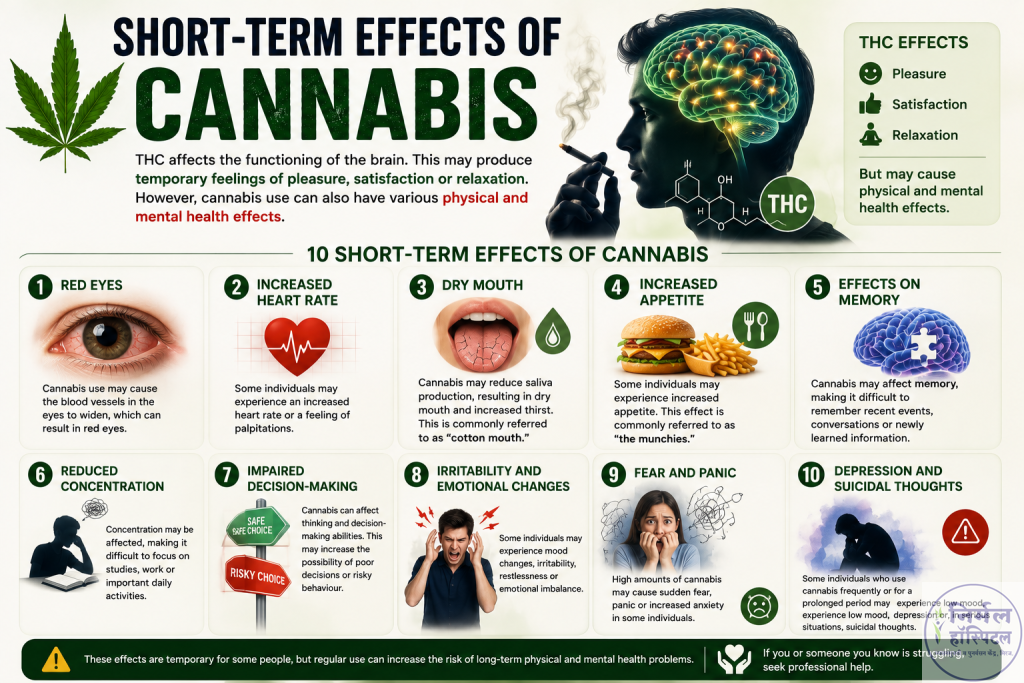
THC affects the functioning of the brain. This may produce temporary feelings of pleasure, satisfaction or relaxation. However, cannabis use can also have various physical and mental health effects.
Short-Term Effects of Cannabis
1. Red Eyes
Cannabis use may cause the blood vessels in the eyes to widen, which can result in red eyes.
2. Increased Heart Rate
Some individuals may experience an increased heart rate or a feeling of palpitations after using cannabis.
3. Dry Mouth
Cannabis may reduce saliva production, resulting in dry mouth and increased thirst. This is commonly referred to as “cotton mouth.”
4. Increased Appetite
Some individuals may experience increased appetite after using cannabis. This effect is commonly referred to as “the munchies.”
5. Effects on Memory
Cannabis may affect memory, making it difficult to remember recent events, conversations or newly learned information.
6. Reduced Concentration
Concentration may be affected, making it difficult to focus on studies, work or important daily activities.
7. Impaired Decision-Making
Cannabis can affect thinking and decision-making abilities. This may increase the possibility of poor decisions or risky behaviour.
8. Irritability and Emotional Changes
Some individuals may experience mood changes, irritability, restlessness or emotional imbalance.
9. Fear and Panic
High amounts of cannabis may cause sudden fear, panic or increased anxiety in some individuals.
10. Depression and Suicidal Thoughts
Some individuals who use cannabis frequently or for a prolonged period may experience low mood, depression or, in serious situations, suicidal thoughts.
Long-Term Effects of Cannabis
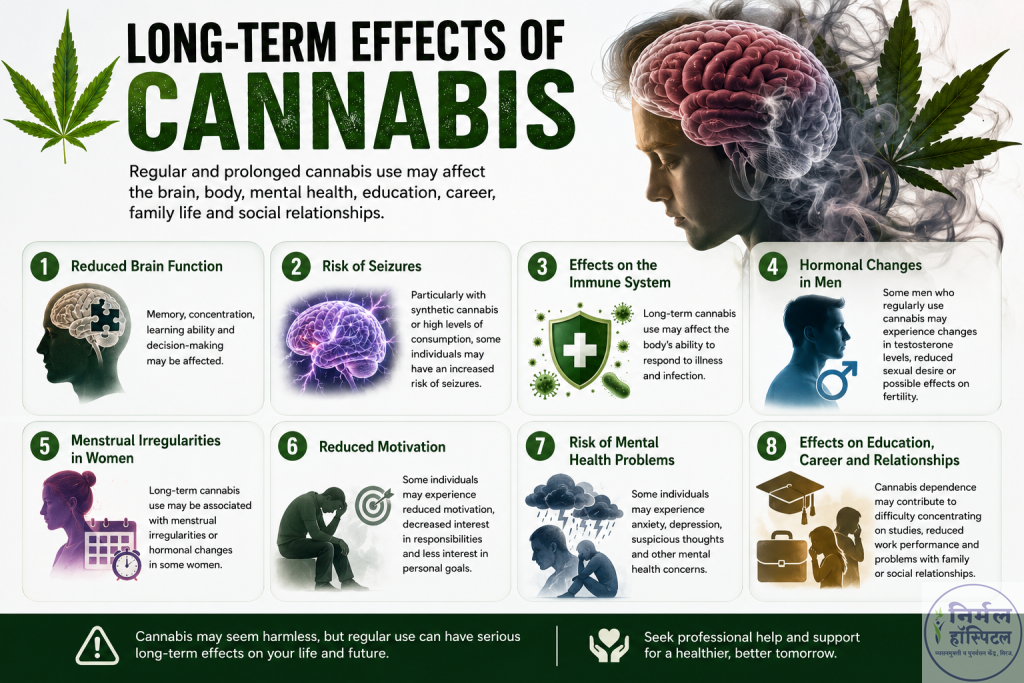
Regular and prolonged cannabis use may affect the brain, body, mental health, education, career, family life and social relationships.
1. Reduced Brain Function
Memory, concentration, learning ability and decision-making may be affected.
2. Risk of Seizures
Particularly with synthetic cannabis or high levels of consumption, some individuals may have an increased risk of seizures.
3. Effects on the Immune System
Long-term cannabis use may affect the body’s ability to respond to illness and infection.
4. Hormonal Changes in Men
Some men who regularly use cannabis may experience changes in testosterone levels, reduced sexual desire or possible effects on fertility.
5. Menstrual Irregularities in Women
Long-term cannabis use may be associated with menstrual irregularities or hormonal changes in some women.
6. Reduced Motivation
Some individuals may experience reduced motivation, decreased interest in responsibilities and less interest in personal goals.
7. Risk of Mental Health Problems
Some individuals may experience anxiety, depression, suspicious thoughts and other mental health concerns.
8. Effects on Education, Career and Relationships
Cannabis dependence may contribute to difficulty concentrating on studies, reduced work performance and problems with family or social relationships.
Signs and Symptoms of Cannabis Addiction
A person experiencing cannabis dependence may show some of the following changes:
- Strong desire or craving to use cannabis
- Increasing amount or frequency of cannabis use
- Reduced interest in studies or work
- Neglecting daily responsibilities
- Problems with memory and concentration
- Reduced decision-making ability
- Irritability and emotional changes
- Increased anxiety or fear
- Suspicious thoughts
- Withdrawal from family and friends
- Repeatedly returning to cannabis use after trying to stop
- Withdrawal symptoms after stopping cannabis
Cannabis Withdrawal Symptoms
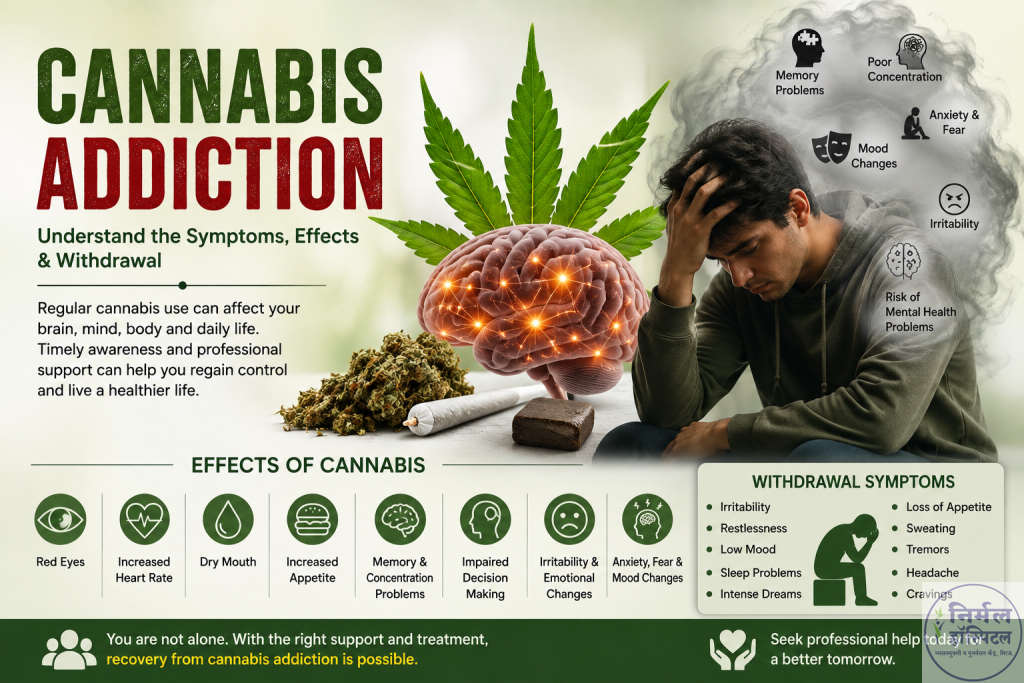
When a person who regularly uses cannabis suddenly stops, some individuals may experience cannabis withdrawal symptoms.
Common Cannabis Withdrawal Symptoms
- Irritability and increased anger
- Restlessness and uneasiness
- Low mood or feelings of depression
- Reduced concentration
- Difficulty sleeping or frequent waking
- Unusual or intense dreams
- Reduced appetite
- Increased sweating
- Trembling of the hands or legs
- Headache or general physical discomfort
These symptoms may begin after stopping cannabis and can be more noticeable during the first week. They gradually decrease in many individuals, although the severity and duration can vary from person to person.
Case History: How Can Cannabis Addiction Develop?
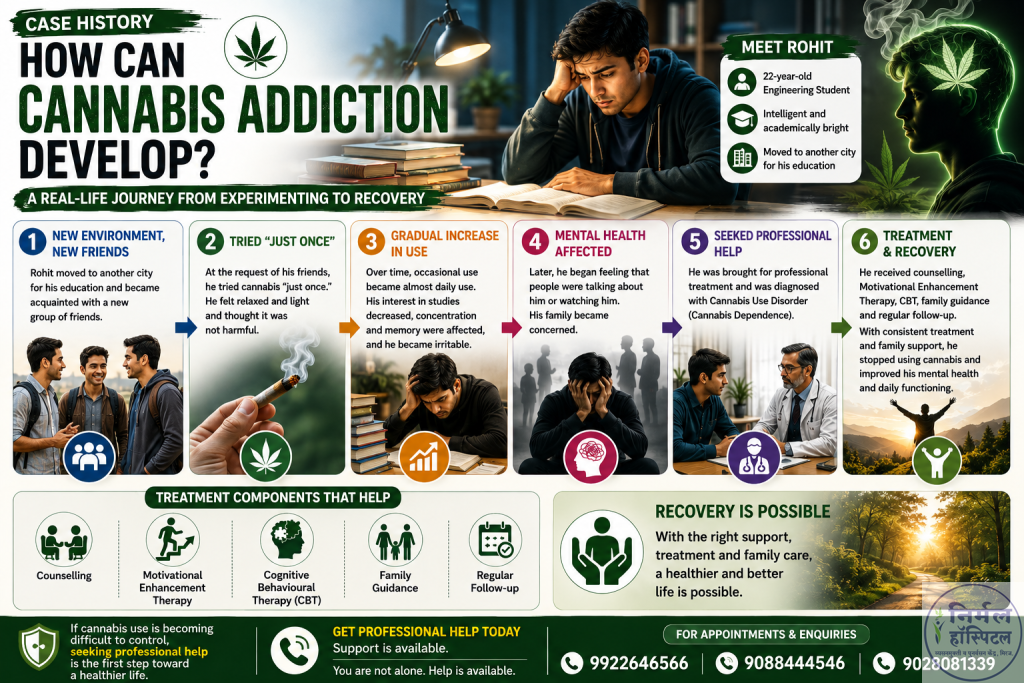
Rohit, a 22-year-old engineering student, was intelligent and performed well academically. After moving to another city for his education, he became acquainted with a new group of friends.
At the request of his friends, he initially tried cannabis “just once.” He felt relaxed and light after using it and gradually developed the misconception that cannabis was not harmful.
Over time, occasional cannabis use gradually became almost daily use. His interest in studies decreased, his concentration and memory were affected, his academic performance declined and he became increasingly irritable.
Later, he began feeling that people were talking about him or watching him. His family became concerned and brought him for professional treatment.
Following assessment, he was diagnosed with Cannabis Use Disorder (Cannabis Dependence). His treatment included counselling, Motivational Enhancement Therapy, Cognitive Behavioural Therapy (CBT), family guidance and regular follow-up.
With consistent treatment and family support, he stopped using cannabis and gradually experienced improvement in his mental health and daily functioning.
Cannabis Dependence Is More Than Just a Habit
Cannabis dependence can affect a person’s physical and mental health as well as education, career, family life and social relationships.
When trying to stop cannabis, some individuals may experience restlessness, irritability, sleep problems or strong cravings to use cannabis again. Therefore, appropriate professional guidance and support may be important during recovery.
Seeking timely professional help can be an important step toward recovery from cannabis dependence.
When Should You Seek Help for Cannabis Addiction?
Professional support may be considered when any of the following problems occur:
- Unable to stop using cannabis
- Increasing cannabis use
- Cannabis use affecting studies or work
- Problems developing in family relationships
- Increasing irritability, anxiety or fear
- Suspicious or paranoid thoughts
- Withdrawal symptoms after stopping cannabis
- Significant changes in mental health or daily functioning
Take the First Step Toward Recovery
Do not ignore cannabis dependence. Seeking professional help at the right time can be an important first step toward a healthier and more balanced life.
Cannabis Dependence | Marijuana Addiction | Cannabis Use Disorder | Cannabis Addiction | Bhang & Charas Addiction
FAQ – Cannabis Addiction
What is cannabis addiction?
Cannabis addiction, also known as cannabis dependence or Cannabis Use Disorder, refers to problematic cannabis use that becomes difficult to control and may affect a person’s health, daily activities, studies, work or relationships.
Is cannabis addictive?
Yes. Regular cannabis use can lead to dependence in some individuals. A person may develop cravings, difficulty stopping and withdrawal symptoms after reducing or stopping cannabis use.
What are the signs of cannabis addiction?
Common signs include strong cravings, increasing cannabis use, difficulty stopping, reduced interest in studies or work, neglect of responsibilities, concentration problems, irritability and continued use despite negative consequences.
What is Cannabis Use Disorder?
Cannabis Use Disorder is a condition involving problematic cannabis use that can interfere with a person’s physical or mental health and daily functioning.
What are cannabis withdrawal symptoms?
Cannabis withdrawal may include irritability, restlessness, low mood, difficulty concentrating, sleep problems, unusual dreams, reduced appetite, sweating, headache and physical discomfort.
Can cannabis affect memory and concentration?
Yes. Cannabis use can affect memory, concentration, thinking ability and decision-making, particularly during or following regular use.
Can cannabis affect mental health?
Cannabis use may be associated with anxiety, fear, mood changes and suspicious thoughts in some individuals. People experiencing significant mental health changes should seek appropriate professional assessment.
Can cannabis addiction affect education and career?
Yes. Cannabis dependence may affect concentration, motivation, academic performance, work performance and relationships.
Can cannabis addiction be treated?
Recovery from cannabis dependence is possible. Depending on the individual’s needs, professional support may include counselling, behavioural approaches, family guidance and regular follow-up.
How long do cannabis withdrawal symptoms last?
Withdrawal symptoms vary from person to person. They may begin after stopping regular cannabis use and can be more noticeable during the first week. Symptoms generally decrease gradually, although their duration and intensity can vary.
When should someone seek help for cannabis addiction?
Professional help should be considered when a person cannot stop using cannabis, cannabis use is increasing, studies or work are affected, family relationships are deteriorating, or significant anxiety, suspicious thoughts, mood changes or withdrawal symptoms occur.
Is cannabis the same as bhang and charas?
Bhang, ganja and charas are terms associated with cannabis products. Their form and preparation can differ, but they are related to the Cannabis sativa plant.
If cannabis use is becoming difficult to control, learn more about our Deaddiction Treatment services and professional support options.
Watch Our Video on Cannabis Addiction
Learn more about cannabis addiction, its symptoms, effects, withdrawal symptoms and warning signs through our informative video.


Leave a Reply