

What Is Chronic Pain Disorder?
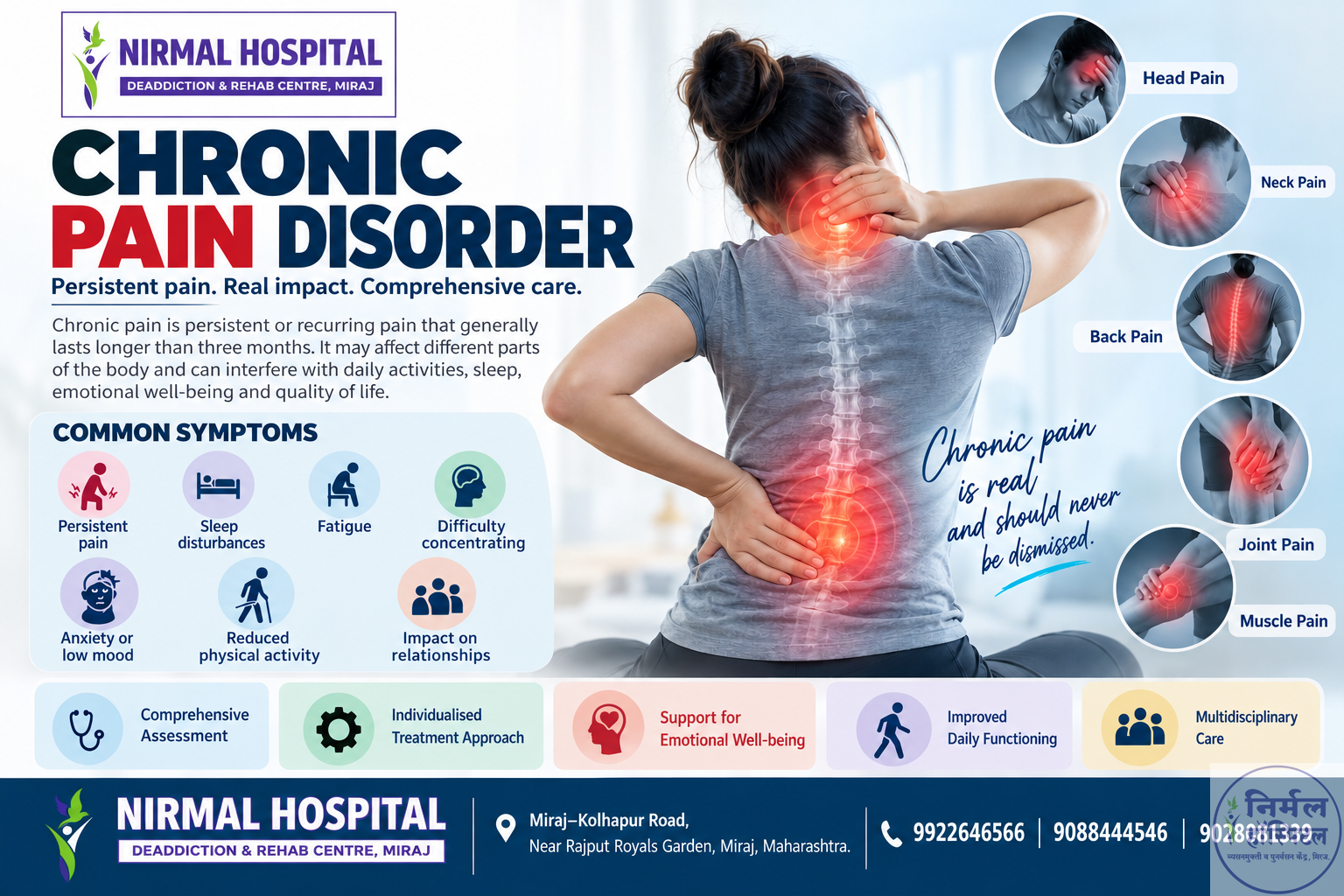
Chronic pain is persistent or recurring pain that generally lasts longer than three months. It may affect different parts of the body, including the head, neck, back, muscles, joints and abdomen.
Chronic pain can significantly interfere with daily activities, sleep, emotional well-being, relationships and quality of life.
Pain is a complex experience influenced by biological, psychological and social factors. Conditions previously described as Pain Disorder may now be evaluated using contemporary diagnostic frameworks, including chronic primary pain or somatic symptom disorder, depending on the patient’s presentation.
Chronic pain is real and should never be dismissed as imaginary or purely psychological.
Common Symptoms of Chronic Pain Disorder
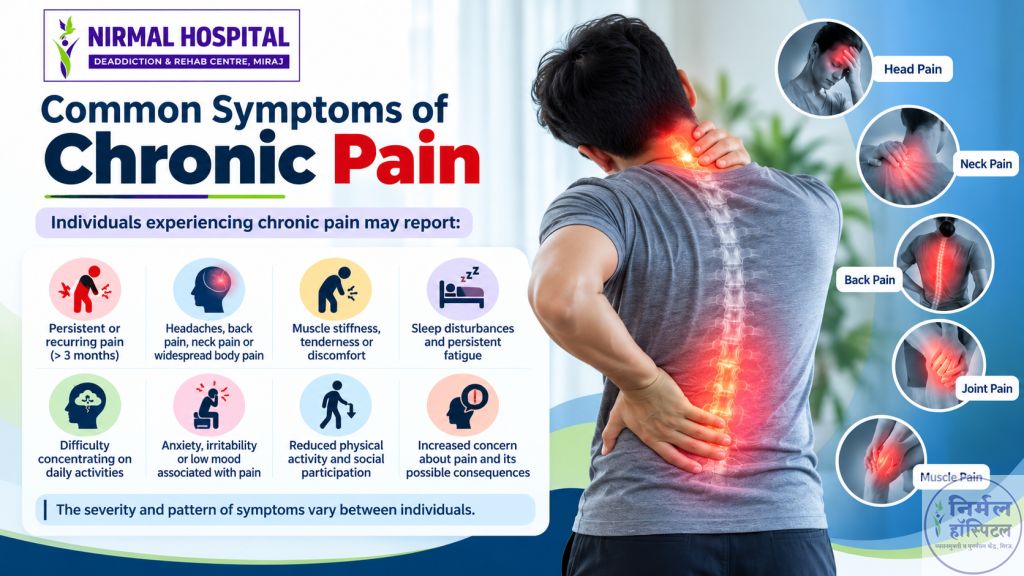
Individuals experiencing chronic pain may report:
-
Persistent or recurring pain lasting longer than three months.
-
Headaches, back pain, neck pain or widespread body pain.
-
Muscle stiffness, tenderness or discomfort.
-
Sleep disturbances and persistent fatigue.
-
Difficulty concentrating on daily activities.
-
Anxiety, irritability or low mood associated with pain.
-
Reduced physical activity and social participation.
-
Increased concern about pain and its possible consequences.
The severity and pattern of symptoms vary between individuals.
Causes and Risk Factors
Chronic pain may develop due to multiple contributing factors.
Physical and Medical Factors
-
Previous injuries or surgical procedures.
-
Musculoskeletal disorders.
-
Neurological conditions.
-
Inflammatory or other chronic medical illnesses.
-
Changes in pain-processing pathways.
Psychological and Emotional Factors
-
Prolonged stress.
-
Anxiety and depression.
-
Fear of movement or reinjury.
-
Negative expectations regarding pain.
-
Difficulties coping with persistent symptoms.
Lifestyle and Social Factors
-
Poor sleep quality.
-
Physical inactivity.
-
Occupational stress.
-
Limited social support.
-
Repeated avoidance of normal activities.
Psychological factors can influence the intensity and impact of pain, but they do not mean the pain is not genuine.
How Is Chronic Pain Disorder Diagnosed?
Diagnosis requires a comprehensive medical assessment to identify possible causes and contributing factors.
1. Detailed Medical History
The doctor evaluates the duration, location, intensity and characteristics of pain.
2. Physical Examination
A clinical examination helps identify possible musculoskeletal, neurological or other medical causes.
3. Diagnostic Investigations
Blood tests, imaging or other investigations may be recommended when clinically indicated.
4. Psychological Assessment
The psychiatrist may assess stress, anxiety, depression, sleep problems and pain-related distress.
5. Functional Assessment
The impact of pain on work, mobility, sleep, relationships and daily functioning is evaluated.
A psychiatric diagnosis should not be made simply because routine investigations are normal.
When Should You Consult a Specialist?
Consult a qualified healthcare professional if:
-
Pain persists beyond three months.
-
Pain interferes with sleep or daily functioning.
-
Symptoms are accompanied by significant anxiety or depression.
-
Pain-related fear restricts normal activities.
-
Previous treatment has not provided adequate relief.
Sudden severe pain, new weakness, loss of bladder or bowel control, chest pain or other acute warning signs require urgent medical evaluation.
Frequently Asked Questions
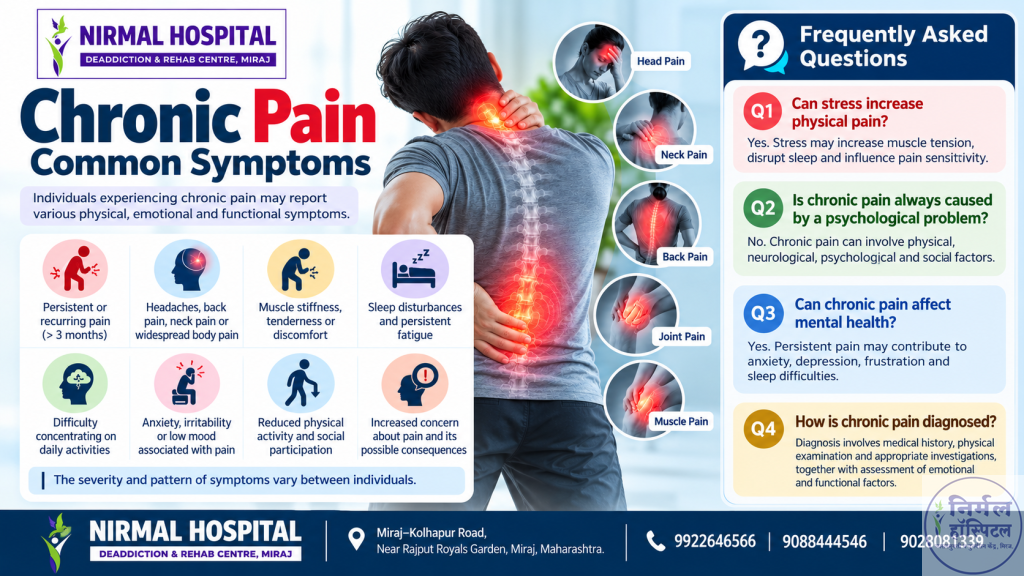
Q1. Can stress increase physical pain?
Yes. Stress may increase muscle tension, disrupt sleep and influence pain sensitivity.
Q2. Is chronic pain always caused by a psychological problem?
No. Chronic pain can involve physical, neurological, psychological and social factors.
Q3. Can chronic pain affect mental health?
Yes. Persistent pain may contribute to anxiety, depression, frustration and sleep difficulties.
Q4. How is chronic pain diagnosed?
Diagnosis involves medical history, physical examination and appropriate investigations, together with assessment of emotional and functional factors.
Consult Nirmal Hospital, Miraj
For psychiatric assessment and support with the psychological impact of chronic pain, consult the mental health team at Nirmal Hospital, Miraj.
Nirmal Hospital – Psychiatric, De-Addiction & Rehabilitation Centre
Address: Miraj–Kolhapur Road, Near Rajput Royals Garden, Miraj, Maharashtra.
Contact: 9922646566 | 9088444546 | 9028081339


