


Obsessive-Compulsive Disorder (OCD) – Symptoms, Causes and Diagnosis
The Vicious Cycle of Thoughts: Understanding Obsessive-Compulsive Disorder (OCD)
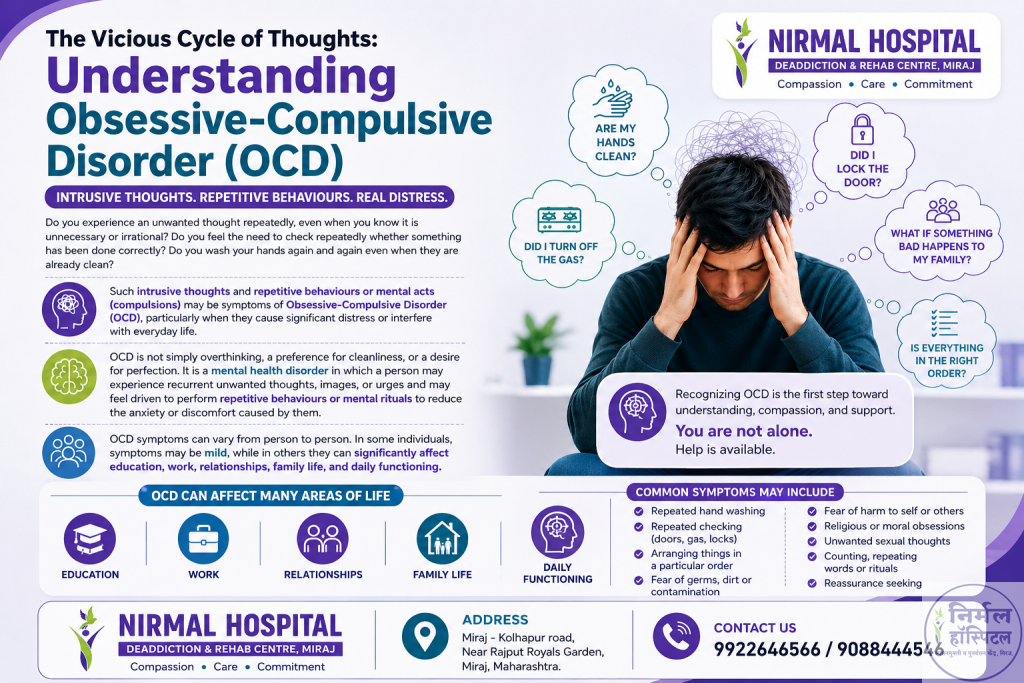
Do you experience an unwanted thought repeatedly, even when you know it is unnecessary or irrational? Do you feel the need to check repeatedly whether something has been done correctly? Do you wash your hands again and again even when they are already clean?
Such intrusive thoughts and repetitive behaviours or mental acts (compulsions) may be symptoms of Obsessive-Compulsive Disorder (OCD), particularly when they cause significant distress or interfere with everyday life.
OCD is not simply overthinking, a preference for cleanliness, or a desire for perfection. It is a mental health disorder in which a person may experience recurrent unwanted thoughts, images, or urges and may feel driven to perform repetitive behaviours or mental rituals to reduce the anxiety or discomfort caused by them.
OCD symptoms can vary from person to person. In some individuals, symptoms may be mild, while in others they can significantly affect education, work, relationships, family life, and daily functioning.
What is Obsessive-Compulsive Disorder (OCD)?
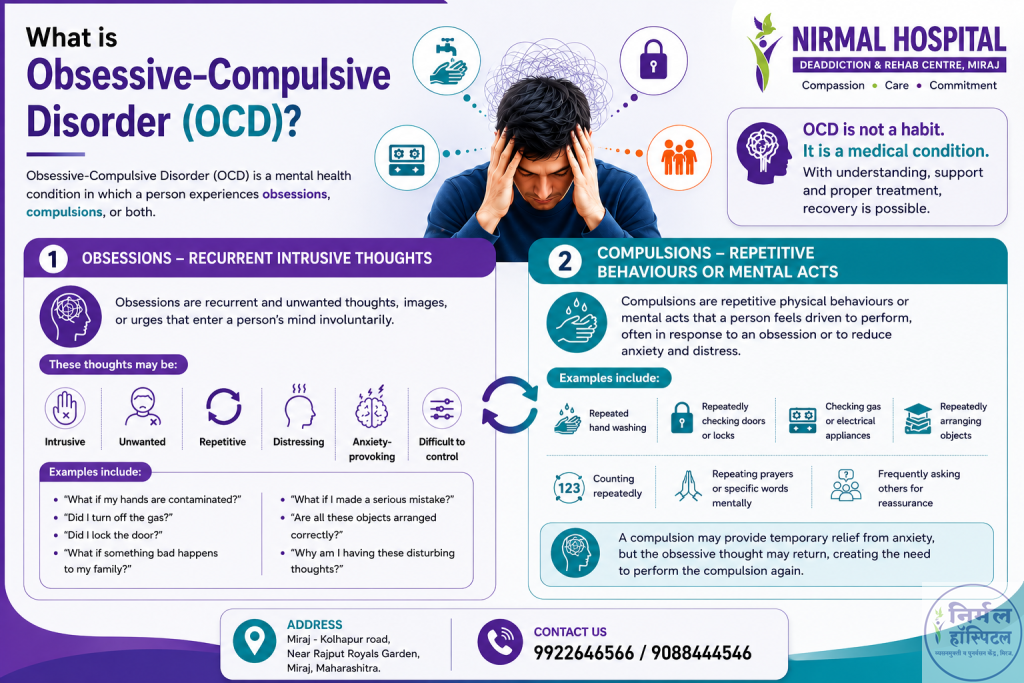
Obsessive-Compulsive Disorder (OCD) is a mental health condition in which a person experiences obsessions, compulsions, or both.
1. Obsessions – Recurrent Intrusive Thoughts
Obsessions are recurrent and unwanted thoughts, images, or urges that enter a person’s mind involuntarily.
These thoughts may be:
-
Intrusive
-
Unwanted
-
Repetitive
-
Distressing
-
Anxiety-provoking
-
Difficult to control
Examples include:
-
“What if my hands are contaminated?”
-
“Did I turn off the gas?”
-
“Did I lock the door?”
-
“What if something bad happens to my family?”
-
“What if I made a serious mistake?”
-
“Are all these objects arranged correctly?”
-
“Why am I having these disturbing thoughts?”
2. Compulsions – Repetitive Behaviours or Mental Acts
Compulsions are repetitive physical behaviours or mental acts that a person feels driven to perform, often in response to an obsession or to reduce anxiety and distress.
Examples include:
-
Repeated hand washing
-
Repeatedly checking doors or locks
-
Checking gas or electrical appliances
-
Repeatedly arranging objects
-
Counting repeatedly
-
Repeating prayers or specific words mentally
-
Frequently asking others for reassurance
A compulsion may provide temporary relief from anxiety, but the obsessive thought may return, creating the need to perform the compulsion again.
How Does the OCD Cycle Develop?
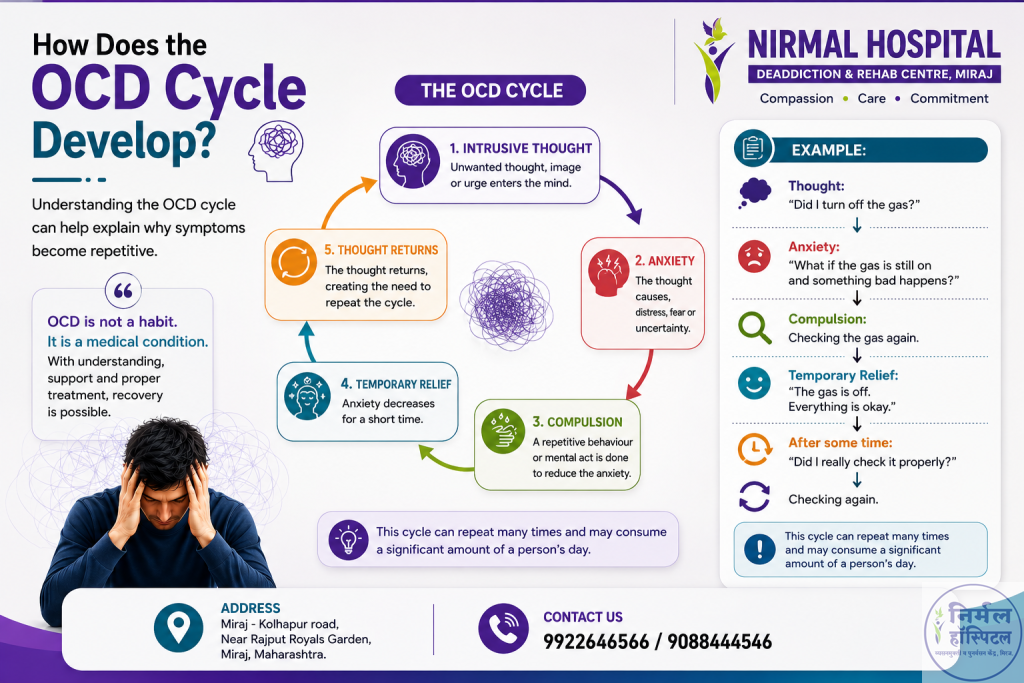
Understanding the OCD cycle can help explain why symptoms become repetitive.
Intrusive Thought → Anxiety → Compulsion → Temporary Relief → Thought Returns
Example:
Thought:
“Did I turn off the gas?”
↓
Anxiety:
“What if the gas is still on and something bad happens?”
↓
Compulsion:
Checking the gas again.
↓
Temporary Relief:
“The gas is off. Everything is okay.”
↓
After some time:
“Did I really check it properly?”
↓
Checking again.
This cycle can repeat many times and may consume a significant amount of a person’s day.
Common Symptoms of OCD
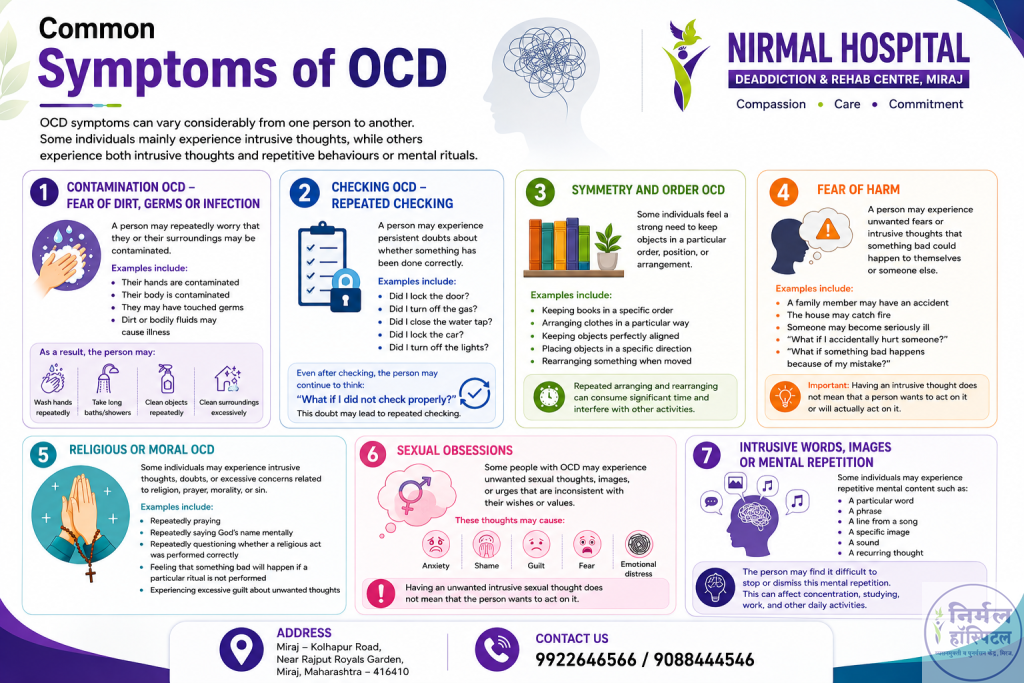
OCD symptoms can vary considerably from one person to another. Some individuals mainly experience intrusive thoughts, while others experience both intrusive thoughts and repetitive behaviours or mental rituals.
1. Contamination OCD – Fear of Dirt, Germs or Infection
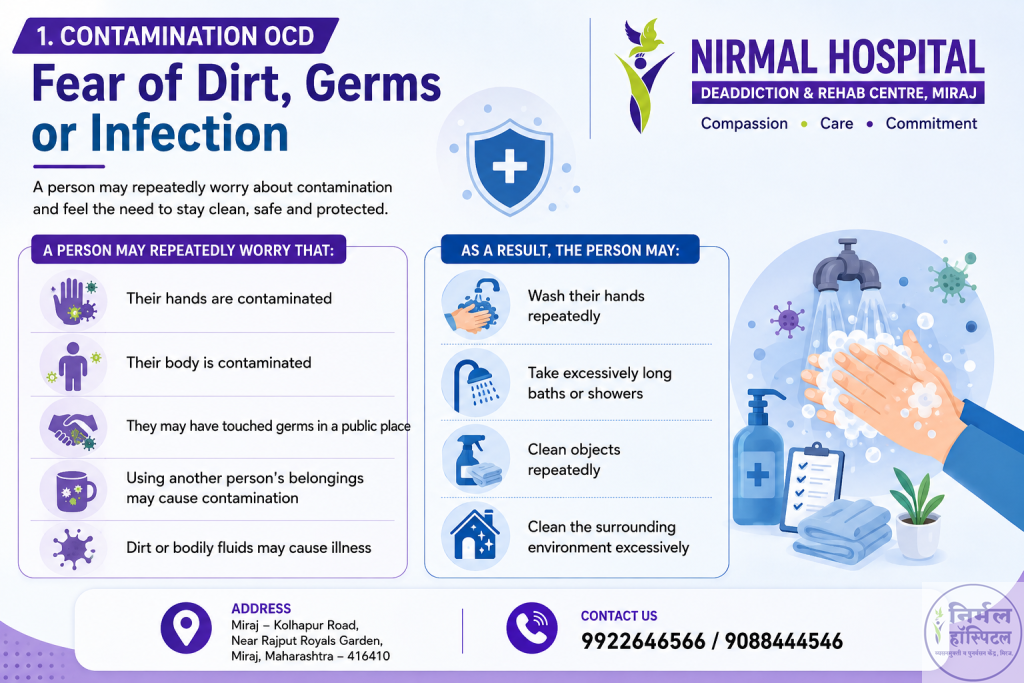
A person may repeatedly worry that:
-
Their hands are contaminated
-
Their body is contaminated
-
They may have touched germs in a public place
-
Using another person’s belongings may cause contamination
-
Dirt or bodily fluids may cause illness
As a result, the person may:
-
Wash their hands repeatedly
-
Take excessively long baths or showers
-
Clean objects repeatedly
-
Clean the surrounding environment excessively
2. Checking OCD – Repeated Checking
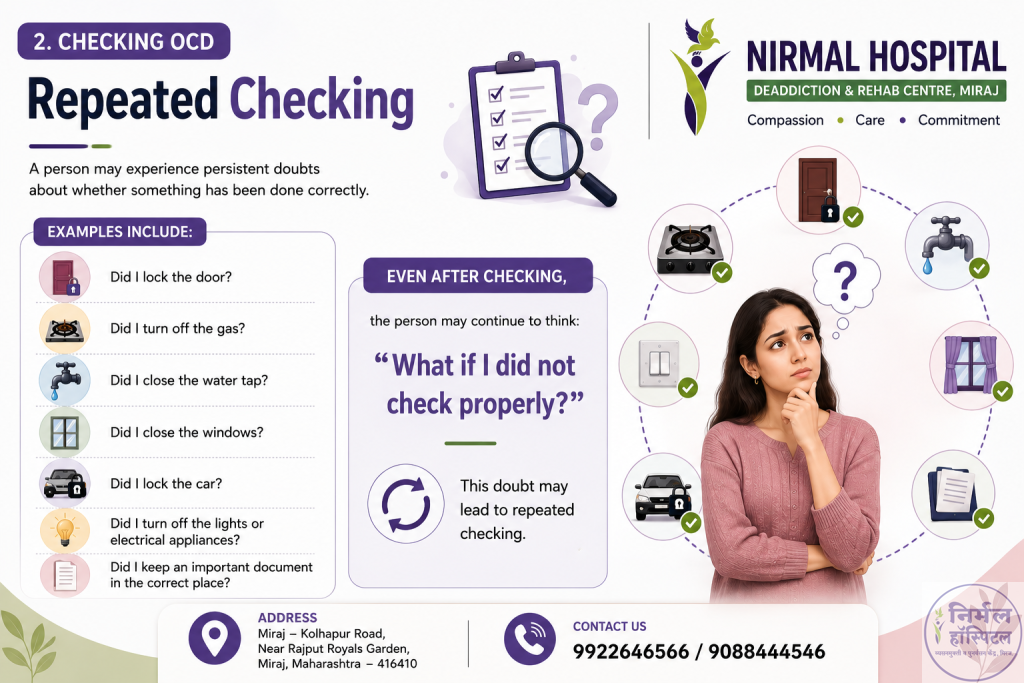
A person may experience persistent doubts about whether something has been done correctly.
Examples include:
-
Did I lock the door?
-
Did I turn off the gas?
-
Did I close the water tap?
-
Did I close the windows?
-
Did I lock the car?
-
Did I turn off the lights or electrical appliances?
-
Did I keep an important document in the correct place?
Even after checking, the person may continue to think:
“What if I did not check properly?”
This doubt may lead to repeated checking.
3. Symmetry and Order OCD
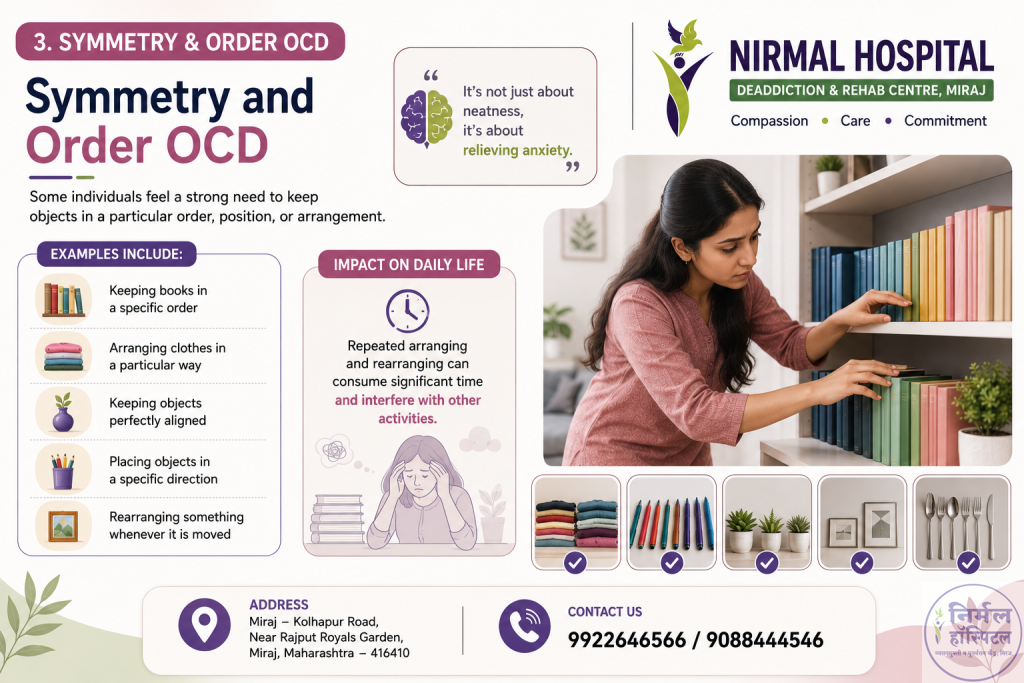
Some individuals feel a strong need to keep objects in a particular order, position, or arrangement.
Examples include:
-
Keeping books in a specific order
-
Arranging clothes in a particular way
-
Keeping objects perfectly aligned
-
Placing objects in a specific direction
-
Rearranging something whenever it is moved
Repeated arranging and rearranging can consume significant time and interfere with other activities.
4. Fear of Harm
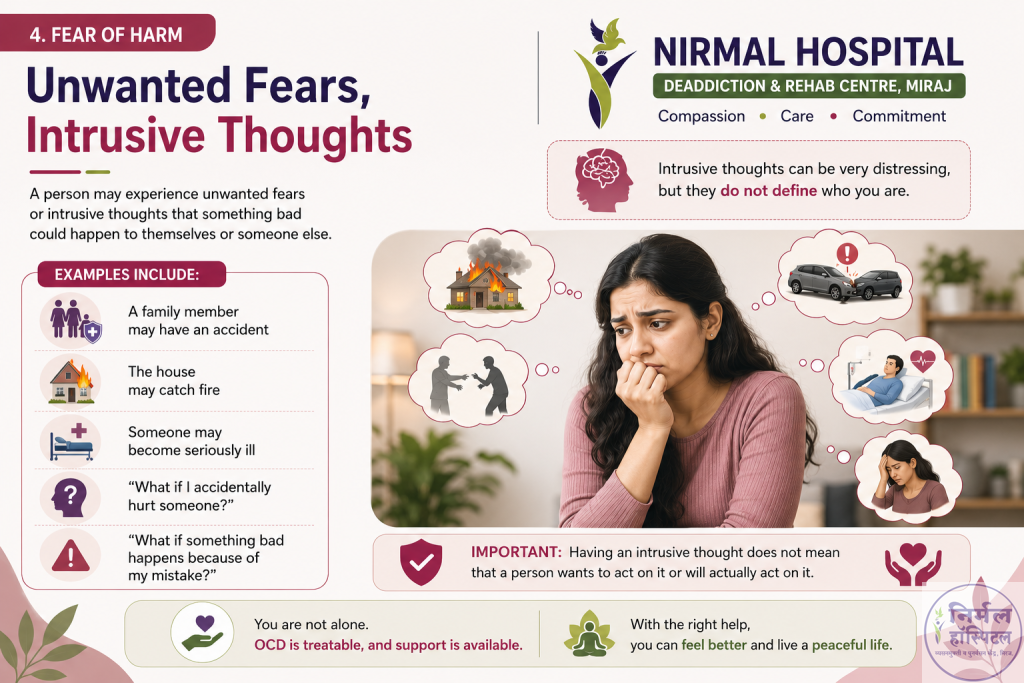
A person may experience unwanted fears or intrusive thoughts that something bad could happen to themselves or someone else.
Examples include:
-
A family member may have an accident
-
The house may catch fire
-
Someone may become seriously ill
-
“What if I accidentally hurt someone?”
-
“What if something bad happens because of my mistake?”
Important: Having an intrusive thought does not mean that a person wants to act on it or will actually act on it.
5. Religious or Moral OCD
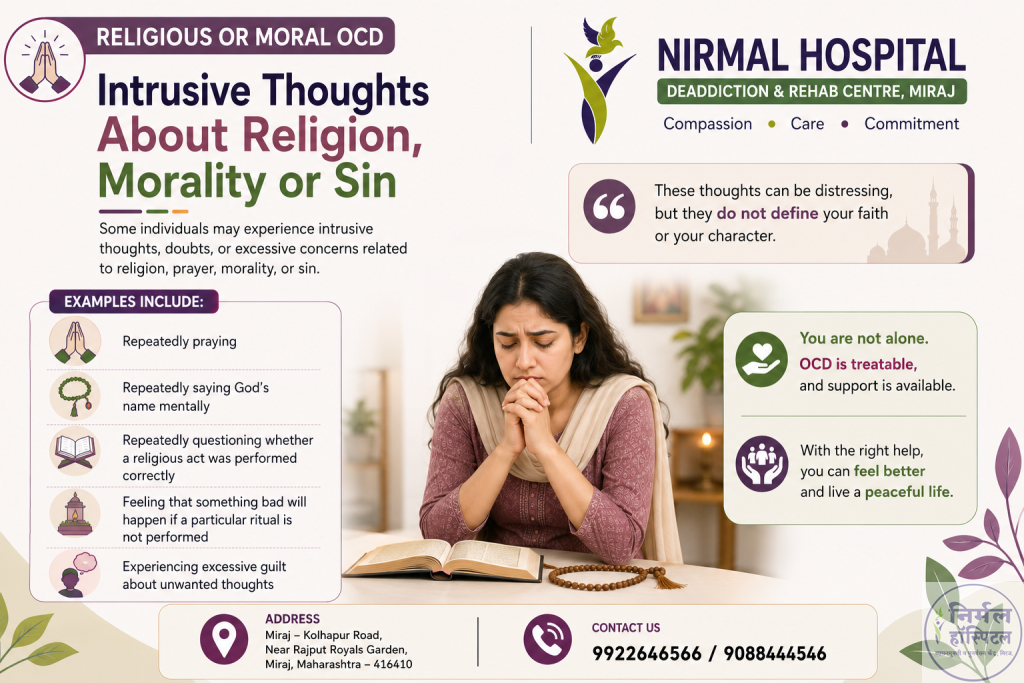
Some individuals may experience intrusive thoughts, doubts, or excessive concerns related to religion, prayer, morality, or sin.
Examples include:
-
Repeatedly praying
-
Repeatedly saying God’s name mentally
-
Repeatedly questioning whether a religious act was performed correctly
-
Feeling that something bad will happen if a particular ritual is not performed
-
Experiencing excessive guilt about unwanted thoughts
6. Sexual Obsessions
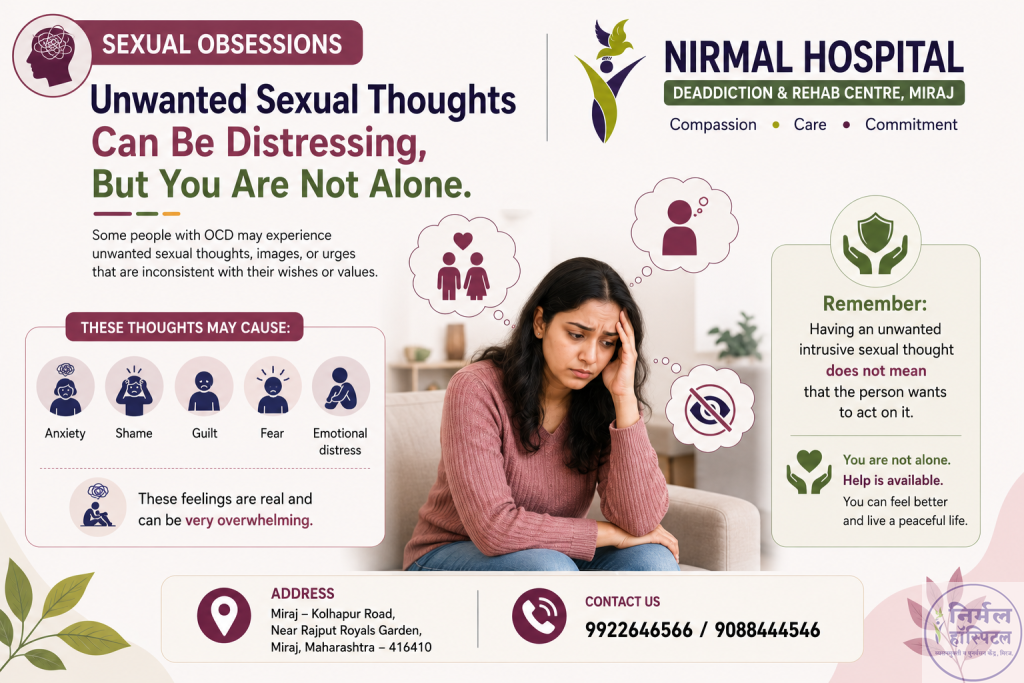
Some people with OCD may experience unwanted sexual thoughts, images, or urges that are inconsistent with their wishes or values.
These thoughts may cause:
-
Anxiety
-
Shame
-
Guilt
-
Fear
-
Emotional distress
Having an unwanted intrusive sexual thought does not mean that the person wants to act on it.
7. Intrusive Words, Images or Mental Repetition
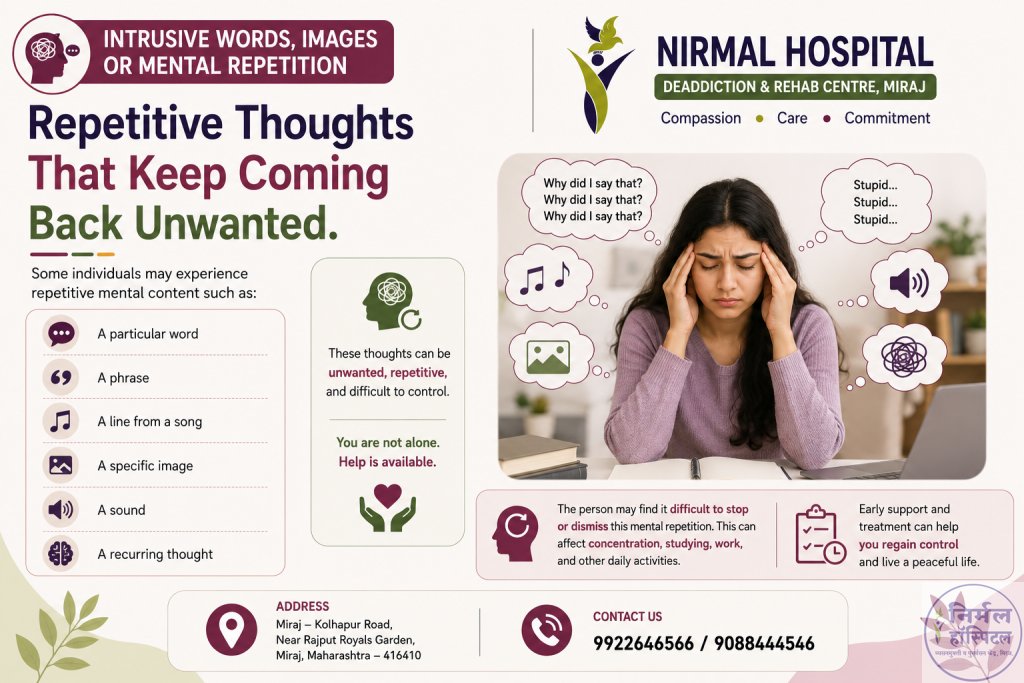
Some individuals may experience repetitive mental content such as:
-
A particular word
-
A phrase
-
A line from a song
-
A specific image
-
A sound
-
A recurring thought
The person may find it difficult to stop or dismiss this mental repetition. This can affect concentration, studying, work, and other daily activities.
What Are the Common Compulsions in OCD?
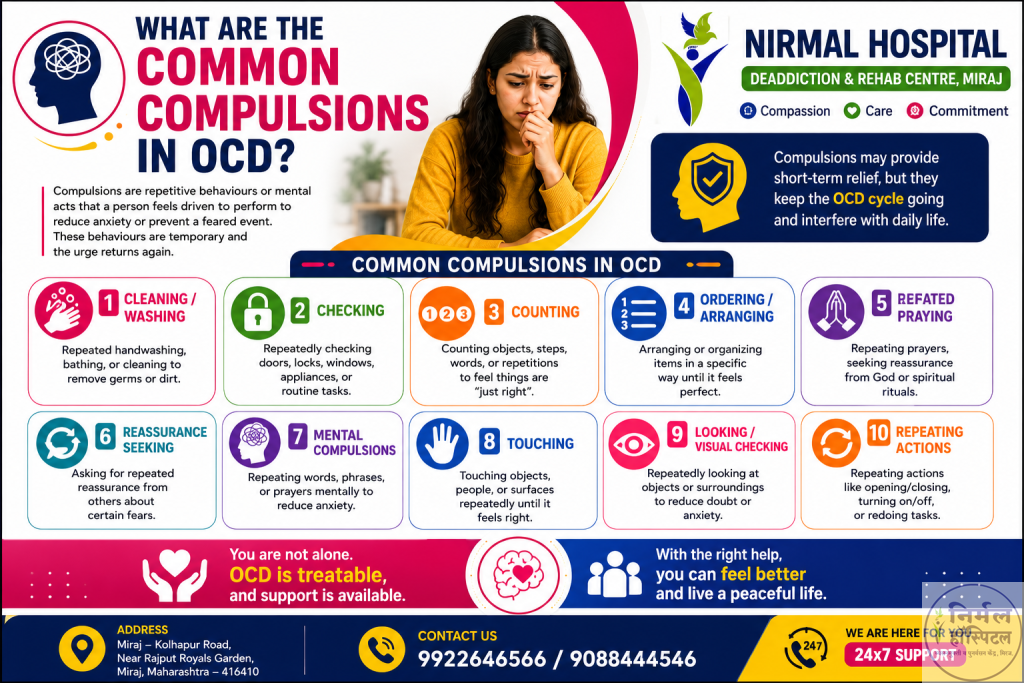
1. Repeated Checking
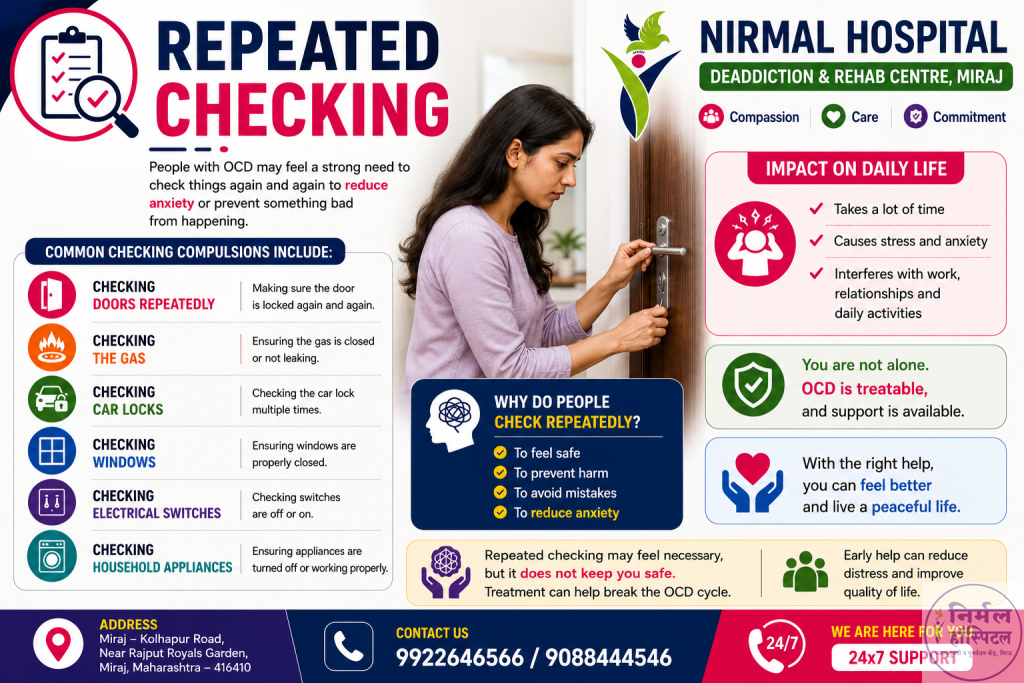
Common checking compulsions include:
-
Checking doors repeatedly
-
Checking the gas
-
Checking car locks
-
Checking windows
-
Checking electrical switches
-
Checking household appliances
2. Excessive Washing

Examples include:
-
Repeated hand washing
-
Taking excessively long baths or showers
-
Repeatedly washing the face or body
-
Washing objects repeatedly
-
Washing again even when something is already clean
3. Excessive Cleaning

Some individuals may repeatedly clean their surroundings because of contamination-related fears.
Examples include:
-
Cleaning the bathroom repeatedly
-
Repeatedly cleaning kitchen surfaces
-
Washing objects over and over
-
Excessive cleaning of the home
-
Excessive use of sanitizers or cleaning products
Excessive washing or cleaning may sometimes cause skin irritation and other skin problems.
4. Counting
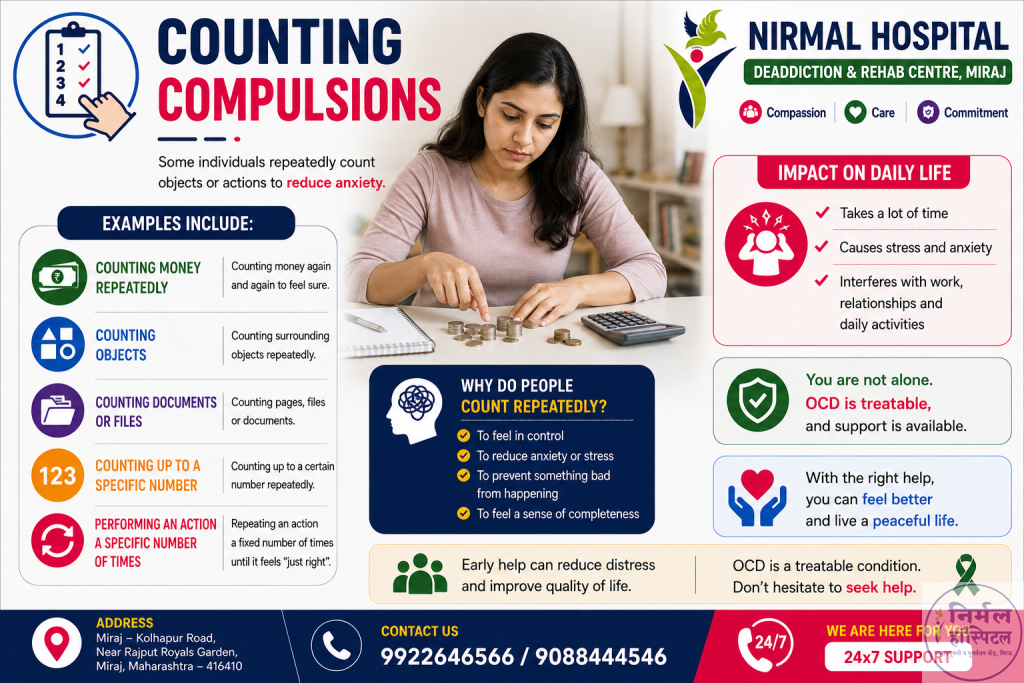
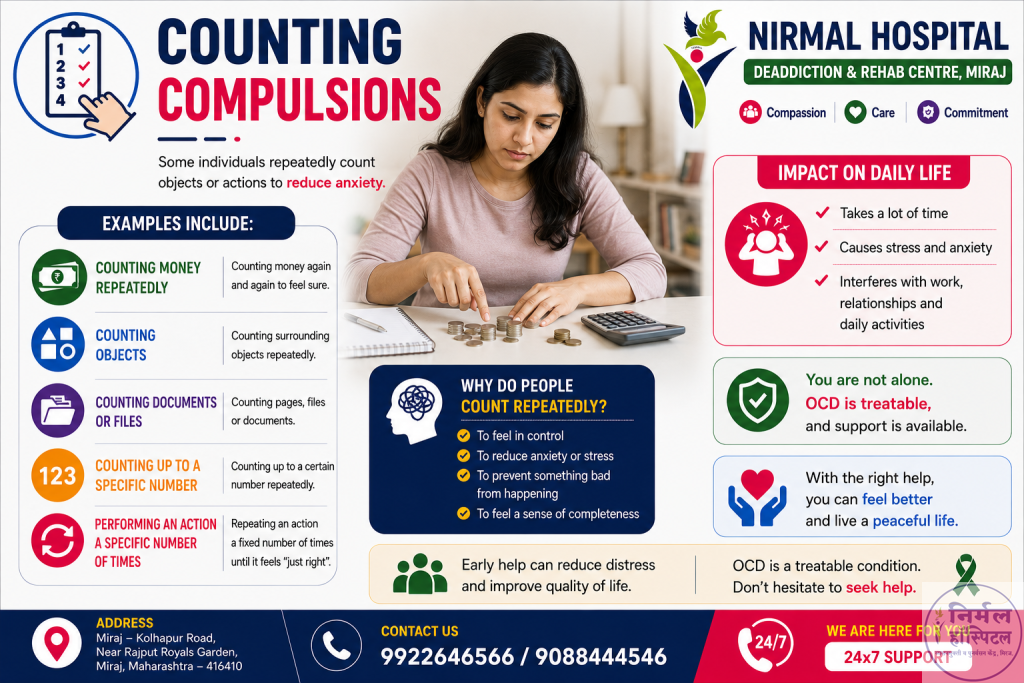
Some individuals repeatedly count objects or actions to reduce anxiety.
Examples include:
-
Counting money repeatedly
-
Counting objects
-
Counting documents or files
-
Counting up to a specific number
-
Performing an action a specific number of times
5. Ordering and Arranging
A person may repeatedly arrange objects until they feel “just right.”
Examples include:
-
Rearranging books
-
Organizing clothes
-
Arranging objects in a specific sequence
-
Repeatedly changing the position or direction of objects
6. Repetitive Rituals
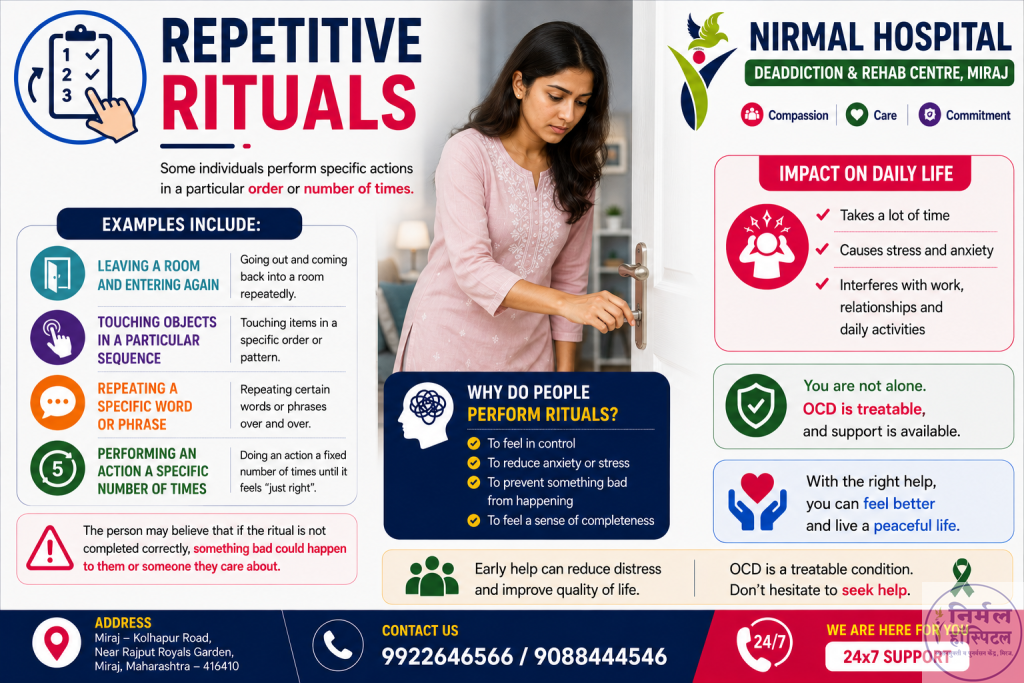
Some individuals perform specific actions in a particular order or number of times.
Examples include:
-
Leaving a room and entering again
-
Touching objects in a particular sequence
-
Repeating a specific word or phrase
-
Performing an action a specific number of times
The person may believe that if the ritual is not completed correctly, something bad could happen to them or someone they care about.
7. Reassurance Seeking
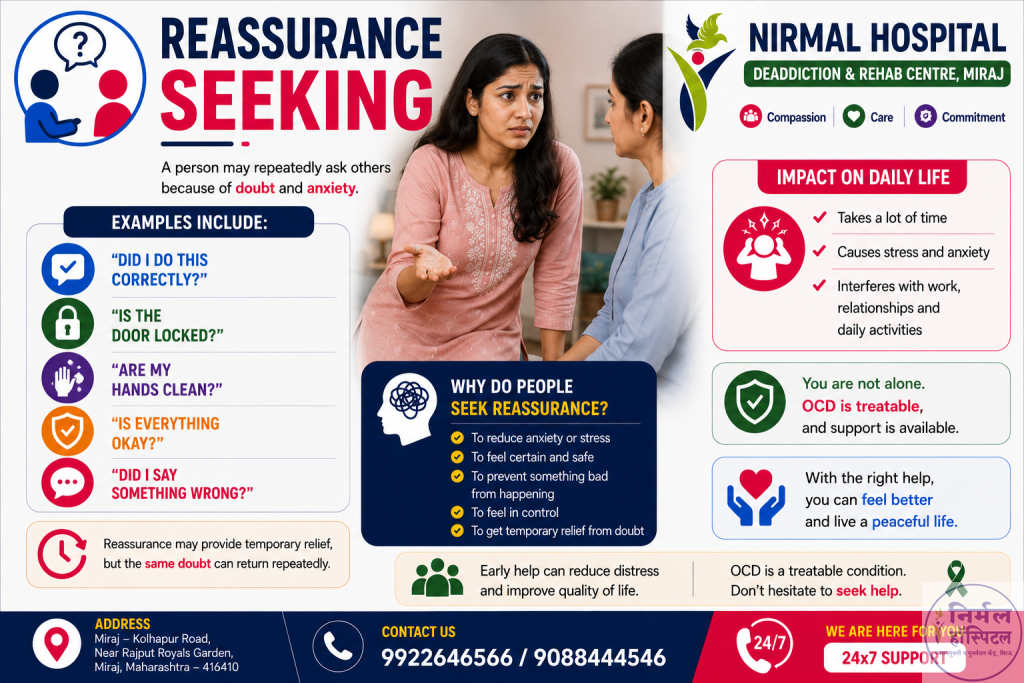
A person may repeatedly ask others:
-
“Did I do this correctly?”
-
“Is the door locked?”
-
“Are my hands clean?”
-
“Is everything okay?”
-
“Did I say something wrong?”
Reassurance may provide temporary relief, but the same doubt can return repeatedly.
8. Mental Compulsions
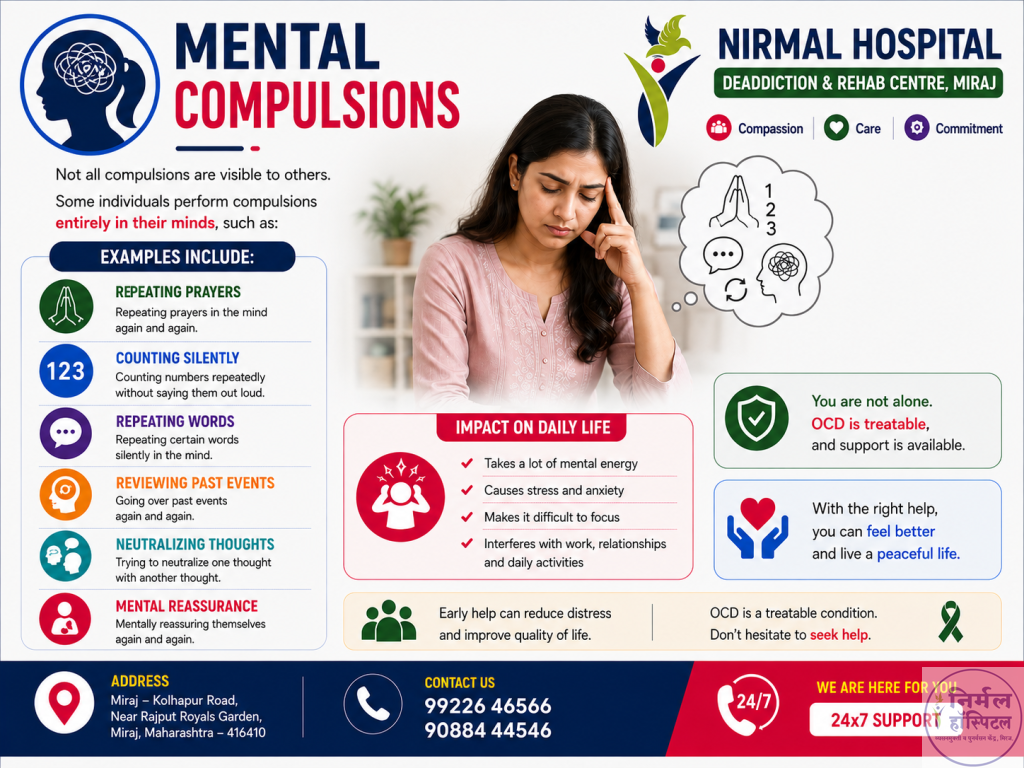
Not all compulsions are visible to others.
Some individuals perform compulsions entirely in their minds, such as:
-
Repeating prayers
-
Counting silently
-
Repeating words
-
Reviewing past events repeatedly
-
Trying to neutralize one thought with another thought
-
Mentally reassuring themselves again and again
These are known as mental compulsions.
OCD vs. Normal Habits: What Is the Difference?
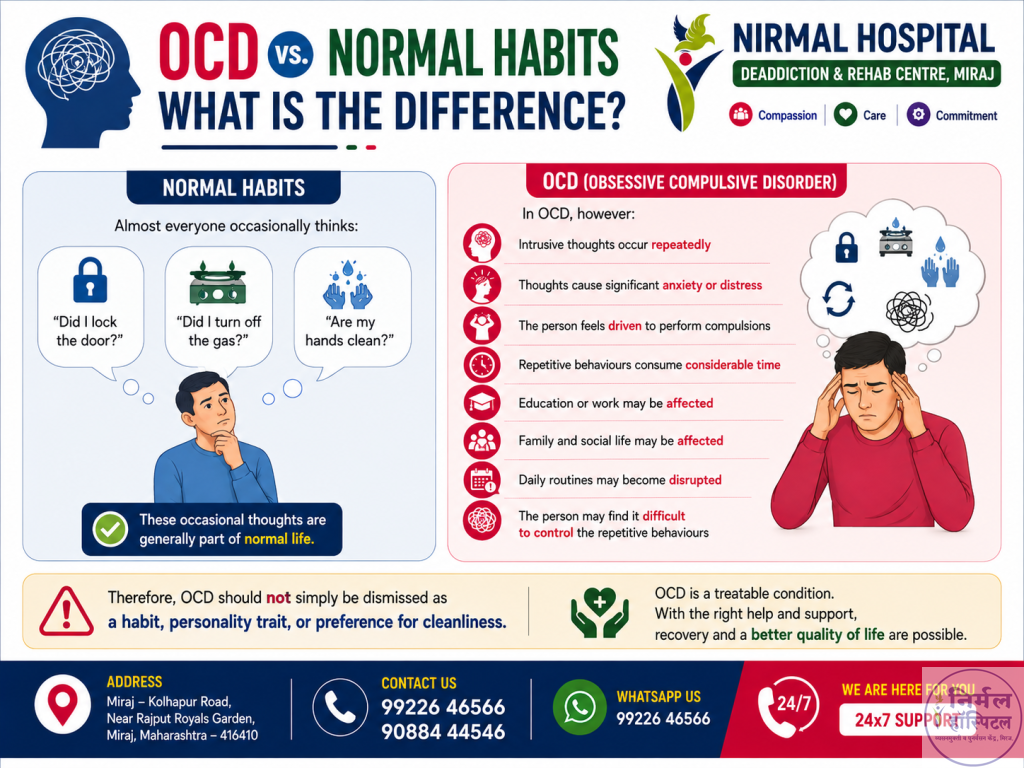
Almost everyone occasionally thinks:
“Did I lock the door?”
“Did I turn off the gas?”
“Are my hands clean?”
These occasional thoughts are generally part of normal life.
In OCD, however:
-
Intrusive thoughts occur repeatedly
-
Thoughts cause significant anxiety or distress
-
The person feels driven to perform compulsions
-
Repetitive behaviours consume considerable time
-
Education or work may be affected
-
Family and social life may be affected
-
Daily routines may become disrupted
-
The person may find it difficult to control the repetitive behaviours
Therefore, OCD should not simply be dismissed as a habit, personality trait, or preference for cleanliness.
What Causes OCD?
There is no single known cause of OCD. Research suggests that a combination of biological, genetic, psychological, and environmental factors may contribute to the development of OCD.
1. Biological Factors
Research suggests that certain brain circuits and neurotransmitter systems may be involved in OCD. In particular, the cortico-striato-thalamo-cortical (CSTC) circuits and serotonin-related pathways have been studied in relation to OCD.
However, OCD should not be described simply as a condition caused by “low serotonin.” It is a complex condition involving multiple biological and psychological factors.
2. Genetic Factors
Genetic factors may contribute to the development of OCD. Individuals with a close family member who has OCD may have a higher risk of developing the condition.
However, having a family history of OCD does not mean that a person will definitely develop OCD. Genetics are only one of several possible risk factors.
3. Stress and Life Events
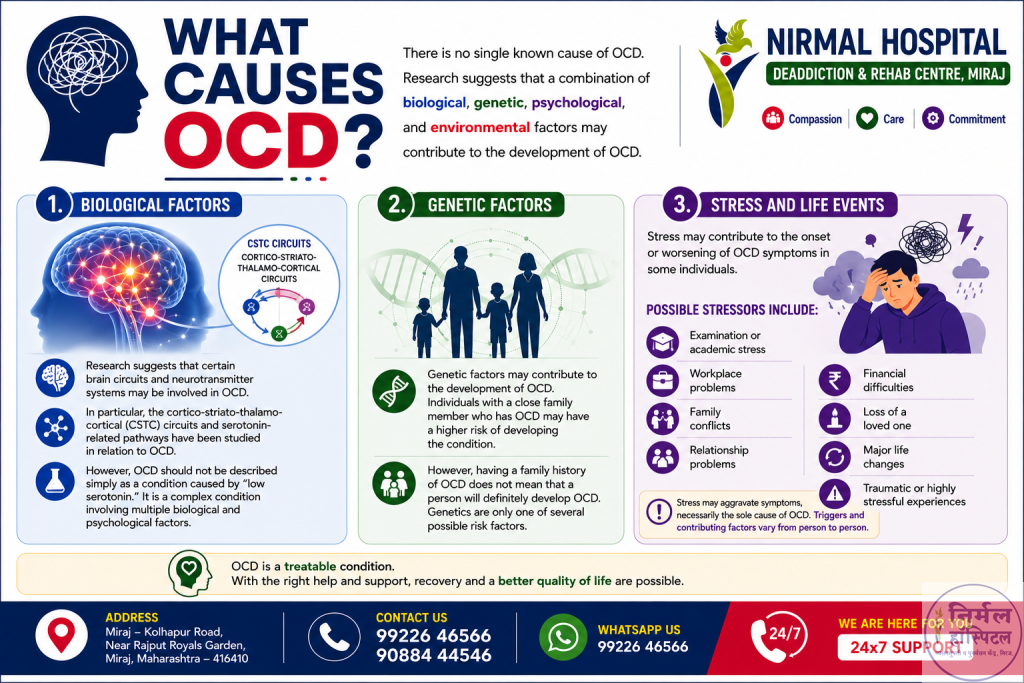
Stress may contribute to the onset or worsening of OCD symptoms in some individuals.
Possible stressors include:
-
Examination or academic stress
-
Workplace problems
-
Family conflicts
-
Relationship problems
-
Financial difficulties
-
Loss of a loved one
-
Major life changes
-
Traumatic or highly stressful experiences
Stress may aggravate symptoms, but it is not necessarily the sole cause of OCD. Triggers and contributing factors vary from person to person.
How Is OCD Diagnosed?
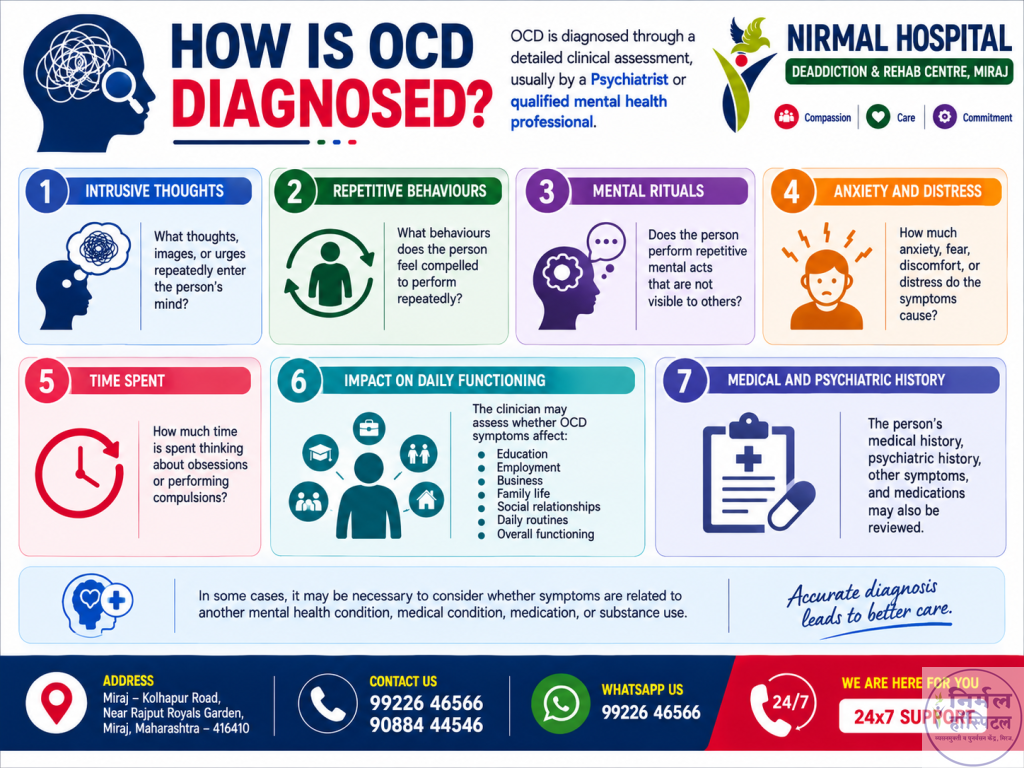
OCD is diagnosed through a detailed clinical assessment, usually by a Psychiatrist or qualified mental health professional.
The assessment may consider:
Intrusive Thoughts
What thoughts, images, or urges repeatedly enter the person’s mind?
Repetitive Behaviours
What behaviours does the person feel compelled to perform repeatedly?
Mental Rituals
Does the person perform repetitive mental acts that are not visible to others?
Anxiety and Distress
How much anxiety, fear, discomfort, or distress do the symptoms cause?
Time Spent
How much time is spent thinking about obsessions or performing compulsions?
Impact on Daily Functioning
The clinician may assess whether OCD symptoms affect:
-
Education
-
Employment
-
Business
-
Family life
-
Social relationships
-
Daily routines
-
Overall functioning
Medical and Psychiatric History
The person’s medical history, psychiatric history, other symptoms, and medications may also be reviewed.
In some cases, it may be necessary to consider whether symptoms are related to another mental health condition, medical condition, medication, or substance use.
Insight in OCD
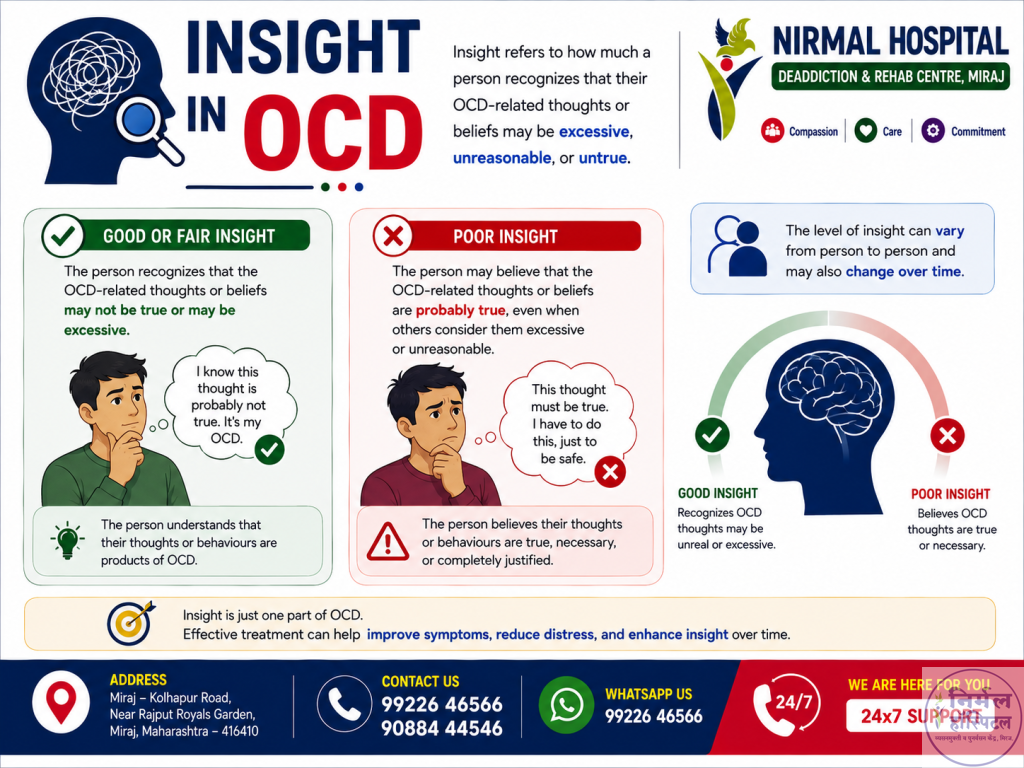
Insight refers to how much a person recognizes that their OCD-related thoughts or beliefs may be excessive, unreasonable, or untrue.
Good or Fair Insight
The person recognizes that the OCD-related thoughts or beliefs may not be true or may be excessive.
Poor Insight
The person may believe that the OCD-related thoughts or beliefs are probably true, even when others consider them excessive or unreasonable.
The level of insight can vary from person to person and may also change over time.
Impact of OCD on Daily Life
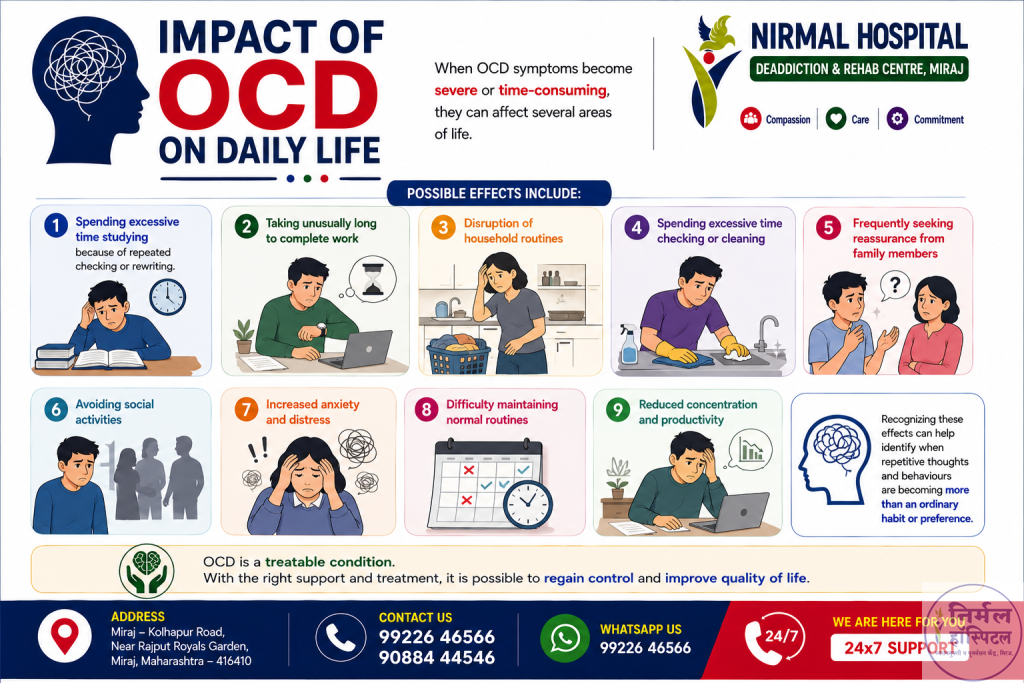
When OCD symptoms become severe or time-consuming, they can affect several areas of life.
Possible effects include:
-
Spending excessive time studying because of repeated checking or rewriting
-
Taking unusually long to complete work
-
Disruption of household routines
-
Spending excessive time checking or cleaning
-
Frequently seeking reassurance from family members
-
Avoiding social activities
-
Increased anxiety and distress
-
Difficulty maintaining normal routines
-
Reduced concentration and productivity
Recognizing these effects can help identify when repetitive thoughts and behaviours are becoming more than an ordinary habit or preference.
Common Myths About OCD
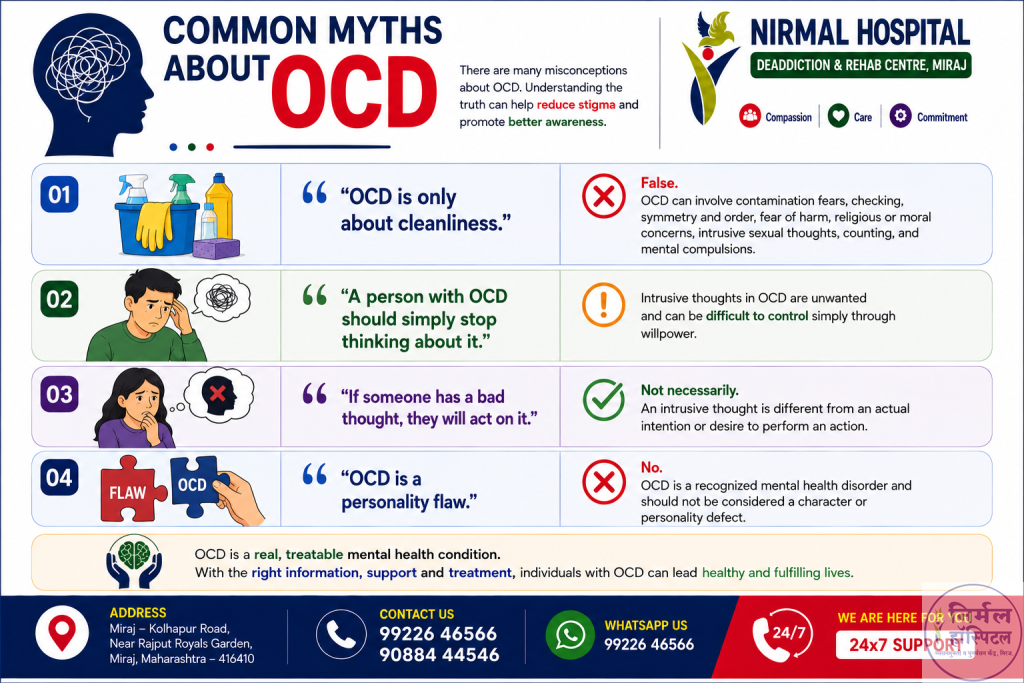
“OCD is only about cleanliness.”
False. OCD can involve contamination fears, checking, symmetry and order, fear of harm, religious or moral concerns, intrusive sexual thoughts, counting, and mental compulsions.
“A person with OCD should simply stop thinking about it.”
Intrusive thoughts in OCD are unwanted and can be difficult to control simply through willpower.
“If someone has a bad thought, they will act on it.”
Not necessarily. An intrusive thought is different from an actual intention or desire to perform an action.
“OCD is a personality flaw.”
No. OCD is a recognized mental health disorder and should not be considered a character or personality defect.
When Should You Seek a Psychiatric Assessment?
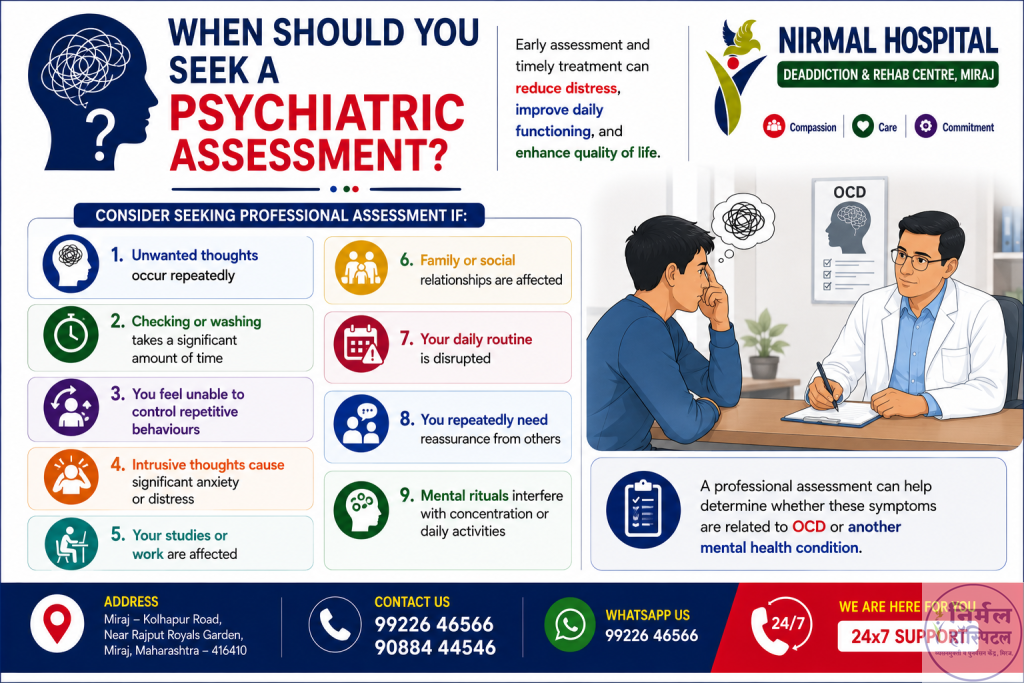
Consider seeking professional assessment if:
-
Unwanted thoughts occur repeatedly
-
Checking or washing takes a significant amount of time
-
You feel unable to control repetitive behaviours
-
Intrusive thoughts cause significant anxiety or distress
-
Your studies or work are affected
-
Family or social relationships are affected
-
Your daily routine is disrupted
-
You repeatedly need reassurance from others
-
Mental rituals interfere with concentration or daily activities
A professional assessment can help determine whether these symptoms are related to OCD or another mental health condition.
Frequently Asked Questions About OCD
What is OCD?
OCD stands for Obsessive-Compulsive Disorder. It is a mental health condition characterized by recurrent unwanted thoughts, images, or urges and/or repetitive behaviours or mental acts that may cause significant distress or interfere with daily life.
Is repeated hand washing a symptom of OCD?
Repeated hand washing can be a compulsion associated with OCD, particularly when it is driven by excessive fears of contamination and becomes repetitive or time-consuming.
Can repeatedly checking the gas or door be a symptom of OCD?
Yes. Repeated checking of gas, doors, windows, locks, electrical appliances, or other safety-related items can be associated with OCD when it becomes excessive, distressing, or disruptive to daily life.
Why do unwanted intrusive thoughts occur in OCD?
OCD can involve recurrent intrusive thoughts, images, or urges that are unwanted and distressing. These thoughts can occur involuntarily and may be difficult for the person to dismiss.
What is the difference between overthinking and OCD?
OCD involves more than ordinary overthinking. Recurrent obsessions and compulsions can cause significant distress, consume considerable time, and interfere with daily functioning.
What causes OCD?
There is no single cause of OCD. Biological, genetic, psychological, and environmental factors may contribute to its development.
Who diagnoses OCD?
OCD is clinically assessed and diagnosed by a Psychiatrist or qualified mental health professional.
Can children and teenagers have OCD?
Yes. OCD can begin during childhood, adolescence, or adulthood. Symptoms in children and teenagers may sometimes appear differently from those in adults.
Does having an intrusive thought mean I will act on it?
No. An unwanted intrusive thought does not automatically represent a person’s intention, desire, or future behaviour.
Conclusion
Obsessive-Compulsive Disorder (OCD) is more than excessive worrying, a preference for cleanliness, or a desire for perfection. Recurrent intrusive thoughts, repeated checking, excessive washing, counting, arranging, reassurance seeking, or mental rituals can become clinically significant when they cause distress or interfere with everyday functioning.
Recognizing the symptoms of OCD is an important first step. If these thoughts or repetitive behaviours are significantly affecting daily life, education, work, relationships, or emotional well-being, a professional psychiatric assessment can help clarify the underlying problem.
For detailed information about OCD treatment, visit our dedicated OCD Treatment page:
OCD Treatment → [Internal Link]
For Information Regarding Treatment Please Click Here
For More Information About Obsessive Compulsive Disorder


Leave a Reply