
Brown Sugar Addiction Treatment: Detox, Rehabilitation & Recovery
Treatment for Brown Sugar addiction should be individualized according to the person’s pattern of opioid use, level of dependence, withdrawal symptoms, physical health, mental health and previous treatment history.
Because substances sold as Brown Sugar may contain heroin or other unknown substances, a professional medical assessment is important before deciding on an appropriate treatment plan.
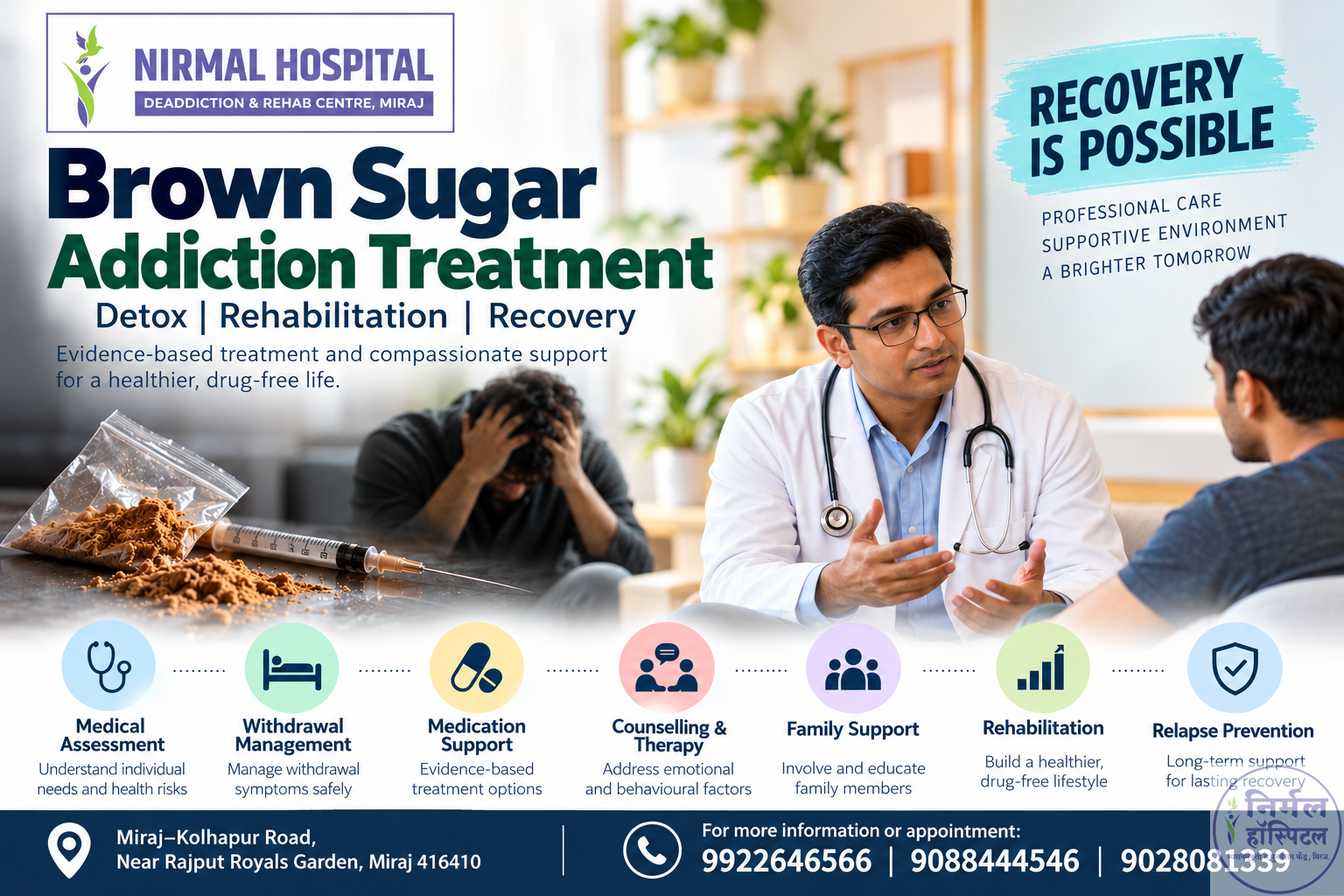
Treatment may involve a combination of medical management, medications for Opioid Use Disorder when clinically appropriate, psychological therapies, counselling, rehabilitation and relapse-prevention support.
1. Medical Assessment
Treatment usually begins with a detailed assessment to understand the severity of opioid use and identify associated health risks.
Assessment may include:
- Pattern, quantity and duration of opioid use
- Route of use, including smoking, snorting or injection
- Previous withdrawal or treatment attempts
- History of overdose
- Use of alcohol, sedatives or other substances
- Physical health assessment
- Mental health assessment
- Screening for co-existing psychiatric conditions
- Assessment of family and social circumstances
- Relevant laboratory investigations when clinically indicated
People who inject drugs may also require appropriate screening for infections such as HIV, hepatitis B and hepatitis C.
2. Management of Opioid Withdrawal
When physical dependence has developed, reducing or stopping opioid use can cause withdrawal symptoms such as:
- Body and muscle aches
- Restlessness
- Anxiety and irritability
- Sweating
- Nausea and vomiting
- Abdominal cramps
- Diarrhoea
- Sleep disturbance
- Strong cravings
The severity of withdrawal varies between individuals. Medical management may be used to reduce symptoms and support the person through the withdrawal period.
Detoxification alone is generally not sufficient treatment for Opioid Use Disorder. Continued addiction treatment and relapse-prevention care are important after withdrawal management.
3. Medications for Opioid Use Disorder
Evidence-based medications may be considered for some people with Opioid Use Disorder.
Depending on clinical assessment, treatment options may include:
- Buprenorphine
- Methadone
- Naltrexone
These medications have different indications, benefits and safety considerations. The choice of medication should be made by a qualified healthcare professional based on the individual’s clinical condition.
Medication should not be started, stopped or changed without appropriate medical advice.
4. Craving Management
Strong cravings can continue even after the initial withdrawal symptoms improve and may increase the risk of returning to opioid use.
Craving management may involve:
- Identifying personal triggers
- Avoiding high-risk situations
- Developing healthier coping strategies
- Managing stress
- Improving sleep and daily routine
- Strengthening motivation for recovery
- Taking prescribed medication appropriately
- Regular medical and psychological follow-up
5. Psychological Treatment and Counselling
Psychological treatment can help a person understand the thoughts, emotions, behaviours and situations associated with substance use.
Depending on individual needs, treatment may include:
- Cognitive Behavioural Therapy (CBT)
- Motivational Enhancement Therapy (MET)
- Individual counselling
- Behavioural interventions
- Psychoeducation
- Relapse-prevention counselling
- Family counselling
Treatment may also address associated problems such as anxiety, depression, relationship difficulties and problems affecting work, education or social functioning.
6. Family Counselling and Support
Family involvement can be an important part of recovery.
Family counselling and psychoeducation may help relatives:
- Understand opioid dependence
- Recognize triggers and warning signs
- Improve communication
- Avoid behaviours that unintentionally enable substance use
- Encourage treatment adherence
- Support regular follow-up
- Respond appropriately if relapse occurs
Family involvement should be planned according to the person’s circumstances and consent.
7. Rehabilitation
Some individuals may benefit from a structured rehabilitation programme, particularly when substance use is severe, repeated relapse has occurred or maintaining recovery in the usual environment is difficult.
Rehabilitation may focus on:
- Establishing a substance-free routine
- Behavioural change
- Psychological recovery
- Coping and life skills
- Physical well-being
- Family relationships
- Social functioning
- Occupational rehabilitation
- Relapse prevention
The need for inpatient or outpatient treatment should be determined after clinical assessment.
8. Treatment of Co-existing Mental Health Conditions
Opioid dependence may occur alongside other mental health or substance-use problems.
These may include:
- Depression
- Anxiety disorders
- Sleep problems
- Other substance-use disorders
- Other psychiatric conditions
Identifying and appropriately treating co-existing conditions can be an important part of comprehensive addiction treatment.
9. Relapse Prevention and Follow-up
Recovery from Brown Sugar or heroin addiction may require ongoing care rather than only short-term detoxification.
A relapse-prevention plan may include:
- Regular follow-up appointments
- Medication adherence when prescribed
- Psychological counselling
- Identification of triggers
- Strategies for managing cravings
- Family support
- Peer or recovery support where appropriate
- Planning for high-risk situations
A return to opioid use does not mean that further treatment cannot help. The treatment plan may need to be reassessed and adjusted according to the person’s needs.
Why Can Overdose Risk Increase After Abstinence?
After a period without opioid use, a person’s opioid tolerance may decrease.
If the person returns to an amount similar to what they previously used, the risk of severe or potentially fatal overdose may increase.
For this reason, continued treatment, overdose education, relapse-prevention planning and access to naloxone where appropriate can be important components of opioid addiction care.
Inpatient or Outpatient Treatment?
The appropriate treatment setting depends on several factors, including:
- Severity of opioid dependence
- Withdrawal symptoms
- Previous treatment attempts
- History or risk of overdose
- Repeated relapse
- Use of other substances
- Physical health complications
- Co-existing psychiatric conditions
- Family and social support
- Safety concerns
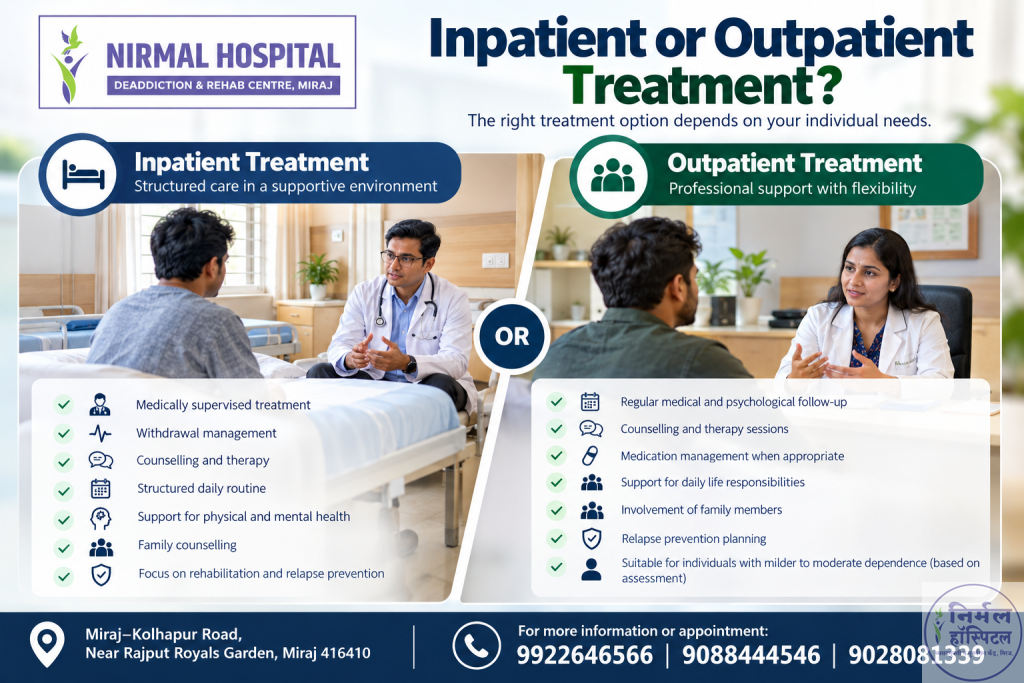
Some people may be managed through outpatient care, while others may benefit from a more structured inpatient deaddiction and rehabilitation programme.
A professional assessment can help determine the appropriate level of care.
Brown Sugar Addiction Treatment at Nirmal Hospital, Miraj
At Nirmal Hospital, Miraj, people experiencing Brown Sugar, heroin or other opioid-related problems can undergo professional assessment to determine an appropriate treatment plan.
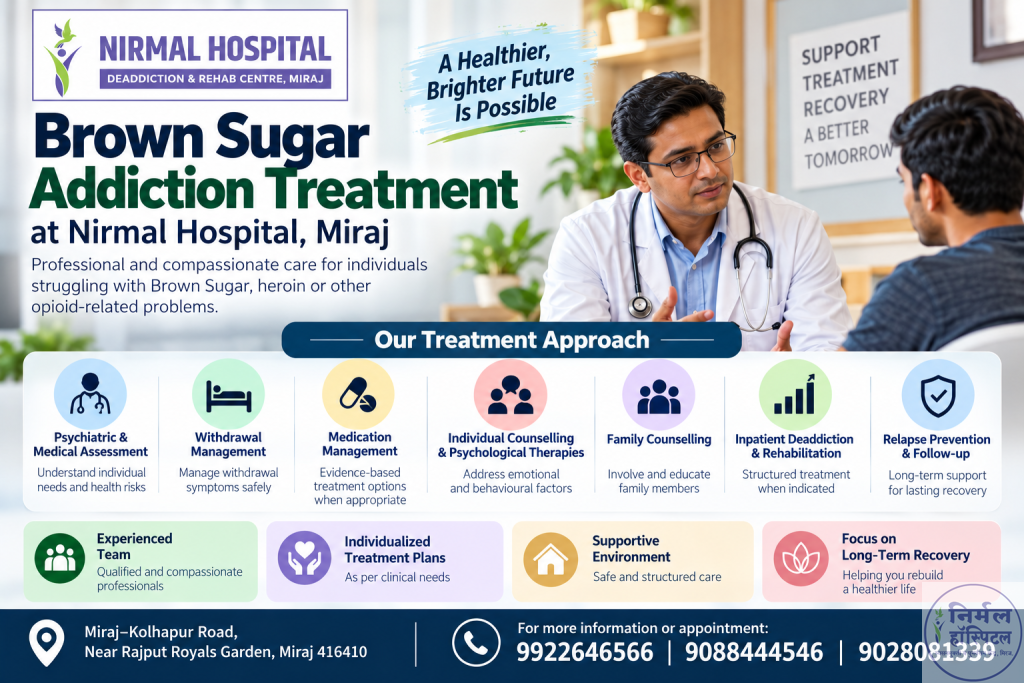
Depending on individual clinical needs, treatment may include:
- Psychiatric and medical assessment
- Withdrawal management
- Medication management when clinically appropriate
- Craving management
- Individual counselling
- Psychological therapies
- Family counselling
- Inpatient deaddiction and rehabilitation when indicated
- Relapse-prevention planning
- Follow-up care
Treatment plans vary according to the person’s clinical condition and are determined after appropriate evaluation.
If Brown Sugar use has become difficult to control, withdrawal symptoms are occurring, or repeated attempts to stop have been unsuccessful, professional assessment should be considered.
Frequently Asked Questions About Brown Sugar Addiction and Treatment
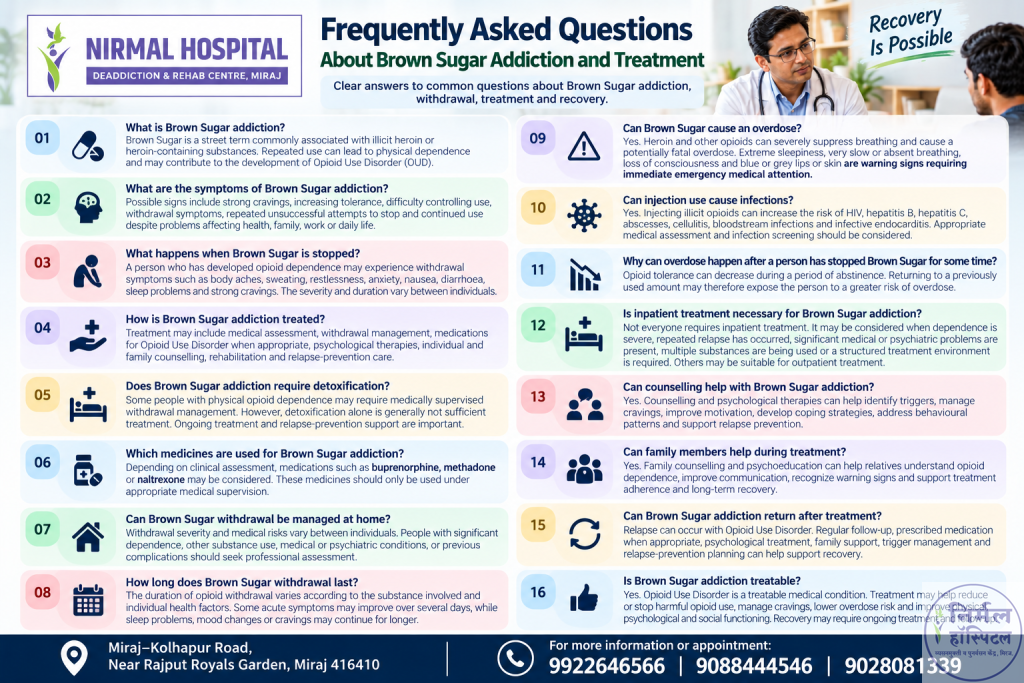
What is Brown Sugar addiction?
Brown Sugar is a street term commonly associated with illicit heroin or heroin-containing substances. Repeated use can lead to physical dependence and may contribute to the development of Opioid Use Disorder (OUD).
What are the symptoms of Brown Sugar addiction?
Possible signs include strong cravings, increasing tolerance, difficulty controlling use, withdrawal symptoms, repeated unsuccessful attempts to stop and continued use despite problems affecting health, family, work or daily life.
What happens when Brown Sugar is stopped?
A person who has developed opioid dependence may experience withdrawal symptoms such as body aches, sweating, restlessness, anxiety, nausea, diarrhoea, sleep problems and strong cravings.
The severity and duration of withdrawal vary from person to person.
How is Brown Sugar addiction treated?
Treatment may include medical assessment, withdrawal management, medications for Opioid Use Disorder when clinically appropriate, psychological therapies, individual and family counselling, rehabilitation and relapse-prevention care.
The treatment plan should be individualized according to the person’s clinical needs.
Does Brown Sugar addiction require detoxification?
Some people with physical opioid dependence may require medically supervised withdrawal management. However, detoxification alone is generally not sufficient for treating Opioid Use Disorder.
Ongoing addiction treatment and relapse-prevention support are important after withdrawal management.
Which medicines are used for Brown Sugar addiction?
Depending on clinical assessment, medications such as buprenorphine, methadone or naltrexone may be considered for Opioid Use Disorder.
These medicines should only be used under appropriate medical supervision.
Can Brown Sugar withdrawal be managed at home?
Withdrawal severity and medical risks vary between individuals. People with significant dependence, other substance use, medical or psychiatric conditions, or previous complications should seek professional assessment before attempting to stop opioids without medical supervision.
How long does Brown Sugar withdrawal last?
The duration of opioid withdrawal varies according to the substance involved, frequency and duration of use, degree of dependence and individual health factors.
Some acute symptoms may improve over several days, while problems such as sleep disturbance, mood changes or cravings may continue for longer.
Can Brown Sugar cause an overdose?
Yes. Heroin and other opioids can severely suppress breathing and cause a potentially fatal overdose.
Extreme sleepiness, inability to wake the person, very slow or absent breathing, loss of consciousness and blue or grey lips or skin are warning signs requiring immediate emergency medical attention.
Can injection use cause infections?
Yes. Injecting illicit opioids can increase the risk of HIV, hepatitis B, hepatitis C, abscesses, cellulitis, bloodstream infections and infective endocarditis.
Appropriate medical assessment and infection screening should be considered.
Why can overdose happen after a person has stopped Brown Sugar for some time?
Opioid tolerance can decrease during a period of abstinence. Returning to a previously used amount may therefore expose the person to a greater risk of overdose.
Is inpatient treatment necessary for Brown Sugar addiction?
Not everyone requires inpatient treatment. It may be considered when dependence is severe, repeated relapse has occurred, significant medical or psychiatric problems are present, multiple substances are being used or a structured treatment environment is required.
Other individuals may be suitable for outpatient treatment.
Can counselling help with Brown Sugar addiction?
Yes. Counselling and psychological therapies can help identify triggers, manage cravings, improve motivation, develop coping strategies, address behavioural patterns and support relapse prevention.
Can family members help during treatment?
Yes. Family counselling and psychoeducation can help relatives understand opioid dependence, improve communication, recognize warning signs and support treatment adherence and long-term recovery.
Can Brown Sugar addiction return after treatment?
Relapse can occur with Opioid Use Disorder. Regular follow-up, prescribed medication when appropriate, psychological treatment, family support, trigger management and relapse-prevention planning can help support recovery.
Is Brown Sugar addiction treatable?
Yes. Opioid Use Disorder is a treatable medical condition. Treatment may help reduce or stop harmful opioid use, manage cravings, lower overdose risk and improve physical, psychological and social functioning.
Recovery may require ongoing treatment and follow-up.
When should someone seek professional help for Brown Sugar addiction?
Professional assessment should be considered when:
- Drug use has become difficult to control
- Withdrawal symptoms occur after stopping
- Cravings are difficult to manage
- Previous attempts to stop have failed
- Drug use is affecting health, family or employment
- Injection drug use is occurring
- There has been an overdose
- Mental health problems are also present
Where can I get treatment for Brown Sugar addiction in Miraj?
Depending on individual clinical needs, treatment may include withdrawal management, medication management, psychological therapies, counselling, family support, inpatient rehabilitation and relapse-prevention follow-up.
Nirmal Hospital, Miraj
Miraj–Kolhapur Road, Near Rajput Royals Garden, Miraj
Contact: 9922646566 | 9088444546 | 9028081339


