


Opioid Addiction: Understanding Dependence and Withdrawal
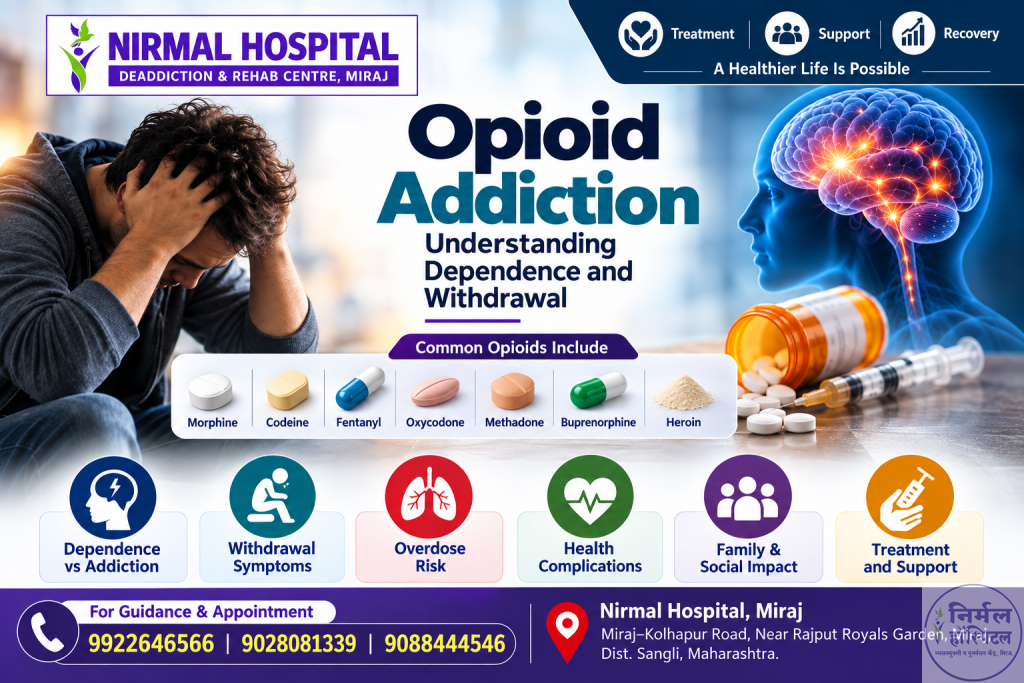
Opioids are substances that act on opioid receptors in the brain and body. Some opioids are prescription medicines used for pain management, while heroin is an illicit opioid.
Examples include:
- Morphine
- Codeine
- Fentanyl
- Oxycodone
- Methadone
- Buprenorphine
- Heroin
Problematic opioid use can develop into Opioid Use Disorder (OUD), a condition in which opioid use becomes difficult to control and causes significant problems in daily life.
For detailed information about a particular opioid, see our [Morphine Addiction](/morphine-addiction/), [Tramadol Addiction](/tramadol-addiction/) and [Fortwin Addiction](/fortwin-addiction/) pages.
What Is Opioid Dependence?
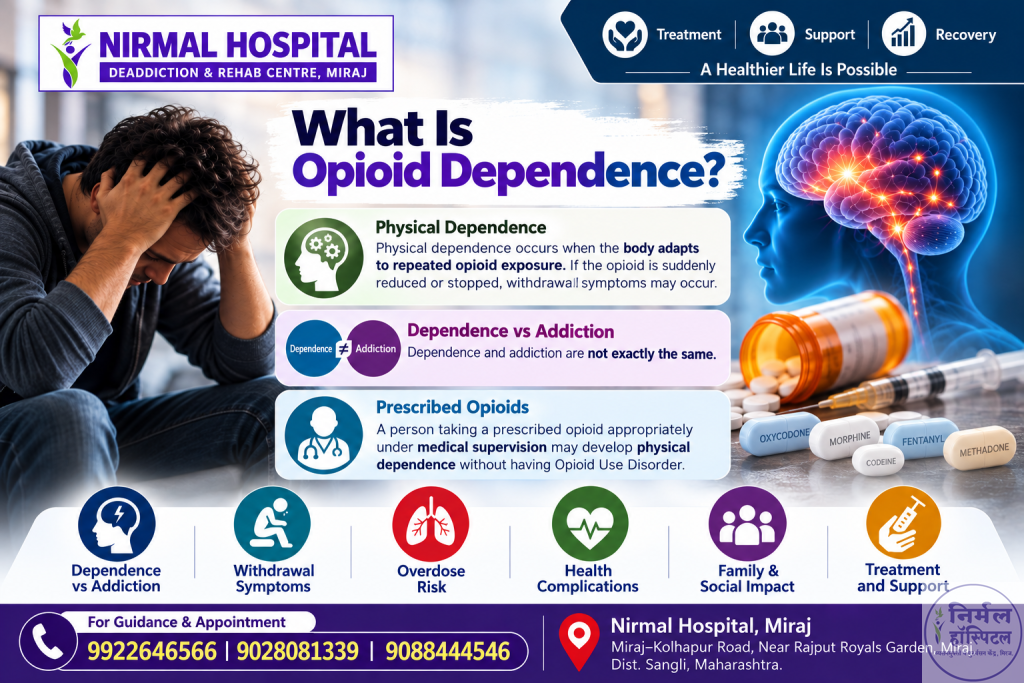
Physical dependence occurs when the body adapts to repeated opioid exposure. If the opioid is suddenly reduced or stopped, withdrawal symptoms may occur.
Dependence and addiction are not exactly the same.
A person taking a prescribed opioid appropriately under medical supervision may develop physical dependence without having Opioid Use Disorder.
Signs of Opioid Addiction
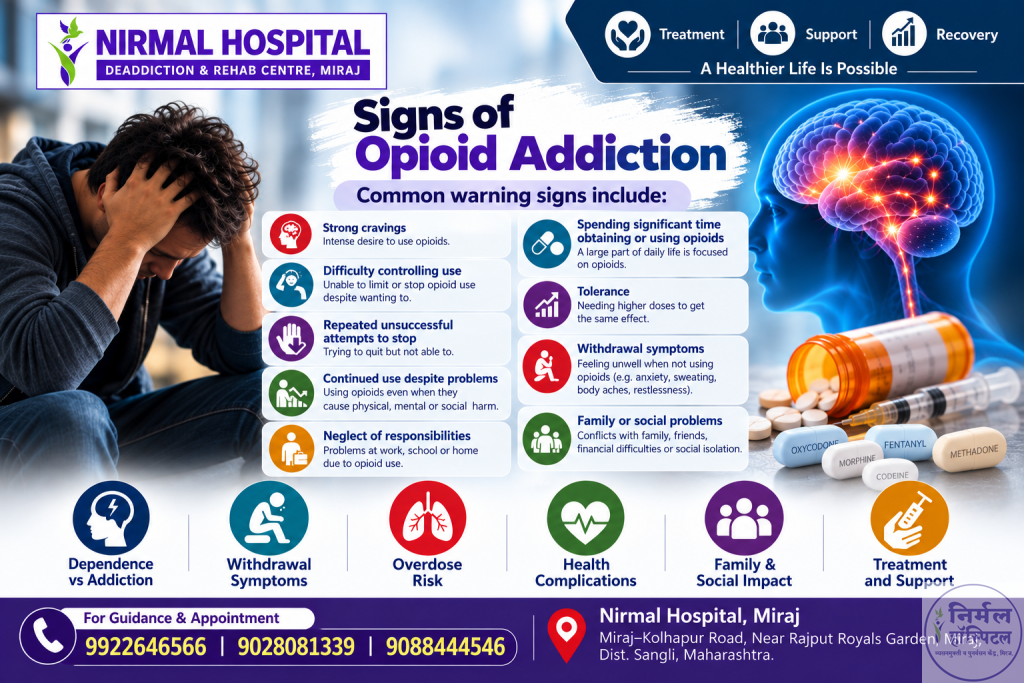
Common warning signs include:
- Strong cravings
- Difficulty controlling opioid use
- Repeated unsuccessful attempts to stop
- Continued use despite problems
- Neglect of responsibilities
- Spending significant time obtaining or using opioids
- Tolerance
- Withdrawal symptoms
- Family or social problems
Effects of Opioids on the Body
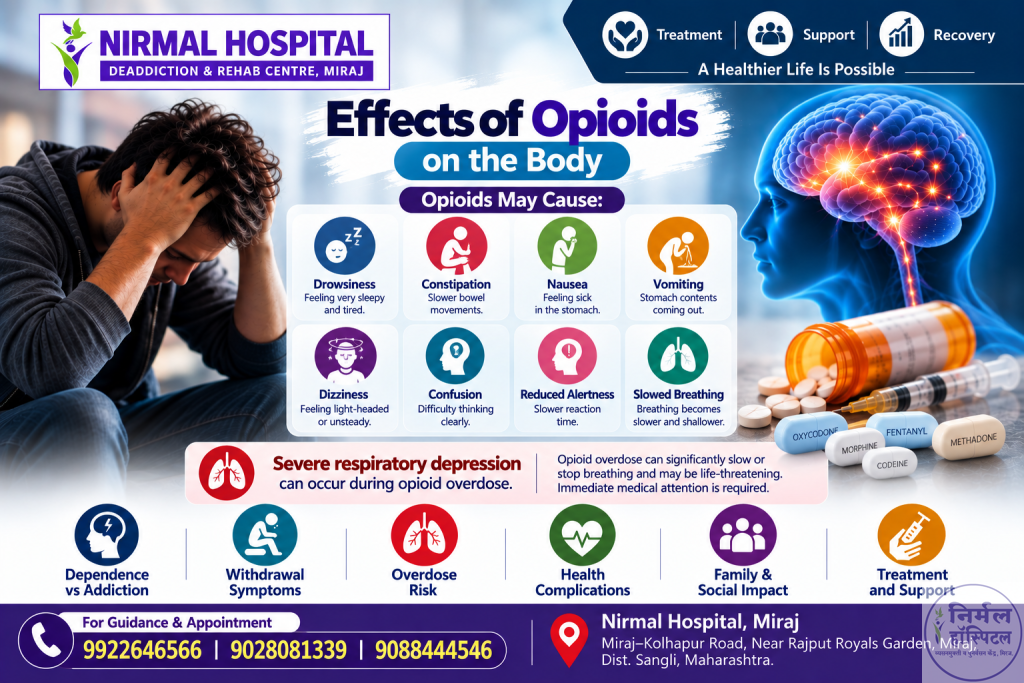
Opioids may cause:
- Drowsiness
- Constipation
- Nausea
- Vomiting
- Dizziness
- Confusion
- Reduced alertness
- Slowed breathing
Severe respiratory depression can occur during overdose.
Opioid Withdrawal Symptoms
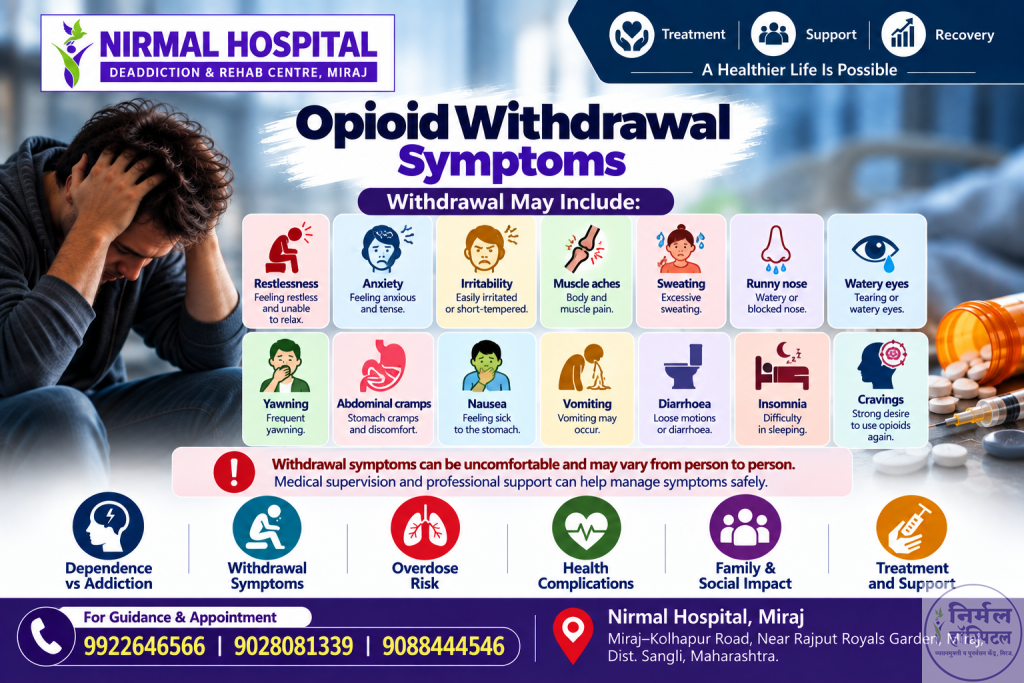
Withdrawal may include:
- Restlessness
- Anxiety
- Irritability
- Muscle aches
- Sweating
- Runny nose
- Watery eyes
- Yawning
- Abdominal cramps
- Nausea
- Vomiting
- Diarrhoea
- Insomnia
- Cravings
Opioid Overdose
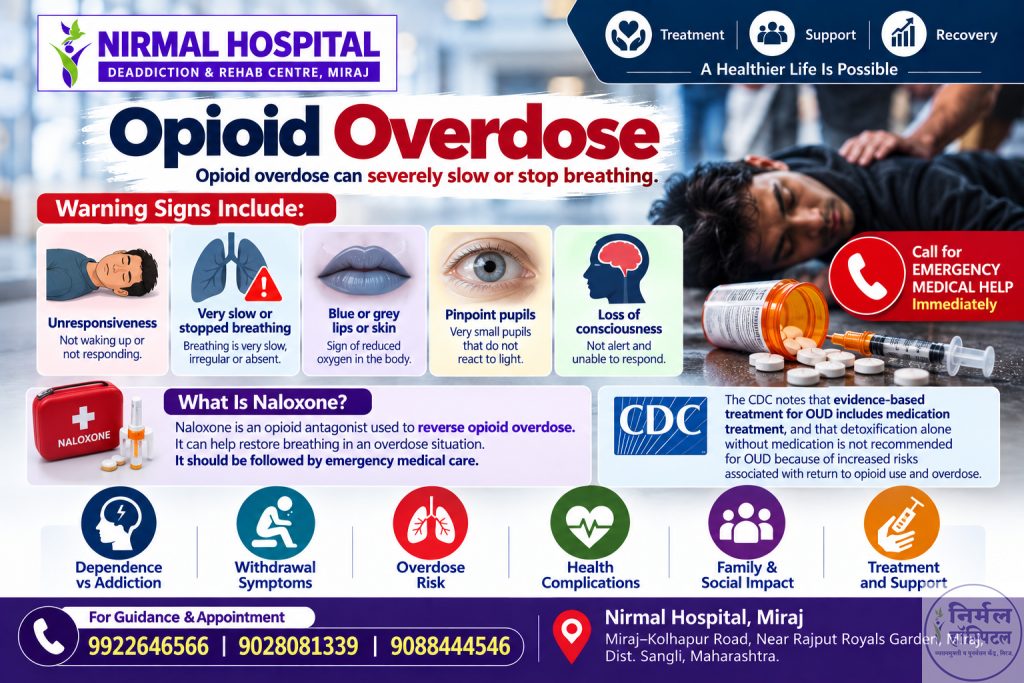
Opioid overdose can severely slow or stop breathing.
Warning signs include:
- Unresponsiveness
- Very slow or stopped breathing
- Blue or grey lips or skin
- Pinpoint pupils
- Loss of consciousness
Immediate emergency medical assistance is required.
The CDC notes that evidence-based treatment for OUD includes medication treatment, and that detoxification alone without medication is not recommended for OUD because of increased risks associated with return to opioid use and overdose. CDC
Treatment details: [Addiction Treatment & Rehabilitation](/addiction-treatment-rehabilitation/)
Complications of Opioid Addiction
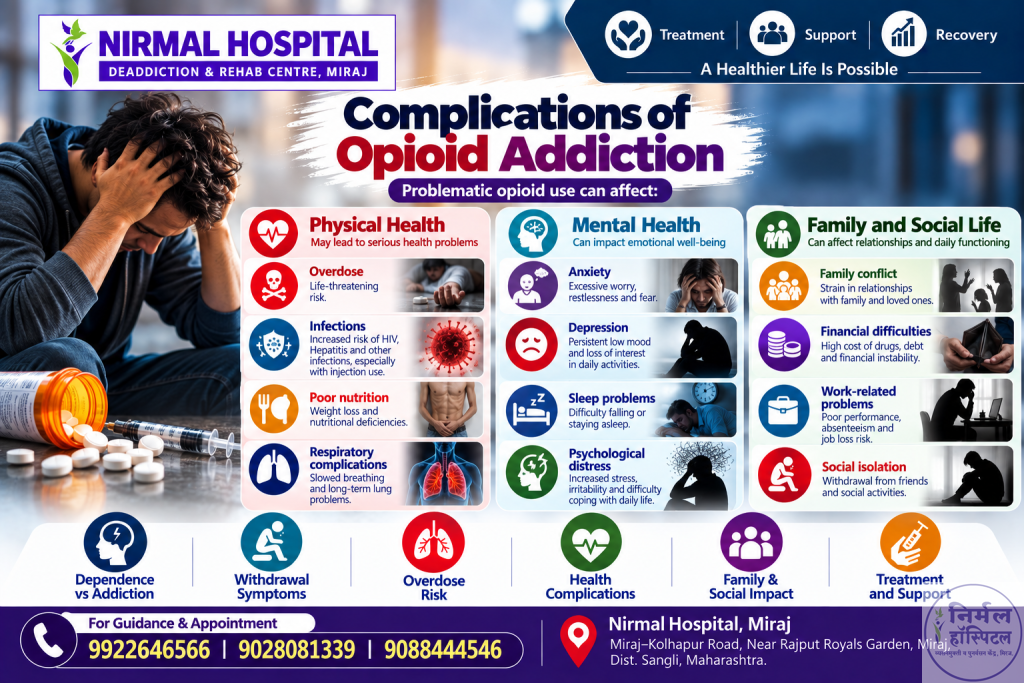
Problematic opioid use can affect:
Physical Health
- Overdose
- Infections
- Poor nutrition
- Respiratory complications
Mental Health
- Anxiety
- Depression
- Sleep problems
- Psychological distress
Family and Social Life
- Family conflict
- Financial difficulties
- Work-related problems
- Social isolation
Frequently Asked Questions About Opioid Addiction
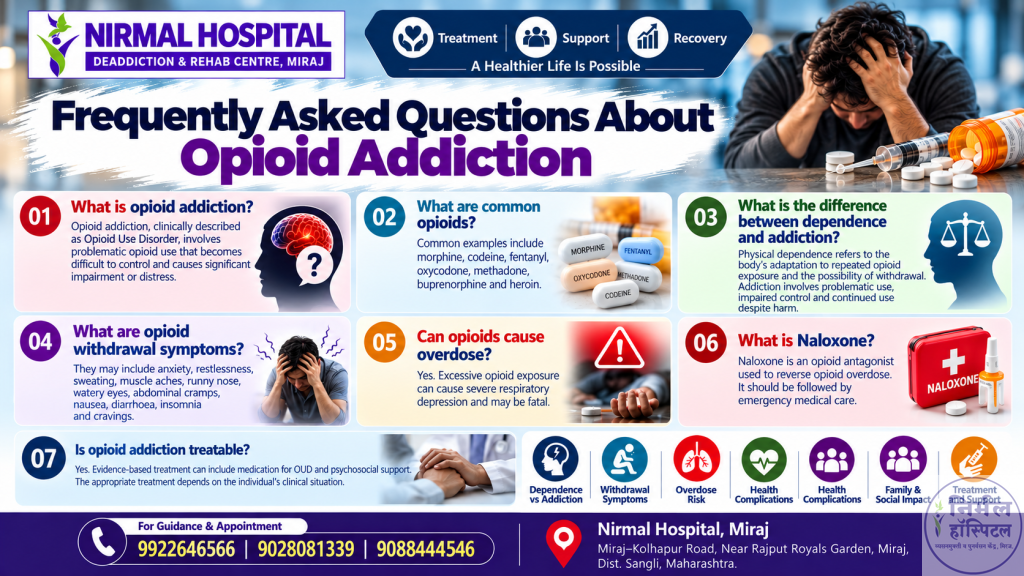
What is opioid addiction?
Opioid addiction, clinically described as Opioid Use Disorder, involves problematic opioid use that becomes difficult to control and causes significant impairment or distress.
What are common opioids?
Common examples include morphine, codeine, fentanyl, oxycodone, methadone, buprenorphine and heroin.
What is the difference between dependence and addiction?
Physical dependence refers to the body’s adaptation to repeated opioid exposure and the possibility of withdrawal. Addiction involves problematic use, impaired control and continued use despite harm.
What are opioid withdrawal symptoms?
They may include anxiety, restlessness, sweating, muscle aches, runny nose, watery eyes, abdominal cramps, nausea, diarrhoea, insomnia and cravings.
Can opioids cause overdose?
Yes. Excessive opioid exposure can cause severe respiratory depression and may be fatal.
What is Naloxone?
Naloxone is an opioid antagonist used to reverse opioid overdose. It should be followed by emergency medical care.
Is opioid addiction treatable?
Yes. Evidence-based treatment can include medication for OUD and psychosocial support. The appropriate treatment depends on the individual’s clinical situation.


