

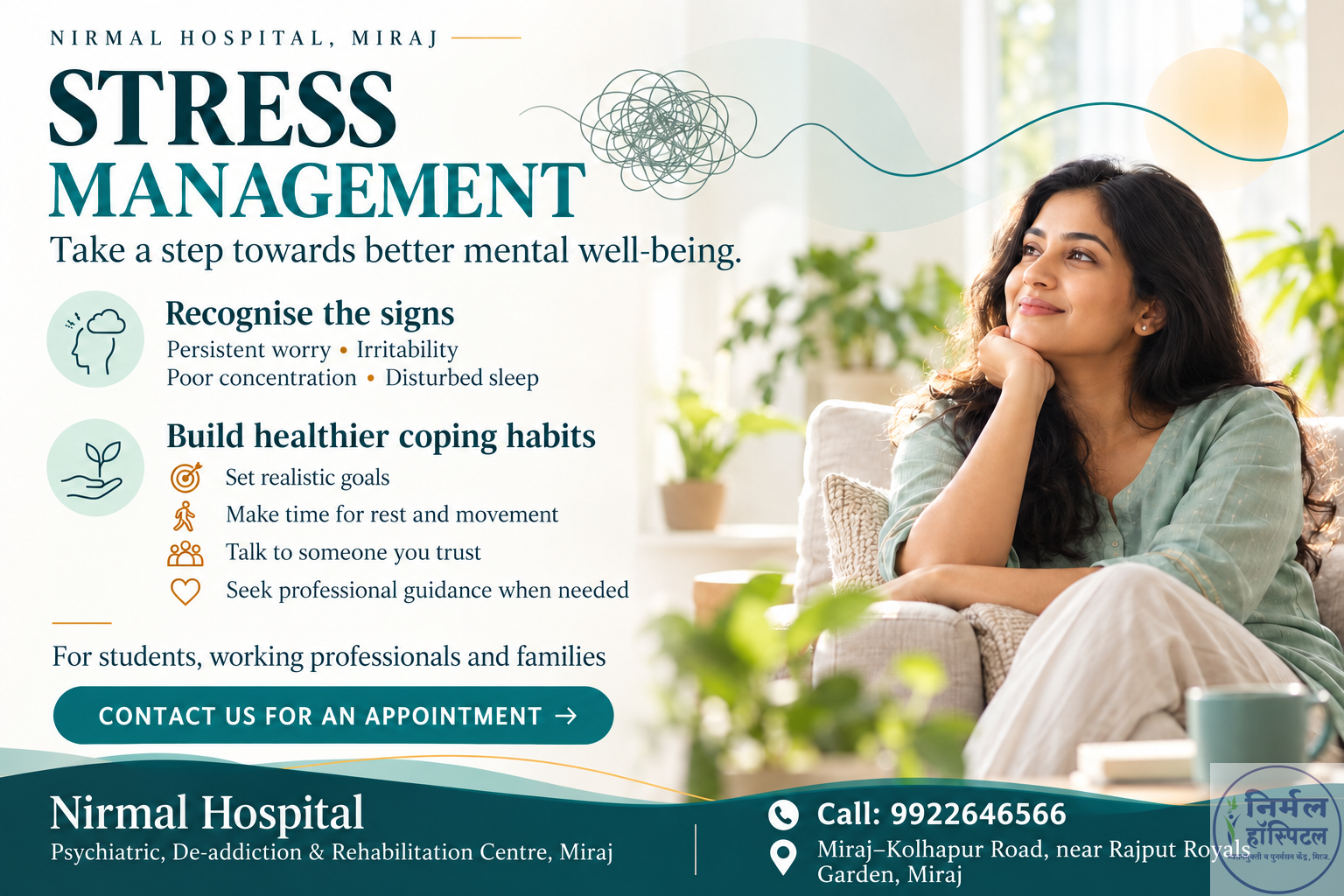
Stress Management in Miraj
Understand your stress. Develop healthier ways to respond.
Academic pressure, work responsibilities, financial concerns, and relationship difficulties can make everyday life feel overwhelming. When stress begins to affect your sleep, concentration, relationships, or daily functioning, it deserves attention.
Stress management involves recognising your stress triggers and developing practical ways to cope. Healthy routines, realistic thinking, supportive relationships, and professional guidance can help you manage challenges more effectively.
For mental health guidance and appointment information, contact Nirmal Hospital, Miraj.
[Contact Us for an Appointment]
What Is Stress?
Stress is the mind and body’s response to a demanding situation, perceived threat, or significant change.
A manageable amount of stress can encourage preparation and action. However, intense or persistent stress can interfere with everyday life. People respond differently to similar situations, depending on their circumstances, experiences, health, and available support.
Common Causes of Stress
Stress may arise from several overlapping pressures:
- Academic demands: Examinations, results, admissions, assignments, and career decisions.
- Workplace responsibilities: Heavy workloads, deadlines, job insecurity, and difficulties maintaining boundaries.
- Relationship concerns: Conflict, misunderstandings, unmet expectations, and communication difficulties.
- Financial challenges: Debt, rising expenses, and uncertainty about income.
- Unrealistic expectations: Feeling that you must always succeed, avoid mistakes, or please everyone.
- Social comparison: Comparing your achievements, lifestyle, or progress with others, including on social media.
Identifying what contributes to your stress is an important step towards managing it.
Signs and Symptoms of Stress
Stress can affect your emotions, thoughts, body, and behaviour.
| Emotional and Mental Signs | Physical and Behavioural Signs |
|---|---|
| Persistent worry or restlessness | Changes in sleep or appetite |
| Irritability or frustration | Headaches or muscle tension |
| Difficulty concentrating | Digestive discomfort |
| Feeling overwhelmed | Avoiding tasks or withdrawing from others |
These symptoms can also have other causes. Avoid assuming that every physical or emotional difficulty is caused by stress. The World Health Organization notes that stress can affect sleep, concentration, and everyday functioning.
How Thoughts, Emotions, and Behaviour Are Connected
The way we interpret an event can influence how we feel and what we do next.
For example, receiving lower examination marks than expected may lead to the thought, “I am a failure.” This can increase discouragement and make it harder to resume studying.
A more balanced response might be: “These results are disappointing, but I can identify where I struggled and adjust my preparation.”
This does not mean that stress is entirely caused by your thoughts. External difficulties are real. Addressing practical problems, seeking support, and receiving appropriate care also matter.
Practical Stress Management Techniques
1. Recognise Your Stress Triggers
Notice when your stress increases. Write down what happened, what you were thinking, how you felt, and how you responded. This can help you identify patterns and areas where change may be possible.
2. Set Realistic Expectations
Replace rigid demands such as “I must never make mistakes” with more flexible expectations: “I will prepare carefully, and I can learn from mistakes.”
Evaluate your progress in relation to your circumstances and goals rather than constantly comparing yourself with others.
3. Break Tasks into Smaller Steps
Divide large responsibilities into manageable actions. Identify priorities, allow time for breaks, and communicate when your workload exceeds what you can reasonably manage.
4. Make Time for Relaxation and Movement
Choose activities that fit your abilities and routine, such as walking, gentle exercise, comfortable breathing exercises, or relaxation practice. Start with a manageable routine that you can maintain.
5. Support Healthy Sleep and Eating Habits
Keep regular sleep and waking times where possible. Make time for meals and reduce screen use before bedtime.
6. Express Your Feelings and Seek Support
Talk to someone you trust or write down your concerns. Avoid relying on alcohol, tobacco, or self-medication to cope.
Daily routines, social support, relaxation, and healthy habits can help people manage stress.
Stress Management for Students
Examinations, college admissions, campus placements, and family expectations can place considerable pressure on students.
A realistic study plan can provide structure. Ask teachers for help with difficult subjects, include breaks, and avoid repeatedly comparing results with classmates.
Parents can help by listening without immediately criticising or focusing only on marks. Conversations about difficulties, effort, and available support can make it easier for students to ask for help.
One examination result does not define a student’s abilities or future.
Counselling and REBT for Stress Management
Counselling provides an opportunity to explore stress triggers, emotional difficulties, and coping patterns.
The presentation introduces Rational Emotive Behaviour Therapy (REBT), an approach that examines rigid expectations and beliefs that may intensify distress.
Questions used to explore these patterns include:
- What evidence supports this thought?
- Am I judging my entire ability based on one event?
- Is there a more balanced interpretation?
- What practical step can I take now?
The aim is to develop realistic thinking and useful responses while acknowledging difficult emotions and circumstances.
When Should You Seek Professional Help?
Consider speaking with a mental health professional if stress:
- Continues or becomes increasingly difficult to manage.
- Interferes with studies, work, relationships, or self-care.
- Leads to persistent emotional or physical difficulties.
- Is accompanied by increased reliance on alcohol, tobacco, or other substances.
A professional can assess your concerns, consider other contributing factors, and recommend appropriate support.
Frequently Asked Questions
Does Feeling Stressed Mean I Have a Mental Illness?
No. Stress is a common human response. However, persistent or severe symptoms that interfere with daily life may need professional assessment.
Is Positive Thinking Enough to Manage Stress?
Not always. Balanced thinking can help, but practical problem-solving, healthy routines, supportive relationships, and professional care may also be necessary.
What Happens During Stress Counselling?
Counselling explores the situations, thoughts, emotions, and behaviours associated with your stress. It may involve developing skills for communication, planning, problem-solving, and managing emotional responses.
How Long Does Stress Management Take?
There is no fixed timeline. Progress depends on the causes and severity of stress, your circumstances, available support, and any other health concerns.
Get Support for Stress in Miraj and Sangli
If stress is affecting your daily life, taking the first step towards support can help you understand what you are experiencing and explore your options.
Contact Nirmal Hospital, Miraj, for mental health guidance and appointment information.
[Contact Us for an Appointment]


Leave a Reply