
Morphine Addiction Treatment: Medical Care, Withdrawal Management and Rehabilitation
Morphine addiction is a serious but treatable condition that may affect a person’s physical health, mental well-being, relationships and daily functioning.
Morphine is a prescription opioid medication commonly used to manage moderate to severe pain. Although it has important medical applications, repeated misuse or uncontrolled use can increase the risk of opioid dependence and Opioid Use Disorder (OUD).
People experiencing Morphine addiction may find it difficult to reduce or stop using the medication despite harmful consequences.
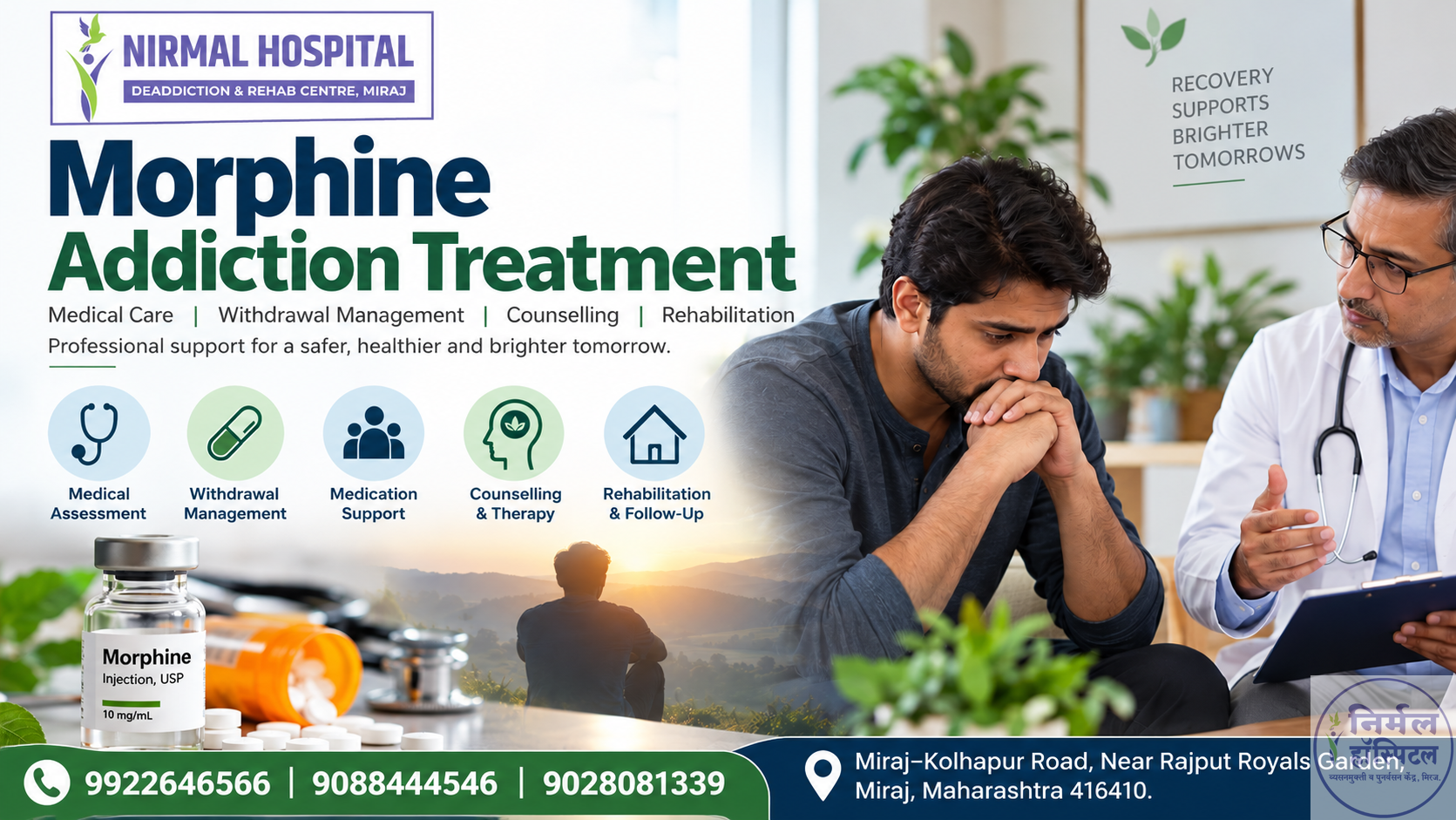
Morphine Addiction Treatment involves comprehensive medical assessment, appropriate withdrawal management, evidence-based medications, psychological counselling, rehabilitation and ongoing relapse prevention.
At Nirmal Hospital, Miraj, individuals experiencing opioid-related problems can seek professional assessment to understand their condition and discuss suitable treatment options.
1. Comprehensive Medical Assessment for Morphine Addiction
The first step in Morphine addiction treatment is a detailed medical and psychiatric evaluation.
A qualified healthcare professional may assess:
-
Duration and frequency of Morphine use
-
Prescribed dosage and patterns of misuse
-
Signs of tolerance and physical dependence
-
Morphine withdrawal symptoms
-
Previous attempts to reduce or discontinue use
-
History of opioid overdose
-
Use of alcohol, sedatives or other substances
-
Existing physical and mental health conditions
-
Chronic pain and other medical indications for Morphine
-
Family support and social circumstances
Blood investigations, liver and kidney function tests, and other assessments may be recommended when clinically indicated.
The assessment helps determine whether the individual requires outpatient treatment, inpatient care or a more intensive level of medical supervision.
Importantly, physical dependence alone does not necessarily indicate Morphine addiction. Clinicians distinguish expected physiological dependence from Opioid Use Disorder before recommending treatment.
2. Medically Supervised Morphine Withdrawal Management
Individuals who have developed physical dependence on Morphine may experience withdrawal symptoms when the medication is reduced or stopped.
Common Morphine withdrawal symptoms include:
-
Anxiety and irritability
-
Restlessness and agitation
-
Excessive sweating
-
Muscle and joint pain
-
Runny nose and watery eyes
-
Repeated yawning
-
Abdominal cramps
-
Nausea and vomiting
-
Diarrhoea
-
Difficulty sleeping
-
Strong opioid cravings
Why Is Medical Supervision Important?
Although uncomplicated opioid withdrawal is generally not life-threatening, it can cause significant physical discomfort, dehydration and an increased risk of relapse.
Medical supervision helps healthcare professionals:
-
Evaluate withdrawal severity
-
Monitor hydration and physical health
-
Manage uncomfortable withdrawal symptoms
-
Identify possible medical complications
-
Assess psychological distress
-
Determine whether medication-assisted treatment is appropriate
The treatment plan depends on the patient’s clinical condition, opioid use history and individual requirements.
Morphine should not be stopped suddenly without professional guidance, particularly when it has been taken regularly for an extended period.
3. Medication-Assisted Treatment for Morphine Dependence
Medication is an important component of evidence-based treatment for many individuals diagnosed with Opioid Use Disorder.
Depending on clinical assessment, treatment may include medications such as:
Buprenorphine
Buprenorphine is an evidence-based medication used to treat Opioid Use Disorder.
It can help:
-
Reduce opioid withdrawal symptoms
-
Control opioid cravings
-
Stabilize patients during treatment
-
Lower the risk of illicit opioid use
Buprenorphine treatment requires appropriate medical evaluation and careful initiation to avoid precipitated withdrawal.
Methadone
Methadone is another evidence-based medication used in the treatment of Opioid Use Disorder.
When provided through an appropriately authorized and supervised treatment program, it can reduce withdrawal symptoms and cravings.
Its availability and use depend on applicable regulations, clinical indications and treatment-setting requirements.
Naltrexone
Naltrexone is an opioid receptor antagonist that may be considered for selected patients after complete opioid withdrawal.
It blocks the effects of opioids and may help prevent relapse.
Naltrexone must not be started while a patient remains physically dependent on opioids because it can trigger severe precipitated withdrawal.
Important Medical Considerations
Medication selection depends on:
-
Severity of opioid dependence
-
Previous treatment history
-
Other medications being used
-
Physical and psychiatric health
-
Patient preference and clinical suitability
-
Availability of authorized treatment services
Withdrawal management alone is not considered sufficient treatment for Opioid Use Disorder. Ongoing evidence-based treatment is important because relapse and overdose risks may increase after opioid tolerance decreases.
4. Psychological Counselling and Behavioural Therapy
Psychological treatment can help individuals understand the behavioural and emotional factors associated with Morphine misuse.
Counselling may be recommended alongside medical treatment.
Cognitive Behavioural Therapy (CBT)
CBT helps patients identify and manage thoughts, emotions and behaviours that contribute to substance use.
It may help individuals:
-
Recognize situations that trigger cravings
-
Develop healthier coping strategies
-
Manage stress and emotional distress
-
Improve problem-solving skills
-
Reduce behaviours associated with relapse
Motivational Enhancement Therapy (MET)
Motivational approaches help individuals explore their reasons for changing substance-use behaviour.
They can support:
-
Readiness for treatment
-
Identification of personal recovery goals
-
Treatment engagement
-
Confidence in making behavioural changes
Family Counselling
Family members may experience emotional stress, communication difficulties and uncertainty when supporting someone with Morphine addiction.
Family counselling can help improve communication, establish healthy boundaries and encourage appropriate involvement in recovery.
5. Inpatient Morphine Addiction Treatment and Rehabilitation
Some individuals with Morphine addiction may require inpatient treatment, depending on the severity of their condition and associated medical or psychiatric needs.
Inpatient care may be considered when a patient has:
-
Severe or complicated opioid dependence
-
Significant psychiatric symptoms
-
Multiple substance-use problems
-
Unstable physical health
-
Repeated unsuccessful treatment attempts
-
Limited support or an unsafe recovery environment
Components of Inpatient Rehabilitation
A structured inpatient rehabilitation program may include:
-
Medical and psychiatric monitoring
-
Withdrawal symptom management
-
Medication management
-
Individual psychological counselling
-
Family counselling and education
-
Relapse prevention planning
-
Sleep and daily routine management
-
Nutritional and lifestyle guidance
-
Psychosocial rehabilitation activities
The duration of inpatient care varies according to individual clinical needs.
Hospitalization is not necessary for every person with Morphine dependence. Many individuals can receive effective treatment through appropriately supervised outpatient services.
6. Relapse Prevention and Long-Term Recovery
Recovery from Morphine addiction may require continued treatment and follow-up after initial stabilization.
Relapse prevention focuses on identifying risk factors, strengthening coping strategies and maintaining engagement with appropriate treatment.
Common Relapse Triggers
Possible triggers include:
-
Psychological stress
-
Chronic pain
-
Emotional distress
-
Exposure to opioids
-
Social environments associated with previous misuse
-
Untreated mental health conditions
-
Poor sleep
-
Limited family or social support
Long-Term Recovery Strategies
A relapse prevention plan may involve:
-
Regular medical follow-up
-
Continued medication for Opioid Use Disorder when indicated
-
Psychological counselling
-
Family involvement
-
Healthy sleep and daily routines
-
Management of coexisting psychiatric conditions
-
Support groups and community-based recovery services
Patients and families should also receive education about opioid overdose prevention.
Naloxone is an emergency medication that can reverse opioid-induced respiratory depression. People at risk of opioid overdose and their families should be advised about access to naloxone and its appropriate use.
A return to opioid use should prompt reassessment and treatment adjustment rather than abandonment of care.
7. Follow-Up Care and Ongoing Medical Support
Long-term follow-up is an important part of Morphine addiction treatment.
Follow-up appointments allow healthcare professionals to evaluate treatment progress, address ongoing symptoms and adjust the care plan when necessary.
Follow-up care may include:
-
Monitoring opioid cravings
-
Reviewing medication effectiveness and side effects
-
Assessing mental health
-
Addressing chronic pain
-
Identifying early signs of relapse
-
Supporting family involvement
-
Updating the individualized recovery plan
The frequency and duration of follow-up depend on the patient’s condition and response to treatment.
For individuals receiving medication for Opioid Use Disorder, treatment duration should be determined clinically rather than restricted to a fixed number of days.
When Should Someone Seek Professional Help for Morphine Addiction?
Professional assessment is recommended when an individual:
-
Takes Morphine in higher doses than prescribed
-
Experiences strong cravings
-
Finds it difficult to control opioid use
-
Develops withdrawal symptoms between doses
-
Continues using Morphine despite harmful consequences
-
Obtains Morphine without a valid prescription
-
Experiences problems at work, home or in relationships because of opioid use
-
Has experienced an opioid overdose
Early evaluation can help identify the appropriate level of care and reduce preventable complications.
Emergency warning: If someone is unresponsive, breathing slowly or not breathing normally after opioid use, seek emergency medical assistance immediately. Administer naloxone if available and follow emergency instructions.
Morphine Addiction Treatment in Miraj – Nirmal Hospital
Nirmal Hospital, Miraj, provides psychiatric and de-addiction services for individuals experiencing substance-use and related mental health problems.
Patients concerned about Morphine misuse, opioid dependence or withdrawal symptoms can consult the medical team for a detailed assessment and individualized treatment planning.
Depending on clinical requirements, the care plan may involve medical monitoring, psychiatric evaluation, counselling, rehabilitation and follow-up support.
Specific medications and specialized treatment services are determined by clinical suitability and availability.
Nirmal Hospital – Psychiatric, De-Addiction & Rehabilitation Centre
Address: Miraj–Kolhapur Road, Near Rajput Royals Garden, Miraj, Maharashtra 416410.
Contact: 9922646566 | 9088444546 | 9028081339
Frequently Asked Questions About Morphine Addiction Treatment
1. Can Morphine addiction be treated successfully?
Yes. Opioid Use Disorder is treatable. Evidence-based medications, counselling and ongoing follow-up can help patients reduce harmful opioid use and improve their health and functioning.
2. How long does Morphine withdrawal last?
Withdrawal duration varies according to the Morphine formulation, dose, duration of use and individual health factors. Symptoms from short-acting opioids often begin within several hours to a day after the last dose and may persist for several days. Some symptoms can last longer.
3. Is hospitalization necessary for Morphine addiction treatment?
Not always. Some individuals can receive outpatient treatment, while others may require inpatient care because of medical complications, psychiatric conditions or other clinical concerns.
4. Which medicines are used to treat Morphine addiction?
Buprenorphine, methadone and naltrexone are evidence-based medications for Opioid Use Disorder. Their suitability and availability depend on medical assessment and applicable treatment regulations.
5. Can counselling alone treat Morphine addiction?
Counselling can provide valuable psychological support. However, for many individuals with Opioid Use Disorder, medication treatment is an important component of care and should not be replaced by counselling alone.
6. Can Morphine addiction return after treatment?
Yes. Opioid Use Disorder can involve recurrence of substance use. Continued treatment, medication when indicated and relapse prevention planning can reduce risks and support recovery.
7. Where can I get Morphine addiction treatment in Miraj?
Individuals seeking professional help for Morphine dependence or opioid-related problems can contact Nirmal Hospital, Miraj, for medical assessment and information about suitable treatment options.


