

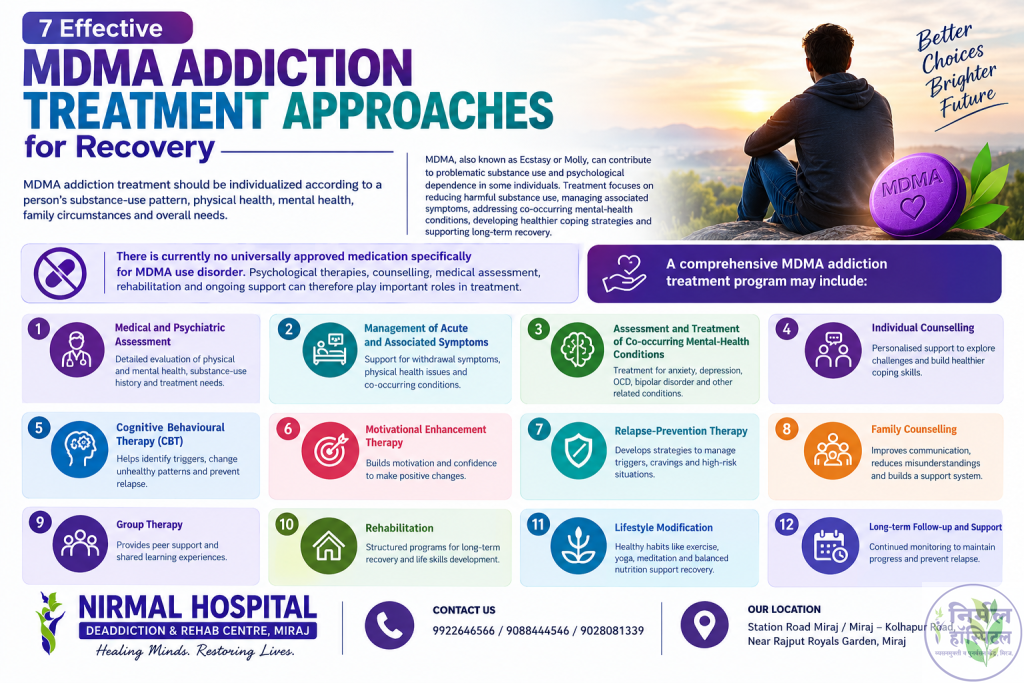
7 Effective MDMA Addiction Treatment Approaches for Recovery
MDMA addiction treatment should be individualized according to a person’s substance-use pattern, physical health, mental health, family circumstances and overall needs.
MDMA, also known as Ecstasy or Molly, can contribute to problematic substance use and psychological dependence in some individuals. Treatment focuses on reducing harmful substance use, managing associated symptoms, addressing co-occurring mental-health conditions, developing healthier coping strategies and supporting long-term recovery.
There is currently no universally approved medication specifically for MDMA use disorder. Psychological therapies, counselling, medical assessment, rehabilitation and ongoing support can therefore play important roles in treatment.
A comprehensive MDMA addiction treatment program may include:
- Medical and psychiatric assessment
- Management of acute or associated symptoms
- Assessment and treatment of co-occurring mental-health conditions
- Individual counselling
- Cognitive Behavioural Therapy (CBT)
- Motivational Enhancement Therapy
- Relapse-prevention therapy
- Family counselling
- Group therapy
- Rehabilitation
- Lifestyle modification
- Long-term follow-up and support
1. Medical and Psychiatric Assessment
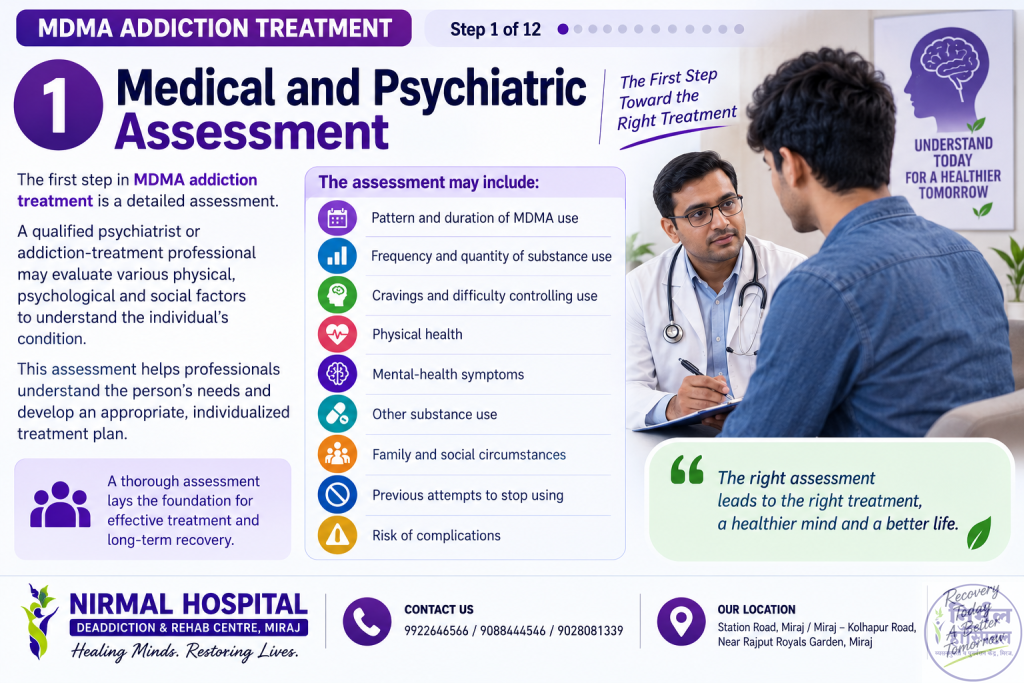
The first step in MDMA addiction treatment is a detailed assessment.
A qualified psychiatrist or addiction-treatment professional may evaluate:
- Pattern and duration of MDMA use
- Frequency and quantity of substance use
- Cravings and difficulty controlling use
- Physical health
- Mental-health symptoms
- Other substance use
- Family and social circumstances
- Previous attempts to stop using
- Risk of complications
This assessment helps professionals understand the individual’s needs and develop an appropriate treatment plan.
2. Cognitive Behavioural Therapy (CBT)
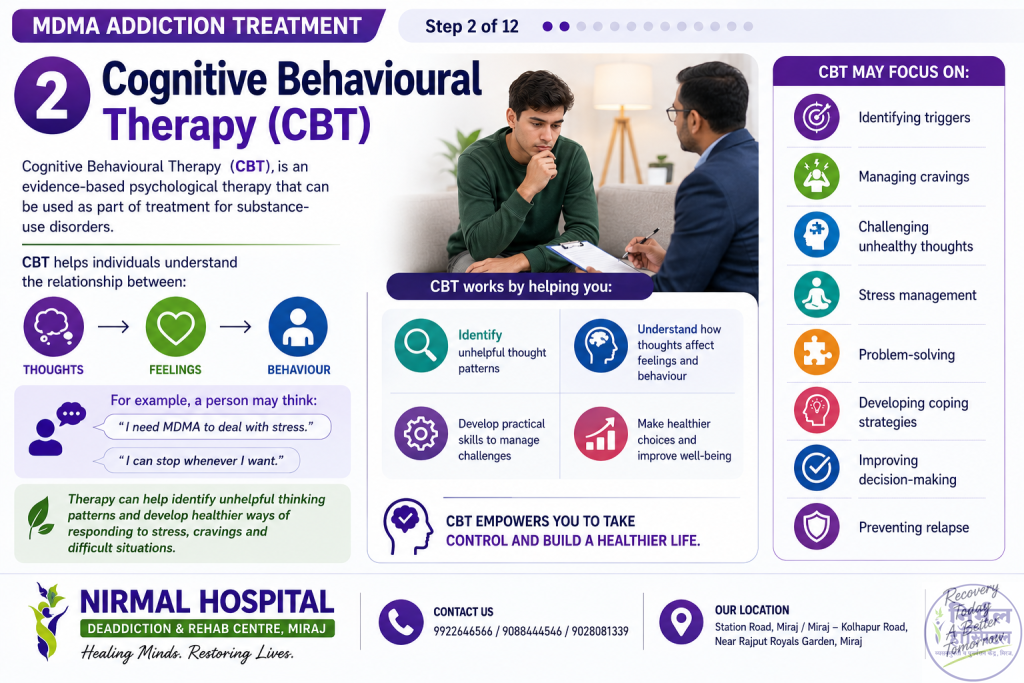
Cognitive Behavioural Therapy (CBT) is an evidence-based psychological therapy that can be used as part of treatment for substance-use disorders.
CBT helps individuals understand the relationship between:
Thoughts → Feelings → Behaviour
For example, a person may think:
“I need MDMA to deal with stress.”
or:
“I can stop whenever I want.”
Therapy can help identify unhelpful thinking patterns and develop healthier ways of responding to stress, cravings and difficult situations.
CBT may focus on:
- Identifying triggers
- Managing cravings
- Challenging unhealthy thoughts
- Stress management
- Problem-solving
- Developing coping strategies
- Improving decision-making
- Preventing relapse
3. Motivational Enhancement Therapy
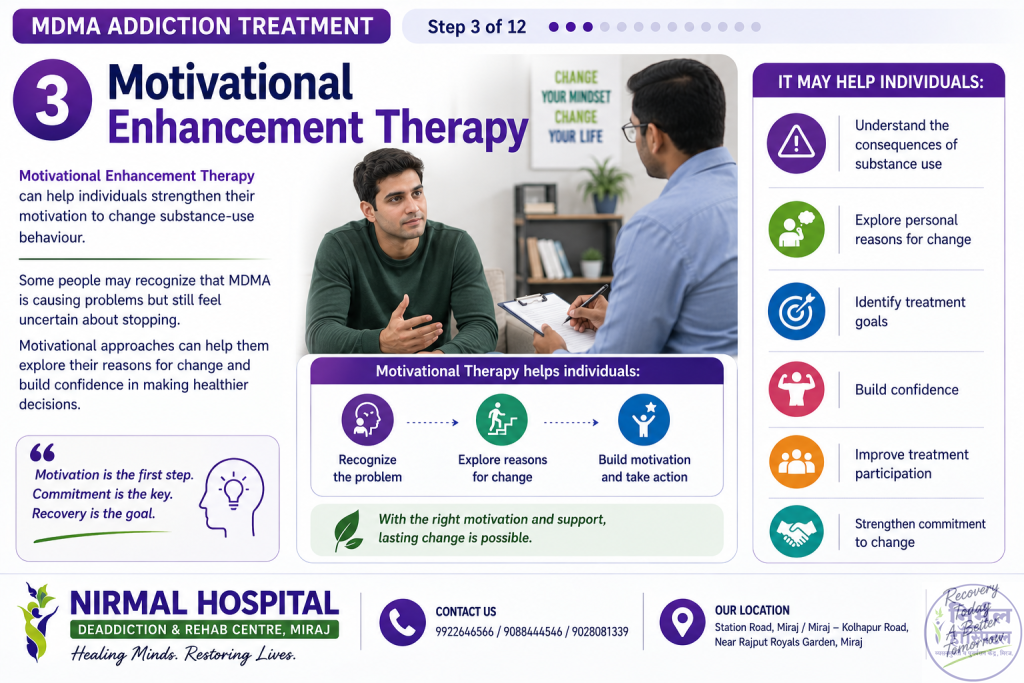
Motivational Enhancement Therapy can help individuals strengthen their motivation to change substance-use behaviour.
Some people may recognize that MDMA is causing problems but still feel uncertain about stopping. Motivational approaches can help them explore their reasons for change and build confidence in making healthier decisions.
It may help individuals:
- Understand the consequences of substance use
- Explore personal reasons for change
- Identify treatment goals
- Build confidence
- Improve treatment participation
- Strengthen commitment to change
4. Relapse Prevention Therapy
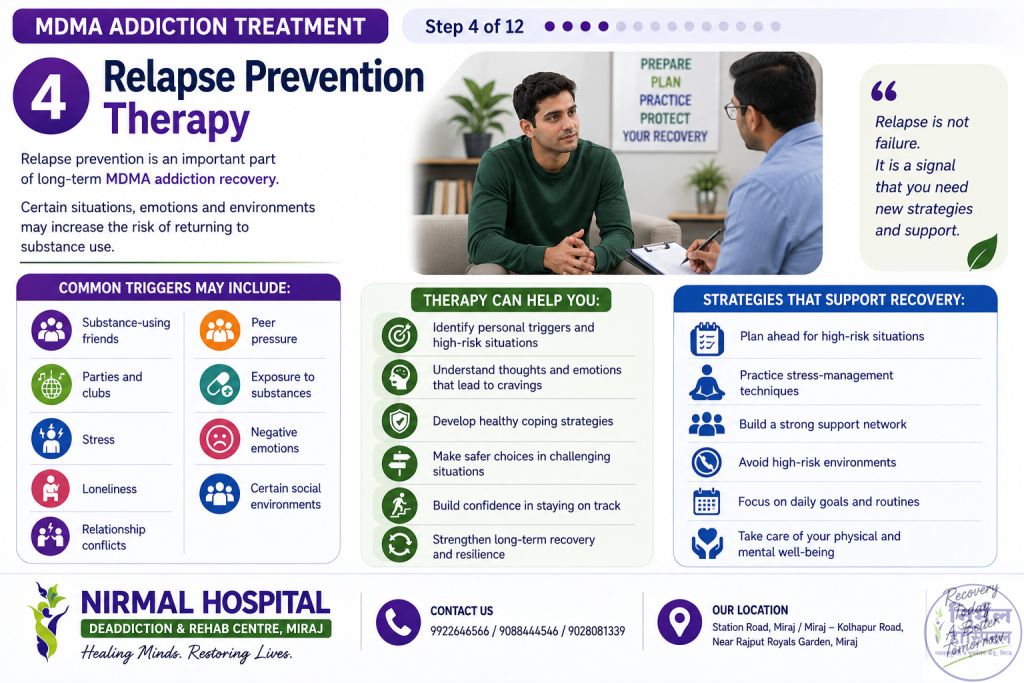
Relapse prevention is an important part of long-term MDMA addiction recovery.
Certain situations, emotions and environments may increase the risk of returning to substance use.
Common triggers may include:
- Substance-using friends
- Parties and clubs
- Stress
- Loneliness
- Relationship conflicts
- Peer pressure
- Exposure to substances
- Negative emotions
- Certain social environments
Therapy can help individuals recognize their triggers and develop healthier strategies for dealing with cravings and high-risk situations.
5. Family Counselling and Support
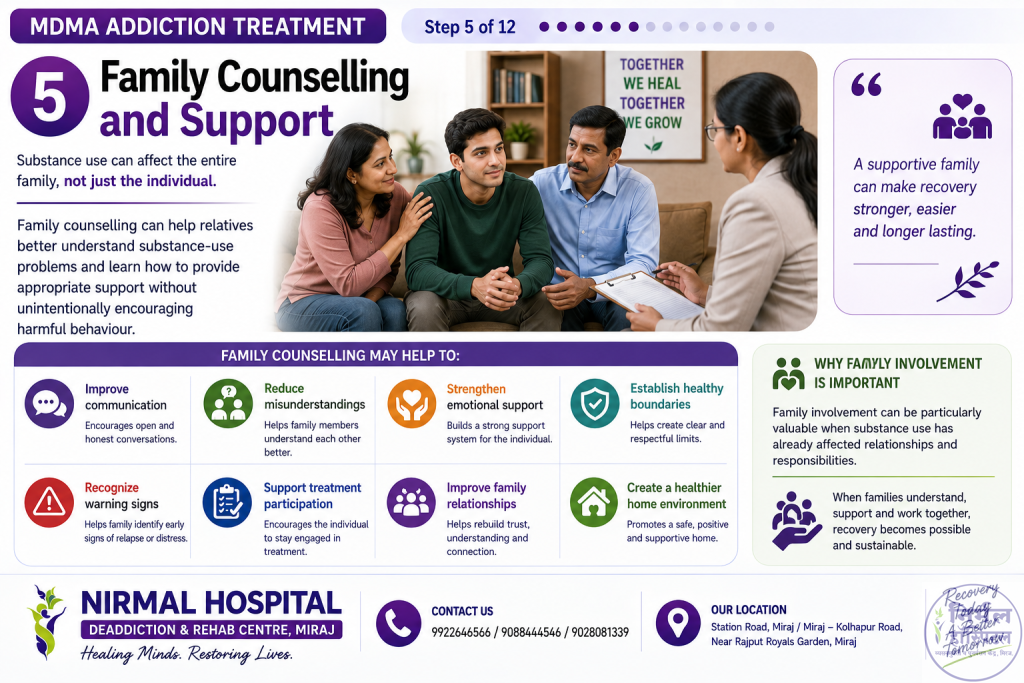
Substance use can affect the entire family, not just the individual.
Family counselling can help relatives better understand substance-use problems and learn how to provide appropriate support without unintentionally encouraging harmful behaviour.
Family counselling may help to:
- Improve communication
- Reduce misunderstandings
- Strengthen emotional support
- Establish healthy boundaries
- Recognize warning signs
- Support treatment participation
- Improve family relationships
- Create a healthier home environment
Family involvement can be particularly valuable when substance use has already affected relationships and responsibilities.
6. Rehabilitation for MDMA Addiction
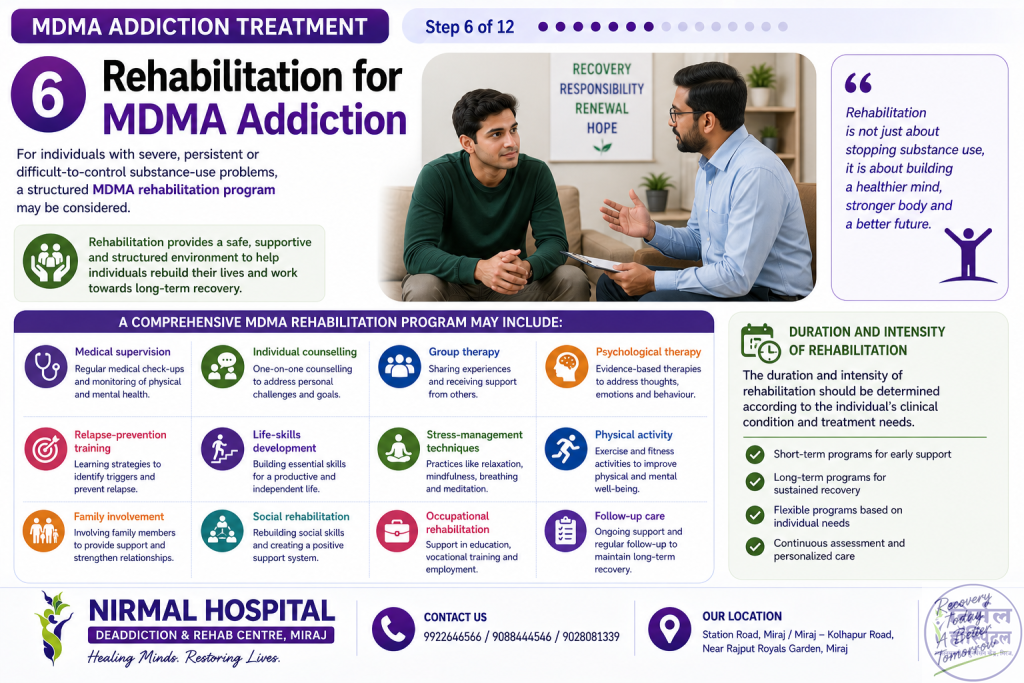
For individuals with severe, persistent or difficult-to-control substance-use problems, a structured MDMA rehabilitation program may be considered.
Depending on clinical needs, rehabilitation may include:
- Medical supervision
- Individual counselling
- Group therapy
- Psychological therapy
- Relapse-prevention training
- Life-skills development
- Stress-management techniques
- Physical activity
- Family involvement
- Social rehabilitation
- Occupational rehabilitation
- Follow-up care
The duration and intensity of rehabilitation should be determined according to the individual’s clinical condition and treatment needs.
7. Lifestyle Changes and Long-Term Support
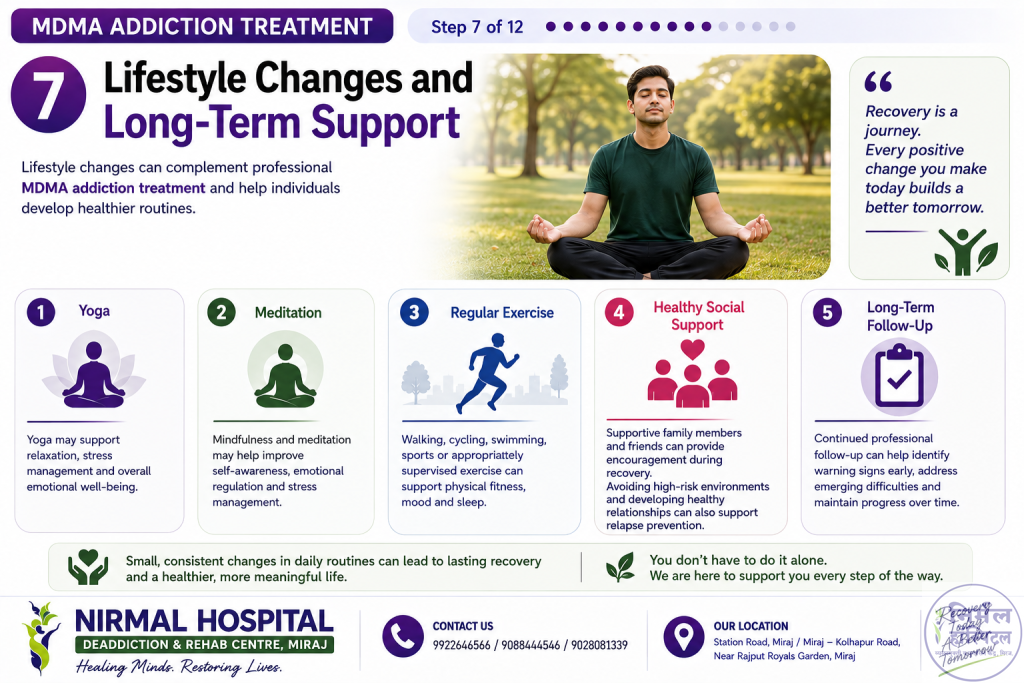
Lifestyle changes can complement professional MDMA addiction treatment and help individuals develop healthier routines.
Yoga
Yoga may support relaxation, stress management and overall emotional well-being.
Meditation
Mindfulness and meditation may help improve self-awareness, emotional regulation and stress management.
Regular Exercise
Walking, cycling, swimming, sports or appropriately supervised exercise can support physical fitness, mood and sleep.
Healthy Social Support
Supportive family members and friends can provide encouragement during recovery.
Avoiding high-risk environments and developing healthy relationships can also support relapse prevention.
Long-Term Follow-Up
Continued professional follow-up can help identify warning signs early, address emerging difficulties and maintain progress over time.
MDMA Withdrawal and After-Effects
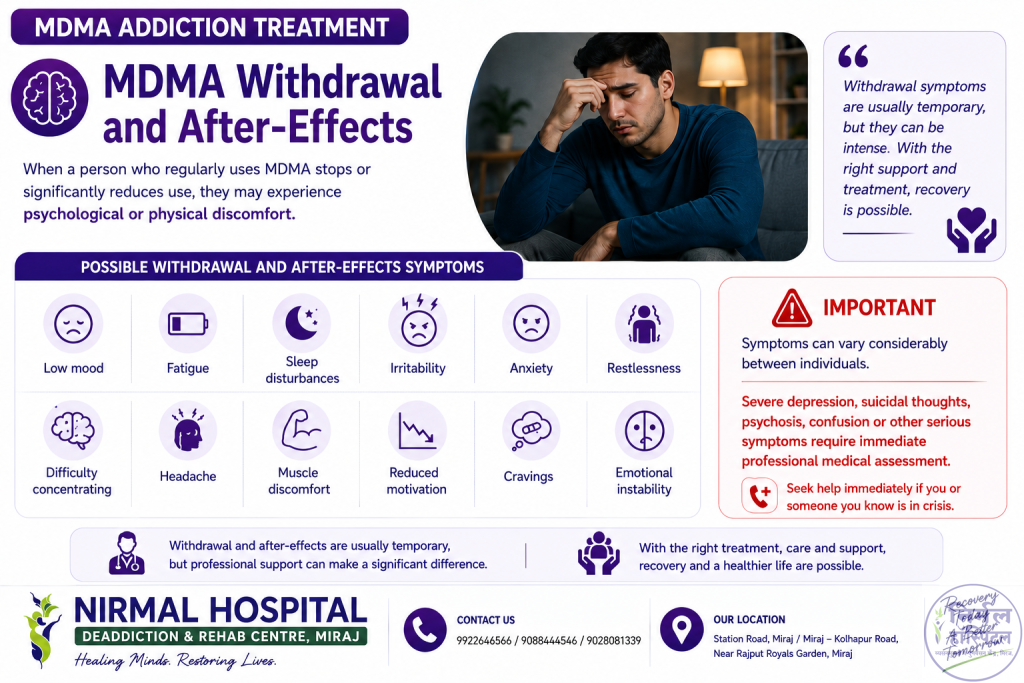
When a person who regularly uses MDMA stops or significantly reduces use, they may experience psychological or physical discomfort.
Possible symptoms may include:
- Low mood
- Fatigue
- Sleep disturbances
- Irritability
- Anxiety
- Restlessness
- Difficulty concentrating
- Headache
- Muscle discomfort
- Reduced motivation
- Cravings
- Emotional instability
Symptoms can vary considerably between individuals.
Severe depression, suicidal thoughts, psychosis, confusion or other serious symptoms require immediate professional medical assessment.
When Is MDMA Use a Medical Emergency?
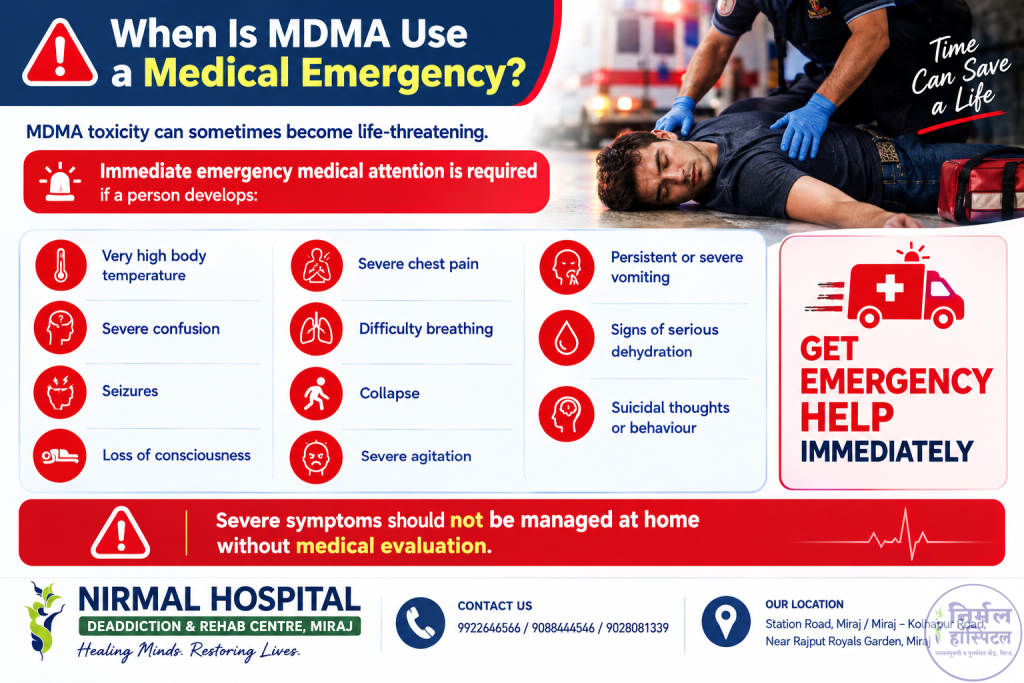
MDMA toxicity can sometimes become life-threatening.
Immediate emergency medical attention is required if a person develops:
- Very high body temperature
- Severe confusion
- Seizures
- Loss of consciousness
- Severe chest pain
- Difficulty breathing
- Collapse
- Severe agitation
- Persistent or severe vomiting
- Signs of serious dehydration
- Suicidal thoughts or behaviour
Severe symptoms should not be managed at home without medical evaluation.
Can MDMA Addiction Be Treated?
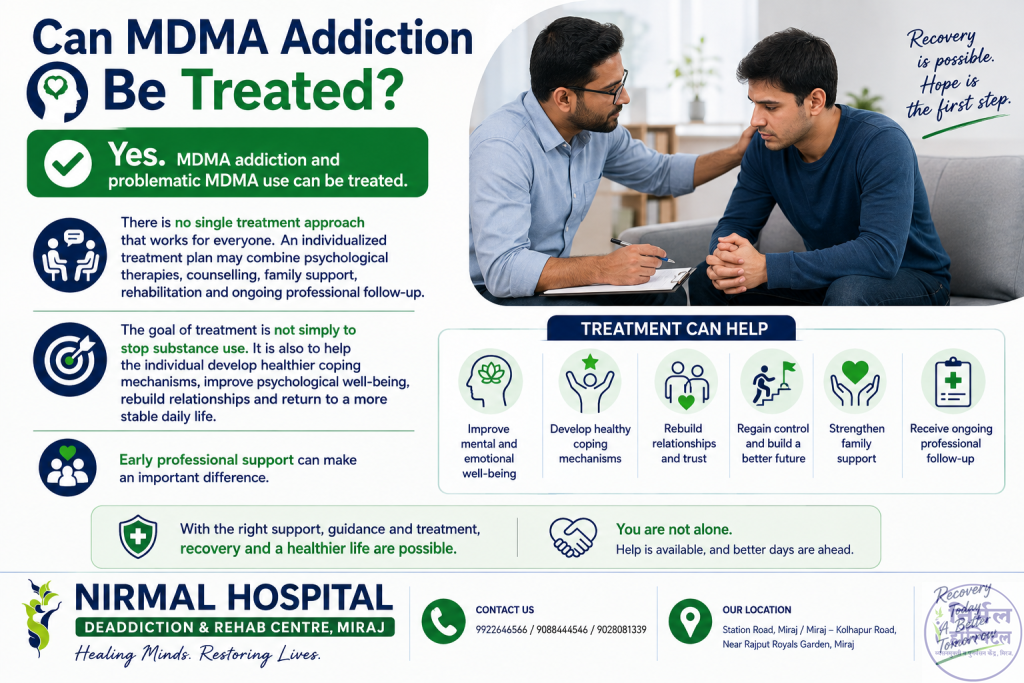
Yes. MDMA addiction and problematic MDMA use can be treated.
There is no single treatment approach that works for everyone. An individualized treatment plan may combine psychological therapies, counselling, family support, rehabilitation and ongoing professional follow-up.
The goal of treatment is not simply to stop substance use. It is also to help the individual develop healthier coping mechanisms, improve psychological well-being, rebuild relationships and return to a more stable daily life.
Early professional support can make an important difference.
Frequently Asked Questions About MDMA Addiction Treatment
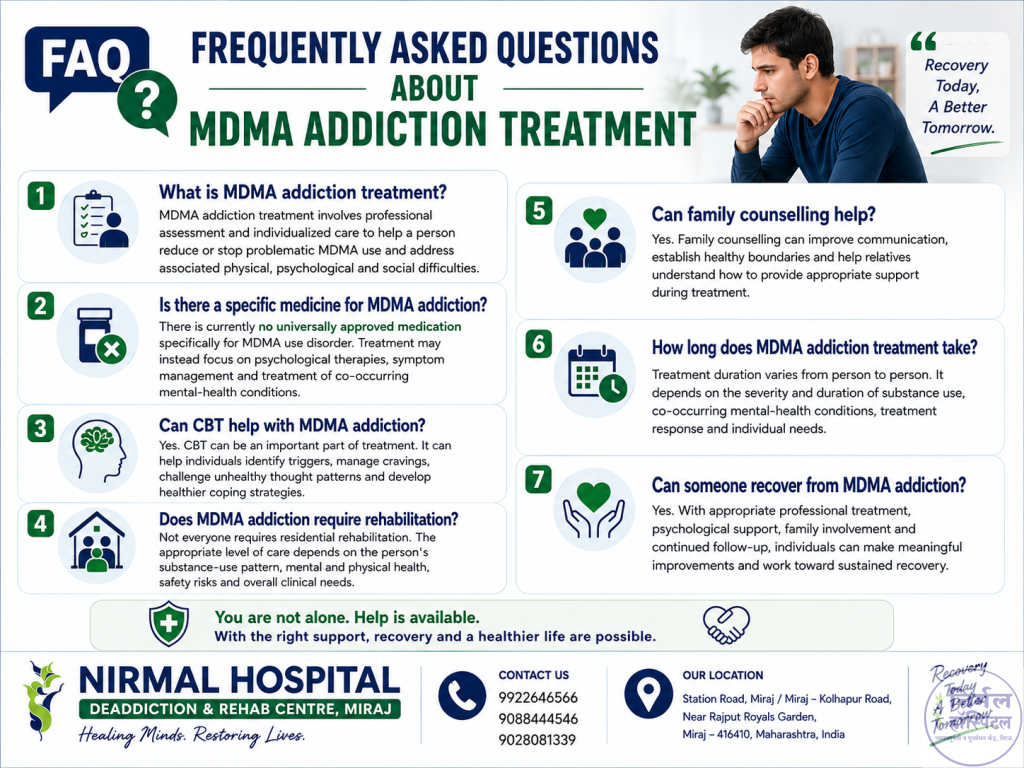
What is MDMA addiction treatment?
MDMA addiction treatment involves professional assessment and individualized care to help a person reduce or stop problematic MDMA use and address associated physical, psychological and social difficulties.
Is there a specific medicine for MDMA addiction?
There is currently no universally approved medication specifically for MDMA use disorder. Treatment may instead focus on psychological therapies, symptom management and treatment of co-occurring mental-health conditions.
Can CBT help with MDMA addiction?
Yes. CBT can be an important part of treatment. It can help individuals identify triggers, manage cravings, challenge unhealthy thought patterns and develop healthier coping strategies.
Does MDMA addiction require rehabilitation?
Not everyone requires residential rehabilitation. The appropriate level of care depends on the person’s substance-use pattern, mental and physical health, safety risks and overall clinical needs.
Can family counselling help?
Yes. Family counselling can improve communication, establish healthy boundaries and help relatives understand how to provide appropriate support during treatment.
How long does MDMA addiction treatment take?
Treatment duration varies from person to person. It depends on the severity and duration of substance use, co-occurring mental-health conditions, treatment response and individual needs.
Can someone recover from MDMA addiction?
Yes. With appropriate professional treatment, psychological support, family involvement and continued follow-up, individuals can make meaningful improvements and work toward sustained recovery.
Why Choose Professional MDMA Addiction Treatment?
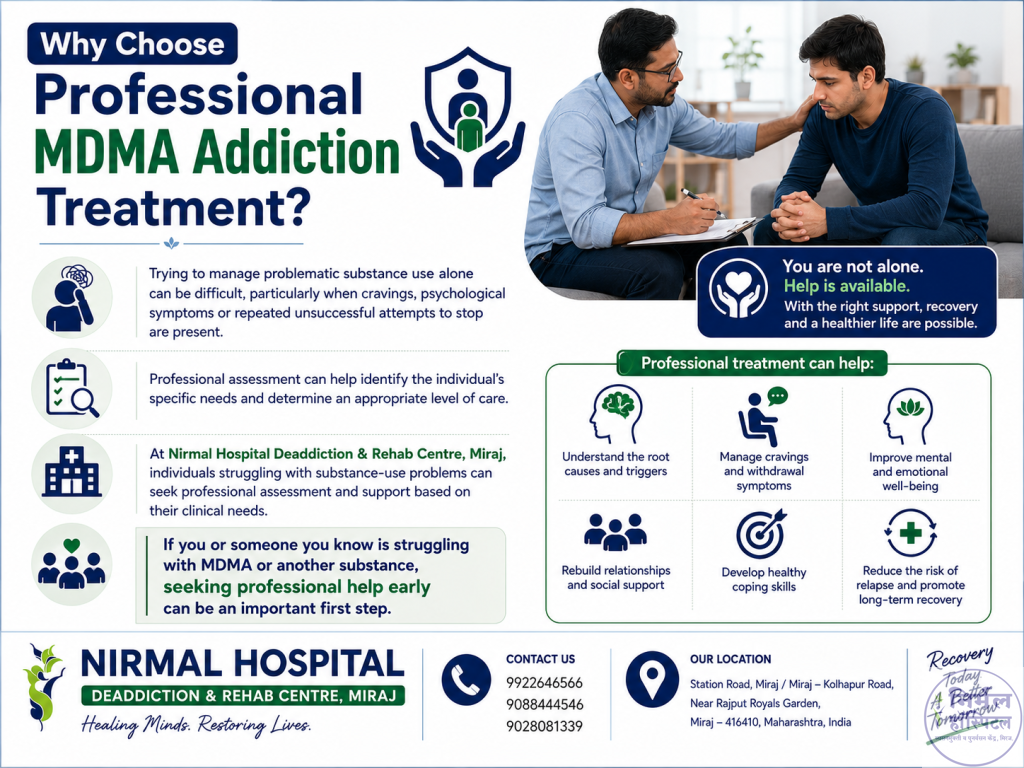
Trying to manage problematic substance use alone can be difficult, particularly when cravings, psychological symptoms or repeated unsuccessful attempts to stop are present.
Professional assessment can help identify the individual’s specific needs and determine an appropriate level of care.
At Nirmal Hospital Deaddiction & Rehab Centre, Miraj, individuals struggling with substance-use problems can seek professional assessment and support based on their clinical needs.
If you or someone you know is struggling with MDMA or another substance, seeking professional help early can be an important first step.
Take the First Step Toward Recovery
MDMA use can affect mental health, physical health, relationships, work and family life.
Recognizing the warning signs and seeking professional support can help address the problem before it becomes more difficult to manage.
If you or someone you know is struggling with MDMA or another substance, consult a qualified psychiatrist or addiction-treatment professional for an appropriate assessment and personalized treatment plan.
Recovery is possible with the right treatment, support and commitment.
Need professional help for MDMA addiction?
Contact Nirmal Hospital Deaddiction & Rehab Centre, Miraj for assessment and guidance.
Contact: 9922646566 / 9088444546 / 9028081339
Address: Station Road, Miraj / Miraj–Kolhapur Road, Near Rajput Royals Garden, Miraj


