

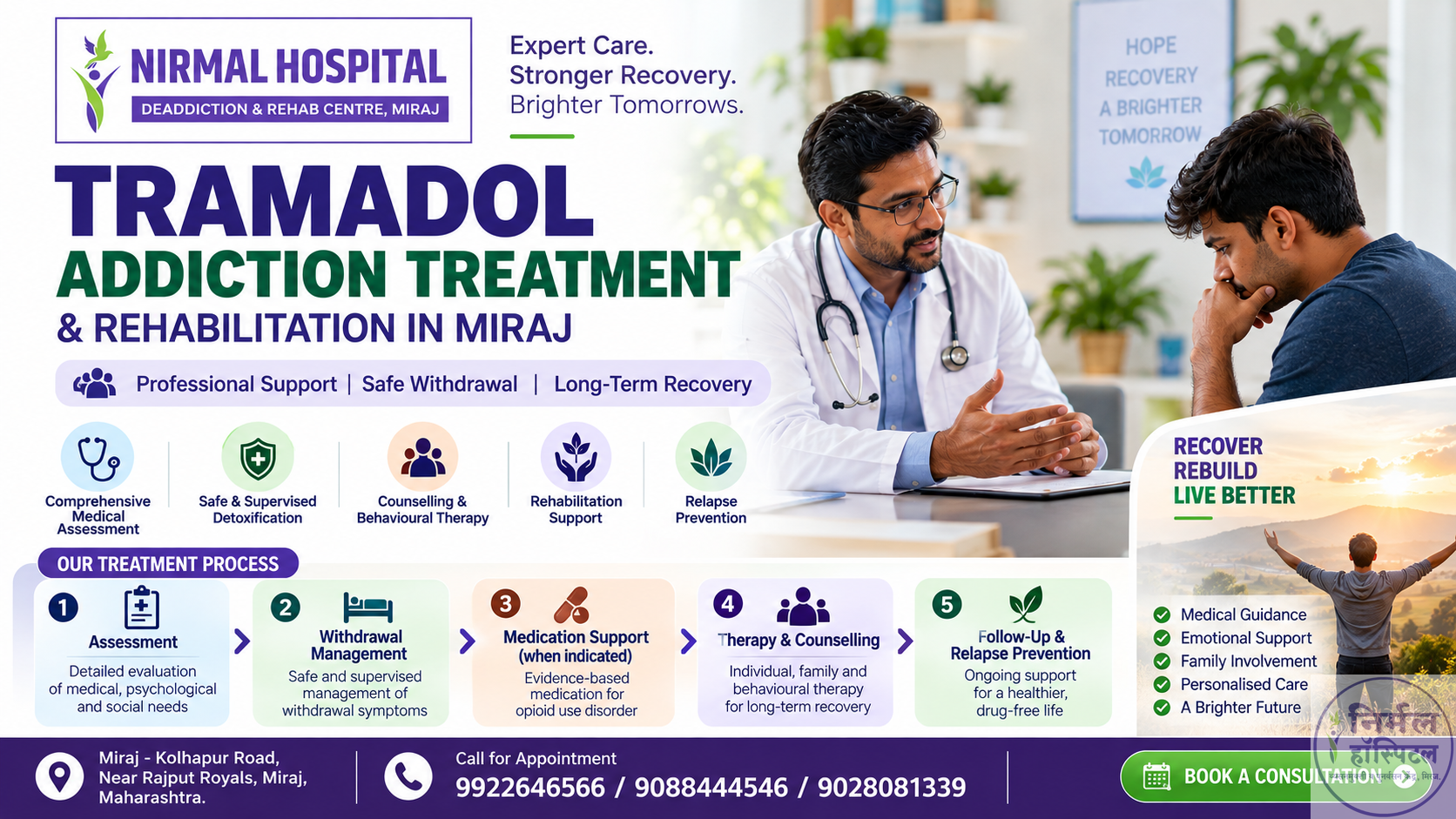
Tramadol Addiction Treatment & Rehabilitation in Miraj
Tramadol is a prescription opioid pain-relieving medicine. Although it is used for legitimate medical purposes, prolonged misuse, taking higher doses than prescribed or using it without medical supervision may lead to physical dependence and addiction.
Tramadol addiction treatment focuses on identifying the severity of dependence, managing withdrawal symptoms safely, addressing psychological and behavioural factors, and supporting long-term recovery.
At Nirmal Hospital, Miraj, individuals experiencing substance-use problems can seek professional assessment and guidance regarding appropriate de-addiction and rehabilitation care.
What Is Tramadol Addiction Treatment?
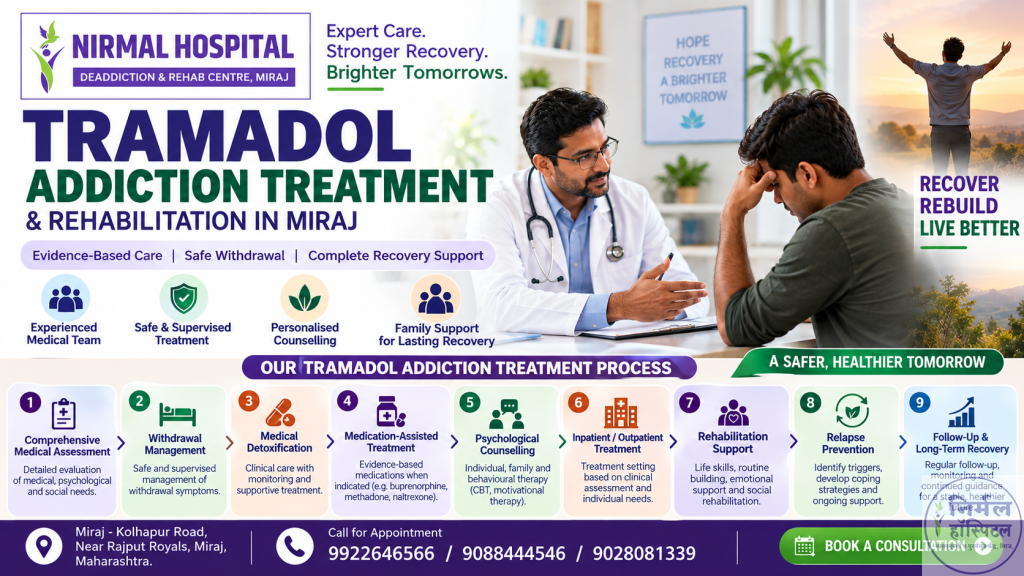
Tramadol addiction treatment is a medically guided process designed to help individuals experiencing problematic Tramadol use or opioid-use disorder.
The approach depends on several factors, including:
- Duration and pattern of Tramadol use
- Current medication use and prescribed dosage
- Severity of physical dependence
- Previous withdrawal experiences
- History of seizures or other medical complications
- Coexisting psychiatric or physical health conditions
- Use of alcohol, sedatives or other substances
- Family and social circumstances
Physical dependence and addiction are not identical. A person who develops dependence while taking prescribed Tramadol may need a supervised medication reduction plan, whereas someone with opioid-use disorder may require additional addiction-specific treatment.
1. Comprehensive Medical Assessment
The first step is a detailed clinical evaluation.
A healthcare professional may assess:
- Medical and medication history
- Frequency and duration of Tramadol use
- Symptoms of dependence or addiction
- Withdrawal symptoms
- Previous attempts to stop
- Risk of seizures
- Possible medication interactions
- Mental health concerns
- Family and social support
Blood tests, liver and kidney function tests, or other investigations may be recommended when clinically indicated.
The assessment helps determine whether outpatient care, closer medical supervision or inpatient treatment is appropriate.
2. Medically Supervised Tramadol Withdrawal Management
When a person has developed physical dependence, reducing or stopping Tramadol may cause withdrawal symptoms.
Common symptoms include:
- Anxiety and irritability
- Restlessness
- Sweating
- Muscle and body aches
- Nausea and vomiting
- Diarrhoea
- Sleep disturbances
- Strong cravings
Some individuals may experience unusual sensory or psychological symptoms because Tramadol affects serotonin and norepinephrine signaling in addition to opioid receptors.
Why Is Medical Supervision Important?
Medical supervision helps clinicians evaluate withdrawal severity, identify complications and determine a suitable discontinuation plan.
Depending on the patient’s circumstances, care may involve a gradual reduction of prescribed Tramadol or addiction-specific treatment when opioid-use disorder is diagnosed.
Tramadol should not be stopped abruptly after regular use without consulting the prescribing healthcare professional.
3. Medical Detoxification
Medical detoxification refers to the clinical management of withdrawal and related health concerns as the body adjusts to a reduction or discontinuation of a substance.
The need for supervised detoxification depends on the patient’s medical condition and pattern of substance use.
During medically supervised withdrawal, clinicians may focus on:
- Monitoring withdrawal symptoms
- Assessing hydration and nutritional needs
- Monitoring vital signs when necessary
- Evaluating sleep disturbances
- Identifying seizures or other complications
- Reviewing concurrent medications
- Providing appropriate supportive medical care
Detoxification alone is not considered adequate treatment for opioid-use disorder. Individuals diagnosed with opioid-use disorder should be assessed for evidence-based ongoing treatment.
4. Medication-Assisted Treatment for Opioid Use Disorder
For patients diagnosed with opioid-use disorder, evidence-based medications may be considered as part of an individualized treatment plan.
Medications used in opioid-use disorder treatment include:
Buprenorphine
Buprenorphine is an evidence-based medication that can reduce opioid withdrawal symptoms and cravings.
It must be initiated under appropriate medical supervision because starting it at the wrong time can precipitate withdrawal.
Methadone
Methadone is an opioid agonist medication used for opioid-use disorder treatment in appropriately authorized clinical settings.
Its use requires careful medical assessment, monitoring and compliance with applicable regulations.
Naltrexone
Naltrexone is an opioid antagonist that blocks opioid effects.
It may be considered for suitable patients after an adequate opioid-free interval and appropriate medical evaluation. Starting it while opioids remain in the body can precipitate withdrawal.
Important: These medications are not interchangeable, and not every patient requires them. Medication selection depends on the diagnosis, clinical condition, availability and prescribing regulations.
People experiencing physical dependence without opioid-use disorder may require a different approach, such as an individualized taper.
5. Psychological Counselling and Behavioural Therapy
Medical care may address physical dependence and withdrawal, while counselling helps patients understand and change patterns of problematic substance use.
Depending on individual needs, psychological interventions may include:
Cognitive Behavioural Therapy (CBT)
CBT helps individuals identify thoughts, behaviours and situations associated with substance use.
It may support:
- Recognizing triggers
- Developing healthier coping skills
- Managing stressful situations
- Addressing unhelpful thinking patterns
- Building relapse-prevention strategies
Motivational Enhancement Therapy
Motivational approaches help individuals explore their reasons for change, strengthen motivation and establish realistic recovery goals.
Individual Counselling
Individual sessions may address personal concerns, emotional difficulties, relationships and challenges affecting recovery.
Family Counselling
Family involvement may help improve communication, establish appropriate boundaries and create a more supportive recovery environment.
Counselling can be valuable, but for diagnosed opioid-use disorder it should not be treated as a replacement for indicated evidence-based medication.
6. Inpatient and Outpatient Tramadol Addiction Treatment
The appropriate treatment setting depends on the severity of the condition.
Outpatient Treatment
Outpatient care may be appropriate for selected individuals who are medically stable and can attend scheduled consultations and follow-up appointments.
Inpatient Treatment
Inpatient care may be considered when an individual has:
- Severe withdrawal or significant medical complications
- A history of seizures
- Multiple substance-use problems
- Significant psychiatric symptoms
- An unsafe or unsupportive home environment
- Difficulty maintaining stability in outpatient care
The decision to recommend admission should be based on clinical assessment rather than a fixed treatment duration.
7. Rehabilitation and Recovery Support
Rehabilitation focuses on improving daily functioning and supporting recovery beyond the initial withdrawal period.
An individualized rehabilitation plan may address:
- Establishing a regular daily routine
- Healthy sleep habits
- Nutrition and physical well-being
- Emotional regulation
- Stress management
- Rebuilding family relationships
- Returning to education or employment
- Developing coping and problem-solving skills
Supportive activities such as yoga, relaxation exercises and recreational therapy may contribute to general well-being when appropriate.
These activities are complementary and do not replace evidence-based addiction treatment.
8. Relapse Prevention
Relapse prevention is an important part of continuing recovery.
Patients may benefit from learning to recognize:
- Situations associated with previous substance use
- Emotional and psychological triggers
- Cravings
- Stress-related patterns
- Social influences
- Early warning signs of returning to problematic use
A relapse-prevention plan may include regular follow-up, counselling, medication management when indicated and involvement of supportive family members.
Returning to substance use does not mean that further treatment cannot help. It indicates the need to reassess the care plan and address current risks.
9. Follow-Up and Long-Term Recovery
Recovery from Tramadol addiction may require ongoing support.
Follow-up care may include:
- Monitoring cravings and substance use
- Reviewing medications
- Evaluating sleep and mental health
- Supporting adherence to the treatment plan
- Addressing ongoing pain-management needs
- Family counselling when appropriate
- Reviewing relapse-prevention strategies
Individuals who still require treatment for chronic pain should have their pain management reviewed alongside their substance-use concerns.
Tramadol Addiction Treatment and Coexisting Mental Health Conditions
Some individuals experiencing problematic Tramadol use may also have anxiety, depression, sleep disorders or other psychiatric conditions.
An integrated assessment can help clinicians identify these concerns and develop an appropriate plan.
Mental health symptoms should not automatically be attributed to addiction because they may have other medical or psychiatric causes.
When Is Urgent Medical Care Required?
Immediate medical attention is necessary if someone taking Tramadol develops:
- Seizures
- Severe confusion
- Loss of consciousness
- Slow or absent breathing
- Severe agitation with fever and muscle rigidity
- Suspected overdose
Call emergency medical services immediately.
Naloxone may reverse opioid-related respiratory depression in a Tramadol overdose, but it does not treat all complications, including seizures. Emergency evaluation is essential.
Why Seek Professional Assessment?
Tramadol dependence and addiction can vary considerably between individuals.
A professional evaluation helps determine:
- Whether physical dependence or opioid-use disorder is present
- Whether medication reduction is appropriate
- Whether withdrawal requires closer supervision
- Whether addiction-specific medication is indicated
- Whether counselling or rehabilitation is needed
- What follow-up support may be beneficial
Related Addiction and Treatment Information
Learn more about related conditions and treatment approaches:
- Tramadol Addiction: Symptoms, Effects and Withdrawal
- Opioid Addiction: Symptoms, Dependence and Risks
- Brown Sugar Addiction
- Morphine Addiction
- Fortwin Addiction
- Addiction Treatment & Rehabilitation
Frequently Asked Questions About Tramadol Addiction Treatment
1. Can Tramadol addiction be treated?
Yes. Tramadol-related substance-use disorders are treatable. Care may involve medical assessment, withdrawal management, evidence-based medication when indicated, counselling and ongoing recovery support.
2. Is medical detoxification necessary for every patient?
No. The need for supervised detoxification depends on the severity of dependence, medical history, withdrawal risk and other clinical factors.
3. How long does Tramadol withdrawal last?
Withdrawal duration varies depending on the pattern and duration of use, individual physiology and other medications. A healthcare professional can assess the likely course and recommend appropriate monitoring.
4. Can Tramadol be stopped suddenly?
Abrupt discontinuation after regular use can cause withdrawal symptoms. Patients should consult their prescribing healthcare professional before changing or stopping the medication.
5. Are medicines available for Tramadol addiction treatment?
For patients diagnosed with opioid-use disorder, medications such as buprenorphine, methadone or naltrexone may be considered when clinically appropriate and legally available. Physical dependence without addiction may require a different approach.
6. Is counselling useful for Tramadol addiction?
Yes. Counselling may help individuals understand triggers, develop coping strategies, improve motivation and address psychological or social problems associated with substance use.
7. Is hospital admission always required?
No. Some individuals may be managed as outpatients, while others require inpatient monitoring or more intensive support.
8. Can Tramadol addiction return after treatment?
Recurrence of substance use is possible. Continuing care, appropriate medication when indicated, counselling and relapse-prevention planning can help support recovery.
9. Can Tramadol addiction and depression be treated together?
Yes. Coexisting substance-use and mental health conditions should be assessed and managed together when appropriate.
10. Where can I seek Tramadol addiction treatment in Miraj?
Individuals concerned about Tramadol dependence or addiction can contact Nirmal Hospital, Miraj, for professional assessment and guidance regarding available de-addiction services.
Trusted Medical Resources
- CDC – Treatment of Opioid Use Disorder
- CDC – Opioid Use Disorder: Treating
- MedlinePlus – Tramadol Drug Information
- NHS – Tramadol
Get Professional Guidance for Tramadol Addiction Treatment in Miraj
If you or a family member is experiencing difficulty controlling Tramadol use, withdrawal symptoms or related health concerns, a professional medical assessment can help determine the next steps.
Nirmal Hospital – Psychiatric, De-Addiction & Rehabilitation Centre
Address: Miraj–Kolhapur Road, Near Rajput Royals Garden, Miraj, Maharashtra.
Contact: 9922646566 | 9088444546 | 9028081339
Book a Consultation for Tramadol Dependence or Addiction Assessment
Medical disclaimer: This information is intended for educational purposes only. Treatment decisions, medication selection and withdrawal management must be individualized by a qualified healthcare professional. Availability of specific medications and services should be confirmed directly with the hospital.


