

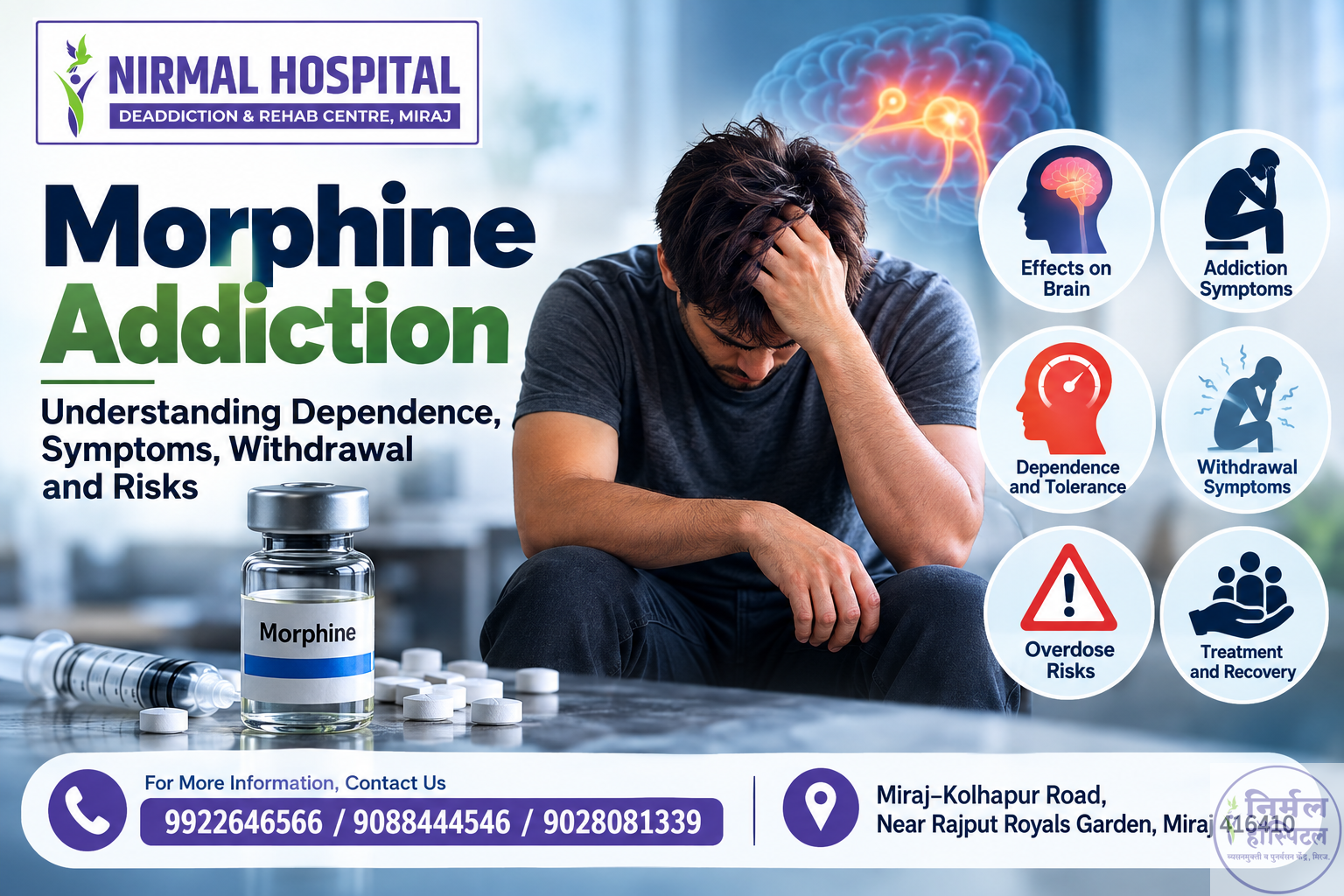
Morphine Addiction: Symptoms, Dependence, Withdrawal and Risks
Morphine is a powerful opioid medication used medically for the management of moderate to severe pain in appropriate clinical situations. It works by acting on opioid receptors in the brain and nervous system, helping reduce the perception of pain.
When morphine is used repeatedly, particularly in higher doses, for longer periods, or differently from medical instructions, it can lead to tolerance and physical dependence. Some individuals may also develop Opioid Use Disorder (OUD).
Morphine should always be taken strictly according to the advice of a qualified healthcare professional.
Medical Uses of Morphine
Morphine may be prescribed for the management of severe pain associated with certain medical situations, such as:
- Major injuries
- Surgery and post-operative pain
- Serious medical conditions
- Cancer-related pain
- Palliative care
The decision to prescribe morphine, including its dose and duration, should be made by a qualified healthcare professional after considering the patient’s medical condition and individual risk factors.
What Is Morphine Addiction?
Morphine addiction may occur when a person develops a problematic pattern of opioid use that becomes difficult to control and continues despite harmful consequences.
Addiction is different from physical dependence. A person taking morphine appropriately under medical supervision may develop physical dependence without necessarily developing addiction.
Morphine Addiction Symptoms
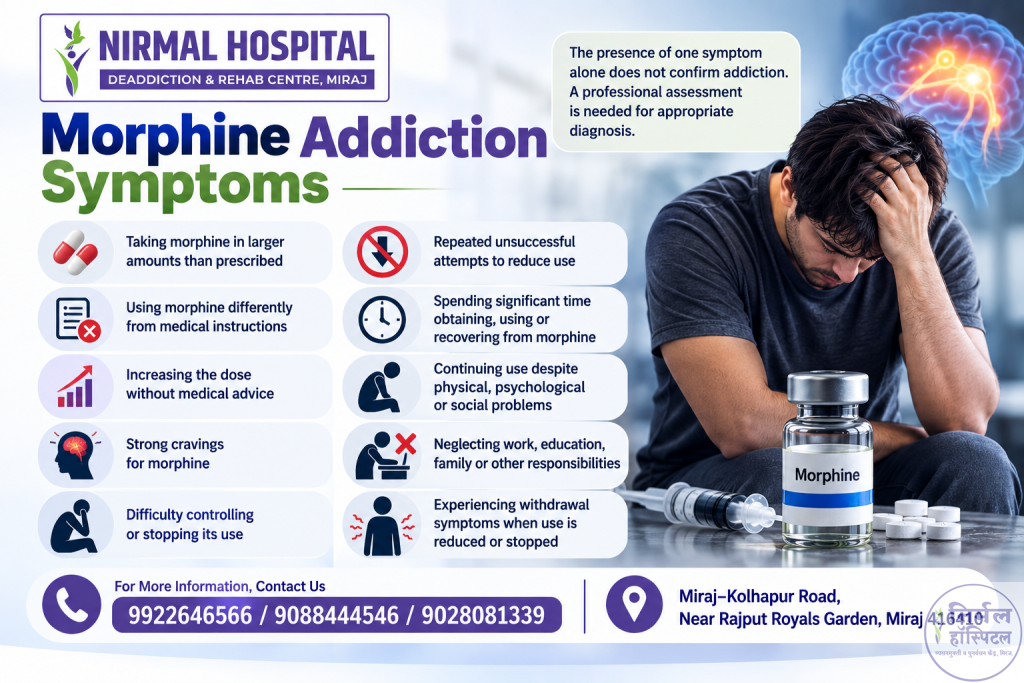
Possible signs and symptoms of problematic morphine use may include:
- Taking morphine in larger amounts than prescribed
- Using morphine differently from medical instructions
- Increasing the dose without medical advice
- Strong cravings for morphine
- Difficulty controlling or stopping its use
- Repeated unsuccessful attempts to reduce use
- Spending significant time obtaining, using or recovering from morphine
- Continuing use despite physical, psychological or social problems
- Neglecting work, education, family or other responsibilities
- Experiencing withdrawal symptoms when use is reduced or stopped
The presence of one symptom alone does not confirm addiction. A professional assessment is needed for appropriate diagnosis.
Morphine Side Effects
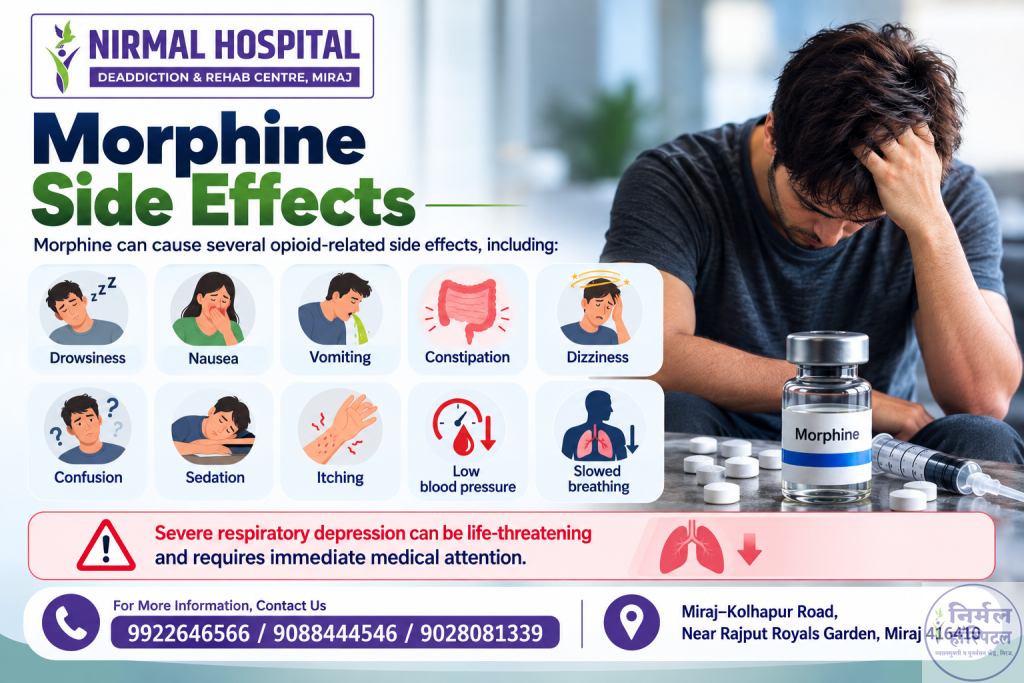
Morphine can cause several opioid-related side effects, including:
- Drowsiness
- Nausea
- Vomiting
- Constipation
- Dizziness
- Confusion
- Sedation
- Itching
- Low blood pressure
- Slowed breathing
Severe respiratory depression can be life-threatening and requires immediate medical attention.
Morphine Dependence and Tolerance
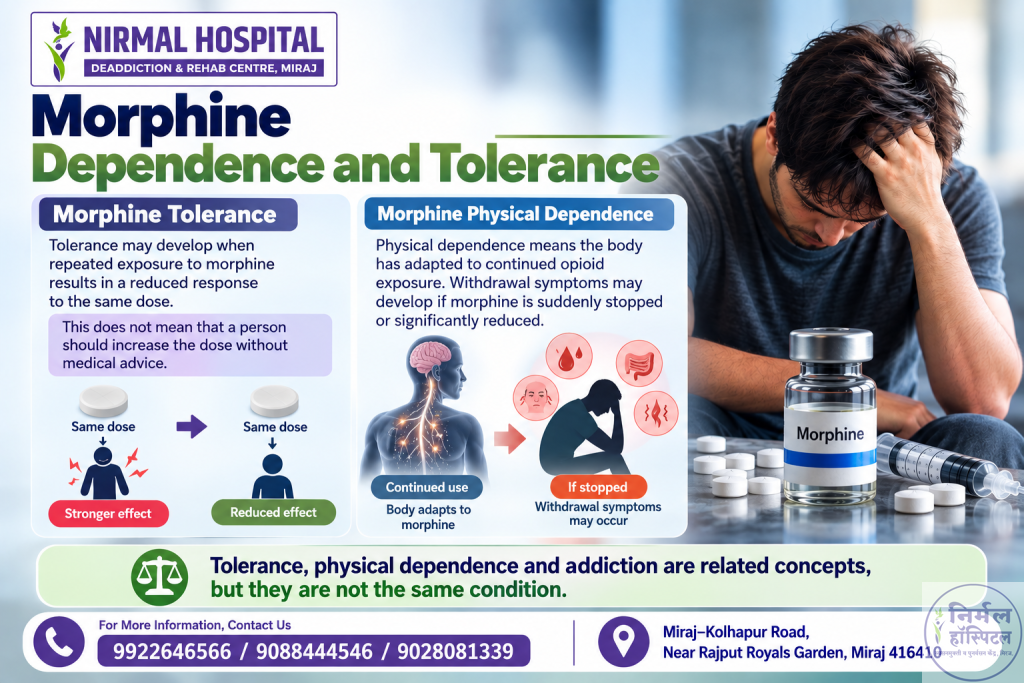
Morphine Tolerance
Tolerance may develop when repeated exposure to morphine results in a reduced response to the same dose. This does not mean that a person should increase the dose without medical advice.
Morphine Physical Dependence
Physical dependence means the body has adapted to continued opioid exposure. Withdrawal symptoms may develop if morphine is suddenly stopped or significantly reduced.
Tolerance, physical dependence and addiction are related concepts, but they are not the same condition.
Morphine Withdrawal Symptoms
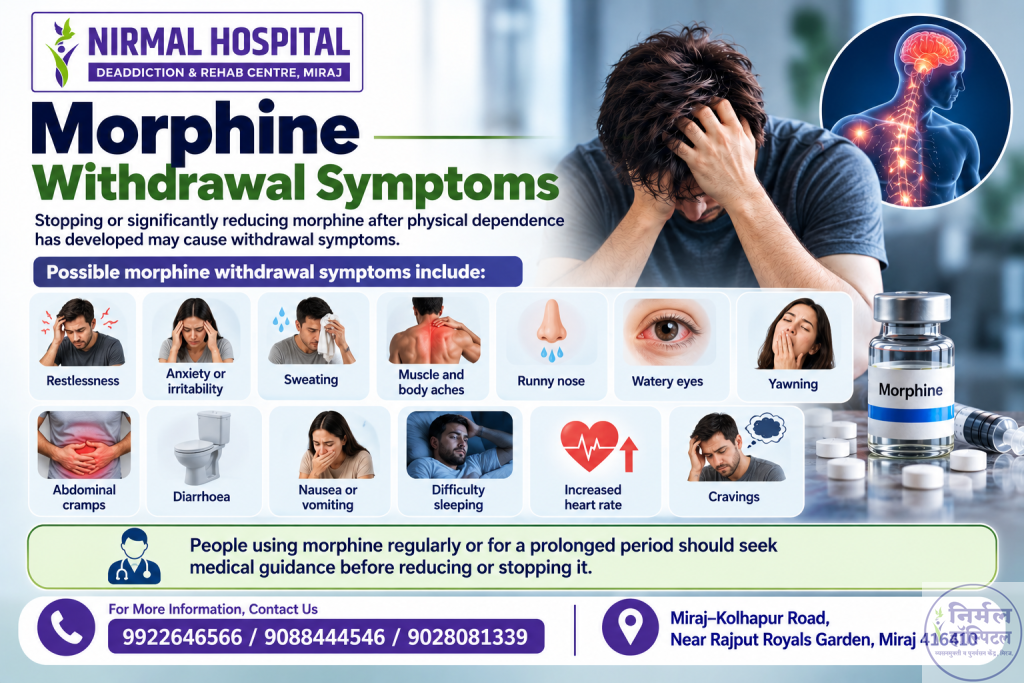
Stopping or significantly reducing morphine after physical dependence has developed may cause withdrawal symptoms.
Possible morphine withdrawal symptoms include:
- Restlessness
- Anxiety or irritability
- Sweating
- Muscle and body aches
- Runny nose
- Watery eyes
- Yawning
- Abdominal cramps
- Diarrhoea
- Nausea or vomiting
- Difficulty sleeping
- Increased heart rate
- Cravings
People using morphine regularly or for a prolonged period should seek medical guidance before reducing or stopping it.
Morphine Overdose
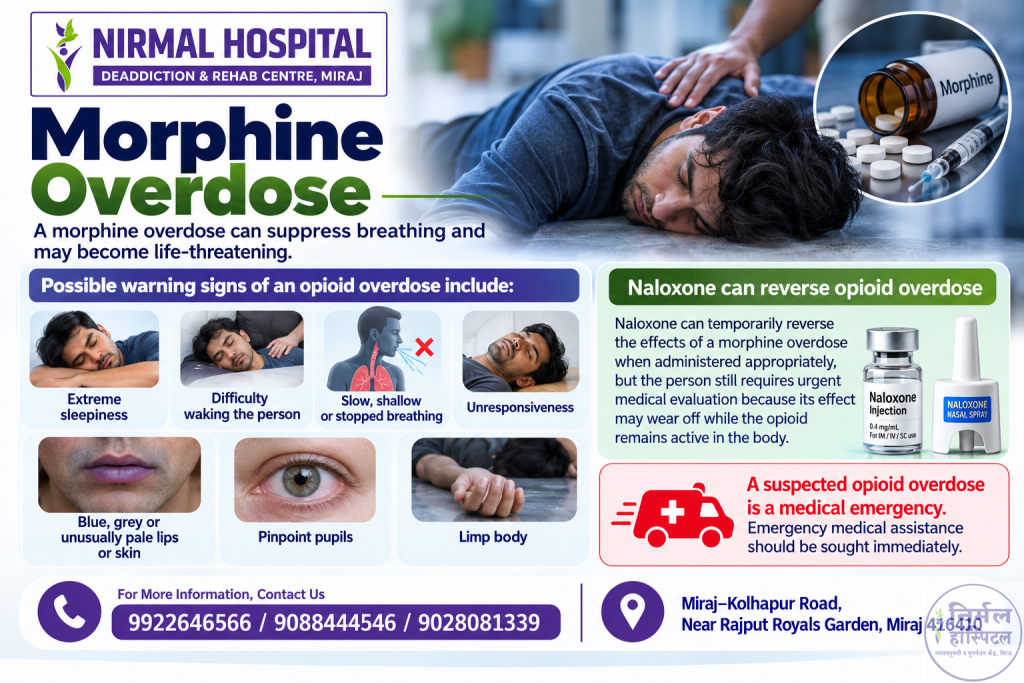
A morphine overdose can suppress breathing and may become life-threatening.
Possible warning signs of an opioid overdose include:
- Extreme sleepiness
- Difficulty waking the person
- Slow, shallow or stopped breathing
- Unresponsiveness
- Blue, grey or unusually pale lips or skin
- Pinpoint pupils
- Limp body
A suspected opioid overdose is a medical emergency. Emergency medical assistance should be sought immediately.
Naloxone can temporarily reverse the effects of an opioid overdose when administered appropriately, but the person still requires urgent medical evaluation because its effect may wear off while the opioid remains active in the body.
Risk Factors for Morphine Addiction
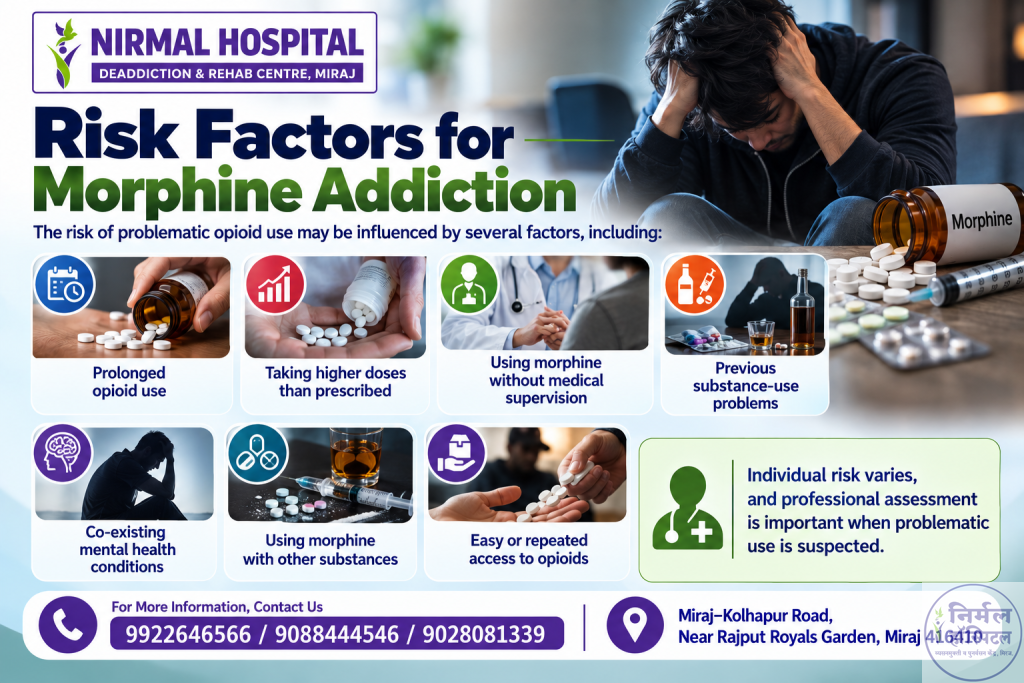
The risk of problematic opioid use may be influenced by several factors, including:
- Prolonged opioid use
- Taking higher doses than prescribed
- Using morphine without medical supervision
- Previous substance-use problems
- Co-existing mental health conditions
- Using morphine with other substances
- Easy or repeated access to opioids
Individual risk varies, and professional assessment is important when problematic use is suspected.
When Should Professional Help Be Considered?
Professional assessment should be considered when a person:
- Cannot control morphine use
- Experiences strong cravings
- Repeatedly increases the dose without medical advice
- Develops withdrawal symptoms
- Continues morphine despite harmful consequences
- Has repeated unsuccessful attempts to stop
- Uses morphine along with alcohol, sedatives or other substances
- Has experienced a suspected overdose
Early assessment can help determine whether the person has physical dependence, Opioid Use Disorder or another opioid-related problem and guide appropriate treatment.
Can Morphine Addiction Be Treated?
Yes. Opioid Use Disorder is treatable. Management may involve medical assessment, withdrawal management, evidence-based medications, psychological interventions, counselling, family involvement, relapse-prevention strategies and rehabilitation.
The appropriate treatment plan depends on the person’s pattern of opioid use, physical health, mental health, other substance use and individual clinical needs.


