

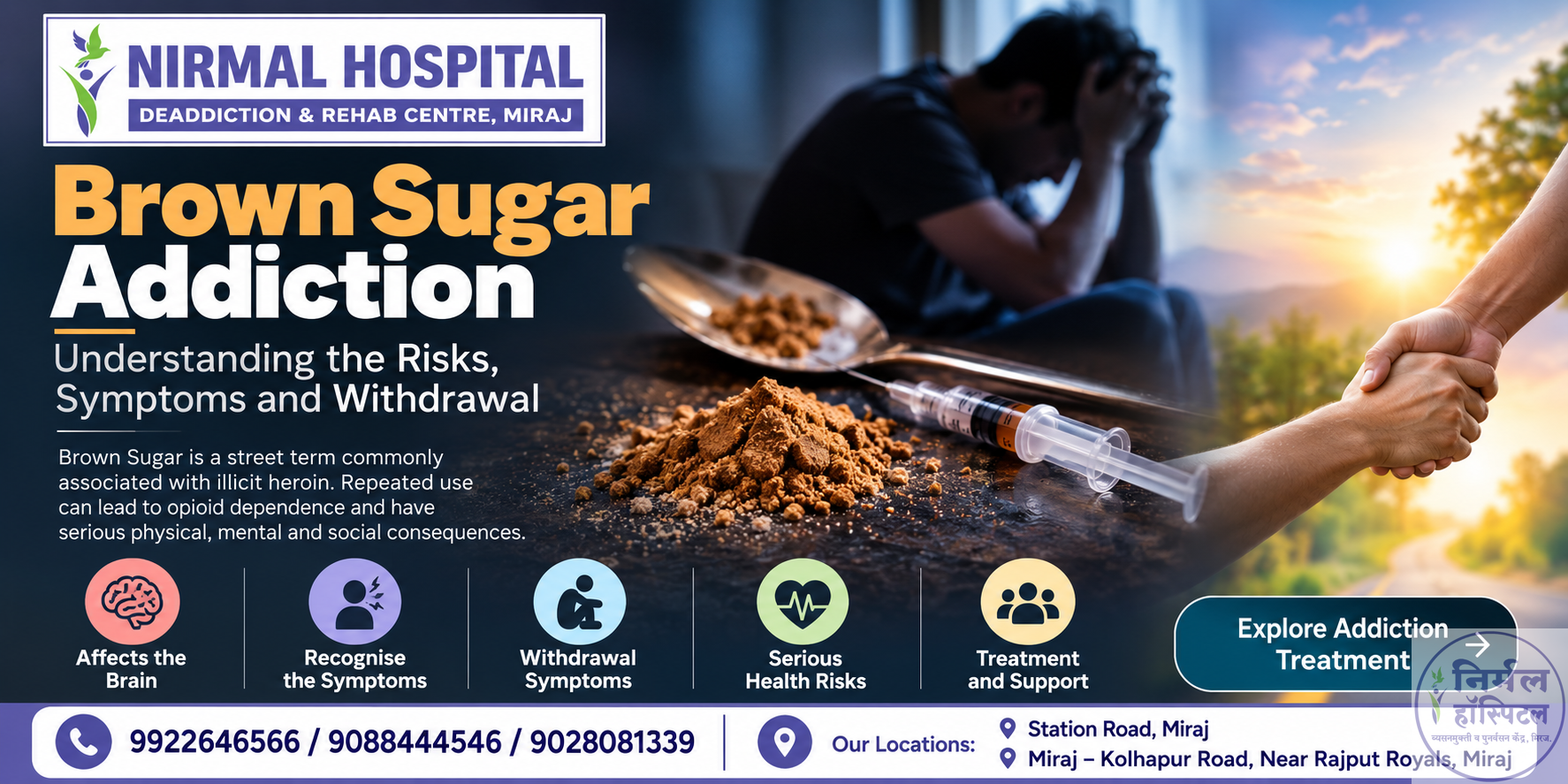
Brown Sugar Addiction: Understanding the Risks, Symptoms and Withdrawal
Brown Sugar is a commonly used street term for illicit heroin or heroin-containing substances in some regions. Because illicit drugs may contain unknown substances and their purity can vary, the exact composition of a substance sold as “Brown Sugar” cannot always be assumed.
Heroin is an opioid, and repeated use can lead to opioid dependence and Opioid Use Disorder (OUD). Brown Sugar addiction can affect a person’s physical health, mental health, family relationships, education, employment and social life.
Addiction is not simply a lack of willpower. It is a medical condition that requires appropriate assessment and professional support.
What Is Brown Sugar?
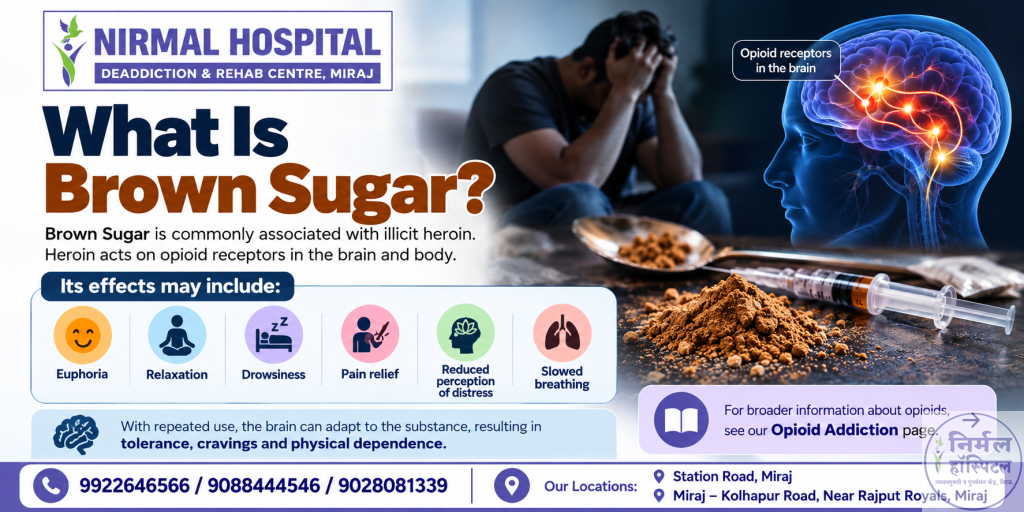
Brown Sugar is commonly associated with illicit heroin. Heroin acts on opioid receptors in the brain and body.
Its effects may include:
- Euphoria
- Relaxation
- Drowsiness
- Pain relief
- Reduced perception of distress
- Slowed breathing
With repeated use, the brain can adapt to the substance, resulting in tolerance, cravings and physical dependence.
For broader information about opioids, see our Opioid Addiction page.
How Does Brown Sugar Affect the Brain?
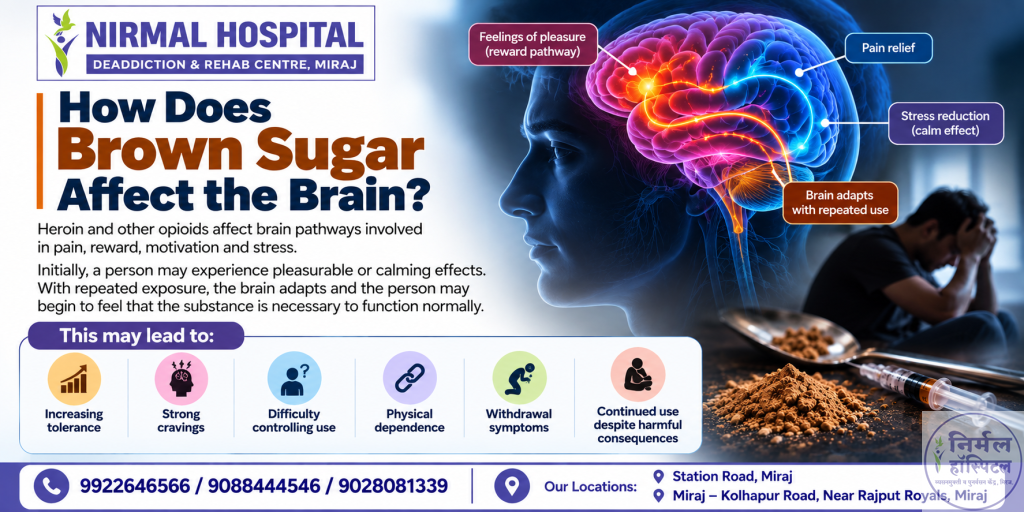
Heroin and other opioids affect brain pathways involved in pain, reward, motivation and stress.
Initially, a person may experience pleasurable or calming effects. With repeated exposure, the brain adapts and the person may begin to feel that the substance is necessary to function normally.
This may lead to:
- Increasing tolerance
- Strong cravings
- Difficulty controlling use
- Physical dependence
- Withdrawal symptoms
- Continued use despite harmful consequences
Signs and Symptoms of Brown Sugar Addiction
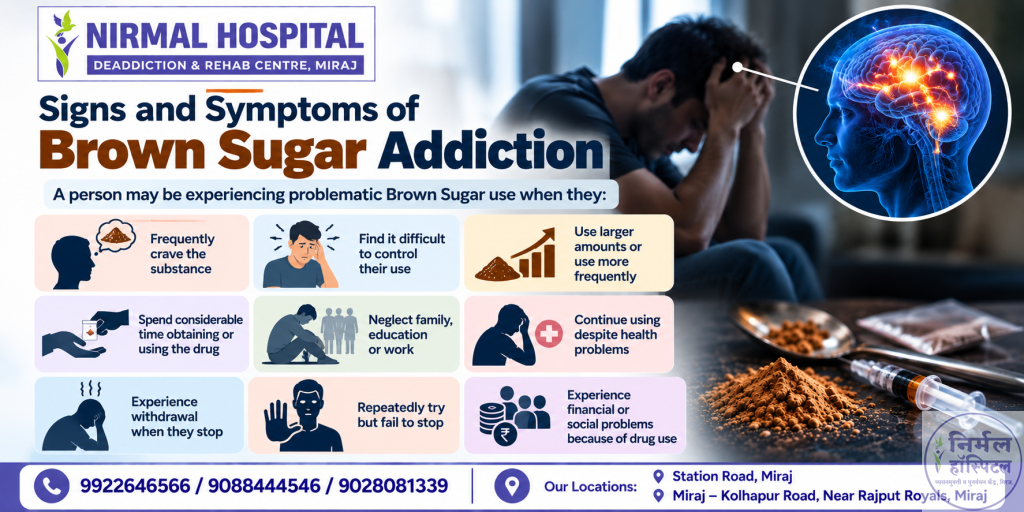
A person may be experiencing problematic Brown Sugar use when they:
- Frequently crave the substance
- Find it difficult to control their use
- Use larger amounts or use more frequently
- Spend considerable time obtaining or using the drug
- Neglect family, education or work
- Continue using despite health problems
- Experience withdrawal when they stop
- Repeatedly try but fail to stop
- Experience financial or social problems because of drug use
Brown Sugar Withdrawal Symptoms
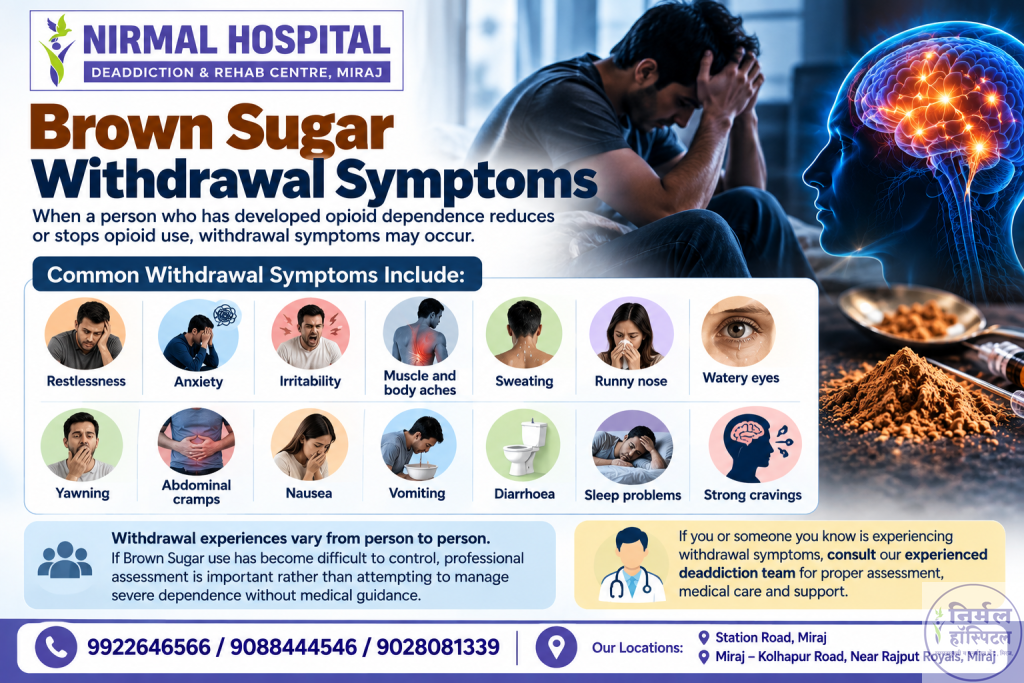
When a person who has developed opioid dependence reduces or stops opioid use, withdrawal symptoms may occur.
Common symptoms include:
- Restlessness
- Anxiety
- Irritability
- Muscle and body aches
- Sweating
- Runny nose
- Watery eyes
- Yawning
- Abdominal cramps
- Nausea
- Vomiting
- Diarrhoea
- Sleep problems
- Strong cravings
Withdrawal experiences vary from person to person.
If Brown Sugar use has become difficult to control, professional assessment is important rather than attempting to manage severe dependence without medical guidance.
Physical and Mental Effects of Brown Sugar Use
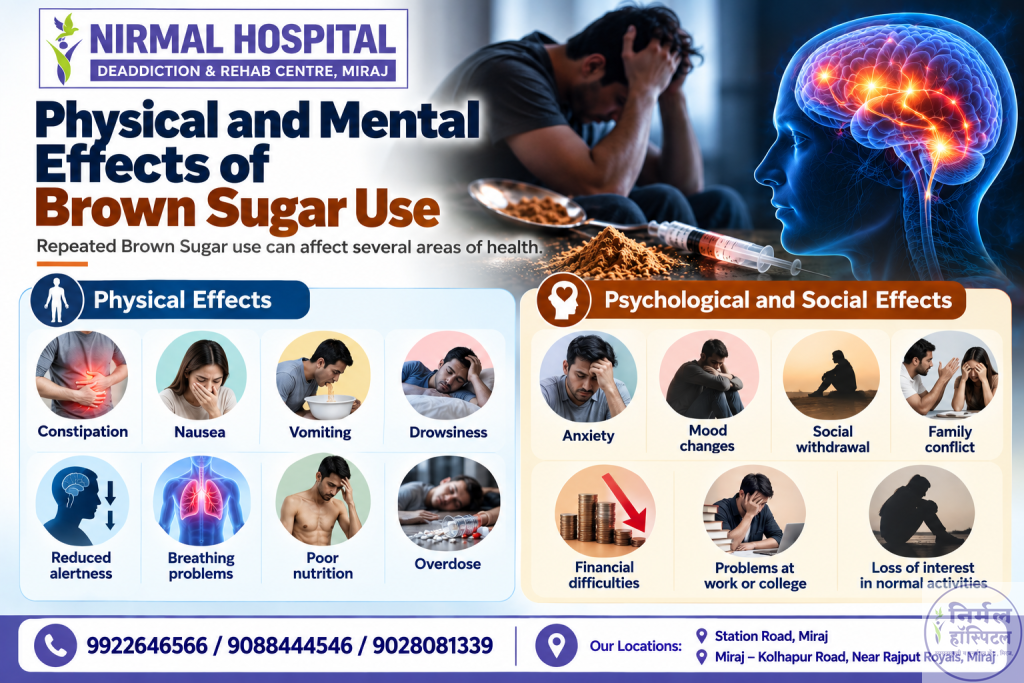
Repeated Brown Sugar use can affect several areas of health.
Physical Effects
- Constipation
- Nausea
- Vomiting
- Drowsiness
- Reduced alertness
- Breathing problems
- Poor nutrition
- Overdose
Psychological and Social Effects
- Anxiety
- Mood changes
- Social withdrawal
- Family conflict
- Financial difficulties
- Problems at work or college
- Loss of interest in normal activities
Health Risks of Injection Drug Use
If illicit opioids are injected, the risk of serious complications increases.
These may include:
- HIV
- Hepatitis B
- Hepatitis C
- Abscesses
- Cellulitis
- Vein damage
- Bloodstream infections
- Infective endocarditis
People who inject drugs should discuss appropriate medical screening with a healthcare professional.
Brown Sugar Overdose
Opioid overdose can be life-threatening because opioids can severely slow or stop breathing.
Warning signs may include:
- The person cannot be awakened
- Very slow or absent breathing
- Loss of consciousness
- Blue or grey lips or skin
- Very small pupils
An opioid overdose is a medical emergency.
Naloxone is an opioid antagonist that can reverse opioid overdose when administered appropriately. Emergency medical care remains necessary.
For authoritative information, see the CDC guidance on opioid overdose and treatment.
When Should Someone Seek Professional Help?
Professional assessment should be considered when:
- Brown Sugar use cannot be controlled
- Withdrawal symptoms occur
- Cravings are difficult to manage
- Drug use affects family or employment
- There has been an overdose
- The person is injecting drugs
- Previous attempts to stop have failed
Related Addiction Information
If the substance involved is different, explore:
Opioid Addiction | Tramadol Addiction | Fortwin Addiction | Morphine Addiction
For the treatment process, visit Addiction Treatment & Rehabilitation.
Frequently Asked Questions About Brown Sugar Addiction
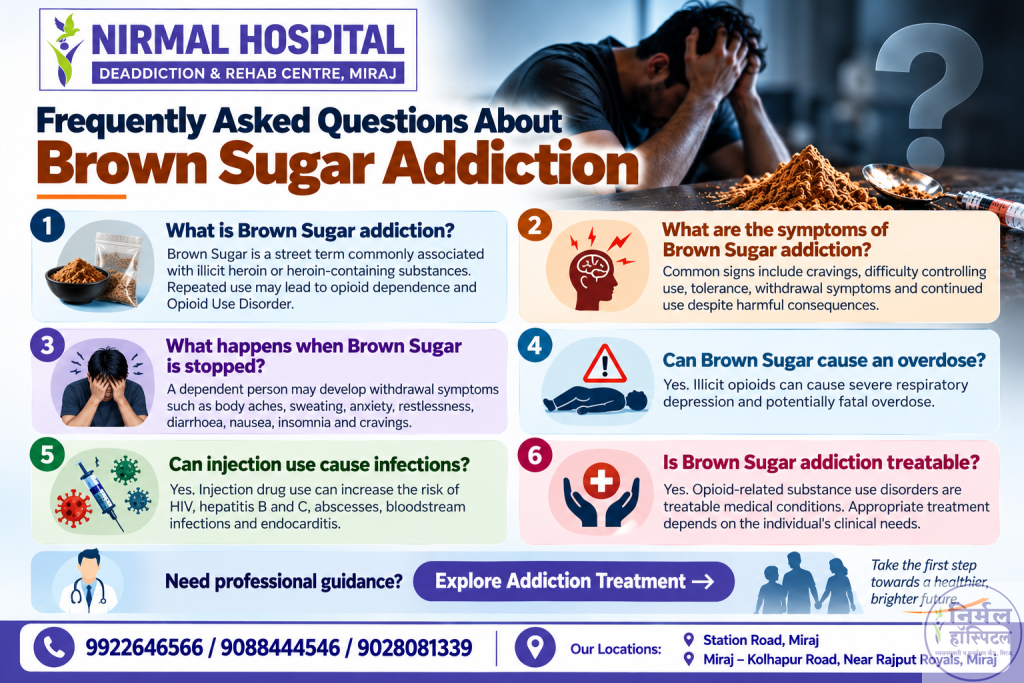
What is Brown Sugar addiction?
Brown Sugar is a street term commonly associated with illicit heroin or heroin-containing substances. Repeated use may lead to opioid dependence and Opioid Use Disorder.
What are the symptoms of Brown Sugar addiction?
Common signs include cravings, difficulty controlling use, tolerance, withdrawal symptoms and continued use despite harmful consequences.
What happens when Brown Sugar is stopped?
A dependent person may develop withdrawal symptoms such as body aches, sweating, anxiety, restlessness, diarrhoea, nausea, insomnia and cravings.
Can Brown Sugar cause an overdose?
Yes. Illicit opioids can cause severe respiratory depression and potentially fatal overdose.
Can injection use cause infections?
Yes. Injection drug use can increase the risk of HIV, hepatitis B and C, abscesses, bloodstream infections and endocarditis.
Is Brown Sugar addiction treatable?
Yes. Opioid-related substance use disorders are treatable medical conditions. Appropriate treatment depends on the individual’s clinical needs.
Need professional guidance? Explore Addiction Treatment →


