
Cannabis Addiction Treatment & Deaddiction
Comprehensive Treatment for Cannabis Dependence
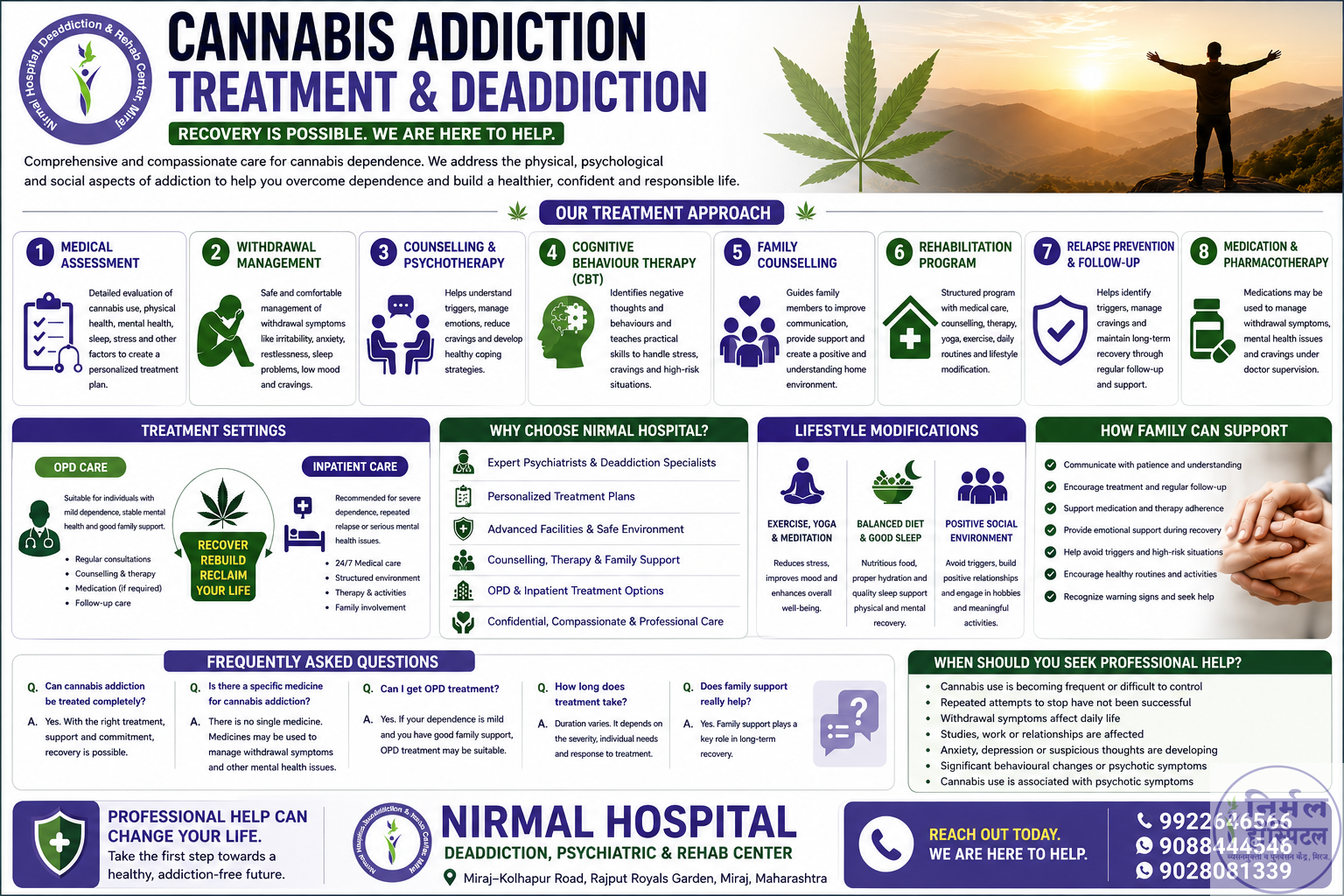
Treatment for cannabis addiction is not limited to medication. Effective deaddiction involves addressing the person’s physical, psychological and social needs. The goal of treatment is to help the individual overcome dependence and work toward a healthier, confident and responsible life.
The appropriate treatment approach depends on the severity of cannabis use, withdrawal symptoms, mental health status, physical health and family or social circumstances.
1. Medical Assessment
Before starting treatment for cannabis dependence, a detailed medical and psychological assessment is carried out.
The assessment helps healthcare professionals understand:
- The severity and pattern of cannabis use
- The effects of cannabis use on physical health
- Existing medical conditions
- Mental health concerns
- Sleep-related problems
- Anxiety or depressive symptoms
- Other substance-use concerns
- The individual’s social and family circumstances
Depending on the clinical situation, doctors may recommend appropriate laboratory investigations and medical examinations to assess overall health.
A proper assessment helps the treatment team determine an appropriate treatment plan for the individual.
2. Cannabis Withdrawal Management
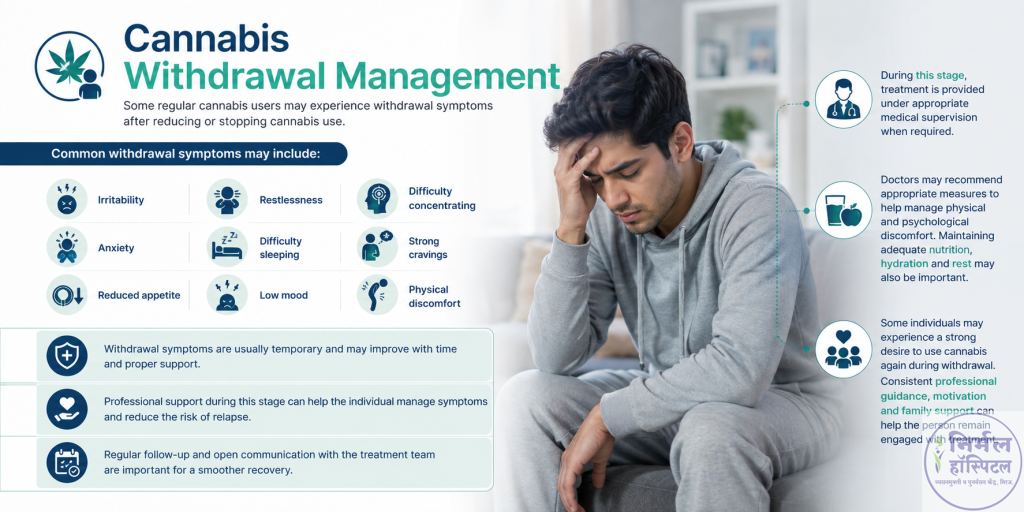
Some regular cannabis users may experience withdrawal symptoms after reducing or stopping cannabis use.
Common withdrawal symptoms may include:
- Irritability
- Restlessness
- Anxiety
- Difficulty sleeping
- Reduced appetite
- Low mood
- Difficulty concentrating
- Strong cravings
- Physical discomfort
During this stage, treatment is provided under appropriate medical supervision when required.
Doctors may recommend appropriate measures to help manage physical and psychological discomfort. Maintaining adequate nutrition, hydration and rest may also be important.
Some individuals may experience a strong desire to use cannabis again during withdrawal. Consistent professional guidance, motivation and family support can help the person remain engaged with treatment.
3. Counselling and Psychotherapy
Counselling and psychotherapy play an important role in the treatment of cannabis dependence.
Counselling can help individuals understand:
- Why cannabis use developed
- Situations that trigger cannabis use
- How stress and emotional difficulties influence substance use
- How to manage anxiety and low mood
- How to deal with cravings
- How to develop healthier coping strategies
- How to build confidence and motivation
Psychotherapy focuses on helping the individual make positive changes in thoughts, emotions and behaviours that may contribute to continued cannabis use.
4. Cognitive Behavioural Therapy (CBT)
Cognitive Behavioural Therapy (CBT) is a structured psychological approach that may be used as part of treatment for substance-use problems.
CBT helps individuals identify:
- Negative thought patterns
- Unhelpful beliefs
- Behavioural patterns associated with cannabis use
- High-risk situations
- Triggers for cravings
During therapy, individuals can learn practical strategies to:
- Manage stress
- Handle difficult situations
- Control or cope with cravings
- Change unhealthy behavioural patterns
- Develop healthier routines
- Make more positive decisions
CBT may be combined with other treatment approaches according to the individual’s needs.
5. Family Counselling
Cannabis dependence can affect not only the individual but also family members and relationships. Therefore, family involvement can be an important part of the treatment process.
Family counselling can help relatives understand:
- Cannabis dependence and its effects
- Factors that may contribute to continued substance use
- How withdrawal may affect behaviour
- How to communicate effectively with the individual
- How to provide appropriate emotional support
- How to create a positive home environment
Family members are encouraged to support the individual without unnecessary blame, criticism or confrontation.
A supportive family environment can help the individual remain engaged with treatment and make healthier lifestyle changes.
6. Rehabilitation for Cannabis Dependence
For individuals with more severe cannabis dependence or repeated difficulty maintaining abstinence, rehabilitation-based treatment may be considered.
A rehabilitation setting can provide a structured and supportive environment away from substance-use triggers.
Rehabilitation may include:
- Medical supervision
- Individual counselling
- Group discussions
- Psychotherapy
- Structured daily routines
- Yoga and relaxation activities
- Physical exercise
- Family guidance
- Lifestyle modification
- Regular follow-up
The aim is to help individuals develop healthier routines, improve psychological well-being and strengthen social functioning.
Not every person with cannabis dependence requires residential rehabilitation. Individuals with less severe dependence, stable mental health and adequate family support may be suitable for outpatient treatment.
The appropriate treatment setting should be decided after professional assessment.
7. Relapse Prevention and Follow-Up
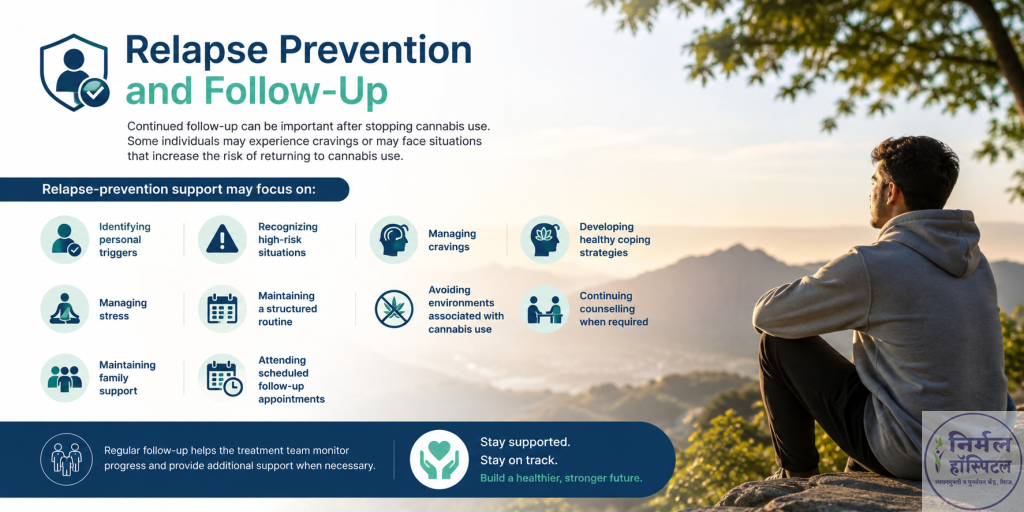
Continued follow-up can be important after stopping cannabis use.
Some individuals may experience cravings or may face situations that increase the risk of returning to cannabis use.
Relapse-prevention support may focus on:
- Identifying personal triggers
- Recognizing high-risk situations
- Managing cravings
- Developing healthy coping strategies
- Managing stress
- Maintaining a structured routine
- Avoiding environments associated with cannabis use
- Continuing counselling when required
- Maintaining family support
- Attending scheduled follow-up appointments
Regular follow-up helps the treatment team monitor progress and provide additional support when necessary.
8. Medication and Pharmacotherapy
There is no single specific medication universally approved as a cure for cannabis dependence. However, depending on the individual’s symptoms and clinical condition, doctors may use medications to manage withdrawal symptoms or co-existing mental health conditions.
Medication should be used only under the supervision of a qualified medical professional.
Depending on the clinical situation, treatment may involve:
Medicines for Withdrawal-Related Symptoms
Some medications may be prescribed for a limited period to help manage symptoms such as:
- Anxiety
- Restlessness
- Irritability
- Sleep difficulties
Certain medicines, including benzodiazepines such as Clonazepam or Alprazolam, may carry a risk of dependence and therefore should only be used when specifically prescribed and monitored by a doctor.
Acetylcysteine
Acetylcysteine has been studied as a possible option for reducing cannabis cravings in some individuals. Its use should be determined by the treating clinician based on the individual’s clinical needs.
Treatment for Depression, Anxiety or Mood Symptoms
If an individual has significant depression, anxiety or mood-related symptoms, a psychiatrist may consider appropriate medications such as:
- Antidepressants
- Mood stabilizers
The choice of medication depends on the individual’s symptoms, diagnosis and overall clinical condition.
Management of Psychotic Symptoms
In some individuals, cannabis use may be associated with serious mental health symptoms such as:
- Suspicious or paranoid thoughts
- Delusions
- Hallucinations
- Significant behavioural changes
When clinically indicated, a psychiatrist may prescribe appropriate antipsychotic medication to manage these symptoms.
Important: Medication is only one component of cannabis dependence treatment. Long-term management may also involve counselling, psychotherapy, family support, lifestyle changes and appropriate follow-up.
9. Counselling and Psychological Therapy
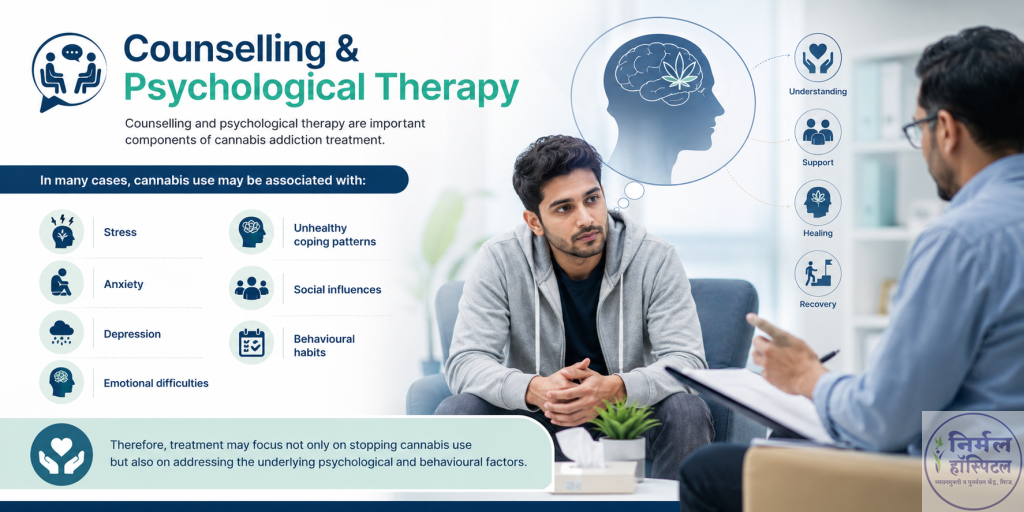
Counselling and psychological therapy are important components of cannabis addiction treatment.
In many cases, cannabis use may be associated with:
- Stress
- Anxiety
- Depression
- Emotional difficulties
- Unhealthy coping patterns
- Social influences
- Behavioural habits
Therefore, treatment may focus not only on stopping cannabis use but also on addressing the underlying psychological and behavioural factors.
Cognitive Behavioural Therapy (CBT)
CBT helps individuals identify negative thoughts, unhelpful beliefs and behaviours associated with cannabis use.
It can help develop skills for:
- Managing stress
- Handling difficult situations
- Coping with cravings
- Changing unhealthy behaviours
- Developing healthier coping mechanisms
Motivational Enhancement Therapy (MET)
Motivational Enhancement Therapy (MET) focuses on strengthening an individual’s motivation to change substance-use behaviour.
Some people may want to stop cannabis use but lack confidence or motivation. MET can help individuals understand the impact of cannabis use, explore their reasons for change and strengthen their commitment to treatment.
Family Counselling
Family counselling helps relatives understand cannabis dependence and learn how to support the individual appropriately.
Family members may receive guidance about:
- Communication
- Emotional support
- Healthy boundaries
- Treatment participation
- Recognizing warning signs
- Creating a supportive environment
Positive family involvement can support continued engagement with treatment.
10. Treatment at a Deaddiction Centre
Some individuals with severe cannabis dependence may require a structured deaddiction-centre setting, particularly when significant behavioural or psychiatric problems are present.
Residential or inpatient treatment may be considered when an individual has issues such as:
- Severe behavioural disturbances
- Risk of harm to self or others
- Psychotic symptoms
- Severe psychiatric problems
- Repeated return to cannabis use despite previous treatment
- Difficulty maintaining abstinence in the usual environment
At a deaddiction centre, treatment may involve a multidisciplinary team that can include:
- Psychiatrist
- Medical professionals
- Counsellors
- Mental health professionals
- Trained support staff
Depending on individual needs, treatment may include:
- Medical monitoring
- Withdrawal management
- Individual counselling
- Group therapy
- Psychotherapy
- Yoga
- Meditation
- Structured daily activities
- Rehabilitation programmes
- Family counselling
- Follow-up planning
OPD or Inpatient Treatment?
Not every individual requires admission to a deaddiction centre.
Individuals with relatively mild dependence, stable mental health and good family support may be considered for Outpatient Department (OPD) treatment.
OPD care may include:
- Regular medical consultations
- Appropriate medication when required
- Counselling
- Psychological therapy
- Family guidance
- Follow-up appointments
The choice between OPD and inpatient treatment should be based on the individual’s pattern of cannabis use, mental health, physical health, behavioural concerns and social circumstances.
11. Lifestyle Modifications
Medication and counselling are important, but healthy lifestyle changes can also support the overall treatment process.
Positive lifestyle changes may help improve physical and psychological well-being, manage stress and reduce exposure to situations associated with cannabis use.
Regular Exercise, Yoga and Meditation
Regular physical activity can support physical and emotional well-being.
Activities such as:
- Walking
- Running
- Cycling
- Swimming
- Exercise
- Yoga
- Meditation
can help establish a healthier daily routine.
Yoga and meditation may help promote relaxation, reduce stress and improve concentration.
Balanced Diet and Adequate Sleep
Maintaining a balanced diet and adequate hydration is important for overall health.
A healthy diet can include:
- Fresh vegetables
- Fruits
- Pulses
- Protein-rich foods
- Adequate fluids
Sleep is also important, particularly when an individual is experiencing sleep difficulties after stopping cannabis.
Helpful sleep habits may include:
- Maintaining a regular sleep schedule
- Avoiding late-night wakefulness
- Creating a calm sleeping environment
- Following a consistent daily routine
Maintain a Positive Social Environment
A supportive social environment can be helpful during cannabis deaddiction.
Individuals may benefit from:
- Avoiding friends or environments associated with cannabis use
- Spending quality time with family
- Developing positive friendships
- Participating in hobbies
- Engaging in social activities
- Focusing on education or career goals
- Developing new interests
A positive environment can help reduce exposure to triggers and encourage healthier habits.
12. How Family Members Can Support Recovery
Family members play an important role in helping a person manage cannabis dependence.
Blaming, repeatedly criticizing or becoming angry with the individual may make the situation more difficult. Instead, family members should try to provide patience, understanding and emotional support.
Helpful Ways Families Can Support
Communicate With Understanding
Talk to the individual calmly and respectfully. Encourage open communication rather than blame or confrontation.
Encourage Professional Treatment
Encourage the person to attend medical appointments, counselling sessions and follow-up visits as recommended by the treatment team.
Support Treatment Adherence
Where appropriate, family members can encourage the individual to follow the treatment plan and take prescribed medicines as directed by the doctor.
Provide Emotional Support
Irritability, restlessness, sleep difficulties or low mood may occur during cannabis withdrawal. Family members should remain supportive and seek professional guidance when symptoms are concerning.
Reduce Exposure to Triggers
Where possible, help the individual avoid people, places and situations strongly associated with cannabis use.
Encourage Healthy Activities
Family members can encourage participation in:
- Exercise
- Yoga
- Meditation
- Hobbies
- Education
- Career-related activities
- Positive social activities
Recognize Warning Signs
Immediate professional assessment should be sought if the individual develops concerning symptoms such as:
- Suicidal thoughts
- Violent or aggressive behaviour
- Severe depression
- Hallucinations
- Delusions or severe suspiciousness
- Significant mental or behavioural changes
A Comprehensive Approach to Cannabis Deaddiction
Cannabis dependence can involve physical, psychological, behavioural and social factors. Therefore, treatment may require a comprehensive and individualized approach.
Depending on the person’s clinical needs, treatment may involve:
Medical Assessment → Withdrawal Management → Counselling → CBT / MET → Family Support → Rehabilitation → Lifestyle Modification → Relapse Prevention → Follow-Up
The treatment plan should be determined by qualified healthcare professionals after assessing the individual’s condition.
When Should You Seek Professional Help?
Professional assessment may be appropriate when:
- Cannabis use is becoming frequent or difficult to control
- Previous attempts to stop have not been successful
- Withdrawal symptoms are affecting daily life
- Studies or work are being affected
- Family relationships are deteriorating
- Anxiety, depression or suspicious thoughts are developing
- There are significant behavioural changes
- Cannabis use is associated with psychotic symptoms
- The person repeatedly returns to cannabis use
Early professional assessment can help identify the appropriate level of care and treatment approach.
Take the Next Step Toward Professional Treatment
Cannabis dependence can affect physical health, mental health, education, career, family life and social relationships. Appropriate medical assessment, psychological support, family involvement and structured treatment can help individuals work toward a healthier and more stable life.
Nirmal Hospital provides professional assessment, psychiatric care, counselling and structured treatment options for individuals experiencing substance-use problems.
If cannabis use has become difficult to control, professional assessment can be an important first step toward appropriate treatment.
Cannabis Addiction Treatment | Cannabis Deaddiction | Cannabis Dependence Treatment | Cannabis Use Disorder Treatment.
Frequently Asked Questions About Cannabis Addiction Treatment
What is cannabis addiction treatment?
Cannabis addiction treatment is a structured approach to managing problematic cannabis use. Depending on the individual’s needs, treatment may include medical assessment, withdrawal management, counselling, psychotherapy, family support, lifestyle guidance and follow-up.
Is there a specific medicine for cannabis addiction?
There is no single medication that universally treats cannabis dependence. Doctors may prescribe appropriate medicines for specific withdrawal symptoms or co-existing psychiatric conditions when clinically required.
Can cannabis addiction treatment be done through OPD?
Yes. Some individuals may be suitable for OPD treatment when cannabis dependence is less severe, mental health is stable and adequate family support is available.
When is admission to a deaddiction centre considered?
Admission may be considered when cannabis dependence is severe, previous attempts to stop have repeatedly been unsuccessful, significant behavioural problems are present or serious psychiatric symptoms require closer medical supervision.
What therapies are used for cannabis dependence?
Depending on the individual’s needs, treatment may include Counselling, Cognitive Behavioural Therapy (CBT), Motivational Enhancement Therapy (MET), Individual Therapy and Family Counselling.
Can cannabis withdrawal cause sleep problems?
Yes. Sleep difficulties, unusual dreams, irritability, restlessness and other withdrawal symptoms may occur after stopping regular cannabis use. The severity and duration can vary between individuals.
Can cannabis use cause anxiety or suspicious thoughts?
Some individuals may experience anxiety, panic, suspicious thoughts or other psychiatric symptoms associated with cannabis use. Significant or persistent symptoms should be evaluated by a qualified mental health professional.
Does family support help during treatment?
Yes. Supportive family involvement can help the individual remain engaged with treatment, attend appointments, follow medical advice and maintain healthier routines.
Can cannabis dependence affect studies and work?
Yes. Problematic cannabis use may affect concentration, memory, motivation, decision-making and daily functioning, which can affect education and occupational performance.
What happens during cannabis addiction treatment at Nirmal Hospital?
Treatment begins with an appropriate medical and psychological assessment. Depending on the individual’s condition, treatment may include medical supervision, withdrawal management, counselling, psychological therapy, family guidance, lifestyle support and follow-up.
Does every cannabis user need inpatient treatment?
No. The need for admission depends on the severity of cannabis dependence, psychiatric symptoms, physical health, behavioural concerns, previous treatment attempts and available family support.
How long does cannabis addiction treatment take?
Treatment duration varies according to the individual’s cannabis-use pattern, severity of dependence, withdrawal symptoms, mental health concerns and response to treatment. The treating team determines the appropriate duration after assessment.
When should professional help be sought?
Professional help should be considered when cannabis use becomes difficult to control, attempts to stop are unsuccessful, withdrawal symptoms interfere with daily life, studies or work are affected, or significant behavioural or mental health changes develop.
Looking for Professional Help?
Take the first step by Contacting Nirmal Hospital for expert guidance and cannabis addiction treatment support.
Cannabis Addiction Awareness
Learn More About Cannabis Addiction
Understand the warning signs, effects, withdrawal symptoms and important information about cannabis dependence through our informative video.
👉 Watch our Cannabis Addiction Awareness Video on YouTube to learn more.


