

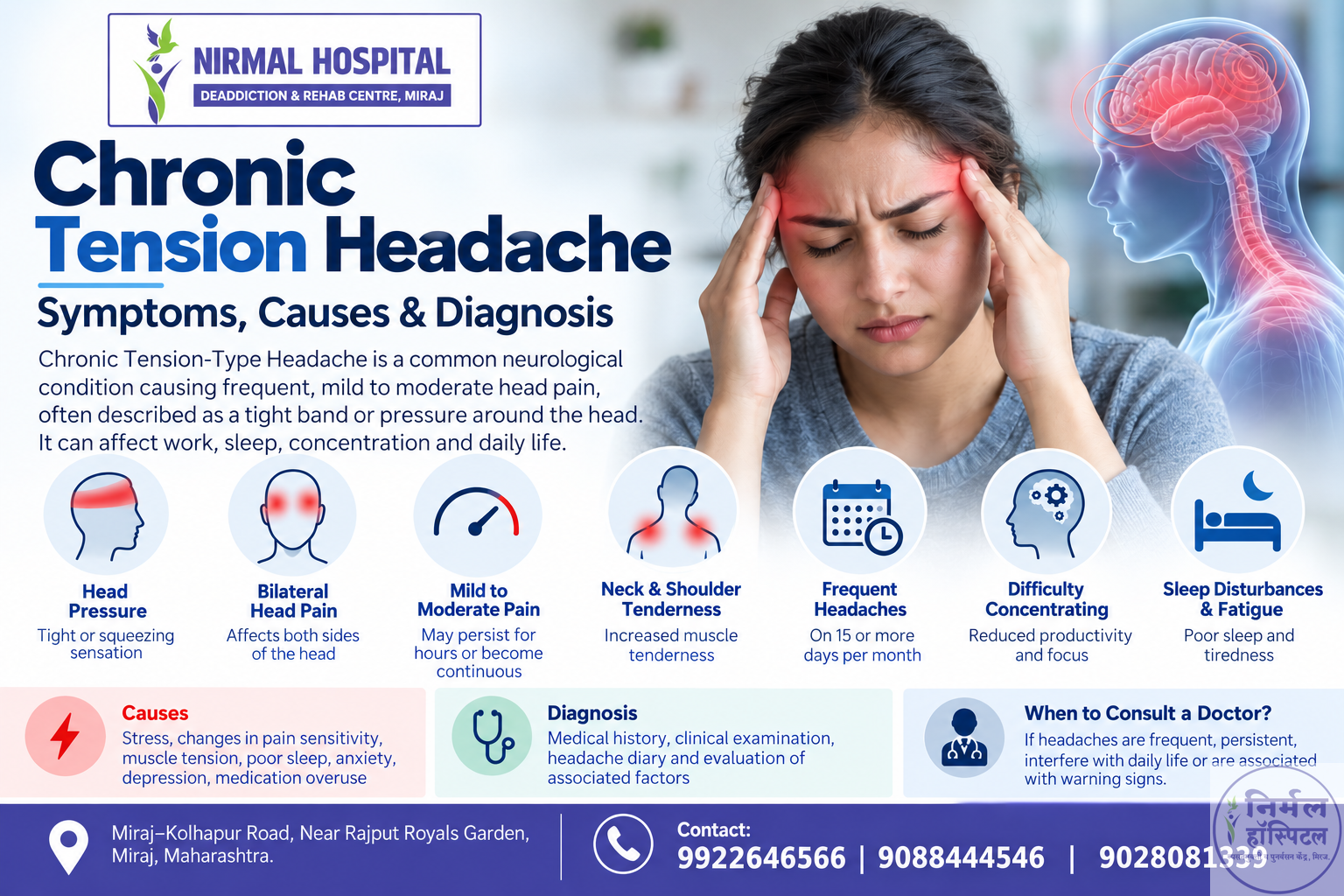
Chronic Tension Headache: Symptoms, Causes & Diagnosis
What Is Chronic Tension-Type Headache?
Chronic Tension-Type Headache (CTTH) is a primary headache disorder characterized by frequent episodes of mild to moderate head pain, often described as a tight band or pressure around the head.
Unlike occasional tension headaches, chronic tension-type headaches occur on 15 or more days per month for more than three months, making them a persistent problem that may interfere with work, sleep, concentration and everyday activities.
The pain is generally pressing or tightening rather than pulsating. It commonly affects both sides of the head and is not usually aggravated by routine physical activity.
Although stress and emotional factors may influence headache frequency and severity, chronic tension-type headache is a recognized neurological condition and should not be considered purely psychological.
7 Common Symptoms of Chronic Tension Headache
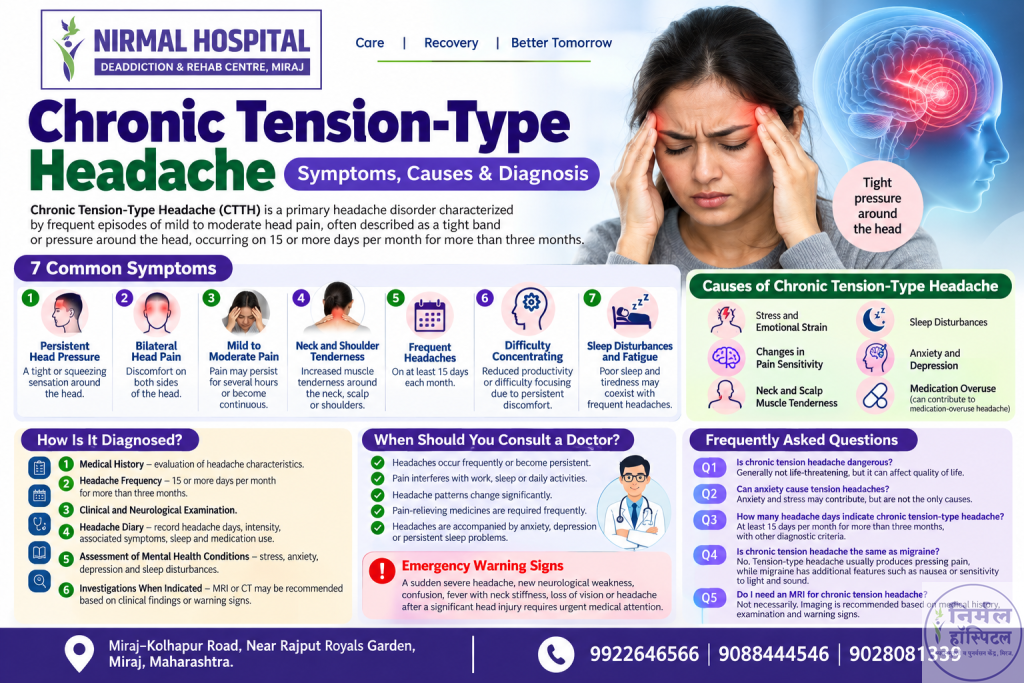
Patients may experience the following symptoms:
- Persistent Head Pressure: A tight or squeezing sensation around the forehead, temples or back of the head.
- Bilateral Head Pain: Discomfort affecting both sides of the head.
- Mild to Moderate Pain: Pain that may persist for several hours or become continuous.
- Neck and Shoulder Tenderness: Increased muscle tenderness around the neck, scalp or shoulders.
- Frequent Headaches: Headache occurring on at least 15 days each month.
- Difficulty Concentrating: Reduced productivity or difficulty focusing because of persistent discomfort.
- Sleep Disturbances and Fatigue: Poor sleep and tiredness that may coexist with frequent headaches.
Tension-type headache is generally not associated with vomiting. Sensitivity to light or sound may occur, but typically not both together in chronic tension-type headache.
Symptoms such as significant nausea, vomiting or pronounced sensitivity to both light and sound may suggest migraine or another headache condition and require further assessment.
Causes of Chronic Tension-Type Headache
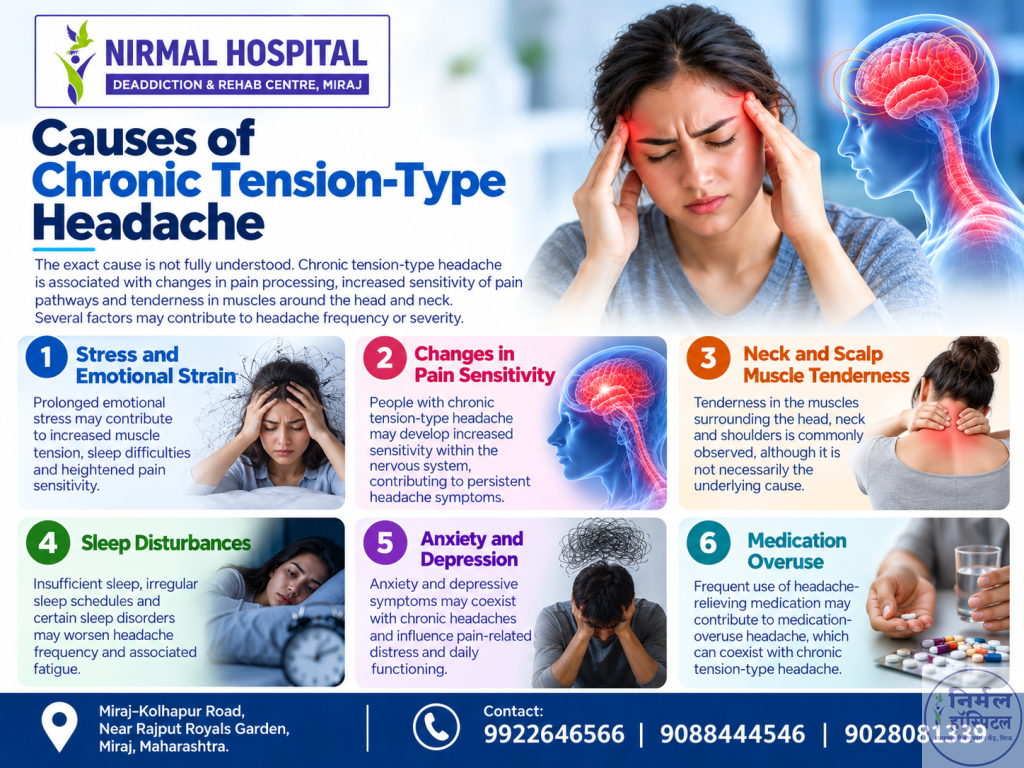
The exact cause is not fully understood. Chronic tension-type headache is associated with changes in pain processing, increased sensitivity of pain pathways and tenderness in muscles around the head and neck.
Several factors may contribute to headache frequency or severity.
1. Stress and Emotional Strain
Prolonged emotional stress may contribute to increased muscle tension, sleep difficulties and heightened pain sensitivity.
2. Changes in Pain Sensitivity
People with chronic tension-type headache may develop increased sensitivity within the nervous system, contributing to persistent headache symptoms.
3. Neck and Scalp Muscle Tenderness
Tenderness in the muscles surrounding the head, neck and shoulders is commonly observed, although it is not necessarily the underlying cause.
4. Sleep Disturbances
Insufficient sleep, irregular sleep schedules and certain sleep disorders may worsen headache frequency and associated fatigue.
5. Anxiety and Depression
Anxiety and depressive symptoms may coexist with chronic headaches and influence pain-related distress and daily functioning.
6. Medication Overuse
Frequent use of headache-relieving medication may contribute to medication-overuse headache, which can coexist with chronic tension-type headache.
Risk Factors
Factors associated with frequent tension-type headaches may include:
- Recurrent episodic tension-type headaches
- Persistent psychological stress
- Poor sleep quality
- Associated anxiety or depression
- Frequent use of acute headache medication
- Other persistent pain conditions
Risk factors vary between individuals and do not establish a diagnosis on their own.
How Is Chronic Tension-Type Headache Diagnosed?
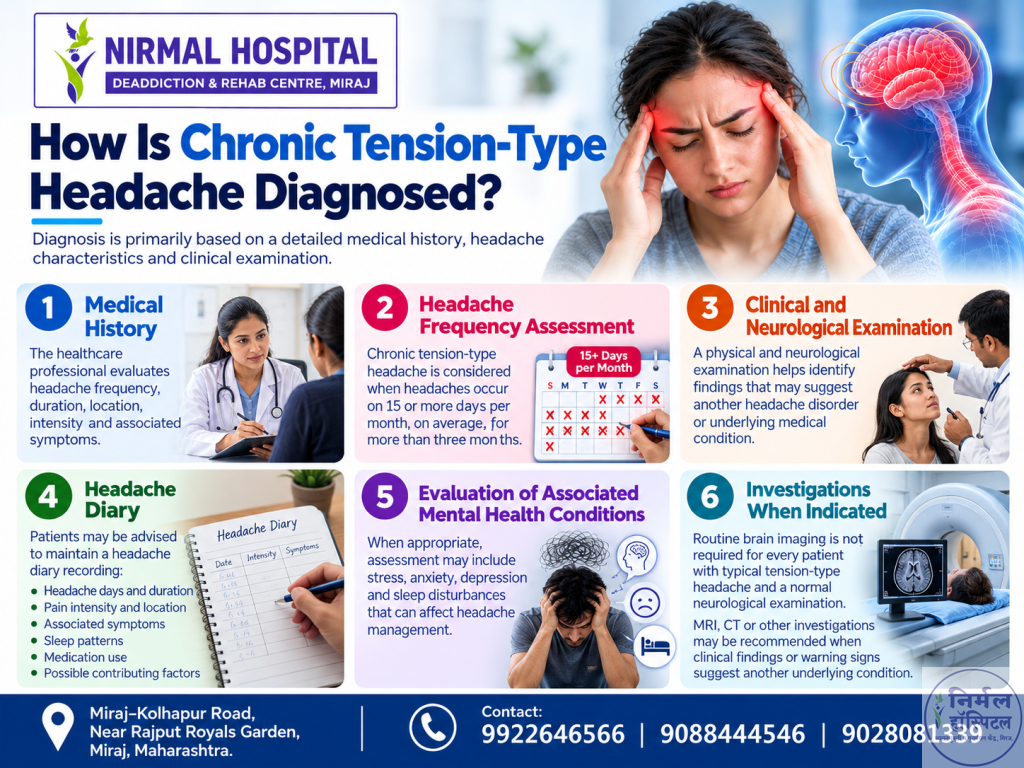
Diagnosis is primarily based on a detailed medical history, headache characteristics and clinical examination.
1. Medical History
The healthcare professional evaluates headache frequency, duration, location, intensity and associated symptoms.
2. Headache Frequency Assessment
Chronic tension-type headache is considered when headaches occur on 15 or more days per month, on average, for more than three months.
3. Clinical and Neurological Examination
A physical and neurological examination helps identify findings that may suggest another headache disorder or underlying medical condition.
4. Headache Diary
Patients may be advised to maintain a headache diary recording:
- Headache days and duration
- Pain intensity and location
- Associated symptoms
- Sleep patterns
- Medication use
- Possible contributing factors
5. Evaluation of Associated Mental Health Conditions
When appropriate, assessment may include stress, anxiety, depression and sleep disturbances that can affect headache management.
6. Investigations When Indicated
Routine brain imaging is not required for every patient with typical tension-type headache and a normal neurological examination.
MRI, CT or other investigations may be recommended when clinical findings or warning signs suggest another underlying condition.
When Should You Consult a Doctor?
Seek medical evaluation if:
- Headaches occur frequently or become persistent.
- Pain interferes with work, sleep or daily activities.
- Headache patterns change significantly.
- Pain-relieving medicines are required frequently.
- Headaches are accompanied by anxiety, depression or persistent sleep problems.
Emergency warning signs: A sudden severe headache, new neurological weakness, confusion, fever with neck stiffness, loss of vision or headache after a significant head injury requires urgent medical attention.
Frequently Asked Questions
Q1. Is chronic tension headache dangerous?
Chronic tension-type headache is generally not life-threatening, but persistent headaches can significantly affect quality of life. New or unusual headache symptoms require medical assessment.
Q2. Can anxiety cause tension headaches?
Anxiety and stress may contribute to headache frequency and severity, but they are not the only causes of chronic tension-type headache.
Q3. How many headache days indicate chronic tension-type headache?
Headaches occurring on at least 15 days per month for more than three months may meet the frequency requirement. Other diagnostic criteria must also be assessed.
Q4. Is chronic tension headache the same as migraine?
No. Tension-type headache usually produces pressing or tightening pain, while migraine commonly has additional features such as nausea or sensitivity to light and sound. Some patients experience both conditions.
Q5. Do I need an MRI for chronic tension headache?
Not necessarily. Imaging is recommended based on the medical history, neurological examination and presence of warning signs.
Headache and Mental Health Assessment at Nirmal Hospital, Miraj
Persistent headaches may coexist with stress, anxiety, depression or sleep disturbances. Psychiatric assessment can help identify and manage these associated concerns as part of coordinated headache care.
Patients may also require evaluation by a physician or neurologist.
Nirmal Hospital – Psychiatric, De-Addiction & Rehabilitation Centre
Miraj–Kolhapur Road, Near Rajput Royals Garden, Miraj, Maharashtra.
Contact: 9922646566 | 9088444546 | 9028081339
Medical Disclaimer: This information is intended for educational and public health awareness purposes and is not a substitute for professional medical advice, diagnosis or treatment.


