

Mania – Symptoms, Clinical Features, Causes & Diagnosis
What is Mania?
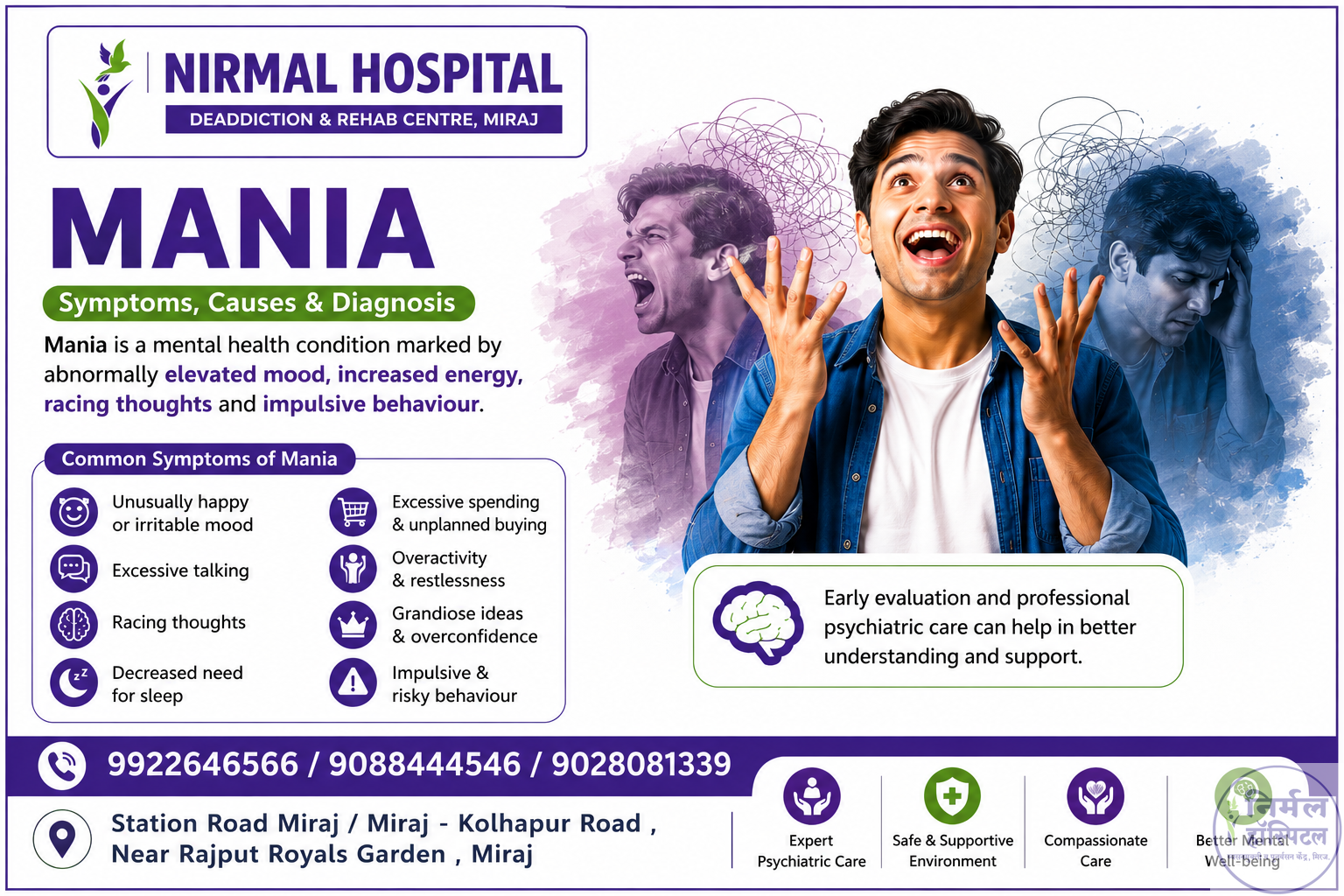
Mania is a mental health condition characterised by an abnormally elevated, expansive, or irritable mood along with increased energy, activity, and changes in behaviour. During a manic episode, a person may feel unusually powerful, important, or exceptionally capable and may have unrealistic ideas about their abilities.
A person experiencing mania may talk excessively, interact more with unfamiliar people, remain unusually cheerful or excited, spend excessive amounts of money, buy unnecessary clothes or other items, start unrealistic activities, or become overactive and aggressive. In some cases, destructive or violent behaviour such as damaging or breaking household items may also occur.
A significant reduction in the need for sleep is another important feature of mania.
Mania is commonly associated with Bipolar Disorder, although manic symptoms can also occur in association with certain medical conditions, medications, or substance use.
Clinical Features of Mania
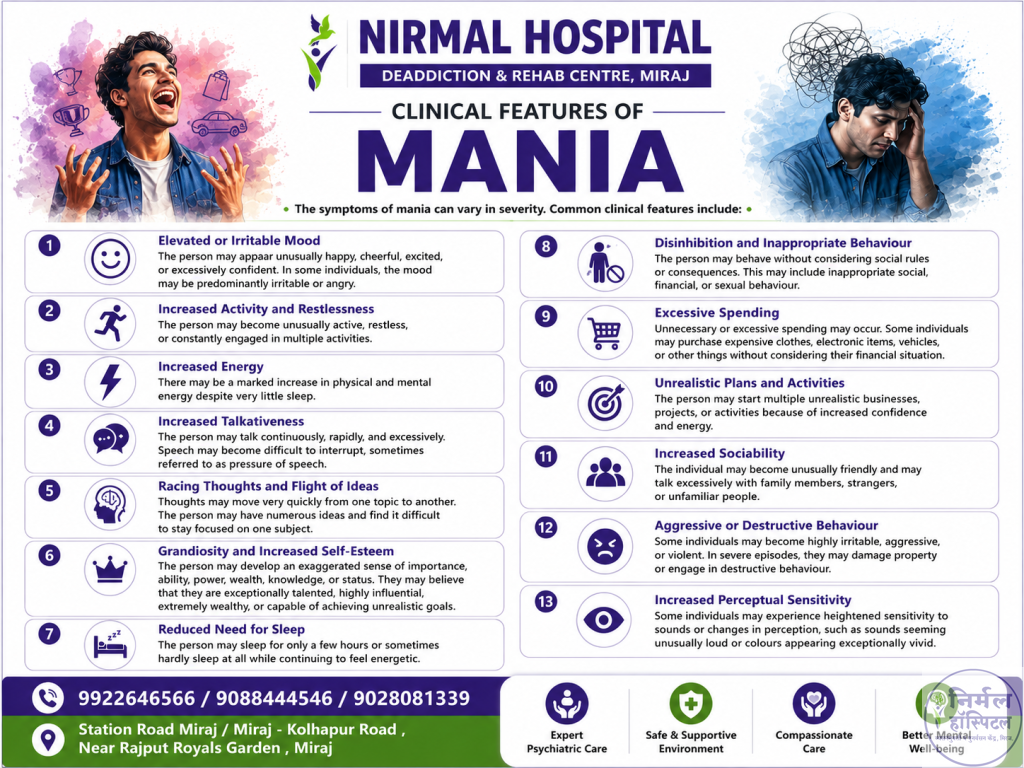
The symptoms of mania can vary in severity. Common clinical features include:
1. Elevated or Irritable Mood
The person may appear unusually happy, cheerful, excited, or excessively confident. In some individuals, the mood may be predominantly irritable or angry.
2. Increased Activity and Restlessness
The person may become unusually active, restless, or constantly engaged in multiple activities.
3. Increased Energy
There may be a marked increase in physical and mental energy despite very little sleep.
4. Increased Talkativeness
The person may talk continuously, rapidly, and excessively. Speech may become difficult to interrupt, sometimes referred to as pressure of speech.
5. Racing Thoughts and Flight of Ideas
Thoughts may move very quickly from one topic to another. The person may have numerous ideas and find it difficult to stay focused on one subject.
6. Grandiosity and Increased Self-Esteem
The person may develop an exaggerated sense of importance, ability, power, wealth, knowledge, or status.
They may believe that they are exceptionally talented, highly influential, extremely wealthy, or capable of achieving unrealistic goals.
7. Reduced Need for Sleep
The person may sleep for only a few hours or sometimes hardly sleep at all while continuing to feel energetic.
8. Disinhibition and Inappropriate Behaviour
The person may behave without considering social rules or consequences. This may include inappropriate social, financial, or sexual behaviour.
9. Excessive Spending
Unnecessary or excessive spending may occur. Some individuals may purchase expensive clothes, electronic items, vehicles, or other things without considering their financial situation.
10. Unrealistic Plans and Activities
The person may start multiple unrealistic businesses, projects, or activities because of increased confidence and energy.
11. Increased Sociability
The individual may become unusually friendly and may talk excessively with family members, strangers, or unfamiliar people.
12. Aggressive or Destructive Behaviour
Some individuals may become highly irritable, aggressive, or violent. In severe episodes, they may damage property or engage in destructive behaviour.
13. Increased Perceptual Sensitivity
Some individuals may experience heightened sensitivity to sounds or changes in perception, such as sounds seeming unusually loud or colours appearing exceptionally vivid.
Mania and Insight
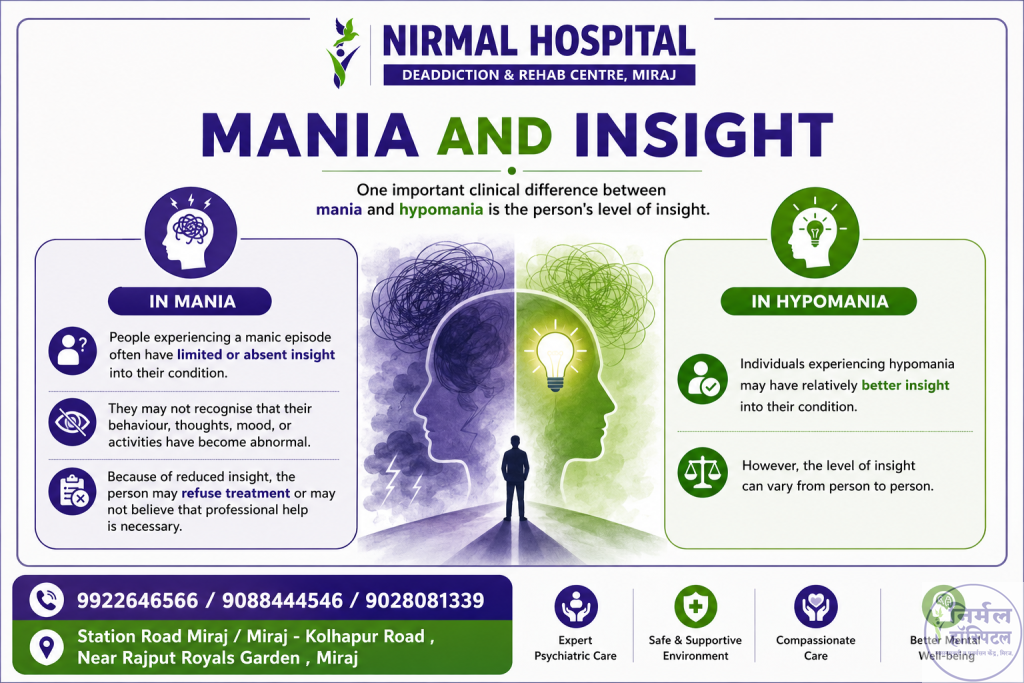
One important clinical difference between mania and hypomania is the person’s level of insight.
In Mania
People experiencing a manic episode often have limited or absent insight into their condition. They may not recognise that their behaviour, thoughts, mood, or activities have become abnormal.
Because of reduced insight, the person may refuse treatment or may not believe that professional help is necessary.
In Hypomania
Individuals experiencing hypomania may have relatively better insight into their condition, although insight can vary between individuals.
Mania vs Hypomania
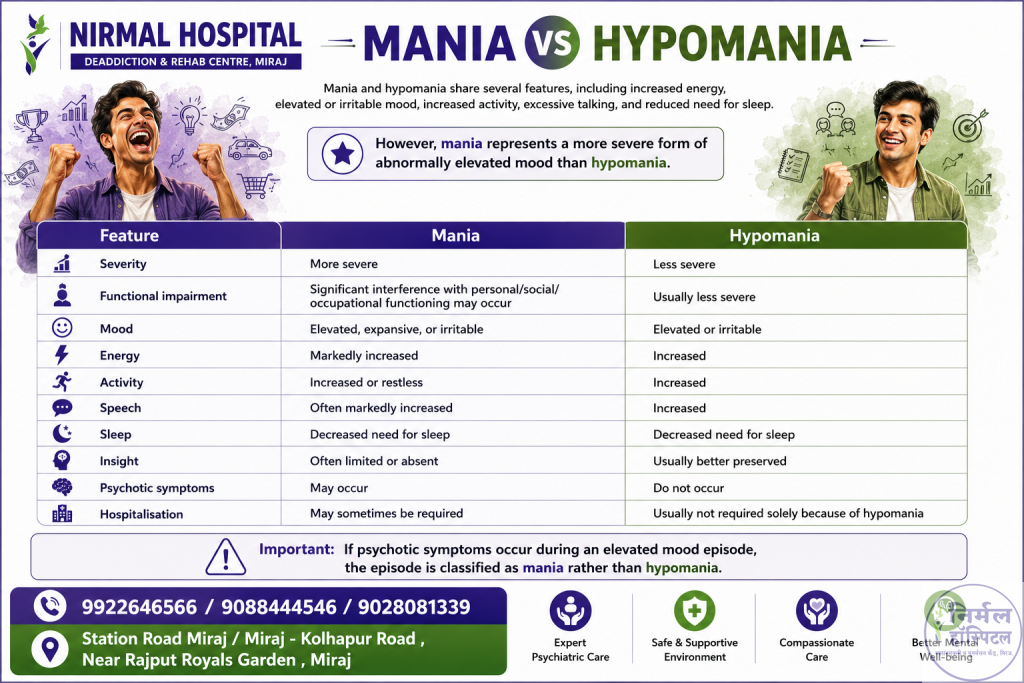
Mania and hypomania share several features, including increased energy, elevated or irritable mood, increased activity, excessive talking, and reduced need for sleep.
However, mania represents a more severe form of abnormally elevated mood than hypomania.
| Feature | Mania | Hypomania |
|---|---|---|
| Severity | More severe | Less severe |
| Functional impairment | Significant interference with personal/social/occupational functioning may occur | Usually less severe |
| Mood | Elevated, expansive, or irritable | Elevated or irritable |
| Energy | Markedly increased | Increased |
| Activity | Increased or restless | Increased |
| Speech | Often markedly increased | Increased |
| Sleep | Decreased need for sleep | Decreased need for sleep |
| Insight | Often limited or absent | Usually better preserved |
| Psychotic symptoms | May occur | Do not occur |
| Hospitalisation | May sometimes be required | Usually not required solely because of hypomania |
Important: If psychotic symptoms occur during an elevated mood episode, the episode is classified as mania rather than hypomania.
Psychotic Symptoms in Mania
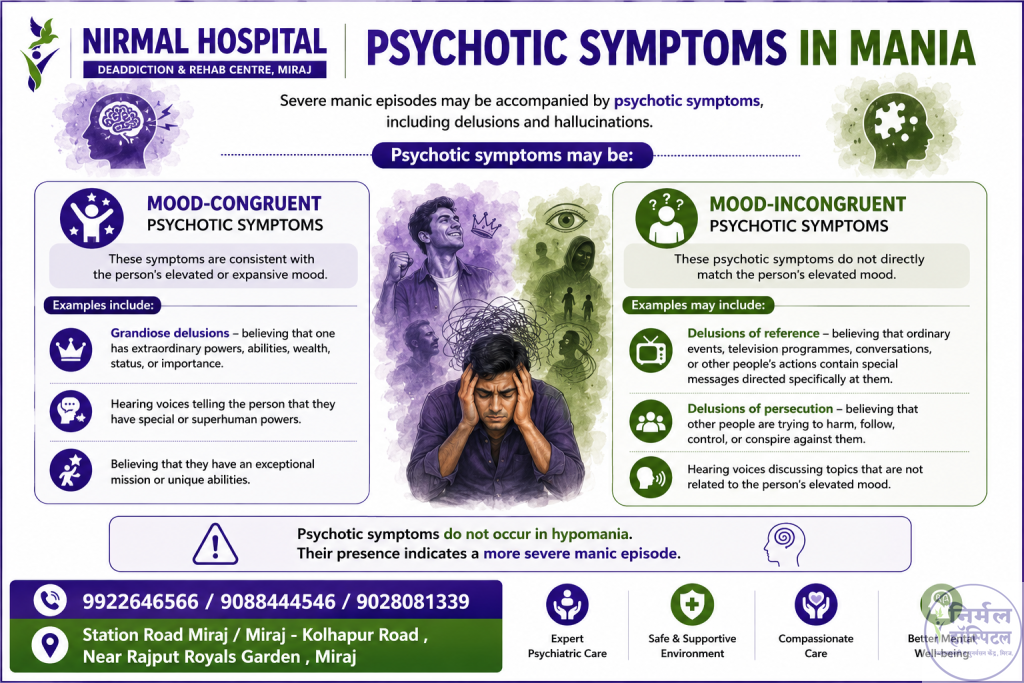
Severe manic episodes may be accompanied by psychotic symptoms, including delusions and hallucinations.
Psychotic symptoms may be:
Mood-Congruent Psychotic Symptoms
These symptoms are consistent with the person’s elevated or expansive mood.
Examples include:
- Grandiose delusions – believing that one has extraordinary powers, abilities, wealth, status, or importance.
- Hearing voices telling the person that they have special or superhuman powers.
- Believing that they have an exceptional mission or unique abilities.
Mood-Incongruent Psychotic Symptoms
These psychotic symptoms do not directly match the person’s elevated mood.
Examples may include:
- Delusions of reference – believing that ordinary events, television programmes, conversations, or other people’s actions contain special messages directed specifically at them.
- Delusions of persecution – believing that other people are trying to harm, follow, control, or conspire against them.
- Hearing voices discussing topics that are not related to the person’s elevated mood.
Psychotic symptoms do not occur in hypomania. Their presence indicates a more severe manic episode.
Behavioural Changes During Mania
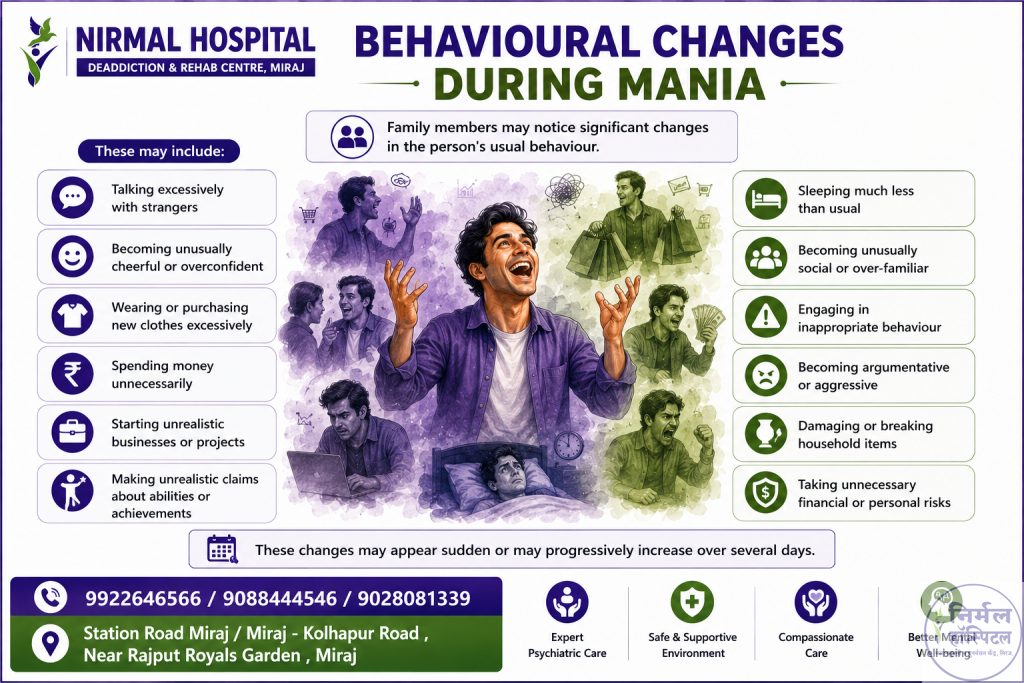
Family members may notice significant changes in the person’s usual behaviour.
These may include:
- Talking excessively with strangers
- Becoming unusually cheerful or overconfident
- Wearing or purchasing new clothes excessively
- Spending money unnecessarily
- Starting unrealistic businesses or projects
- Making unrealistic claims about abilities or achievements
- Sleeping much less than usual
- Becoming unusually social or over-familiar
- Engaging in inappropriate behaviour
- Becoming argumentative or aggressive
- Damaging or breaking household items
- Taking unnecessary financial or personal risks
These changes may appear sudden or may progressively increase over several days.
Causes and Risk Factors of Mania
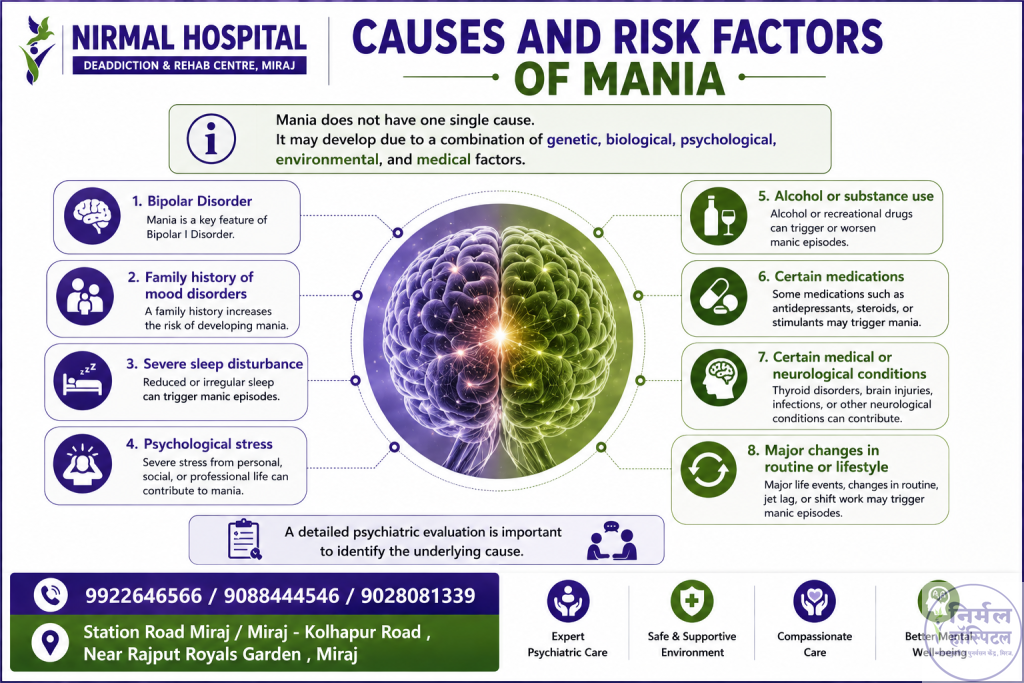
Mania does not have one single cause. It may develop due to a combination of genetic, biological, psychological, environmental, and medical factors.
Possible contributing factors include:
- Bipolar Disorder
- Family history of mood disorders
- Severe sleep disturbance
- Psychological stress
- Alcohol or substance use
- Certain medications
- Certain medical or neurological conditions
- Major changes in routine or lifestyle
A detailed psychiatric evaluation is important to identify the underlying cause.
Mania and Bipolar Disorder
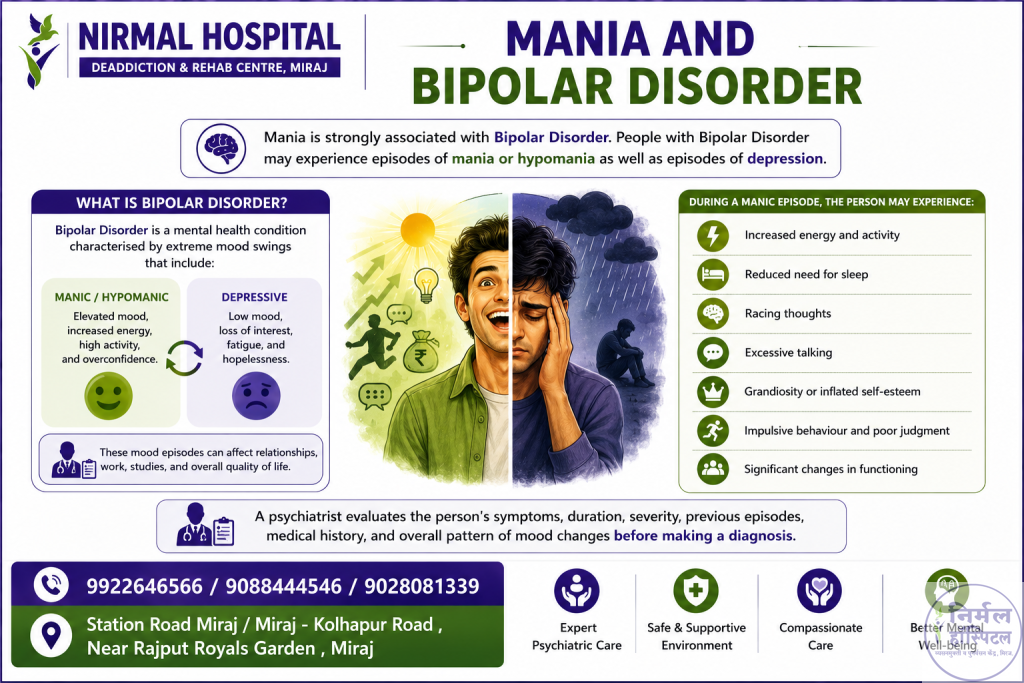
Mania is strongly associated with Bipolar Disorder. People with Bipolar Disorder may experience episodes of mania or hypomania as well as episodes of depression.
During a manic episode, increased energy, reduced need for sleep, racing thoughts, excessive talking, grandiosity, impulsive behaviour, and significant changes in functioning may occur.
A psychiatrist evaluates the person’s symptoms, duration, severity, previous episodes, medical history, and overall pattern of mood changes before making a diagnosis.
How is Mania Diagnosed?
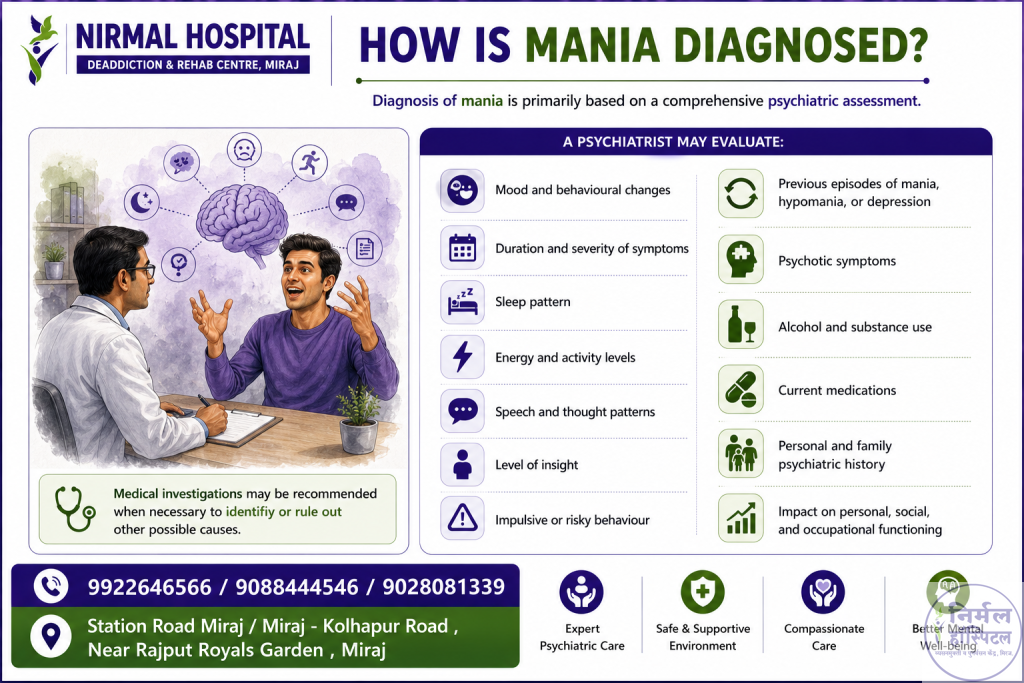
Diagnosis of mania is primarily based on a comprehensive psychiatric assessment.
A psychiatrist may evaluate:
- Mood and behavioural changes
- Duration and severity of symptoms
- Sleep pattern
- Energy and activity levels
- Speech and thought patterns
- Level of insight
- Impulsive or risky behaviour
- Previous episodes of mania, hypomania, or depression
- Psychotic symptoms
- Alcohol and substance use
- Current medications
- Personal and family psychiatric history
- Impact on personal, social, and occupational functioning
Medical investigations may be recommended when necessary to identify or rule out other possible causes.
When Should You Consult a Psychiatrist?
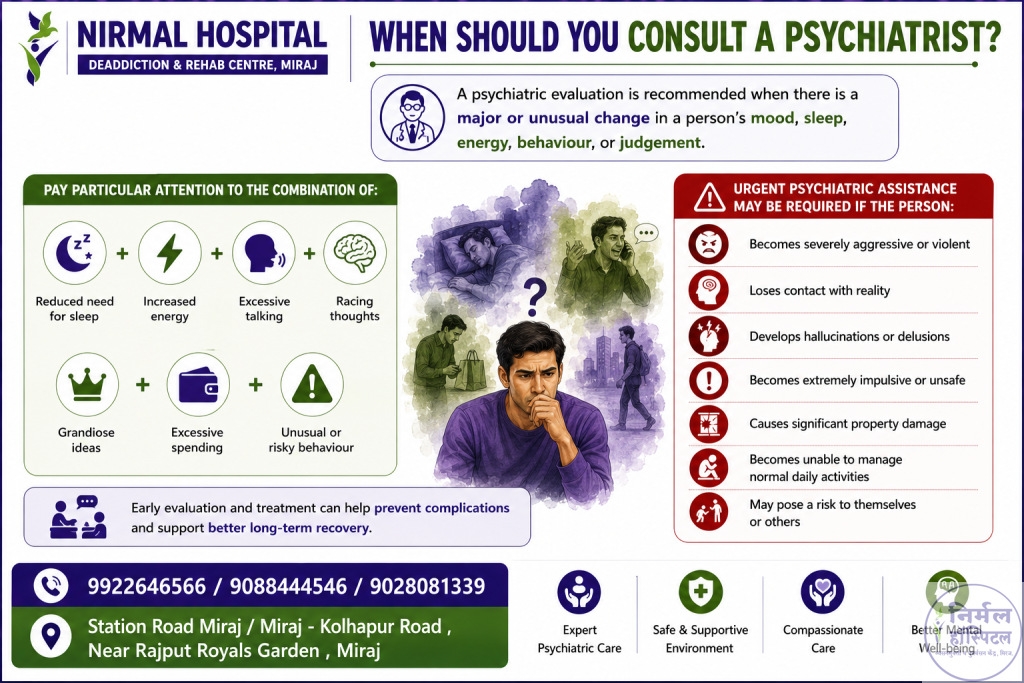
A psychiatric evaluation is recommended when there is a major or unusual change in a person’s mood, sleep, energy, behaviour, or judgement.
Pay particular attention to the combination of:
Reduced need for sleep + increased energy + excessive talking + racing thoughts + grandiose ideas + excessive spending + unusual or risky behaviour
Urgent psychiatric assistance may be required if the person:
- Becomes severely aggressive or violent
- Loses contact with reality
- Develops hallucinations or delusions
- Becomes extremely impulsive or unsafe
- Causes significant property damage
- Becomes unable to manage normal daily activities
- May pose a risk to themselves or others
Importance of Early Psychiatric Evaluation
Mania can significantly affect a person’s relationships, finances, work, social life, and personal safety. Reduced insight may also make it difficult for the individual to recognise the need for professional help.
Early identification of manic symptoms and appropriate psychiatric evaluation can help determine the underlying condition and the appropriate course of care.
Mania Treatment
Treatment for Mania is covered on a separate page.
👉 Learn More About Mania Treatment
At Nirmal Hospital, Miraj, psychiatric evaluation and care are available for individuals experiencing symptoms of mania, Bipolar Disorder, and other mental health conditions.
The appropriate treatment approach depends on the individual’s symptoms, severity, diagnosis, medical history, and overall clinical needs.
Frequently Asked Questions About Mania
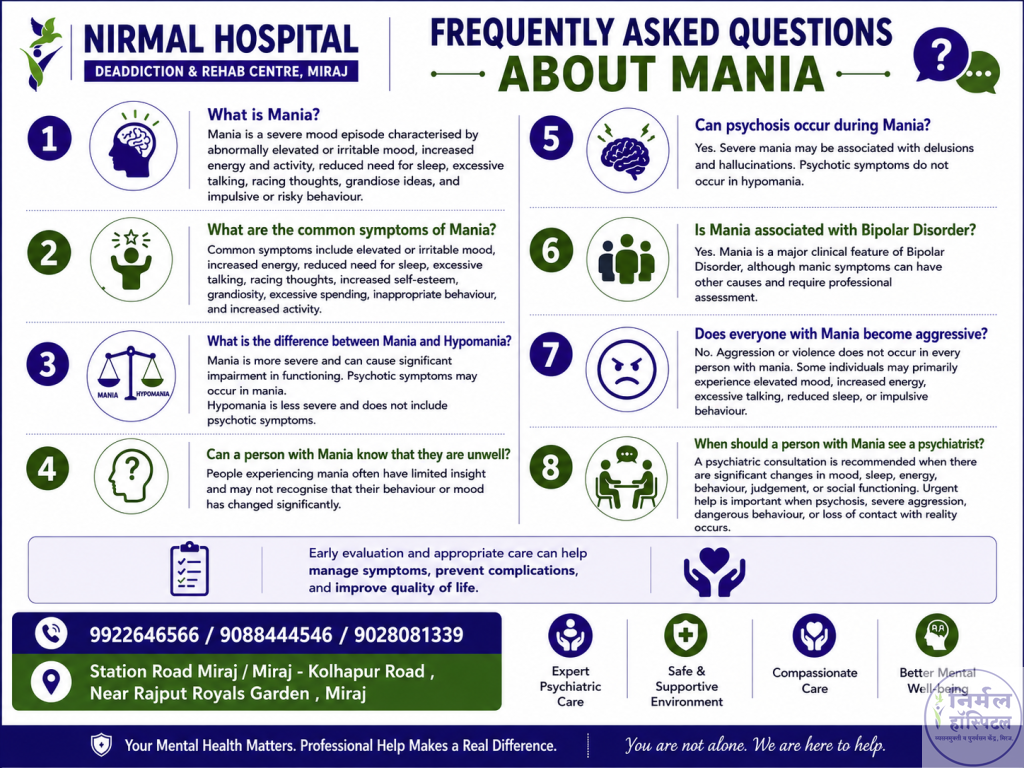
What is Mania?
Mania is a severe mood episode characterised by abnormally elevated or irritable mood, increased energy and activity, reduced need for sleep, excessive talking, racing thoughts, grandiose ideas, and impulsive or risky behaviour.
What are the common symptoms of Mania?
Common symptoms include elevated or irritable mood, increased energy, reduced need for sleep, excessive talking, racing thoughts, increased self-esteem, grandiosity, excessive spending, inappropriate behaviour, and increased activity.
What is the difference between Mania and Hypomania?
Mania is more severe and can cause significant impairment in functioning. Psychotic symptoms may occur in mania. Hypomania is less severe and does not include psychotic symptoms.
Can a person with Mania know that they are unwell?
People experiencing mania often have limited insight and may not recognise that their behaviour or mood has changed significantly.
Can psychosis occur during Mania?
Yes. Severe mania may be associated with delusions and hallucinations. Psychotic symptoms do not occur in hypomania.
Is Mania associated with Bipolar Disorder?
Yes. Mania is a major clinical feature of Bipolar Disorder, although manic symptoms can have other causes and require professional assessment.
Does everyone with Mania become aggressive?
No. Aggression or violence does not occur in every person with mania. Some individuals may primarily experience elevated mood, increased energy, excessive talking, reduced sleep, or impulsive behaviour.
When should a person with Mania see a psychiatrist?
A psychiatric consultation is recommended when there are significant changes in mood, sleep, energy, behaviour, judgement, or social functioning. Urgent help is important when psychosis, severe aggression, dangerous behaviour, or loss of contact with reality occurs.
For More Information Please Click Here
For More Information About Treatment Please Click Here


Leave a Reply