


Bipolar Mood Disorder: Symptoms, Types, Causes and Diagnosis
What Is Bipolar Mood Disorder?
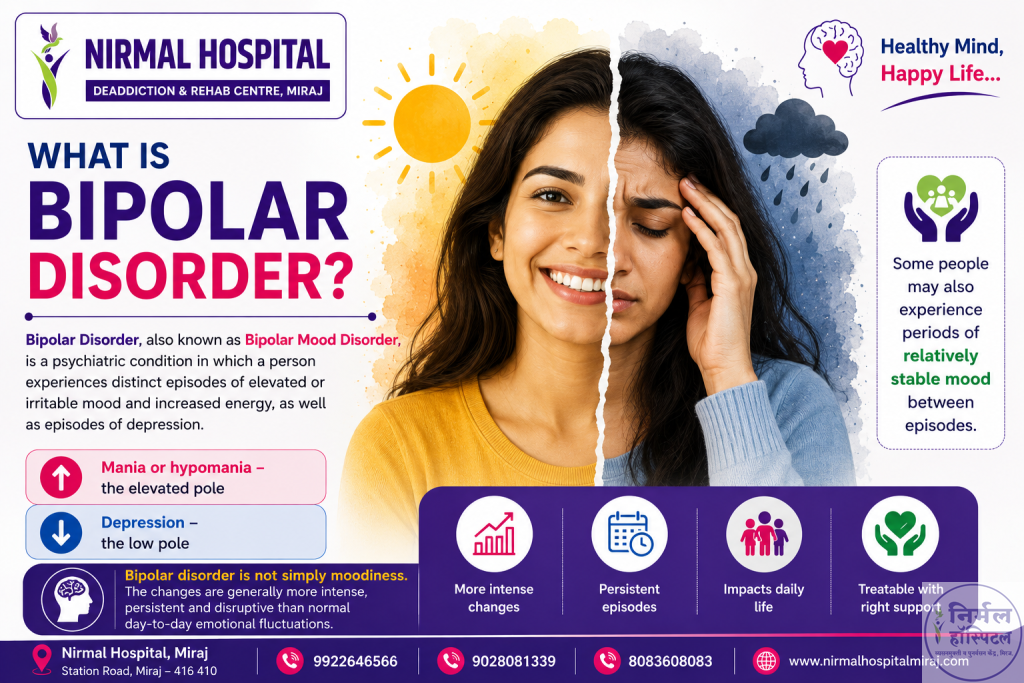
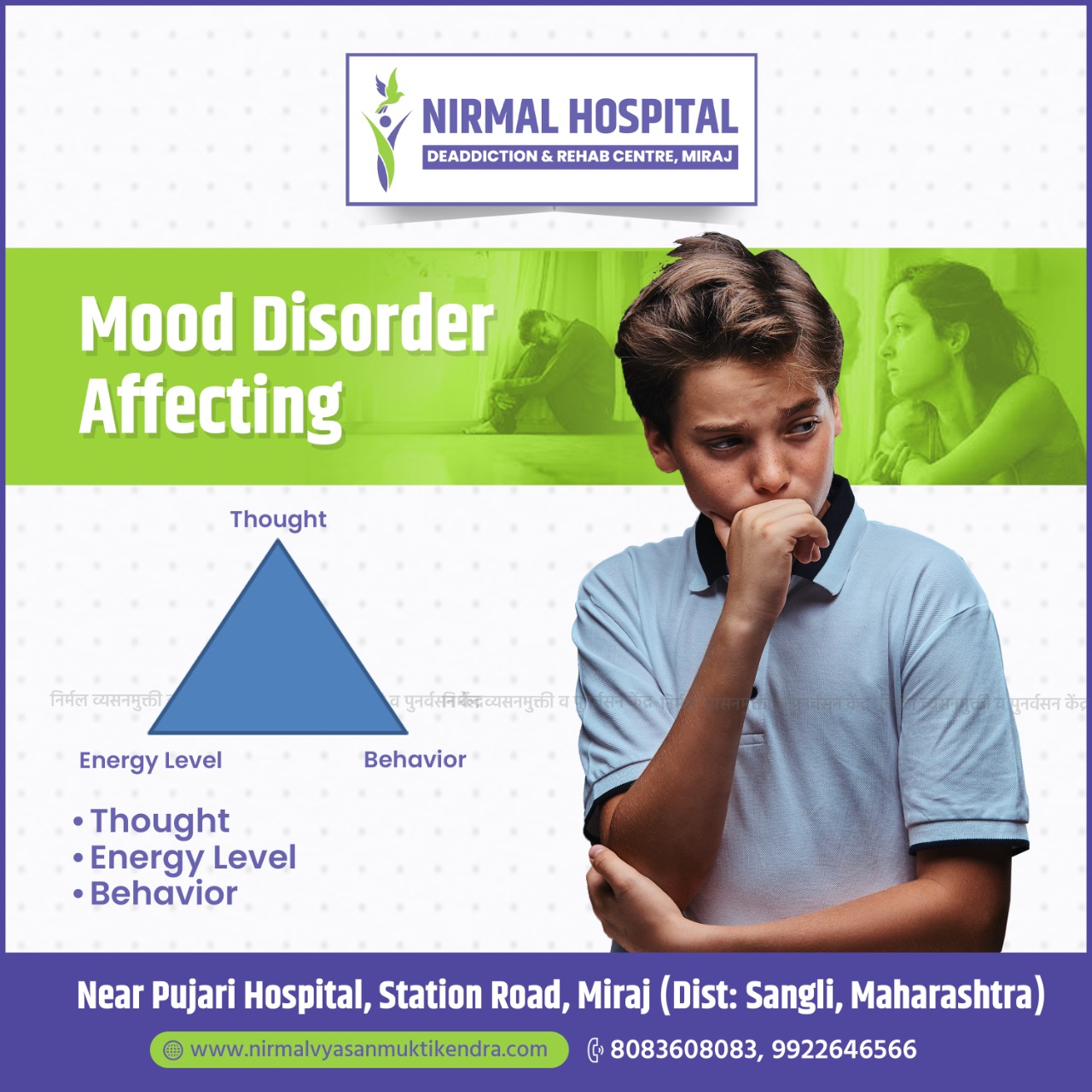
Bipolar Mood Disorder, commonly referred to as Bipolar Disorder, is a mental health condition characterized by significant changes in a person’s mood, energy, activity levels, sleep, thinking and behaviour.
A person with Bipolar Mood Disorder may experience periods of unusually elevated or irritable mood and increased energy, known as mania or hypomania, along with periods of depression.
These changes are different from ordinary day-to-day mood fluctuations. Bipolar Mood Disorder can affect a person’s relationships, work, education, decision-making and overall daily functioning.
Some people may experience periods of relatively stable mood between episodes.
What Are the Symptoms of Bipolar Mood Disorder?
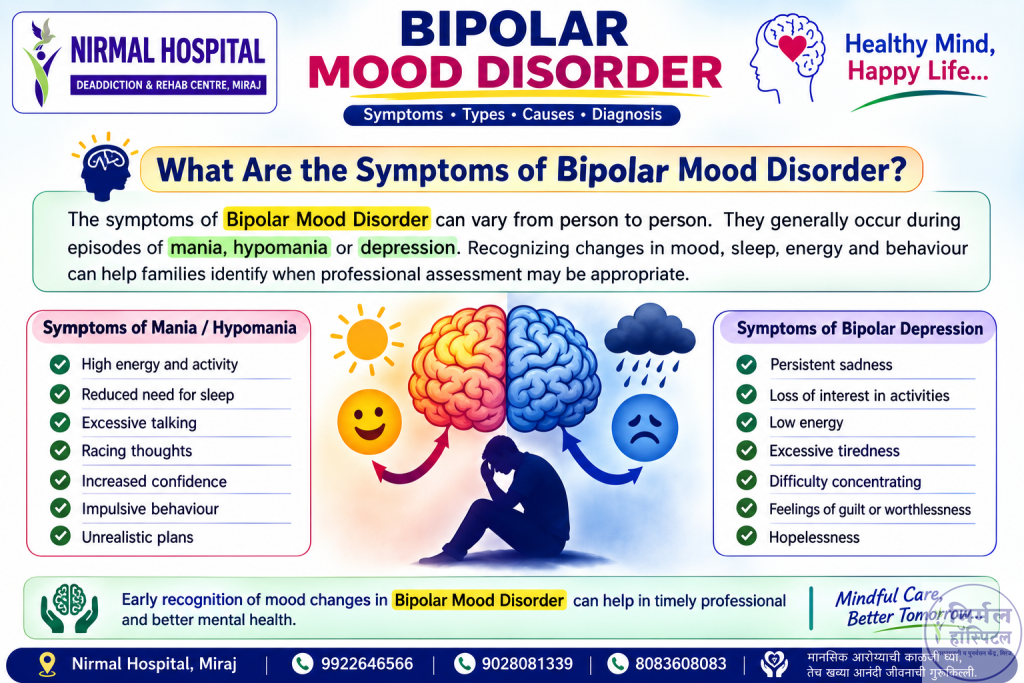
The symptoms of Bipolar Mood Disorder can vary from person to person. They generally occur during episodes of mania, hypomania or depression.
Recognizing changes in mood, sleep, energy and behaviour can help families identify when professional assessment may be appropriate.
Symptoms of Mania
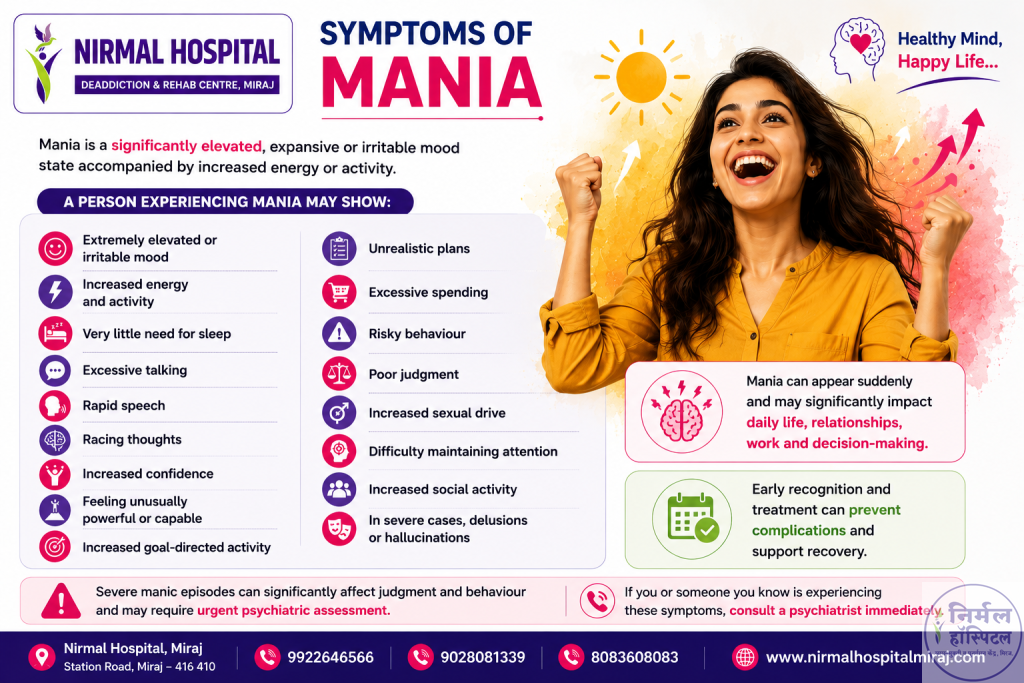
Mania is a significantly elevated, expansive or irritable mood state accompanied by increased energy or activity.
A person experiencing mania may show:
- Extremely elevated or irritable mood
- Increased energy and activity
- Very little need for sleep
- Excessive talking
- Rapid speech
- Racing thoughts
- Increased confidence
- Feeling unusually powerful or capable
- Increased goal-directed activity
- Unrealistic plans
- Excessive spending
- Risky behaviour
- Poor judgment
- Increased sexual drive
- Difficulty maintaining attention
- Increased social activity
- In severe cases, delusions or hallucinations
Severe manic episodes can significantly affect judgment and behaviour and may require urgent psychiatric assessment.
Symptoms of Hypomania
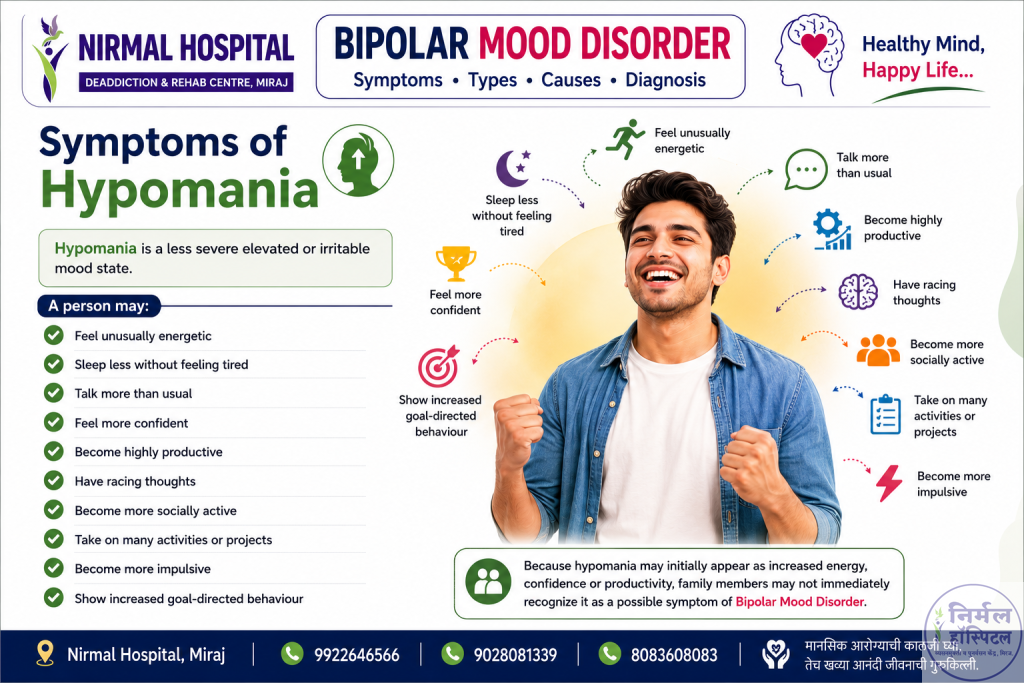
Hypomania is a less severe elevated or irritable mood state.
A person may:
- Feel unusually energetic
- Sleep less without feeling tired
- Talk more than usual
- Feel more confident
- Become highly productive
- Have racing thoughts
- Become more socially active
- Take on many activities or projects
- Become more impulsive
- Show increased goal-directed behaviour
Because hypomania may initially appear as increased energy, confidence or productivity, family members may not immediately recognize it as a possible symptom of Bipolar Mood Disorder.
Symptoms of Bipolar Depression
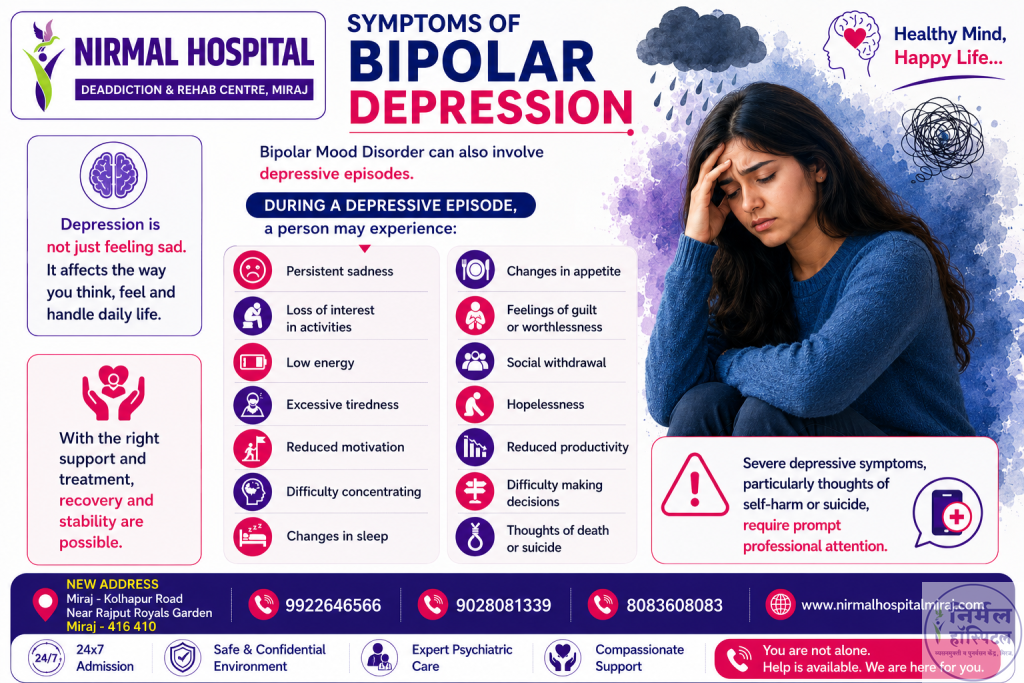
Bipolar Mood Disorder can also involve depressive episodes.
During a depressive episode, a person may experience:
- Persistent sadness
- Loss of interest in activities
- Low energy
- Excessive tiredness
- Reduced motivation
- Difficulty concentrating
- Changes in sleep
- Changes in appetite
- Feelings of guilt or worthlessness
- Social withdrawal
- Hopelessness
- Reduced productivity
- Difficulty making decisions
- Thoughts of death or suicide
Severe depressive symptoms, particularly thoughts of self-harm or suicide, require prompt professional attention.
Bipolar Mood Disorder vs Normal Mood Swings
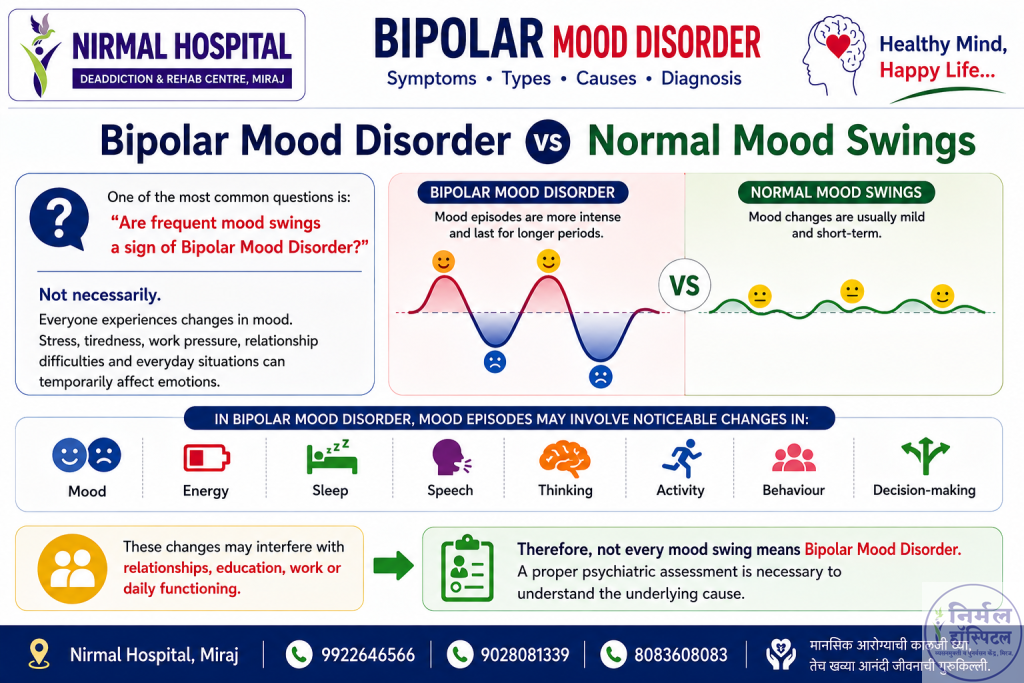
One of the most common questions is:
“Are frequent mood swings a sign of Bipolar Mood Disorder?”
Not necessarily.
Everyone experiences changes in mood. Stress, tiredness, work pressure, relationship difficulties and everyday situations can temporarily affect emotions.
In Bipolar Mood Disorder, mood episodes are generally more significant and can involve noticeable changes in:
- Mood
- Energy
- Sleep
- Speech
- Thinking
- Activity
- Behaviour
- Decision-making
These changes may interfere with relationships, education, work or daily functioning.
Therefore, not every mood swing means Bipolar Mood Disorder. A proper psychiatric assessment is necessary to understand the underlying cause.
Types of Bipolar Mood Disorder
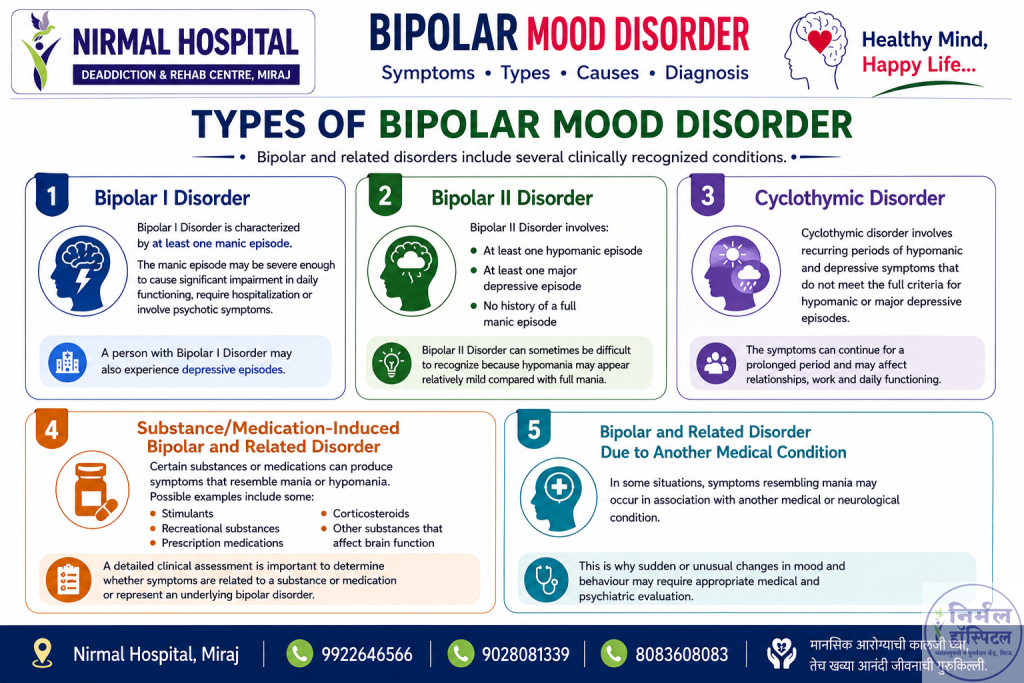
Bipolar and related disorders include several clinically recognized conditions.
1. Bipolar I Disorder
Bipolar I Disorder is characterized by at least one manic episode.
The manic episode may be severe enough to cause significant impairment in daily functioning, require hospitalization or involve psychotic symptoms.
A person with Bipolar I Disorder may also experience depressive episodes.
2. Bipolar II Disorder
Bipolar II Disorder involves:
- At least one hypomanic episode
- At least one major depressive episode
- No history of a full manic episode
Bipolar II Disorder can sometimes be difficult to recognize because hypomania may appear relatively mild compared with full mania.
3. Cyclothymic Disorder
Cyclothymic disorder involves recurring periods of hypomanic and depressive symptoms that do not meet the full criteria for hypomanic or major depressive episodes.
The symptoms can continue for a prolonged period and may affect relationships, work and daily functioning.
4. Substance/Medication-Induced Bipolar and Related Disorder
Certain substances or medications can produce symptoms that resemble mania or hypomania.
Possible examples include some:
- Stimulants
- Recreational substances
- Prescription medications
- Corticosteroids
- Other substances that affect brain function
A detailed clinical assessment is important to determine whether symptoms are related to a substance or medication or represent an underlying bipolar disorder.
5. Bipolar and Related Disorder Due to Another Medical Condition
In some situations, symptoms resembling mania may occur in association with another medical or neurological condition.
This is why sudden or unusual changes in mood and behaviour may require appropriate medical and psychiatric evaluation.
What Causes Bipolar Mood Disorder?
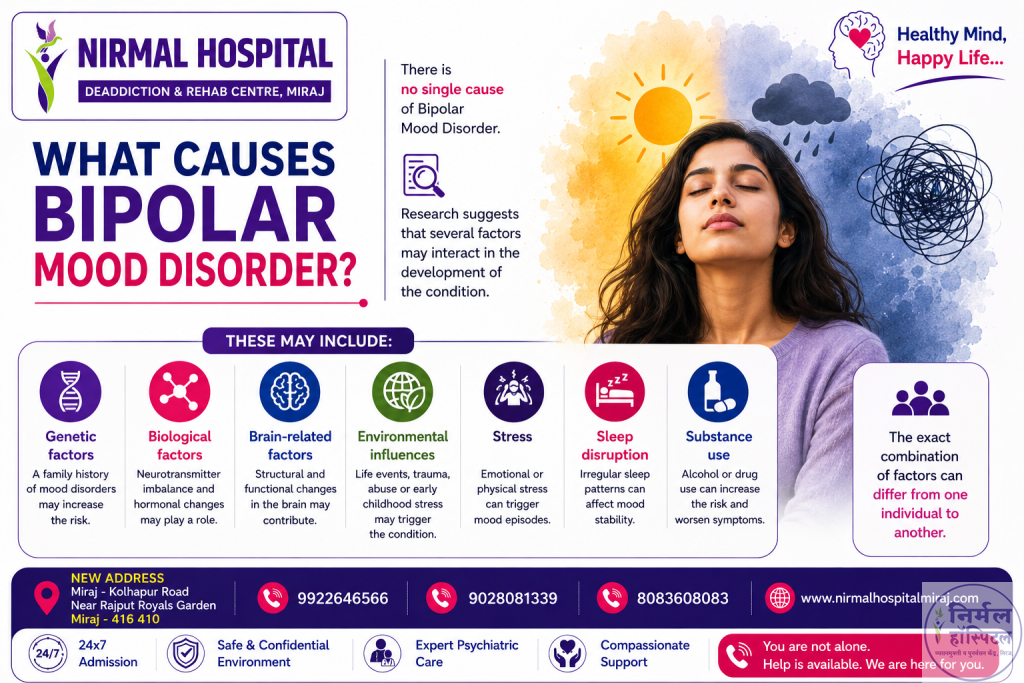
There is no single cause of Bipolar Mood Disorder.
Research suggests that several factors may interact in the development of the condition.
These may include:
- Genetic factors
- Biological factors
- Brain-related factors
- Environmental influences
- Stress
- Sleep disruption
- Substance use
The exact combination of factors can differ from one individual to another.
Genetic Factors and Bipolar Mood Disorder
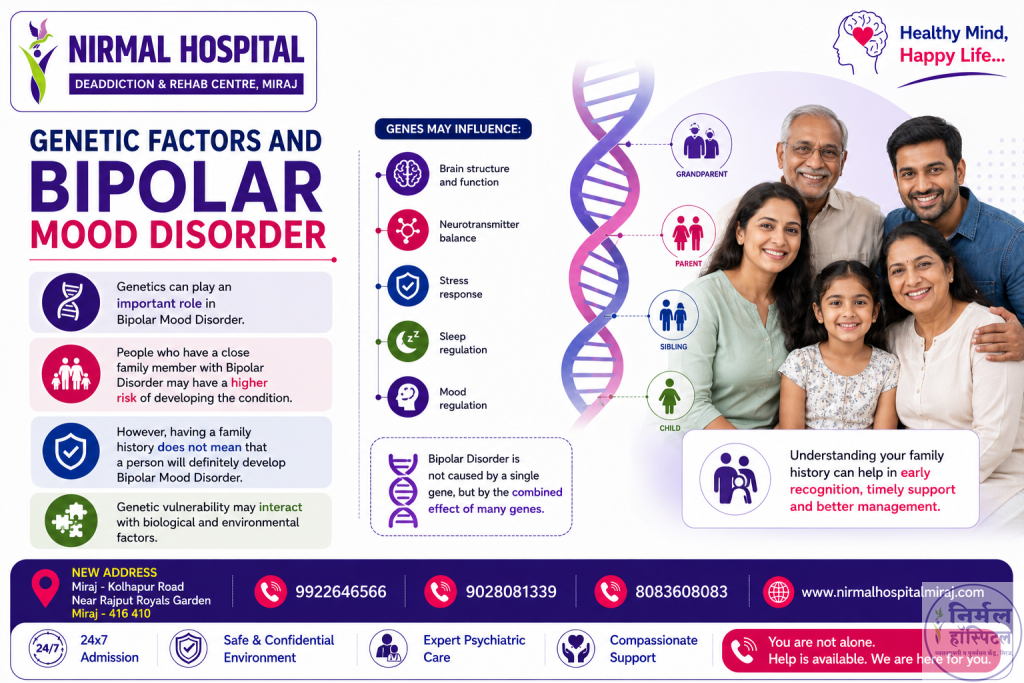
Genetics can play an important role in Bipolar Mood Disorder.
People who have a close family member with Bipolar Disorder may have a higher risk of developing the condition.
However, having a family history does not mean that a person will definitely develop Bipolar Mood Disorder.
Genetic vulnerability may interact with biological and environmental factors.
Biological Factors
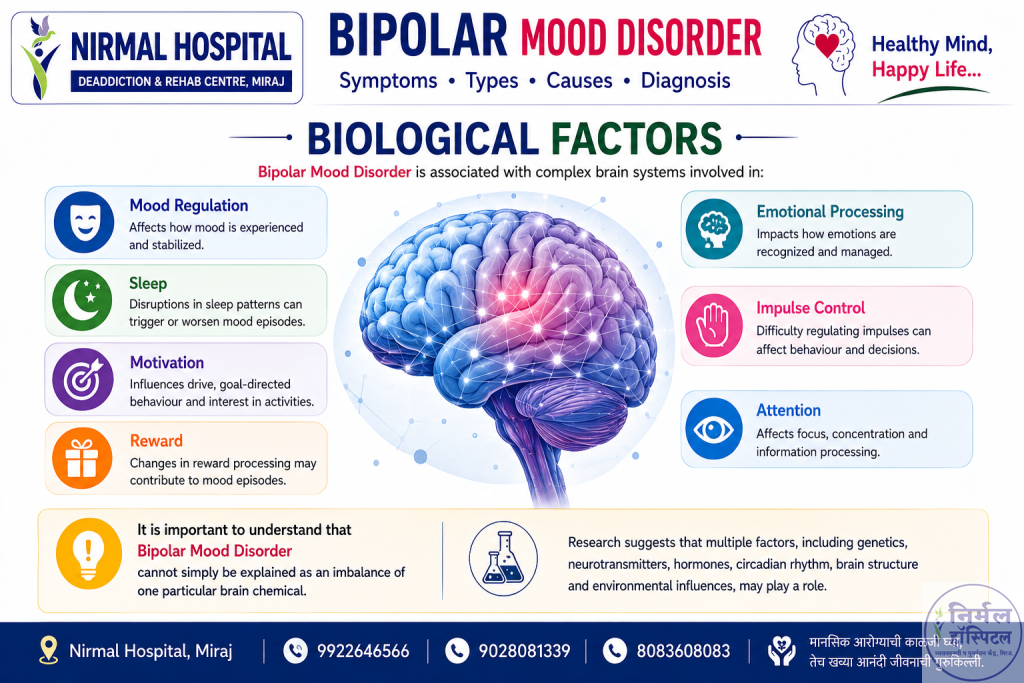
Bipolar Mood Disorder is associated with complex brain systems involved in:
- Mood regulation
- Sleep
- Motivation
- Reward
- Emotional processing
- Impulse control
- Attention
It is important to understand that Bipolar Mood Disorder cannot simply be explained as an imbalance of one particular brain chemical.
Environmental Factors
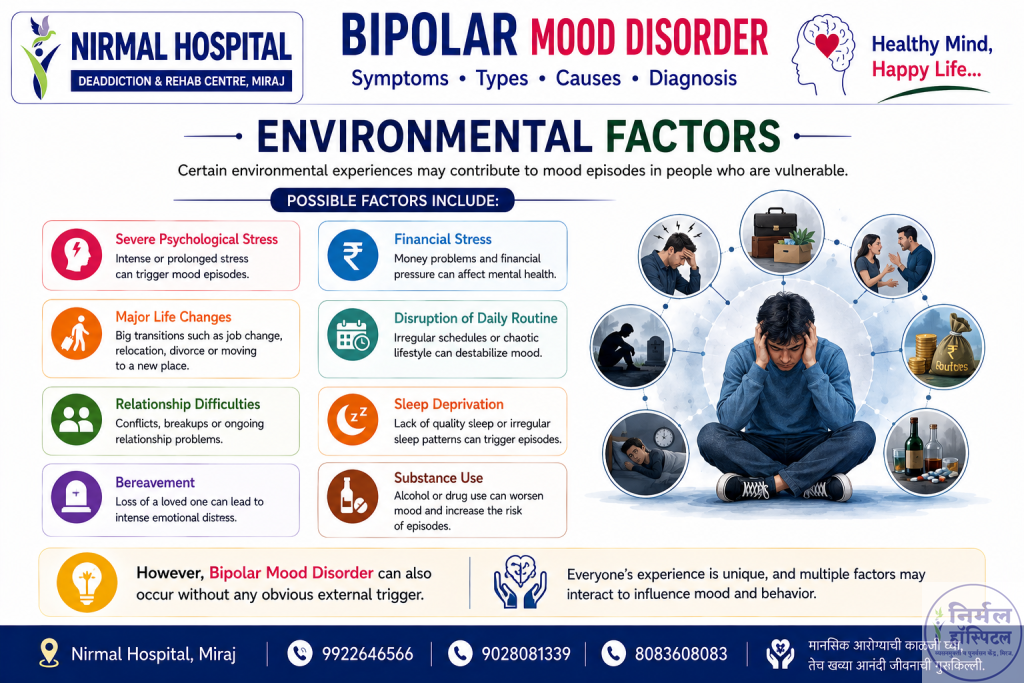
Certain environmental experiences may contribute to mood episodes in people who are vulnerable.
Possible factors include:
- Severe psychological stress
- Major life changes
- Relationship difficulties
- Bereavement
- Financial stress
- Disruption of daily routine
- Sleep deprivation
- Substance use
However, Bipolar Mood Disorder can also occur without any obvious external trigger.
Common Triggers Associated With Bipolar Mood Disorder
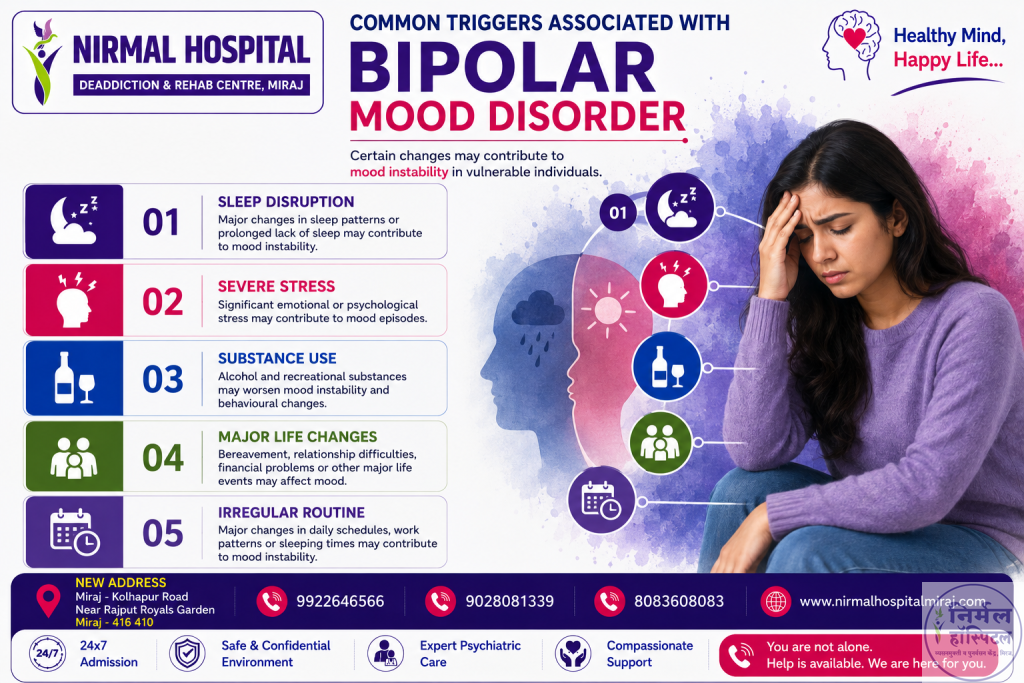
Certain changes may contribute to mood instability in vulnerable individuals.
1. Sleep Disruption
Major changes in sleep patterns or prolonged lack of sleep may contribute to mood instability.
2. Severe Stress
Significant emotional or psychological stress may contribute to mood episodes.
3. Substance Use
Alcohol and recreational substances may worsen mood instability and behavioural changes.
4. Major Life Changes
Bereavement, relationship difficulties, financial problems or other major life events may affect mood.
5. Irregular Routine
Major changes in daily schedules, work patterns or sleeping times may contribute to mood instability.
How Is Bipolar Mood Disorder Diagnosed?
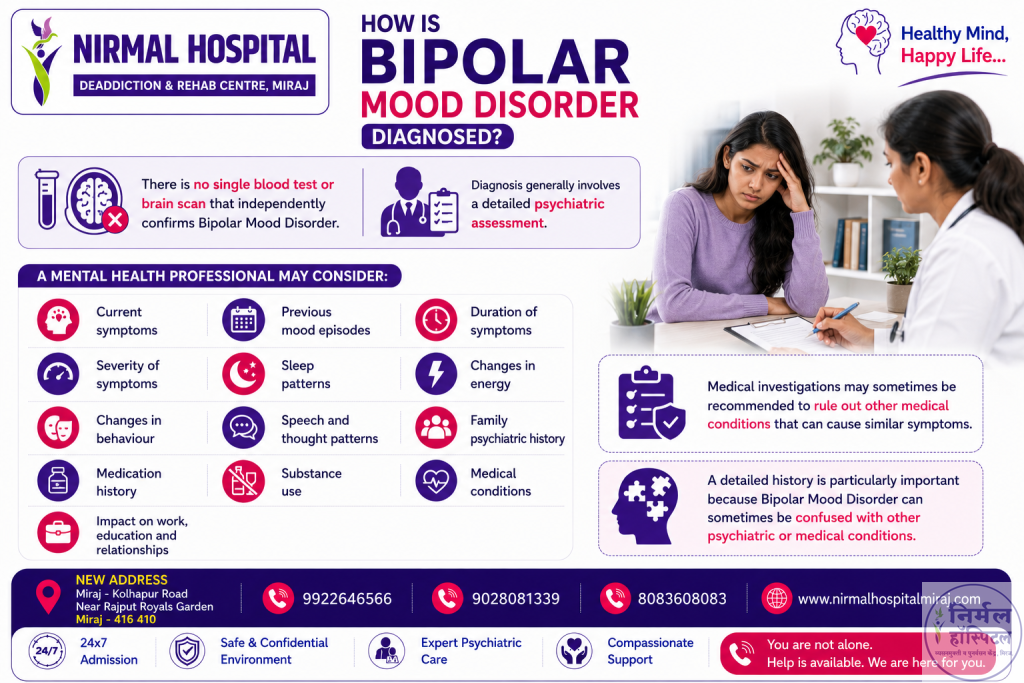
There is no single blood test or brain scan that independently confirms Bipolar Mood Disorder.
Diagnosis generally involves a detailed psychiatric assessment.
A mental health professional may consider:
- Current symptoms
- Previous mood episodes
- Duration of symptoms
- Severity of symptoms
- Sleep patterns
- Changes in energy
- Changes in behaviour
- Speech and thought patterns
- Family psychiatric history
- Medication history
- Substance use
- Medical conditions
- Impact on work, education and relationships
Medical investigations may sometimes be recommended to rule out other medical conditions that can cause similar symptoms.
A detailed history is particularly important because Bipolar Mood Disorder can sometimes be confused with other psychiatric or medical conditions.
Why Is Early Recognition of Bipolar Mood Disorder Important?
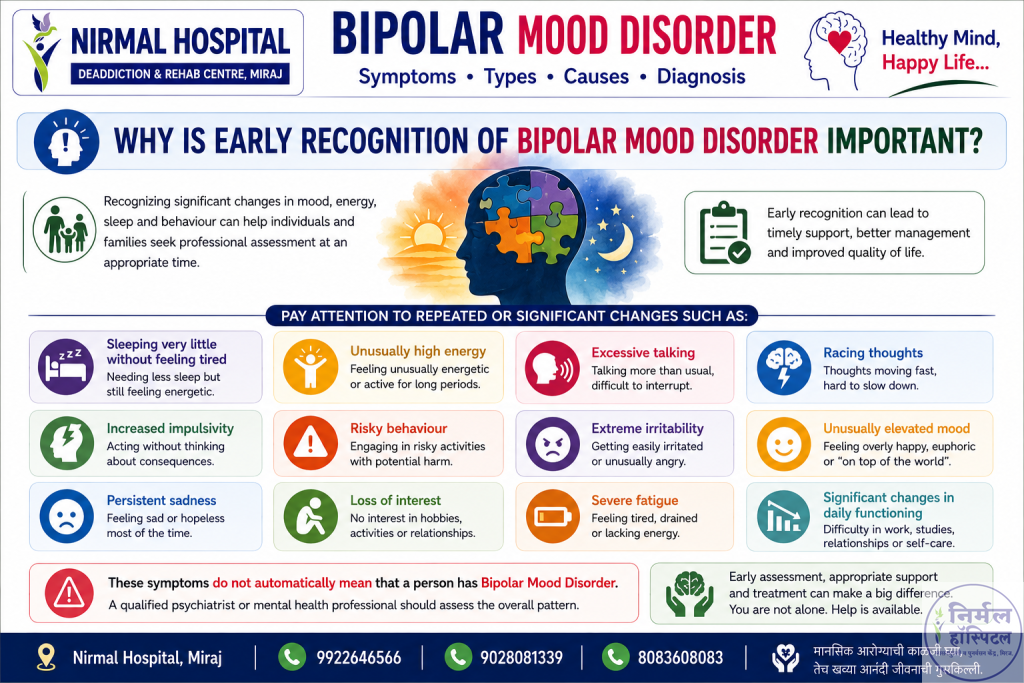
Recognizing significant changes in mood, energy, sleep and behaviour can help individuals and families seek professional assessment at an appropriate time.
Pay attention to repeated or significant changes such as:
- Sleeping very little without feeling tired
- Unusually high energy
- Excessive talking
- Racing thoughts
- Increased impulsivity
- Risky behaviour
- Extreme irritability
- Unusually elevated mood
- Persistent sadness
- Loss of interest
- Severe fatigue
- Significant changes in daily functioning
These symptoms do not automatically mean that a person has Bipolar Mood Disorder. A qualified psychiatrist or mental health professional should assess the overall pattern.
Bipolar Mood Disorder and Daily Life
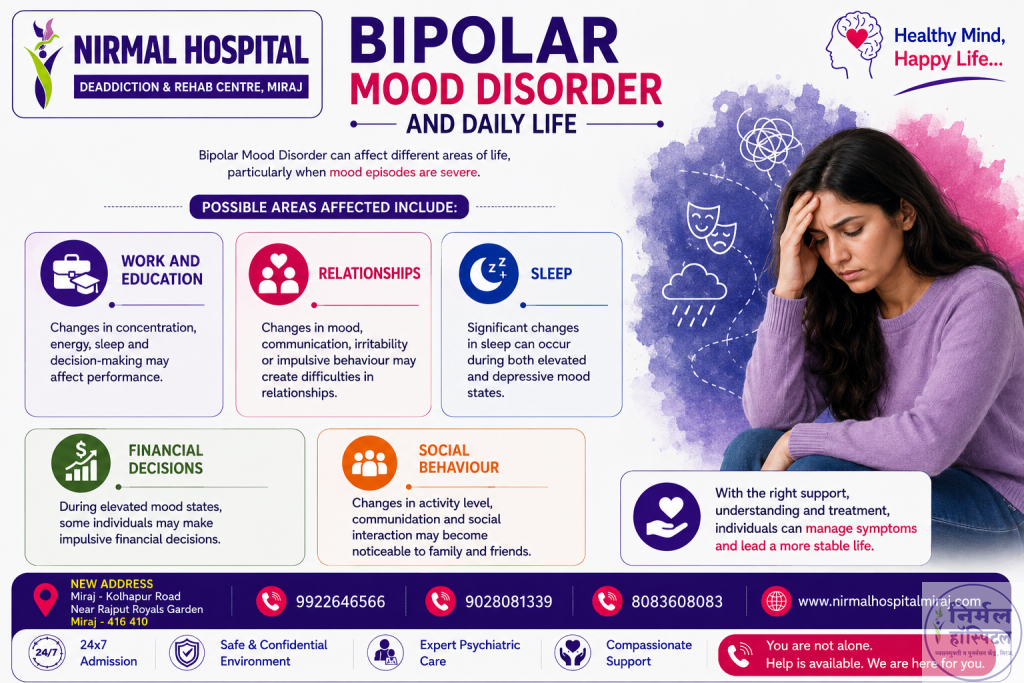
Bipolar Mood Disorder can affect different areas of life, particularly when mood episodes are severe.
Possible areas affected include:
Work and Education
Changes in concentration, energy, sleep and decision-making may affect performance.
Relationships
Changes in mood, communication, irritability or impulsive behaviour may create difficulties in relationships.
Sleep
Significant changes in sleep can occur during both elevated and depressive mood states.
Financial Decisions
During elevated mood states, some individuals may make impulsive financial decisions.
Social Behaviour
Changes in activity level, communication and social interaction may become noticeable to family and friends.
When Should You Consider a Psychiatric Assessment?
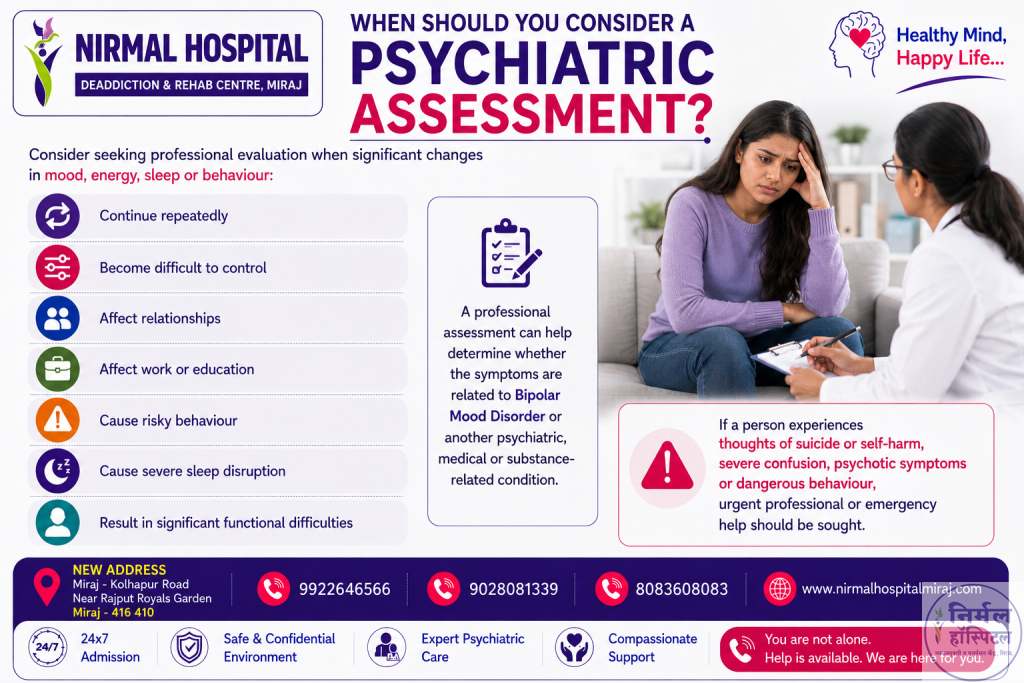
Consider seeking professional evaluation when significant changes in mood, energy, sleep or behaviour:
- Continue repeatedly
- Become difficult to control
- Affect relationships
- Affect work or education
- Cause risky behaviour
- Cause severe sleep disruption
- Result in significant functional difficulties
A professional assessment can help determine whether the symptoms are related to Bipolar Mood Disorder or another psychiatric, medical or substance-related condition.
If a person experiences thoughts of suicide or self-harm, severe confusion, psychotic symptoms or dangerous behaviour, urgent professional or emergency help should be sought.
Frequently Asked Questions About Bipolar Mood Disorder
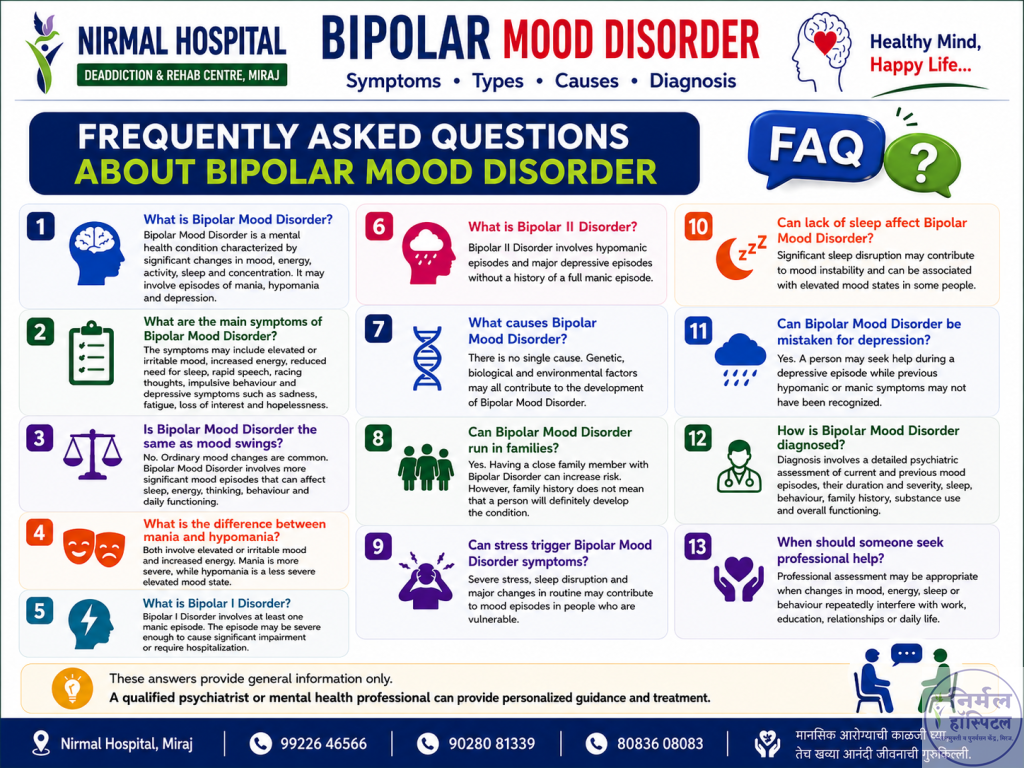
1. What is Bipolar Mood Disorder?
Bipolar Mood Disorder is a mental health condition characterized by significant changes in mood, energy, activity, sleep and concentration. It may involve episodes of mania, hypomania and depression.
2. What are the main symptoms of Bipolar Mood Disorder?
The symptoms may include elevated or irritable mood, increased energy, reduced need for sleep, rapid speech, racing thoughts, impulsive behaviour and depressive symptoms such as sadness, fatigue, loss of interest and hopelessness.
3. Is Bipolar Mood Disorder the same as mood swings?
No. Ordinary mood changes are common. Bipolar Mood Disorder involves more significant mood episodes that can affect sleep, energy, thinking, behaviour and daily functioning.
4. What is the difference between mania and hypomania?
Both involve elevated or irritable mood and increased energy. Mania is more severe, while hypomania is a less severe elevated mood state.
5. What is Bipolar I Disorder?
Bipolar I Disorder involves at least one manic episode. The episode may be severe enough to cause significant impairment or require hospitalization.
6. What is Bipolar II Disorder?
Bipolar II Disorder involves hypomanic episodes and major depressive episodes without a history of a full manic episode.
7. What causes Bipolar Mood Disorder?
There is no single cause. Genetic, biological and environmental factors may all contribute to the development of Bipolar Mood Disorder.
8. Can Bipolar Mood Disorder run in families?
Yes. Having a close family member with Bipolar Disorder can increase risk. However, family history does not mean that a person will definitely develop the condition.
9. Can stress trigger Bipolar Mood Disorder symptoms?
Severe stress, sleep disruption and major changes in routine may contribute to mood episodes in people who are vulnerable.
10. Can lack of sleep affect Bipolar Mood Disorder?
Significant sleep disruption may contribute to mood instability and can be associated with elevated mood states in some people.
11. Can Bipolar Mood Disorder be mistaken for depression?
Yes. A person may seek help during a depressive episode while previous hypomanic or manic symptoms may not have been recognized.
12. How is Bipolar Mood Disorder diagnosed?
Diagnosis involves a detailed psychiatric assessment of current and previous mood episodes, their duration and severity, sleep, behaviour, family history, substance use and overall functioning.
13. When should someone seek professional help?
Professional assessment may be appropriate when changes in mood, energy, sleep or behaviour repeatedly interfere with work, education, relationships or daily life.
Conclusion
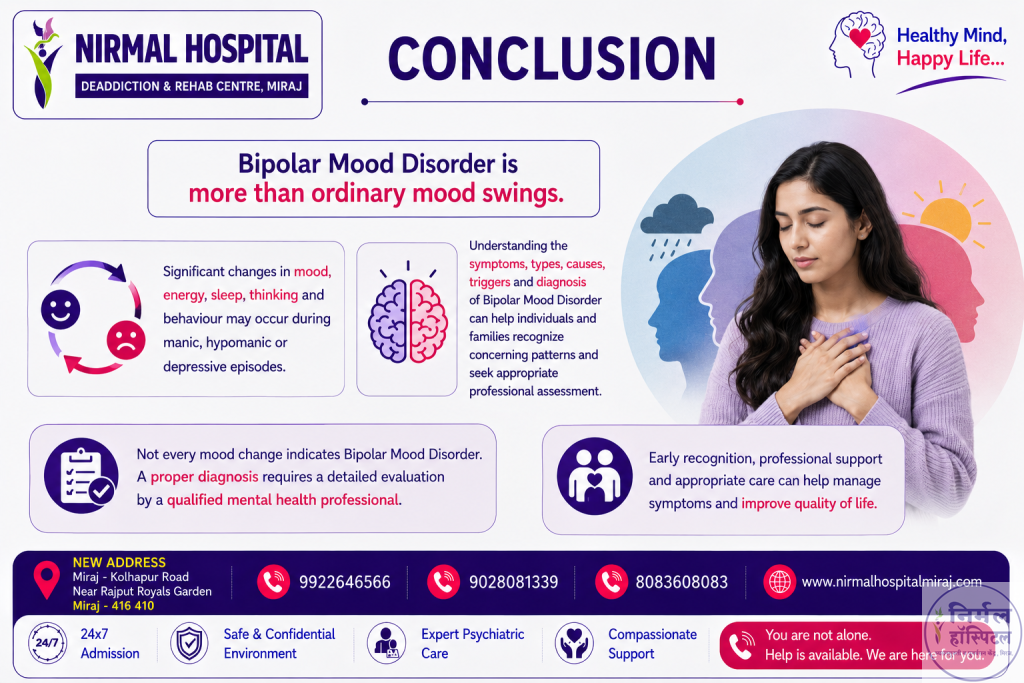
Bipolar Mood Disorder is more than ordinary mood swings.
Significant changes in mood, energy, sleep, thinking and behaviour may occur during manic, hypomanic or depressive episodes.
Understanding the symptoms, types, causes, triggers and diagnosis of Bipolar Mood Disorder can help individuals and families recognize concerning patterns and seek appropriate professional assessment.
Not every mood change indicates Bipolar Mood Disorder. A proper diagnosis requires a detailed evaluation by a qualified mental health professional.





Leave a Reply