

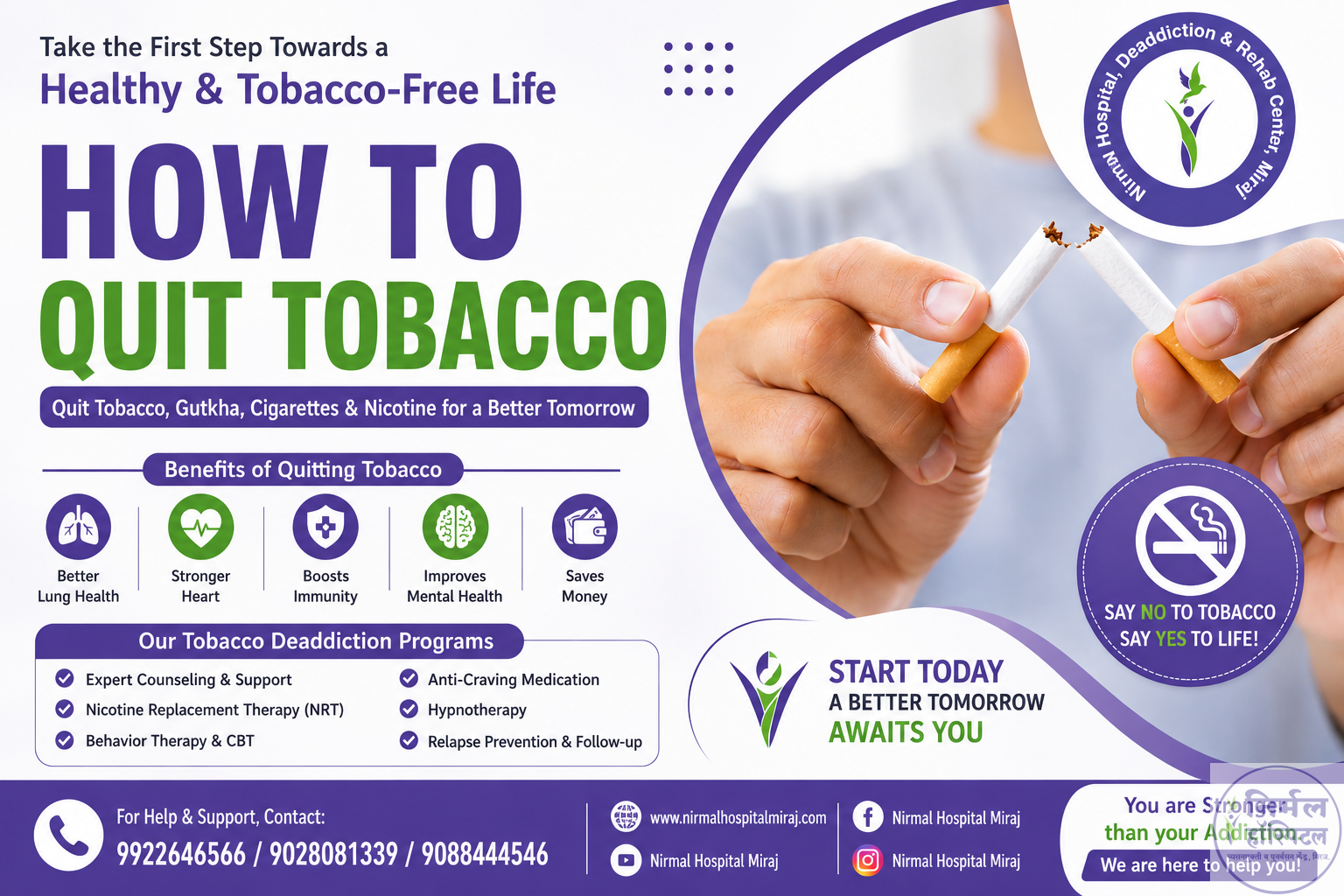
Tobacco Deaddiction: A Step Towards a Healthy and Addiction-Free Life
Millions of people consume tobacco products such as tobacco, gutkha, cigarettes, bidi, mawa, khaini, tapkir, pan masala, and chewing tobacco every day. Most users know that these substances seriously affect physical, mental, sexual, and social health. Despite this awareness, nicotine addiction makes quitting extremely difficult.
The good news is that tobacco deaddiction is possible with proper treatment, counselling, motivation, and medical support. If you or a loved one is struggling with nicotine addiction, this guide will help you understand the causes, withdrawal symptoms, and the most effective tobacco deaddiction treatments.
What is Tobacco Deaddiction?
Tobacco deaddiction is the process of helping individuals stop using nicotine-containing products through medical treatment, counselling, behavioural therapies, and lifestyle modifications.
The goal is not only to stop tobacco consumption but also to prevent relapse and improve overall health and quality of life.
Common Forms of Nicotine Use
Nicotine addiction can develop through the use of:
- Tobacco
- Gutkha
- Cigarettes
- Bidi
- Mawa
- Khaini
- Tapkir
- Pan Masala
- Chewing Tobacco
Why Do People Become Addicted to Tobacco?
1. Family Influence
Children often imitate parents who consume tobacco products.
2. Social Environment
Friends, neighbours, relatives, and colleagues can influence tobacco use.
3. Peer Pressure
Many adolescents begin smoking or chewing tobacco due to pressure from friends.
4. False Beliefs
Some individuals believe tobacco makes them look mature, confident, or socially attractive.
5. Curiosity
Experimenting “just once” often leads to long-term addiction.
6. Stress, Anxiety & Depression
People frequently use tobacco as a coping mechanism for emotional distress.
7. Genetic Factors
Research suggests a genetic predisposition can increase vulnerability to nicotine dependence.
How Nicotine Affects the Brain
Tobacco contains more than 3,000 harmful chemicals. Nicotine is one of the most addictive substances.
When nicotine reaches the brain, it stimulates neurotransmitters such as:
- Dopamine
- Serotonin
- Norepinephrine
These chemicals temporarily create feelings of pleasure, relaxation, alertness, and satisfaction.
Over time, the brain becomes dependent on nicotine, leading to addiction.
Nicotine Withdrawal Symptoms
Withdrawal symptoms typically occur when nicotine use is suddenly stopped or significantly reduced after regular use for several weeks or longer.
Within 24 hours of quitting, an individual may experience four or more of the following symptoms:
Emotional Symptoms
- Depressed mood
- Dysphoric mood
- Anxiety
- Irritability
- Frustration
- Anger
Physical Symptoms
- Restlessness
- Decreased heart rate
- Increased appetite
- Weight gain
Cognitive Symptoms
- Difficulty concentrating
- Reduced focus
- Mental fog
Sleep Problems
- Insomnia
- Disturbed sleep
These symptoms are one of the main reasons why professional tobacco deaddiction treatment is important.
Tobacco Deaddiction Treatment: The Effective 8D Formula
1. Declare a Date
Choose a quit date such as a birthday, anniversary, New Year, or World No Tobacco Day.
2. Declare to Relatives
Inform family members and friends about your decision to quit.
3. Drug Therapy
Take treatment under medical supervision to reduce withdrawal symptoms.
4. Delay
When cravings occur, delay consumption for 5–10 minutes.
5. Distraction
Engage in activities such as:
- Walking
- Reading
- Music
- Exercise
- Talking to friends
6. Deep Breathing
Practice slow deep breathing to reduce stress and cravings.
7. Drink Water
Drink plenty of water to reduce cravings and detoxify the body.
8. Discussion
Talk with family members, counsellors, psychiatrists, or support groups.
Pharmacotherapy for Nicotine Dependence
Many individuals benefit from medications specifically designed to help them quit tobacco.
A. Nicotine Gum
Nicotine gum is commonly used during the first few months of a quit attempt.
Available Strengths
- 2 mg Nicotine Gum
- 4 mg Nicotine Gum
Most patients can begin reducing gum use after approximately 3–4 weeks.
Benefits
- Reduces cravings
- Helps manage withdrawal symptoms
- Increases success rates of quitting
Nicotine Replacement Therapy (NRT)
Nicotine Replacement Therapy is one of the most effective treatments for tobacco deaddiction.
Types of NRT
- Nicotine Gum
- Nicotine Patch
- Nicotine Lozenges
- Nicotine Inhalers
Benefits include:
- Reduced withdrawal symptoms
- Better craving control
- Higher quit rates
Bupropion Therapy
Bupropion
Bupropion is a commonly used medication in nicotine dependence treatment.
Mechanism of Action
Although its exact mechanism is not fully understood, Bupropion works by:
- Enhancing dopamine levels in the mesolimbic system
- Reducing cravings
- Reducing withdrawal symptoms
This medication should only be taken under medical supervision.
Varenicline Therapy
Varenicline
Varenicline is one of the most effective medications used for smoking cessation and nicotine (tobacco) dependence treatment. It is prescribed to help individuals quit tobacco by reducing cravings and minimizing withdrawal symptoms.
Mechanism of Action
Varenicline acts as a partial agonist at the α4β2 nicotinic acetylcholine receptors in the brain.
Its dual action helps individuals quit tobacco by:
- Reducing nicotine cravings
- Decreasing withdrawal symptoms
- Blocking nicotine from fully stimulating brain receptors
- Reducing the pleasurable and rewarding effects of tobacco use
As a result, smoking or chewing tobacco becomes less satisfying, making it easier for individuals to stop using nicotine-containing products.
Other Pharmacotherapies for Nicotine Dependence
Several additional medications may be used in selected patients.
Smoking-Aversive Agents
- Silver Acetate
Blocking Agents
- Mecamylamine
- Naltrexone
Medications Used to Manage Withdrawal Symptoms
- Anxiolytics
- Antidepressants
- Stimulants
- Anorectic agents
These medications are prescribed only after proper psychiatric and medical evaluation.
Counselling for Tobacco Deaddiction
Counselling is one of the most important components of successful tobacco deaddiction treatment.
Benefits of Counselling
- Identifies triggers
- Improves motivation
- Builds coping skills
- Prevents relapse
- Increases confidence
Effective Therapies
- Cognitive Behavioral Therapy (CBT)
- Motivational Enhancement Therapy
- Family Counselling
- Relapse Prevention Therapy
Hypnotherapy for Tobacco Deaddiction
Hypnotherapy uses positive suggestions directed toward the subconscious mind.
Potential benefits include:
- Reduced cravings
- Better self-control
- Increased motivation
- Reduced stress
Additional Rules for Successful Tobacco Deaddiction
✔ Do not keep tobacco products with you.
✔ Do not ask anyone for tobacco.
✔ Refuse tobacco even if offered.
✔ Maintain a daily tobacco-free diary.
✔ Avoid tobacco-friendly environments.
✔ Exercise regularly.
✔ Eat healthy foods.
✔ Reward yourself for remaining tobacco-free.
Financial Benefits of Quitting Tobacco
A person spending ₹100 daily on tobacco spends approximately ₹36,500 annually.
Imagine using that money for:
- Family welfare
- Education
- Travel
- Savings
- Health insurance
This can be a powerful source of motivation.
Benefits of Tobacco Deaddiction
Physical Benefits
- Better lung function
- Improved breathing
- Reduced cancer risk
- Lower risk of heart disease
- Better immunity
Mental Benefits
- Better concentration
- Reduced anxiety
- Improved mood
Social Benefits
- Better relationships
- Greater self-confidence
- Improved quality of life
Financial Benefits
- Significant monthly savings
Why Choose Nirmal Hospital Miraj for Tobacco Deaddiction Treatment?
At Nirmal Hospital Miraj, we provide:
- Tobacco Deaddiction Treatment
- Nicotine Replacement Therapy
- Psychiatric Evaluation
- Counselling Services
- CBT Therapy
- Family Counselling
- Hypnotherapy
- Relapse Prevention Programs
- Long-Term Follow-Up Care
Our expert team helps individuals overcome nicotine addiction safely and effectively.
Conclusion
Tobacco addiction can affect every aspect of life, but recovery is possible. With proper tobacco deaddiction treatment, counselling, medical support, and determination, anyone can successfully quit tobacco and achieve a healthier future.
Every tobacco-free day is a step toward better health, greater confidence, and freedom from addiction.
FAQ Schema Section
Q1. What is tobacco deaddiction?
Tobacco deaddiction is a treatment process that helps individuals quit tobacco products through counseling, behavioral therapy, medication, and relapse prevention strategies.
Q2. How long does nicotine withdrawal last?
Most withdrawal symptoms peak within the first week and gradually improve over 2–4 weeks.
Q3. Is nicotine replacement therapy safe?
Yes, when used under medical supervision, nicotine gum and patches are safe and effective.
Q4. Can counseling help me quit tobacco?
Yes. Counseling significantly improves quit rates by helping individuals manage cravings and triggers.
Q5. Where can I get tobacco deaddiction treatment in Miraj?
Nirmal Hospital Miraj offers comprehensive tobacco deaddiction treatment, counseling, and rehabilitation services for nicotine addiction.
Contact Nirmal Hospital Miraj
📞 9922646566 / 9028081339 / 9088444546
🌐 Website: www.nirmalhospitalmiraj.com
For More Information Please Click Here
Take the first step today. Choose tobacco deaddiction and reclaim your health.


Leave a Reply