
Conversion Disorder Treatment in Miraj
Functional neurological symptoms can affect mobility, communication, independence and confidence. Treatment aims to improve functioning and help people manage symptoms through care suited to their needs.
If you are looking for conversion disorder treatment in Miraj, contact Nirmal Hospital to discuss assessment, treatment options and any specialist referrals required.
People searching for “hysterical conversion reaction treatment” may encounter the current terms conversion disorder and functional neurological disorder (FND).
Understanding the Diagnosis
Treatment begins with a clear explanation of the diagnosis and the clinical findings supporting it. Patients should have an opportunity to ask questions and understand why a particular treatment is recommended.
FND is potentially treatable, although the degree and pace of improvement vary. Care should acknowledge the symptoms and their impact on everyday life.
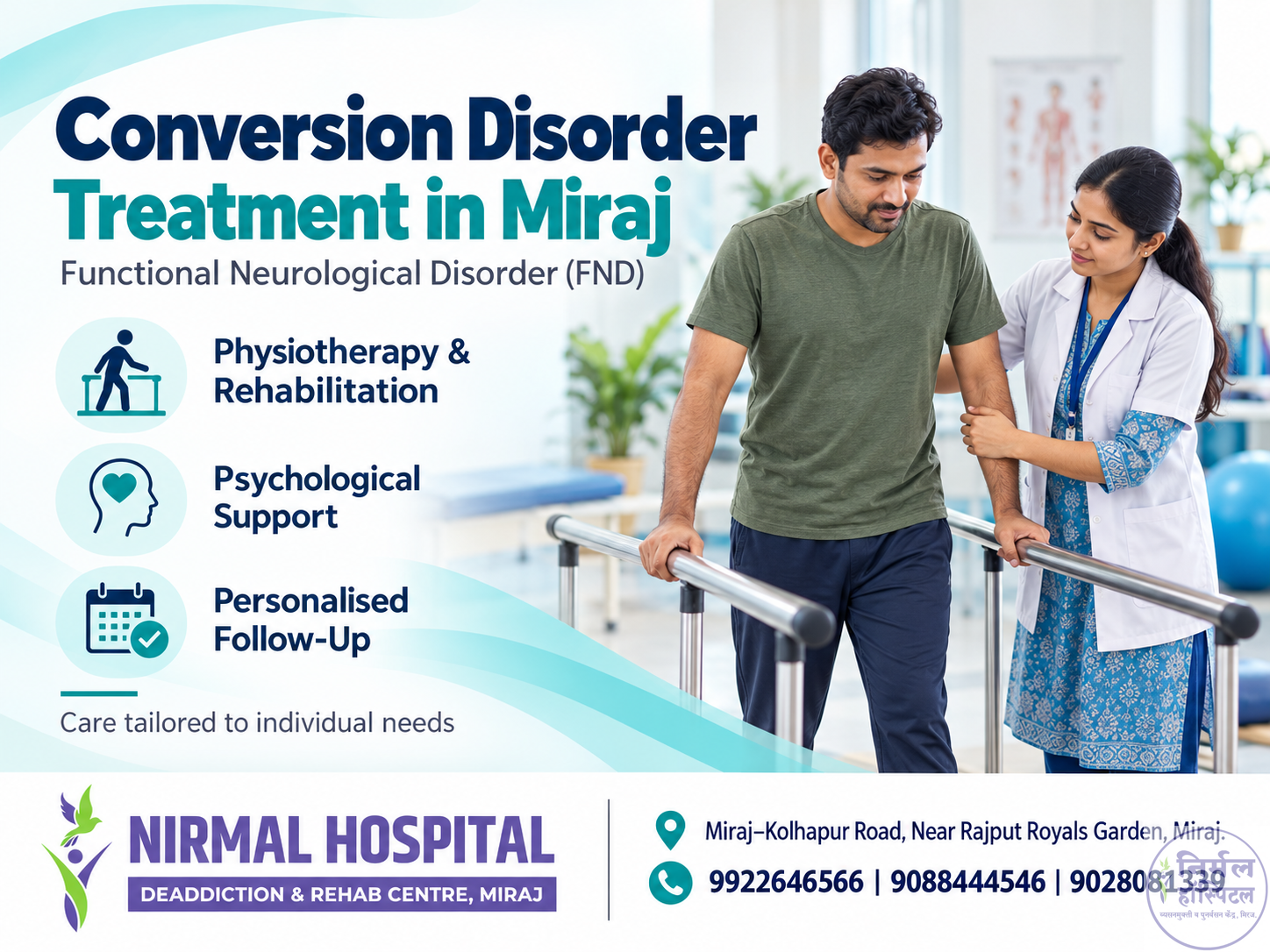
Physiotherapy and Rehabilitation
For movement-related symptoms, physiotherapy may help improve walking, movement and everyday function. Occupational therapy can support practical daily activities.
The programme should be tailored to the person’s symptoms and abilities.
Psychological Therapy
Psychological therapy, including cognitive behavioural therapy (CBT), may help people manage symptom-related distress and develop coping strategies. It can also address accompanying anxiety, depression or trauma-related difficulties when present.
A referral for therapy does not mean the symptoms are imaginary.
Speech and Swallowing Support
Speech and language therapy may be appropriate when functional symptoms affect speech, voice or swallowing, following suitable assessment.
Treatment for Functional Seizures
Functional seizures require a clear diagnosis and an individual care plan. Psychological interventions may help reduce episodes and improve quality of life for some people.
The treating clinician should also assess for coexisting epilepsy and mental health conditions. Involving a trusted family member, with the patient’s agreement, can support understanding and continuity of care.
What Is the Role of Medication?
Medication may be prescribed for accompanying conditions such as depression, pain or sleep problems. It is not a specific cure for FND.
Antiseizure medicines do not treat functional seizures themselves. They may still be necessary for coexisting epilepsy or another medical indication. Do not stop or change prescribed medicines without the treating clinician’s guidance.
Regular Follow-Up
Follow-up appointments allow the care team to review progress and adjust treatment. Care may involve neurological, rehabilitation and mental health professionals, depending on the person’s needs.
Any coexisting medical condition should continue to receive appropriate treatment.
Questions to Discuss With Your Care Team
At your appointment, you can ask:
- Which symptoms will the treatment plan address first?
- Would physiotherapy, psychological therapy or speech therapy be appropriate?
- What activities can I safely practise at home?
- What should my family do during an episode?
- Which changes in symptoms need urgent medical attention?
- How will we review progress?
Frequently Asked Questions
Can conversion disorder improve?
Improvement is possible. Recovery varies, and some people need ongoing support. A fixed recovery time or guaranteed outcome cannot be promised.
Does everyone need the same treatment?
No. Treatment depends on the type of symptoms, daily difficulties and any accompanying conditions.
Is counselling the only treatment?
No. Care may include rehabilitation, psychological therapy, education and treatment of accompanying conditions. The combination depends on individual needs.
Discuss Your Care Options at Nirmal Hospital, Miraj
An appropriate diagnosis provides the starting point for a personalised care plan.
Contact Nirmal Hospital, Miraj, for guidance on conversion disorder treatment and the next steps appropriate for you.


