

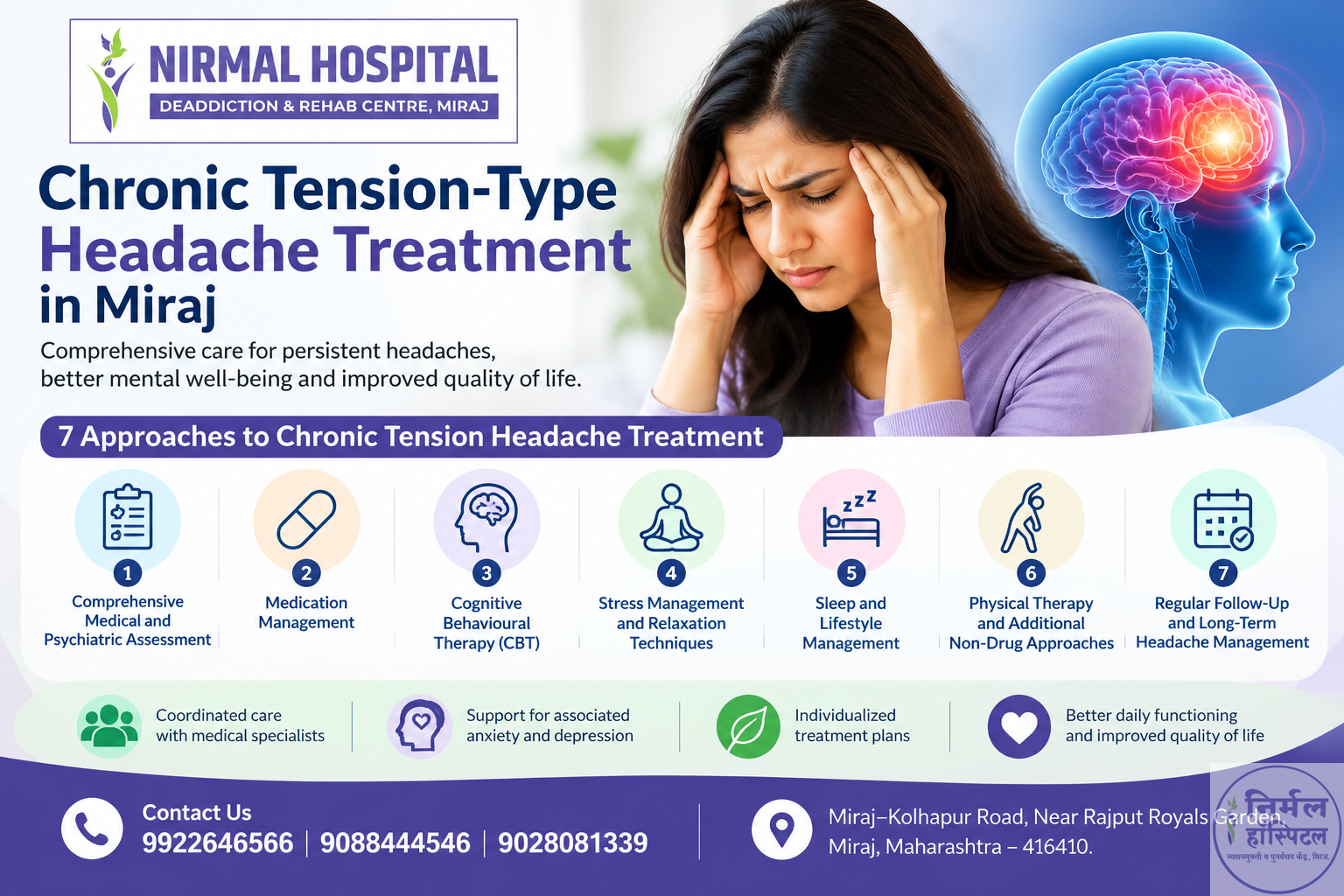
Chronic Tension-Type Headache Treatment in Miraj
Understanding Chronic Tension Headache Treatment
Chronic Tension-Type Headache is a neurological headache disorder that can cause frequent or persistent pressure-like pain around the head.
Treatment focuses on reducing headache frequency and severity, improving daily functioning, addressing contributing factors and preventing medication-overuse headache.
Patients experiencing chronic headaches may benefit from coordinated care involving a physician, neurologist and mental health professionals when appropriate.
Treatment should be individualized according to headache characteristics, associated medical conditions, medication history and psychological well-being.
7 Approaches to Chronic Tension Headache Treatment
1. Comprehensive Medical and Psychiatric Assessment
A detailed assessment is the first step in developing an appropriate treatment plan.
The evaluation may include:
- Frequency and duration of headaches
- Headache location and intensity
- Associated neurological symptoms
- Current and previous medication use
- Sleep quality and daily routines
- Stress, anxiety and depressive symptoms
- Impact on work and everyday functioning
The healthcare professional may recommend additional medical evaluation or specialist referral when necessary.
Psychiatric assessment is particularly helpful when chronic headaches coexist with significant anxiety, depression, stress-related distress or sleep difficulties.
2. Medication Management
Medication may help relieve headache symptoms and, in selected cases, reduce headache frequency.
Acute Headache Treatment
A qualified healthcare professional may recommend suitable medicines such as paracetamol or non-steroidal anti-inflammatory drugs (NSAIDs), considering the patient’s medical history, contraindications and potential adverse effects.
Preventive Medication
For selected patients with chronic tension-type headache, a physician may consider preventive medication such as amitriptyline after assessing potential benefits, adverse effects and individual suitability.
Preventive treatment generally requires regular monitoring and may take several weeks to demonstrate benefit.
Important: Frequent use of pain-relieving medication can contribute to medication-overuse headache. Opioids are not recommended for tension-type headache treatment.
Patients should not start, stop or change medication without medical advice.
3. Cognitive Behavioural Therapy (CBT)
Cognitive Behavioural Therapy may help patients manage the emotional and behavioural effects of persistent headaches.
CBT can support patients in:
- Identifying stress-related thought patterns
- Developing healthier coping strategies
- Managing headache-related anxiety
- Reducing avoidance of everyday activities
- Improving emotional regulation
- Building sustainable stress-management habits
CBT may be particularly useful when chronic headaches coexist with anxiety, depression or significant psychological distress.
It is a supportive component of care rather than a replacement for appropriate neurological or medical evaluation.
4. Stress Management and Relaxation Techniques
Psychological stress may increase headache-related distress and contribute to sleep disturbances.
Supportive approaches may include:
- Deep breathing exercises
- Progressive muscle relaxation
- Mindfulness practices
- Guided relaxation
- Structured daily routines
- Stress-management counselling
These techniques may help patients manage stress and improve their ability to cope with recurrent headaches.
Individual responses vary, and relaxation methods should be considered part of a broader management plan.
5. Sleep and Lifestyle Management
Healthy lifestyle habits may support headache management.
Patients may be advised to:
- Maintain regular sleep and waking times.
- Avoid prolonged sleep deprivation.
- Stay adequately hydrated.
- Eat regular, balanced meals.
- Engage in appropriate physical activity.
- Take breaks during prolonged screen use.
- Maintain comfortable working posture.
- Identify individual headache triggers through a diary.
Lifestyle adjustments do not replace medical treatment but may improve overall well-being.
6. Physical Therapy and Additional Non-Drug Approaches
Some patients experience neck, scalp or shoulder muscle tenderness alongside chronic tension-type headaches.
Depending on the clinical assessment, supportive care may include:
- Physiotherapy for associated musculoskeletal problems
- Gentle stretching and mobility exercises
- Posture and ergonomic guidance
- Relaxation-based interventions
A clinician may also discuss acupuncture as a preventive treatment option for chronic tension-type headache, taking into account patient preference, suitability and access to qualified practitioners.
The effectiveness of different non-drug interventions varies, and they should be selected according to individual needs.
7. Regular Follow-Up and Long-Term Headache Management
Regular follow-up helps evaluate treatment response and identify any changes in symptoms.
The healthcare team may monitor:
- Monthly headache frequency
- Pain severity and duration
- Medication use
- Sleep quality
- Associated anxiety or depression
- Functional improvement
- Treatment-related adverse effects
A headache diary can help assess progress and guide future treatment decisions.
Treatment of Associated Anxiety and Depression
Chronic headaches may coexist with mental health conditions such as anxiety disorders and depression.
These conditions can influence pain-related distress, sleep quality, concentration and overall quality of life.
When clinically indicated, treatment may involve psychiatric consultation, psychological therapy, appropriate medication and regular follow-up.
Treating associated mental health conditions may improve emotional well-being and support overall headache management.
Can Chronic Tension Headache Be Cured Permanently?
Many patients experience improvement with appropriate treatment and consistent follow-up.
However, treatment outcomes differ depending on headache severity, contributing factors, associated medical conditions and individual response.
The primary goal is to reduce headache frequency and severity, prevent medication overuse and improve everyday functioning.
When Should You Seek Medical Attention?
Consult a qualified healthcare professional when:
- Headaches occur frequently or almost daily.
- Pain affects sleep, work or normal activities.
- Headache frequency or severity increases.
- Pain-relieving medication is required regularly.
- Headaches coexist with significant anxiety or depression.
Seek emergency medical attention for sudden severe headache, new neurological symptoms, confusion, fever with neck stiffness or other concerning warning signs.
Frequently Asked Questions About Chronic Tension Headache Treatment
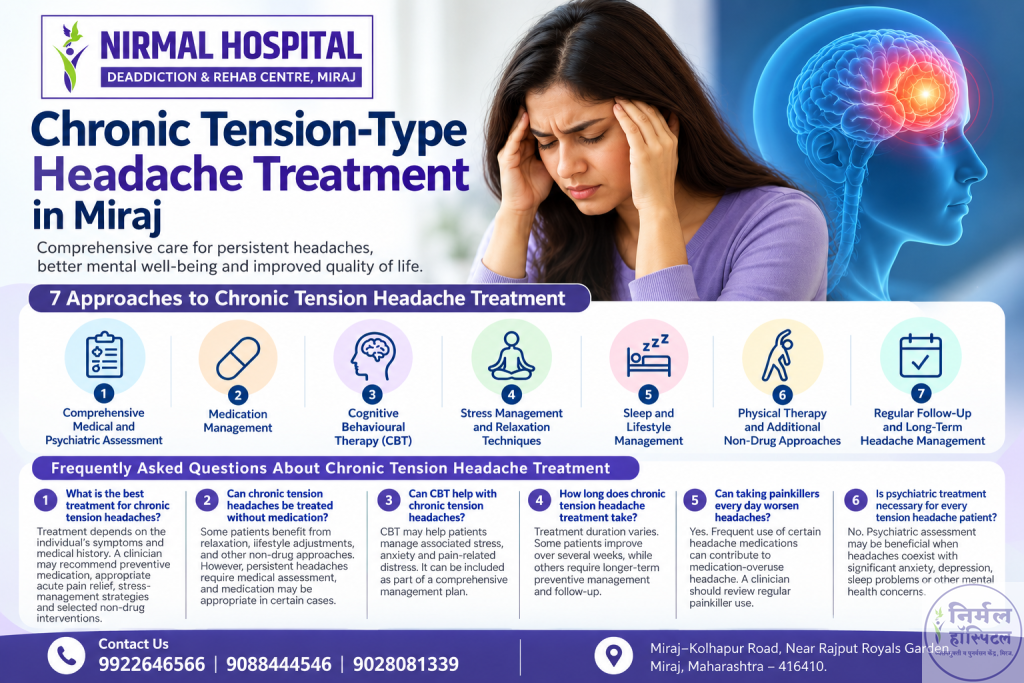
Q1. What is the best treatment for chronic tension headaches?
Treatment depends on the individual’s symptoms and medical history. A clinician may recommend preventive medication, appropriate acute pain relief, stress-management strategies and selected non-drug interventions.
Q2. Can chronic tension headaches be treated without medication?
Some patients benefit from relaxation, lifestyle adjustments and other non-drug approaches. However, persistent headaches require medical assessment, and medication may be appropriate in certain cases.
Q3. Can CBT help with chronic tension headaches?
CBT may help patients manage associated stress, anxiety and pain-related distress. It can be included as part of a comprehensive management plan.
Q4. How long does chronic tension headache treatment take?
Treatment duration varies. Some patients improve over several weeks, while others require longer-term preventive management and follow-up.
Q5. Can taking painkillers every day worsen headaches?
Yes. Frequent use of certain headache medications can contribute to medication-overuse headache. A clinician should review regular painkiller use.
Q6. Is psychiatric treatment necessary for every tension headache patient?
No. Psychiatric assessment may be beneficial when headaches coexist with significant anxiety, depression, sleep problems or other mental health concerns.
Chronic Tension Headache and Mental Health Care at Nirmal Hospital, Miraj
At Nirmal Hospital, Miraj, patients experiencing chronic headaches alongside stress, anxiety, depression or sleep disturbances can receive psychiatric evaluation and guidance.
Our approach focuses on understanding associated psychological factors, supporting emotional well-being and coordinating care with appropriate medical specialists when required.
Nirmal Hospital – Psychiatric, De-Addiction & Rehabilitation Centre
Address: Miraj–Kolhapur Road, Near Rajput Royals Garden, Miraj, Maharashtra – 416410.
Contact: 9922646566 | 9088444546 | 9028081339
Consult a qualified healthcare professional for an individualized assessment and treatment plan.
Medical Disclaimer: This information is for educational and public health awareness purposes only. It is not a substitute for professional medical advice, diagnosis or treatment.


