

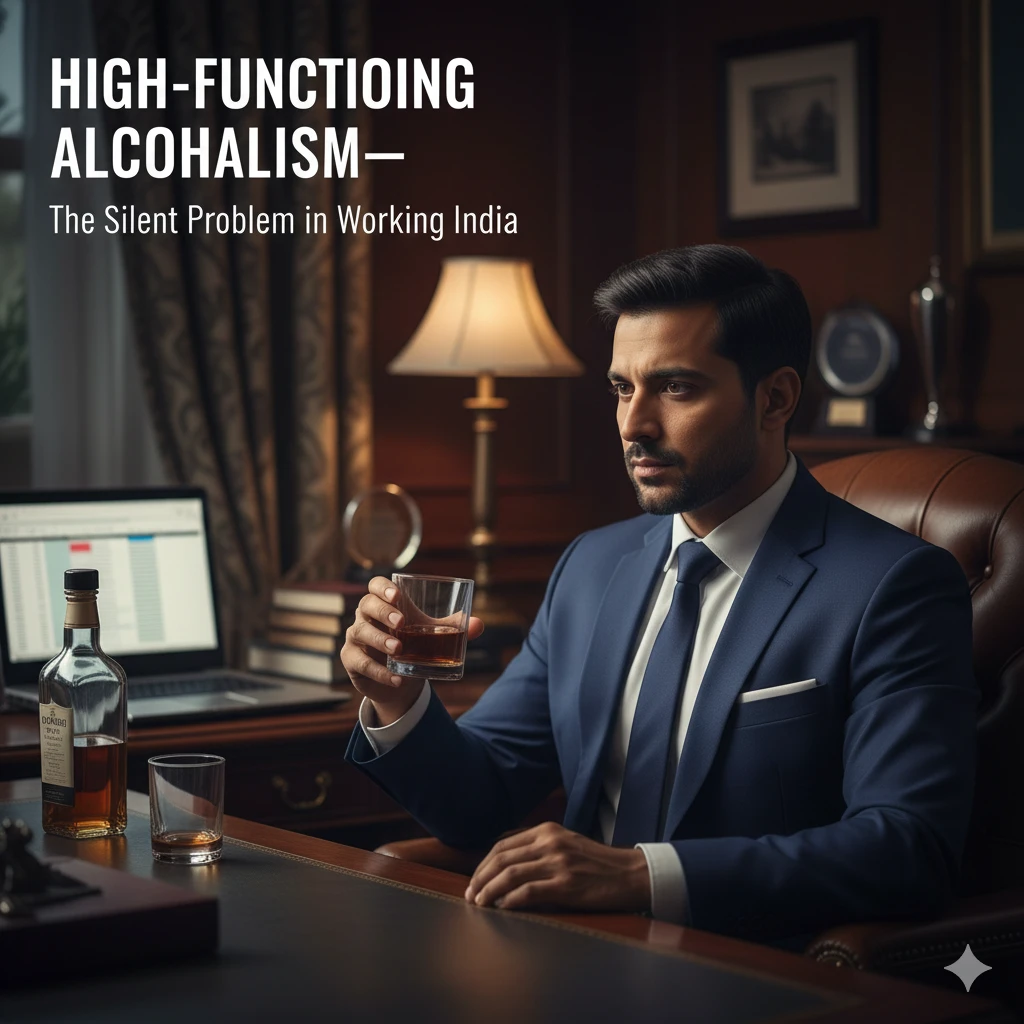
Introduction: High-Functioning Alcoholism—The Silent Problem in Working India
The term “high-functioning alcoholism” refers to a pattern of alcohol dependence where an individual maintains the appearance of a normal, successful life despite a persistent, harmful reliance on alcohol. These individuals often hold demanding jobs, maintain stable families, and meet their professional and social obligations without overt collapse. They do not fit the common stereotype of someone struggling with addiction.
This condition is a silent problem, particularly among working professionals in India. It goes largely unnoticed because the consumption often occurs behind closed doors or within socially acceptable contexts like corporate parties or late-night networking. The professional façade is meticulously maintained; the individual is often the top performer, the successful manager, or the respected business owner. They use their success and external stability as proof that they “have things under control,” effectively masking the escalating physical and psychological toll of their daily drinking habit. The drinking is frequently rationalized as a necessary stress-reliever or a reward for long hours.
Many patients in Miraj, Sangli, Mumbai, and other parts of Maharashtra seek help only when the symptoms become severe—when a liver issue arises, when performance finally slips, or when a spouse issues an ultimatum. Nirmal Hospital helps identify these early, subtle signs before the addiction severely damages health and career.
Why High-Functioning Alcoholism is Hard to Spot
High-functioning alcoholism is so insidious precisely because the key indicators of addiction—job loss, financial instability, and social isolation—are absent. The affected individual actively maintains a life that looks completely normal to the outside world.
-
Works, Earns, and Socializes Normally: The individual typically continues to perform their professional duties effectively, meeting deadlines and earning a consistent income. They participate in social functions, appear well-dressed, and engage in articulate conversation. Their success becomes a potent defense mechanism, allowing them to dismiss any suggestion of a drinking problem. The performance of these normal activities creates a perfect smokescreen.
-
Normal Outward Behaviour Hides Internal Struggle: While the exterior is controlled, the interior life is often one of physical dependence, shame, and anxiety. The person may rely on alcohol to manage stress, fall asleep, or simply feel “normal.” Their daily focus is often centered on planning the next drink, hiding consumption, or managing hangovers, but this intense internal preoccupation is completely masked by their competent external behavior.
-
Family Often Misreads Early Symptoms as Stress: Close family members may notice subtle signs—irritability, mood swings, increased isolation, or a defensive reaction to questions about drinking—but they often attribute these behaviors to the pressures of work, especially in demanding professional fields. The family avoids confronting the core issue, rationalizing the drinking as a necessary coping mechanism for “high stress” rather than seeing it as a dependency.
Nirmal Hospital’s psychiatry and deaddiction team understands this pattern, which helps in early screening across Maharashtra. They focus on the pattern of drinking and the function it serves, not just external consequences.
Hidden Signs of High-Functioning Alcoholism in Indian Working Adults
Identifying high-functioning alcoholism requires looking beyond outward success and examining the relationship the individual has with alcohol. For working professionals in India, these signs are often integrated into demanding lifestyle patterns.
3.1 Using Alcohol to ‘Relax’ After Work Daily
A key early indicator is when alcohol is no longer a choice but a necessity for unwinding. It becomes normalized as stress relief—the only way to mentally “switch off” after a long workday. This pattern is sadly common in corporate cities like Mumbai, where long commutes and high-pressure targets create immense stress. The daily glass of wine or peg of whiskey moves from a pleasure to a mandatory end-of-day ritual. This reliance signals a psychological dependence. Counseling available at Nirmal Hospital can help individuals develop healthier, non-chemical coping mechanisms for stress.
3.2 Excelling at Work While Drinking Regularly
Paradoxically, many high-functioning individuals continue to see promotion or good productivity even while drinking regularly. This success acts as powerful self-justification, reinforcing the belief that they do not have a problem. They reason: “If I were an alcoholic, I wouldn’t have just closed this deal.” However, beneath the surface, the dependence grows silently, consuming more mental energy and compromising long-term health.
3.3 Increased Tolerance to Alcohol
A critical medical red flag is increased tolerance to alcohol. This means the person increasingly needs more drinks to feel the same effect of relaxation or euphoria they once achieved with less. This physiological change indicates that the body and brain have adapted to a consistently high level of alcohol, requiring higher doses to function. This is a clear biological sign of escalating physical dependence. This change can be assessed through a specialized deaddiction assessment at Nirmal Hospital Miraj and Sangli.
3.4 Drinking in Secret or Hiding the Quantity
The need to conceal the extent of drinking signals a deep-seated problem and associated shame. This involves drinking in secret or hiding the quantity consumed. Examples include having a few drinks before attending a social event, drinking alone during a work trip, or diluting drinks so that the amount consumed is not obvious. Lying about consumption level to family or doctors becomes routine.
3.5 Irritability, Mood Swings & Poor Sleep
Alcohol, a depressant, severely disrupts mental health and sleep architecture. Even if the individual manages to pass out quickly, the quality of sleep is poor and unrefreshing. They wake up fatigued and reliant on caffeine. This cycle leads to noticeable irritability, mood swings, and poor sleep quality. Families often confuse these emotional shifts with “office stress,” missing the underlying alcohol-withdrawal symptoms that occur between drinking sessions.
3.6 Justifying Alcohol Use With Cultural Norms
Many individuals expertly justify alcohol use with cultural or social norms. They claim, “I drink only socially” even when their social life involves drinking every weekend, and they drink alone during the weekdays. Normalization in Indian corporate gatherings, where heavy drinking is often seen as a sign of camaraderie or success, further shields the behavior from scrutiny. The problem is not the environment but the compulsion to drink every time the opportunity arises.
3.7 Physical Signs That Start Showing Slowly
While the severe physical consequences may take years, subtle physical signs start showing slowly. These often include chronic morning fatigue, frequent gastrointestinal issues like acidity or headaches, and persistent high blood pressure. These symptoms, indicating early liver stress or nutritional deficits, are often treated in isolation by primary care physicians. Routine health checkups at Nirmal Hospital can detect abnormalities in liver enzymes or other biochemical markers early, prompting a necessary conversation about alcohol consumption.
Psychological & Emotional Impact on Working Adults
While the physical symptoms of high-functioning alcoholism can be hidden, the psychological and emotional toll eventually becomes debilitating, particularly for those who strive to maintain professional excellence. The constant internal struggle erodes mental well-being over time.
The most pervasive impacts include heightened anxiety, guilt, and overthinking. The individual spends significant mental energy worrying about when they can next drink, whether they were observed drinking the night before, and creating complex narratives to hide their consumption. This constant internal secrecy fuels chronic anxiety. The gap between their external success and their internal dependency generates intense feelings of guilt and low self-worth, leading to obsessive overthinking about past actions or potential future exposure.
This cycle rapidly creates emotional dependence on alcohol. The substance ceases to be a casual pleasure and becomes the primary, and often only, tool used to manage all difficult emotions. If a professional receives a bad review, celebrates a major win, or simply feels stressed, the default response is drinking. This dependence means that stress management without alcohol becomes difficult or even impossible. The ability to use healthy coping mechanisms—like exercise, meditation, or talking to a trusted person—atrophies because alcohol has taken over those functions.
Breaking this vicious psychological cycle requires professional help that addresses both the chemical dependency and the learned emotional coping mechanisms. Nirmal Hospital provides integrated psychiatry and therapy, ensuring that both the biological drive for alcohol and the deep-seated emotional dependence are addressed effectively.
How High-Functioning Alcoholism Affects Family Life
While the workplace remains stable, the family unit often bears the hidden weight of high-functioning alcoholism. The person’s constant effort to maintain their external façade draws energy away from intimate relationships, leading to a corrosive internal environment at home.
The most immediate impact is a severe communication breakdown. The secrecy surrounding the drinking creates a wall of dishonesty. Family members often feel they are walking on eggshells, afraid to ask direct questions about drinking lest they trigger an aggressive or defensive response. The person with the dependency constantly minimizes or lies about their consumption, making open, honest conversation nearly impossible. The essential foundation of trust within the family rapidly deteriorates.
Family life is also characterized by unpredictable mood patterns. While the individual may appear composed at work, at home, they can swing from being overly affectionate and genial when drinking to being highly irritable, critical, or withdrawn when experiencing the early stages of withdrawal or when their supply is threatened. This inconsistency makes the home environment feel chaotic and unsafe, particularly for children, who learn to adapt their own behavior based on their parent’s mood state.
Ultimately, this leads to profound emotional distance in relationships. Spouses and children often feel neglected because the person with the dependency is emotionally preoccupied with alcohol. They may be physically present but emotionally unavailable. Over time, family members may detach themselves as a form of self-protection, leading to isolation and resentment, even though the family unit technically remains intact.
Addressing these dynamics is crucial for true recovery. Family therapy at Nirmal Hospital (Miraj & Sangli) provides a safe, structured environment for repairing trust, re-establishing honest communication, and healing the wounds caused by the silent addiction.
When It Turns Dangerous: Warning Signs to Act Immediately
While high-functioning alcoholism can persist silently for years, there are critical tipping points where the behavior escalates from chronic dependency to acute danger. Recognizing these specific warning signs is essential for immediate intervention, as the person’s life, and the lives of others, may be at risk.
Drinking During Work Hours
A critical line is crossed when the individual begins drinking during work hours or immediately upon waking to prevent withdrawal symptoms. This shift signals that the physical dependence is now so severe that it overrides professional obligations and judgment. It means the person can no longer wait for the “acceptable” time to drink and requires alcohol simply to function.
Aggression and Blackout Episodes
The onset of aggression or blackout episodes is an urgent call for help. Aggression, particularly when combined with intoxication, creates an unpredictable and unsafe environment for the family. Blackouts—periods of amnesia where the person is functioning but cannot recall events—indicate dangerous levels of alcohol consumption that severely impair brain function and judgment.
Risky Behaviour
Escalating dependency leads directly to risky behaviour. This often involves drinking and driving, which puts the public at severe risk. Other risky behaviors include extreme late-night isolation (e.g., passing out alone in unfamiliar places), engaging in unsafe sexual practices, or mixing alcohol with other substances. These actions demonstrate a profound loss of control and disregard for personal safety.
Severe Withdrawal Symptoms
When the individual attempts to stop or significantly reduce drinking, severe withdrawal symptoms can emerge. While mild withdrawal includes anxiety and tremors, severe, life-threatening symptoms include:
-
Visual or auditory hallucinations.
-
Seizures (alcohol withdrawal seizures).
-
Delirium Tremens (DTs): A medical emergency characterized by confusion, rapid heart rate, fever, and severe agitation.
Severe withdrawal is a medical crisis that requires immediate, medically supervised detoxification.
If you observe these critical signs, do not hesitate to seek emergency help. Nirmal Hospital Miraj offers 24×7 psychiatric emergency support to safely manage acute intoxication, severe withdrawal, and related psychiatric crises.
Diagnosis & Treatment Options for High-Functioning Alcoholism
Because high-functioning alcoholism is so expertly masked, specialized diagnosis and an integrated treatment plan are necessary for successful recovery. Treatment focuses on safely breaking the physical dependency while addressing the psychological drivers of the addiction.
7.1 Medical Evaluation & Screening
The journey begins with a thorough medical evaluation and screening. Since high-functioning individuals rarely look physically unwell, the diagnosis often requires objective evidence. This includes liver tests (checking for elevated enzymes like ALT and AST), blood pressure monitoring, and specialized psychological assessments to evaluate the severity of dependence and identify co-occurring mental health issues like depression or anxiety. Comprehensive initial assessments are available at Nirmal Hospital Maharashtra, ensuring that treatment addresses both the substance use and any underlying health complications.
7.2 Detox & Medication Support
Breaking the physical cycle requires a safe and managed withdrawal process. Detoxification (detox) and medication support provide a safe way to stop drinking. Because alcohol withdrawal can be life-threatening (due to seizures or Delirium Tremens), a safe alcohol withdrawal plan is mandatory and requires medical supervision. Medications are used to mitigate severe withdrawal symptoms and cravings. This medical stabilization phase is essential before any meaningful psychological work can begin.
7.3 Behavioral Therapy & Counseling
Once physically stable, the focus shifts to addressing the reasons why the person drinks. Behavioral therapy and counseling are critical for long-term recovery.
-
Cognitive Behavioral Therapy (CBT): Helps the individual identify and change the thought patterns (like justifying drinking as “stress relief”) and behavioral habits that led to dependence.
-
Motivational Therapy: Strengthens the individual’s commitment and desire to change.
Treatment also involves treating underlying anxiety or depression, which often fuel the need for self-medication with alcohol. These essential counseling services are available in Miraj, Sangli, and Mumbai through Nirmal Hospital’s network.
7.4 Long-Term Rehabilitation
Recovery is a continuous process that extends well beyond the initial detox. Long-term rehabilitation focuses on sustaining sobriety and rebuilding a fulfilling life.
-
Habit Change: Patients learn to build entirely new routines, stress management techniques, and social activities that do not involve alcohol.
-
Relapse Prevention: This involves identifying high-risk situations (like corporate parties or specific times of day) and developing specific strategies to navigate them without drinking.
Nirmal Hospital offers structured deaddiction programs that provide the necessary support structure for this long-term recovery journey, emphasizing sustained sobriety and psychological resilience.
Why Many Indian Working Adults Delay Treatment
The gap between recognizing a problem and seeking help is often significant, particularly for high-functioning working adults in India. This delay is rooted in powerful social, cultural, and personal barriers that prioritize external success over internal health.
Social Image Fear
One of the most potent deterrents is the fear of social image ruin. For professionals who have built careers on competence and reliability, admitting to an addiction feels like an existential threat. They worry that a diagnosis will lead to immediate loss of respect from peers, clients, and community members. The stigma associated with “addiction” is seen as far more damaging to their reputation than any physical health issue.
Belief “I Can Handle It Myself”
The very nature of high-functioning alcoholism fosters the belief, “I can handle it myself.” Because they have successfully managed a demanding job, family, and finances while drinking, they develop an inflated sense of control. They mistake their functional capacity for actual control over the substance, leading them to repeatedly try (and fail) to moderate or quit on their own, further delaying professional intervention.
Family Denial
Often, the family unit contributes to the delay through family denial. To protect the family’s social standing and financial stability, spouses or parents may minimize the drinking, rationalize the behavior as stress, or actively participate in hiding the problem. This collective denial prevents the individual from facing consequences and removes the necessary pressure that often motivates entry into treatment.
Workplace Stigma
Finally, the pervasive workplace stigma against mental health issues and substance use disorders is a major hurdle. Employees fear that disclosure will lead to demotion, marginalization, or termination, making them reluctant to take the necessary time off for intensive rehabilitation or even initial consultation. The perceived risk to their career outweighs the perceived benefit of treatment.
Nirmal Hospital understands these sensitive barriers. They emphasize how discreet, confidential psychiatric care is available at their facilities. Their processes are designed to protect the privacy and professional reputation of patients, offering a safe path toward recovery without compromising career stability.
How Nirmal Hospital Supports Alcohol Addiction Recovery
Alcohol addiction, particularly the subtle form known as high-functioning alcoholism, requires a specialized, multi-stage approach to ensure lasting recovery. Nirmal Hospital provides a structured and comprehensive recovery framework designed to address both the physical and psychological dimensions of dependency.
Expertise and Specialized Staff
Nirmal Hospital is led by highly experienced psychiatrists who specialize in addiction medicine (Deaddiction Psychiatry). This expertise ensures that the initial assessment and the crucial detoxification phase are managed safely and effectively. The team also includes dedicated psychologists and counselors who are skilled in addiction therapy, providing a robust, integrated clinical approach.
Customized Deaddiction & Counseling Plans
Understanding that addiction is highly personal, Nirmal Hospital focuses on creating customized deaddiction and counseling plans. Treatment is never one-size-fits-all. Plans are tailored based on the individual’s specific history, the severity of dependence, the presence of any co-occurring mental health issues (like anxiety or depression), and their home environment. Counseling utilizes evidence-based methods such as CBT (Cognitive Behavioral Therapy) and Motivational Enhancement Therapy.
Outpatient and Inpatient Rehabilitation Options
The hospital offers flexibility in treatment intensity through both outpatient and inpatient rehab services:
-
Inpatient Rehab: This provides a secure, structured environment necessary for initial detoxification, stabilization, and intensive, round-the-clock therapy. It is ideal for those with severe dependency or withdrawal risks.
-
Outpatient Rehab: This allows individuals with stable sobriety to attend therapy and follow-up sessions while living at home and managing professional duties, supporting the transition back to normal life.
Essential Family Counseling
Recovery is a family process. Nirmal Hospital emphasizes family counseling to repair the damage caused by the addiction and transform the home environment into a place of support rather than a source of stress. Family sessions help rebuild trust, establish healthy communication patterns, and teach family members how to effectively support long-term relapse prevention. This crucial service is offered for patients in their network.
Locations Served
Nirmal Hospital extends its reliable and confidential care across major regions of the state. Its services are strategically available to patients from Miraj, Sangli, Mumbai, and the broader Maharashtra region, ensuring that specialized deaddiction treatment is accessible when needed most.
Conclusion: Early Help Can Prevent Long-Term Damage
High-functioning alcoholism is a stealthy and destructive condition, often hiding behind professional success until it causes catastrophic personal and health failure. The crucial takeaway is this: addiction becomes significantly harder to treat if ignored and allowed to progress. Years of physical dependency and deeply ingrained psychological coping mechanisms create complex barriers to sobriety. Waiting for the addiction to become visible—through job loss or severe illness—only makes the path to recovery longer and more difficult.
The good news is that high-functioning alcoholism is treatable. With the right medical intervention and comprehensive behavioral therapy, individuals can successfully achieve sobriety, heal relationships, and restore their health without sacrificing their careers. The key is to intervene early, before the silent dependency becomes chronic.
We strongly encourage reaching out for support. Taking the step to seek an assessment is not a sign of failure; it is the most powerful act of self-preservation and strength a person can make.
If you or a loved one needs confidential alcohol deaddiction support, Nirmal Hospital is here to help across Miraj, Sangli, Mumbai, and Maharashtra.


Leave a Reply